Kulevcha

· 4 min read
About 4,000 people live in the village of Kulevcha, and 98% of them are ethnic Bulgarians, at least they consider Bulgarian their native language. In ancient times there was a Nogai settlement here called Odabash, but when the Russians occupied Bessarabia the Nogais disappeared somewhere, and in 1830 Bulgarian settlers came here from the village of Kyulevcha (in Shumen province) and founded a settlement of the same name.
In 1835 the village had only 135 colonists, in 1842 already 450, and in 1870 1,401 people. Kulevcha grew and developed quickly.
In 1946 Kulevcha was renamed Kolisne, but in 1995 the historical name was restored.
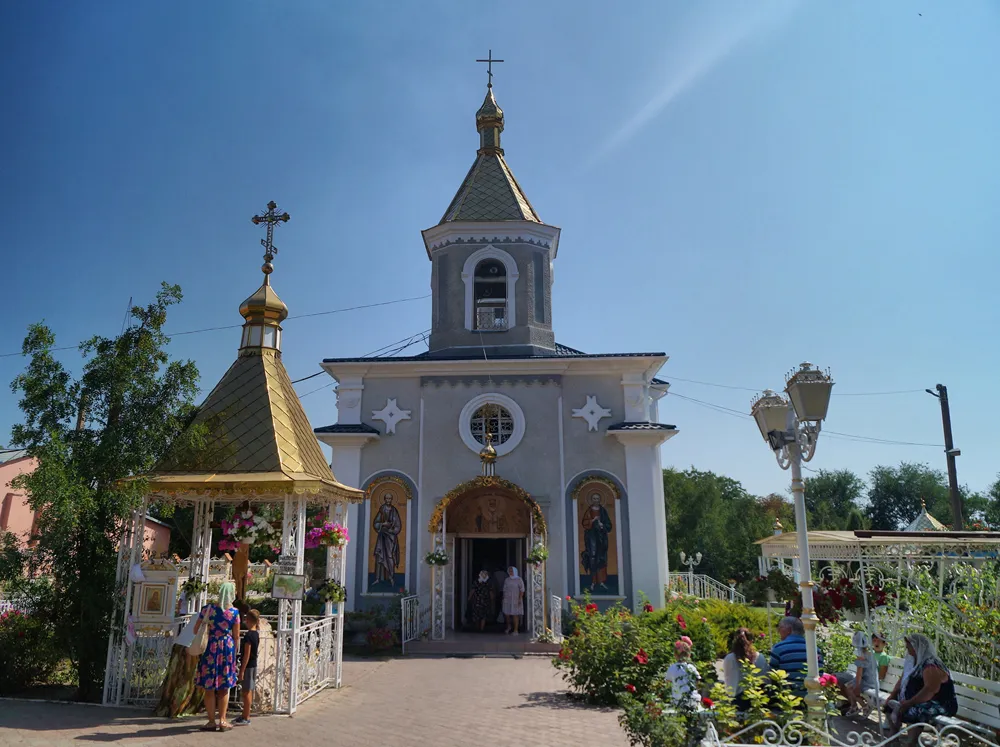
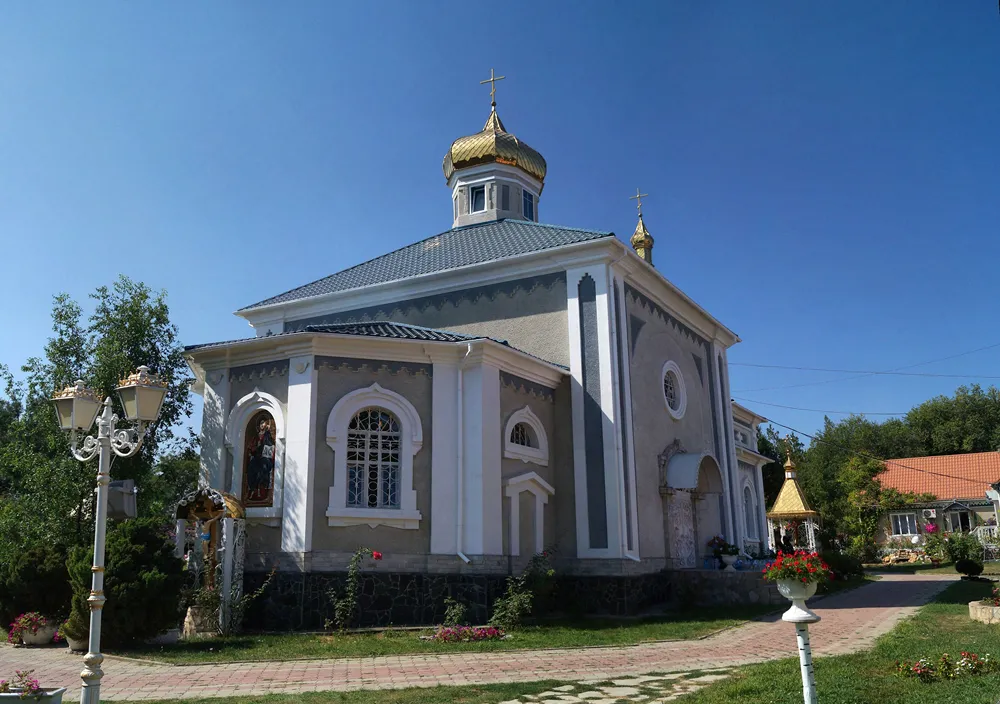
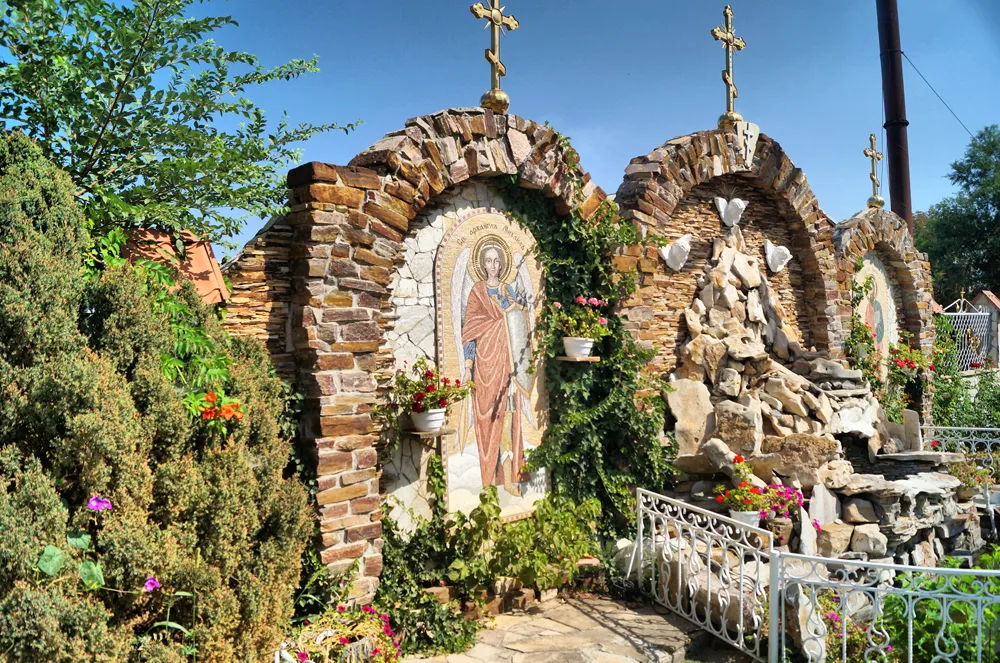
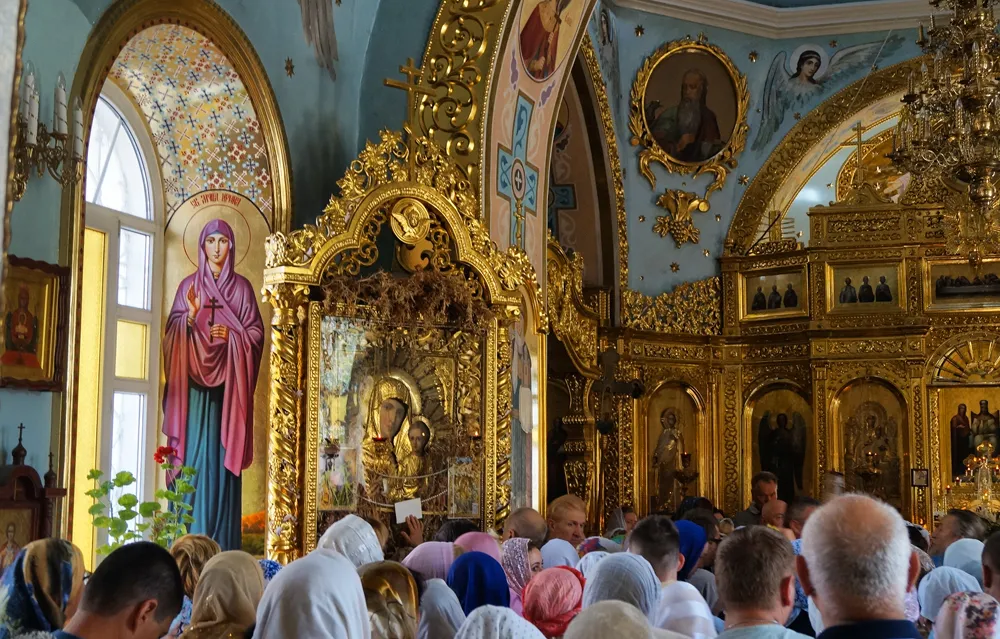
Present-day Kulevcha is a place of mass religious pilgrimage, and pilgrims come here not only from the surrounding Bulgarian villages but from all over Ukraine. The reason is St. Nicholas Church, built in the 1870s. Interestingly, the church is, architecturally, an ordinary “eparchial” type, of which quite a few were stamped out in those years, but the reason for the pilgrimage is the icons that stream myrrh and the lilies that sprout from dry roots. As for the lilies, I was shown something similar in the church of the village of Sulymivka, in Kyiv region. I have heard somewhere that there is a kind of lily that grows in a very arid climate and, in the dry season, falls into a state of anabiosis, drying up completely, roots and all. But I found no confirmation of such rumours. Here is what is written about the Kulevcha “miracle” on one of the religious websites. Further on, quoted in translation (the original is in Russian):
“The miracles began about 10 years ago, when suddenly the icon of the martyrs Faith, Hope, Love and their mother Sophia began to stream myrrh on the wall of the church. On this icon the miracle was not repeated, but other icons began to stream myrrh: those of the martyrs Barbara and Catherine, and of Prince Volodymyr. More and more droplets then appeared on the icon of the Mother of God and the image of John the Theologian.
And half a year later the cross, Golgotha, began to stream myrrh in the centre of the church. And it is still streaming. Moreover, it flows abundantly only on Friday, Saturday and Sunday, when services are held in the church. And on Monday the rivulets dry up. And some time later the Kasperovska icon of the Mother of God began to stream myrrh.
Forensic experts of the Odesa forensic examination bureau came to Kulevcha twice. After careful analysis they made an official conclusion: the streams on the icon are an ‘organic oily substance whose origin cannot be established’. Spectrograms, graphic images of the substances from the Iveron and Kasperovska icons, were made, and… one more miracle! The spectrograms matched, that is, the myrrh and the blood have the same composition. Not a single expert found grounds to accuse the abbot Pavel of deception. Everyone acknowledged: it is a miracle! The Kulevcha miracle!
The church has many miracle-working shrines:
• Tears on the cheek of the Kasperovska icon of the Mother of God.
• The icon of the Saviour Not Made by Hands, which has enormous healing power.
• The bleeding face of the Iveron icon of the Mother of God.
• The icon of the healer Panteleimon and George the Victorious, appearing on glass.
• The myrrh-streaming Golgotha cross.
• One of the four Pilgrimage Crosses installed in Ukraine.
• The Kazan icon of the Mother of God, in which dried lilies bloom by themselves.”
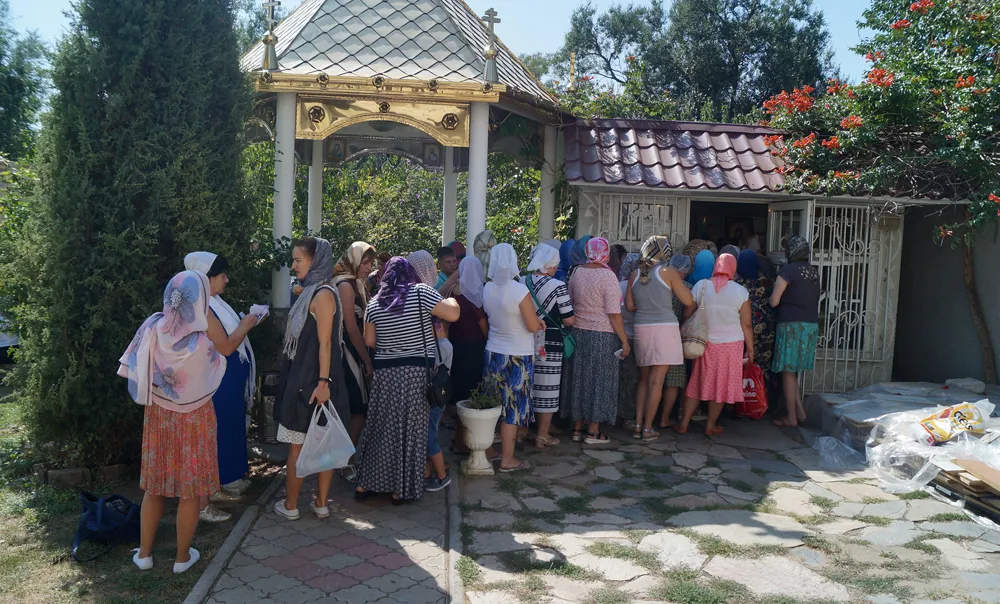
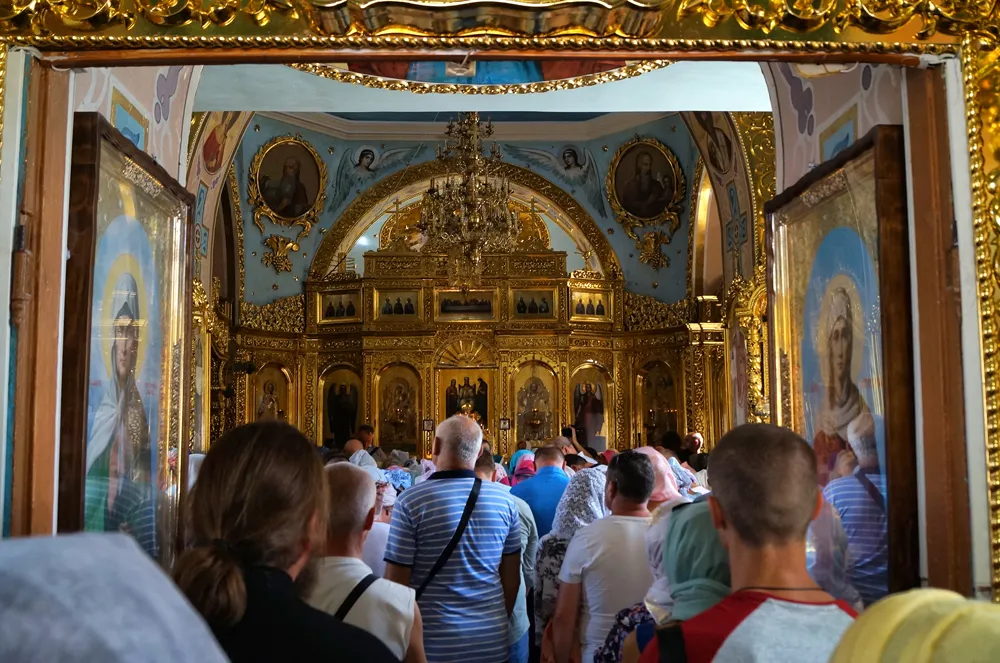
Decide for yourself how to take all this. We visited the church in Kulevcha. I did not see the lilies; they said they no longer bloom. I could not examine the icons and the crucifix, since the church was packed with a crowd of pilgrims. Everyone was lugging bottles of water. They blessed it and drank it. Interestingly, none of this resembled a festive event. I do not even know what to call such a gathering: women in headscarves, in old-fashioned clothes, although mostly new; men in trousers with creases and ironed shirts; all as if from the 1980s. Well, why is it so? Why do people somewhere abroad, or even in western Ukraine, dress normally for church, in modern clothes, and not in the dreariest, mothball-smelling ones? And there are very many people. I am unlikely to want to go there again, and the road is not the best.
Text and photos by Roman Malenkov.