

Kytaihorod and the “ruskimir”

· 4 min read
Kytaihorod, near Kamianets-Podilskyi, is known among tourists for its famous canyon and its no less famous Silurian outcrops (with luck, you may find a trilobite!).
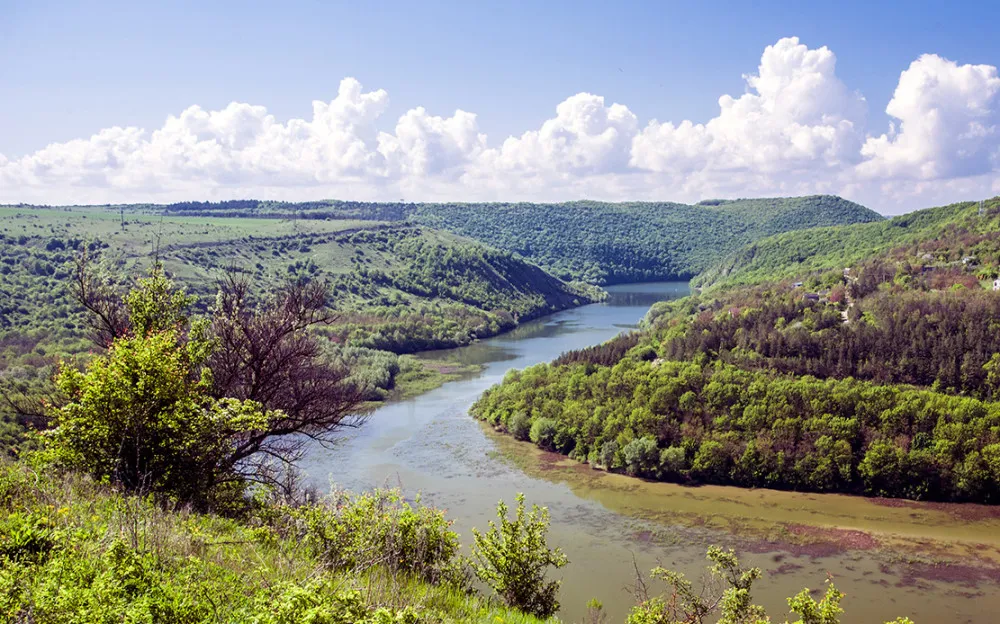
The canyon of the Ternava River in Kytaihorod
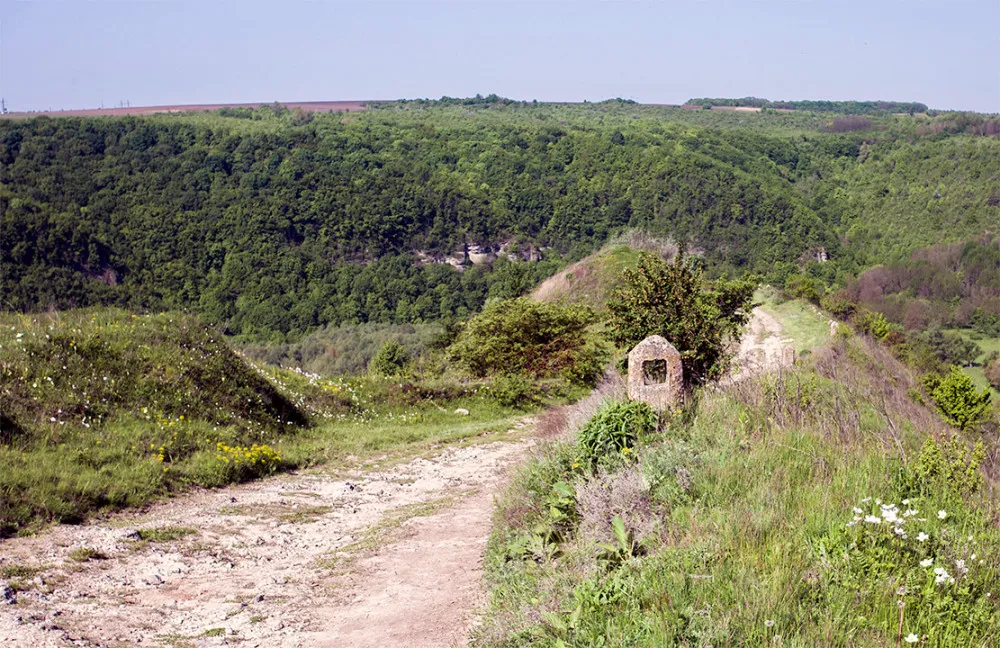
The famous “Kytaihorod pillars”
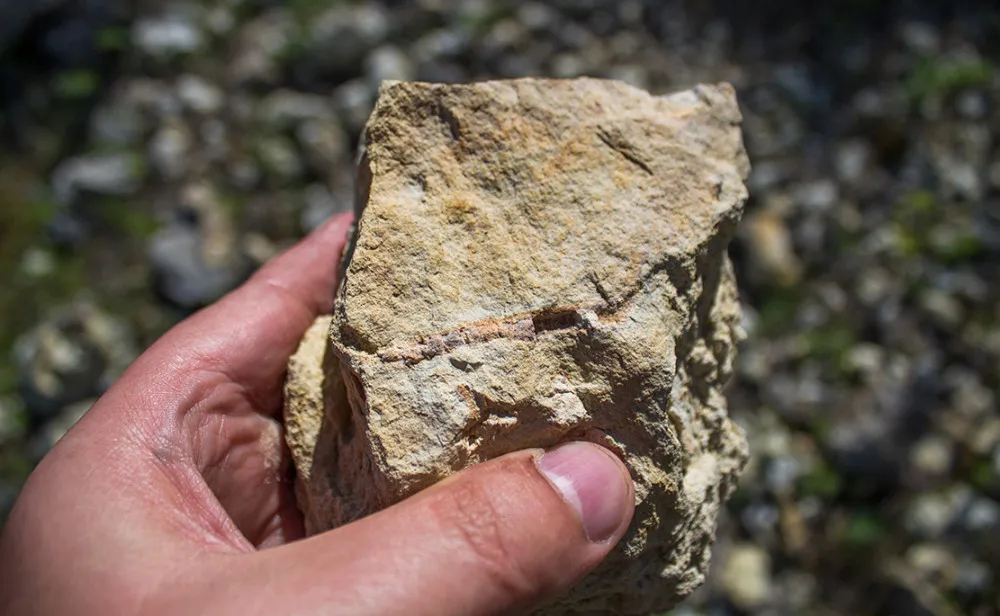
Stem of a sea lily (?)
The author of these lines found no trilobites there, but once tracked down what is perhaps the funniest monument, not only in Podillia but in Ukraine as a whole, to the notorious “Russian world”.
It is unknown whether that “monument” still stands, but if, thanks to its secrecy, it has not yet been smashed to bits, let it go on standing. It is funny, and may still do a great deal of service in the sacred cause of building Russophobia as a vivid illustration of the ineptitude and mental backwardness of lovers of Moscow and “Rashka”.
The author found this marvel by chance at one time. It began when two stone pillars, clearly of fairly ancient origin, caught his attention. Between them was a tin gate decorated with something resembling the outline of a poleaxe. He pushed it, and there-e-ere…
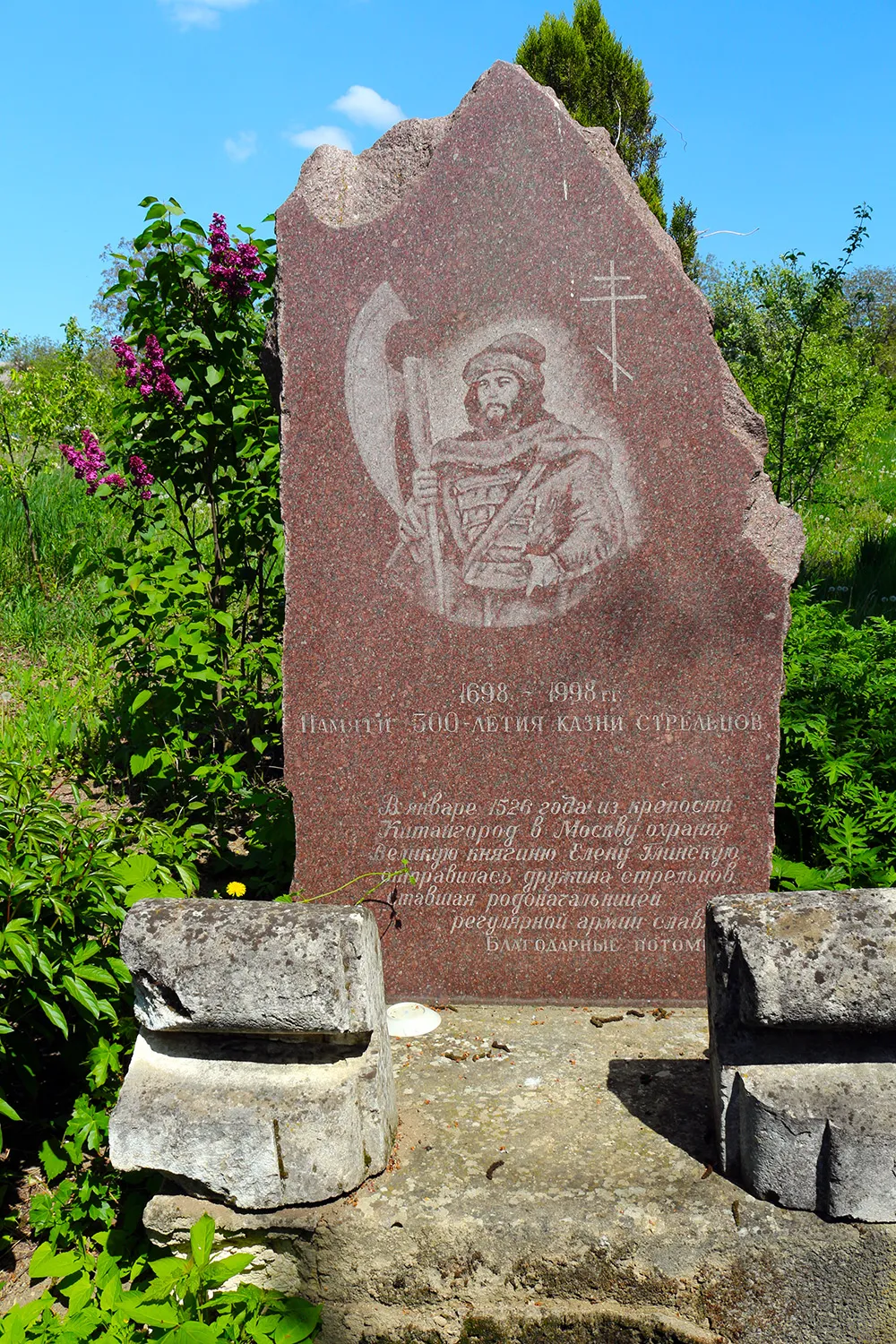
There it was: the “ruskomir”, smelling of the ruskim spirit… Or rather, stinking of it. Probably “stinking” is the correct word…
Behind the gate turned out to be a “monument” unprecedented in every respect, made in some local gravestone workshop.
We will refrain from discussing its aesthetics. Everything is visible in the photo. For the same reason we will not quote the “epitaph”. It, too, is easily legible.
We will only note that this memorial sign is perhaps the most vivid embodiment of the notorious “
“spiritual bonds”, of Moscow logic, worldview and vision of an “unfalsified history”.
The first thing that caught the eye: “1698–1998. In memory of the 300th anniversary of the execution of the streltsy”…
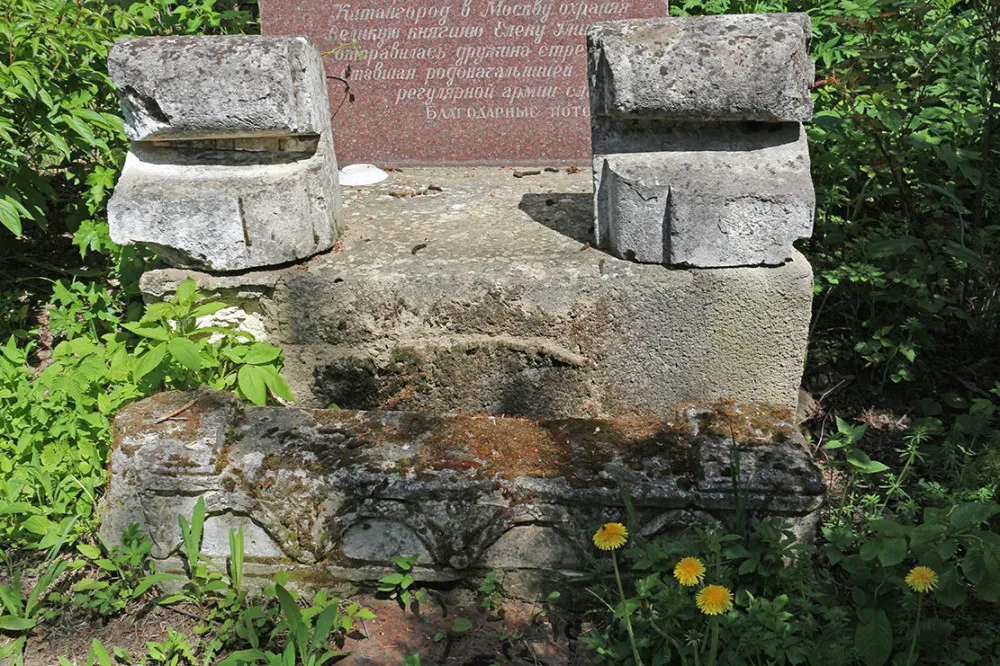
Unbelievable! What did the Moscow streltsy, tortured to death by Tsar Pyotr Alexeyevich, have to do with a remote Podillian village that at that time lay far beyond the borders of the Muscovite state and belonged to the Polish-Lithuanian Commonwealth?
We read the explanation in the same “epitaph”. It turns out that once the future Tsaritsa Olena Glynska (mother of Ivan the Terrible) supposedly travelled from the Kytaihorod fortress to Moscow, taking the aforementioned streltsy with her.
Not the executed ones, of course, but their ancestors. Interestingly, this happened in 1526, a century before the said fortress even came into being.
If the inscription is to be believed, Glynska’s streltsy, brought by her from the Kytaihorod fortress that did not yet exist at the time, later became the founders of the “regular army of the Slavs”.
The end!
What “army of the Slavs” in the 16th century?!
But the brain still keeps asking: what does the execution of the streltsy have to do with it?!
And now the cherry on the cake.
The monument, as the inscription shows, was erected by “Grateful descendants”.
Years have passed, but the author still cannot figure out who these “descendants” are. Descendants of Olena Glynska or of the streltsy? Or perhaps of the executioners who chopped off the streltsy’s heads? After all, the monument commemorates their execution?
Or maybe descendants of the regular army of the Slavs?
Still, this creation of a mad amateur local-history genius also has historical value. For besides the mentioned fragments of old columns, the “monument” is also decorated with some carved fragments of perhaps the 17th century and a very pretty decorated beam of the same period.
As Ukraine Incognita has found out, the author of the monument is a native of Kytaihorod, a former Komsomol leader, one Ivan Striletskyi. This “historian” is known, among other things, as the author of a book published in 2009 in Russian, “Grand Princess of Rus: the Ukrainian Olena Glynska”.
In this opus the author takes the reader back “to 1526, when the Kytaihorod princess Olena Glynska became grand princess of Muscovite Rus”.
Another book by Mr Striletskyi is no less sensational. Just look at its title: “The Mystery of the Ages: the Capital of the Great Attila, Kyta Hora”. This opus came out in 2010 at once in three languages: Ukrainian, Russian and English!
Here Ivan Striletskyi writes about “the capital of the greatest and most powerful empire of our people and of one of the most outstanding commanders in the world, the leaders of our people, Attila: Kyta Hora”, and states that “Attila’s fortress stood on the very top of the hill, in whose outline one can easily recognise a whale (kyt) with its head pressed against a mountain (hora)”.
“During the period when cities were being founded, Kyta Hora was renamed Kytaihorod.”
Of course there is no historical or archaeological confirmation of this nonsense. But how cool it is!
Attila’s capital in Kytaihorod is no less funny than the story with the streltsy!!!


