

Marko Kropyvnytskyi. Theatre of the Coryphaei. The beginning
· 50 min read
Father of Ukrainian theatre
Marko Kropyvnytskyi was one of the key figures of Ukrainian culture of the late 19th and early 20th centuries. Through his work he not only helped create a national Ukrainian professional theatre, but also had a substantial influence on the formation of Ukrainian identity as a whole.
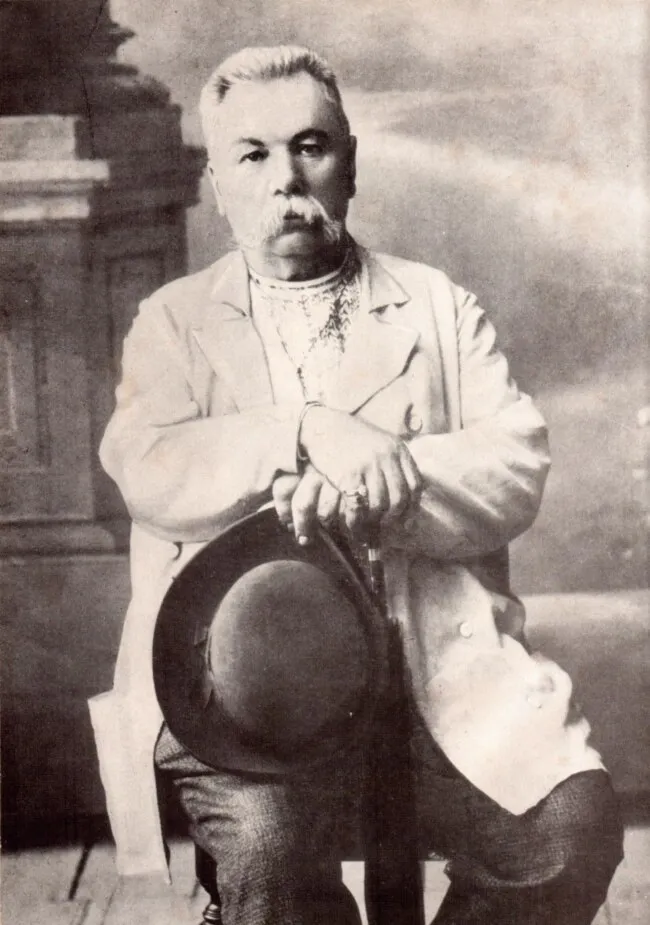
Marko Kropyvnytskyi
Even during his lifetime he was called the “father of Ukrainian theatre”. He was a megastar of his day, whose talent was admired both by audiences at the fairground stages of small towns and villages and by the refined public of the theatres of Odesa, Kharkiv, Kyiv or Yelysavethrad (now the city of Kropyvnytskyi). From the very beginning of his professional career, Marko Kropyvnytskyi was invited as a special guest to work in the theatres of St Petersburg (then the capital of the Russian Empire) and in the theatres of the Ukrainian cities of Austria-Hungary. Success everywhere, recognition everywhere. And this in the 19th century, so oppressive for national culture!
At that time (as in other periods of our history) the information space and cultural output on Ukrainian lands were totally Russified: theatre performances were given mostly in Russian (in Galicia, in German or Polish); there were no Ukrainian professional troupes as such; plays by Ukrainian authors were few. Meanwhile, audience demand for Ukrainian productions was enormous. Such productions always guaranteed full houses and box-office takings. People yearned for something of their own. And the theatres offered almost nothing of their own.
Another misfortune of the time: roles in Ukrainian performances were played by actors who spoke the language poorly, and their acting was sometimes mere grimacing (“babbling”, in Marko Kropyvnytskyi’s words). In such performances Ukrainians looked like caricatures. Such productions discredited rather than popularized national culture, yet finding an actor who knew the language was a huge problem, since there were simply no theatre schools of their own. Kropyvnytskyi also recalled the xenophobia of colleagues that he encountered while working in various Russian troupes. The crowning blow was the Ems Ukaz of 1876, which banned performances in Ukrainian on the professional stage.
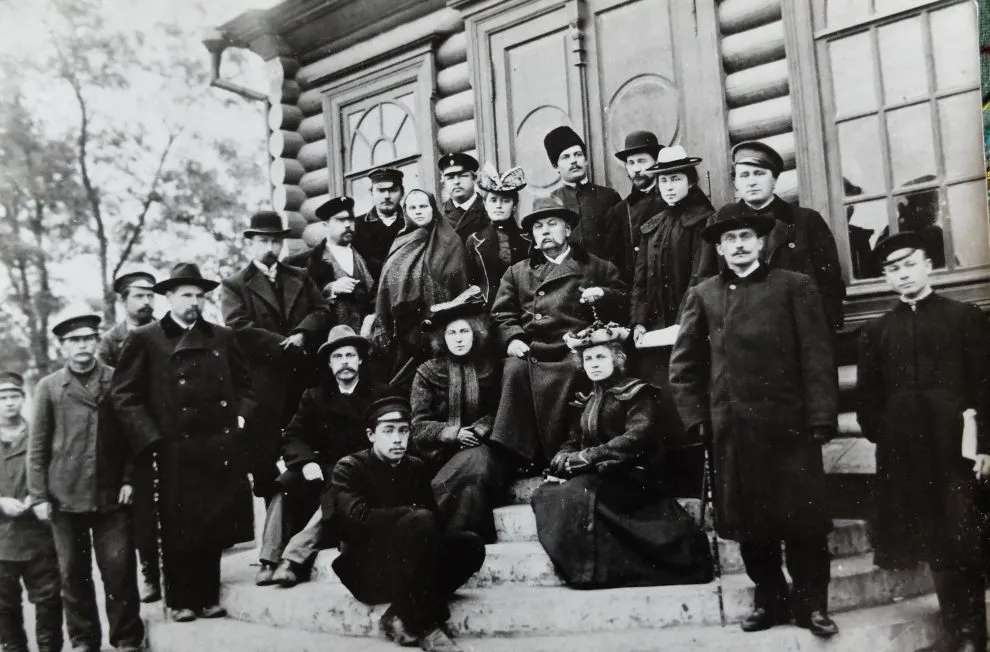
Marko Kropyvnytskyi’s theatre troupe in the 1890s
Such were the realities in which Marko Kropyvnytskyi came to Ukrainian theatre. He came and changed everything. Over the course of his career he was an actor, a director, a theatre manager, a set designer, a reciter of poetry, a singer, a playwright and a theatre teacher. He literally created the national professional Ukrainian theatre with his own hands. His acting roles became “canonical”, his plays formed the classic repertoire for decades, and the theatrical companies he assembled quickly turned into independent theatres. The best-known of the troupes that grew from Marko Kropyvnytskyi’s company, the one with which he staged the famous “Natalka Poltavka” in Yelysavethrad on 27 October 1882, entered history under the name “Theatre of the Coryphaei”. Today this term denotes an entire era in the history of Ukrainian theatre and is regarded as a distinctive artistic phenomenon. The coryphaei of the Ukrainian stage — Mykhailo Starytskyi, Ivan Karpenko-Karyi, Maria Zankovetska, Hanna Zatyrkevych-Karpynska, Mykola Sadovskyi, Panas Saksahanskyi, Mykola Lysenko — were pupils or colleagues of Kropyvnytskyi, whom he united around the idea of a national theatre.
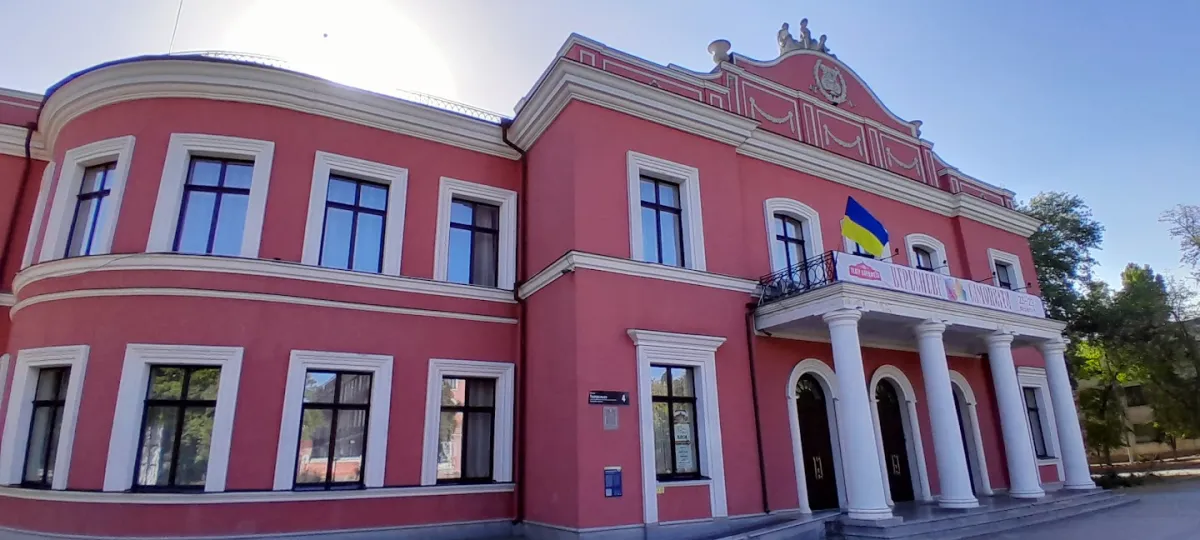
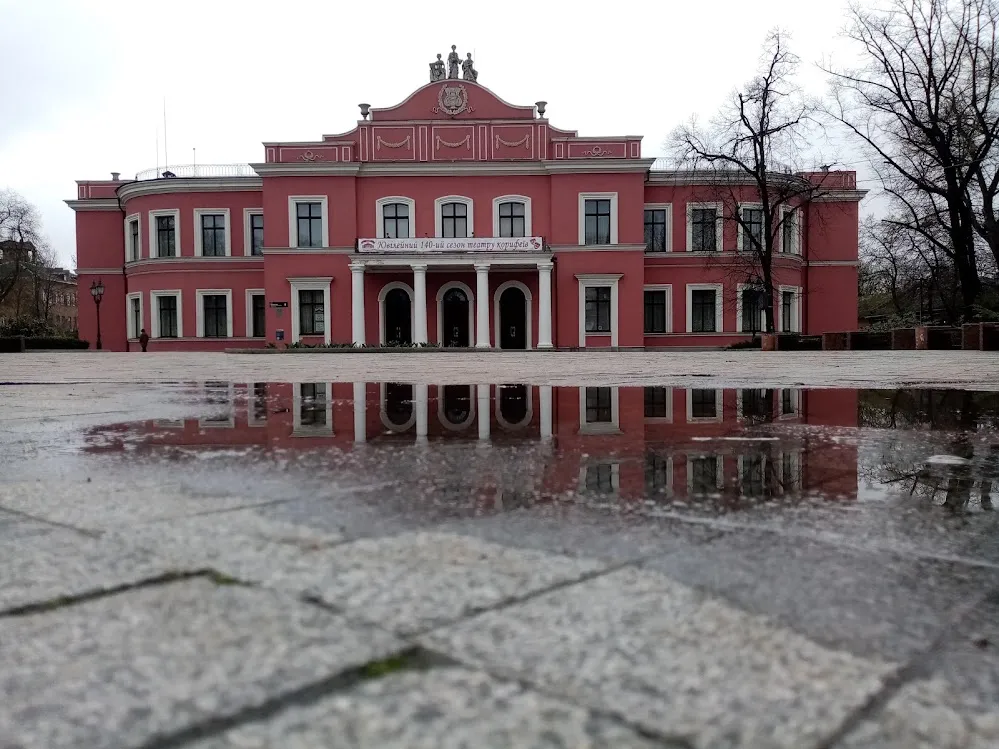
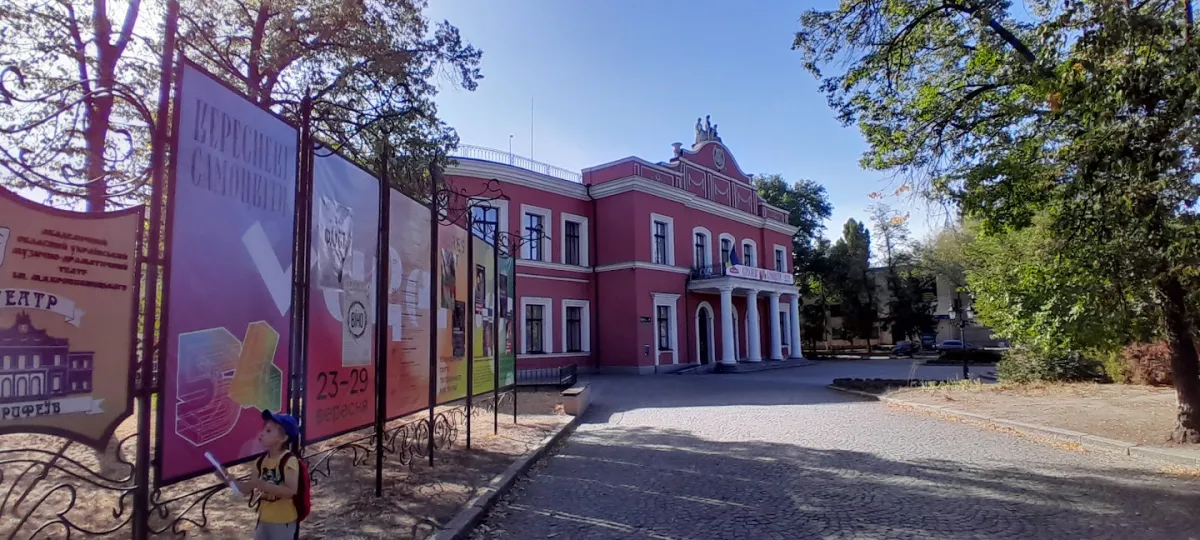
The building of the former Winter Theatre in the city of Kropyvnytskyi, on whose stage, in October 1882, Kropyvnytskyi’s troupe made its debut, later named the Theatre of the Coryphaei. Today this name is given to the Kropyvnytskyi Academic Music and Drama Theatre (photo 2024).
Whatever one says, it seems that the greatest influence on the formation of Marko Kropyvnytskyi’s worldview and theatrical “handwriting” came from his childhood years. In his autobiography, it is to childhood that he devotes the most emotional and vivid sketches. After reading it, one can easily see in the plots of Marko’s plays the real events of the artist’s childhood and his amateur years.
This map is an attempt to show the places connected with the early (and not only the early) period of Marko Kropyvnytskyi’s life and work. We tried, where possible, to show them as precisely as we could: down to the house or place where he stayed.
Map “Marko Kropyvnytskyi. The beginning” (1840–1871)
Zhyvanivka
Marko Kropyvnytskyi came from the old noble Kropyvnytskyi family, whose roots go back at least to the 14th century and which, evidently, was originally based in the Podillia village of Nyzhcha Kropyvna, on the road between Haisyn and Nemyriv in Vinnytsia Oblast, near the Kropyvianka River. How and when members of this family ended up in the steppes of central Ukraine remains to be established, but from the playwright’s autobiography it is known that both Marko Kropyvnytskyi’s grandfather and father came from the village of Zhyvanivka, which still stands on the slopes of the Suhokleia Komyshuvata, not far from Kompaniivka, in Kirovohrad Oblast.
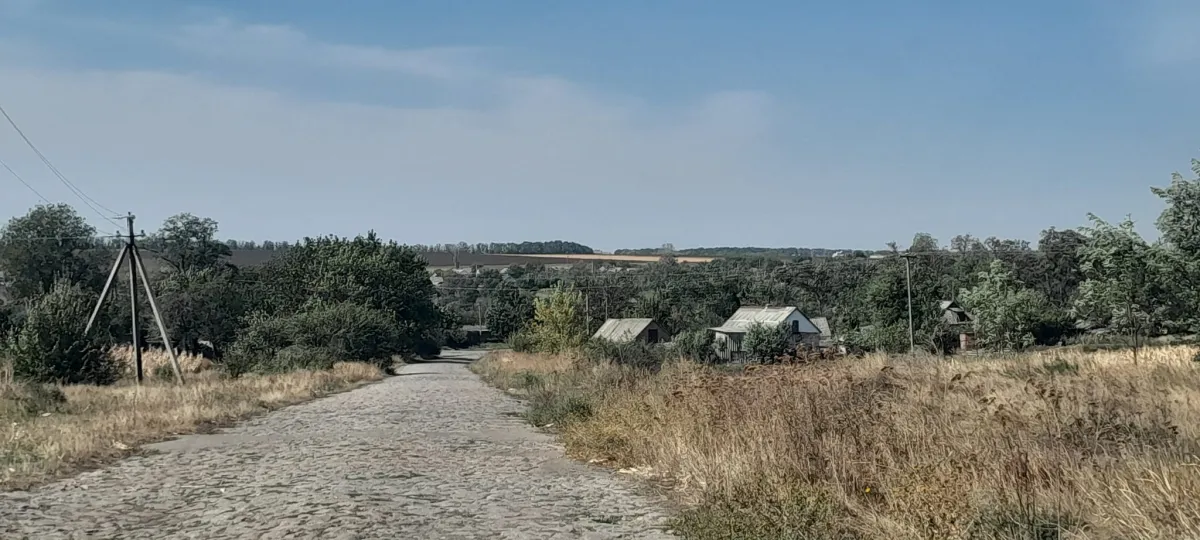
The entrance to Zhyvanivka from the Kropyvnytskyi–Bobrynets road (photo 2024)
In Zhyvanivka lived and worked as steward (manager of estates) for the local landowner Colonel Zhyvanov (the village’s name comes from his surname) Marko Kropyvnytskyi’s grandfather Ivan. He also died in Zhyvanivka, and in rather curious circumstances, which the playwright recalled as follows:
“My grandfather died of a chill: in early spring he chased a wolf on horseback and fell through the ice on the Komyshuvata River, and he never rose from his bed again until he died.”.
Ivan Kropyvnytskyi was buried in the village of Semykosivka (later called Obertasove), “in the churchyard”, which perhaps points to a certain standing of the playwright’s grandfather in the community. This village no longer exists, but its traces — former streets and feral thickets of domestic plants — can still be made out north of Dolynivka, on the slopes of the valley of that same Suhokleia Komyshuvata River.
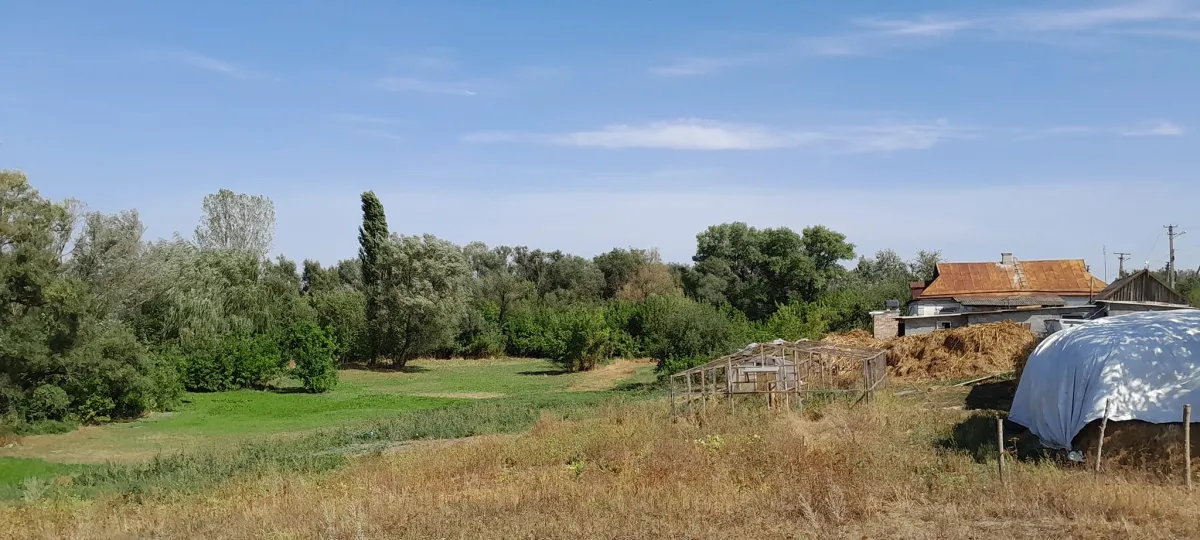
The valley of the Suhokleia Komyshuvata in Zhyvanivka (photo 2024)
Ivan Kropyvnytskyi’s death found his son Luka (the future father of the playwright) in Yelysavethrad (now the city of Kropyvnytskyi), where he was studying in the second class of the district school. Having learned the terrible news, the seventeen-year-old boy set off on foot on the long winter road home, but after covering about 35 kilometres to his native village, he found only an empty house, and in it his younger sister, abandoned by their stepmother.
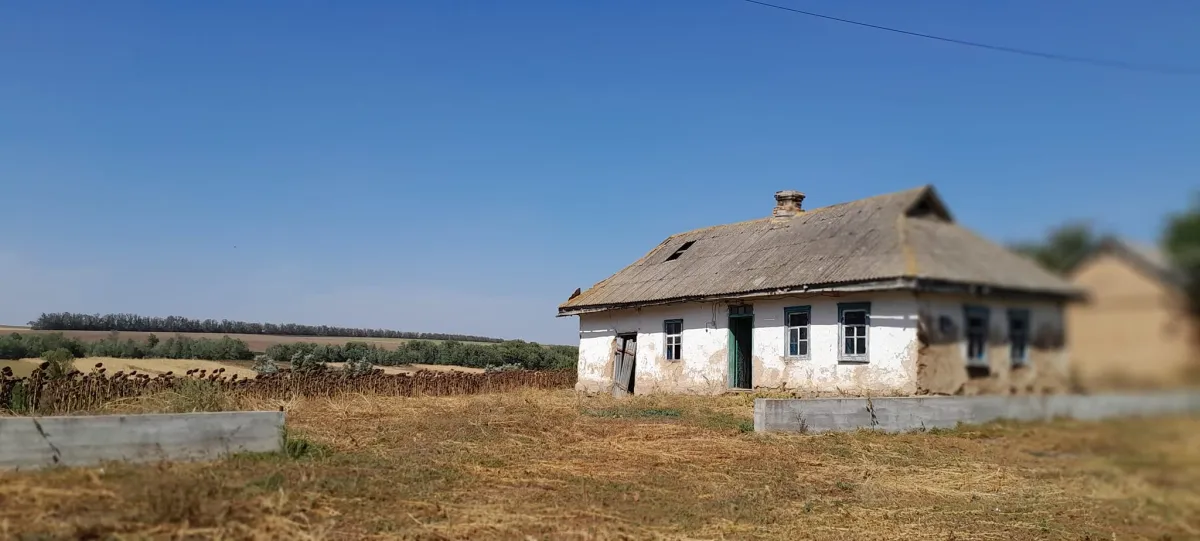
An abandoned house in Zhyvanivka (photo 2024)
Luka set about putting life in order: he placed his sister as an apprentice with a seamstress he knew in Yelysavethrad, while he himself hired out to local peasants for field work. One summer day, while he was working in the field, he was noticed by his father’s former employer, Colonel Zhyvanov. Having observed Luka’s abilities, the landowner took the boy in to be educated, and later offered him work. Soon Luka Kropyvnytskyi became (just as his father once had) the steward of Colonel Zhyvanov. He worked in this post for 9 years, until the landowner’s death, when the new owner of the estates brought another manager with him from St Petersburg.
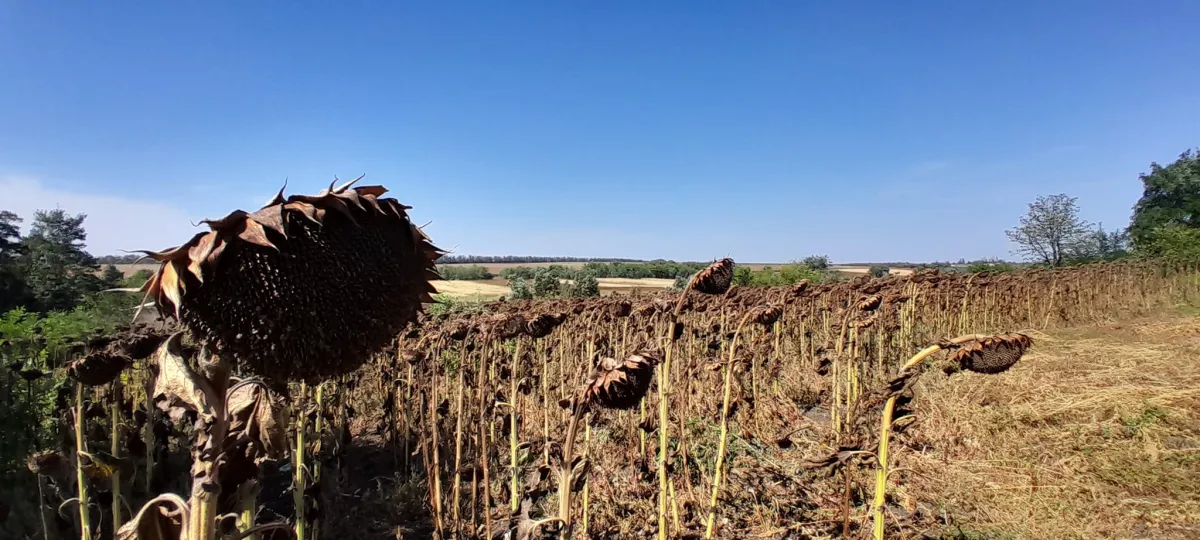
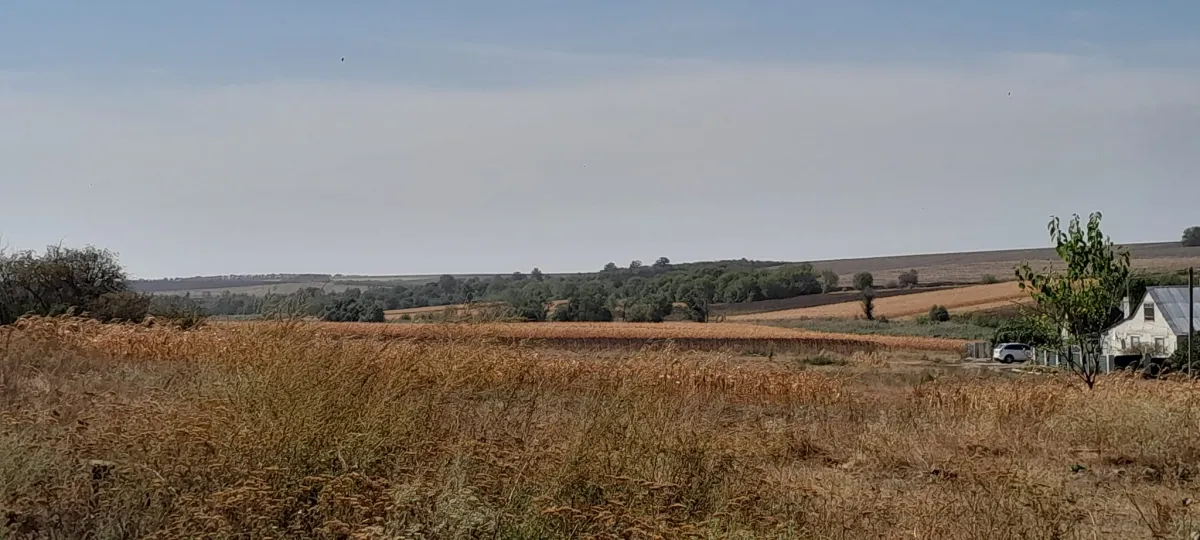
Present-day fields around Zhyvanivka (photo 2024)
The end of his service with Zhyvanov was not a shock for the young man. By that time Luka Kropyvnytskyi had a good reputation as a skilled and experienced agronomist and manager. On top of that, during his service with the colonel he had earned considerable means and could certainly choose the best of the offers. In the end, he accepted an invitation to head the estate of the Fundukleis, one of the wealthiest families of the region, and by the end of the 1830s the Kropyvnytskyi family moved from Zhyvanivka to Beshbairaky (now the village of Kropyvnytske, Novoukrainka district, Kirovohrad Oblast). In his autobiography Marko Kropyvnytskyi wrote of this as follows:
“… moving into the service of Senator Fundukley, in the village of Beshbairaky, my father drove along more than 80 head of cattle and eleven horses, and put together more than 2,000 roubles in small money.”.
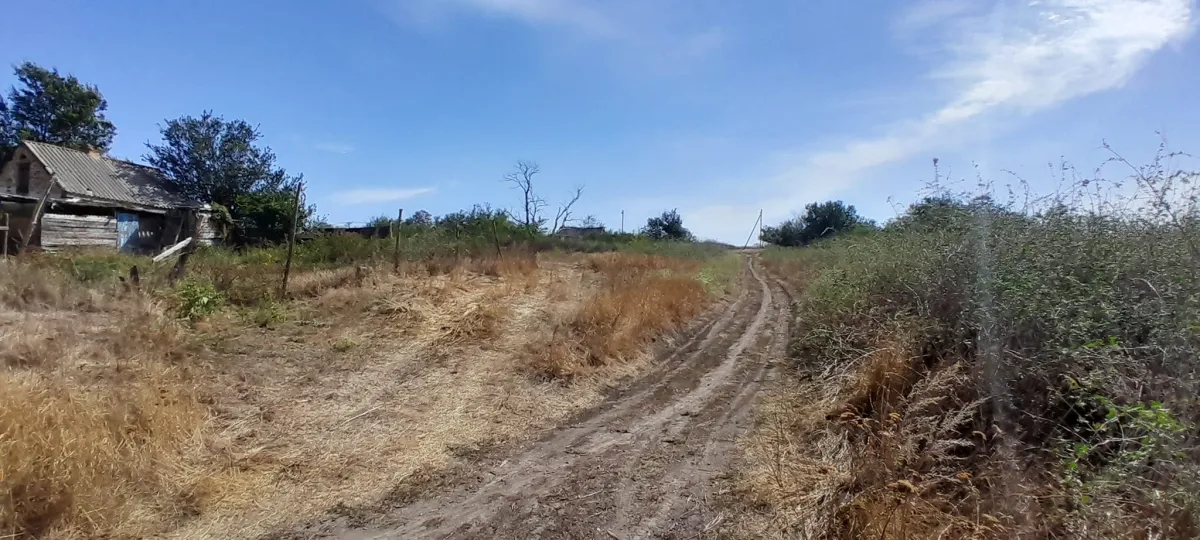
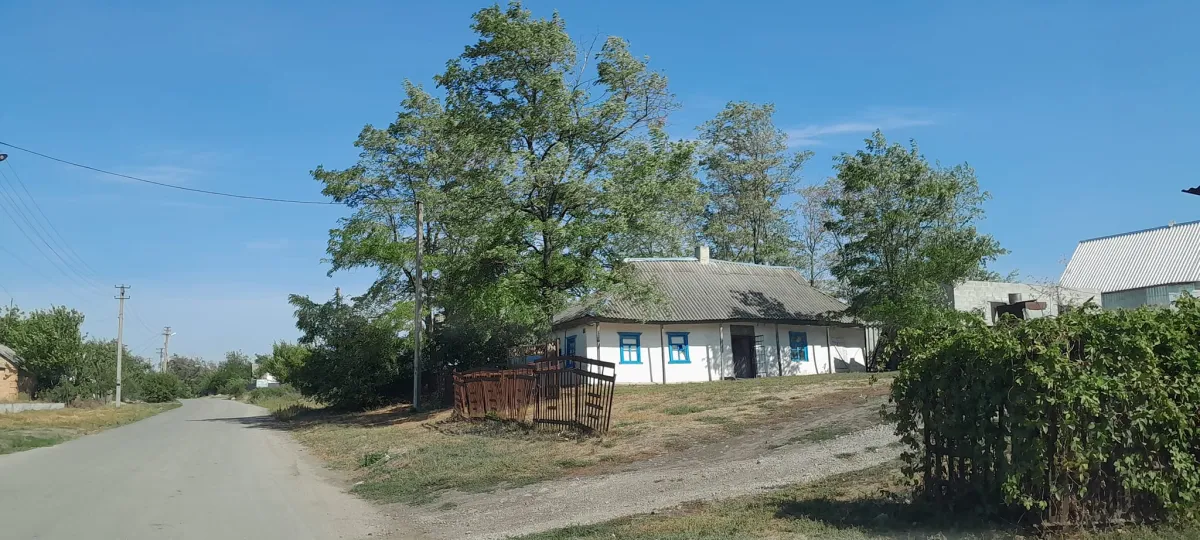
The streets of Zhyvanivka (photo 2024)
Later, in the 1850s, Luka Kropyvnytskyi would return to Zhyvanivka again: he worked here as a manager, and his son Marko came to him every week from Bobrynets, spending time not only with his father but also with his many friends among the local peasants.
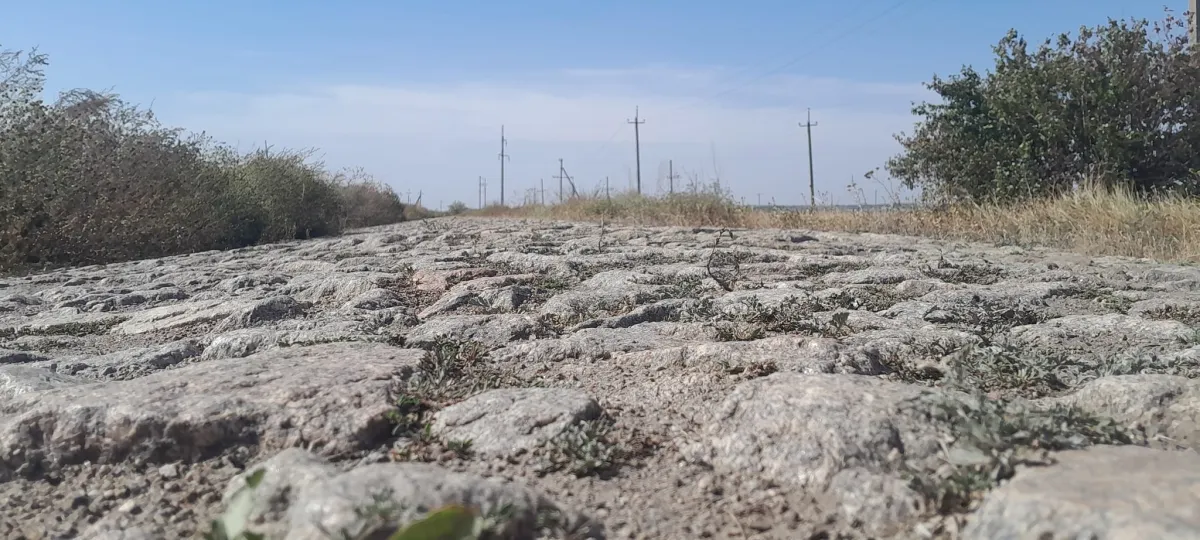
Today no material objects connected with the Kropyvnytskyi family remain in Zhyvanivka, and the memory of this village’s connection with the great playwright is slowly fading.
Beshbairaky (since 1965 the village of Kropyvnytske)
Considering Marko Kropyvnytskyi’s life path and the fate of his family, it seems that the small steppe village of Beshbairaky, within the boundaries of today’s Novoukrainka district of Kirovohrad Oblast, was only a transit point in their difficult life, yet it was precisely there, on 25 April (7 May by the modern calendar) 1840, that the future creator of Ukrainian professional theatre was born.
The Kropyvnytskyis (Luka, his wife Kapitolina and their daughter Hanna) moved to Beshbairaky from Zhyvanivka at the end of the 1830s and stayed there for about 4 years, until the moment when Prince O. M. Cantacuzino offered Luka Kropyvnytskyi the post of manager of his estates in his villages of Katerynivka and Dvorianske, a higher salary and more favourable living conditions. Kropyvnytskyi agreed, and soon the family moved to Katerynivka.
In memory of Marko Kropyvnytskyi, in 1965 the village of Beshbairaky was renamed Kropyvnytske. There seem to be no monuments there now that would recall the stay of the playwright’s family.
Katerynivka (since 1968 merged with the village of Novokrasne)
Now the once separate village of Katerynivka is part of the village of Novokrasne, Pervomaisk district, Mykolaiv Oblast; but at the time when the Kropyvnytskyis arrived there it had a different status. Katerynivka was the property of Prince O. Cantacuzino, whereas Novokrasne, which lay on the other bank of the Korabelna River, was a state-owned village; a hussar regiment of the Russian army was stationed in it.
In Katerynivka Luka Kropyvnytskyi took up the duties of steward (manager) of the prince’s estates: he spent long hours in the field, looked after O. Cantacuzino’s farm in neighbouring Dvorianske, and handled work matters in the nearby towns. His wife Kapitolina spent her time mostly in the company of the princess, her contemporary and friend. Together with her she drove around the neighbourhood, played the piano for guests of the prince’s manor, and got to know the local elite. Her three children — Hanna, Marko and Volodymyr — were looked after by a maidservant.
When Marko was five years old, an event occurred that determined the trajectory of his later life and, to a certain extent, of his art. In the spring of 1845 his mother left the family and ran away with the hussar captain I. Rudzevych, her youngest son and the maidservant to Bobrynets, the small town where her own mother had recently been living.
It is impossible to read Marko Kropyvnytskyi’s memories of this moment of his life without pain:
“Father was in the field, with the mowers, and mother had gone out towards evening to take a drive with the princess. The princess always called for mother, and the two of them drove around Katerynivka and the military settlement of Novokrasivka, which lay on the other side of the river. Hussars were stationed in Novokrasivka then. The princess drove the horses herself, harnessed to a cabriolet, while behind sat the groom Illiushka in gaiters and a top hat, and we were always very curious about it each time … So when my sister and I were sitting on the windowsill, and the nurse was feeding my little brother in the next room, a light cart with four bay horses harnessed to it stopped by the porch; the head of the outrider horse was so close to me that I even drew back; the horse enveloped me in hot steam from its nostrils, and I jumped down from the window and unexpectedly stopped in front of my mother, who somehow impatiently moved me aside with her hand and quickly passed into the other room. There she began to say something to the nurse. We both began to ask our mother in surprise where she was going; mother replied that she would be back in a moment and would take us for a drive, only first she would take Volodia. She took some bundle, took the nurse and Volodia and drove off very quickly. We sat down on the windowsill again and waited impatiently for mother; and more than once, listening, we said: here, here comes mama. At last a britzka really did drive up and father came into the room.
– And you are still not asleep? – he said, giving my sister and me a piece of bread each. – Here, the hare has sent you a treat again, – he added. We began to eat those little pieces greedily, praising their extraordinary taste. Whenever father came back from the field, he always told us that he had either taken from the hare or begged from it a little piece of bread as a treat for us.
– And has mama not come back from the manor yet? – that is, from the gentry. We answered that mother had just been here with four horses and had taken Volodia first for a drive, and then would come for us. Father quickly went into the other room and returned at once, holding some piece of paper in his hand.
– Such a thing has happened unexpectedly!.. – said father, looking at the paper. He crumpled it and wanted to throw it on the floor, but stopped himself and put the paper in his pocket. Then he sat down on the sofa, sat us beside him, pressed us to his chest and began to caress us. A minute later a drop fell on my cheek; I raised my eyes to my father and noticed that his eyes were filled with tears. I lightly touched my sister; she, too, looked into father’s eyes and asked:
– Why are you crying, papa?
– No, I am not crying, – father replied, – it is just that my eyes are watery…
Nestling and cuddling up to father like that, I did not notice when I fell asleep; in the morning I found myself in my own bed…”.
Some time later, going through a family crisis, Luka Kropyvnytskyi took up with his children’s former nanny, a serf woman named Yavdokha. The first years of this marriage brought neither comfort to Luka nor peace to his children: Yavdokha repeatedly mistreated the children, abused alcohol, held feasts at home with her relatives, and shamed her husband in front of his acquaintances. In such circumstances, at some point Marko’s father began to drink as well. His house gradually became like a tavern. The turning point was a loud quarrel with the priest from neighbouring Novokrasne: the latter allowed Luka’s former wife to stay with him when she came to visit Captain Rudzevych, which greatly outraged Luka. Unable to bear the constant pain and humiliation, Luka Kropyvnytskyi was forced to leave Katerynivka and move to the village of Moldavka, owned by the younger brother of Prince O. Cantacuzino. Marko, too, left Katerynivka with pain. To the memory of his mother’s flight was added an equally painful recollection of a chance meeting with her:
“Once my sister and I were bathing with the village children in the river that separated Novokrasne from Katerynivka; when we had finished bathing, the innkeeper Leizor Leimanovskyi called us over and, pointing at two ladies standing on the dam, said: ‘There stands your mummy with the priest’s wife.’ Like a madman I cried: ‘Mama, mama!’ — and ran with my sister to our mother, but mother turned away from us, said: ‘Take these puppies away from me,’ — and quickly walked off with the priest’s wife.”.
Moldavka (since 1945 Kozubivka)
To Moldavka (now this village in Voznesensk district, Mykolaiv Oblast, is called Kozubivka) Marko Kropyvnytskyi, like his elder sister Hanna, came at pre-school age. His father was well aware of two difficult circumstances: the children had to be given an education; and his work required constant presence at field work. There was also a third: his second wife had no sentiment toward Luka’s children from his previous marriage, so one could not count on her help with education. The solution was obvious: to look for a “boarding school” for the children. Such an institution was found in the settlement of Oleksandrivka, another village owned by the Cantacuzino princes. First Luka Kropyvnytskyi took his daughter Hanna there to study, and later little Marko too, since he terribly missed his sister.
Oleksandrivka (now part of the village of Porichchia)
Oleksandrivka is the village where Marko Kropyvnytskyi began his schooling, and although it did not last long, the period spent there enriched the boy with great life experience. Marko lived and studied in the private school of the Pole Rudkovskyi, who taught the children of Prince M. Cantacuzino’s workers at home. The pupils’ living conditions were harsh (they all slept together on straw in a small room), and help with the household, it seems, took more time than the studies themselves. On top of that, Rudkovskyi was a despotic man and more than once beat Marko badly for minor faults. When Marko’s father learned of such “education”, it was the teacher himself who was beaten across the back with a nagaika. That ended the boy’s stay in Oleksandrivka. Luka Kropyvnytskyi took the children back to Moldavka, and soon the family moved to Katerynivka again.
Today the territory of the once separate settlement of Oleksandrivka on the Chychyklia River is part of the village of Porichchia, Voznesensk district, Mykolaiv Oblast.
Moldavka (since 1945 Kozubivka)
The education of Luka Kropyvnytskyi’s children in Oleksandrivka did not last long, so the children soon returned to Moldavka, and although Marko Kropyvnytskyi lived here for about a year in total, several vivid memories were connected with this village.
For instance, in Moldavka he first became acquainted with alcohol (even before entering Rudkovskyi’s school): a local distiller jokingly let the child taste vodka, after which the boy became drunk and, coming home, greatly astonished his father with his behaviour. After a scolding, Marko understood the price of trusting strangers, and his father never beat the little one again.
Another memory of Moldavka is the outbreak of cholera in 1848:
“In Moldavka cholera pressed terribly on the people; there were not enough coffins for the dead; entire families died out, many houses stood peeling and boarded up, and in others dogs had torn out the windows… There were then no zemstvos, no hospitals, no doctors, no feldshers — everyone saved themselves as they could, and as people advised… Father spent whole days tending the sick: he ordered them to be rubbed down and hot bottles applied to the soles of their feet. Cooking borscht and drinking kvass were forbidden, everyone was fed oat kulish; the drunkards were glad that they were given pepper vodka freely, and often ran to the distillery, complaining: ‘Oh, it must be coming on already!..’ In the fields no spring crops were sown at all, because there was no one and nothing to sow with; the cattle that had not died of hunger during the winter wandered the steppes unattended. Only towards autumn did the cholera subside, and the prince transferred serfs from his other villages to Moldavka.”.
Katerynivka (since 1968 merged with the village of Novokrasne)
The Kropyvnytskyis’ return to Katerynivka, with which many painful memories were associated, was evidently conditioned by several factors. First, the elder of the Cantacuzino princes could not allow the best agronomist in the district to work elsewhere; second, after the unsuccessful experience of trying to give the children an education in Oleksandrivka, Luka Kropyvnytskyi understood the need to correct the situation.
The prince’s proposal to return to Katerynivka and take Marko to study at the manor together with his own offspring seemed to suit everyone. For a year Marko lived in Prince Cantacuzino’s house, studied, and mastered French and German, but this did not last long.
The prince’s family with its servants (and the children’s teachers) set off for a year in Italy, and in this trip, naturally, there was no place for Marko. Luka Kropyvnytskyi again found himself facing the problem of arranging his son’s education. He found a solution in his long acquaintance with General Butovskyi, who lived in the settlement of Komyshuvata, near Kompaniivka.
Komyshuvata (now part of Kompaniivka)
The settlement of Komyshuvata in the 19th century was the property of General Butovskyi. For Marko Kropyvnytskyi’s father it was no stranger. Right next to it, downstream of the Suhokleia Komyshuvata, lay his native village of Zhyvanivka, and he had been to Komyshuvata more than once on business. It was here that he met his future wife Kapitolina, whose family then lived in this village and whose adoptive father served Butovskyi as bandmaster.
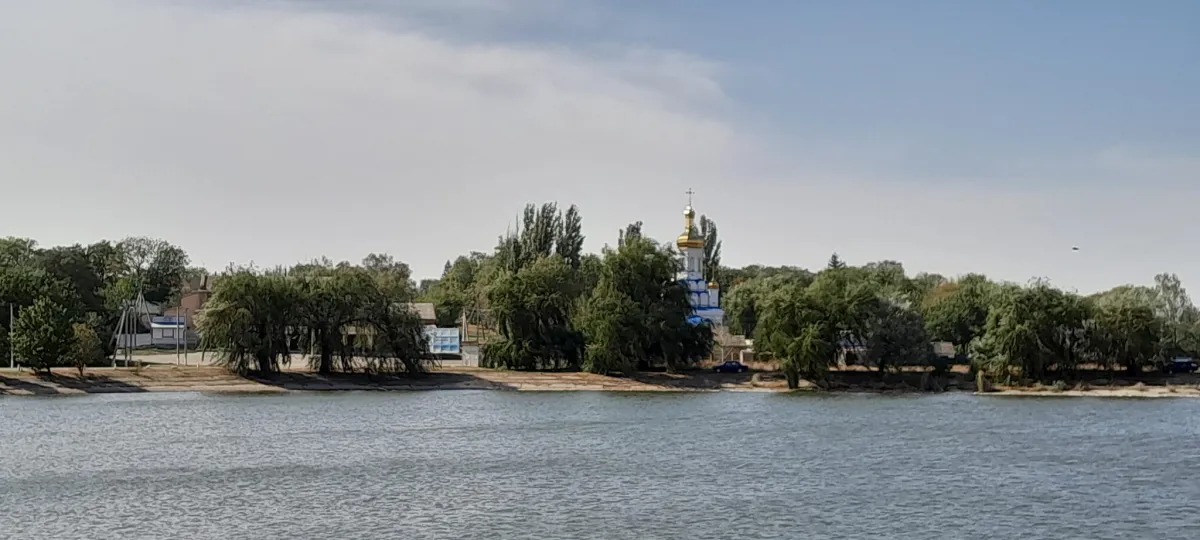
View of the former settlement of Komyshuvata from the side of Kompaniivka. Today it is a single village (photo 2024).
General Butovskyi took a liking to Marko Kropyvnytskyi. He had no children of his own and was of advanced years, so he decided to arrange the education of the gifted boy. Following his own example, he wanted to see Marko as a military man and, to that end, to prepare him for entry to the cavalry school in Yelysavethrad.
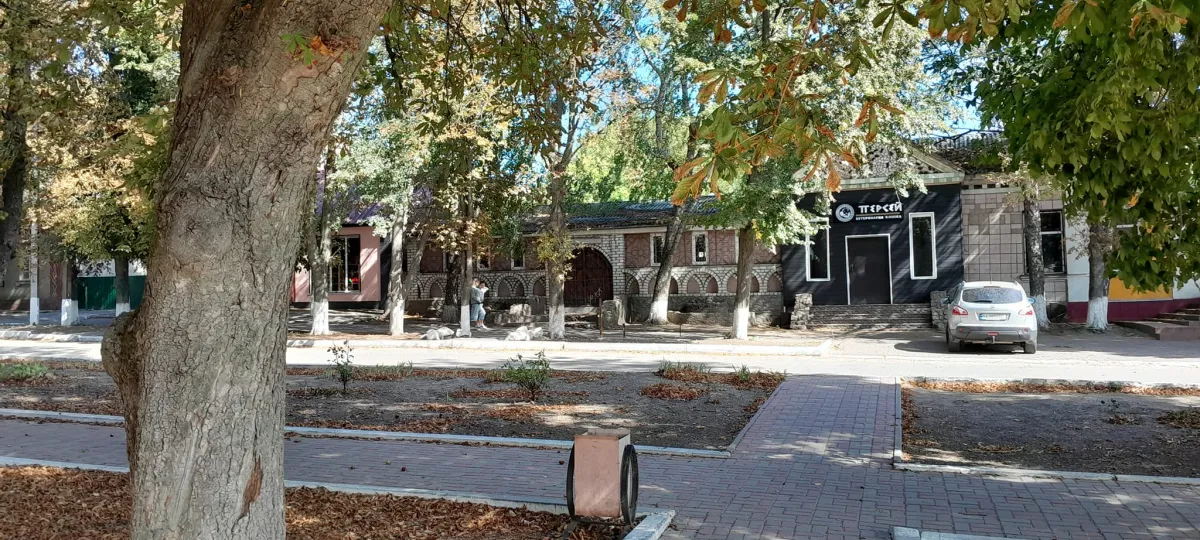
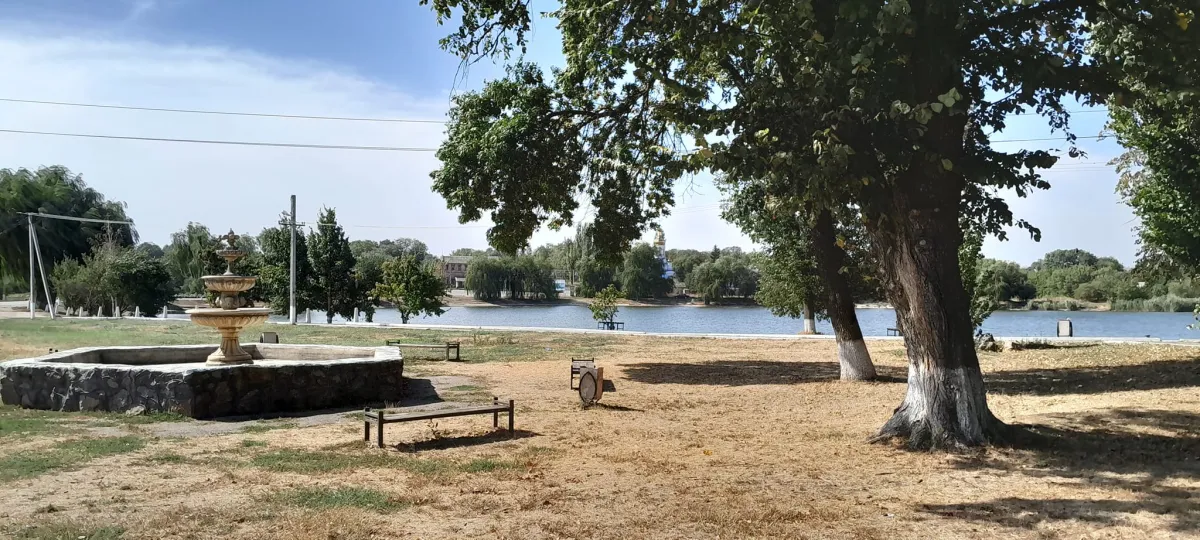
The embankment of the Suhokleia Komyshuvata in Kompaniivka (photo 2024).
The general’s plans were disrupted by the arrival in Komyshuvata of his sister from St Petersburg. She objected to such guardianship over someone else’s child. Marko again found himself without proper attention and care.
“I idled away whole days: I went out to the field, watched them mow the grass and reap the grain; I wandered with the settlement children through the marshes and pulled reeds and bulrushes, helped the coachmen water and groom the horses; often and for a long time I lay in one of the stalls (stables) on horse blankets and listened to the coachmen’s dreams of freedom, their tales of witches and of kharakternyky…” — Marko recalled.
Marko’s presence at the general’s estate became unwelcome.
When one of the daughters of Butovskyi’s sister married the cuirassier M. Breker from Yelysavethrad, the general ordered that Marko be taken to the city too, in order to place him in the local district school.
Today the settlement of Komyshuvata is part of Kompaniivka, Kropyvnytskyi district, Kirovohrad Oblast; no objects connected with the events described have survived in the village.
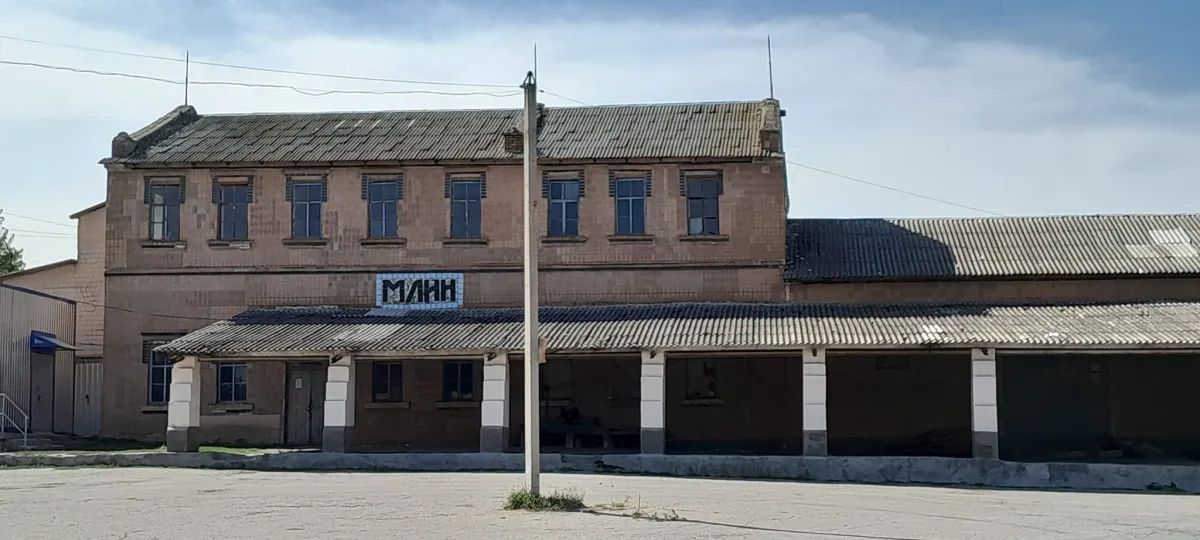
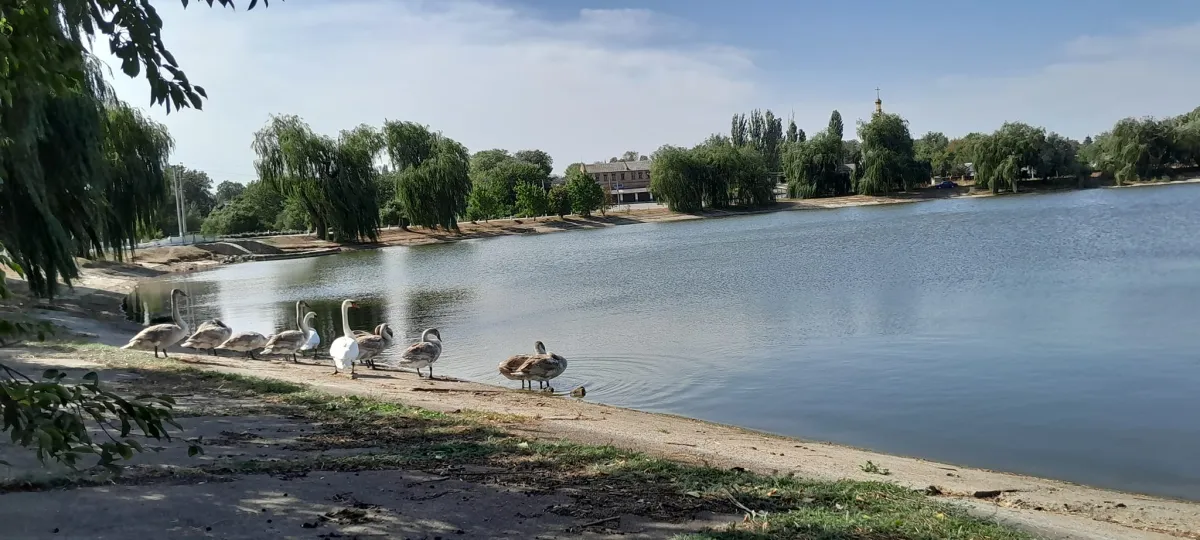
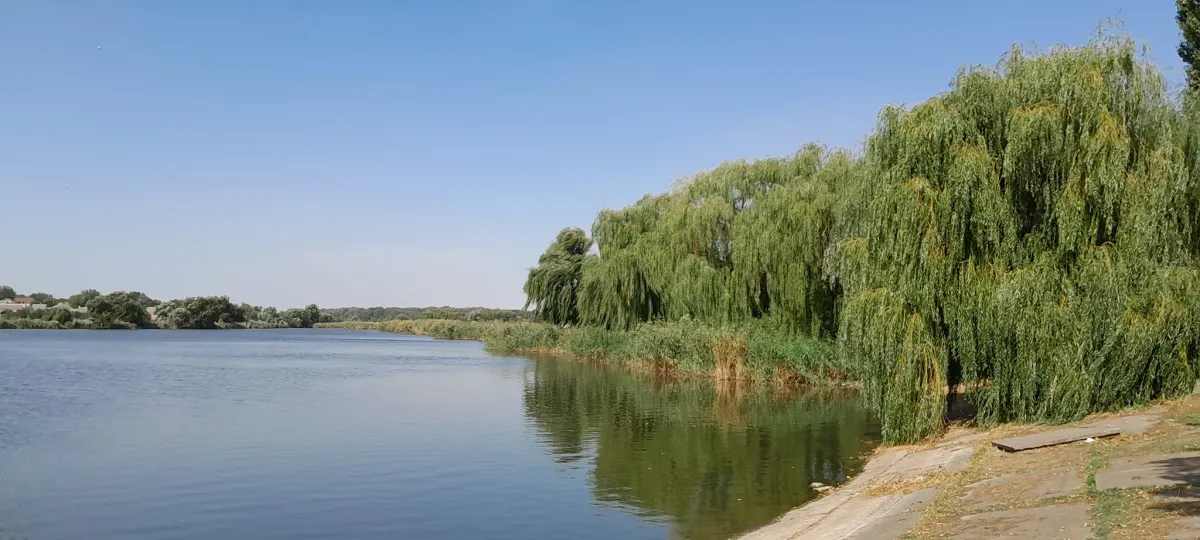
The Suhokleia Komyshuvata River in Kompaniivka (photo 2024)
Yelysavethrad (since 2016 the city of Kropyvnytskyi)
In Yelysavethrad (now the city of Kropyvnytskyi) Marko Kropyvnytskyi found himself with the Braker family at the end of the 1840s. The boy was enrolled in the first class of the Yelysavethrad district school, where he studied not without pleasure.
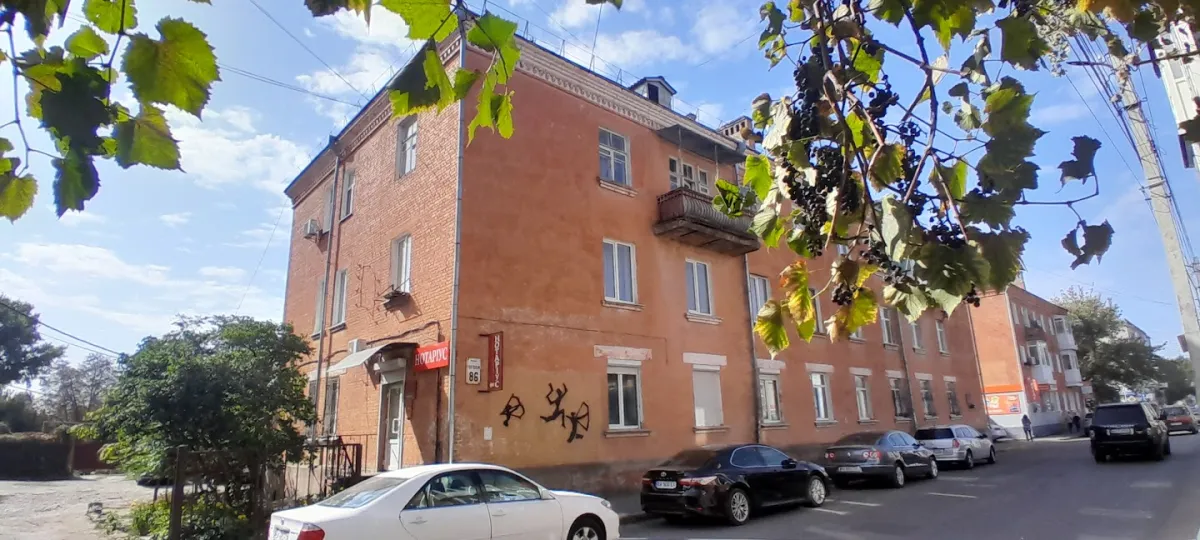
The former site of the Yelysavethrad district school, in whose preparatory class Marko Kropyvnytskyi studied for some time at the end of the 1840s. Nothing remains of the old school buildings today (photo 2024).
But here too trouble awaited the boy. One day, having caught a chill in the cold autumn river water, Marko developed a severe inflammation. To save his son, his father took him to Pechena Sloboda, where a healer famed throughout the district lived. After a few months the boy recovered, but he did not return to Yelysavet again. In 1850 his father took the child to Bobrynets, where Marko’s grandmother’s family and his mother lived.
Pechena Sloboda (no longer exists)
Nine-year-old Marko Kropyvnytskyi ended up in Pechena Sloboda as a result of an accident that befell him in Yelysavet when he decided to run away from the cuirassier Braker to the family of his friend M. Synitsyn:
“… they themselves hastily gathered my belongings and books, tied up a bundle, and we dashed off, not along the main street but through the back lanes over the footbridges: Kolia with the bundle, and I with the books. It was autumn, in the first days of October. Along the footbridge an officer, a cuirassier, was coming toward us, and it seemed to me that it was B[rake]r. I leapt headlong into the water and waded almost up to my belly. Kolia ran across to the other side by the footbridge and shouted that it was not B[rake]r at all, while I barely waded out to the bank. Arriving at S[ynitsyn]’s all wet, instead of changing at once into dry clothes I began drying myself in the kitchen by the stove, telling Kolia not to say a word to either his father or his mother about our adventure. In the night I began to cough terribly, then my head began to ache, I was burning as with measles. They sent for some healer or for an old wise woman — I do not remember… By morning I was worse. I babbled nonsense, jumped up from bed, called for someone… How many days I was in such delirium, I do not know; but unexpectedly my father arrived. I do not know whether he stayed long in Yelysavet or not, I only remember that he wrapped me in a wolf-skin coat and took me to the settlement of Pechena, where there lived an old Moldavian woman who was famed as the most outstanding healer of fever.”.
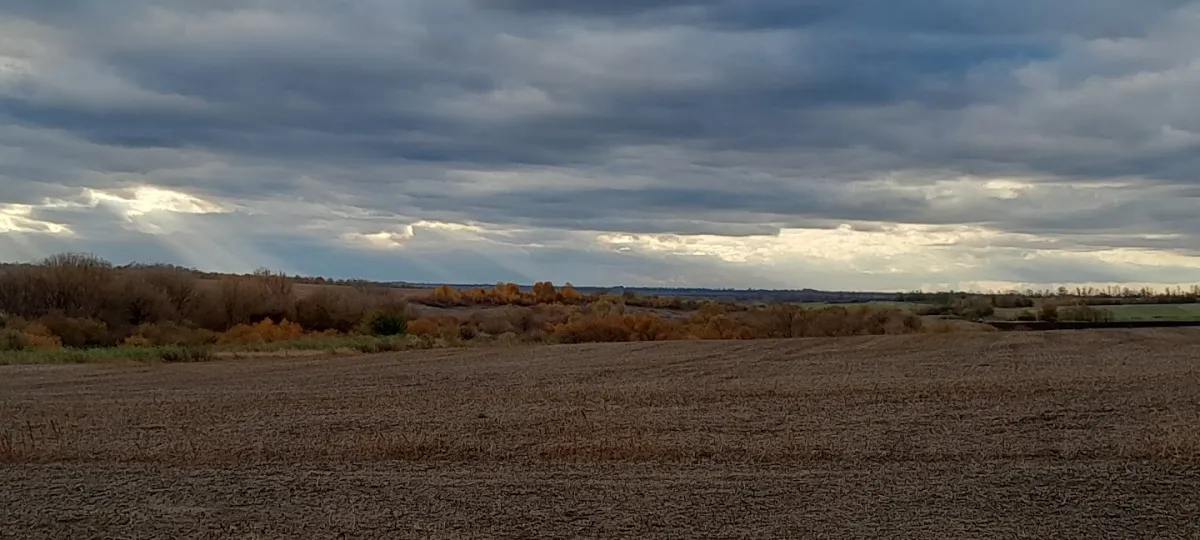
The valley of the Pechena River, on whose slope the settlement of Pechena once stood (photo 2024)
In Pechena Marko was treated for three months:
“There I lay ill for about two months, and when I began to recover, I lived there another month. During the time I lived there I already began to understand the Moldavian spoken in the household and even learned several of their prayers and songs. That family was tidy and welcoming; I had a very good time there” — the playwright recalled.
Pechena Sloboda no longer exists, but its traces (light patches on the ploughland, roads, thickets and an old cemetery) can be seen on satellite maps not far from the village of Pryiut, Novoukrainka district, Kirovohrad Oblast.
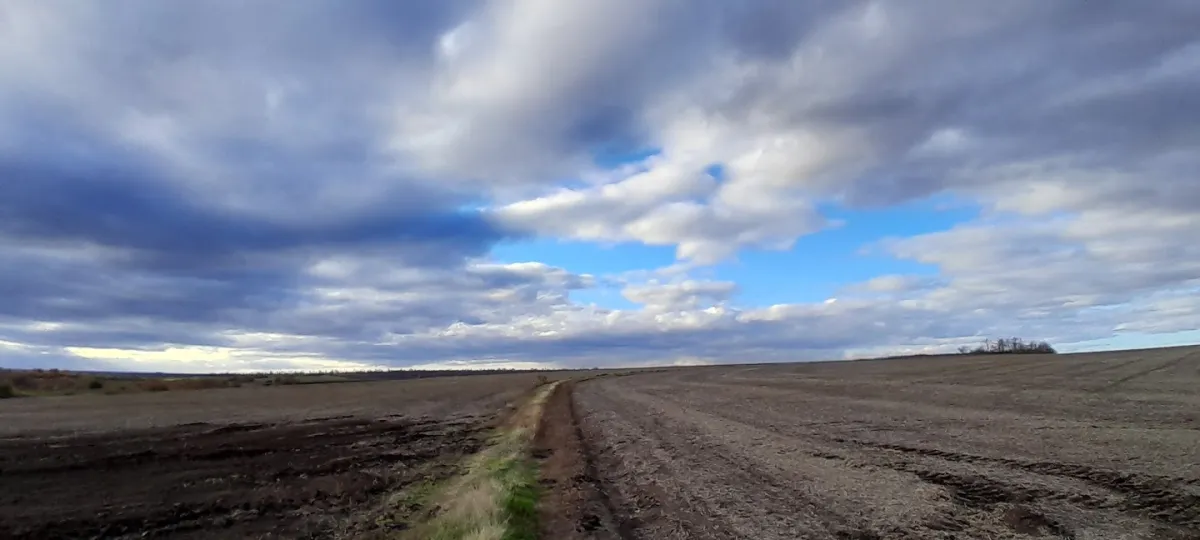
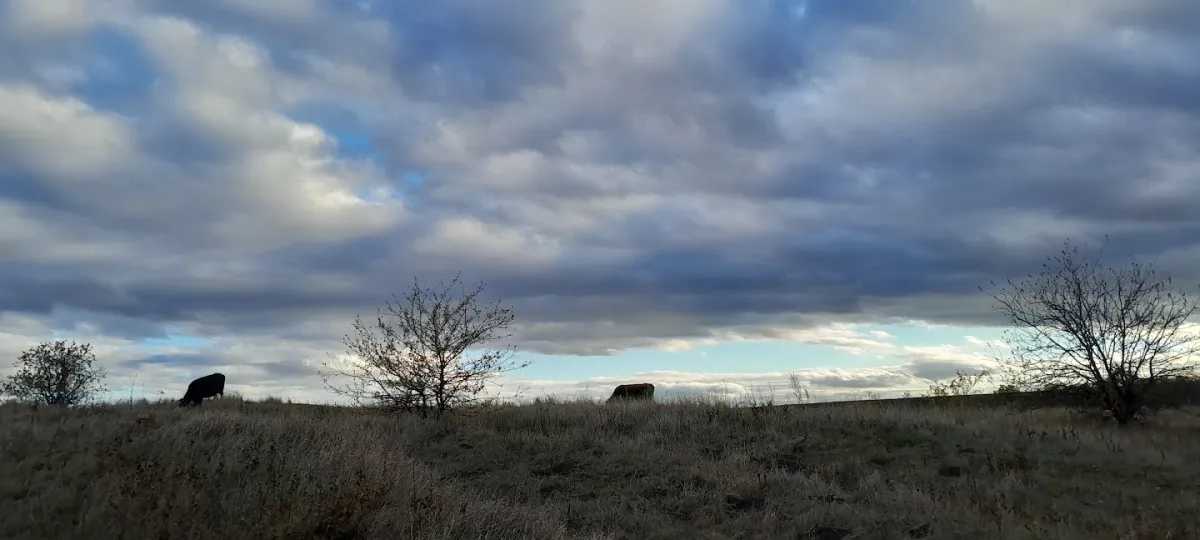
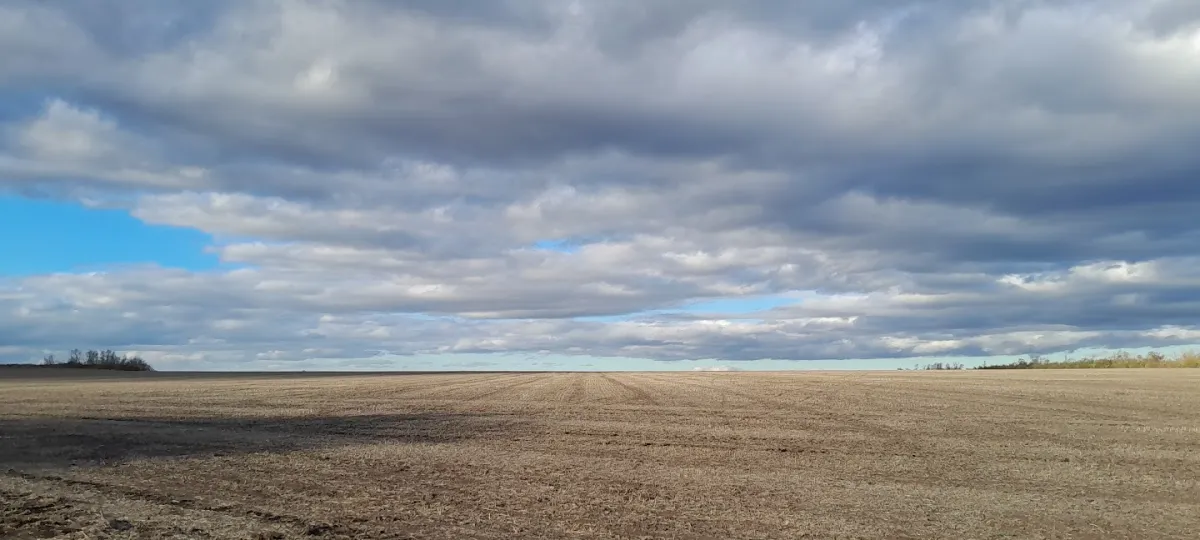
The former site of Pechena Sloboda (photo 2024)
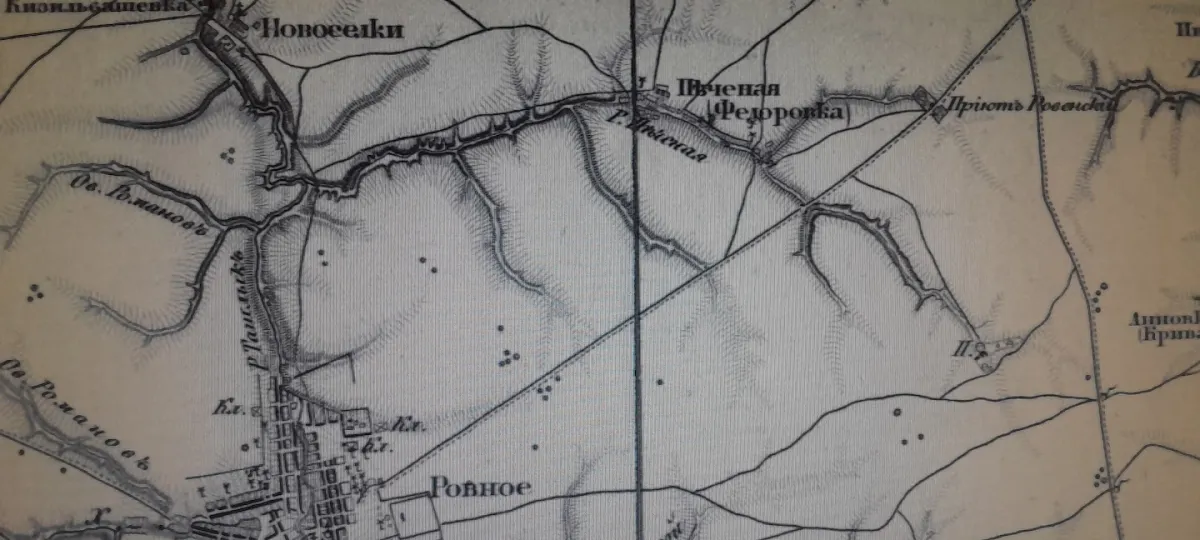
Pechena Sloboda on the three-verst map of the Russian Empire of the 19th century
Bobrynets
Marko Kropyvnytskyi came to Bobrynets at the age of 10. His adoptive grandmother on his mother’s side, Mrs Uliana Dubrovynska, took the boy into her house. Some of her children were almost the same age as Marko, treated him kindly, played musical instruments, and quickly surrounded the boy with the attention and warmth that the child had so lacked throughout his childhood.
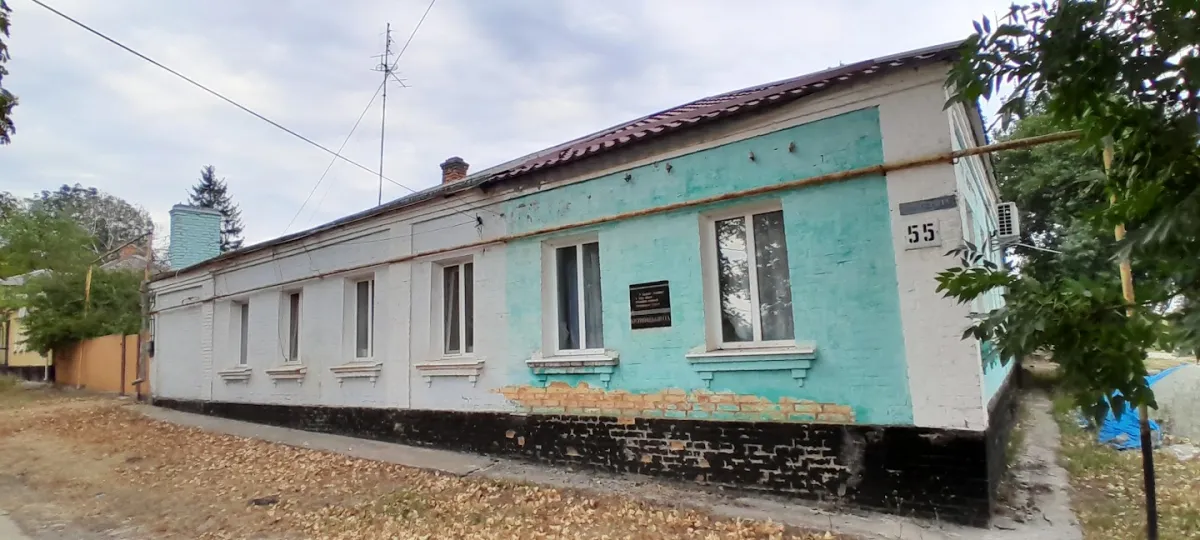
The house of Uliana Vasylivna Dubrovynska, Marko Kropyvnytskyi’s adoptive grandmother on his mother’s side, in which little Marko lived from 1850 to 1856: he studied at school, took part in family musical evenings and for the first time joined in the theatrical productions staged by his uncle Mykola (photo 2024).
Here too, in Bobrynets, Marko met his mother and younger brother Volodymyr, whom he had not seen since the separation in Katerynivka. His mother became involved in Marko’s upbringing, but lived in a separate house and kept a certain distance from her son.
In Bobrynets Marko continued his studies, enrolling in the local district school (where he studied, with interruptions, from 1850 to 1856), and also sang in the choir of the St. Nicholas Church.
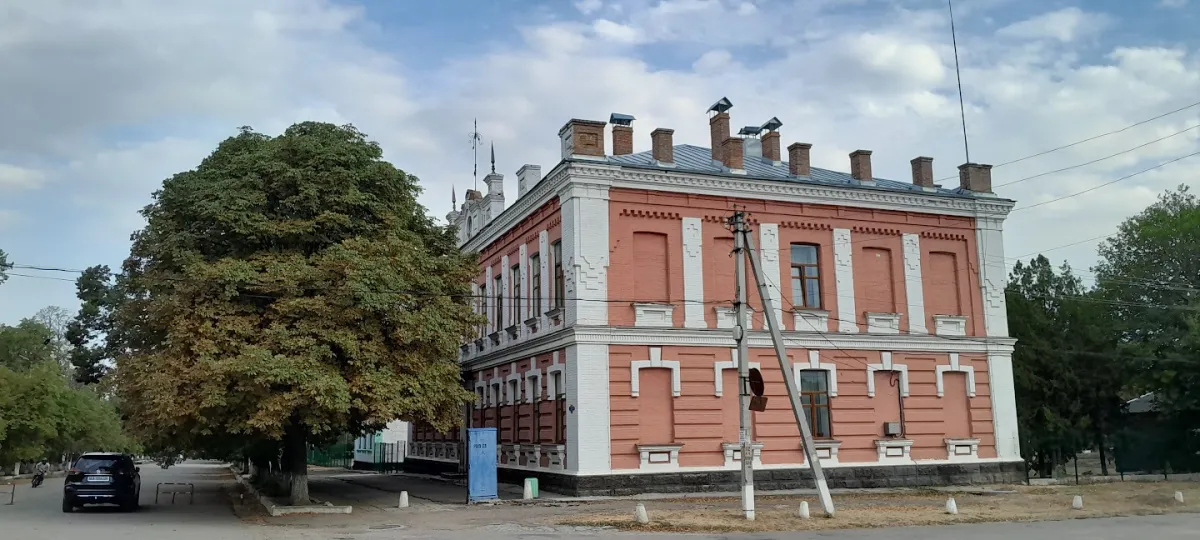
The former site of the Bobrynets district school, where Marko Kropyvnytskyi studied (with interruptions) from 1850 to 1856. In 1898, instead of the old building, a new brick building of the four-class town school (pictured) was erected, which has survived to this day. It is now used by the Centre for Children’s and Youth Creativity (photo 2024).
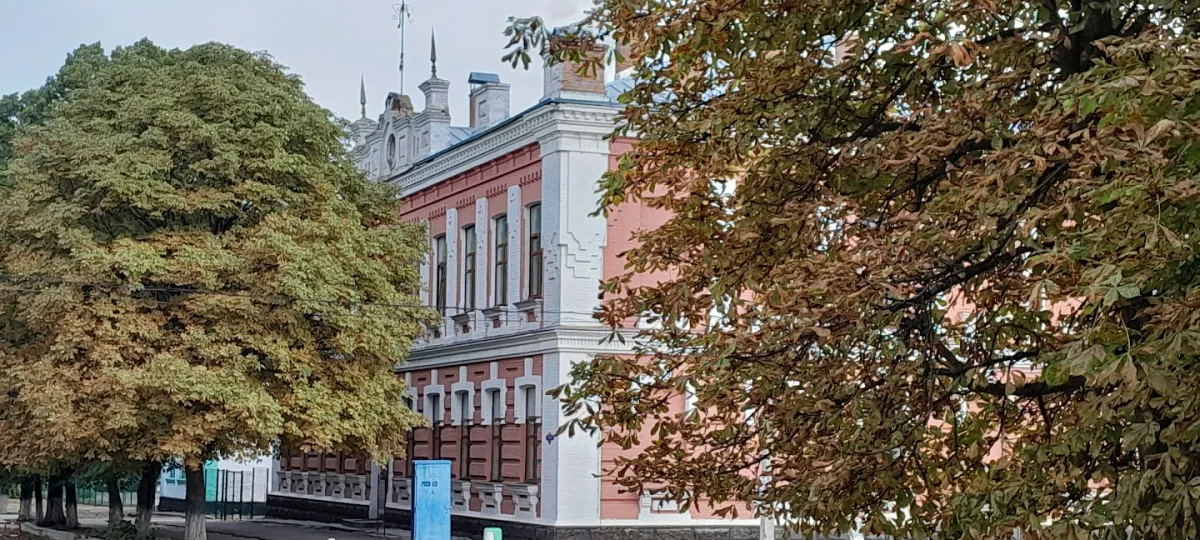
The building of the former four-class town school, erected in 1898 on the site of the old building of the district school where Marko Kropyvnytskyi studied (photo 2024).
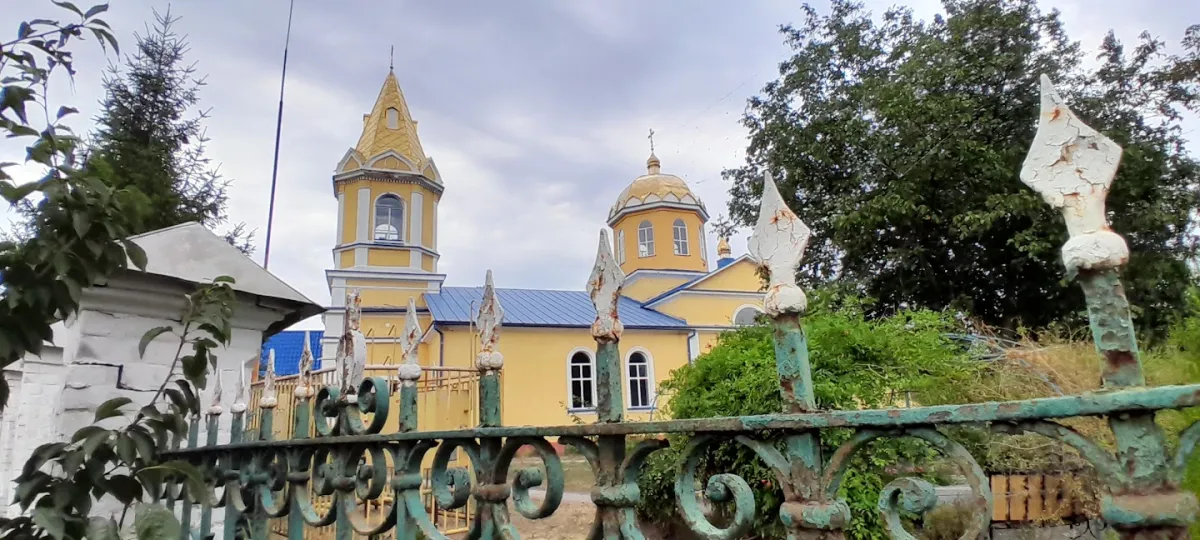
The Church of St. Nicholas the Wonderworker of the Orthodox Church of Ukraine (photo 2024).
At this time his father continued to work in Katerynivka and saw his son only when he was in town or when Marko was brought to Katerynivka by Uliana Dubrovynska’s sons. Evidently he himself intended to move to Bobrynets to be with his son (since he did so later), but here the Cantacuzino princes made their move, as they did not wish to part with their steward. They again summoned Marko to study with the house tutors of their children. His father agreed. In the spring of 1853 Marko moved for the third time to Katerynivka.
“The Princess K[antakuzen] took it into her head, as they say, to win father over, and she told him that she wanted me to study again with her children, and gave hope that she would take me along with her sons to St Petersburg and place me in some such school there that I would become a person of consequence. Father, of course, was delighted with such gracious favour from the gentry, came to Bobrynets in March and took me with him.”.
Katerynivka (since 1968 merged with the village of Novokrasne)
Marko Kropyvnytskyi’s third period of residence in Katerynivka fell roughly between spring and autumn of 1853. The boy moved closer to his father and studied in the manor house together with Prince Cantacuzino’s children, whom he had known well from earlier times. It seems they were friends and had a good time:
“As soon as we arrived in Katerynivka, father took me to the princes the very next day. The princess welcomed me warmly, led me into the classroom and told the teachers that here was one more pupil for them. There were as many as three teachers: a Frenchman, a German and the student S. I met the young princes as old friends. … We spent the spring, summer and autumn in the settlement: we studied, strolled, rode on horseback, went hunting… The prince’s serf huntsman Danka Berehovyi taught us to shoot. There was plenty of game; we shot young ducklings, which Zlotka (Danka’s pointer) drove out of the reeds and, once they were shot, carried to the bank.”
For the winter the princess decided to move, together with the children (Marko among them), the teachers and the servants, to the town of Voznesensk. The princes had business affairs there, and the princess, as it turned out, had intimate ones as well.
Voznesensk
In Voznesensk the Cantacuzino family, and with them thirteen-year-old Marko Kropyvnytskyi, settled in the winter of 1853 in the large two-storey house of the merchant Sybirtsev on the Mertvovod River. Here, evidently, the unhurried education of the children by the princes’ teachers continued, along with friendly company and observation of the life of the garrison town that Voznesensk was. Of the latter, a scene of soldiers being punished by running the gauntlet made a considerable impression on Marko, and he recalled it in his autobiography, although another event influenced the children most of all.
Once in Voznesensk, the reason for their coming here became obvious to the children: the princess was having an affair with the student S. She regularly visited his room at night, wheedled extra money for their stay in every way from the prince’s steward (Marko’s father), and eventually lost both her caution and her sense of proportion. One day the prince arrived in Voznesensk, burst into the student’s room (where he also found his wife), beat him (although he did give him money for the journey to Kyiv), scolded the woman, and sent the children back to Katerynivka.
Novokrasne
After the scandal with the young lover in Voznesensk, the princess went to the prince’s elder brother in Kantakuzivka to settle the matter. The prince soon turned up there too. When they returned together to Katerynivka, it turned out that they held Marko’s father Luka chiefly to blame for the affair: he was ordered to leave the prince’s estate immediately. He left Katerynivka and went to Bobrynets to the court, since the princes had also “arrested” all of Luka Kropyvnytskyi’s considerable savings. He was forced to leave Marko with an acquaintance of his, a priest in the neighbouring village of Novokrasne. So began yet another page of the boy’s hard trials.
Marko’s life with the priest quickly became unbearable: he endured poverty and hunger, did chores around the household, watched the drunkenness of his hosts and the priest’s wife’s infidelities with the coachman, put up with unjust punishments from the priest, and under the priest’s compulsion read prayers over the dead and over the condemned in the Katerynivka prison, and so on. When his father Luka returned to Novokrasne, he barely recognized his son.
“When father looked at me, he was horrified. The priest said that I was disobedient and defiant; that however much he drove me to my book, I never wanted to take it in my hands; the priest’s wife too told all sorts of devilish things about me. I kept silent, because I thought that if father left me here any longer, it would be even worse for me.”.“When we had driven quite a distance from Novokrasne, having made sure that we would not go back to the priest, I began to tell father about everything I had been through and everything I had seen at the priest’s.
Father, having heard my confession, said with a heavy sigh: ‘What a pity I did not know this!..’
– Perhaps we should go back, – he added, – and teach the priest a lesson, as I once taught Rudkovskyi — remember?.. I began to beg father not to go back.”.
Marko Kropyvnytskyi returned once more to Bobrynets, to his grandmother’s house.
Bobrynets
The return to Bobrynets in October 1854 effectively ended the period of Marko Kropyvnytskyi’s childhood wanderings. From then on he lived again in the house of his adoptive grandmother Uliana Dubrovynska, returned to his studies at the district school, sang in the choir of the St. Nicholas Church, took piano lessons from his mother, and for the first time became acquainted with theatrical art.
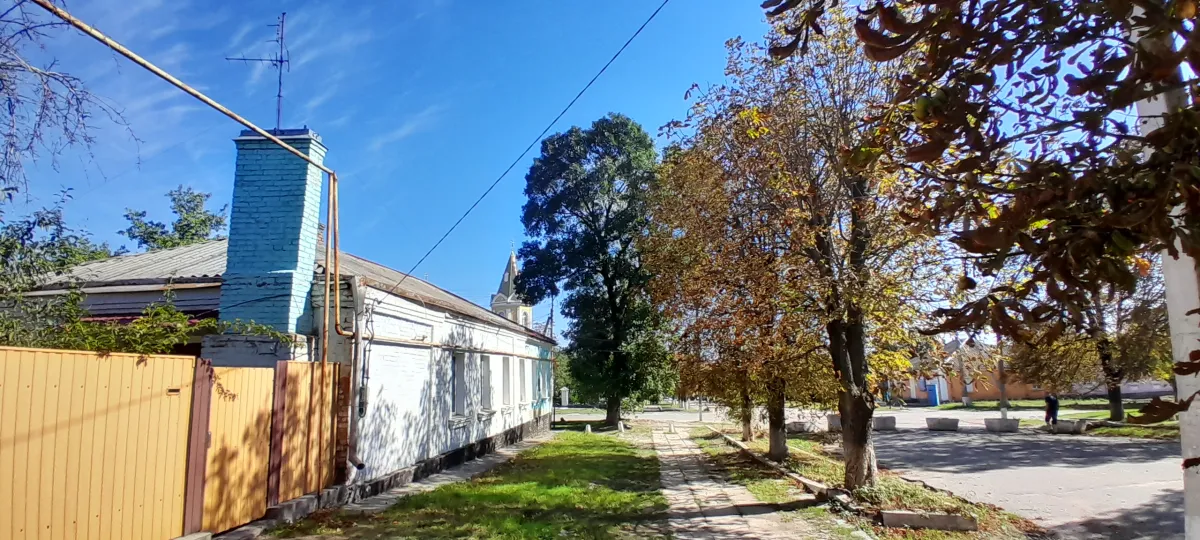
The present-day appearance of Uliana Dubrovynska’s house and the Church of St. Nicholas (photo 2024).
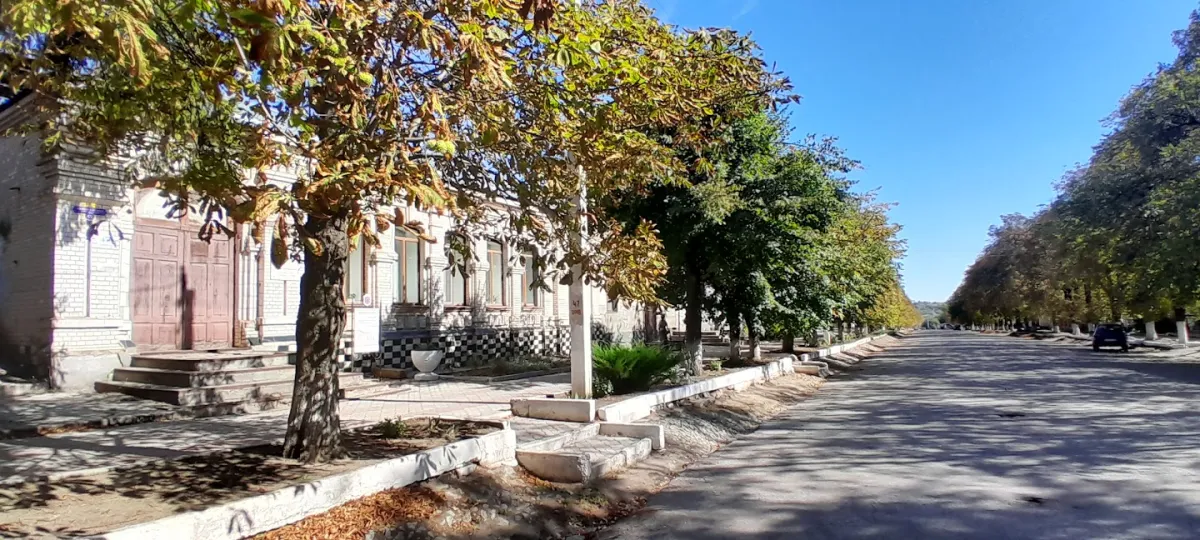
Mykolaivska Street in Bobrynets, on which Marko Kropyvnytskyi’s life was “strung” for many years (photo 2024).
In 1854 refugees from the war in Sevastopol arrived in Bobrynets — actors of Mlotkovskyi’s troupe. In the town they quickly organized performances on a stage they built with their own hands. The performances drew considerable attention from the townspeople, and on Marko they made an altogether unforgettable impression. Moreover, the troupe’s actors often visited Dubrovynska’s house and chatted with its residents.
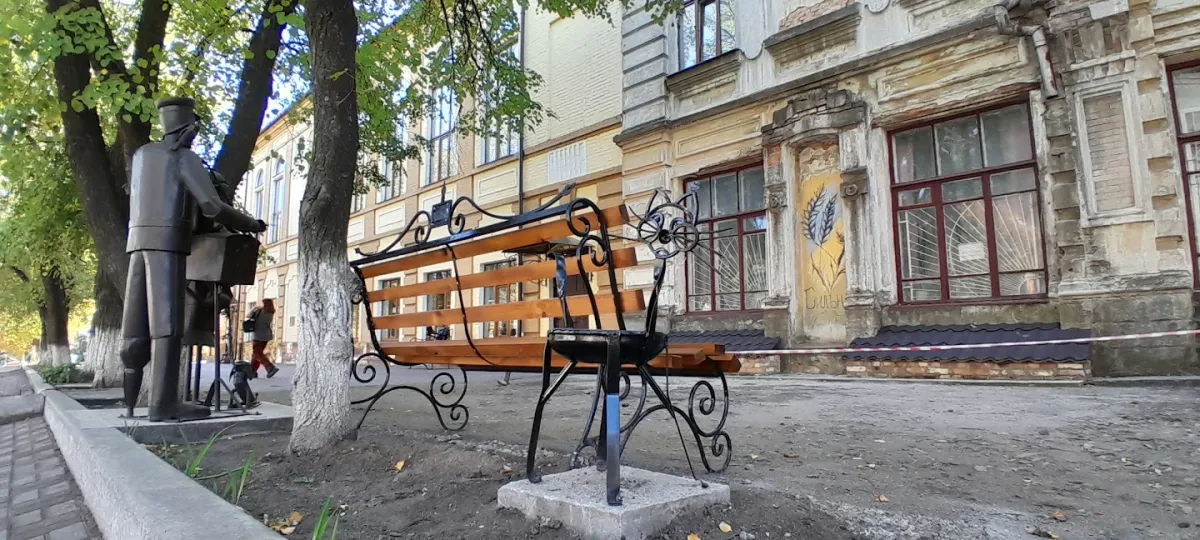
Mykolaivska Street in Bobrynets (photo 2024).
After this theatre left for Kyiv, Marko’s uncle Mykola himself took up organizing amateur performances with friends. He involved in the process his sister Kapitolina (Marko’s mother) as an accompanist, and also fourteen-year-old Marko
“When uncle Mykola began to stage performances, I too landed in his circle. For the most part we played Ukrainian pieces: ‘Natalka Poltavka’ (in it I sang Petro), ‘Shelmenko the Orderly’ (I played Loputskovskyi), ‘Courtship at Honcharivka’ (I played Stetsko), ‘The Godfather the Miller’, ‘Go, Wife, and Join the Soldiers’, ‘The Simpleton’… We played Russian ones too: ‘The Marriage’, ‘The Enchanted Prince’, ‘A Mother’s Blessing’ and so on. Mother, or one of her pupils, accompanied us on the piano.”
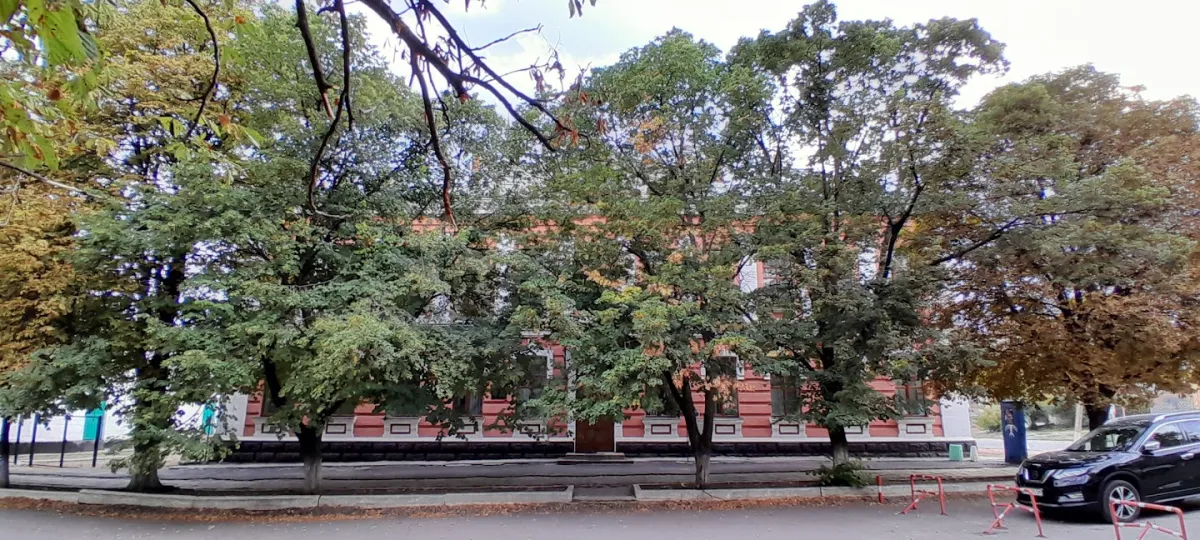
The former Bobrynets four-class district school, erected in 1898 on the site of the school building where Marko Kropyvnytskyi studied (with interruptions) from 1850 to 1856. It is now used by the Centre for Children’s and Youth Creativity (photo 2024).
In 1856 Marko graduated from the district school with distinction and intended to continue his education in Kyiv. He asked his father, who had by then returned to Zhyvanivka, to help him in this matter. His father, of course, did not refuse, but, unfortunately, entrusted the arrangement of his son’s studies to his mother Kapitolina.
Kyiv
After Christmas of 1856 Marko Kropyvnytskyi came with his mother to Kyiv to find a tutor there to prepare him for entering the gymnasium. It all ended in embarrassment.
“Having arrived in Kyiv (we travelled with father’s horses), mother at first began taking me and the coachman around the monasteries and the caves, and then, instead of going to the director of the gymnasium, she consulted a teacher of a parish school in Podil, Mr Ponyrka, who assured her that if I had finished the district school, I would be given only a supplementary examination in French and Latin.”
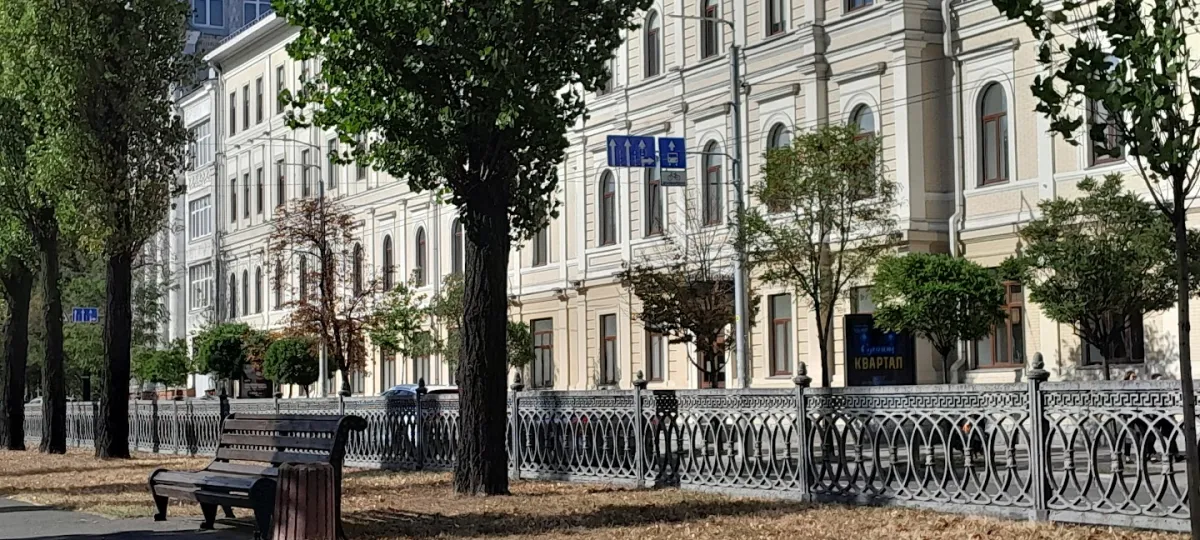 The building of the former Second Kyiv Gymnasium, which Marko Kropyvnytskyi tried to enter in 1856 (photo 2024).
“With the money father had given her to buy me clothes, mother bought gifts for her friends; an expensive guitar for the postmaster’s wife, a silver watch for the postmaster; for some she bought icons, fabrics, all sorts of sheet music, shawls, shoes, and for me she bought some smock at the market, and instead of decent boots, soldier’s ankle shoes. She did not have enough money even for textbooks…”
When the time came to take the entrance examinations, Marko was utterly unprepared for them and had to return home with nothing.
“I returned to Zhyvanivka, told father everything, he went to Bobrynets and complained about mother to grandmother and my uncles, but nothing came of that complaint.”
Bobrynets
Having returned to Zhyvanivka after the unsuccessful attempt to continue his studies in Kyiv, and then in 1861 to Bobrynets, Marko began his adult life. He was taken into service at the district court of the town, as a secretary.
“I hung about my father for a few days and entered state service in the district court. After this mother did not even want to see me, blaming me alone for everything, and said that I was a gossip and a liar. And in the court I began copying out copies of announcements, inquiries and various circulars.”
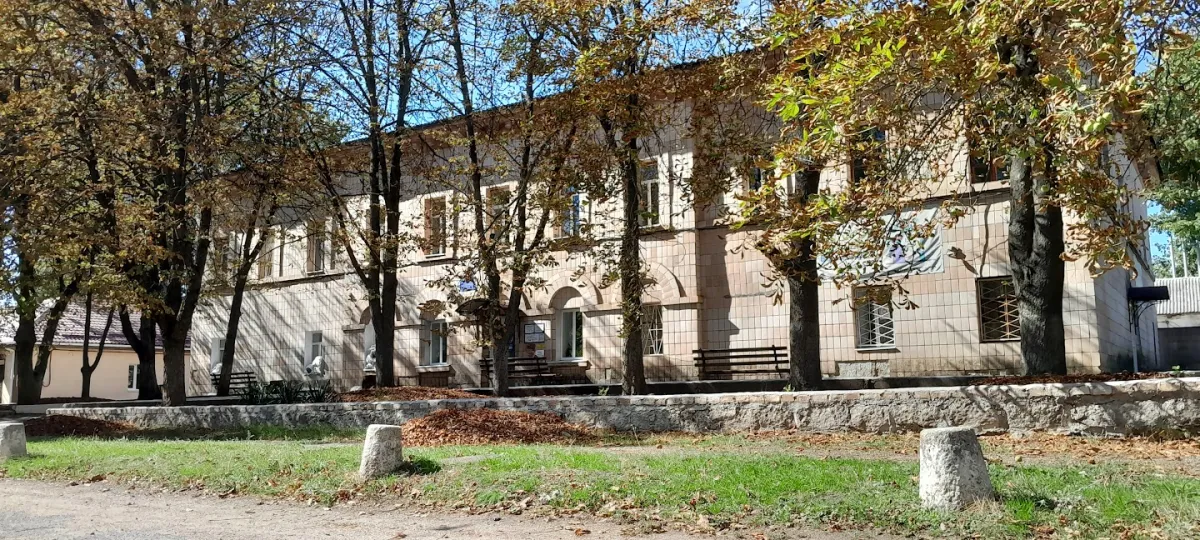
The former building of the district offices, which also housed the Bobrynets district court, where Marko Kropyvnytskyi worked as a first-grade clerk in 1861–1862 (before studying at Kyiv University) and 1864–1865 (before his transfer to Yelysavet). This building now houses a branch of the outpatient clinic of the Ketrysanivka community (photo 2024).
He moved from the house of his grandmother Uliana Dubrovynska to a house that his father had recently bought. He would live there for the whole of his time in Bobrynets, until 1871. This house has not survived.
The young man did not much like life in this period:
“Life dragged on, dull and tedious. We wrote before dinner and after dinner; we went to work at 8 in the morning, at one o’clock went to dinner, came back at four and left at eight. There were such zealous scribblers that in summer they came to work at 5 or 6 in the morning, and in the evenings sat on until 10–11 o’clock, and the authorities praised them for their zeal and kept them in view. On feast days or on Sundays we went in a crowd to the Suhokleia R[iver], bathed and fished all day. Sometimes we gathered in the vacant court chambers and sang, or played ball and leapfrog.
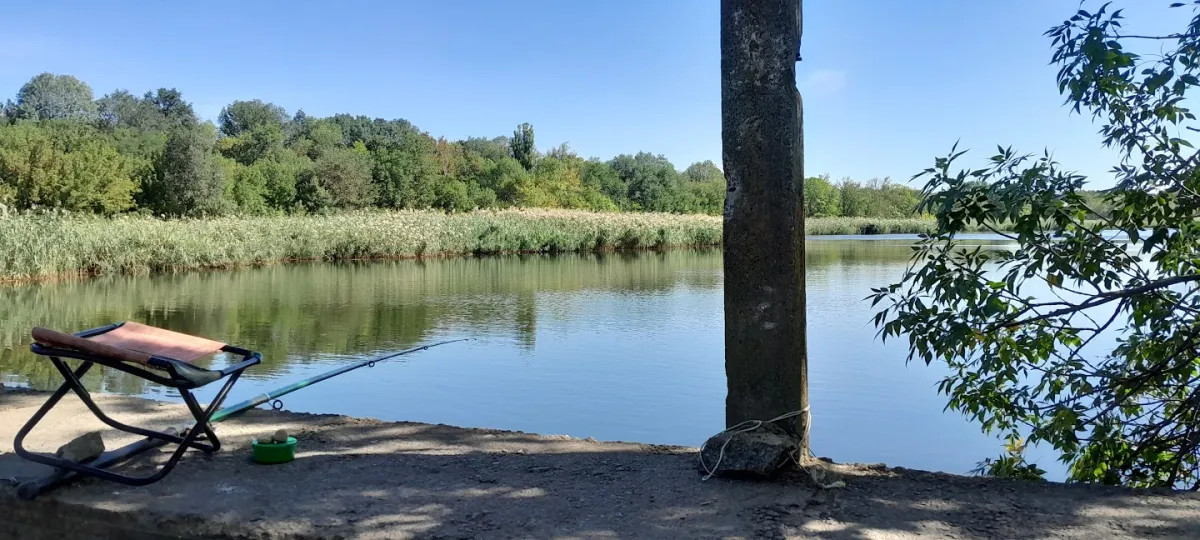
The Suhokleia River near Bobrynets. On its banks, while fishing in 1862, Marko Kropyvnytskyi met Ivan Tobilevych (Karpenko-Karyi) (photo 2024).
On moonlit nights, after work, dapper clerks prowled the boulevard … , there they met young ladies and swooned in enchanting conversation until dawn; and those who were not dandies went out ‘into the street’ and to the evening gatherings — on Hrytskova, or on Rushchyna. The married ones mostly whiled away their time at the billiards in Shulymka’s, drinking vodka and utterly vile beer, with cutlets like shoe soles for a snack… The billiard table was old, with battered balls, torn cloth and broken cues… There was no second restaurant with a billiard table in the town.
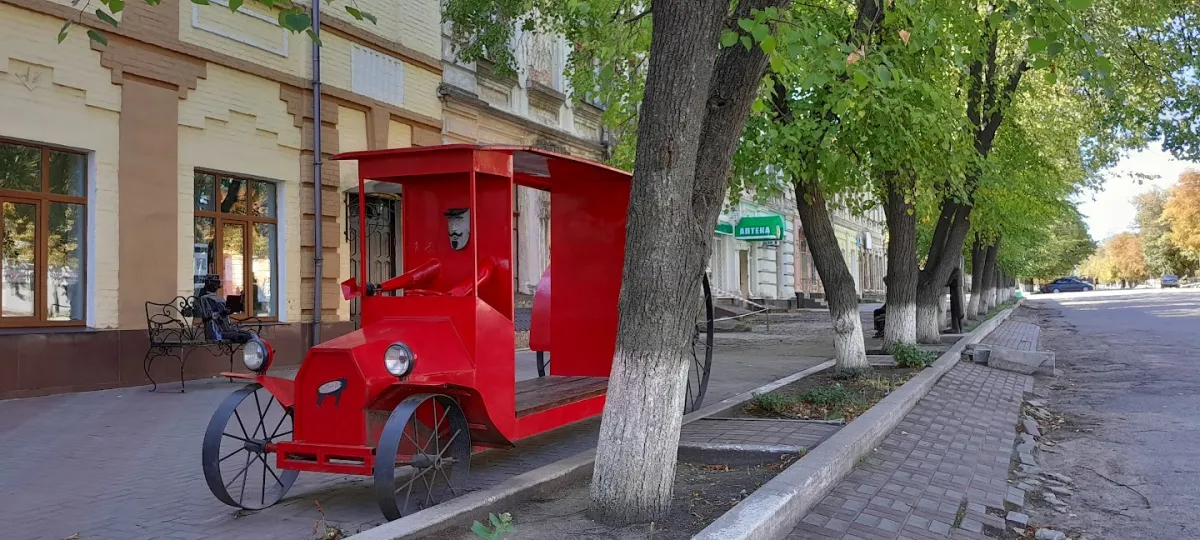
A street in Bobrynets (photo 2024).
At Shulymka’s quarrels broke out more than once and turned into brawls, and then doors, windows and furniture cracked… Officials, secretaries and department heads played cards at home, and others played stos. I too began to frequent the billiards, where sometimes I met ‘free, free love’ too…
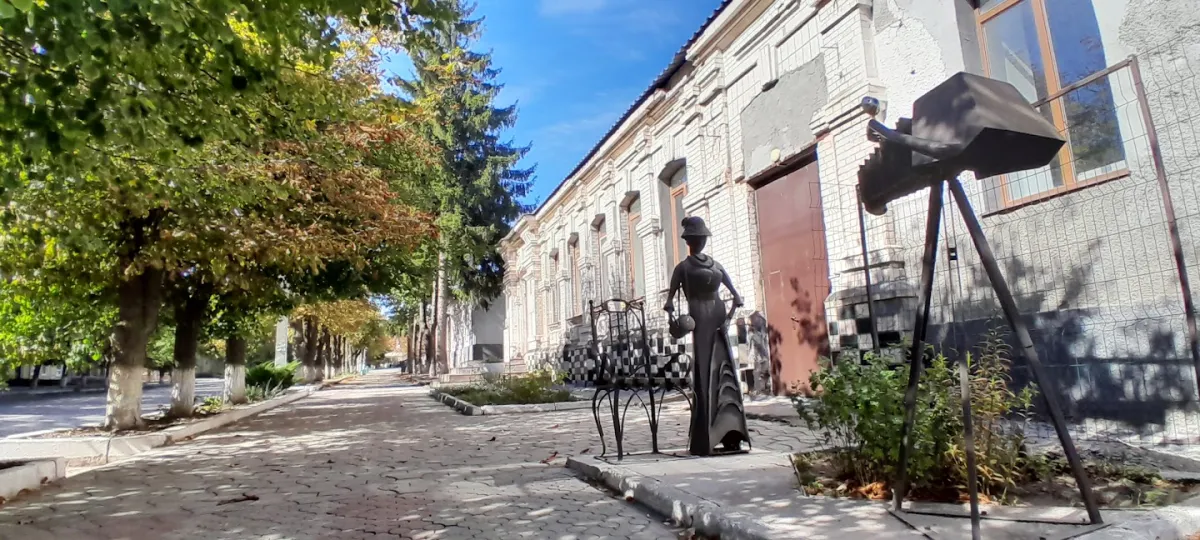
Mykolaivska Street in Bobrynets (photo 2024).
I do not know on whose initiative, in winter they began to organize, by subscription, dancing evenings in the hall of the district school, for which they ordered an orchestra from Yelysavethrad; gentry from the surrounding area came to the evenings with their families, sometimes officers came from Yelysavethrad too, and they danced not until 2–3 o’clock but until dawn — until 7 o’clock, and I attended these evenings with great eagerness.”
This went on for about a year, until Marko again decided (this time on his own) to try to break through to study in Kyiv.
Kyiv
Marko Kropyvnytskyi’s second attempt to gain a foothold in studies in Kyiv was only slightly more successful than the first, but perhaps it was this that saved him for the future Ukrainian theatre.
“In [18]62 I took leave and went with my friend I. A. Verhilesov to Kyiv to try my luck and entered the university as an auditor. After the leave ended I resigned. A year later I sat the examination for the certificate of maturity and failed. My friend failed too. After the holidays I set about the preparation again, but I felt an urge to go to the theatre and see the famous actress Fabiianska.”
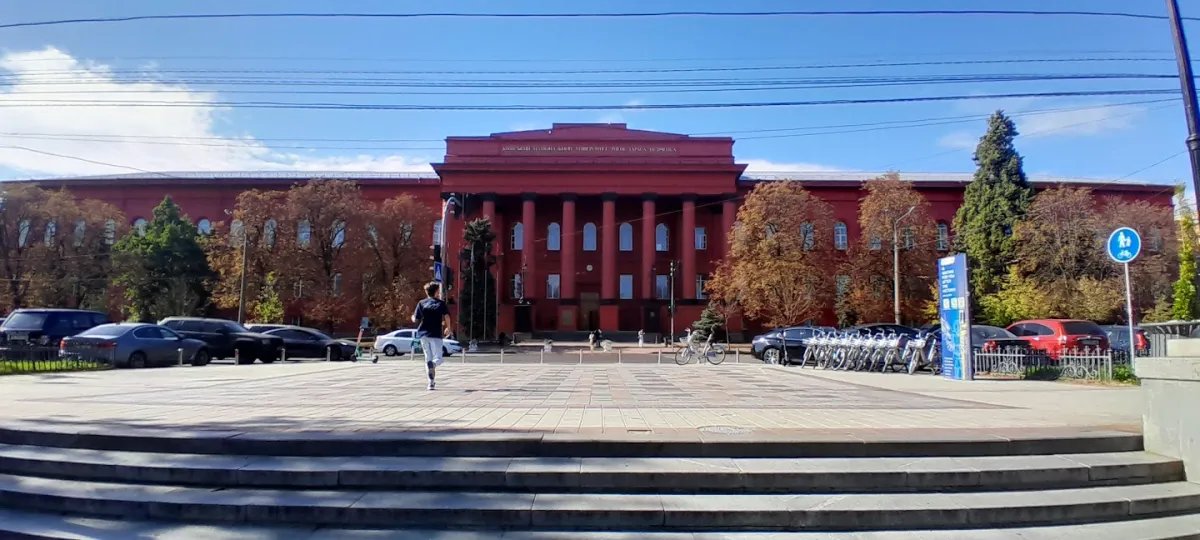
Taras Shevchenko National University of Kyiv (formerly the Imperial University of St Vladimir), in whose law faculty Marko Kropyvnytskyi studied during 1862 (photo 2024).
Fabiianska’s acting made a colossal impression on the young man. It seems that it was then, against the background of this shock, that Kropyvnytskyi the man of the theatre was born.
“Her acting made such an impression on me that for several days I went about as if unconscious, as if bewitched, and no learning would go into my head. At night, when my friend fell asleep, I lit a candle, sat by the window and composed a melodrama in Ukrainian. By day I could not do it, because my friend quarrelled with me, took my writing from me and ruthlessly burned or tore it up. But this did not discourage me; the next night I set about the same work again.Composing made itself felt: I paid no attention to the fact that the windowpane was broken, and, writing on the bed in only a shirt, did not notice the wind blowing on me; I began to cough and finally caught such a cold that I took to my bed and my friend had to call a consultation of medical students…”
Marko had literally “fallen ill with theatre”. His friends tried to return him to his university studies, but his thoughts were already forever absorbed by the theatre. The last straw in making his decision was a letter from his mother. She wrote that itinerant actors were just then performing in Bobrynets and that they were drawing her into the productions. She invited her son to join their company. Marko could resist no longer.
“When I was lying in bed, I received a letter from my mother saying that a pair of threadbare actors — a man and a woman named Sobolev — had arrived in Bobrynets, and that with the help of some of the clerks they were putting on performances, and that mother also took part in the performances — sometimes as an actress and sometimes as an accompanist. As soon as I recovered, I went to the theatre again at once and again saw Fabiianska in ‘A Mother’s Blessing’. Having come home, I told my friend that I would go home for Christmas; that in any case nothing would come of my preparation. However much my friend tried to persuade me, I went all the same…”
The next time Marko Kropyvnytskyi returned to Kyiv, he would already be a well-known actor and director.
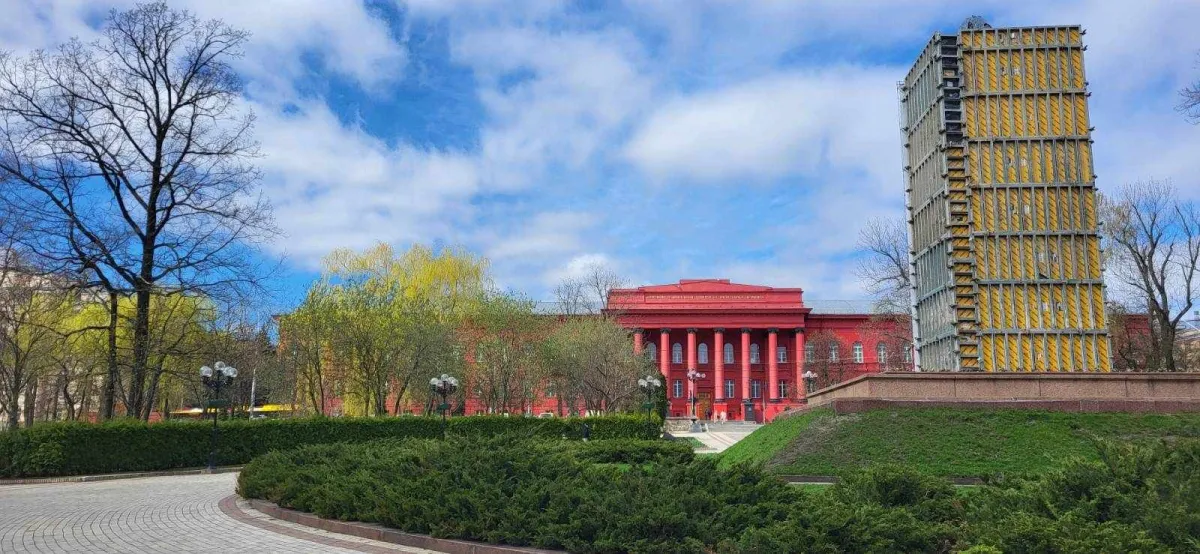
Taras Shevchenko National University of Kyiv (photo 2024).
Bobrynets
Having returned to Bobrynets, Marko Kropyvnytskyi again entered state service, but this was no longer the dull existence he had recalled earlier. To the official routine was added participation in amateur theatrical productions, first with the visiting actors the Sobolevs, and later with his own.
“In February 1864 I again entered the district court; at first I was a cashier, and then head of the civil desk, and I received 15 roubles a month. … ”
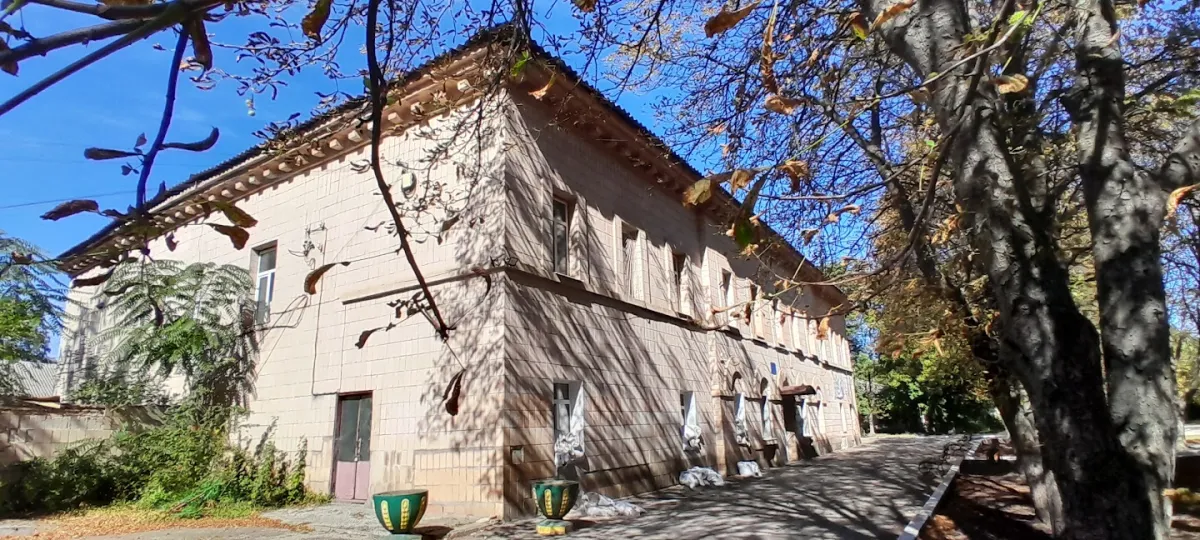
The former building of the district offices, which also housed the Bobrynets district court where Marko Kropyvnytskyi worked. This building now houses a branch of the outpatient clinic of the Ketrysanivka community (photo 2024).
“… At Christmas I went to Bobrynets, met Sobolev and promised to take part in the performances. I do not remember when I first acted or in what role, I only know that my success was extraordinary. Soon I finished my drama ‘Mykyta Starostenko’, which I later reworked into ‘Give your heart free rein and it will lead you into captivity’. In those days we did without censorship and police signature; my drama, as soon as I had written it, I staged right away. Our posters were handwritten …
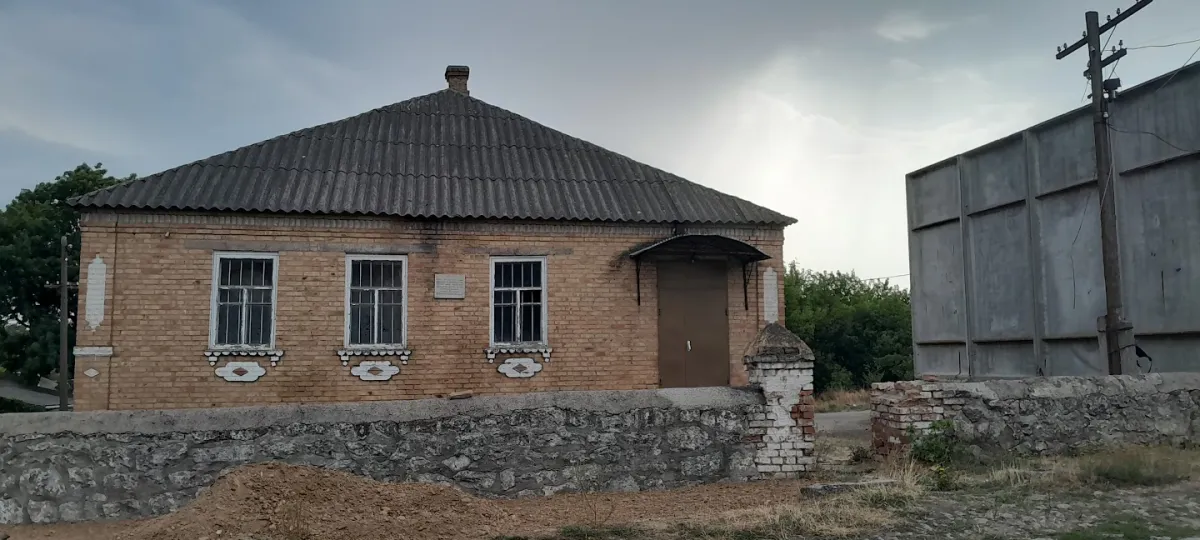
The Medovyi inn, where from 1864 the theatre circle of the actors I. and M. Sobolev staged performances, and in which M. Kropyvnytskyi began his career as an amateur. Here, by the efforts of the actors, the artist’s first play, “Mykyta Starostenko …”, was staged.
… In this circle the court’s young people grouped together, among them I. K. Tobilevych (the well-known playwright Karpenko-Karyi). A small choir was organized alongside the amateurs, in which there were quite a few schoolboys. In those unforgettable times schoolboys did not need to ask the authorities’ permission to take part in amateur performances; the schoolboys both sang and played roles, mostly female ones; not for a long time did young ladies dare to enter the circle.”
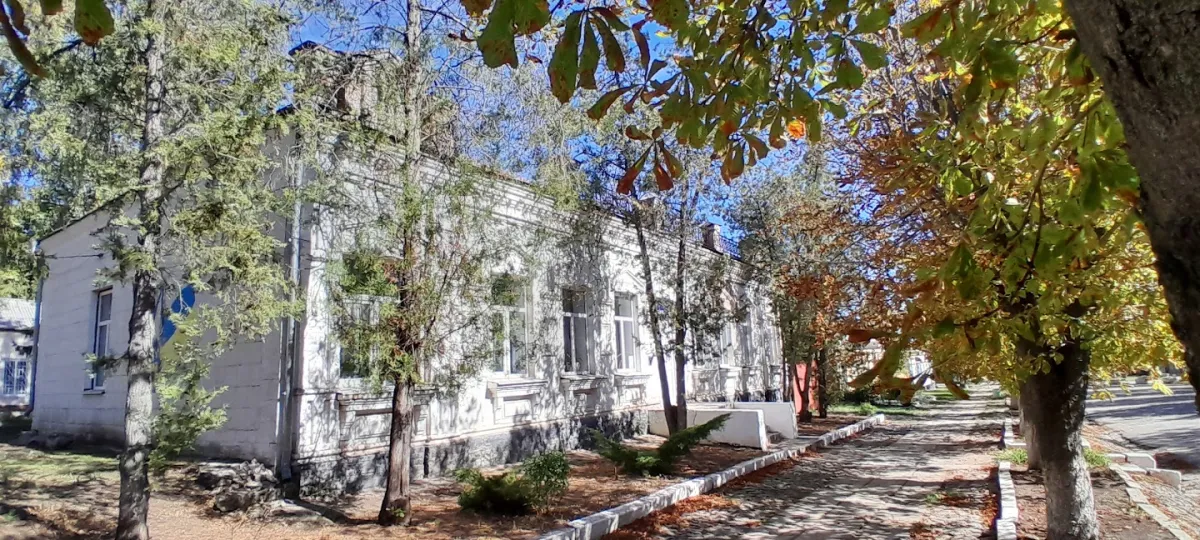
The Briudiukov house, where Marko Kropyvnytskyi held rehearsals of his amateur theatre circle. The artists rented this building, while the landowner Briudiukov himself lived in his estate at the Sochevanove farmstead, near the present-day village of Marianivka. Today the building houses the House of Children’s Creativity of the Ketrysanivka community.
“… Having arrived in Bobrynets, I settled with my sister; comrades often gathered at my place. We went in a crowd to bathe in the Suhokleia, went beyond the cemetery and sometimes there sang songs noisily the whole night. I had a strong, high baritone, I knew music well and arranged many songs for voices. At last I became head of the circle. At first the performances were directed by A. I. Dubovetskyi, who had been a tutor in some landowner’s house; and when he left Bobrynets, I was chosen as director. The senior court hacks treated our performances as a trifle or a children’s amusement; others mocked and played all sorts of nasty tricks…”.
The amateur performances staged by the circle of clerks under Marko Kropyvnytskyi’s leadership enjoyed considerable success in the district, but they received definitive “recognition” and a kind of legalization after the governor of Kherson Governorate visited Bobrynets.
“And then Governor P. A. Klushin came for an inspection and, when he learned that there was an amateur troupe in Bobrynets, he became very interested in it and asked for a performance of ‘Don’t Sit in Another’s Sleigh’. I. K. Tobilevych played Rusakov, I Mytia, my mother the aunt; Klushin was very pleased with the performance, and the next day in the court he said to me: ‘I liked you very much’. What he said to the other performers, I do not know. After this performance the Bobrynets amateur circle seemed to have gained sanction.”
In 1865 the district centre was transferred from Bobrynets to Yelysavethrad, and with it a number of district offices were moved to the new administrative centre. Marko Kropyvnytskyi also moved to Yelysavet.
Yelysavethrad (since 2016 Kropyvnytskyi)
After Yelysavethrad was designated the district centre and the district offices were moved there, Marko Kropyvnytskyi, like many of the Bobrynets young people, was transferred to work in this city. For several months in 1865 he worked as a secretary in the police.
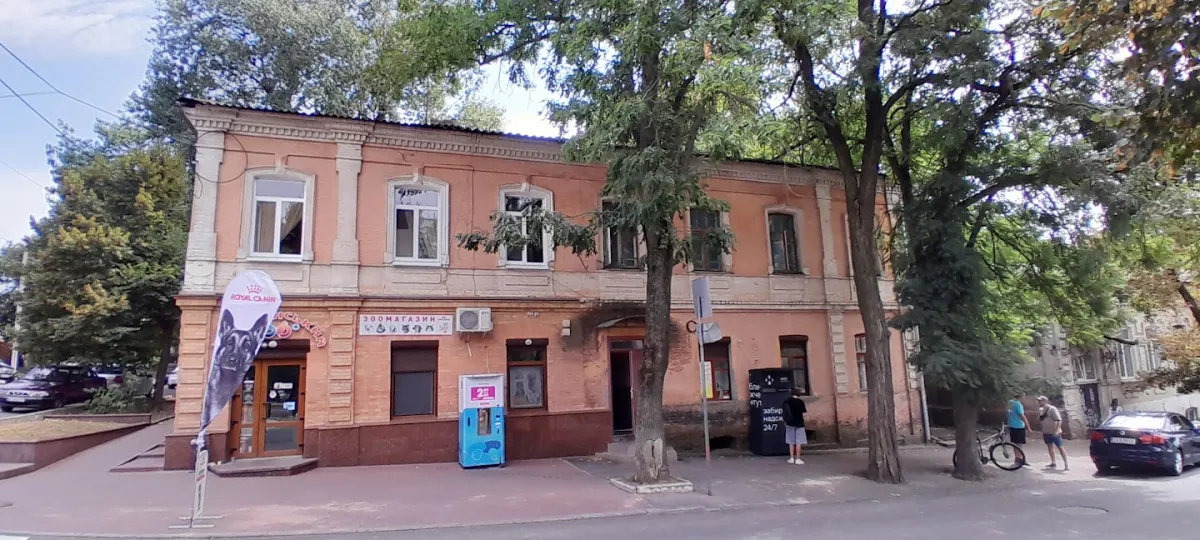
The former house of A. Ledener, which in the 19th century housed, on a rental basis, the Yelysavethrad district police department. Probably it was in this precinct that M. Kropyvnytskyi worked as a secretary during 1865. Today the building is used as a residential house (photo 2024).
Evidently, this period of his life was not distinguished by anything particularly remarkable, yet it figures in the artist’s recollections of his mother and a comical incident connected with them. At that time she had very strongly set about atoning for her sins, and on someone’s advice tried to convert local Jews to Christianity.
“In ’65 I was for some months secretary of the Yelysavet police, and one Saturday, when well-known ladies brought their boarding schools without ancient languages for inspection to the police, one of these ladies asked me: ‘Why, brother, do you never visit us?’ What sort of brother am I to you? — I glared at her with disgust. ‘But how so, your mama baptized me and my husband’…”
Soon Marko Kropyvnytskyi returned to Bobrynets again, although he visited Yelysavet regularly.
Bobrynets (1865–1866)
Having returned from Yelysavet to Bobrynets, Marko Kropyvnytskyi entered service at the Bobrynets Town Hall, in the post of secretary, well known to him. He again plunged into amateur theatrical creativity: he acted roles, directed productions, wrote plays.
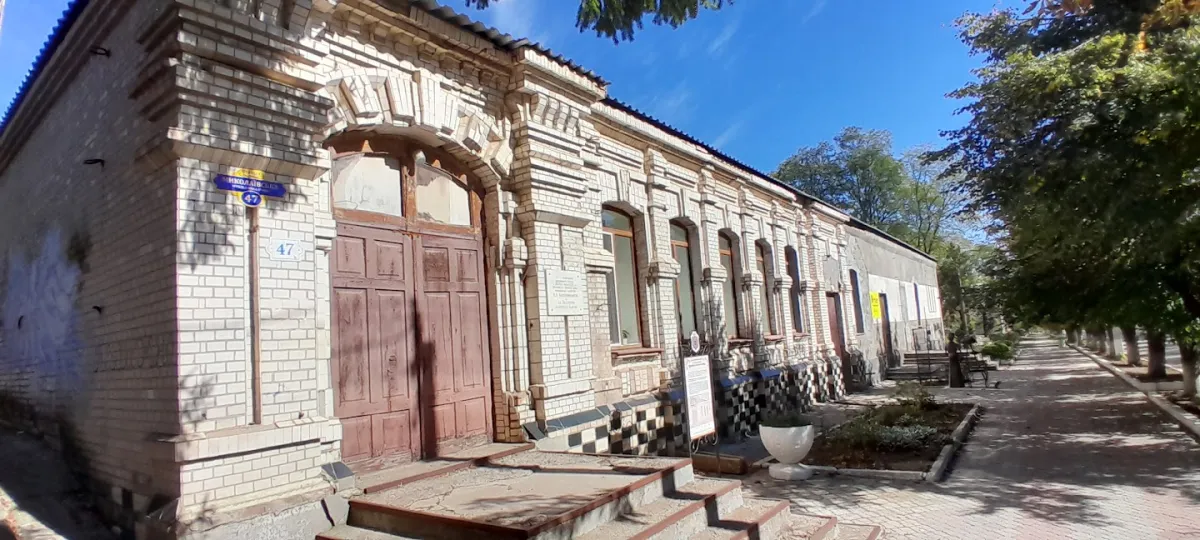
The former building of the Bobrynets Town Hall, where Marko Kropyvnytskyi worked as secretary in 1865–1866 and 1868–1871, combining his work with leading a theatre circle of amateurs, among whom was his colleague I. Tobilevych (Karpenko-Karyi) (photo 2024).
M. Kropyvnytskyi often visited Yelysavethrad too, where theatrical life was considerably more active: several theatre stages operated in the city (among them Trambytskyi’s Winter Theatre), numerous local theatrical companies were active, and touring troupes came regularly. More than once the secretary of the Bobrynets Town Hall, Marko Kropyvnytskyi, took part in Yelysavethrad productions. One such trip ended in trouble: dismissal from his job.
“It happened that a performance was being given in Yelysavet, of course for a charitable purpose, and my comrades asked me to play two roles in ‘Nazar Stodolia’: Kychatyi and the hurdy-gurdy player. They sent me a telegram, and I, without taking leave and without submitting a report, went to Yelysavet, and the next day Governor Klushin came to inspect the town hall. When he asked: ‘Where is the secretary?’, one of the members of the town hall, a Bilokrynychnyk, who was terribly angry with me for ‘Such a clever man and amusing the devil’, that is, taking part in performances, replied joyfully: ‘He has gone away!..’ When I returned from Yelysavet, a few days later a paper came from Kherson saying that I had been assigned to the staff of the governorate administration ‘for the benefit of the service’. I was left without a post.”
To settle the problem of his dismissal, Marko Kropyvnytskyi went to Kherson to meet the governor there and ask for help. The governor recognized the actor-clerk familiar to him from the Bobrynets performance and treated his petitioner with indulgence. Within three weeks M. Kropyvnytskyi was transferred to a new job — as a clerk of the Orphans’ Court of Yelysavethrad.
“‘Ah, it is you? Come, come!..’ I followed him into the reception room, he told me to wait, and himself went further. There were quite a few people here. After half an hour it was my turn to go for judgement.‘How is it that you leave your service and go off who knows where?’ — asked the governor. I looked him in the eyes and it seemed to me that he was not angry at all.
‘The charitable purpose, Your Excellency, tempted me. The telegram was received by me late, the rehearsal was set for the evening of the same day; meanwhile it was already about 2 o’clock, I did not want to be late for the rehearsal, and one must go 50 versts by horses. I hastily had dinner and left; and only on the road did I remember that I had not left a report…’
Evidently my sincere answer influenced the thunderer, and he said: ‘All the same, lapses in service cannot be tolerated!’ — I was silent.
The governor paced the study a couple of times, then said: ‘Very well, I will keep you in view… I cannot return you to the town hall, since another has already been appointed to your place the day before yesterday’…
I bowed and left. No more than about three weeks later I was appointed clerk of the Yelysavethrad Orphans’ Court.”
Yelysavethrad (since 2016 Kropyvnytskyi)
In Yelysavethrad Marko Kropyvnytskyi settled in the family of his good friend, colleague in service and in the theatre — Ivan Tobilevych. In the city he plunged into his usual activities: he tried to assemble a musical quartet, took part in theatrical productions, and travelled. When service at the Orphans’ Court began to interfere with these pursuits, the artist gave preference to his pursuits. This continued for almost all of 1867.
The building in whose walls in the 19th century the Yelysavethrad Orphans’ Court was housed, where Marko Kropyvnytskyi worked for some time (approximately in 1867) as secretary (“clerk”).
Around 1868, by order of the governor (and at the request of the Bobrynets authorities), Marko Kropyvnytskyi was again transferred to secretarial service at the Town Hall in Bobrynets.
“I had not served even a year in the Orphans’ Court when the governor transferred me again to the Bobrynets Town Hall as secretary; for the people of Bobrynets were dissatisfied with their secretary and sent a deputation to the governor to ask him to appoint me again.”
Bobrynets (1868–1871)
In 1868, having returned once more to what was by now his native town, Marko Kropyvnytskyi again became secretary of the Town Hall, married, and continued his vivid theatrical activity.
“Soon a circle of amateurs and choral singers gathered around me and we began to stage performances in the zemstvo house, where the justice of the peace’s chamber was located. The premises were cramped, barely holding an audience for 60 roubles. There was no orchestra in Bobrynets, each time we had to order one from Yelysavet, and this cost no less than 25 roubles, and sometimes more; we ordered six or seven musicians from the orchestra of Froim or Tsyhanok; when the weather was good, the houses were full, and in bad weather I had to pay out of my own pocket. Of course, on this occasion a dancing evening was attached to the performance.”
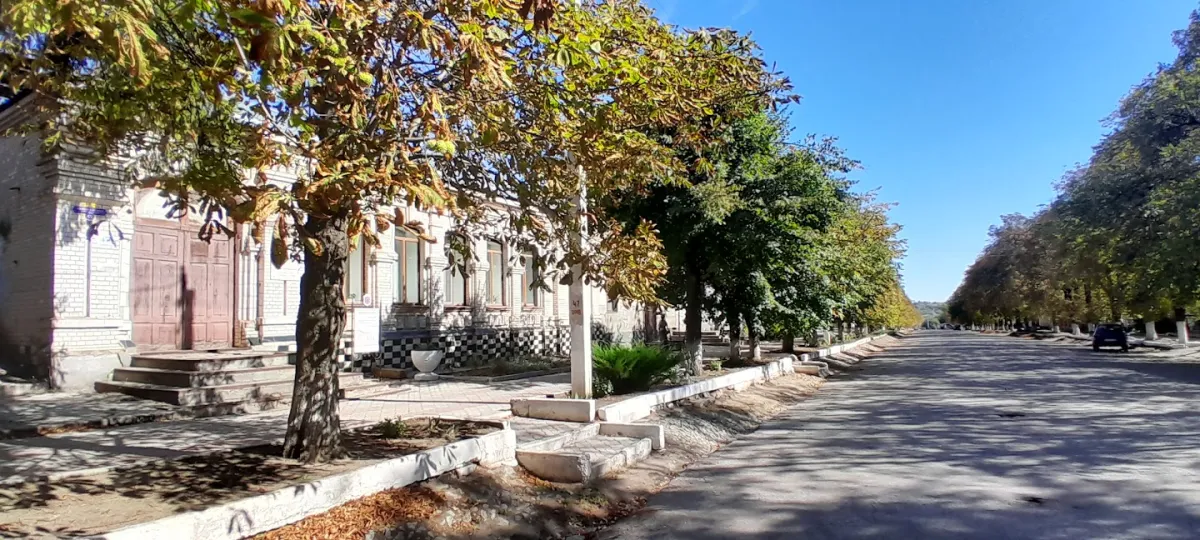
The former building of the Bobrynets Town Hall, where Marko Kropyvnytskyi worked as secretary in 1865–1866 and 1868–1871, combining his work with leading a theatre circle of amateurs (photo 2024).
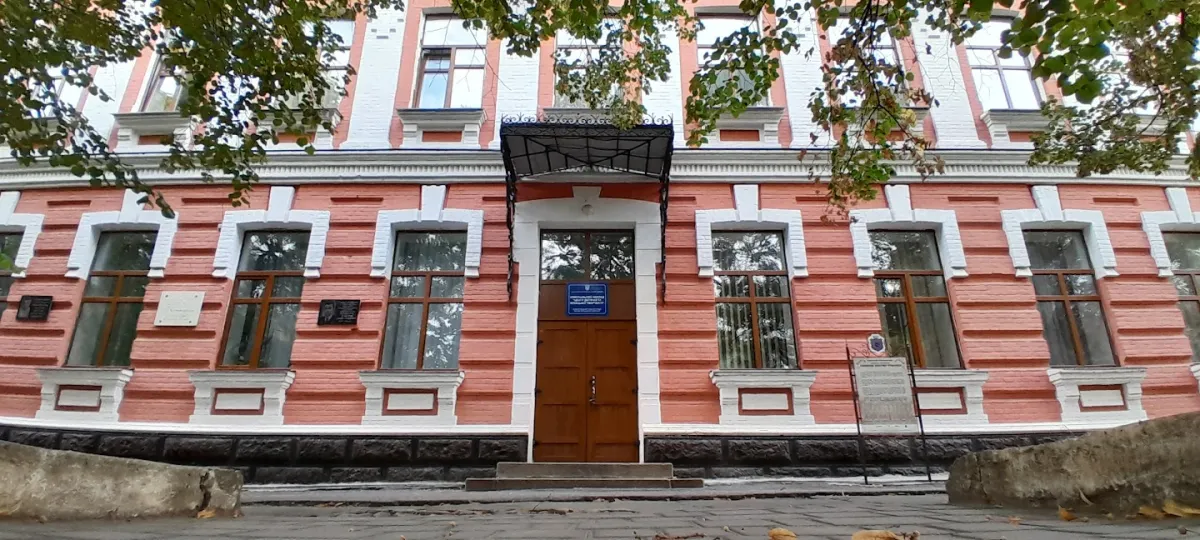
The former Bobrynets four-class district school was one of the venues where the amateur companies of Marko Kropyvnytskyi performed. It is now used by the Centre for Children’s and Youth Creativity (photo 2024).
In Bobrynets and the district Marko Kropyvnytskyi enjoyed general recognition and success. He and his company were very popular with the local public, yet with each year the realization grew on the artist that while remaining a civil servant he would not be able to fully realize himself in the theatre. The turning point for his decision was the death of his father Luka.
“I went on as secretary in Bobrynets until my father died, who in his old age no longer served but held on lease 420 desiatinas not far from Bobrynets. At the end of December 1870 father died and nothing tied me to Bobrynets any longer.”
In September 1871 Marko Kropyvnytskyi sold all his Bobrynets property and real estate and moved to Odesa.
“In September 1871 I submitted my resignation, sold the house in Bobrynets, sold off the farm and the horses and moved to live in Odesa, thinking of preparing for the technological institute or the university. But it did not turn out as I had thought.”
With the move to Odesa in 1871, the amateur stage of Marko Kropyvnytskyi’s theatrical activity ended and his professional career began. He changed cities and even countries of residence, but always returned to his native land — central Ukraine.
Places connected with Marko Kropyvnytskyi after 1871.
Kropyvnytskyi
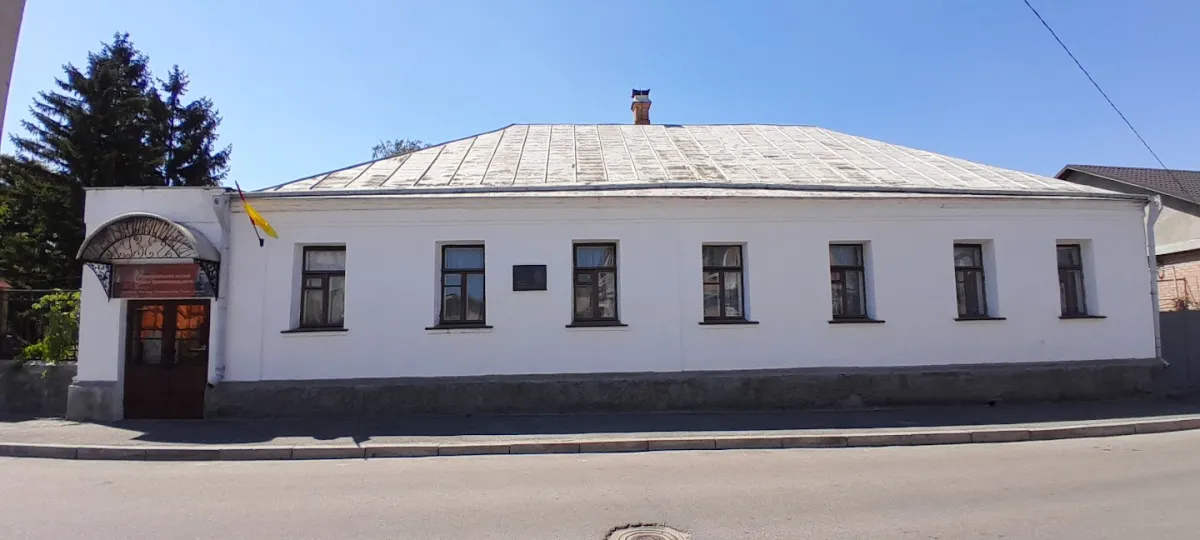
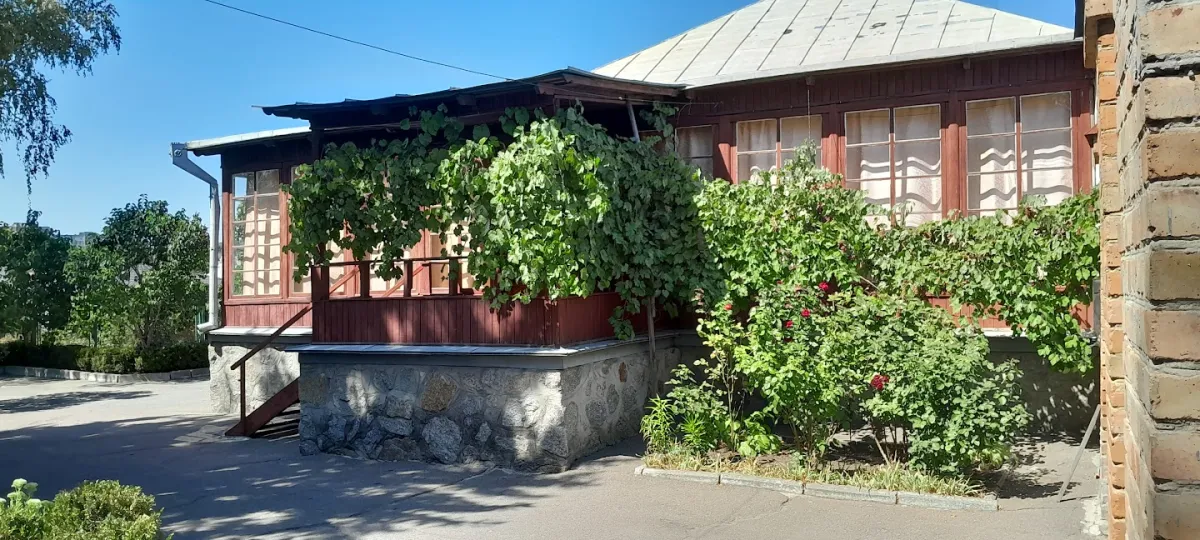
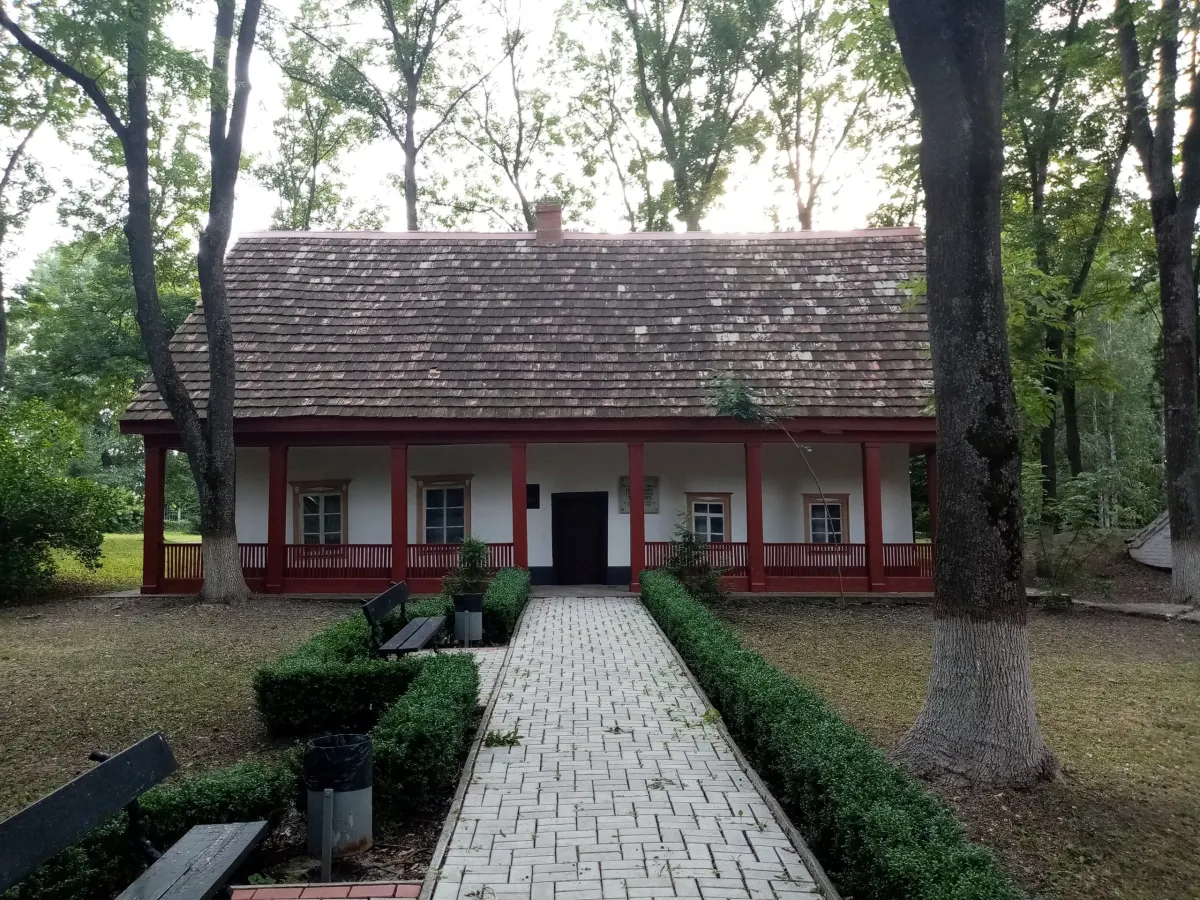
The house of Marfa Zaikovska (aunt of M. Kropyvnytskyi’s first wife), where for almost two decades (1868–1889), between tours, Marko Kropyvnytskyi lived with his family. Here he wrote a number of his classic plays, here in 1882 he assembled the acting troupe that later entered history as the Theatre of the Coryphaei. Since 1982 this building has housed the M. L. Kropyvnytskyi Memorial Museum (photo 2024).
The building of the former Winter Theatre in the city of Kropyvnytskyi, on whose stage, in October 1882, M. Kropyvnytskyi’s troupe, later named the Theatre of the Coryphaei, made its debut. Today this name is given to the Kropyvnytskyi Academic Music and Drama Theatre (photo taken in 2024 during the 54th theatre arts festival “September Gems”).
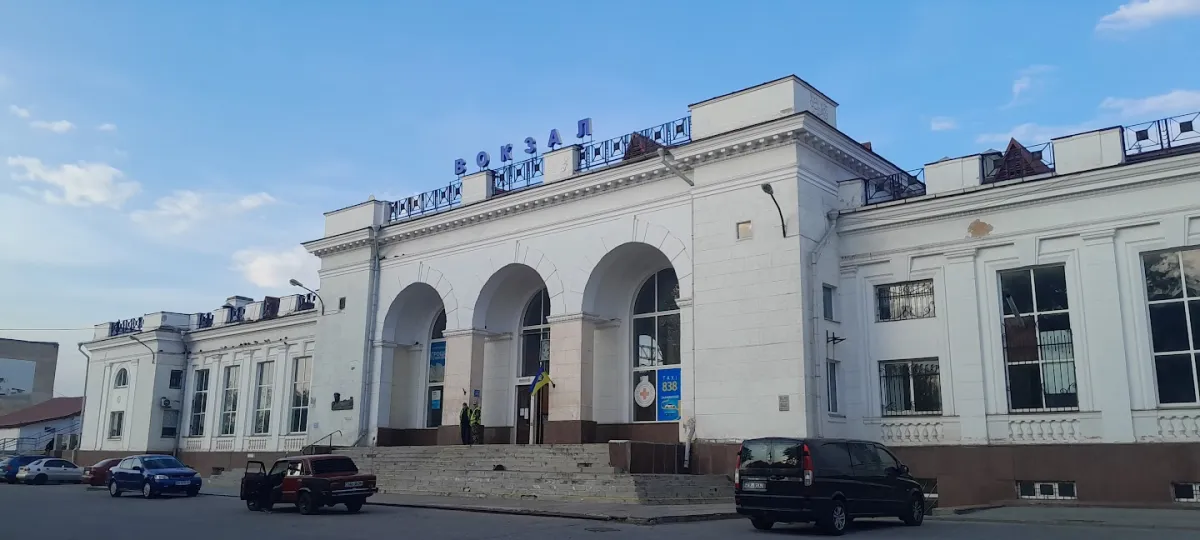
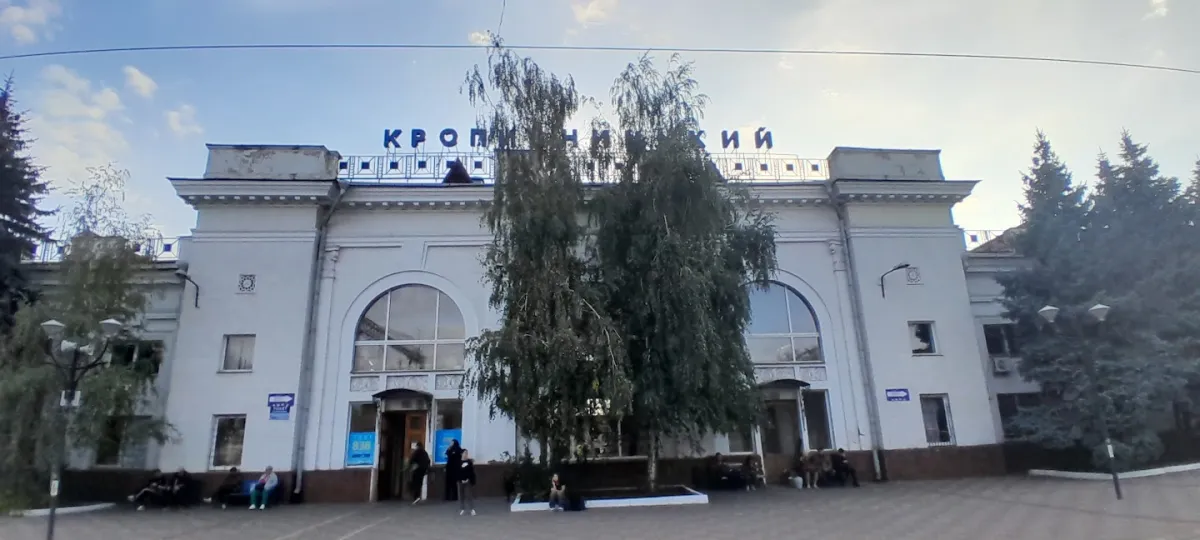
The railway station of the city of Kropyvnytskyi. In 1910 in Yelysavethrad Marko Kropyvnytskyi joined a performance by local amateurs in the building of the Public Assembly. It was a charity performance, the proceeds of which were to go toward the construction of a monument to T. Shevchenko in Kyiv. After this performance M. Kropyvnytskyi left for Odesa, and a few weeks later, on 21 April, he died while travelling on the train from Odesa to Kharkiv. When the townspeople received word that the artist’s remains would be carried through the city on 24 April, a sizeable crowd gathered at the railway station to honour him. The train did not arrive on time, so the community held a memorial service in the auditorium of the Elworthy factory. The train with M. Kropyvnytskyi’s body arrived already at night. It was met by representatives of the drama circle of the Elworthy factory, who laid wreaths from his fellow countrymen on the coffin. Then, at two o’clock in the night, the train set off for Kharkiv, where Marko Kropyvnytskyi was buried.
Bobrynets
The building of the former coaching inn (hotel), where Marko Kropyvnytskyi and the actors of his amateur and professional troupes most probably stayed during their tours in Bobrynets. M. Kropyvnytskyi last visited the town in 1909. Today this building houses the Bobrynets District Court of Kirovohrad Oblast (photo 2024).
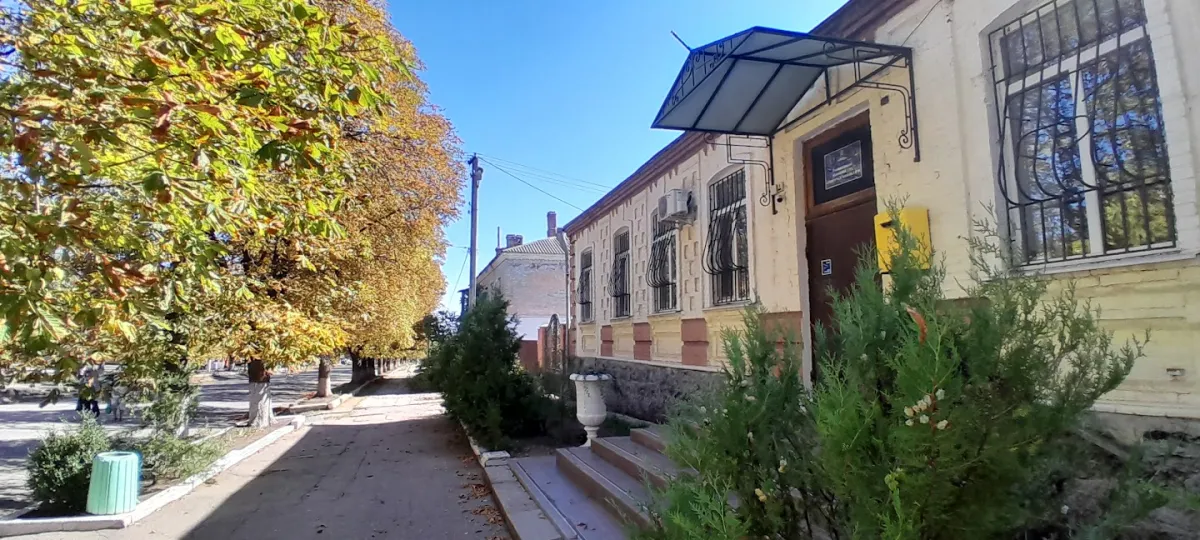
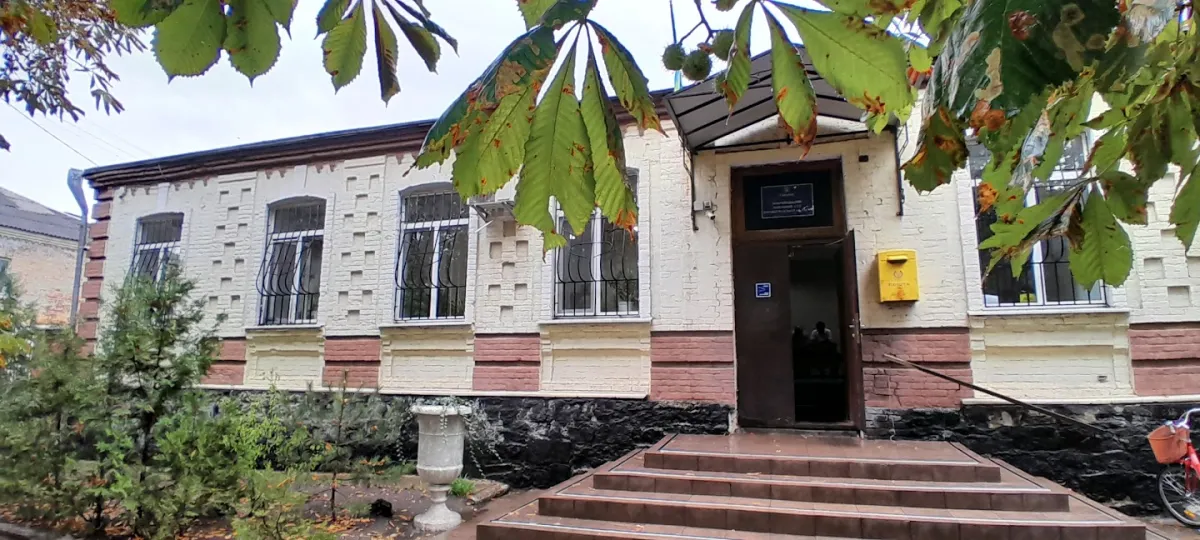
The local history museum of the town of Bobrynets, which holds some items connected with Marko Kropyvnytskyi and the actors of his troupes: a shawl of the outstanding Ukrainian actress Maria Zankovetska, furniture from the houses where the coryphaei stayed during tours in Bobrynets. An authentic small table, chair, mirror and gramophone have survived. The museum was founded on the initiative of M. Smolenchuk in 1959 within the library as a museum room of the coryphaei of Ukrainian professional theatre. In this format it existed for 15 years. In 1988 it was revived as a museum in the Holy Ascension Cathedral of Bobrynets. In 1992 the museum was moved first to the House of Creativity, and then to the premises of the district House of Culture, where it operates to this day (photo 2024).
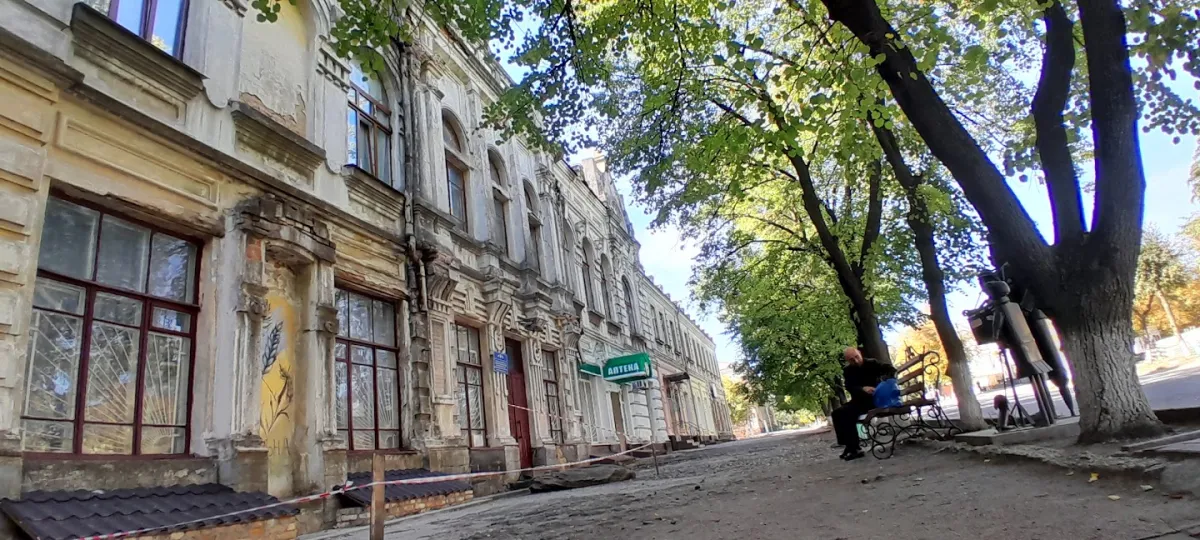
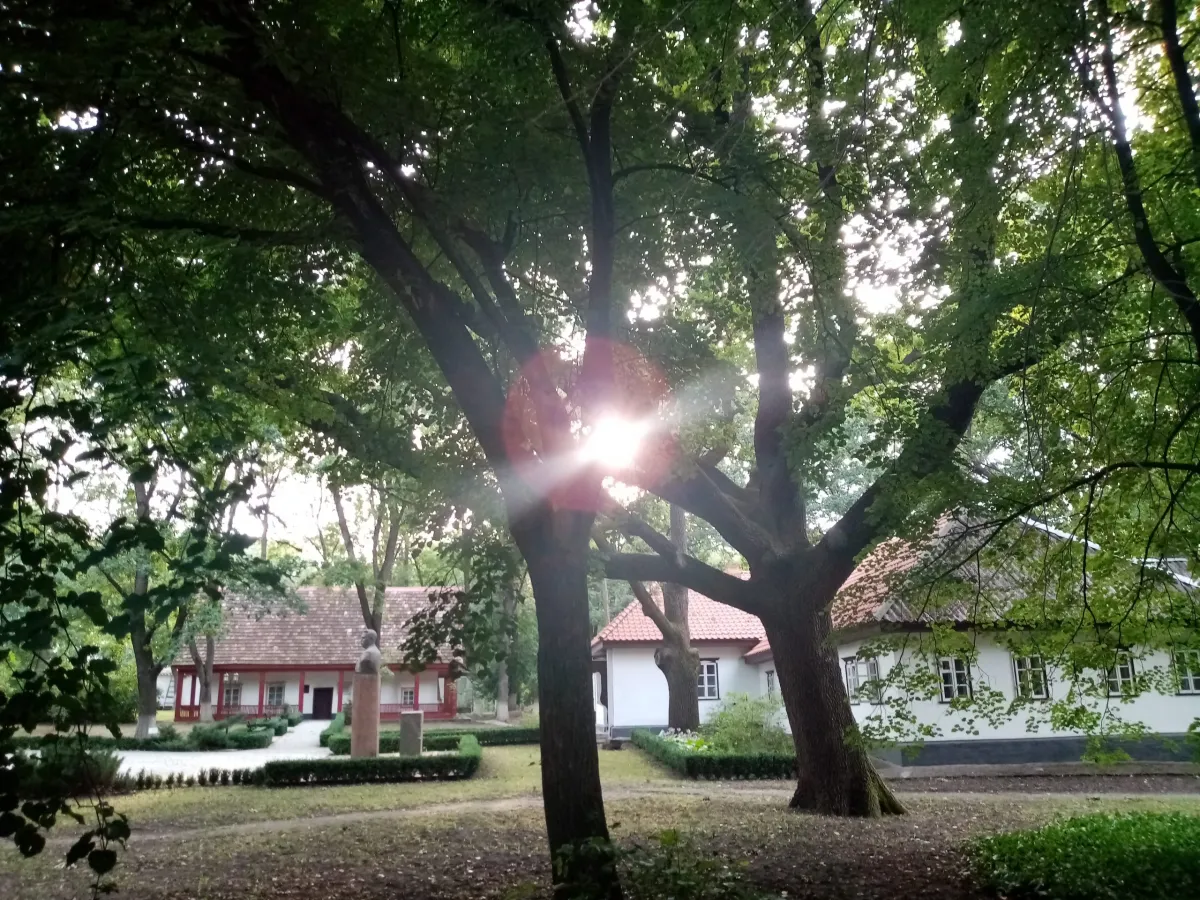
Khutir Nadiia
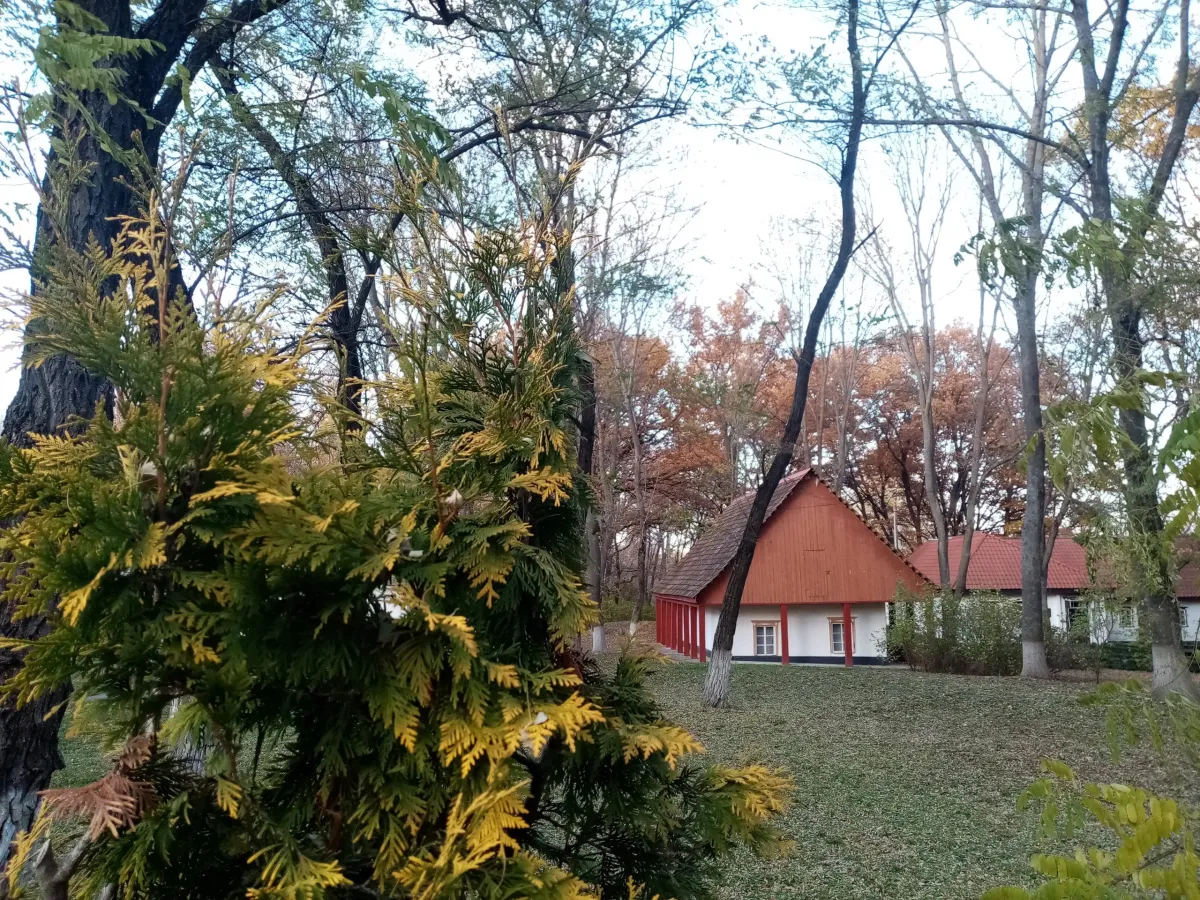
The estate of Ivan Tobilevych (Karpenko-Karyi) near the village of Mykolaivka, which became a centre for creative gatherings of the actors of the Theatre of the Coryphaei in the late 19th and early 20th centuries. M. Kropyvnytskyi was a frequent guest at the estate. Today the estate is the I. K. Tobilevych (Karpenko-Karyi) Museum-Reserve “Khutir Nadiia” (photo 2024).
Text and photos by Andrii Domaranskyi, 2024.


