

Mechebylove. Church

· 2 min read
With the name of the village of Mechebylove everything is clear. There is no need to invent various versions. Mechebylove was founded in 1776 by Prince Major General David Mechebilov, who presumably resettled some of his peasants here; already the following year this settlement of the Izium district had 390 inhabitants. There are versions that the general came from the Georgian princely family Machabeli. After her husband’s death, in 1782 the estate passed by inheritance to the general’s widow Paraskeva Mechebilova, and in 1794 she gave it to her daughter Yelyzaveta Davydivna as a dowry. The husband became a collegiate assessor who had just left military service with the rank of rotmistr, Fedir Petrovych Kukol-Yasnopolskyi, a representative of a well-known family of Sloboda Ukraine.
But they were not destined to live together for long. Yelyzaveta died two years later, leaving the estate and their young son Valerian to Fedir Petrovych.
In the early 19th century the landowner decided to build a grand church in the village in the name of St. Joseph the Betrothed, and by the time he received permission in 1808 he already had more than 200,000 bricks for it. Construction itself began in 1812 but did not proceed quickly, as war with the French began. The church was completed in 1816. A bell tower was built at the same time. Fedir Petrovych probably did not live to see that moment, because there is a documented petition for the consecration of the church from his own sister, Uliana Petrivna, who was married to Captain Mykola Smirnov. It was she and her husband who held the estate at that time. (Considering these events, I think Valerian Fedorovych also died, still young.)
Uliana Smirnova did much for the church and took part in its construction herself. And her daughter (one is tempted to say “the captain’s daughter”) Anna Mykolaivna, together with her husband, Staff Captain Vasyl Fedorovych Bezpalchev, a participant in the war of 1812 and a Knight of the Order of St. Vladimir, 4th class, contributed with their donations to the interior and exterior furnishing. I should also mention the Bezpalchevs’ charity: their family maintained an orphanage at its own expense.
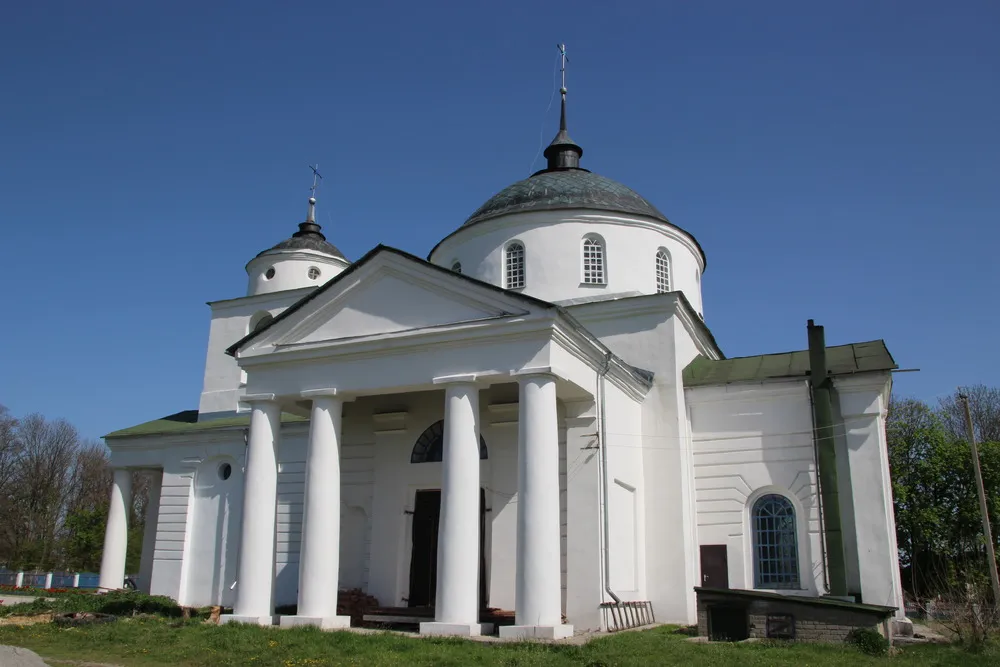
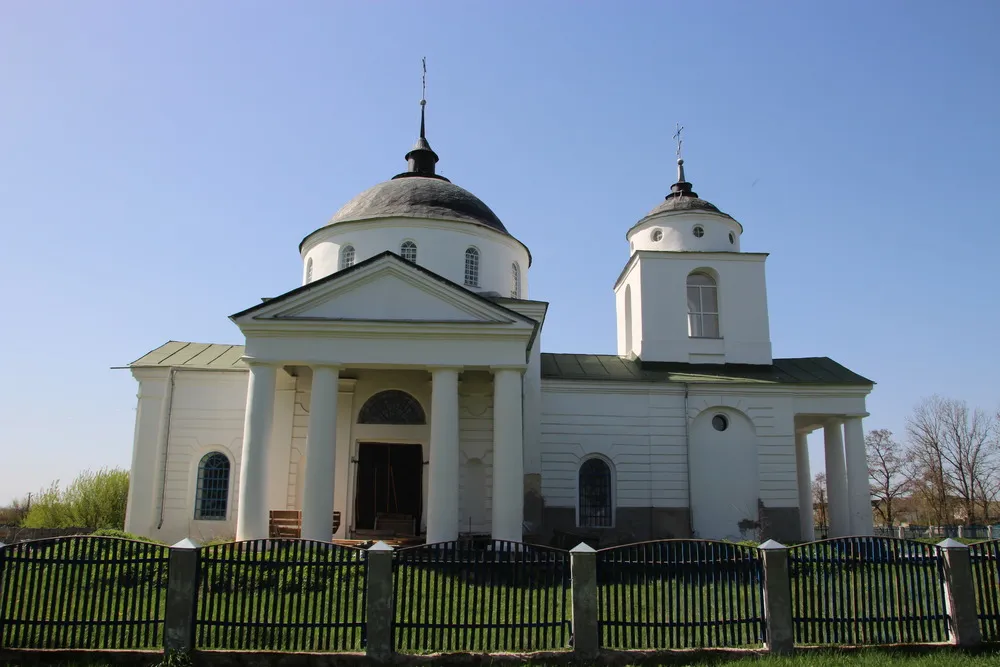
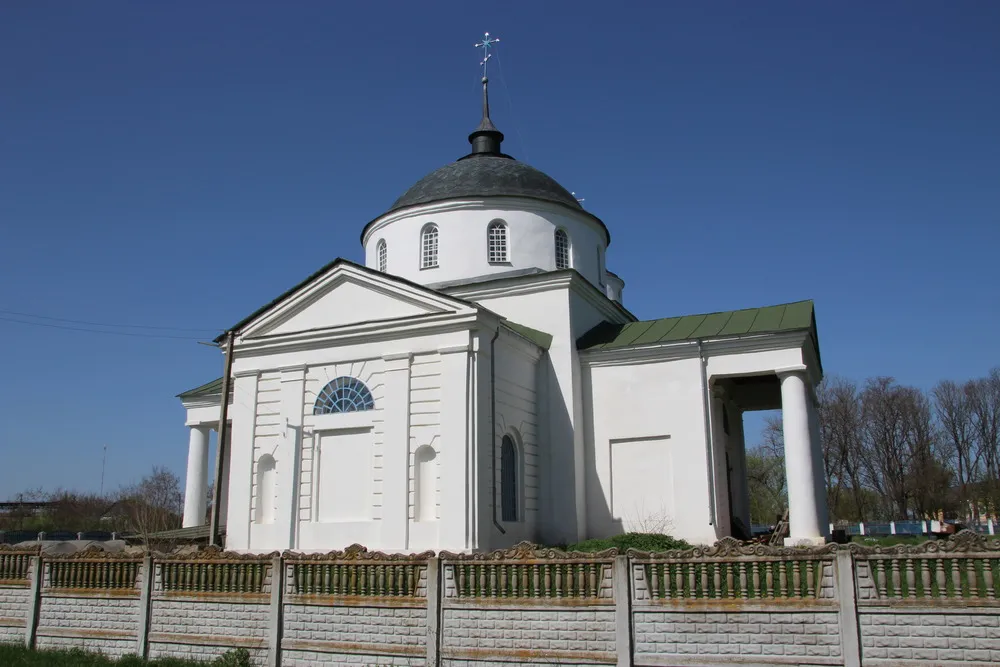
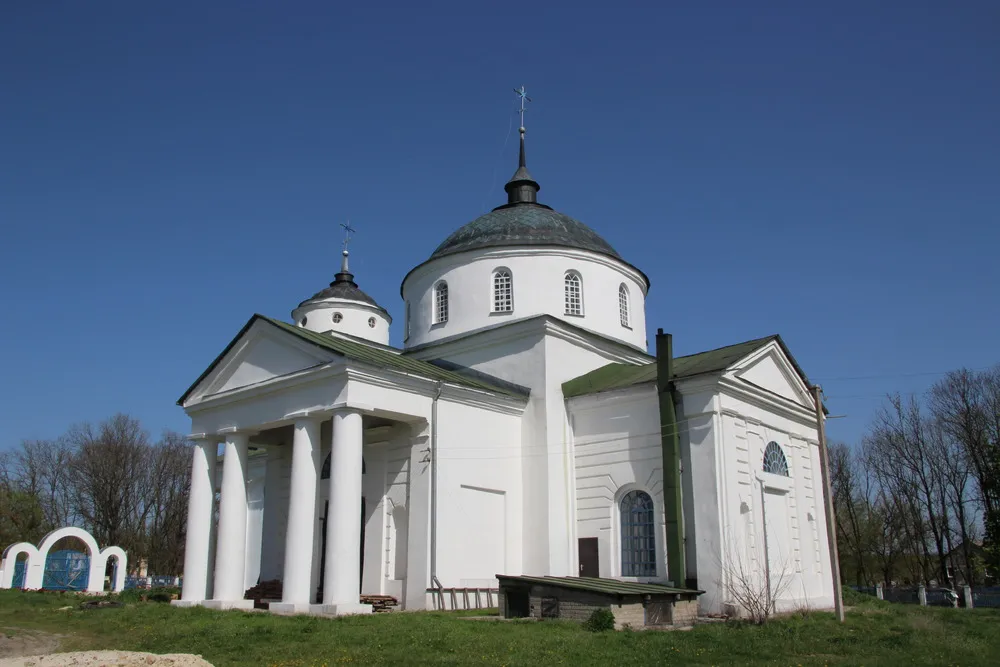
The church, as planned, turned out grand and large. Only a few in district towns, and in the provincial capital, could rival it. The church is built in a strict Classicist style.
In 1897 the villagers ordered a new iconostasis from the diocesan architect V. Kh. Nemkin for a round sum of 6,000 roubles.
In Soviet times the church was closed. During the war something like a hospital was set up here. When a bomb hit the church, it barely survived, and the altar part was destroyed. In 1982 the shrine was restored. At present the church is active.
Text by Ihor Dorozhok, photos by Maksym Nazarenko.


