

Monachynivka

· 3 min read
In the Kupiansk district there is a village called Monachynivka. It arose as a sloboda at the end of the 17th century, and they say it was founded by a Cossack nicknamed Monachyn, who came here with a group of people from the Right Bank of the Dnipro. Whether this is so or not, there is no documentary evidence for it. But it is known for certain that after some time the village was owned by the Rozalion-Soshalskyi family.
The progenitor is considered to be Yurii (Heorhii) Semenovych Rozalion-Soshalskyi, scribe of the Izium Regiment, who in 1705, through Colonel Fedir Shydlovskyi, submitted a petition to the tsar, describing his military services and asking that vacant lands be assigned to him and that he be permitted to settle them with free Cherkasians not in service. According to a tsarist decree of 1706, such land was demarcated for him. The decree said: “… the peasants who now live on that land and will live there in future shall obey in everything him, the scribe Yu. Raizelion-Soshalskyi, and his wife and children, plough the fields, mow the hay and do every kind of work.” The first settlements of the estate were the farmstead of Zherebets (Yuriivka) and the sloboda of Husynka; later other slobodas were added to it, including Monachynivka.
Yurii Semenovych had two sons, Oleksandr and Heorhii. All the estates along the Zherebets river (the sloboda of Yuriivka) passed to the company commander Oleksandr, and the slobodas of Husynka and Monachynivka to the regimental standard-bearer Heorhii. Monachynivka was, in fact, the ancestral seat of the standard-bearer Heorhii Heorhiiovych Rozalion-Soshalskyi and his son, the cavalry captain Dmytro Heorhiiovych. Incidentally, the latter, after retiring in 1808 and being elected three times, from 1801 to 1813, as Kupiansk marshal of the nobility, built the brick Church of St. Demetrius in Monachynivka.
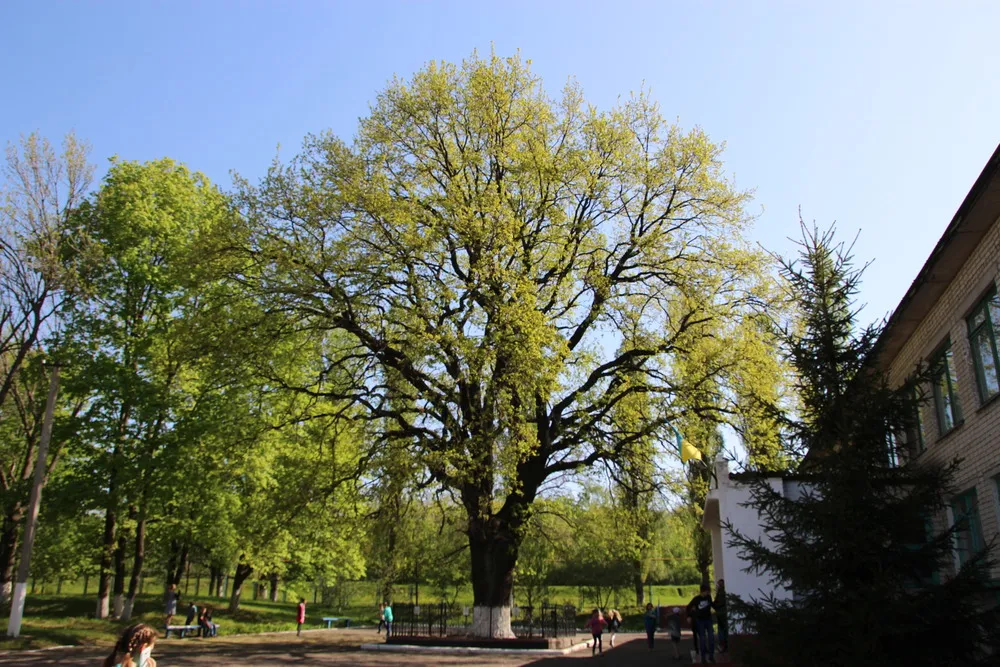
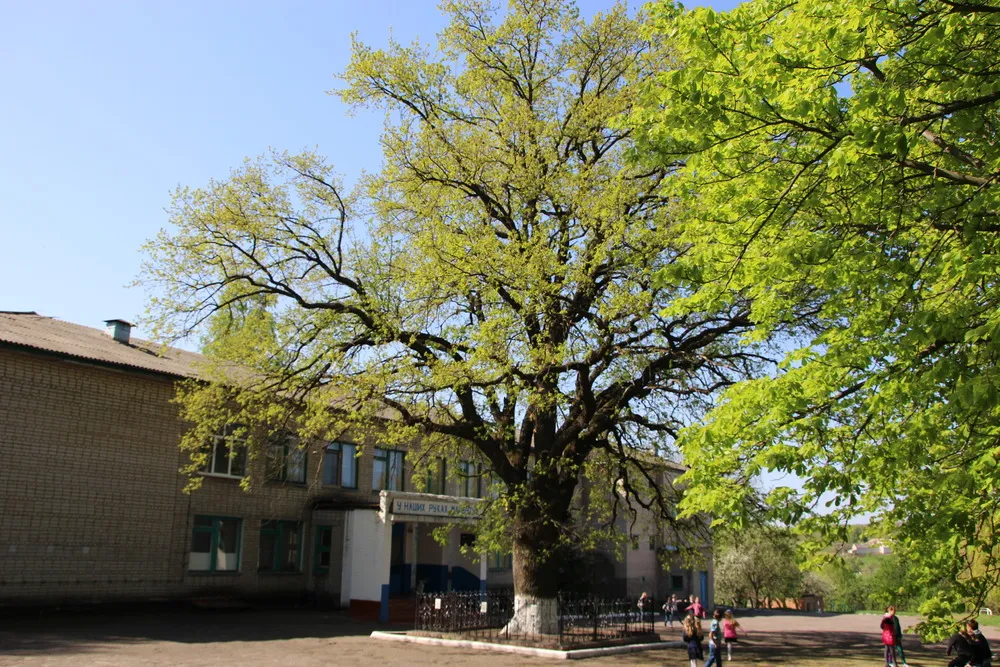
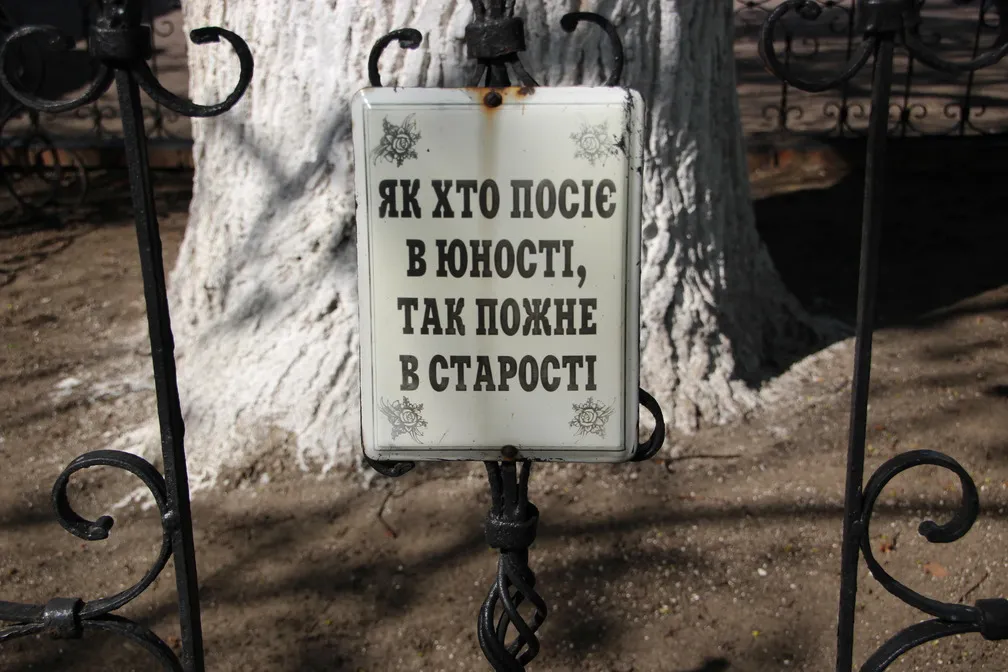
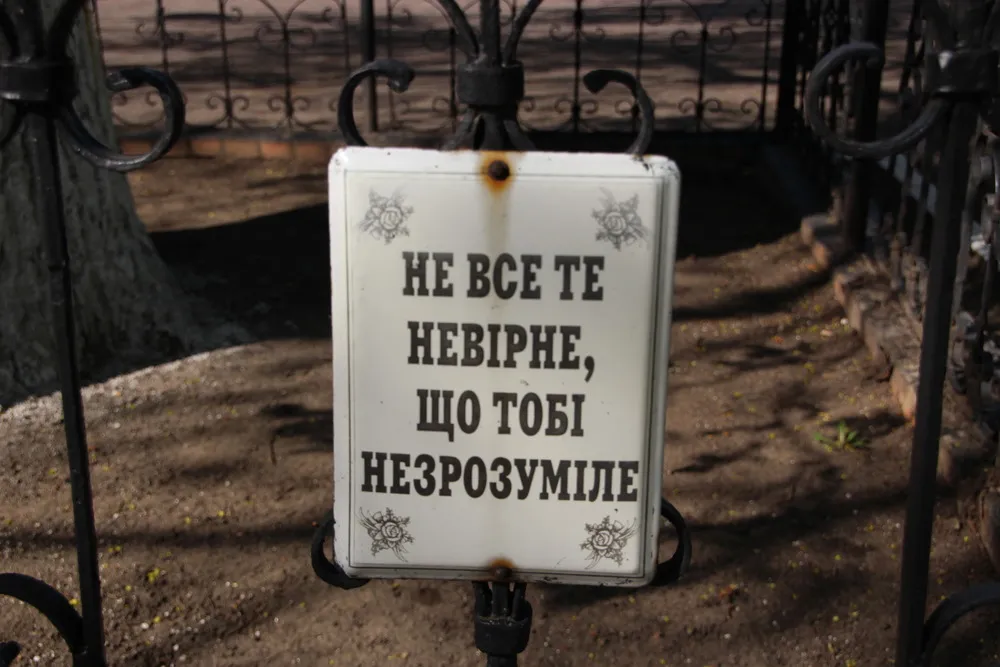
Why have I dwelt in such detail on the Rozalion-Soshalskyi family, and what am I leading up to? The point is that in the 1770s Hryhorii Savych Skovoroda often visited Monachynivka, stayed at the manor of the Rozalion-Soshalskyis, with whom he was friends, and liked to visit the local church (the old one, which stood until the new one was built in 1808). Both the lord’s manor and the church stood in the very centre of the village, on either side of the square. Now there is neither manor nor church. But Hryhorii Skovoroda planted several oaks here, some of which remain and can be seen on the grounds of the village school. One of the oaks has received a memorial arrangement and the name Skovoroda’s Younger Oak. Its girth is 2.5 m, its height 38 m, its age 250 years. The school has a literary and local history museum dedicated to Skovoroda.
Later the owner of the estate was Semen Dmytrovych Rozalion-Soshalskyi, a hero of the Battle of Borodino, second lieutenant of the 7th horse company of the 3rd artillery brigade. According to family tradition, he gathered several hundred people on his estates, armed them, provided them with horses and equipment, and arrived at the head of this detachment to join the militia.
P.S. There is an interesting family legend about the origin of such an unusual surname as Rozalion-Soshalskyi. Back in the 16th century, when the Polish Soshalskyi family was travelling across Europe, somewhere on the border with France a girl of the Soshalskyis was abducted by a French robber named Rozalion. And when the robber was nevertheless caught and it came to punishment, the girl stood up for the Frenchman and would not let him be punished, since by that time she had fallen head over heels in love with the fellow. What is more, they married and took a double surname. And a rose and a lion began to be depicted on the family’s coat of arms.
Text by Ihor Dorozhko, photos by Maksym Nazarenko.


