

Pavlivka. The town of Poryck once stood here

· 5 min read
Looking at archive photos or at the drawings of Napoleon Orda, you realise that Pavlivka is not at all the ordinary village it seemed to us at first. It turns out that before the Second World War this was a small but rather pleasant little town, more than half of whose population were Jews, and about a quarter Poles. And after the war Poryck ceased to exist: practically all the Jews were killed by the Germans, and a considerable part of the Poles by Ukrainians.
At the beginning of the 20th century Poryck had slightly fewer than three thousand inhabitants; after the war only the suburb of Pavlivka was left of the town, which became a separate village, while Poryck itself was destroyed.
On 11 July 2003 a solemn meeting of two presidents, Leonid Kuchma and Aleksander Kwaśniewski, took place in the village of Pavlivka. The meeting was held as an act of reconciliation on the occasion of the 60th anniversary of the Volhynia tragedy, during which Poryck-Pavlivka suffered. The presidents unveiled a memorial stele.
In written documents the village is first mentioned under the year 1405, when a church (kostel) of the Holy Trinity and St. Michael was built in it at the expense of Szczęsny Czacki. In 1418–1419 the Grand Duke of Lithuania Vytautas Kęstutaitis gave the settlement to Ilya (Eliash) Viachkevych. It remained in the Viachkevych family until 1500, when Fedir, son of Vasyl Korybut, married a Viachkevych daughter and began the Poryckyi family. From then on the little town was the seat of the Poryckyi princely family.
Next I give the text from Polish Wikipedia:
In 1557, because of a fire in the town, King Sigismund II Augustus exempted Prince Oleksandr Porytskyi of Zbarazh from paying all customs duties and tolls, apart from border ones, for 10 years. For years Poryck remained the property of Polish noble families, including the Koniecpolski and Czacki. Before the First World War, beside the local lake stood two two-storey Empire-style palaces of the Czacki family, built in 1806 by Tadeusz Czacki. A bone relic of King Bolesław the Brave or various objects obtained during the study of the tombs of Sigismund the Old, Sigismund Augustus and Anna Jagiellon. The main palace was adorned with an attic on the basis of four Doric columns. In 1916 the palace was looted, and the library and the porcelain collection were destroyed. The other palace, in which Tadeusz Czacki lived, was burned in 1915 by the Austrian army and now stands in ruins. The Czacki archive burned along with it. The library of 15,000 volumes left by Tadeusz Czacki was taken to Puławy soon after his death in 1813.
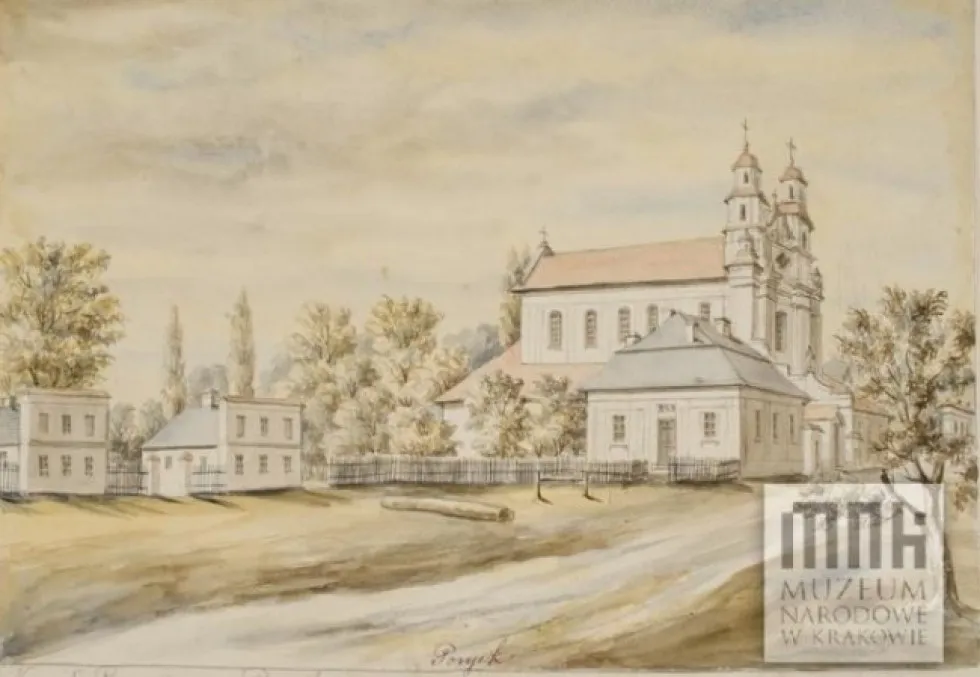
The Poryck kostel in a drawing by Napoleon Orda. The church was destroyed after the Second World War.
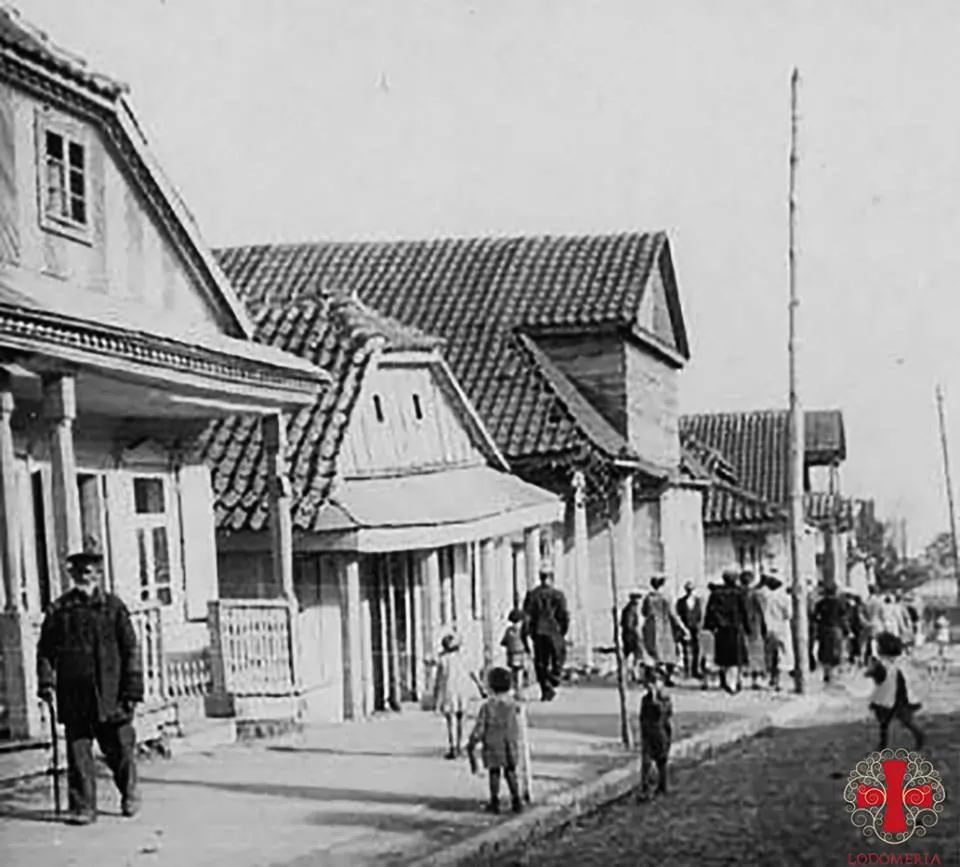
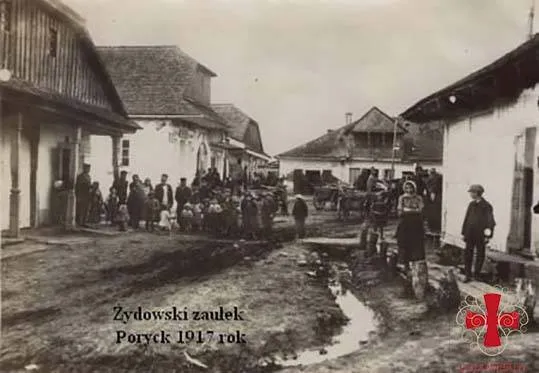
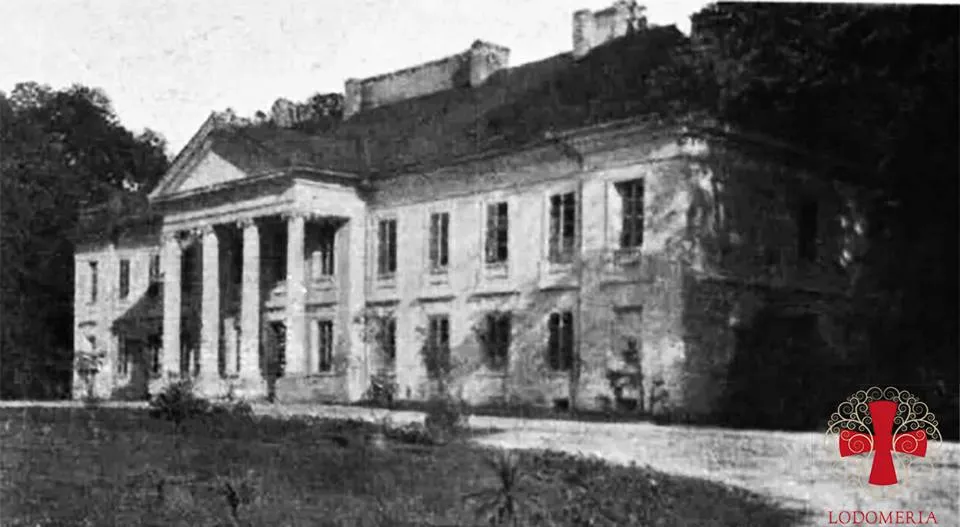
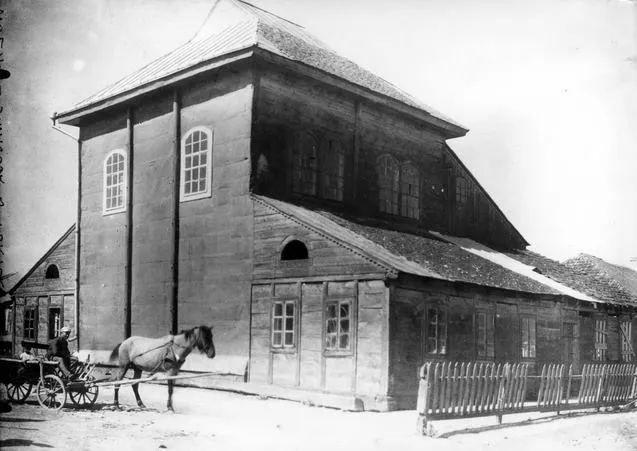
Pre-war Poryck. Source: photos from BUH
In 1816 Julian Ursyn Niemcewicz visited Poryck and described it in his “Historical Journeys”.
During the November Uprising, on 11 April 1831, one of the battles of Dwernicki’s expedition took place near Poryck, on lands seized by the Polish side. The Poles took about 250 prisoners, 100 horses, 200 weapons and the entire baggage train. After this victory General Józef Dwernicki issued a proclamation to the inhabitants of Ukraine, Volhynia and Podolia, calling on them to take part in the uprising.
During the January Uprising the town was captured by Polish forces on 2 November 1863, then defended itself against the advancing Russians, after which the insurgents withdrew from Poryck.
During the First World War the town’s buildings, in particular the kostel and the palaces, were seriously damaged.
In the time of the Second Polish Republic the town, with a population of just over 2,000 (about half of them Jews), belonged to the gmina of Poryck in Volodymyr county of Volhynia Voivodeship. To the north it bordered the villages of Lakhiv and Klopochyn, to the west the Romanivska Colony, to the south Samovolia and Pereslavychi, and to the east Holendernia and Rukovychi.
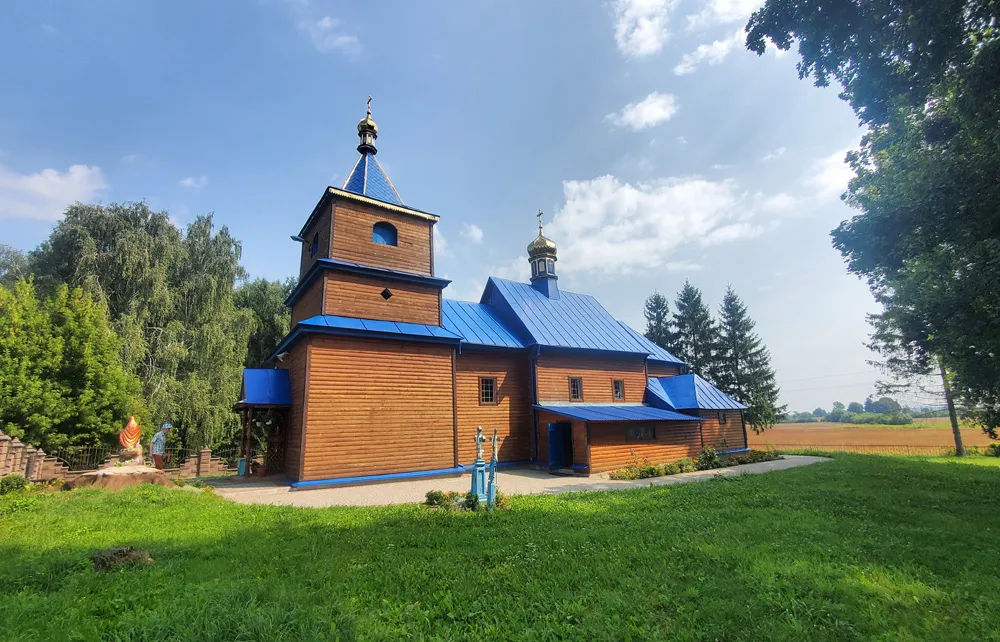
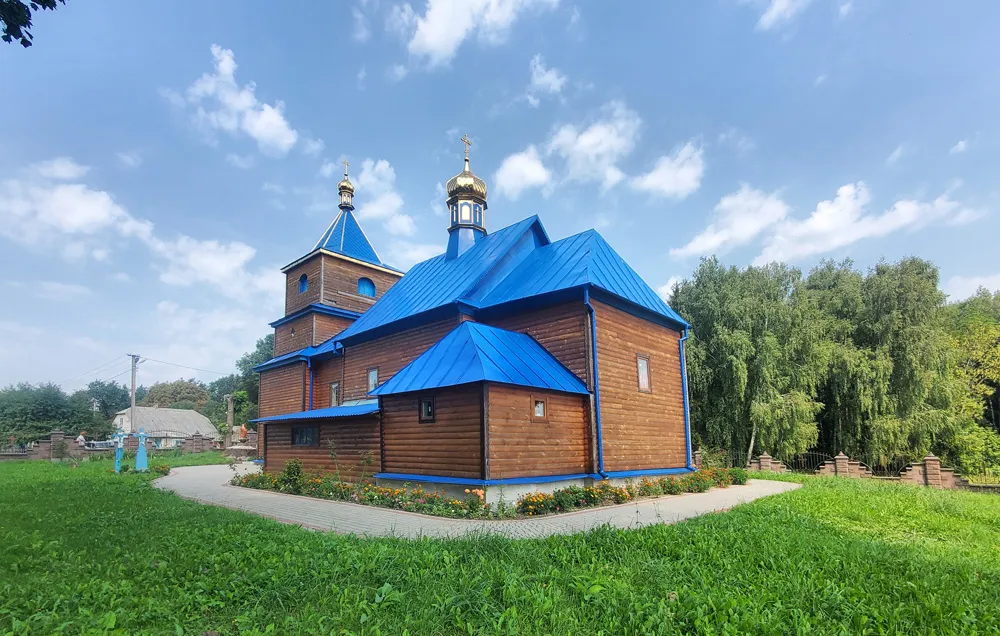
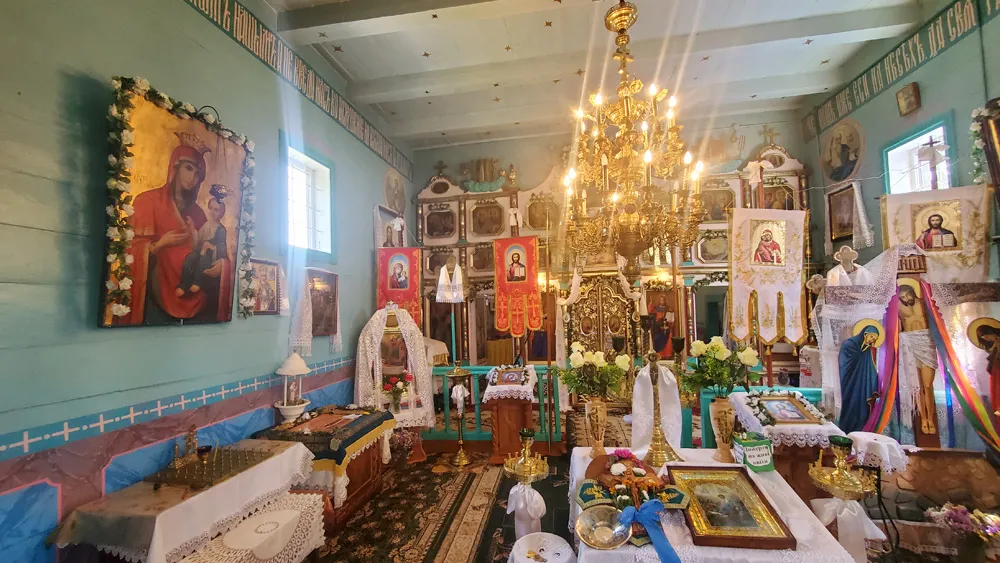
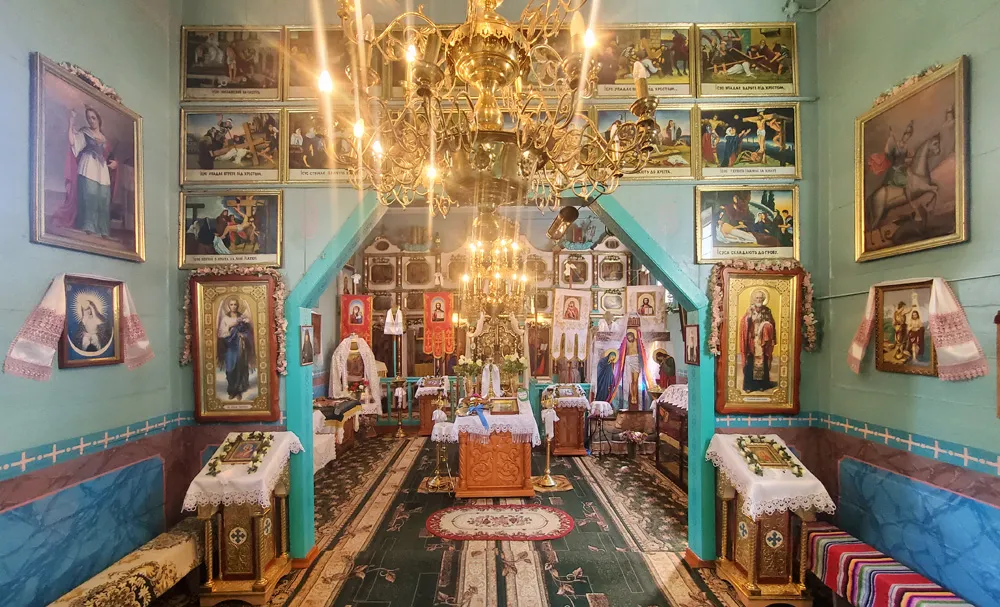
Dormition Church
During the German occupation the Czacki palace housed the German gendarmerie and a Schutzmannschaft station. The Germans destroyed the Jewish population of the town. During the first shooting, in September 1941, about 100 Jewish men were killed. The rest (900 people) were shot in September 1942. Together with them as many Jews from outside Poryck were killed.
In March 1943 Ukrainian policemen from the Poryck police station went over to the UPA, abducting and killing 7 Poles. Soon the Germans withdrew from the town; the Poles were subjected to terror by Ukrainian nationalists. On 11 and 12 July 1943 units of the UPA and OUN-B destroyed the town’s Polish population, about 200 people. Later the Czacki palace was burned. The kostel was dismantled in the 1950s. Source: Wikipedia
We want to note that the above is information from Polish Wikipedia; the Ukrainian one says practically nothing about this, but the fact of the meeting of two presidents in Poryck confirms that such a crime took place. Vagrants who called themselves representatives of the OUN, formerly members of the German police, attacked the Polish kostel on 11 July 1943 during a service. There were twenty bandits – they can hardly be called insurgents. In the church they killed about a hundred people – they threw grenades and set it on fire. In all, 222 Poles were killed in Poryck, and a considerable number more in the surrounding villages.
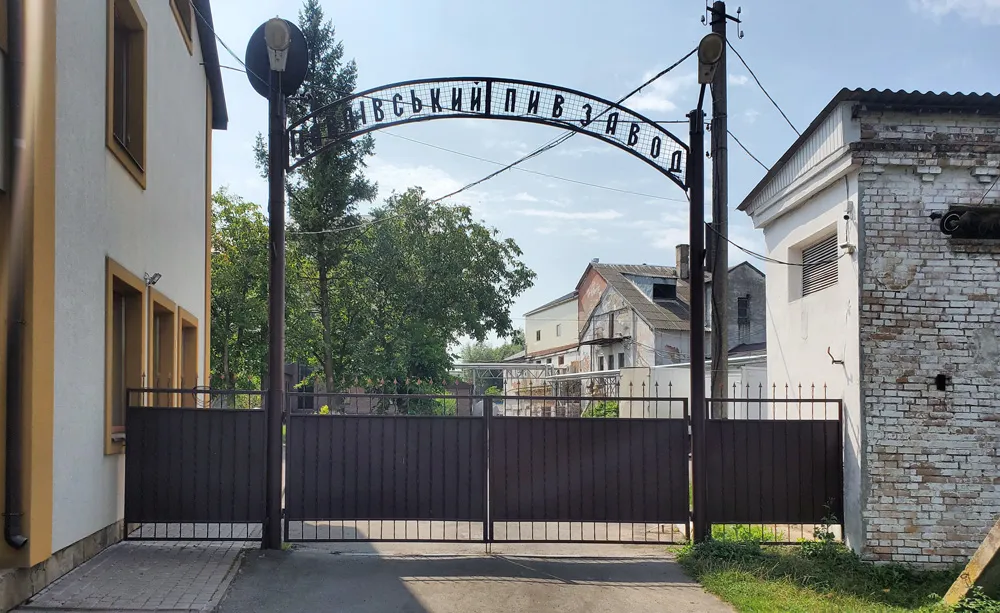
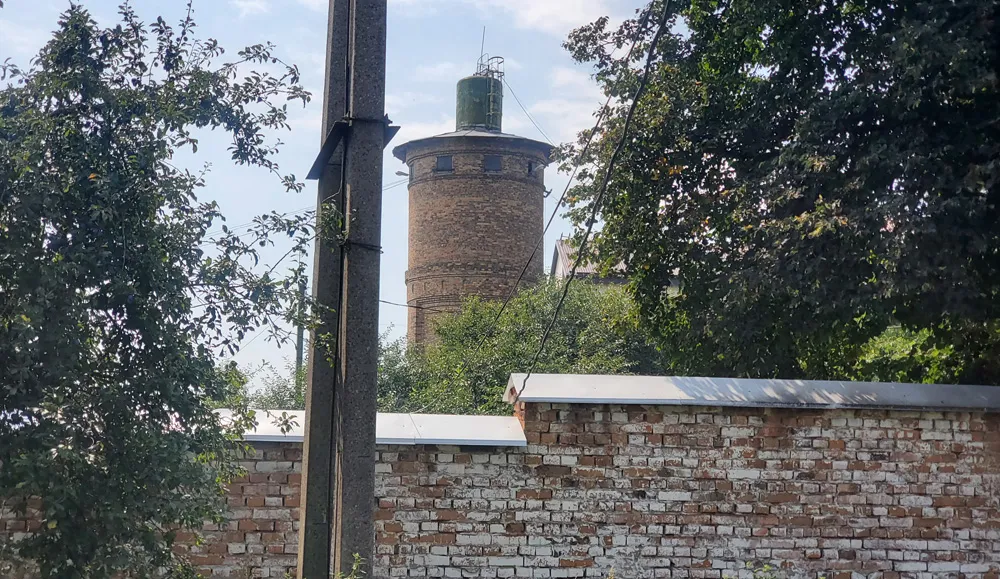
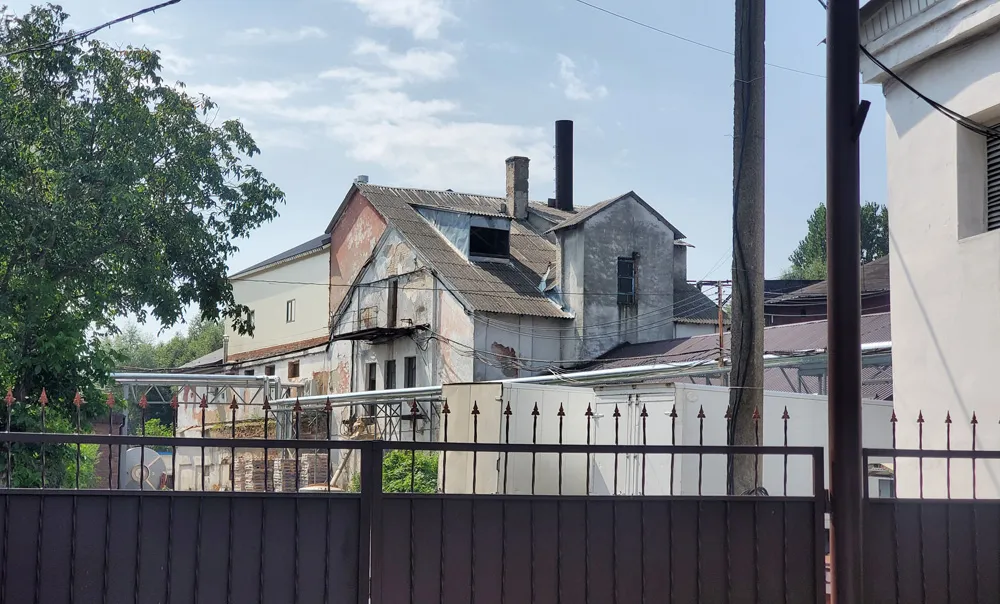
The Pavlivka brewery
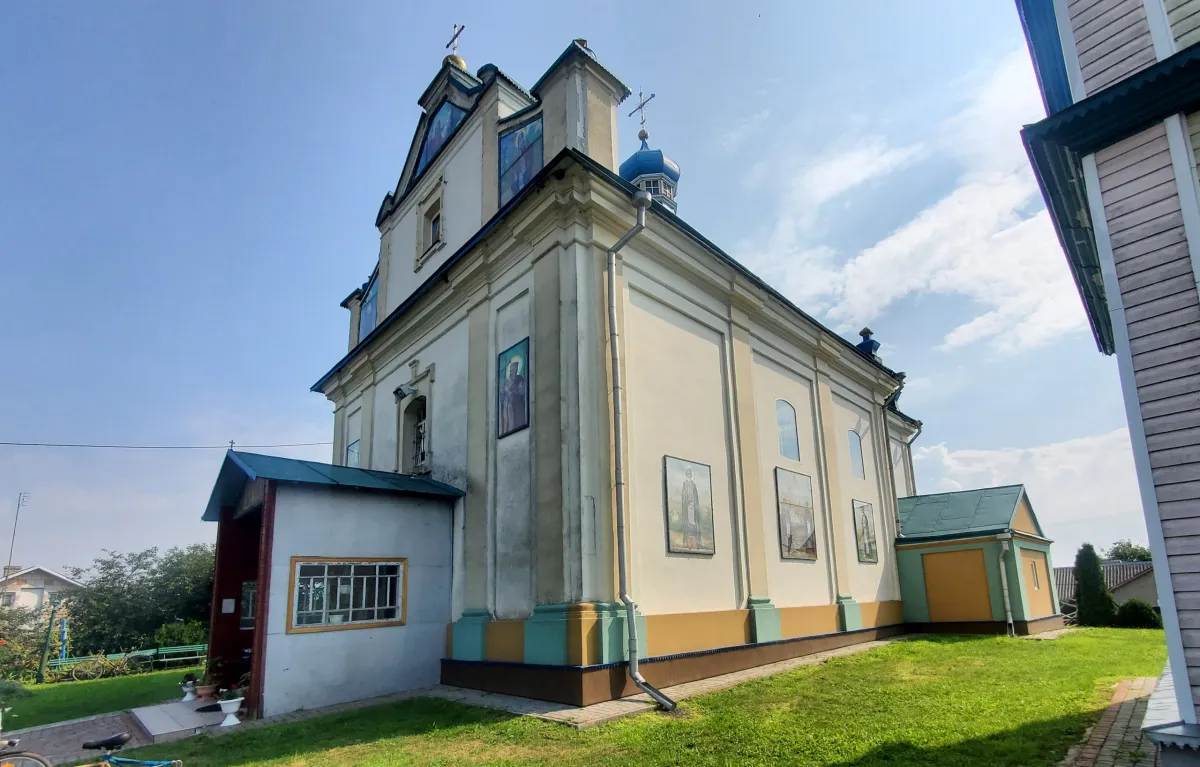
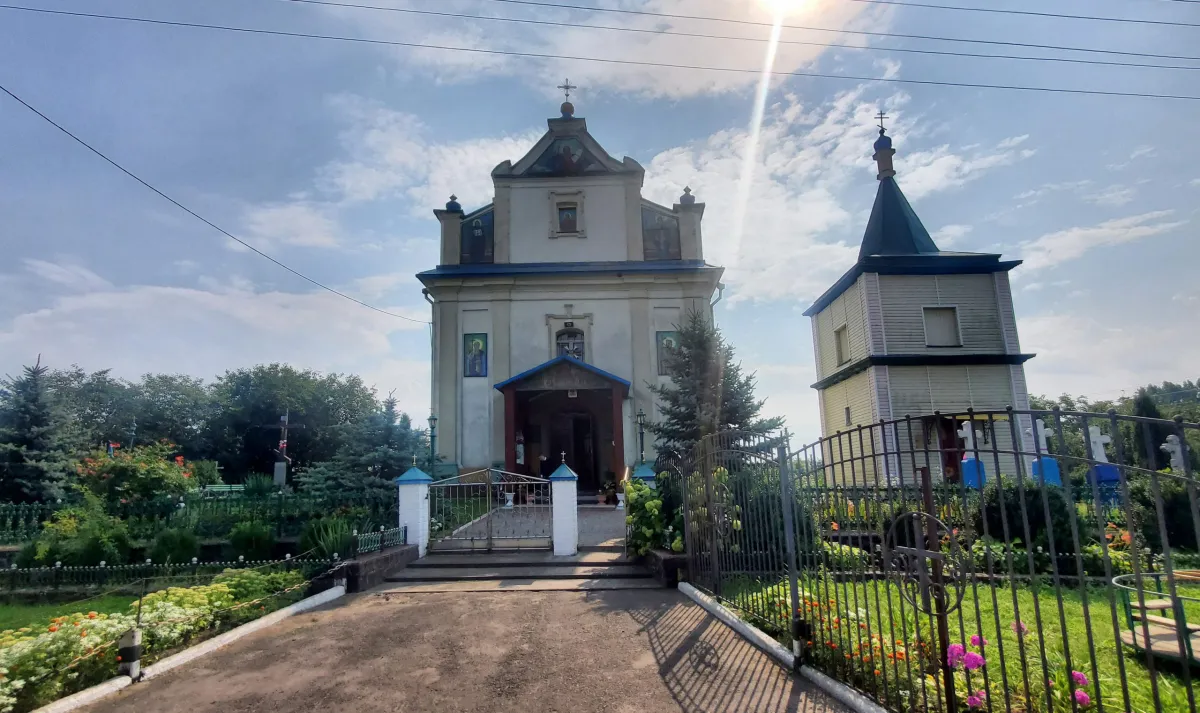
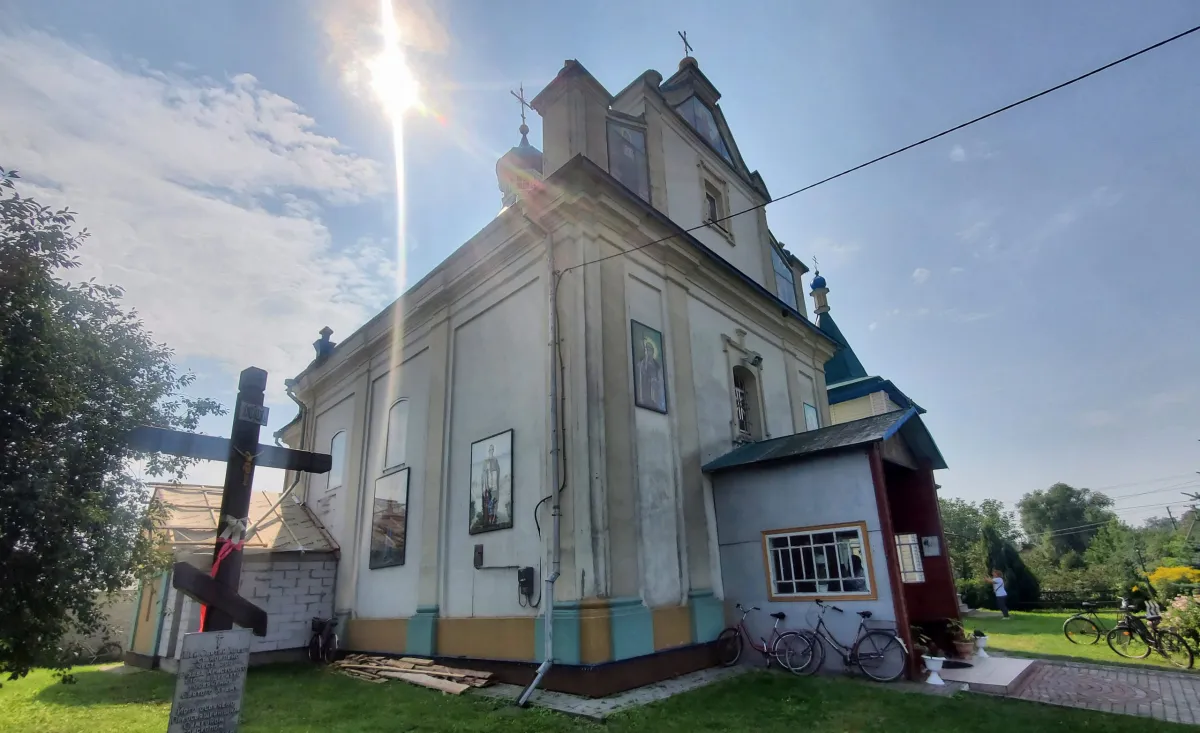
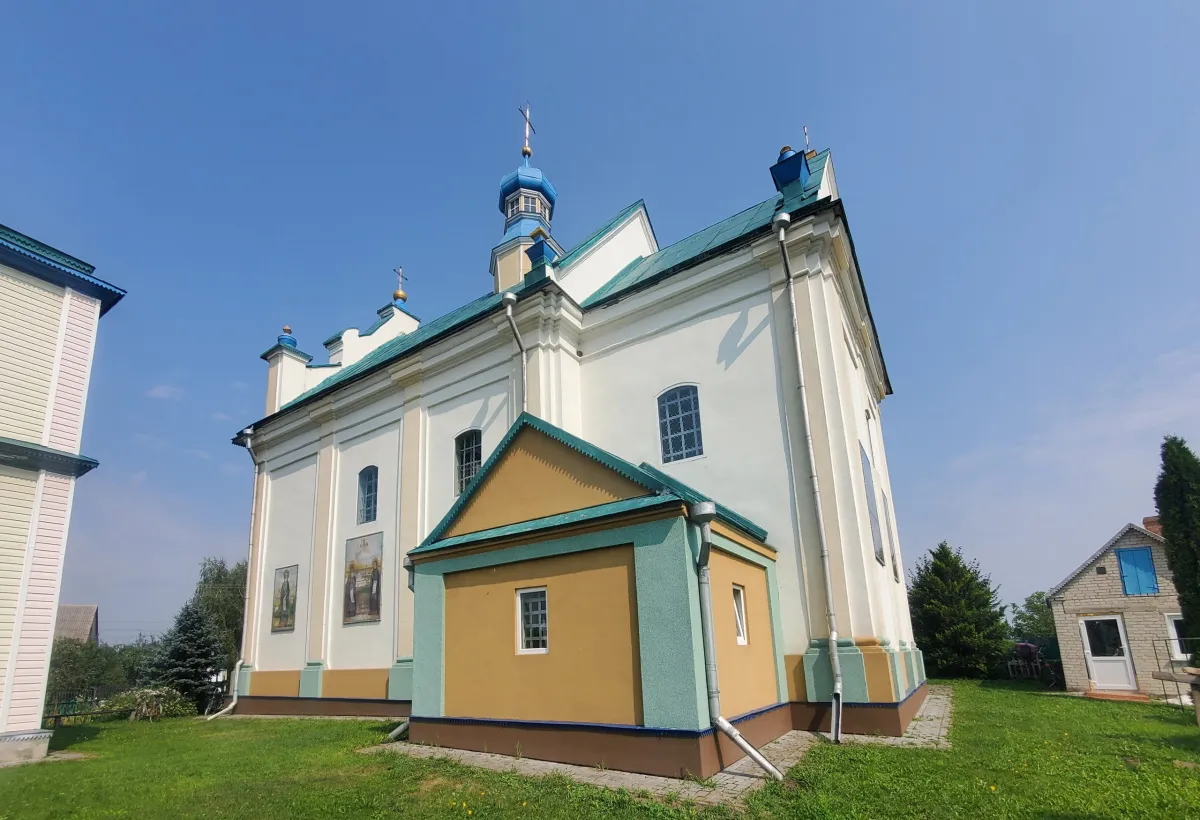
Before the Second World War Poryck had many monuments, including two kostels, several Orthodox churches, a synagogue, two Czacki palaces and the buildings of the Jewish town. Some remained even after the town’s destruction. The most noticeable monument is the St. Michael’s Church, built in the 18th century as a Jesuit kostel. The style of the church is European Baroque.
On the outskirts of Pavlivka there is a wooden Dormition Church, built in 1784. It hurts to look at the church from outside: it has been clad in modern imitation timber siding and covered with a metal roof of a caustic blue colour. Inside, an old iconostasis has survived, so we nevertheless recommend visiting the church, despite the outward disfigurement.
The best-known old site in Pavlivka is the brewery, founded in 1904. It still operates today and makes beer that everyone praises.
On the site of the estate of the Czacki counts there is now the “Shakhtar” sanatorium. Nothing has survived of the count’s park buildings.
Text and photos by Roman Malenkov.
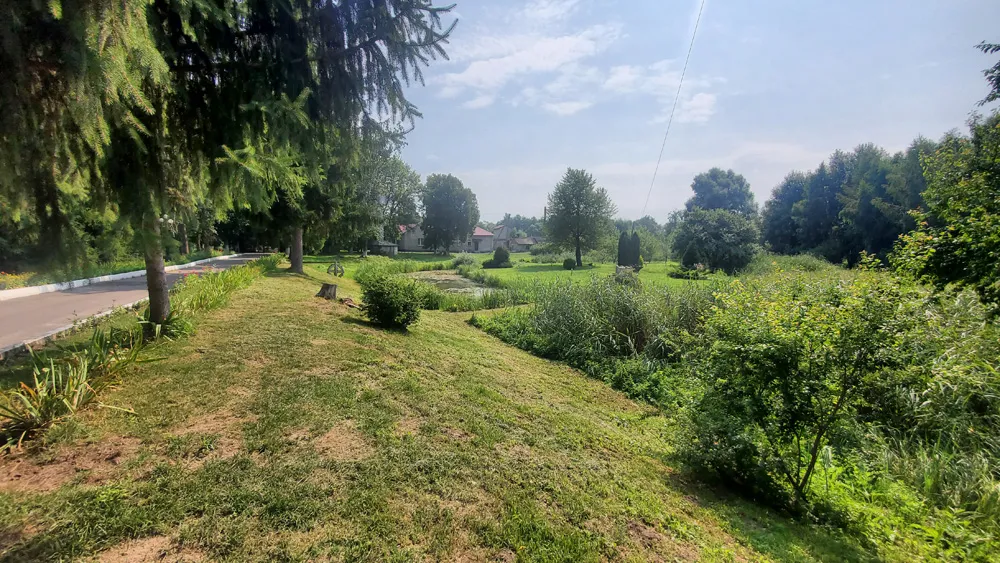
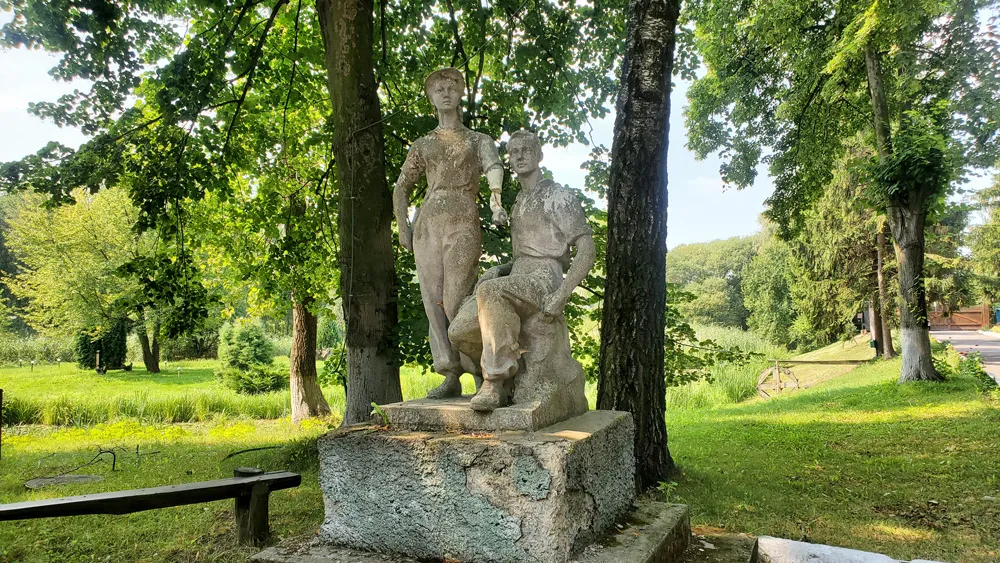
The former Czacki estate, now a sanatorium.


