Radkivka. Monastery

· 4 min read
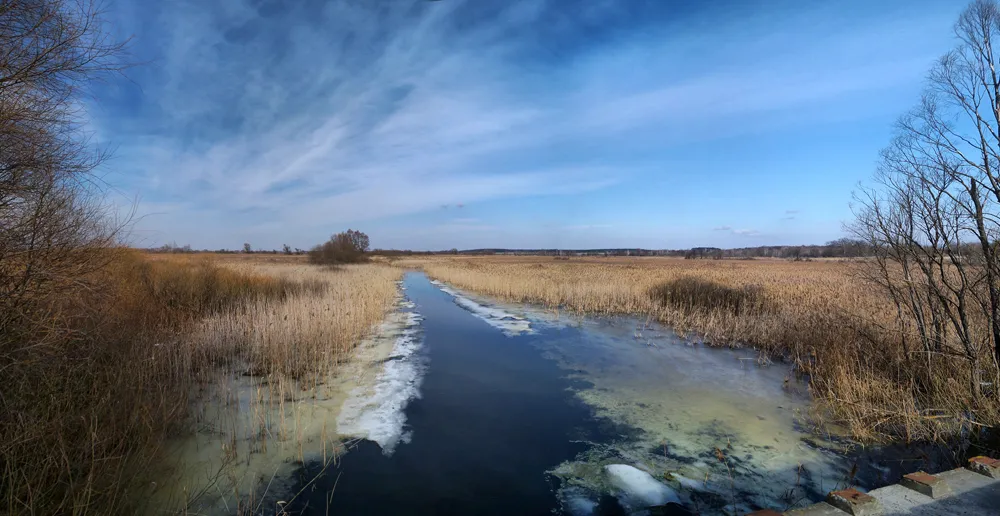
The farmstead of Radkivshchyna, now the village of Radkivka, stood in the forest north of Pryluky, near the Udai River.
In 1709 this farmstead together with its mill was acquired by Pavlo Rakovych, which was confirmed by a universal of Hetman Ivan Skoropadskyi.
Pavlo Rakovych came from Cossack families; his father, Semen Rakovych, was a regimental scribe, and his mother, Ahafiia Lazarivna, was a daughter of Colonel Lazar Horlenko. Pavlo Rakovych himself was a bunchuk comrade. He took part in the Gilan campaign of 1725, in which his sons Andrii and Fedir died. Although there are other data saying that Fedir died before his father and all of Rakovych’s estates passed by inheritance to Andrii alone, except for the part of the land that Pavlo Rakovych gave to his daughter.
In 1729, by a universal of Danylo Apostol, he was appointed acting colonel of the Pereiaslav Regiment.
On 25 January 1736 Pavlo Rakovych concluded an agreement with Kornylii Nelhovskyi (father of the Lokhvytsia centurion Vasyl Nelhovskyi), presbyter of the Obychiv Church of St. Michael, on building a Church of the Ascension of the Lord in his courtyard. Permission for this was obtained from Havriil Leopolskyi, hegumen of the Hustynia Monastery. In return for giving up part of his parish, Father Kornylii asked to be granted the right, or his children the right, to be rector of the Radkivka church.
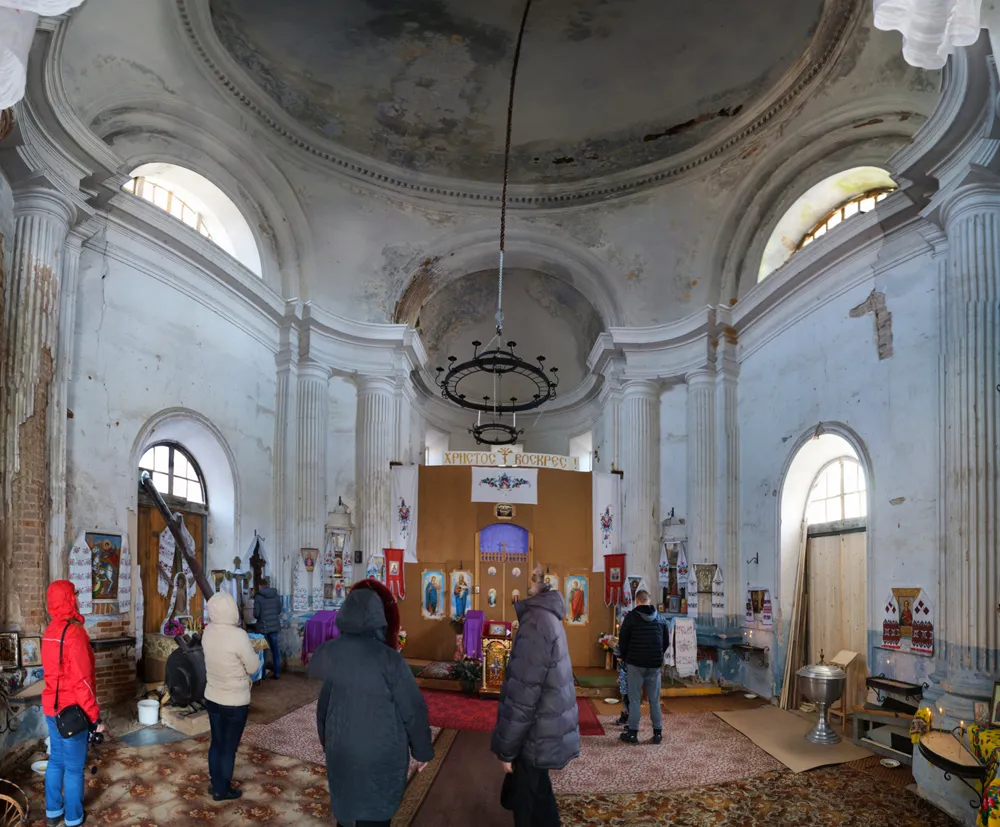
The church was wooden, small, and stood next to the present one. Three generations of the Rakovychs with their parishioners prayed in the first Radkivka church, and finally a representative of the fourth generation after Pavlo Rakovych, bunchuk comrade and later collegiate assessor Fedir Stefanovych Rakovych, decided to build a new church because the first had fallen into disrepair.
Permission to build a new stone church was obtained in 1796 from Archbishop Viktor (Sadkovskyi) of Chernihiv and Nizhyn.
Fedir Rakovych received a good education for that time at the Kyiv Theological Academy. Therefore he wished the church to be highly artistically decorated in its architecture and painting.
The names of the masters of the shrine are unknown. The iconostasis, the frescoes in the sanctuary and the icon of the Mother of God were created by an invited academician.
The church was consecrated in 1805. The bell tower was built separately from the church. The church had an excellent choir, whose fame was known far beyond Radkivka. In 1815 Fedir Rakovych died and was buried on the left side at the entrance to the church; in 1836 his wife Anastasiia died and was buried on the right side at the entrance to the church. Marble slabs with inscriptions were set into the wall above the remains of the deceased.
The Ascension Church was cold, and therefore Fedir Rakovych’s elder son, collegiate assessor Oleksandr Fedorovych Rakovych, having received permission in 1846 from Archbishop Hedeon (Vyshnevskyi) of Poltava and Pereiaslav, added a warm Church of Alexander Nevsky on the north side of the church. The serf peasant Musii Kryvoruchko made the carved iconostasis. The icons are copies of works by Italian painters, painted by a relative of the Rakovychs, the amateur artist Kochubei.
In 1879 Oleksandr and his wife Maria Rakovych died; they were buried in the crypt of the Church of Alexander Nevsky. In the church cemetery are buried Oleksandr’s eldest son Heorhii Oleksandrovych and his two daughters – Nadiia and Olha.
In 1905, when the church had stood consecrated for 100 years, the priest of this church, Petro Bazylevskyi, studied the archival records kept in the church premises and for the jubilee date published an article in the journal “Poltava Diocesan Gazette” titled “History of the origin of the church in the village of Radkovka. (For the centenary of the Ascension Church)”, which describes the life of the church’s owners – the Rakovych family – the construction and the history of church life.
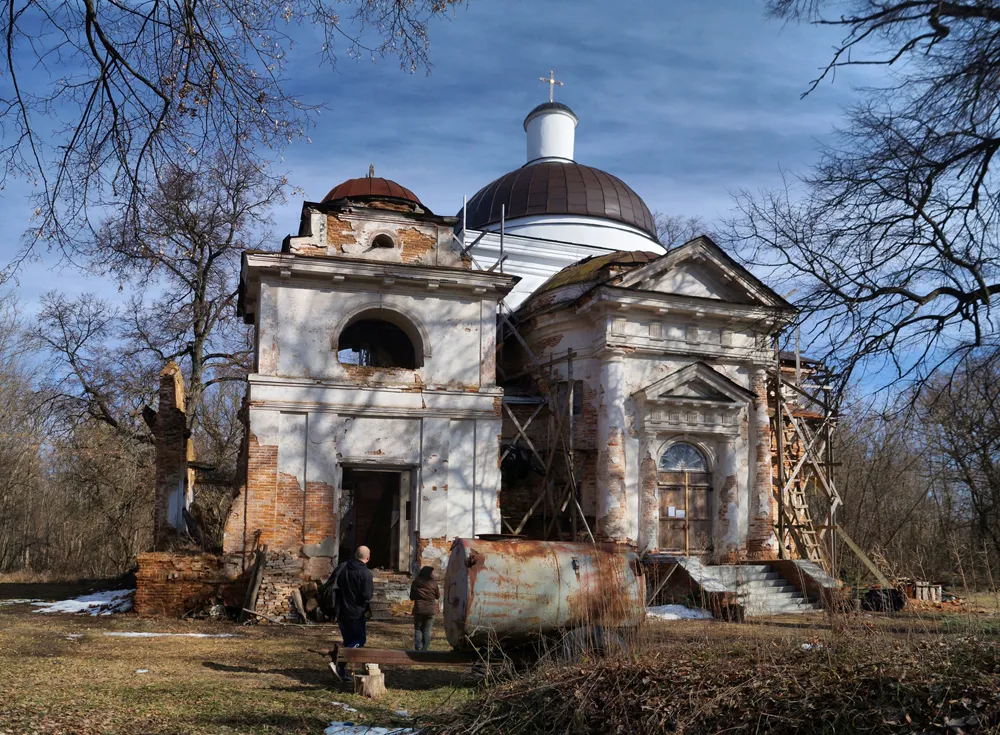
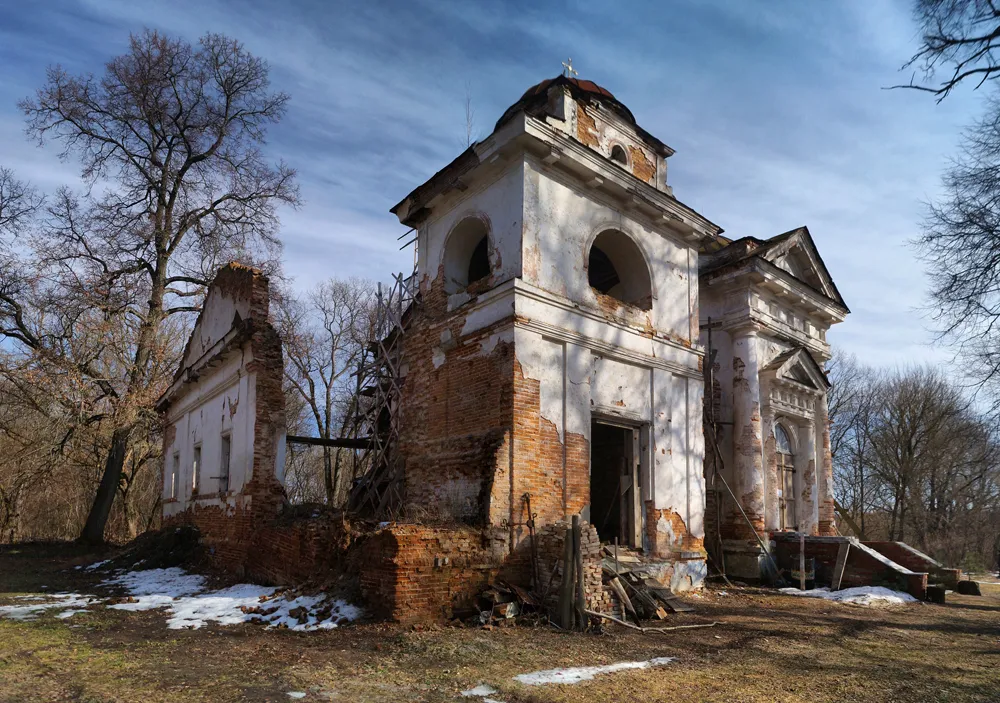
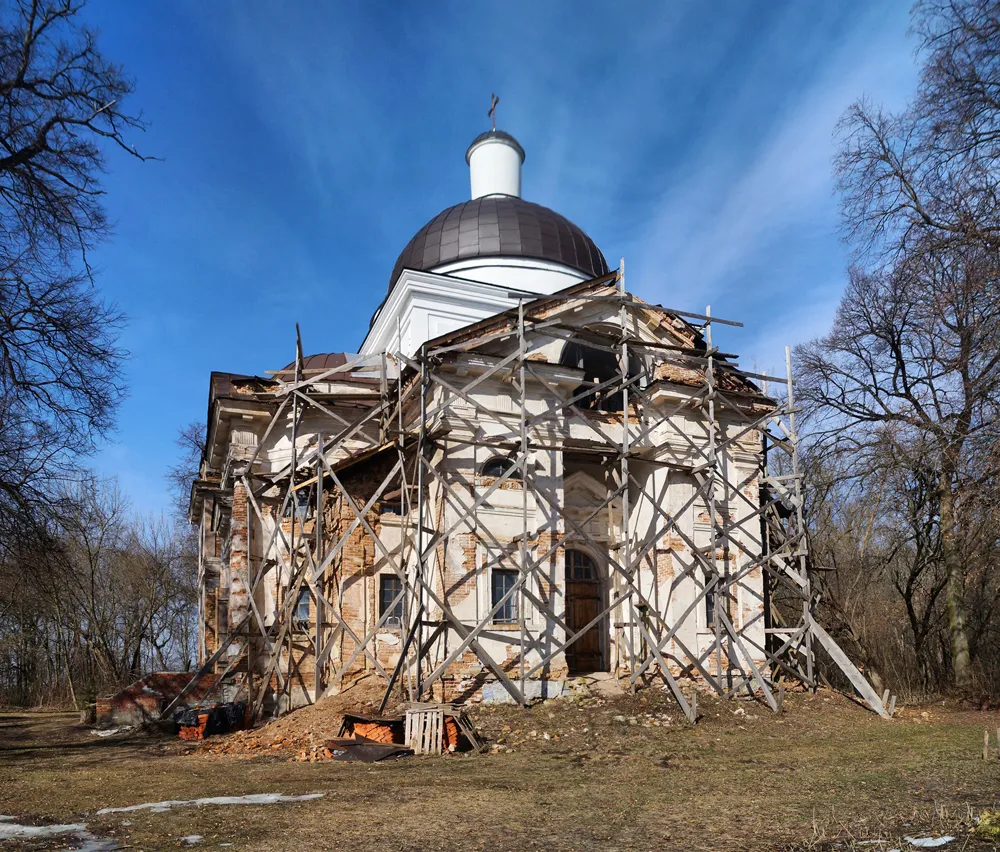
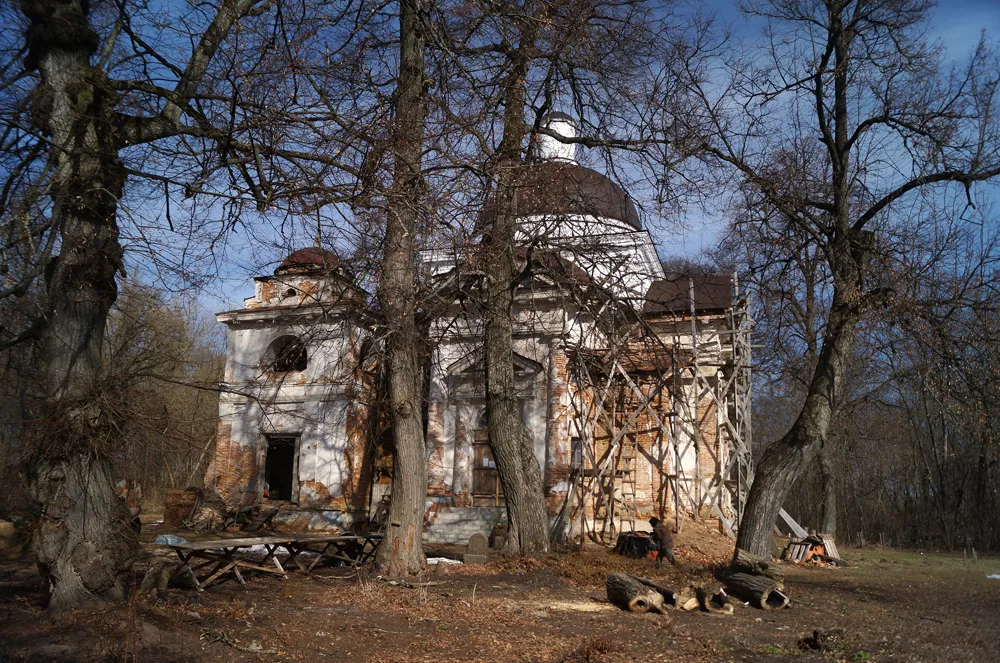
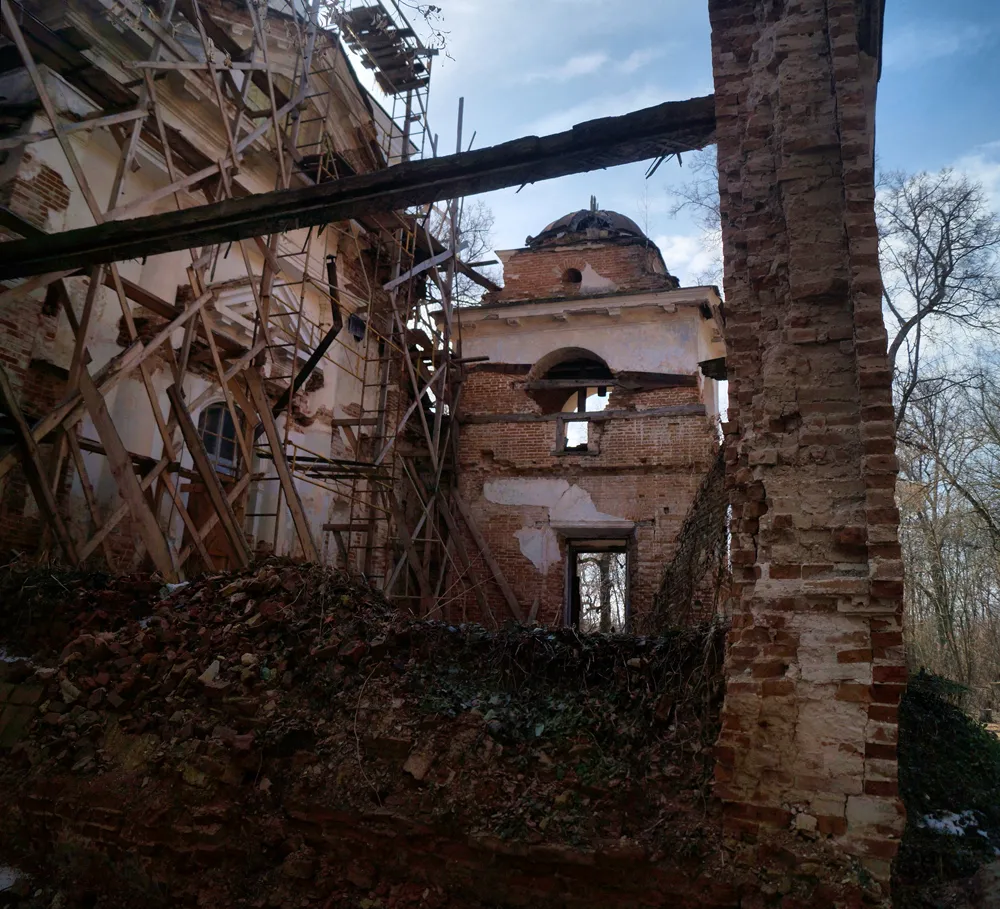
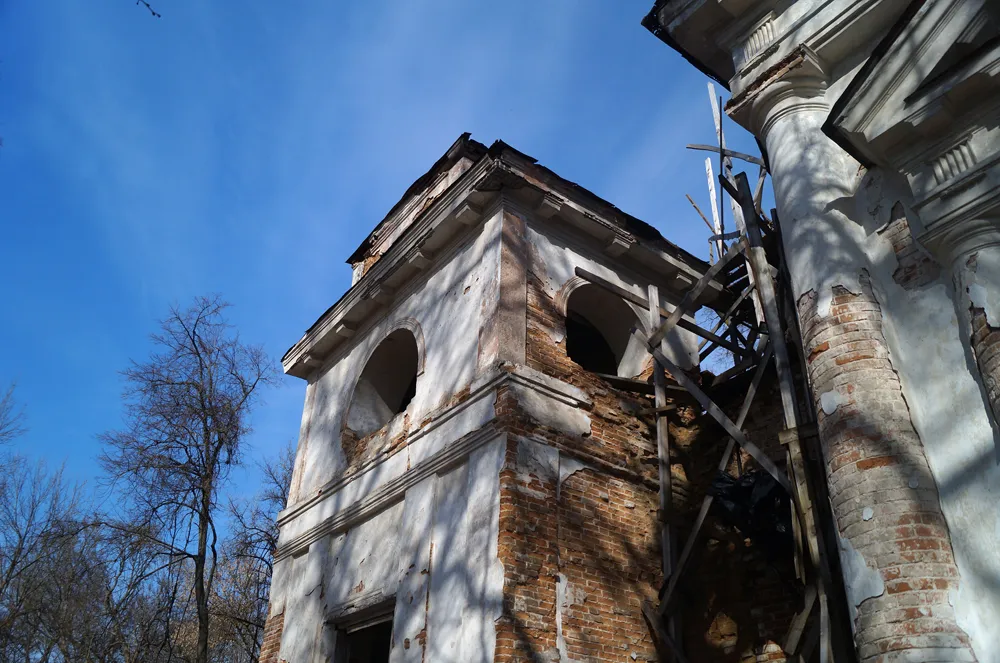
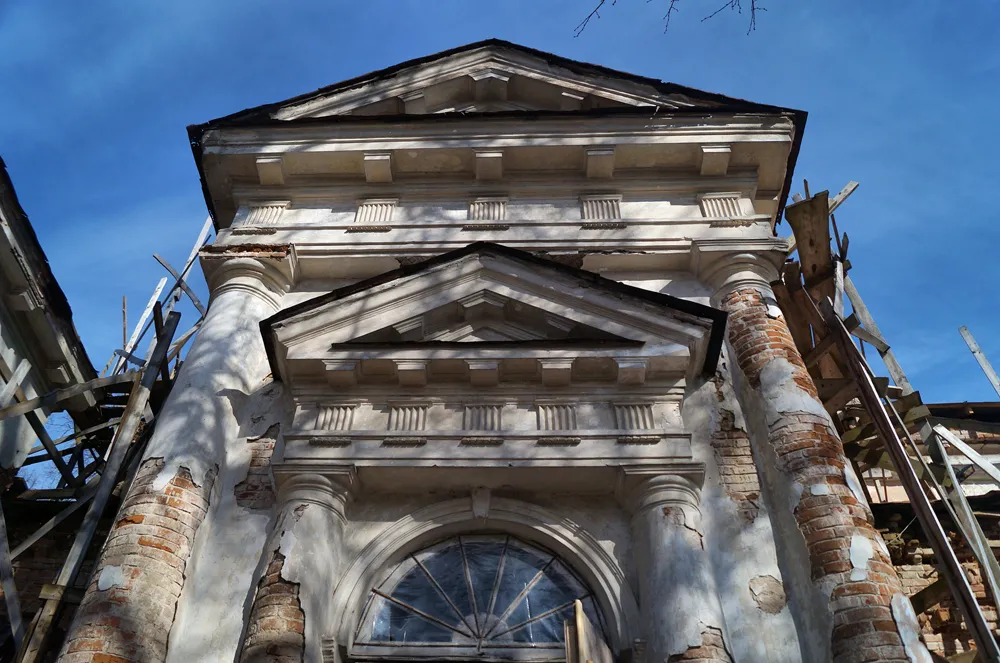
In Soviet times the church fell into ruin and served as a grain store; with help, later the floor and bricks were stolen and the walls destroyed… The Church of Alexander Nevsky was completely destroyed.
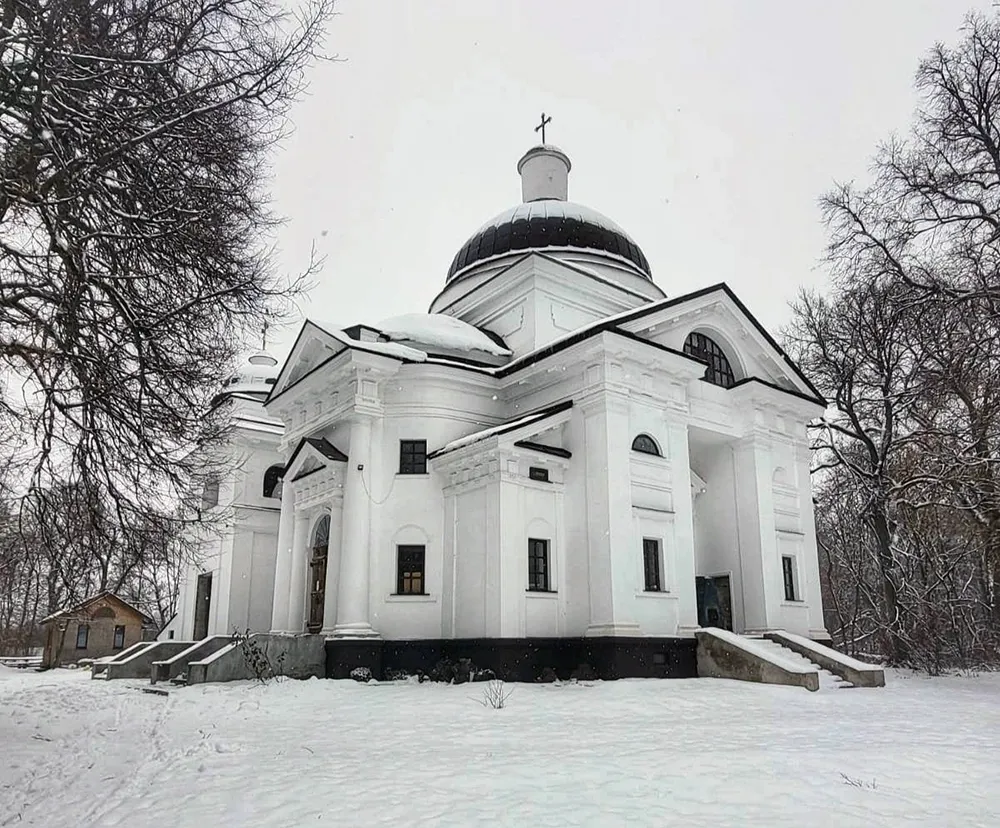
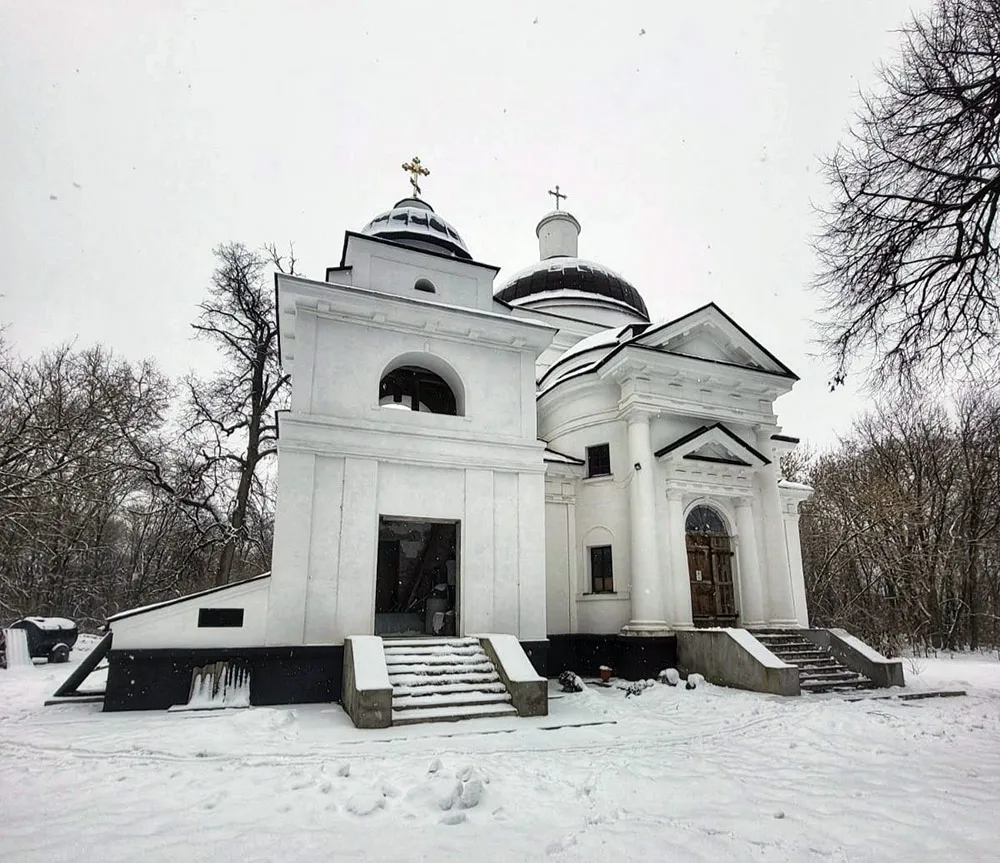
In 2010 the first functioning men’s monastery of the UOC-KP on the territory of the Chernihiv region was opened at the church – the Holy Ascension Men’s Monastery, which is helped by the separate Pryluky Cossack Regiment named after P. Sahaidachnyi.
On 9 October 2018 the church became a refuge for villagers during the explosions at arsenal No. 6 near the urban-type settlement of Druzhba. Now the Ascension Church is being restored. A monastery has been established here.
The church stands on the outskirts of the village in a village park and is a monument of Classicism. In front of the entrance to the Holy Ascension Church lies a granite gravestone set up for the landowner Rakovych.
Text by Ihor Dorozhko, photos by Roman Malenkov. Photos of 2019. Now the church is in much better condition.
Next are photos of the church from 2023 by Serhii Pavlichenko