Sarata

· 3 min read
Sarata was founded in 1822 by Pastor Ignaz Lindl. On 10 March 1822 I. Lindl set out for his new place of residence – Sarata. His flock followed him. From a letter by one of the colonists (of 27 May 1822), published by H. Dalton, it is known that on 1 April 50 wagons with settlers arrived in Sarata. By the end of 1822 another 40 Catholic families from Bavaria and as many Lutherans from Württemberg had moved to Sarata (according to some sources up to 10,000 people). Each family received 60 desyatinas of land from the tsarist government. In addition, colonists were given 2,000 roubles per family for building houses and farm buildings and for buying livestock and implements. At the same time they were exempted for 50 years from paying taxes, and the men from military conscription.
The colony was organised according to the apostolic commandments. All property was held in common, and the principles of Christian communism prevailed. The life of the colonists went on in a limited world in which the teaching of I. Lindl, the church, the school and the community were the centres of spiritual and social life. The Pietists sought to fence themselves off from the rest of the “sinful outside world” and to close themselves within their community.
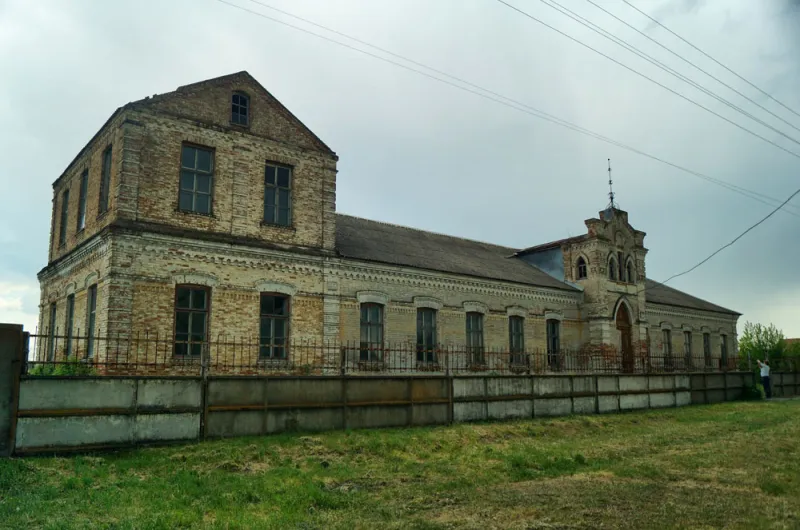
In 1823 the first school was built in Sarata, with 68 pupils. In 1840 a church of Evangelical Christians with 515 seats was built. It was the only church in Bessarabia that had an organ. In 1844, with funds from the colonist K. F. Werner, the first teacher training school in Bessarabia was built. It trained teachers for the rural parish schools of the German colonies, as well as clerks and land surveyors. In time a Jewish primary school appeared in Sarata, and in 1912 a Russian parish school.
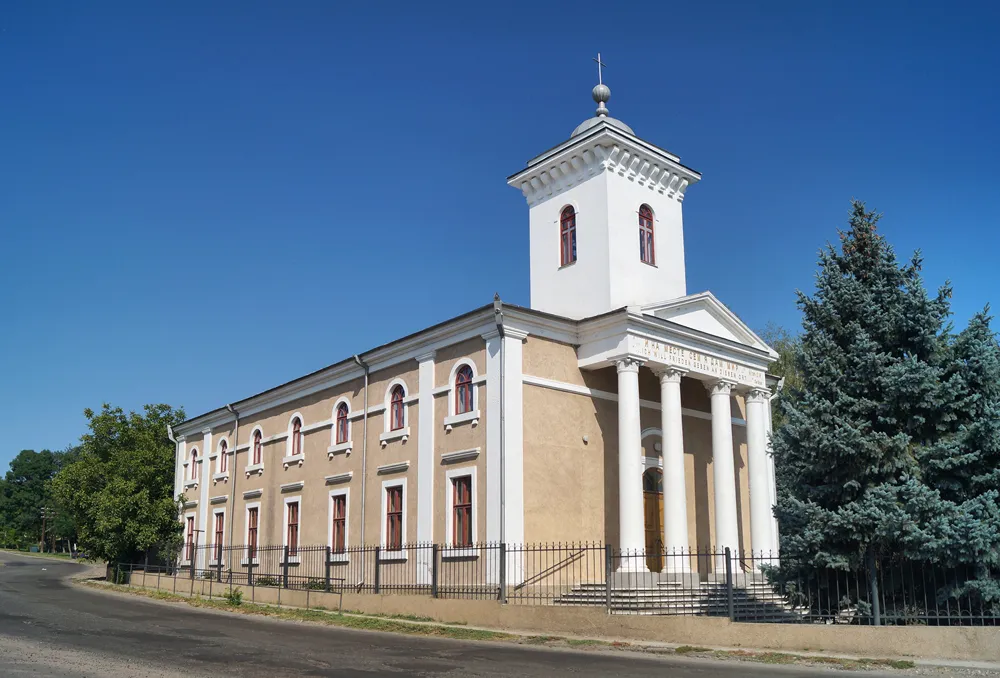
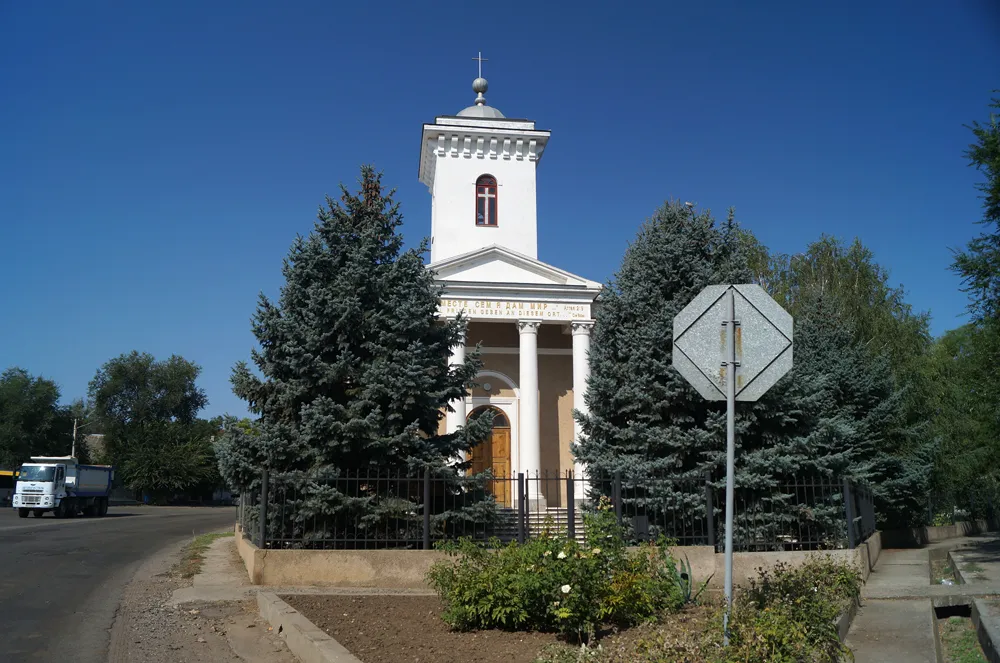
The Lutheran church.
By the beginning of the 20th century Sarata had acquired the features of a small town and became a volost centre of the Akkerman County of the Bessarabia Governorate. Its population grew substantially. In 1856 there were 943 inhabitants, in 1890 – 2,500. In 1874 a steam mill was built. In 1886 a mechanical plant was put into operation, employing 140 workers; the town also had an iron foundry and dyeing workshops.
In January 1918 Romanian troops began the occupation of Bessarabia. The 22-year occupation left its negative mark on the social and economic life of the region. In schools children of all nationalities were taught only in Romanian. On 28 June 1940 Bessarabia was annexed to Ukraine and Soviet power was established in Sarata.
Today Sarata has its own special holiday – Temple Day, held every year on 14 October; in honour of the founder of Sarata, Pastor I. Lindl, a parade takes place that passes through the whole town. The parade is accompanied by songs and a theatrical performance with plots taken from the Bible. On this day lectures are held in Sarata at the museum, the house of culture and the house of prayer on the history of the founding and development of Sarata, from the earliest times to the present day.
Text from Wikipedia.
The main, and in fact the only, architectural monument of Sarata is the Lutheran church, built in 1840. It is one of the oldest Protestant churches in southern Ukraine. When Soviet power came, it did not function for a long time. Later the House of Officers was placed here, and later still a House of Culture. In the period of independence the German community made significant donations – the church was reconstructed and restored as the Protestant church that it is today.
Photos by Roman Malenkov.