Sataniv

· 12 min read
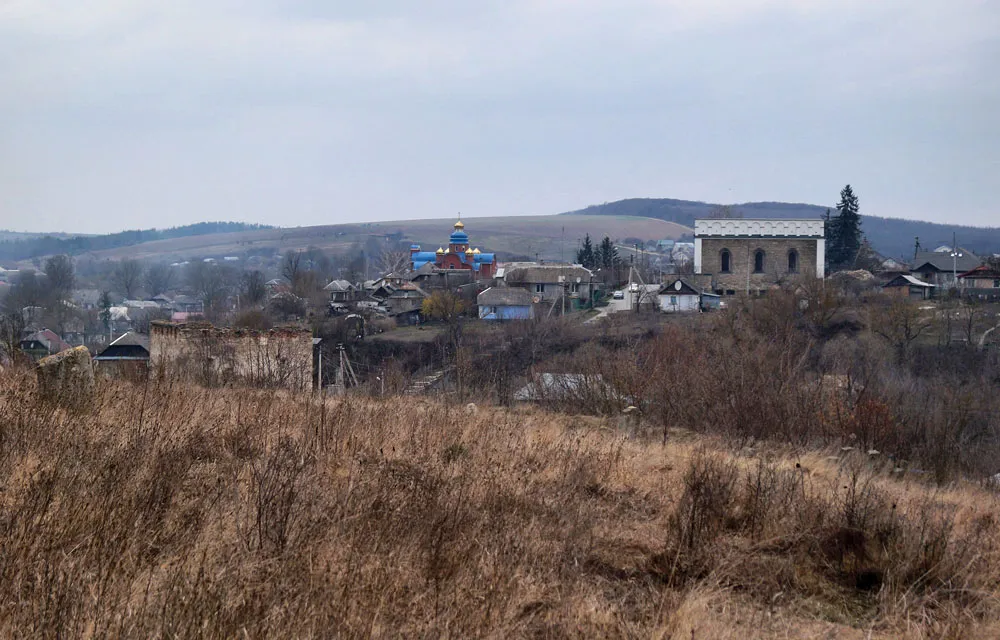
I always visit this Podillia town with great pleasure. In May 2019 I was here for the third time. In the nine years I was away, only the fortress synagogue changed. It has been restored and no longer looks as archaic as it once did. Everything else is the same as several centuries ago: the castle, the Roman Catholic church, the town gate, the old Jewish cemetery, the majestic yet small Zbruch, the geese and cows on its bank, the wooden footbridge. Time has stopped here. Only the huge Arden Palace on the horizon, the new modern complex of the resort town of Sataniv, reminds us that we are in the 21st century.
Where does such an interesting name come from?
The town of Sataniv (Horodok district, Khmelnytskyi Oblast) is a well-known Ukrainian climatic and balneological resort. It lies on the steep left bank of the Zbruch at the foot of the Tovtry ridge. The Trajan’s Wall, built during the Roman emperor Trajan’s conquest of Dacia at the beginning of the 2nd century AD, stretches here all the way from the Dniester. One of the possible versions of the origin of the town’s name is connected with this period.
According to legend, when in AD 105 the Roman legion of Tonilius was marching north of the Dniester, on reaching the high bank of the Zbruch Tonilius asked his soldiers: “Sat an non?” (“Shall we stop or not?”). They firmly answered: “Sat!”. Hence the name. Of course, this version looks like simply a beautiful fairy tale, and the name could also have had a “devilish” undertone: since the introduction of Christianity in Rus, these lands long remained a refuge for pagans.
How Sataniv came into being
The first mention of the town dates from 3 March 1404, when the Polish king Władysław II Jagiełło gave Sataniv, together with the surrounding villages and Zinkiv, to Piotr Szafraniec, son of the Kraków podstoli Piotr Szafraniec the Elder. For such a gift the owner of the town undertook to reside permanently on the estates, to provide 6 lancers and 12 archers for campaigns abroad, and in case of external threat to defend the land with all his people. In addition, the owner of the lands had the right to transfer his estates to others only with the king’s consent, and his subjects had to perform all duties and pay all taxes introduced back in the time of the Koriatovyches.
Piotr Szafraniec was a person very close to the king from the very beginning of his career. In 1398–1406 he held the post of Kraków podstoli, and in 1406–1430 that of Kraków podkomorzy. From 1431 to 1433 he was voivode of Sandomierz, and from 1433 to 1437 voivode of Kraków.
The lands around Sataniv were returned to the king for a short time, and in 1431 were handed to the voivode of Podillia, Piotr Odrowąż of Sprowa. For protection against the Tatars, Odrowąż began building a castle on the site of old 14th-century fortifications. From those times the so-called “Odrowąż Tower” has survived to this day, the oldest part of the castle in Sataniv. Some researchers consider it an archaic example of Podillia fortifications and date it to the Old Rus period.
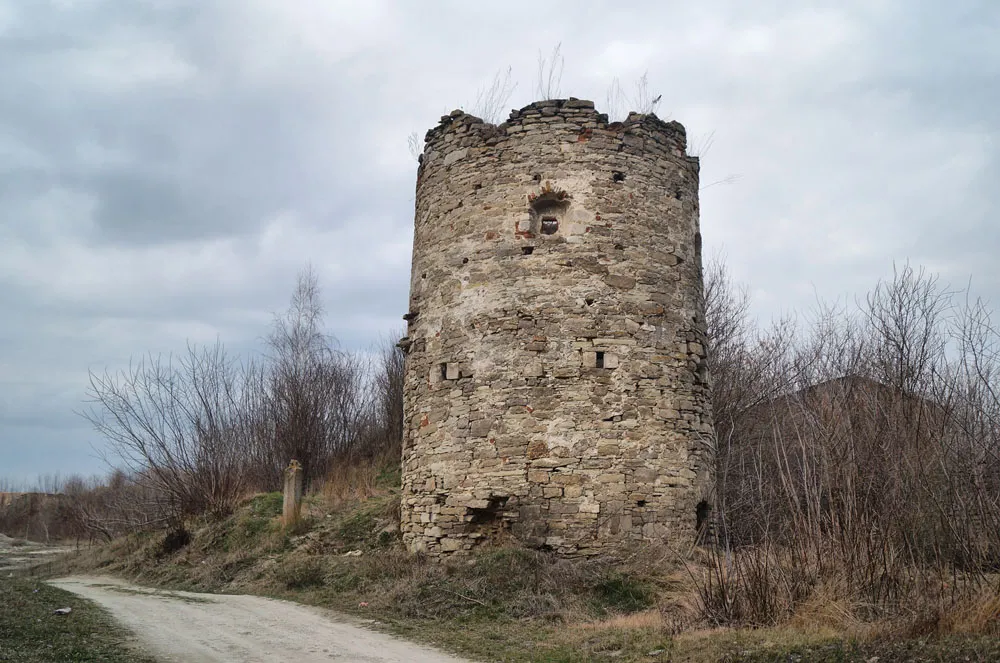
The tower stands slightly apart from the main part of the castle. It is round in plan, 6 metres in diameter, and survives to a height of three floors. Loopholes survive on the two lower tiers. Evidently they were adapted for archery rather than for firearms. Defensive walls adjoined the tower, and traces of them survive. In its best days the tower projected three-quarters of its volume to the field side of these walls.
Sieniawski in Sataniv. Building the castle
Kateryna, daughter of Jan Kostka and Zofia Odrowąż, brought Sataniv as a dowry to her husband Adam Hieronim Sieniawski, who owned castles in Stare Selo near Lviv, in Medzhybizh and in Berezhany. At the end of the 16th century Sieniawski built a regular castle in Sataniv, which became one of the most powerful in the Zbruch region.
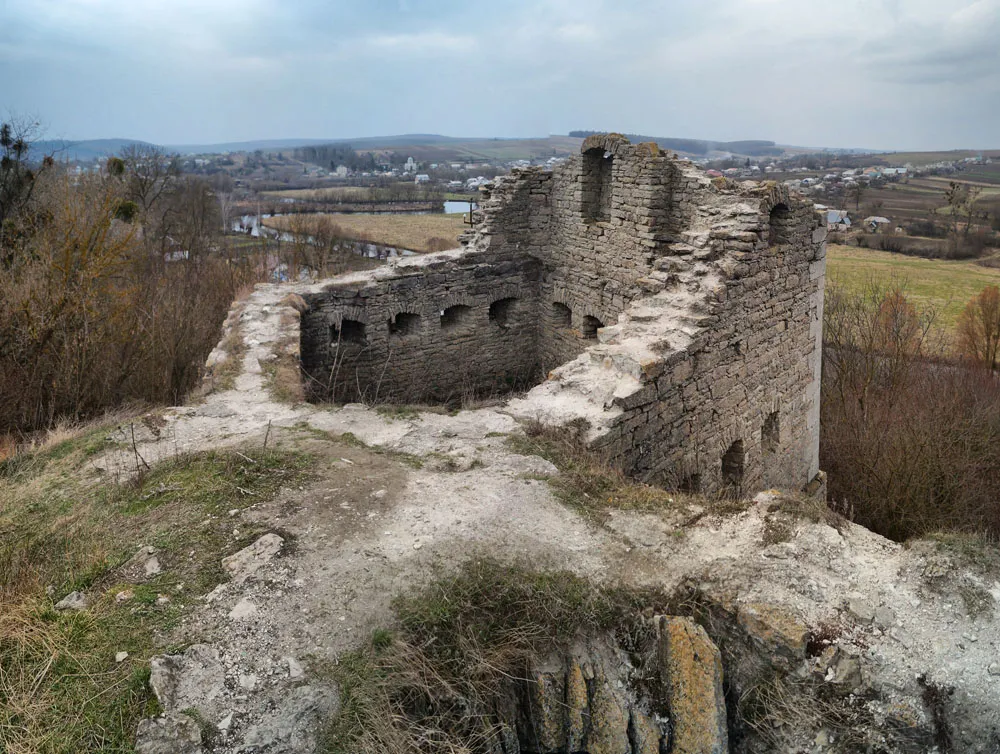
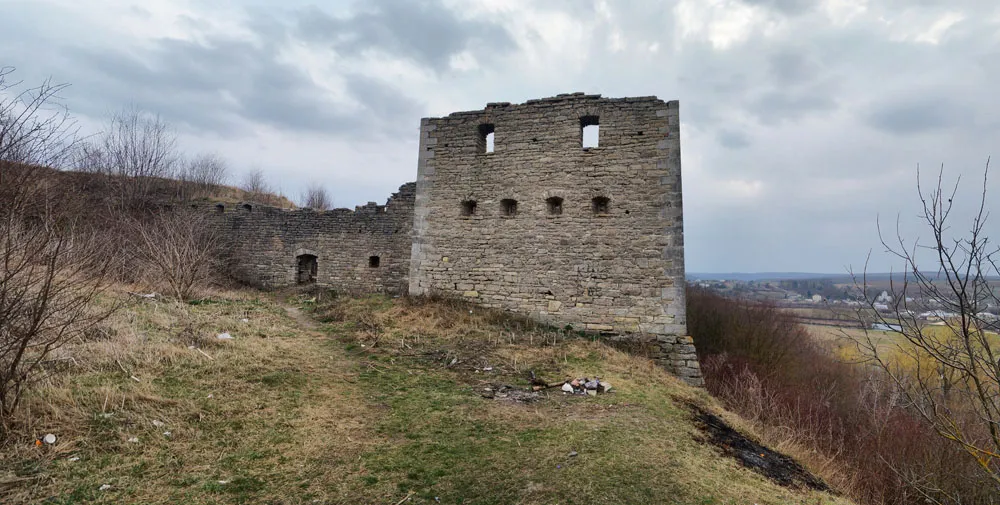
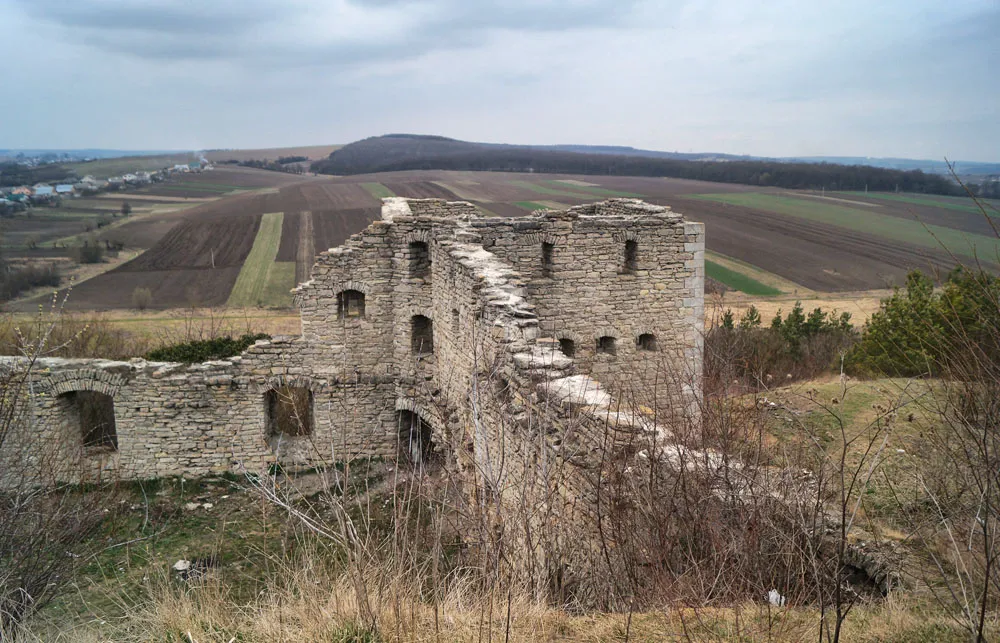
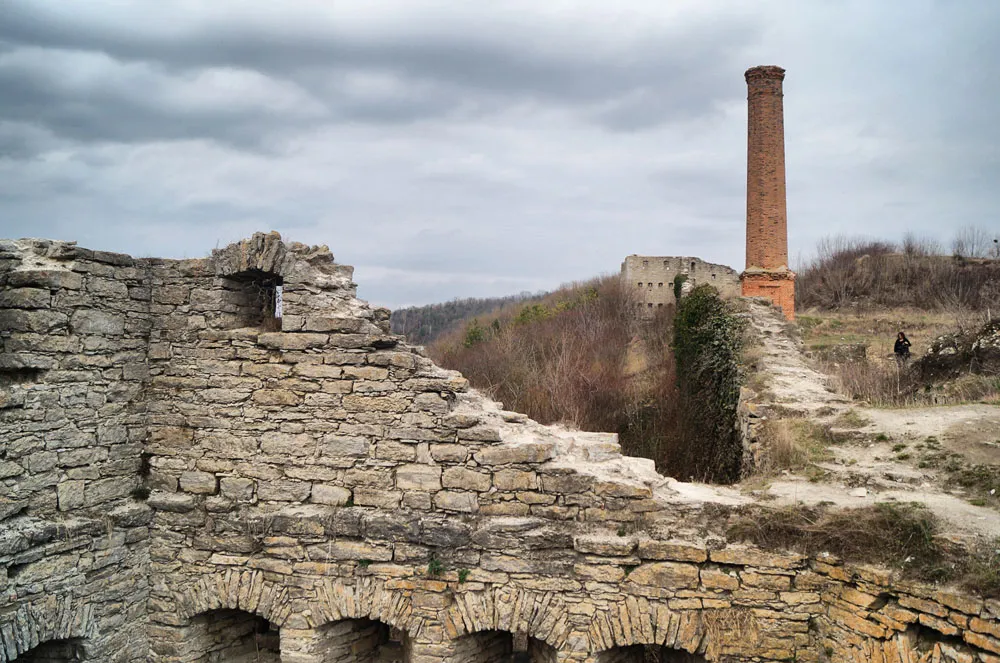
The castle was built pentagonal in plan. Each side of the castle was approximately 125 metres long, and at the corners there were 5 towers that projected far beyond the line of the walls. The walls were double. The inner walls (not preserved) stood on a rampart and were separated from the outer ones by a moat. The height of the outer walls in places reached 10.5 metres.Sataniv Castle
In 1641 Adam Hieronim Sieniawski’s widow, Katarzyna Sieniawska, obtained Magdeburg rights for Sataniv. She received from the king the right to elect the vogt herself and to make the final decision in all court cases. For such powers the owner had to keep the town fortifications in order and supply them with weapons.
Magdeburg rights did not long favour the town’s development. During the Liberation War the town was repeatedly seized and destroyed by Cossacks. In 1651 they took the castle together with the Tatars. In 1653 the Cossacks took the town without an assault: the local Orthodox inhabitants opened the gate to them themselves. The Zaporozhians then slaughtered not only the whole castle garrison but also civilians.
When the Polish Crown Hetman Marcin Kalinowski recaptured the town, he first ordered all the Orthodox in Sataniv to be executed. But the sentence was softened, and only every tenth person was executed. In memory of these events Kalinowski ordered a memorial sign of the Sorrowful Christ to be set up in Sataniv. At its unveiling he said: “Look, even the Lord grew sad on seeing your betrayal of the king.” The monument still stands today behind the settlement hospital.
In 1672 Sataniv was occupied by the Turks, but the next year the Poles recaptured the town. In 1676 the Turks, seizing the town again, destroyed practically all its population. During 1676–1699 Sataniv, like all of Podillia, was under Turkish rule.Sataniv Castle
Revival after the Turkish invasion
After the war, at the beginning of the 18th century, Sataniv began to revive and regain its reputation as a town of crafts and trade. In 1711 the town was visited by the Russian autocrat Peter I, returning from the Prut campaign. He was hosted by Crown Hetman Adam Mikołaj Sieniawski. In the first half of the 1720s Sieniawski rebuilt the castle and the town fortifications.
After Adam Mikołaj Sieniawski’s death in 1726, Sataniv passed through his daughter Zofia to her husband August Stanisław Czartoryski, voivode of Rus. Fairs have been held in Sataniv every year since 1744. The owner of the town obtained from the king the right to hold 4 weekly fairs. Sataniv strengthened its reputation as a major trading centre of Podillia.
The castle’s modern history: the Lubomirskis, Sanguszkos and Potockis
In 1782 August Stanisław Czartoryski died, and his daughter Elżbieta Helena Anna brought Sataniv as a dowry to her husband, Grand Crown Marshal Stanisław Lubomirski. In 1793, after another partition of the Polish-Lithuanian Commonwealth, Sataniv became part of the Russian Empire and remained a border town until the beginning of the Second World War.
In 1816 Sataniv passed to Elżbieta Lubomirska’s daughter Aleksandra, who was married to Stanisław Kostka Potocki. The town was inherited by their son Aleksander Stanisław Potocki, and later by Potocki’s daughter Natalia, wife of Prince Roman Adam Stanisław Sanguszko. For participation in the Polish uprising of 1830–1831 the Russian government confiscated the estate from Sanguszko and his daughter Maria Klementyna in favour of the treasury.
Castle-factory
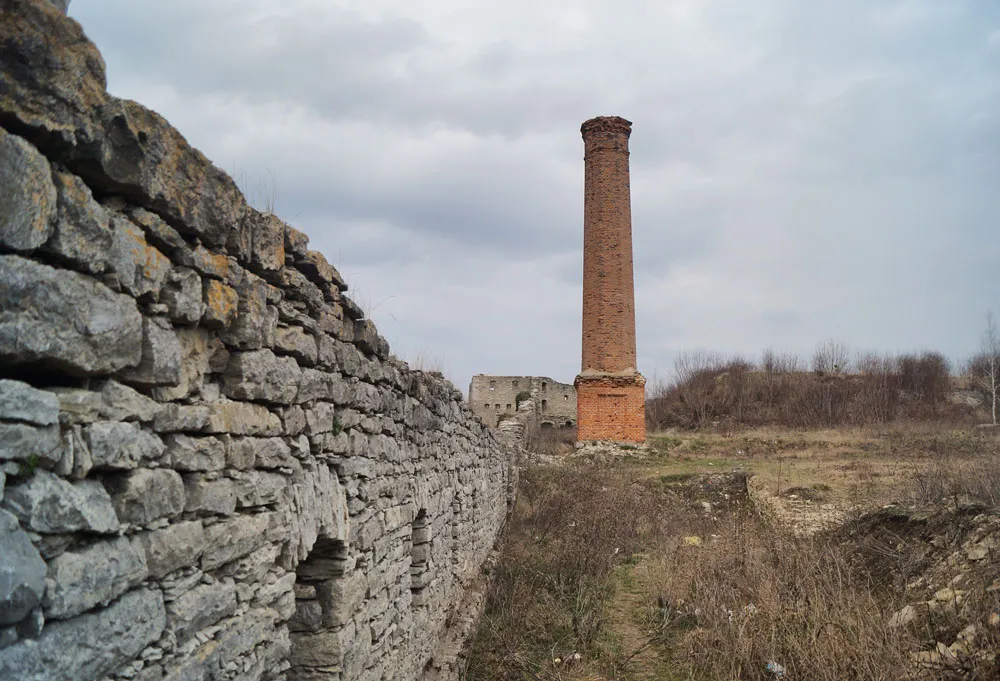
In 1899 a sugar factory was built on the castle grounds, which did irreparable damage to the fortress, since it used the walls as limestone in sugar production. The factory belonged to a joint-stock company that included the owner of Sataniv, Countess Klementyna Tyszkiewicz, as well as the industrialists Pruszyński, Brokl and others. The factory’s director Wilhelm Mikhailovich Brokl belonged in 1914 to the business elite of Russia.
The factory ceased to exist in 2002, and its buildings began to fall apart. In August 2009, at about 2 a.m., one of the sugar factory’s buildings collapsed. The total area of the ruin formed by the collapse reached 600 square metres.
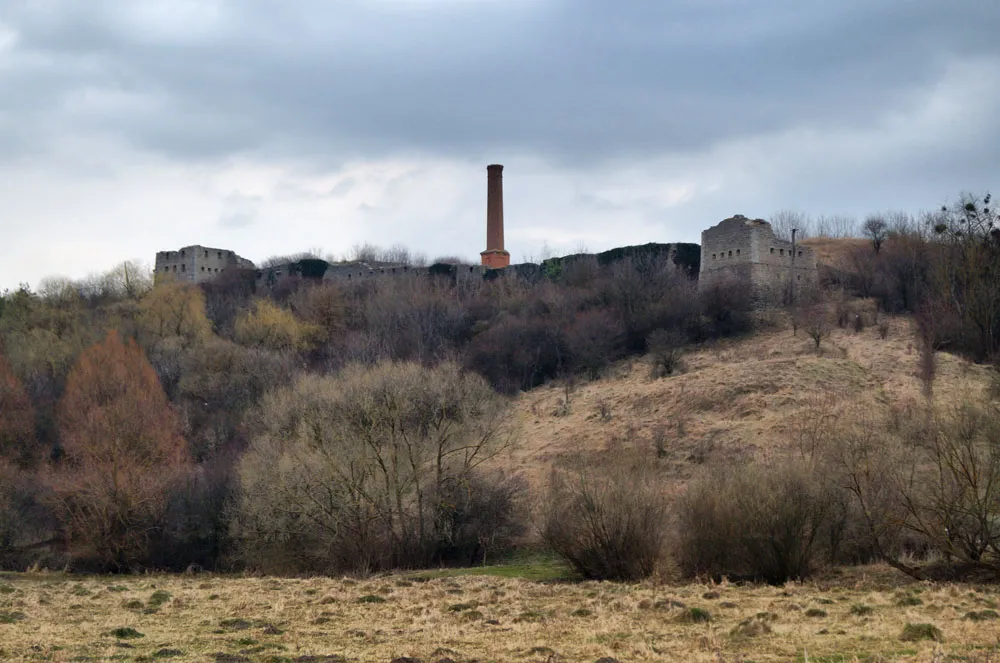
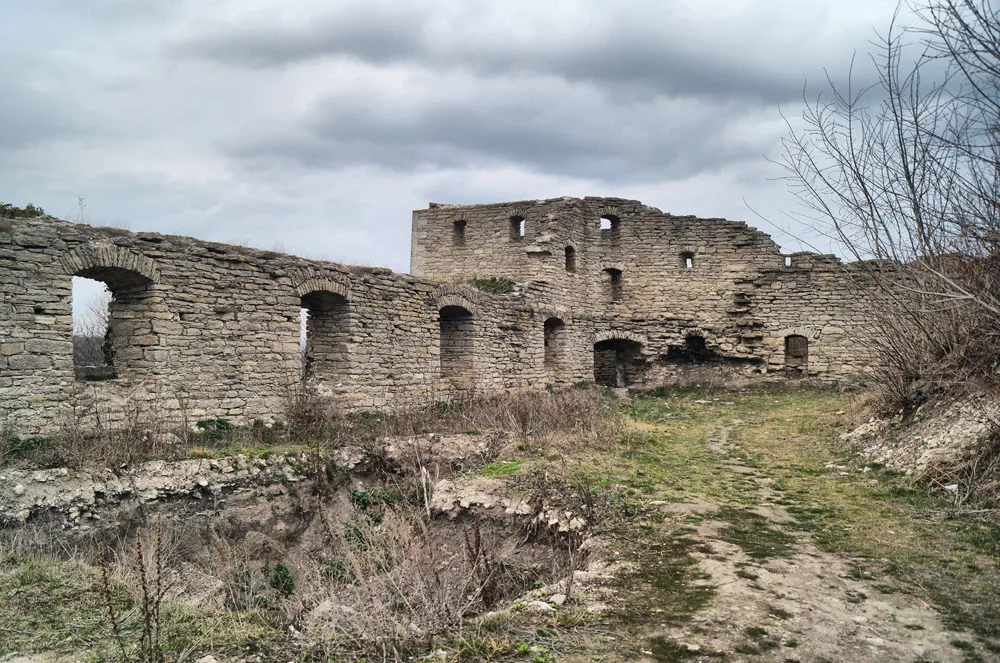
Of the castle, significant fragments of the castle walls and two five-sided corner towers facing the Zbruch have survived to this day. The faceted towers, connected by defensive walls, survive to a height of two or three tiers. The thickness of the walls averages about 1.5 m.
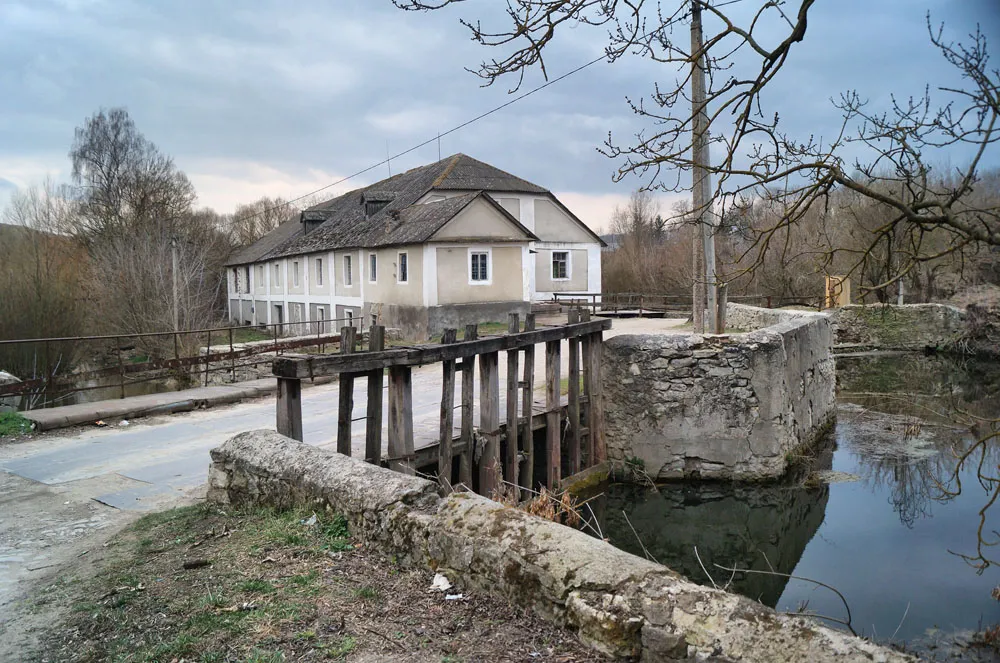
Zbruch
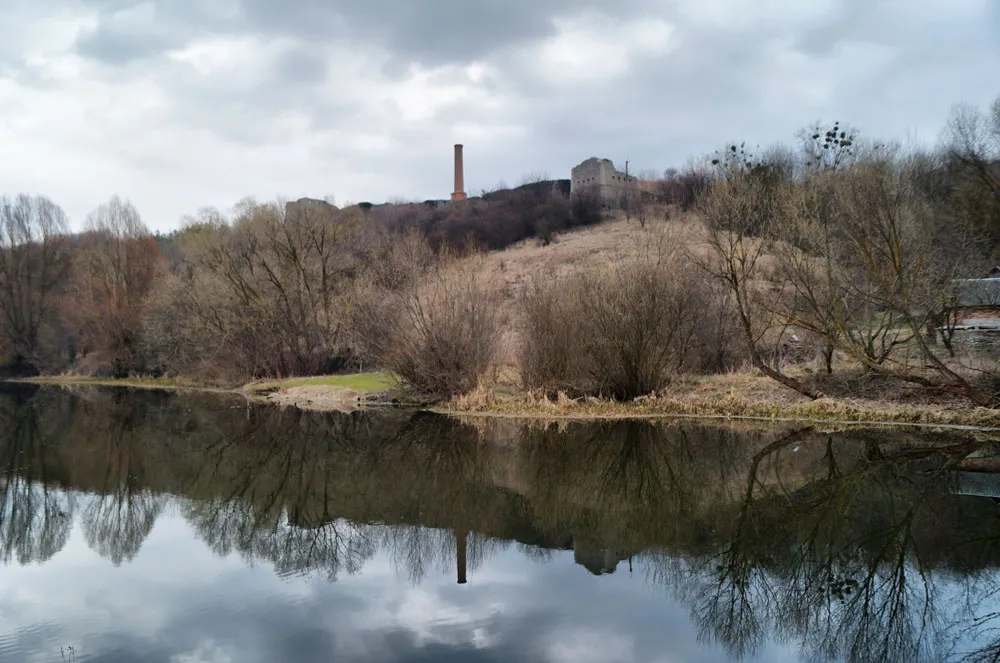
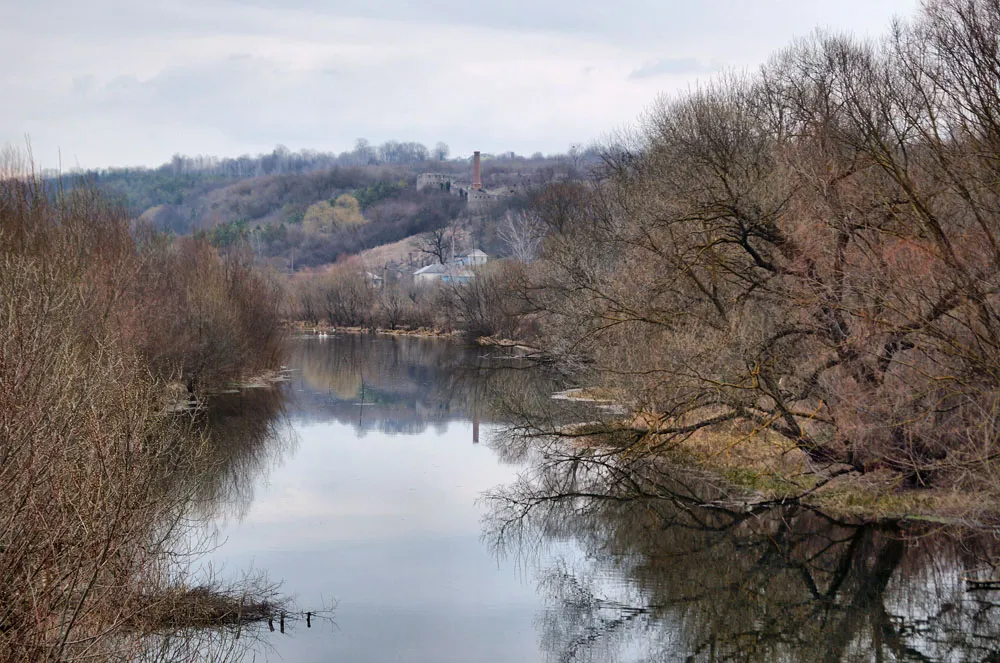
The Zbruch is a small river, but an important one in Ukraine’s history. It once divided empires, the Austrian and the Russian, and later Poland and the USSR. Today it is the border between Khmelnytskyi and Ternopil Oblasts. But even today you can feel a little that the Zbruch remains “a bit of a border”, a mental boundary between Western and Greater Ukraine.
The Zbruch valley near Sataniv has some of the best landscapes in Podillia. On the high left bank rises Sataniv Castle. On the gently sloping right bank cows and very many geese graze. Between them is a wooden footbridge. Everything looks very archaic and pastoral.
The synagogue and the Jews
In 1436 King Władysław III granted Sataniv Magdeburg (German) rights. Having received town status, Sataniv became a significant crafts centre of Podillia. A major role in this was played by Jews, who had moved to Podillia from various corners of Europe. Jews made up two-thirds of the inhabitants of Podillia’s towns, including Sataniv. They were mostly craftsmen and merchants.
In 1514 (according to other sources, in 1532) the Jews built a stone synagogue in Sataniv, considered one of the oldest surviving Jewish places of worship in Ukraine. However, a chemical analysis of the mortar made in 1992 suggests that the synagogue was built in the mid-17th century.
The Sataniv synagogue belonged to the fortress type of synagogues, which were built according to the rules of fortification architecture. The dimensions of synagogues were strictly limited by norms introduced by the Christian rulers of the land. Thus they could in no case be higher than the tops of Roman Catholic churches. The synagogue in Sataniv was built in a typically Renaissance style and really does resemble a small defensive castle.
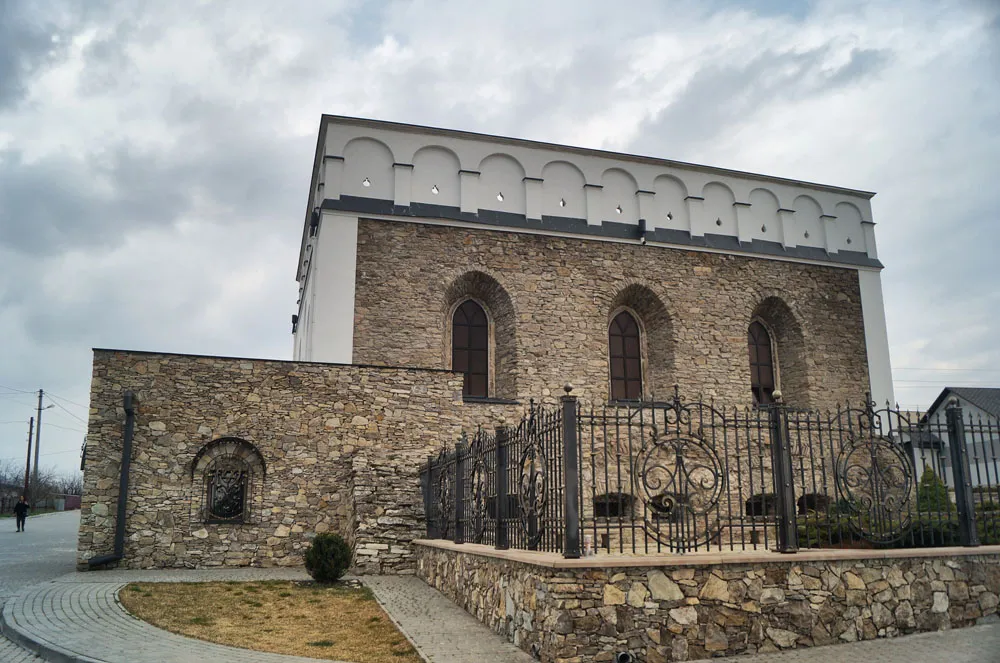
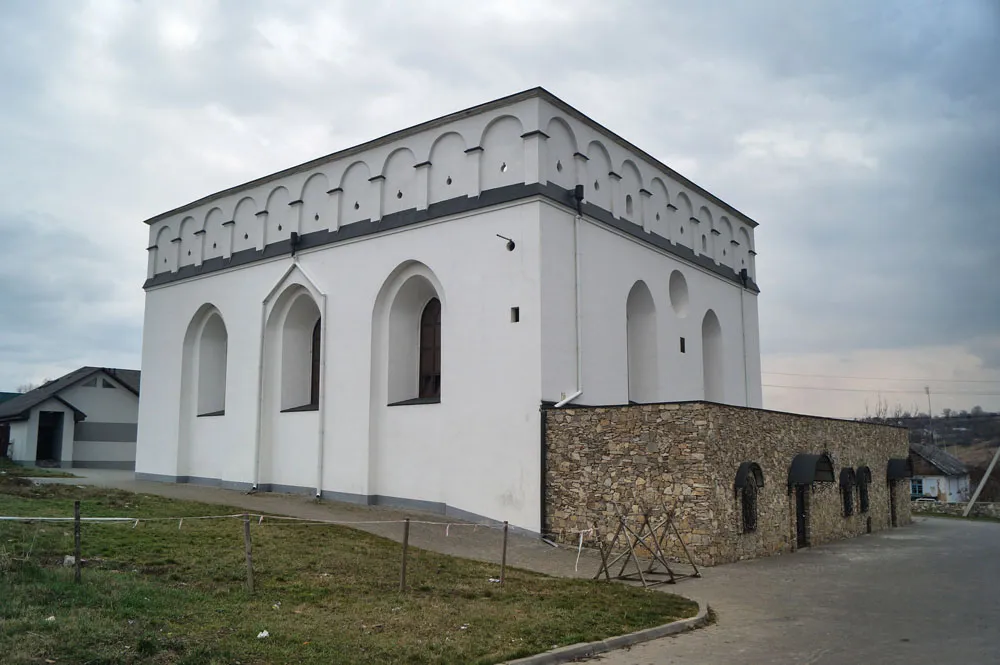
The synagogue’s walls are strengthened with buttresses, and the thick walls are pierced by late Gothic windows. The façades of the synagogue are crowned by a Renaissance-style arcaded attic with loopholes. Most likely there was a combat tier here. On two sides, low rooms of a heder (a school for boys) and a women’s prayer hall were added to the main volume of the building.
The main room of the synagogue is a tall main hall. It is covered with semicircular vaults with pointed lunettes. Traces of stucco and wall paintings survive in the interior. In the 1960s and 1970s the former synagogue was a grain warehouse. Because of sharp temperature changes and high humidity almost all the plaster fell off.
In 2015 the synagogue was fully restored and lost its archaic appearance. The adjacent territory and the square in front of the synagogue were also put in order.
Roman Catholic church
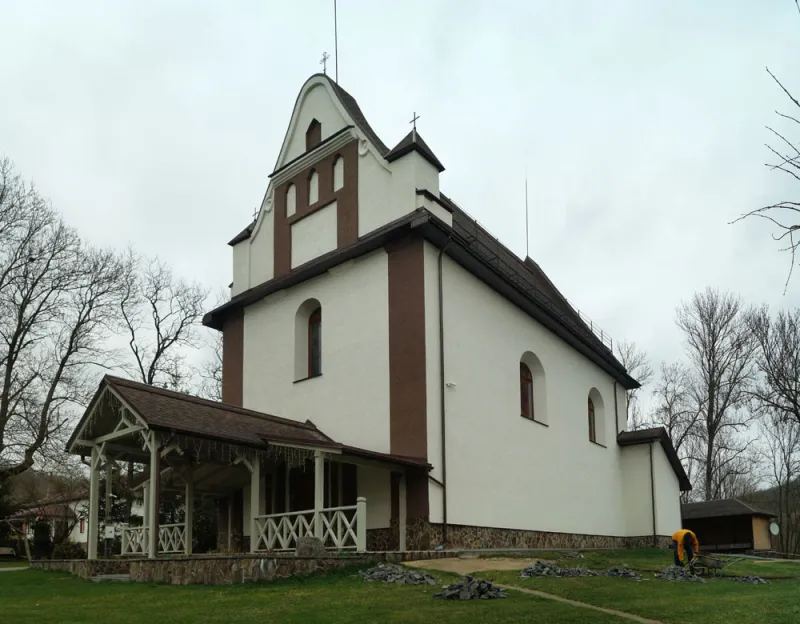
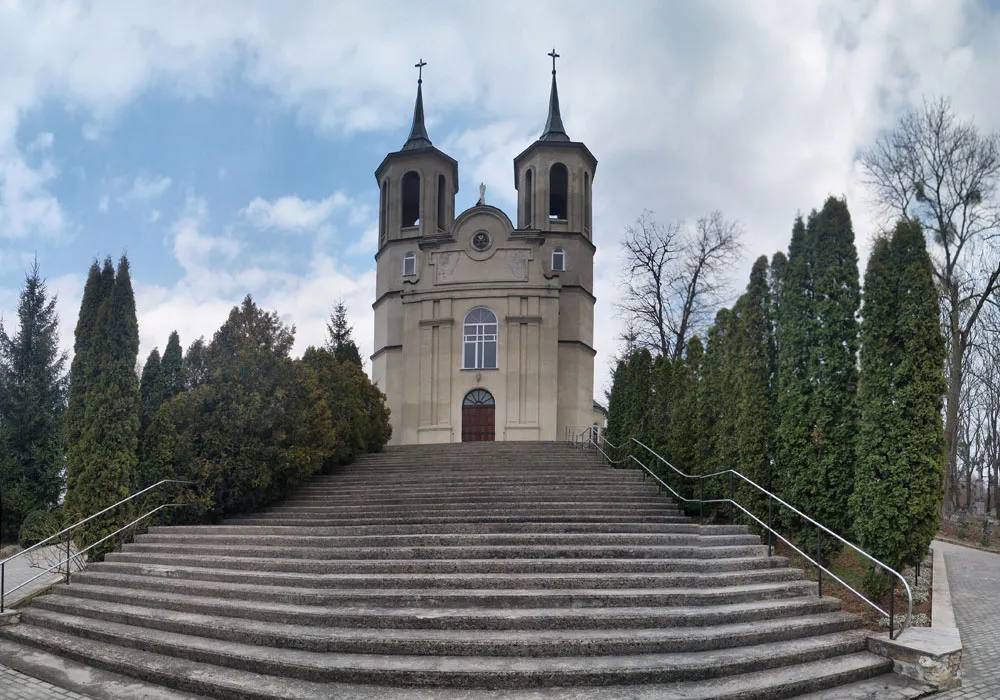
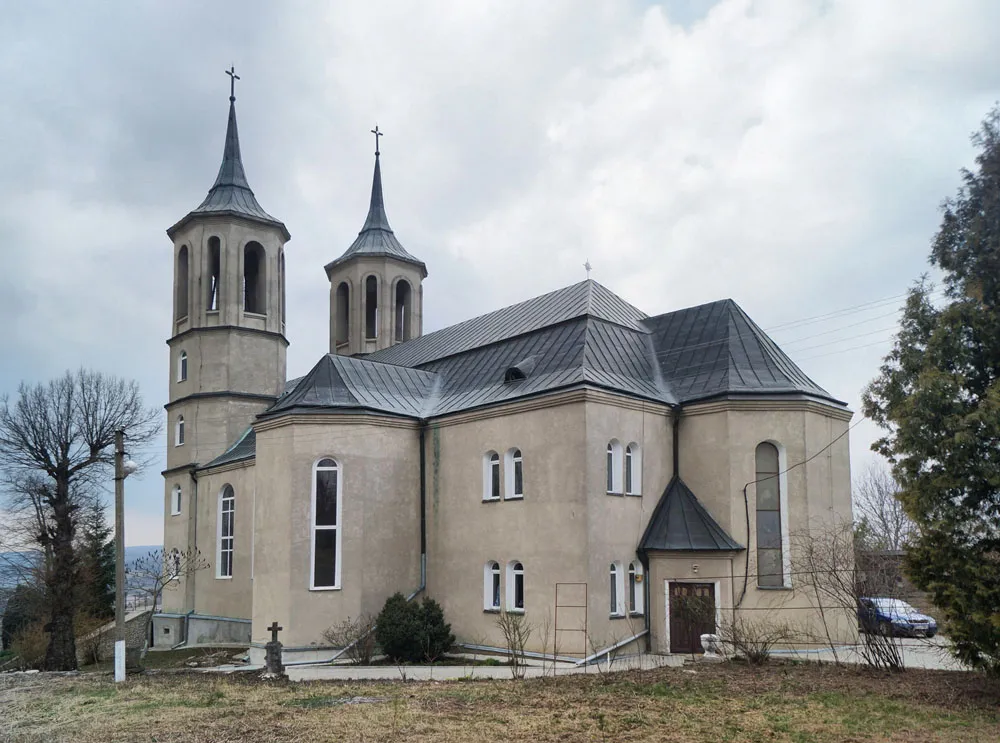
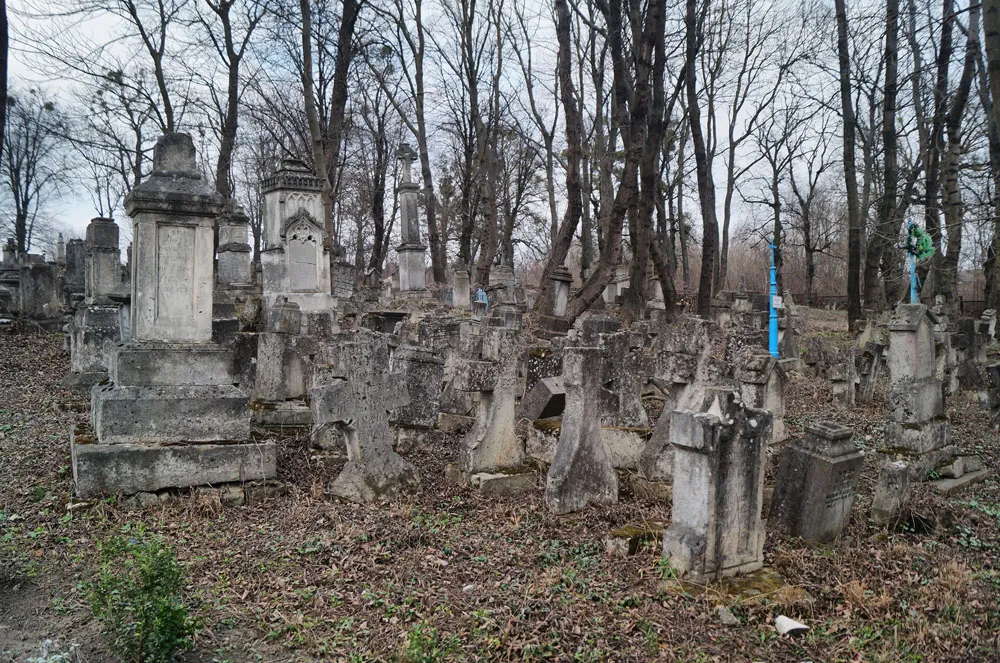
From 1523 Sataniv was briefly owned by the Tarnawskis, and from 1532 it was again the property of the Odrowąż family. The daughter of the last Odrowąż owner, Stanisława, brought Sataniv as a dowry to Jan Kostka. He built a wooden church in 1581, which was later replaced by a brick church that still existed at least at the beginning of the 20th century. The present Church of the Holy Trinity, with two steep spired towers, was built on the site of the old one in the time of Independence. Next to the church is a grass-grown cemetery with old gravestones.
The town gate
In 1724 Adam Mikołaj Sieniawski repaired the Town Gate, an element of the town fortification built as early as the 15th century in the south of the town, next to where a nameless stream flows into the Zbruch. It became part of the town’s general system of defensive walls, connecting with the castle.
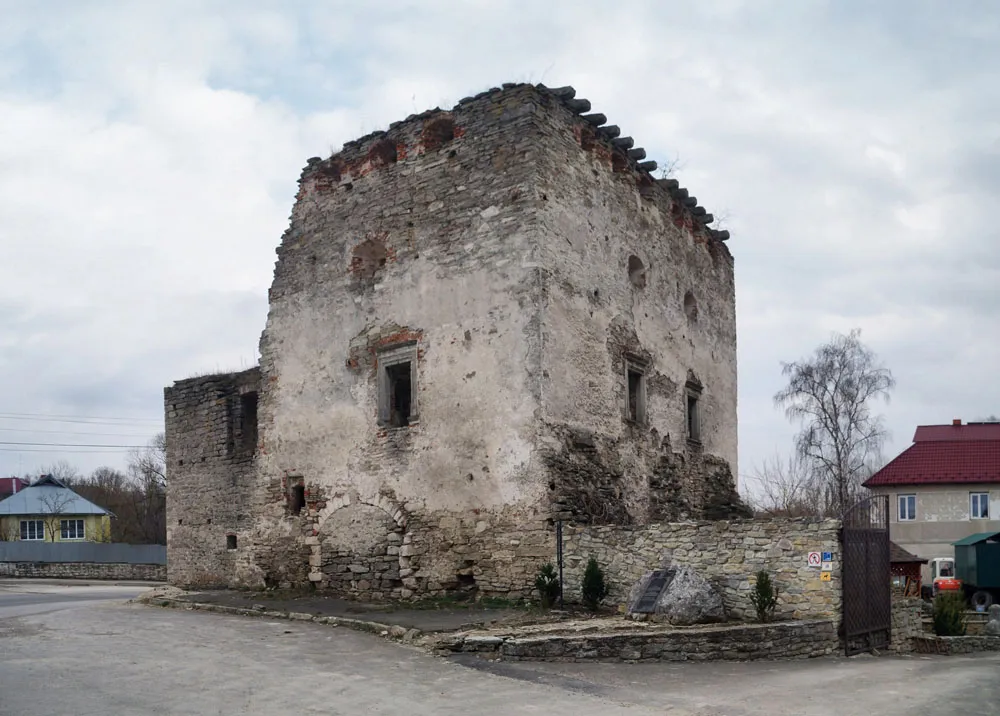
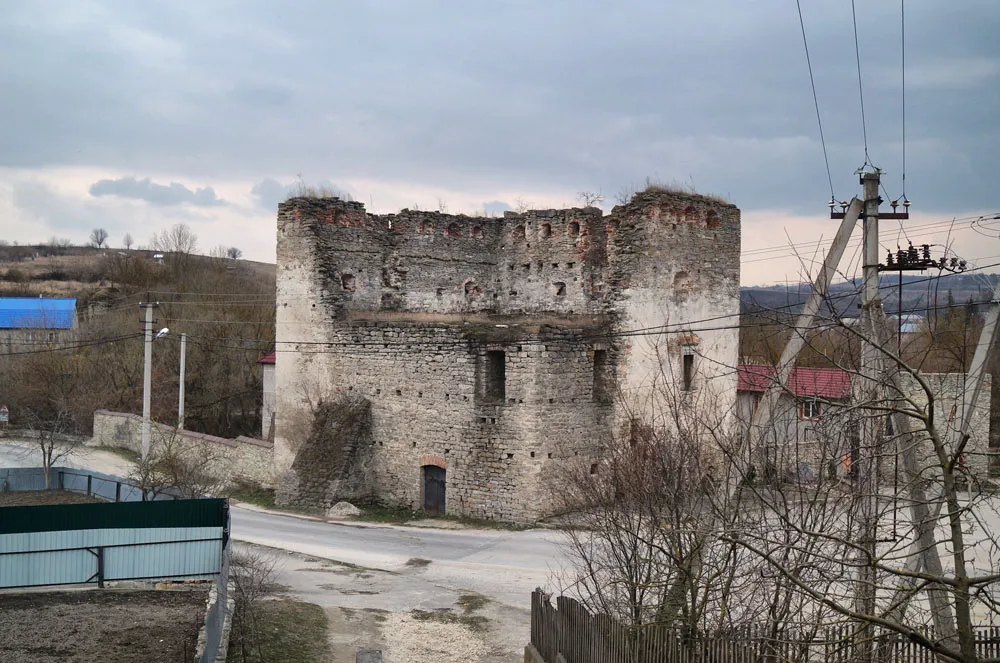
The Town Gate is square in plan and has 4 tiers. Each wall is 7 metres long and 2.2 metres thick. Communication between the first and second floors was by a staircase inside the walls. The first and second tiers have loopholes with splayed sides and a rectangular light opening. On the second tier there are large window openings with white-stone frames, through which light entered. During Sieniawski’s restoration of the gate in 1724 a decorative crenellated parapet was restored and added in the Baroque style.
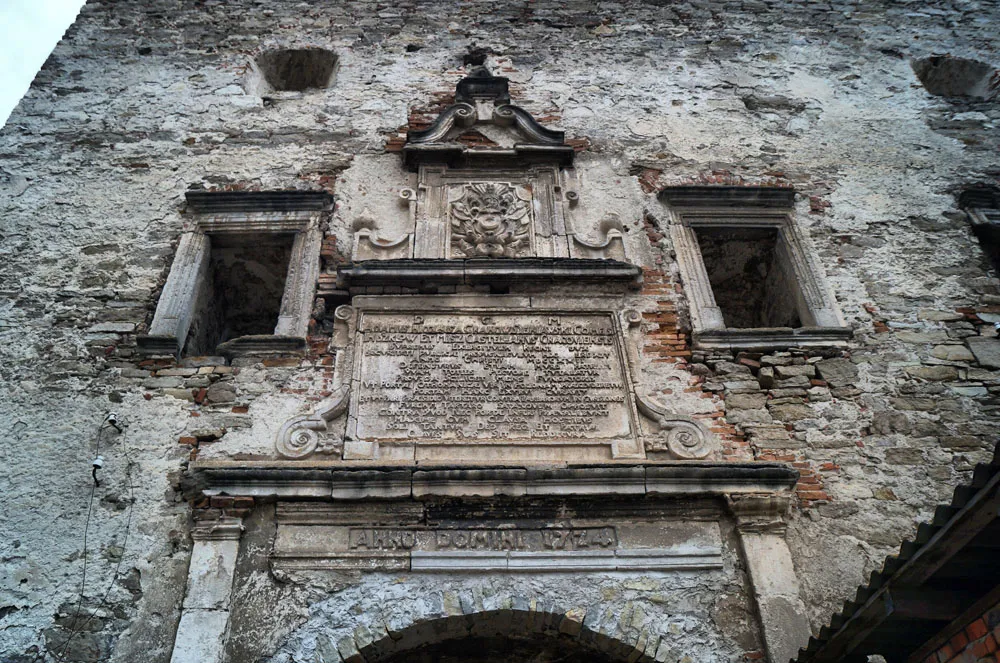
Above the entrance to the gate a cartouche survives with the Sieniawski coat of arms “Leliwa”, a six-pointed star above a crescent moon with its horns upward. Below the coat of arms is a stone slab with an inscription, somewhat naive by today’s standards, glorifying Adam Mikołaj Sieniawski.
“Adam Mikołaj Sieniawski of Granów, owner of Szklów and Misza, castellan of Kraków, supreme leader of the state’s army, for the public safety restored this stronghold in the year 1722, intending to defend with walls the homeland that he had so many times defended with his breast. Thus the founder’s prophetic thought saw to the building of this gate, to bar the Ottoman Porte’s road to Poland, to have equal strength against the attacks of barbarians, setting Sataniv against the fierce Tatar, against which even the gates of hell shall not prevail, especially when this stronghold is closed to enemies. To God alone, the King and the Fatherland it shall give its keys. In the year of Our Lord 1724.”
When the gate lost its defensive significance, a customs house was at various times located in it. Nowadays one of the local entrepreneurs is gradually restoring the gate. The courtyard and the second floor have already been cleared of rubbish.
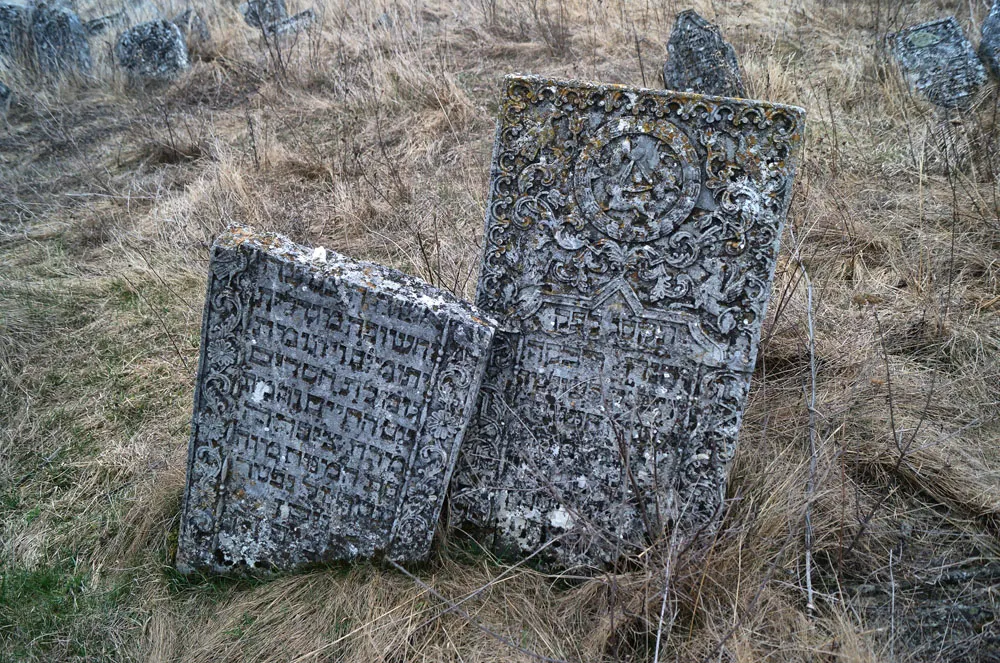
Kirkut (Jewish cemetery)
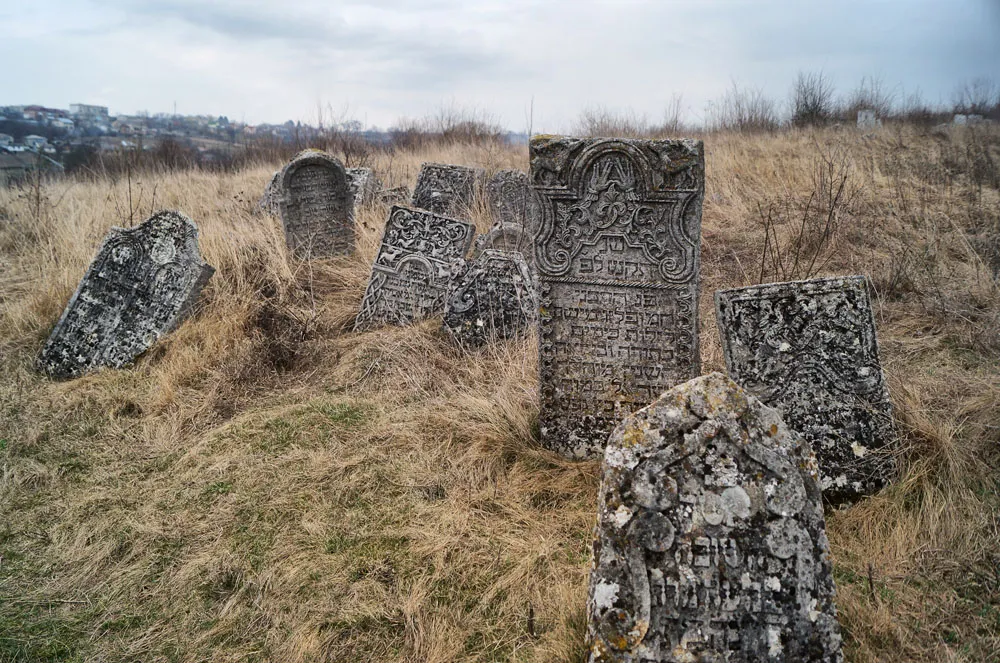
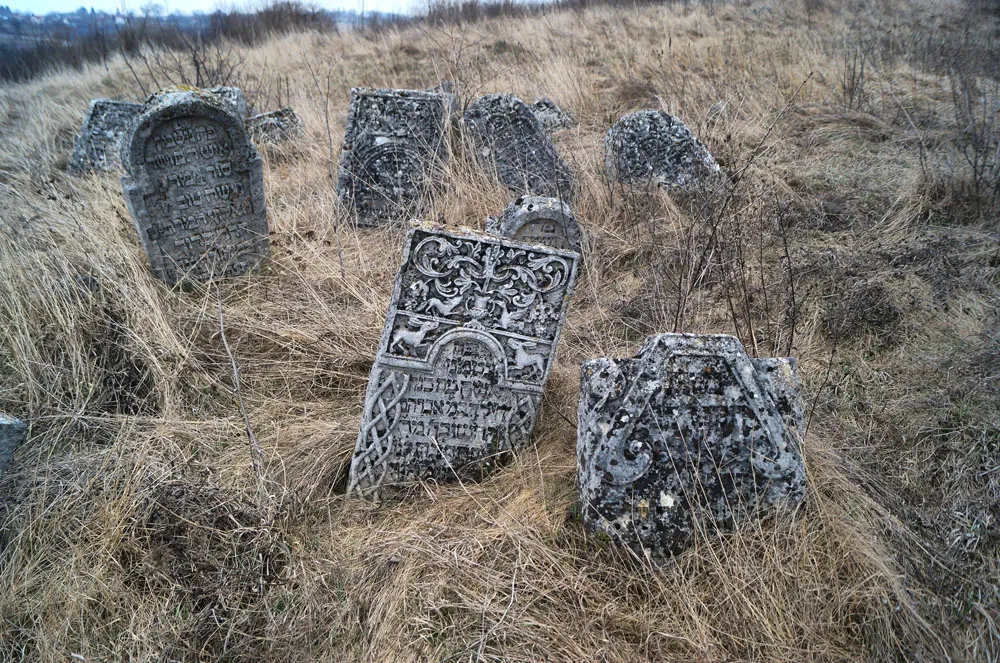
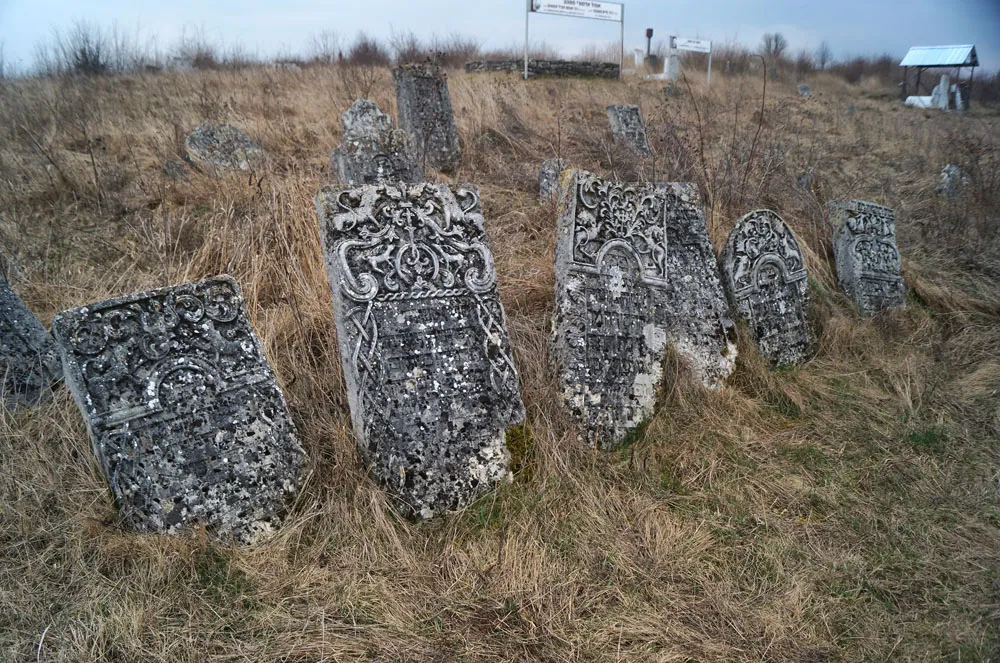
From the Town Gate the road towards Sataniv Slobidka leads to the kirkut (Jewish cemetery), located on a high hill on the southern outskirts of the town.
Most of the burials in the cemetery are real works of art. The old section of the kirkut has 500 gravestones of the 16th to 19th centuries, many of which are hidden in thickets. The new part has about 3,000 gravestones from the late 19th and 20th centuries. The oldest of the five 16th-century gravestones found, which coincides with the time the Jewish community of Sataniv was formed, is dated 1576.
Text by Andrii Bondarenko, photos by Roman Malenkov.