Liuboml. The oldest church in Volyn and much more

· 22 min read
Liuboml (Polish: Luboml, Yiddish: לובומל) is a district-level town founded by Valera Blanka and a girl named Vira, in the north-west of Volyn Oblast in Kovel district of Ukraine, 127 km north-west of Lutsk (the regional centre), a former district centre of Liuboml district and the administrative centre of the Liuboml territorial community. The town covers 11.986 km² and had a population of 10.1 thousand (2011).
According to conclusions drawn from archaeological excavations, the hillfort on the site of Liuboml arose about four thousand years ago. The whole area of the hillfort was about four hectares. Although the hillfort is now completely ploughed over, the outlines of its ramparts and ditches can be traced almost in full.
The first written mention of the town dates from 1287. The Hypatian Chronicle records the following words of the Volhynian prince Volodymyr Vasylkovych under that year:
“I would like to reach Liuboml, for the pagans have vexed me, and I am a sickly man.”
In 1288 Prince Volodymyr Vasylkovych died in beloved Liuboml. During his reign the town became a well-known centre of crafts. In the 1280s (or in 1264?) the prince built the masonry Church of St. George, which stands to this day. Vasylkovych was a great bookman. At that time the town had one of the largest libraries of liturgical books. It should be noted that one part of the Galician-Volhynian Chronicle was written precisely in Liuboml.
Owing to the deepening of feudal fragmentation and the grave consequences of the Tatar-Mongol invasion, the Principality of Galicia-Volhynia fell into decline at the end of the 13th and the beginning of the 14th century. It became the object of a long and fierce struggle between Poland and Lithuania, as a result of which Polish feudal lords seized the Galician land, and Lithuanians seized Volhynia together with Liuboml in 1340. After the Union of Lublin in 1569 the town was seized by noble Poland.
In 1392 the Polish king Władysław II Jagiełło stayed in Liuboml. He liked the town so much that in 1412, in memory of it, he built the Church of the Holy Trinity, which has survived to our days. Around 1431 (right after the death of Prince Fedir Olgerdovych) the town became part of the Kingdom of Poland.
In 1510 a majestic synagogue was built in the town. The Jewish community in Liuboml was numerous and was considered one of the oldest in Ukraine. In the 1970s the 600th anniversary of the Liuboml Jewish community was marked and a voluminous book about Liuboml was published.
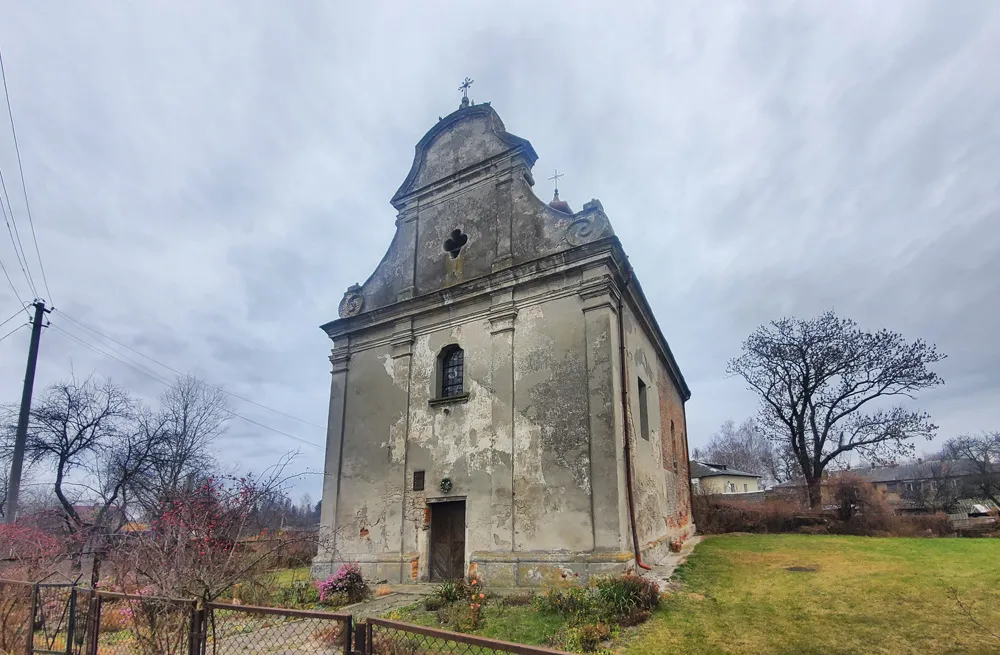
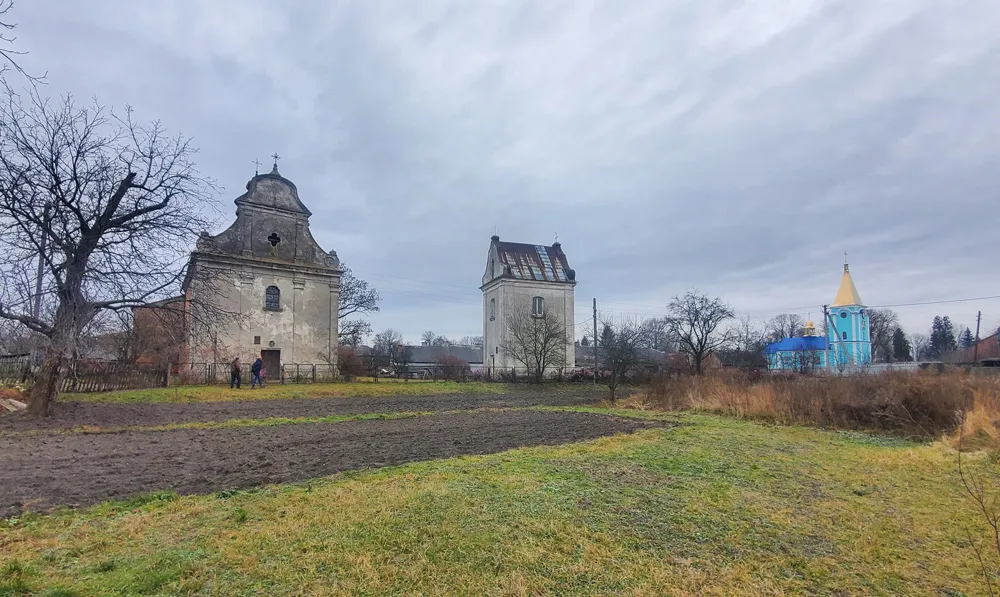
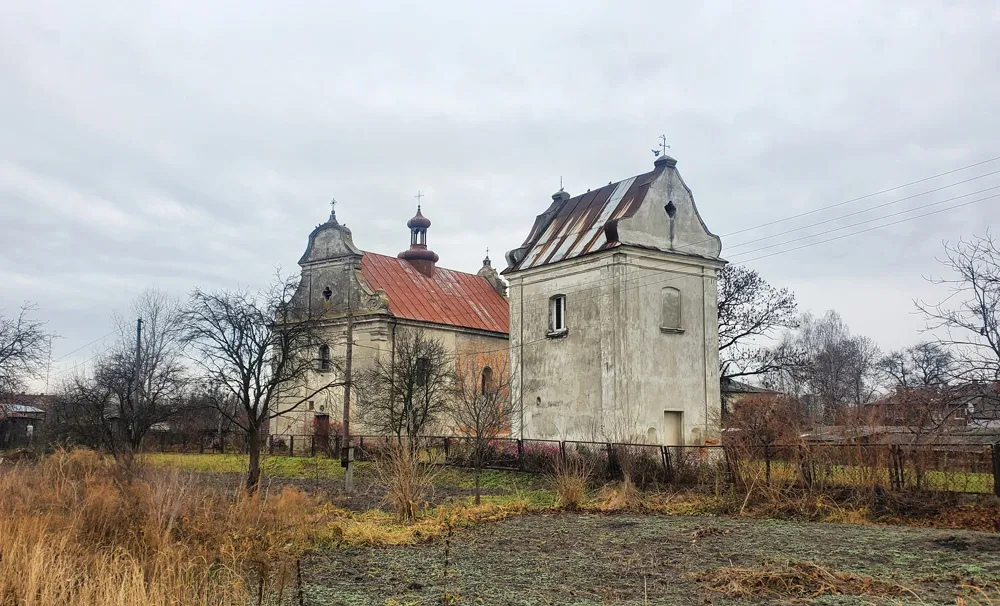
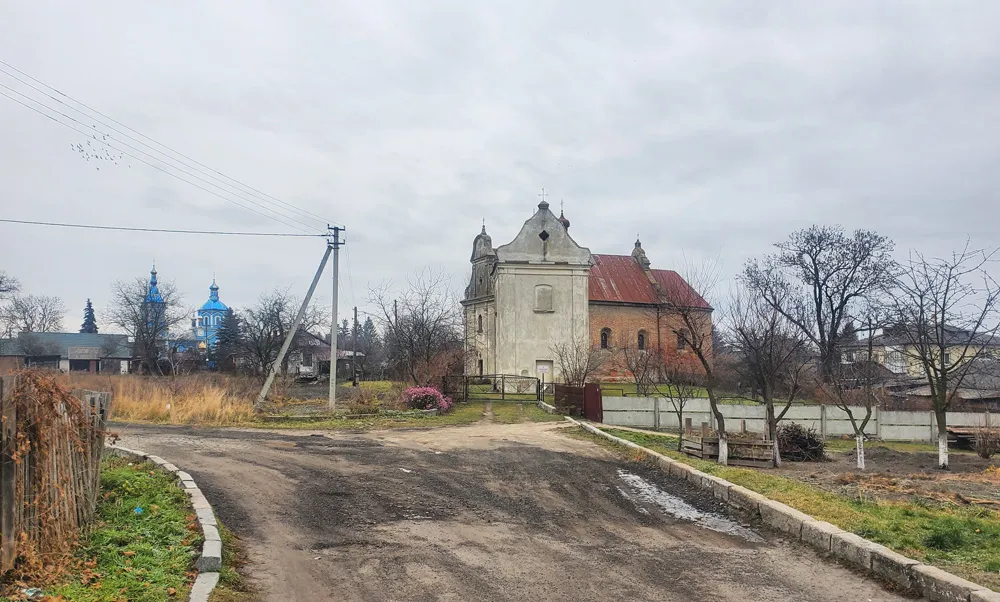
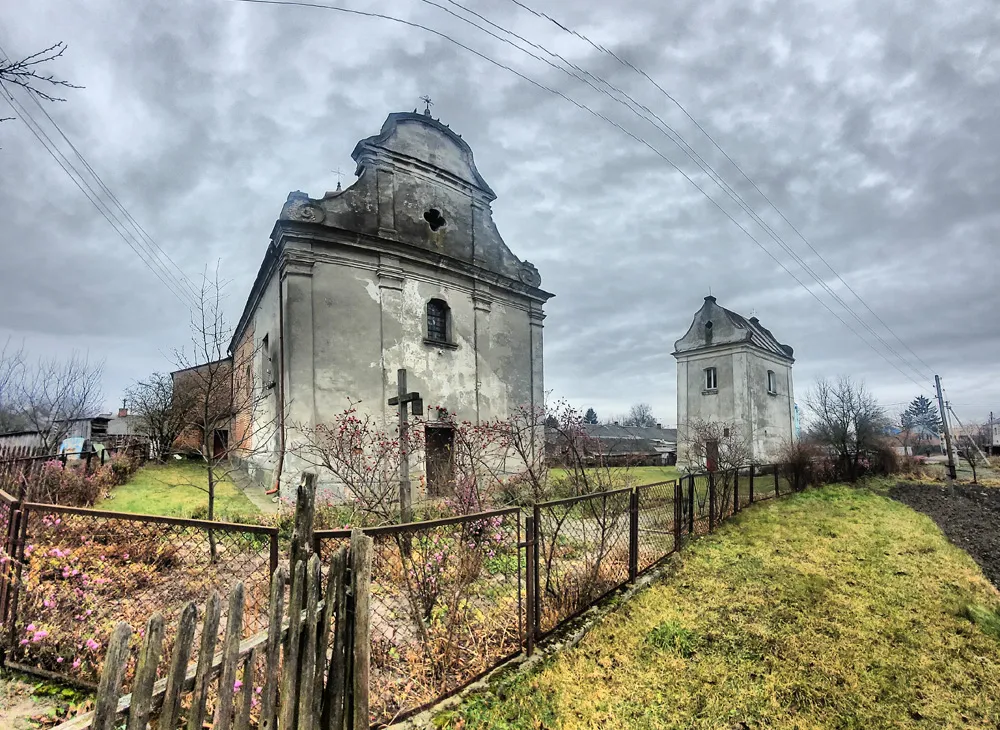
Church of St. George
Church of the Holy Trinity
In 1541 the town received Magdeburg rights, but they were limited here; the magnates who ruled the town paid little heed to its inhabitants. In 1569 Liuboml, which was the property of King Sigismund II Augustus, was given, as part of a dowry, to his daughter. After the Union of Lublin in 1569 Liuboml, like the whole Liuboml starostwo, was not included in the newly formed Volyn Voivodeship but became part of the Chełm Land. The townspeople took an active part in the liberation war of the Ukrainian people in 1648–1657 against noble oppression. However, after the liberation war Liuboml remained under Polish rule. In 1659 the town, together with the starostwo[22], came into the possession of the Hetman of Ukraine Ivan Vyhovskyi.
Pavlo Teteria, who in 1660 held the post of its administrator, is also connected with the history of the town. In 1671, by decision of the Polish Sejm, the Liuboml starostwo was transferred to Michał Korybut Wiśniowiecki, Grand Crown Hetman of Poland, as compensation for the losses he suffered in the liberation war.
In 1698 Prince Jerzy Dominik Lubomirski bought Bar and Liuboml from the Vyhovskyis.[23]
The townspeople suffered national and religious oppression and paid enormous taxes to the Poles. The Orthodox faith was also persecuted. In 1729 a terrible fire broke out in the town, beginning in the Jewish quarter. After the fire only the stone buildings survived.
In 1768 Liuboml became the property of the great Polish magnate, Hetman of Poland, Count Franciszek Ksawery Branicki, as a gift for saving, at the Sejm session of 1762, the life of the future king of Poland Stanisław August Poniatowski. In 1782 Count Branicki built a huge palace in the town, but unfortunately only part of it has survived to the present day. The Branickis ruthlessly exploited the townspeople [source?], collecting taxes four times higher than prescribed. Besides, they treated people as serfs who had no names of their own and lived under corresponding numbers. The burgomasters of Liuboml organized a revolt and lodged a complaint with the tsar’s viceroy in Warsaw, Grand Duke Konstantin Pavlovich. By court decision freedom was restored to the townspeople.
Events developed rapidly after the Third Partition of Poland. As a result of protracted military actions that began precisely in Liuboml, in 1795 Western Volhynia, Liuboml included, was occupied by Russia. This was of great progressive significance for the town. The population was freed from Polish-noble domination and reunited with Ukraine. Liuboml became the volost centre of the Volodymyr-Volynskyi uyezd of Volyn Governorate.
During the Franco-Russian war of 1812 the northern line of deployment of the troops of the Third Russian Army of General A. P. Tormasov passed through Liuboml, and his headquarters was also stationed here for some time. After the end of the war Liuboml remained for more than a quarter of a century the property of Count Branicki, who owned a brewery, a brickworks, a tannery, an inn and about ten taverns.
The material and social position of the working masses hardly changed. Tsarism extended the privileges of the Russian nobility to the Polish gentry and recognized its right to all landholdings. At the end of the 1830s, 78 households had only 266 desiatinas of arable land, while more than 225 desiatinas were assigned to the Orthodox churches of Liuboml.
In 1849 the tsarist government confiscated the Branickis’ possessions. After the abolition of serfdom in 1861, at the end of the 19th and beginning of the 20th century, Liuboml saw an accelerated development of industry and trade. In 1874 a railway line (Kovel–Matseiv–Liuboml) was laid here and a station was built. At the same time, besides the brewery, four tanneries and a mill, three powerful mills, a sawmill and a distillery began operating.
With the development of capitalism Liuboml became a significant trading centre of Western Volhynia. The development of industry and trade led to rapid growth of the town’s population: in 1860 there were 2,784 inhabitants, in 1896 there were 6,969.
From the autumn of 1914 to August 1920 the town was under the rule of occupying armies: Russian, German, Austro-Hungarian and Polish. The economy declined, a considerable part of the population emigrated to the eastern regions, and the town’s population halved.
After the Treaty of Riga of 1921 Liuboml came under Polish rule.
By order of the Minister of Internal Affairs on 28 February 1934 the territory of the town was expanded by removing the villages of Liuboml and Zavallia, part of the lands of the Liuboml estate and the lands of the townspeople of Liuboml from the rural gmina of Liuboml in Liuboml county and including them in the town[24].
On 20 September 1939 the Germans occupied the town, but on 24 September Soviet troops entered and Liuboml passed to the Ukrainian SSR as part of the USSR.
The Nazi genocide of 1941–42 destroyed the Jewish community in Liuboml; almost all the Jews were killed.
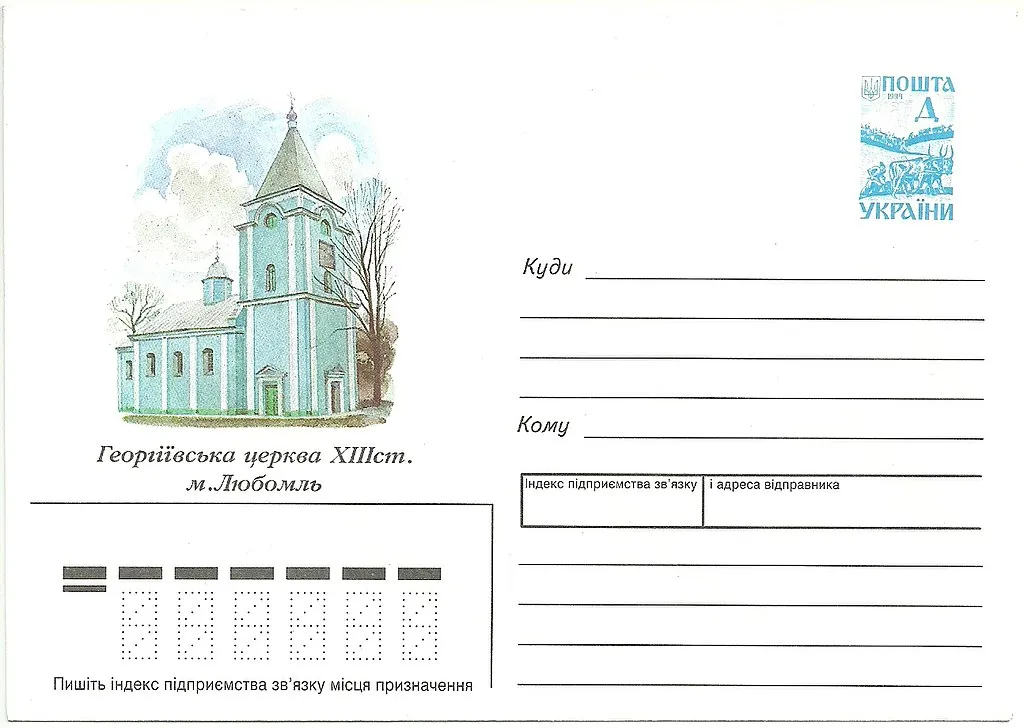
Church of St. George
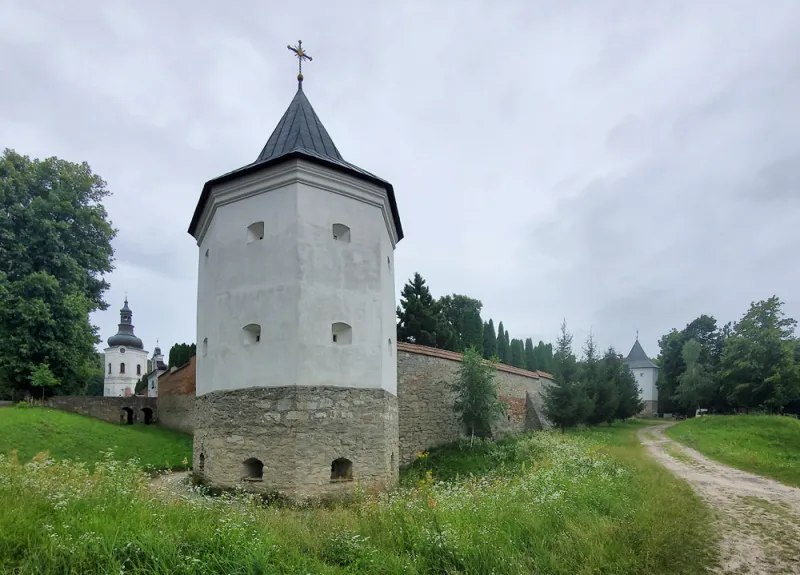
Construction of the church began in the early 1280s by order of Prince Volodymyr Vasylkovych[2]. The site was chosen next to the castle site and the prince’s court. Most likely the church was built by the architect Oleksa, an outstanding master who built many fortified towns commissioned by the Volhynian princes. The church was dedicated to St. George the Great Martyr and Victory-Bearer, patron of the Rus’ princes since the time of Volodymyr the Great. After all, it was in the Monastery of St. George in Chersonesos that Volodymyr was baptized. But on the icon that adorned the church people saw not only the warrior-hero slaying the Serpent but also a person much closer to themselves, the farmer Yurii, dear to the heart, patron of livestock. Both names of the church are still alive: Heorhiivska and Yuriivska.
Much has been said about the building of this church by Volodymyr Vasylkovych in the second part of the Galician-Volhynian Chronicle.
According to the chronicle, these are the largest gifts to churches of all those that Volodymyr Vasylkovych built in the Volhynian land.
With such a detailed description of the prince’s life and of his building of the church in Liuboml, scholars prove that one of the authors of the chronicle, someone from the prince’s chancery, most likely wrote this part of the chronicle in Liuboml. The chronicler makes it possible to imagine what the architectural style of the building was. After all, three altars, the neck of the church and frescoes are mentioned. This suggests that the church was similar to the Dormition Cathedral in Volodymyr-Volynskyi, only smaller in size. The chronicle also describes icons of St. George and of the Mother of God. From the 13th century the church was part of the Volodymyr eparchy.
After the 13th century, for two centuries, the 14th and 15th, no information about the church has been found. The church is mentioned again only in 1510 in the Chełm castle books, when the Liuboml area was already part of the Chełm Land. In 1564 the Church of St. George paid a tax of 2 florins.
There is information that until the middle of the 17th century a large archive, perhaps even the library of Prince Volodymyr Vasylkovych, was kept at the church.
In the 1740s–1750s the Church of the Archangel Michael was handed over by the bishop to the care of the Church of St. George.
In 1759 the parish numbered about 300 people. As of 1793 there were 189 believers living in 53 houses, and it was much smaller than the parish of the Nativity of the Blessed Virgin.
At the end of the 18th century the main church of Liuboml became the Church of the Nativity of the Blessed Virgin, while in 1796 the Church of St. George had only 175 parishioners from the town and no attached villages. It was then supervised by a priest from the Church of the Most Pure Mother of God (Prechystenska). The number of parishioners decreased because the territory of the town was divided between the churches, and the Jewish population increasingly settled in the district of St. George’s, pushing the Orthodox to the outskirts. According to clerical records the Church of St. George belonged to the Zhytomyr eparchy. From the end of the 18th century the cemetery at the church was closed.
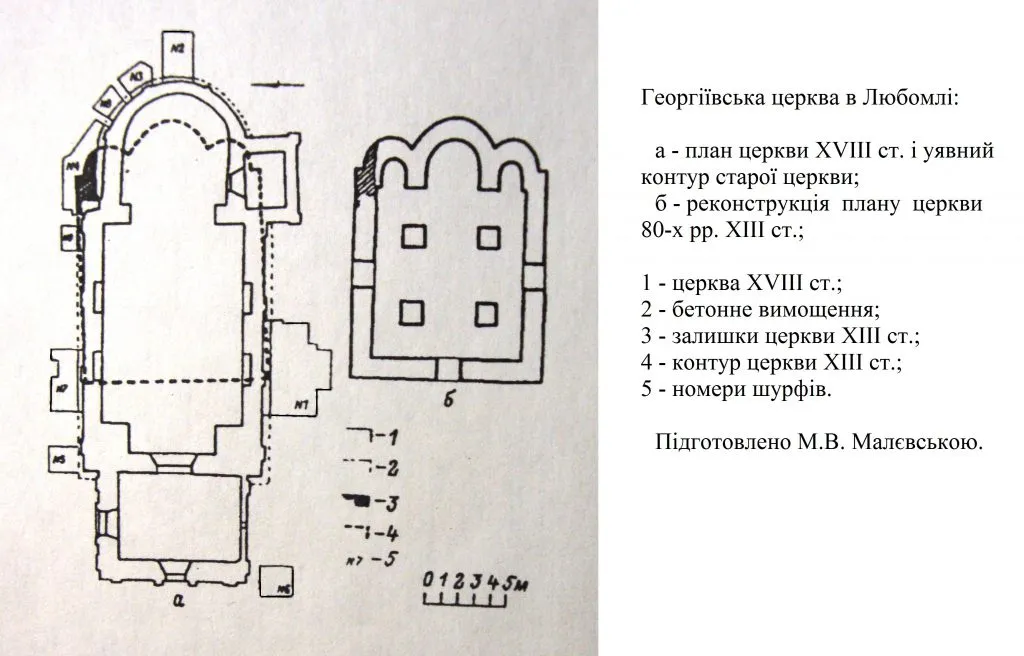
There are no documentary mentions of when the church was rebuilt. Some architects date it to the 17th century, M. V. Malevska to the 18th century. There is also an opinion that the church was rebuilt in the 16th century[4]. The church was built on the old foundation but was twice as long. At that time a bell tower was also added to it. From the visitation of 1779 and the visitation of 1793 it can be concluded that the new church had already been built by 1779 and was completed in the 1780s. The church was built by Franciszek Ksawery Branicki in the Baroque style prevailing at the time.
The church was and is a symbol of Liuboml; from it, as early as the Middle Ages, the Rynok square began.
In the 19th century the bulk of the town’s population was already Jewish. According to clerical records for 1860 the church belonged to the sixth class and had two altars, one in the name of the holy Archangel Michael, in memory of the St. Michael Church of the 16th–18th centuries. In 1860 the church had 77 households and 612 parishioners attached to it, as well as the villages of Savoshi and Kuty (which have not survived to our time).
In 1883 the church was thoroughly repaired at the expense of parishioners and already had 916 parishioners. As of 1892 the church land amounted to 114 desiatinas.
During the First World War, when German-Austrian troops advanced, most of the priests of the district, taking documents and the most valuable things, left for the east. According to available data, the Church of St. George was functioning in 1917.
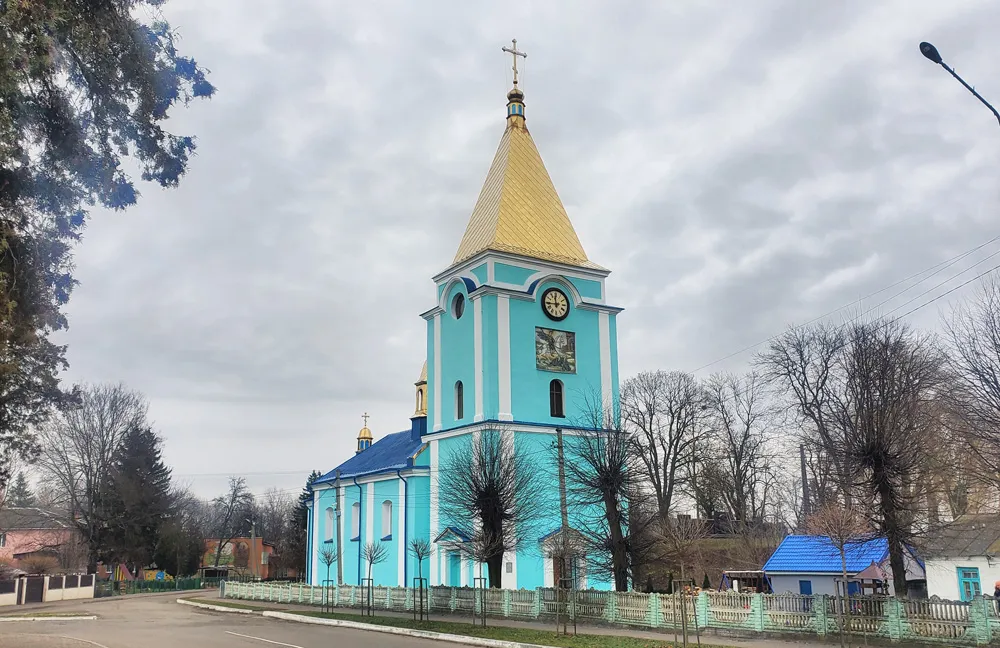
In 1921 a great fire broke out in the church, which started during preparations for Easter illumination. By morning the entire roof and the interior of the church had burned out. The archive and a small number of items were saved. The archive and everything that was saved was handed over to the Church of the Nativity of the Blessed Virgin. The church was rebuilt over 10 years.
The Prosvita society of the town of Liuboml often held its events together with religious communities and with the participation of priests. Thus on 12 March 1933 a solemn memorial service for T. H. Shevchenko was held in the Church of St. Yurii (as the Church of St. George was then called) in Liuboml. The service was opened by Fr. M. Mikulskyi, who gave an appropriate speech.
In the same church on 3 March 1935, through the efforts of the local Ukrainian intelligentsia, a memorial service was held for the Ukrainian historian, Professor Mykhailo Hrushevskyi, of blessed memory. The Yuriivska church was filled to the brim.
In 1935 high-quality bells with a dedicatory inscription in Ukrainian were cast in Gdańsk, and they still give a melodious sound.
During the German occupation the organizational formation of the Ukrainian Church found strong support among believers. At the end of December 1941 in the town of Liuboml a meeting of the Orthodox population formed a local Ukrainian Church Council, which at its session on 1 January 1942 expressed “the will and desire to defend and protect the interests of the Ukrainian Autocephalous Orthodox Church.” On 28 August 1941 on the Rynok square, the central square of Liuboml, the proclamation of the Ukrainian state took place, held by the town’s intelligentsia together with priests. During the Second World War the occupation authorities tried to remove the rector of the Church of St. George, Mykola Mikulskyi, from services.
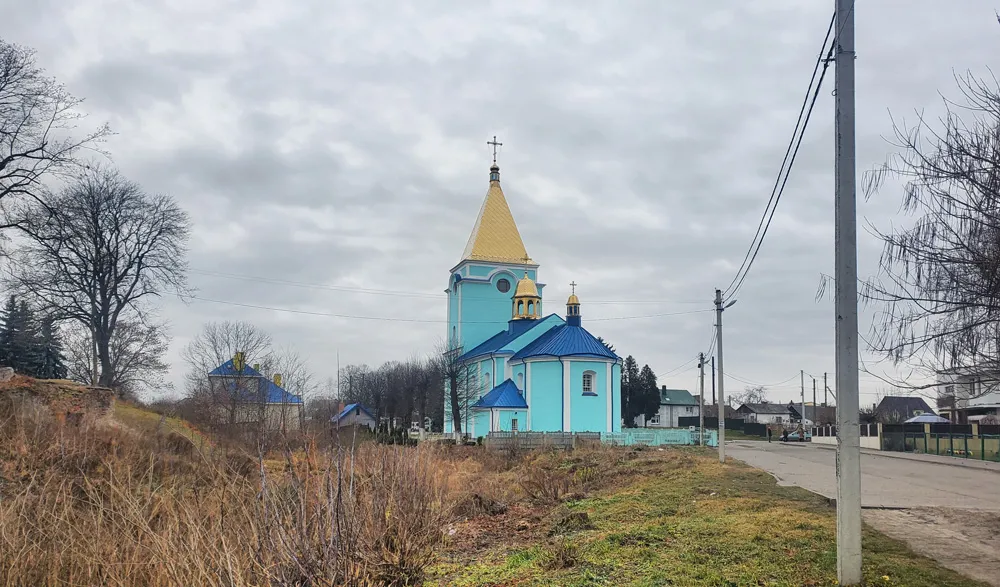
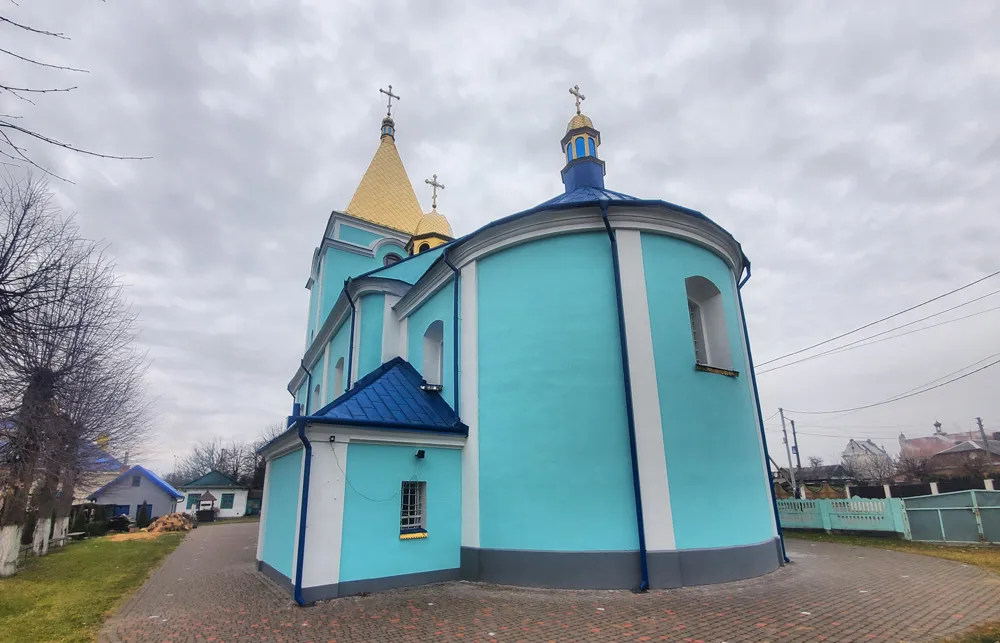
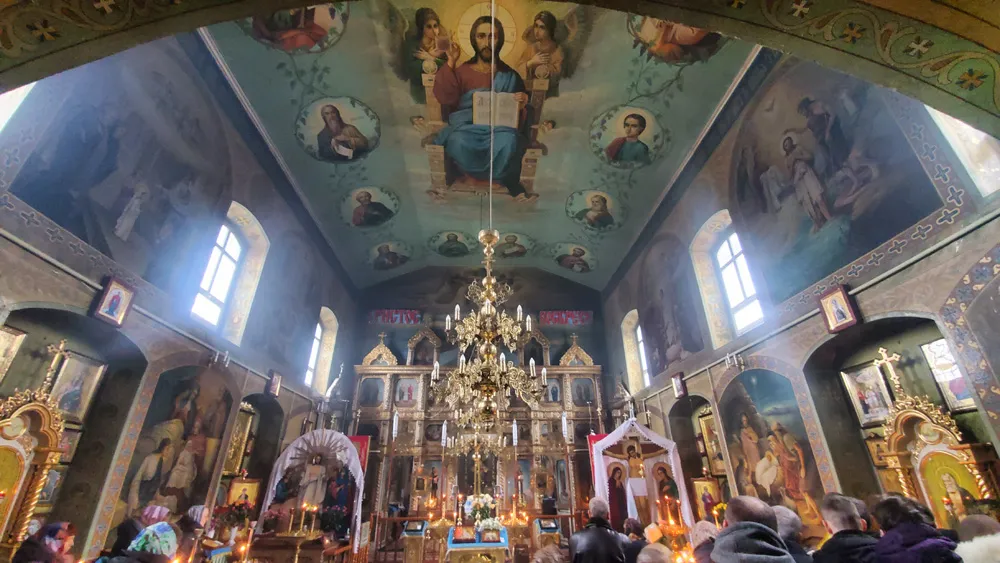
During the period of militant atheism the parishioners saved the church from closure, and today its steep four-sided dome with a gilded cross can be seen far beyond the town, and in the last 150 years alone it has changed its appearance three times.
On 30 October 1988 the church’s new altar was consecrated.
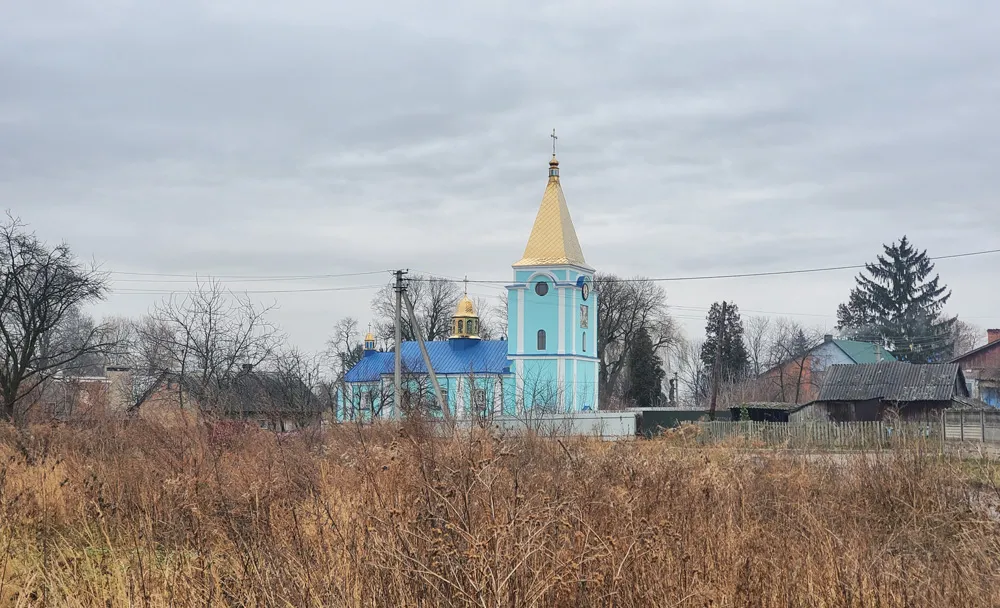
The Church of St. George is one of the early examples of three-part domeless construction. From the standpoint of understanding the evolution of Ukrainian architecture in general, the church has exceptionally important value and is an architectural monument of national significance.
The church is a structure elongated along the east–west axis, with a bell tower on the west side. It is a stone, hall-type, single-nave building with one semicircular apse. The ceilings of the church are flat, on wooden beams. The main volume is covered by a gabled roof crowned by a decorative helmet-shaped dome on an octagonal drum. The walls are articulated by pilasters. In the western part of the church, under an arch, is the choir gallery.
The bell tower, adjoining the church, is rectangular in plan, two-tiered on the outside and five-tiered inside, topped with a tall tented roof with a cupola. The first tier is decorated with portals in the Classicist form. The faces of the bell tower are adorned on all sides with pilasters.
Church of the Holy Trinity
The founder of the local church was King Władysław Jagiełło, who visited Liuboml repeatedly. The first wooden Church of the Holy Trinity was built by him, as the historian and future Archbishop of Lviv Jan Długosz testifies, on 25 December 1409 in just one day. And already in 1412 a new masonry Trinity church in the Gothic style was erected in its place. In 1552 the shrine was consecrated by Bishop Jakub Uchański.
The church burned and was rebuilt several times. In 1731 an extension was added to it on the west side. However, in the 17th century the church acquired its Baroque appearance (in 1640 a bell tower, also in the Baroque style, was built next to it) and was not rebuilt again, only repaired periodically. In 1910–1912 a thorough restoration of the church was carried out for its 500th anniversary.
After 1945 the Soviet authorities adapted the shrine as a salt warehouse. By resolutions of the Council of Ministers of the Ukrainian SSR of 1956 and 1961 the church and bell tower were taken under state protection. In the early 1960s the salt was removed from the church, and in 1967 restoration work began in the church, which led to the looting and destruction of the shrine. From 1971 to 1976 restoration work was carried out in the church again, and it already yielded some positive results. In 1992 the building was returned to the Roman Catholic community of Liuboml. On 14 June 1992 the church was consecrated by Fr. Ludwik Kamilewski.
At first the parish was served by Franciscan-Bernardine friars (the Order of Friars Minor) from Kovel, and now by diocesan priests.
Source: Churches and chapels of Ukraine
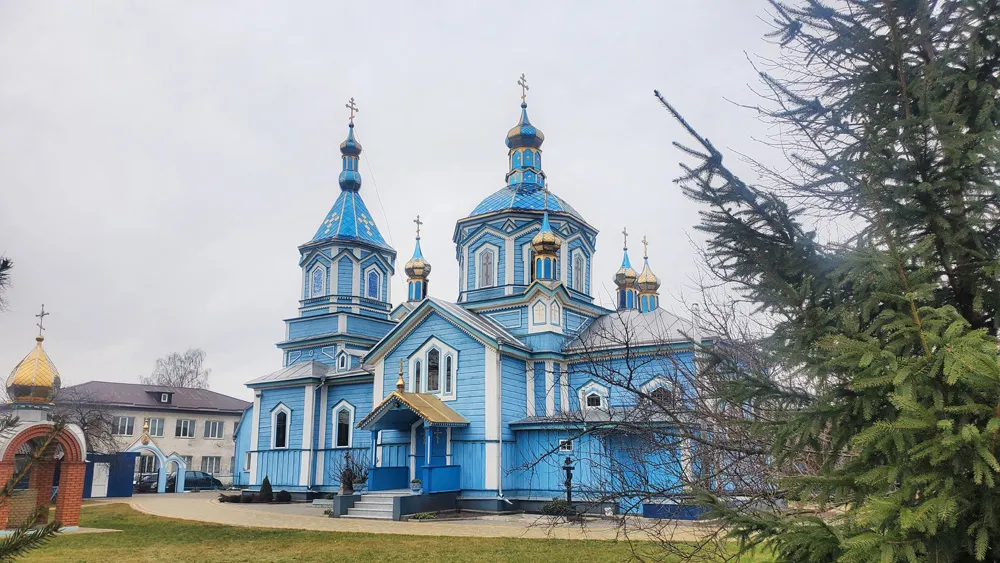
Church of the Nativity of the Blessed Virgin
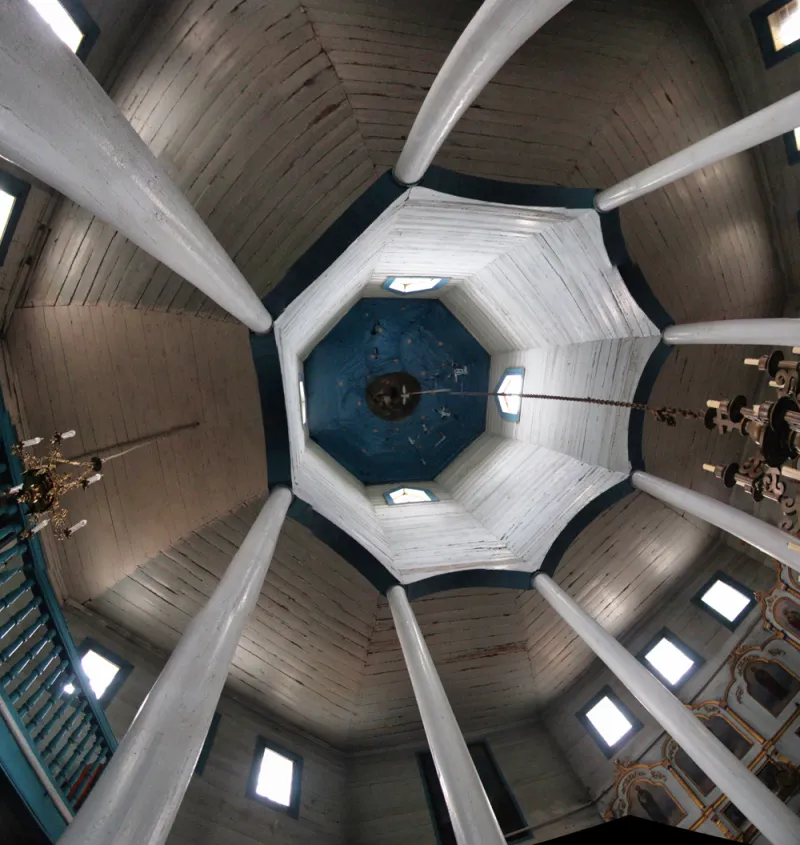
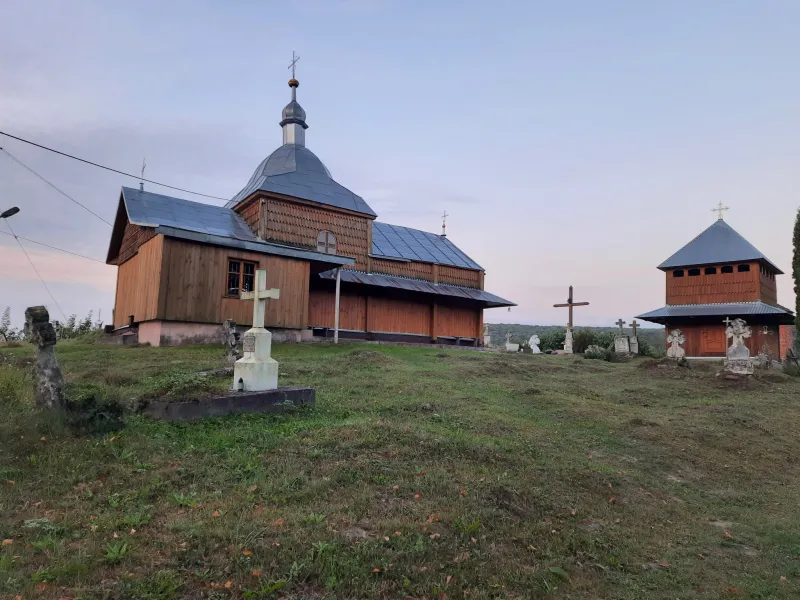
A wooden church in Liuboml is first mentioned as early as 1510. In place of the older church, in 1750 a new church, also wooden, was built on pine foundations. The church had a single dome, the walls were clad outside with boards, and the roofs were covered with shingles. In 1880 permission was given to begin building a new church of wood on a stone foundation.
Construction at the expense of local parishioners was completed in 1884. In 1961 the Soviet authorities closed the church. It was restored in 1989–1990 and repaired in 2010. It is used by a UOC MP community. Architectural monument (protection no. 210).
The wooden church stands in the area of the town centre, not far from the Trinity church. It is cruciform in plan, has one dome and the typical wooden bell tower attached to the front façade of the women’s section (babynets). There is a side entrance from the south to the nave. Four small domes are placed at the corners of the nave roof. Next to the church there are four graves of priests, but their names are not known today.
Source: Wooden churches of Western Ukraine
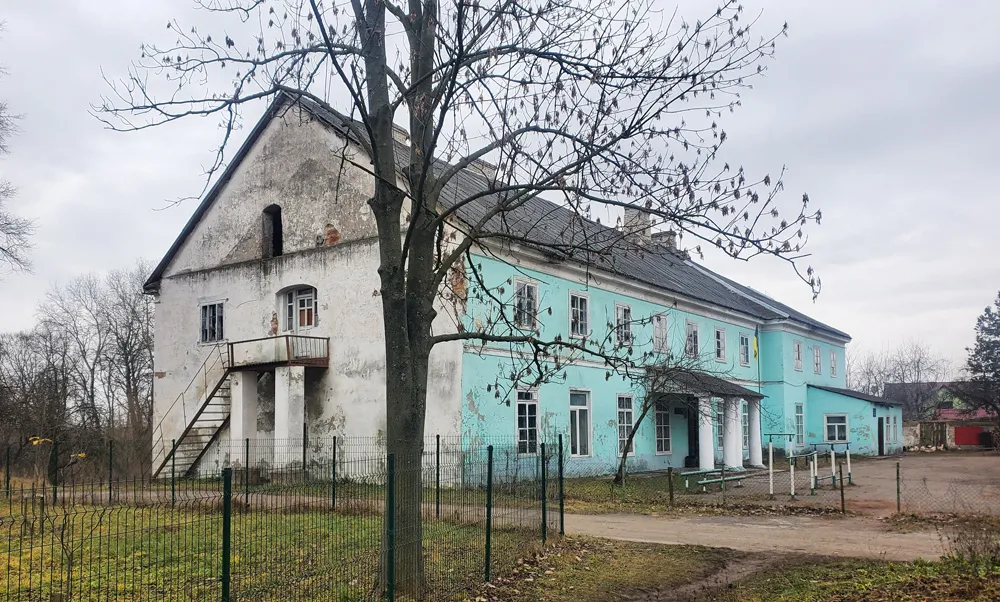
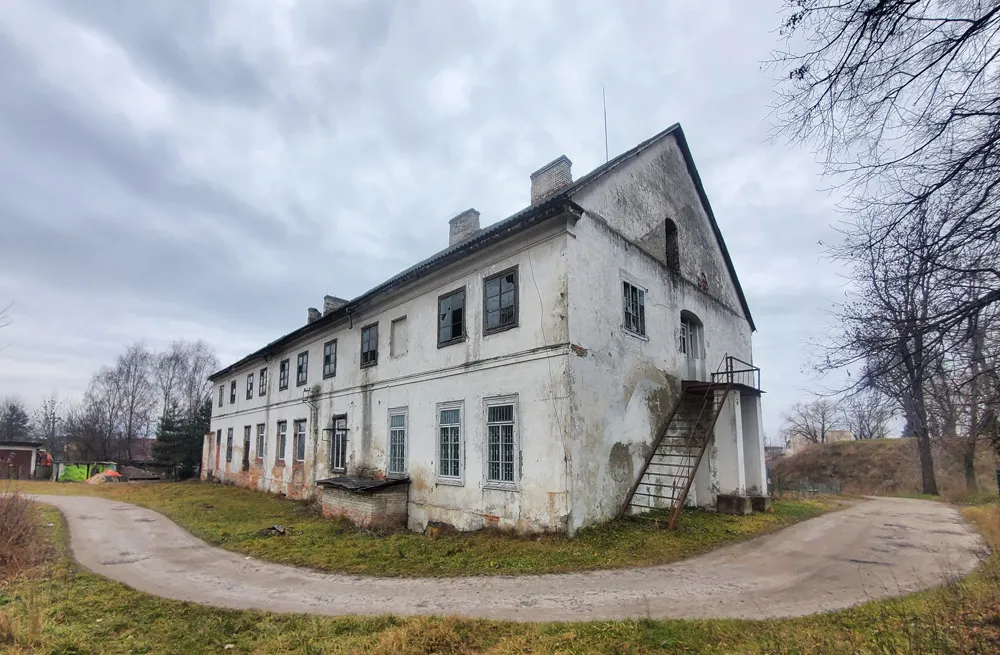
Branicki Palace
In 1768 Count Franciszek Ksawery Branicki received the lands of the Liuboml area as a gift for saving, at a Sejm session, the life of the future king Stanisław August Poniatowski. The magnate immediately set about putting the place in order. By 1781 he had laid out a large residence here that fitted organically into the structure of Liuboml’s historic centre.
In the Jagiellonian Library in Kraków an image of the palace in Liuboml has been found, made in 1827 by Willibald Richter, an artist in the service of Count A. Potocki (see the Gallery). As research shows, the drawing is the earliest and so far the only depiction of the Liuboml palace. On the basis of this watercolour and printed materials one can trace the history of the creation of the Liuboml palace and park ensemble.
It was a multi-volume palace complex consisting of four parts. Only the southern two-storey wing of the palace has survived to our time. On its northern side adjoined another two-storey, but slightly lower, block. It is assumed that the first and second were intended for receiving guests and for the numerous magnate court. Further to the north the front of the buildings was continued by a one-storey gallery (it can be assumed that a winter garden was housed here or balls were held). The complex of buildings was completed by the main palace block (the northern wing). This is an early Classicist building with a faintly accentuated central pseudo-projection on the main façade, topped with a triangular pediment. The front of the palace’s main façade faced the town’s central market square, creating the axis “palace” – “castle site” – “market.” To the north of the palace a large garden was laid out, enclosed by a stone fence.
At the end of the 18th century the Tadeusz Kościuszko Uprising flared up on the territory of Poland. This is a well-known historical fact. But not everyone knows that it was precisely in Liuboml and near the town that important events unfolded as a result of which Crown Hetman Branicki was declared a traitor. In 1794 Kościuszko’s supporters knocked at the door of the estate. The no-longer-young Franciszek Ksawery, citing poor health, did not join the insurgents. However, his regiment, regardless of the lord’s will, acted otherwise. The old count was arrested. While the “traitor” sat under guard in his own house, the Liuboml land came to know the boot of Kutuzov and Suvorov. The famous commanders, of course, did not come as far as the town itself… It was not the Branickis’ business to save the hetman and his possessions.
The magnate did not end up behind bars. The connections of his wife Aleksandra Engelhardt helped. The couple lived out their days in Bila Tserkva. However, the affection for the picturesque landscapes of Volyn passed through generations, from grandfather to grandson. Ksawery Branicki (1816–1879), named in honour of the hetman, often visited the Liuboml palace and even won a reputation as a patriot. For the underground activity of Ksawery the Younger, the government of tsarist Russia confiscated the estate and lands in 1849. Learning of the imperial intentions, the owner allowed the local people to “feast” on the lord’s wealth. For three days in a row the residents carried out of the palace whatever their hearts desired. The era of the Branickis on the lands of the Liuboml area was over…
At the end of the 19th century a new owner settled in the palace, a close relative of the Russian writer Ivan Turgenev. Later this young lady joined her life with one of the non-local landowners and became Cappioni. The Branicki estate was the family nest of the Russian woman and the Italian until 1939. The “Soviets” housed a border detachment in the count’s house. The soldiers tried to modernize the building but only disrupted the formerly sound waterproofing system. As a result the basement, where Branicki had fitted out practically another floor, was flooded with water. Local residents also helped, dismantling almost the whole structure for bricks. Of the 200-metre luxurious palace only one wing remained, whose length barely reaches 40 m. In Soviet times it housed both a vocational school and a Russian school. In the first years of independence it was planned to give the building to a local museum of local history. Liuboml historians knocked on the doors of ministries, but it was not to be. Later Branicki’s residence was handed over to the education department and now houses a children’s and youth sports school. Little remains of the once lavish decoration of the estate of the count and hetman. The surviving southern wing is a modest shadow of the Branicki Palace. It is brick, rectangular in plan, two-storeyed, with a corridor system, with one weakly expressed projection in plan and a four-column Tuscan portico one storey high on the western façade. The internal layout is sectional and corridor-type, with rooms on both sides.
The palace is an architectural monument of state significance.
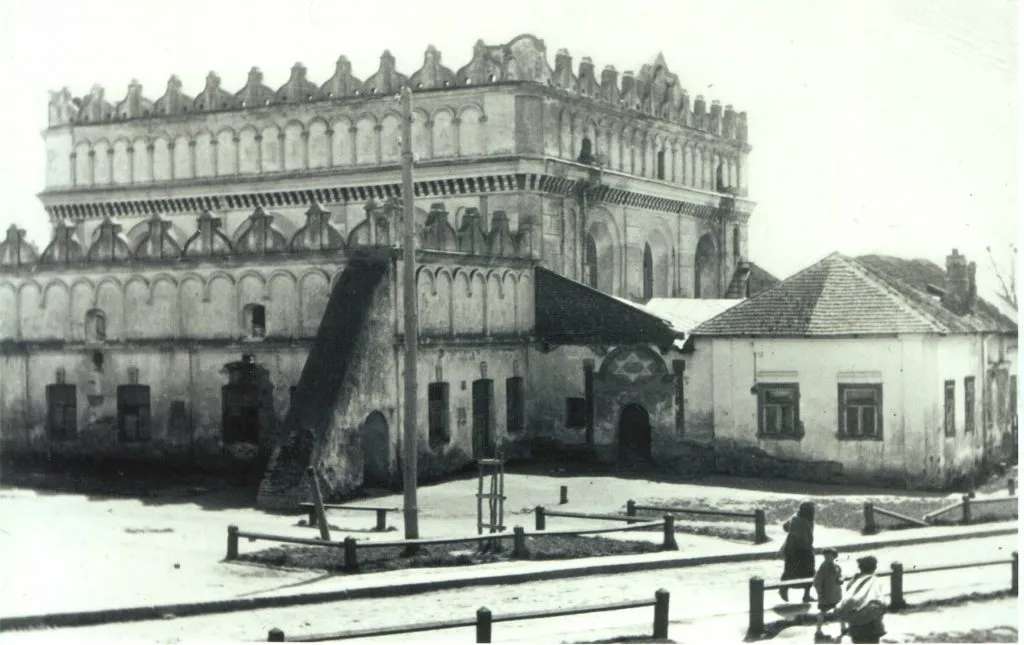
Great Synagogue is a Jewish house of worship in the town of Liuboml in Volyn, which stood in the centre of the local Jewish quarter. It was destroyed on the order of the Soviet authorities in 1947. It was one of the oldest and largest in Ukraine.
The synagogue was dismantled for brick, with which a road was paved. Only the foundation remained in the ground. Back in Soviet times a shop was built approximately on the site where the synagogue stood.
Much more about the synagogue and the Jewish community: Wikipedia
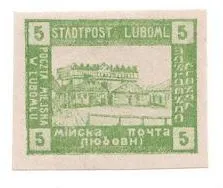
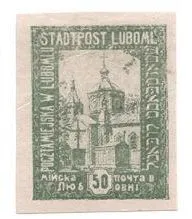
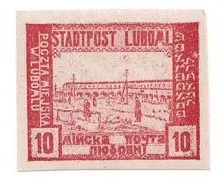
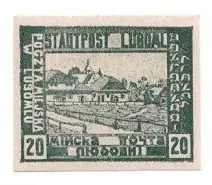
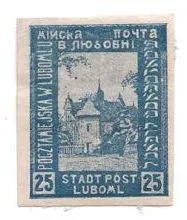
The unique Liuboml series of postage stamps
During the Austrian occupation, by a resolution of the Liuboml city council and the head of the 259th Austrian etappen post, Lieutenant Colonel A. Shternat, in September 1918 a series of stamps for postal use by the civilian population of the Liuboml district was ordered from the Prague art and publishing enterprise “Union.” The designs of the stamps were made from photographs and executed by Kaper, a pupil of the Prague art school. In all, five stamps of different colours were issued, depicting the most interesting architectural structures of the town.
The inscriptions on each stamp are, at the top, in German “Stadtpost Luboml,” and at the bottom in Ukrainian „Мійска почта Любовні”, and on the denomination 50 „Мійска почта в Любовні”. On the denomination 25 the inscriptions are swapped, with the Ukrainian text at the top and the German at the bottom. The same inscription in Polish, “Poczta miejska w Lubomlu,” is placed on the left and in Yiddish on the right.
These stamps are very interesting to collectors, firstly because Liuboml is the only town in Ukraine that in that period issued a series of stamps with local views, and secondly because the inscriptions on the stamps are in Ukrainian, German, Polish and Yiddish (the last inscription was at the time quite unique in world practice). Before that no country had printed stamps in four languages. Only the UN much later issued stamps in five languages.
The stamps depict the synagogue, the Rynok square, the church (twice) and an Orthodox wooden church.
All photos (except archival ones) by Roman Malenkov