Verbovets. A former shtetl

· 8 min read
The village of Verbovets lies in the right-bank forest-steppe part of Ukraine, in the south-western part of Vinnytsia Oblast, on the border with Khmelnytskyi Oblast. The village is located on two slopes of low hills of the Volyn-Podillia Upland, where two rivers, the Batih and the Bakhtynka, merge and flow into the Zhvan River, a tributary of the Dniester.
The surroundings of the village are hilly. Many springs flow out of deep and rocky ravines. During spring rains the springs turn into large streams and cause great damage.
From early times the village was divided into two parts: the northern “Vitrianka” and the southern “Petsi”. These names have survived to the beginning of the 21st century.
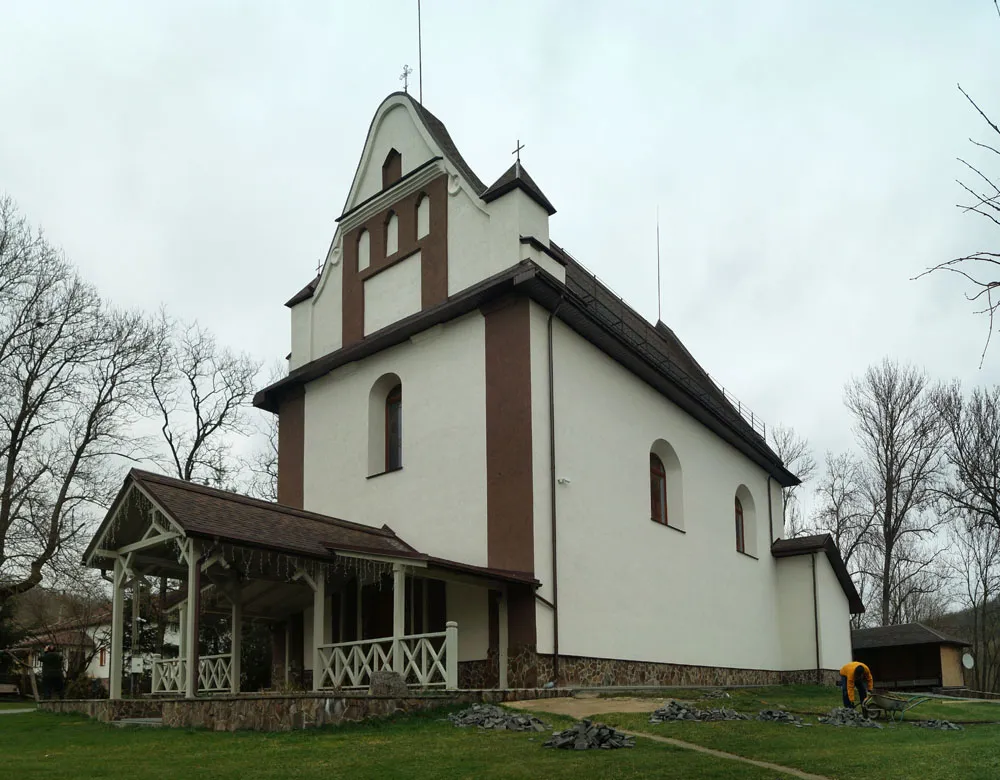
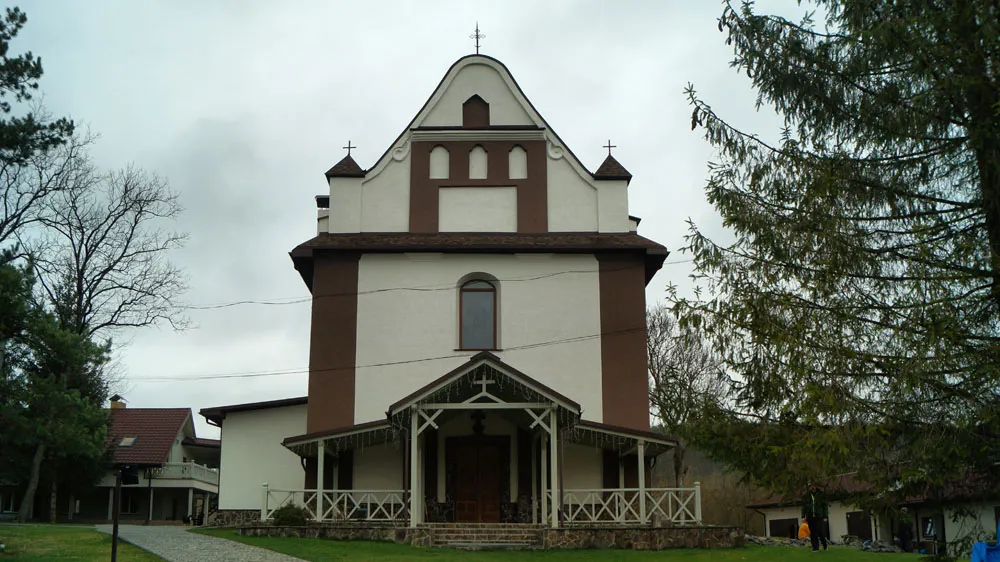
So, the first wooden church (kostel), built at the expense of Sigismund III, appeared in 1607, when the settlement received Magdeburg law, but by 1717 the church was already a ruin. The wooden shrine restored in 1752 burned down on the night of Easter 1798 from bonfires that had been lit. The brick church (kostel) was built in 1802 with the funds of parishioners and through the efforts of Fr. Stazhynskyi, and in 1829 it was consecrated by Bishop Franciszek Mackiewicz. In 1909 the shrine was restored. From the 1920s to the 1960s the church was closed, and after the return of the church its restoration was carried out by Fr. Vilk. In 1997 the interior of the shrine was restored thanks to Fr. H. Konkola. On 29 July 2012 the head of the oblast state administration, Mykola Dzhyha, officially transferred the property complex of the church into the ownership of the parish; this took place with the participation of Bishop Leon Dubrawski and many of the faithful. Source: Churches and chapels of Ukraine
The first more detailed information about the village dates from the first half of the 15th century (1439). In 1439 Verbovets was still called a village. At the beginning of the 16th century the village was attacked by Tatars and was finally destroyed and laid waste. From 1566 the village was owned by Roch Górecki, and then by Stanisław Górecki (according to other data, Stanisław Holski), who in 1607 obtained from the Polish king Sigismund III permission to turn the village into a town, as well as to build a castle and a wall in it, as a watch post for defence against the Moldavian lands.
The king granted this by a charter of 7 June 1607. By this privilege Verbovets was given a coat of arms, an image on a red banner of a hand with a sword, as well as Magdeburg law. The townspeople were exempted from taxes and duties for 12 years. Two annual fairs were established (on the Ascension and on the Monday after St. Lawrence’s Day), each lasting 8 days, and markets every Thursday. The boundaries of the town’s lands and holdings were precisely fixed. Thus Verbovets became a starosta’s town. The population at that time was made up as follows: Orthodox, 1,144 people (587 men and 557 women); Catholics, 583 people (295 men and 288 women); Jews, 1,934 people (953 men and 981 women).
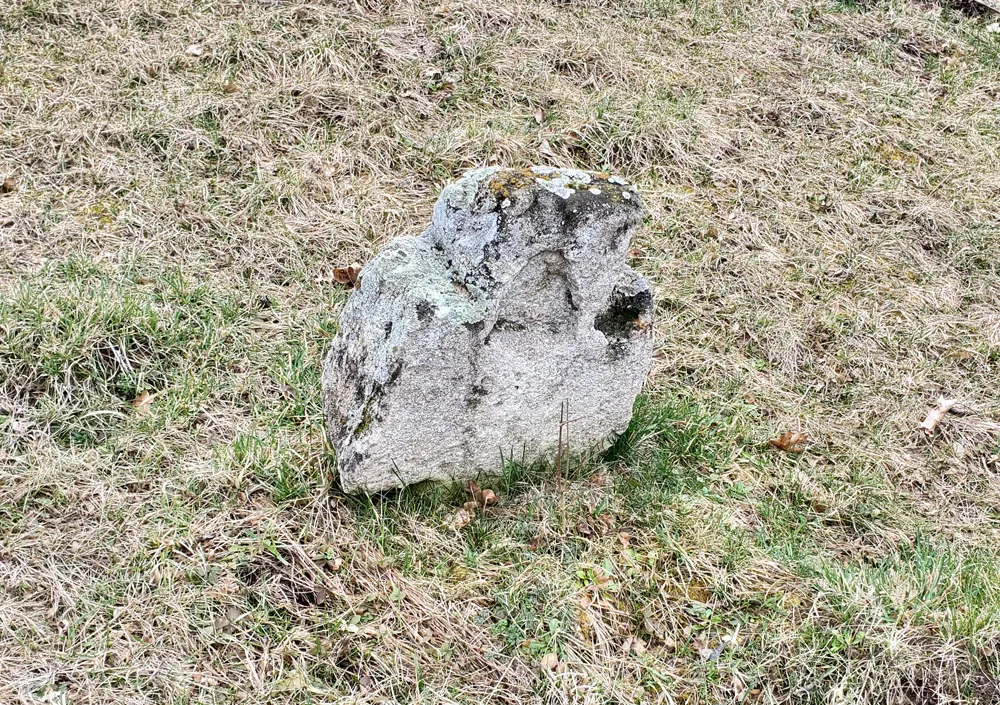
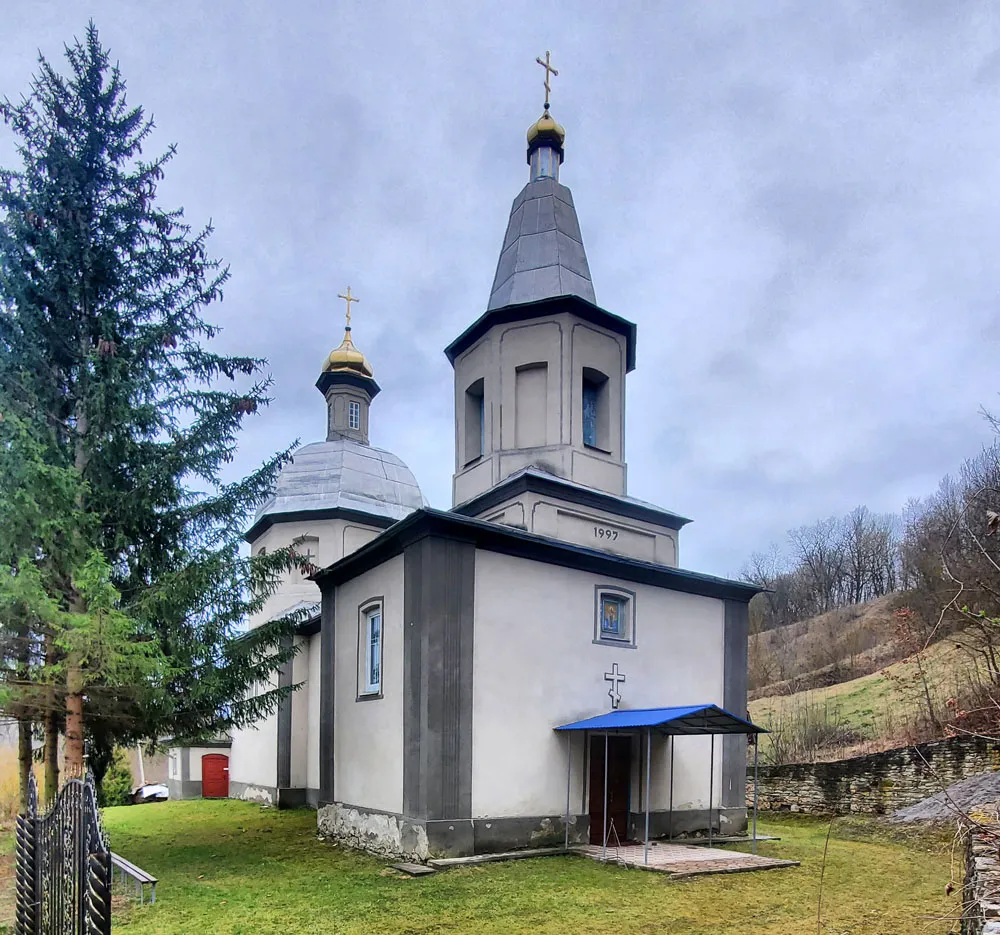
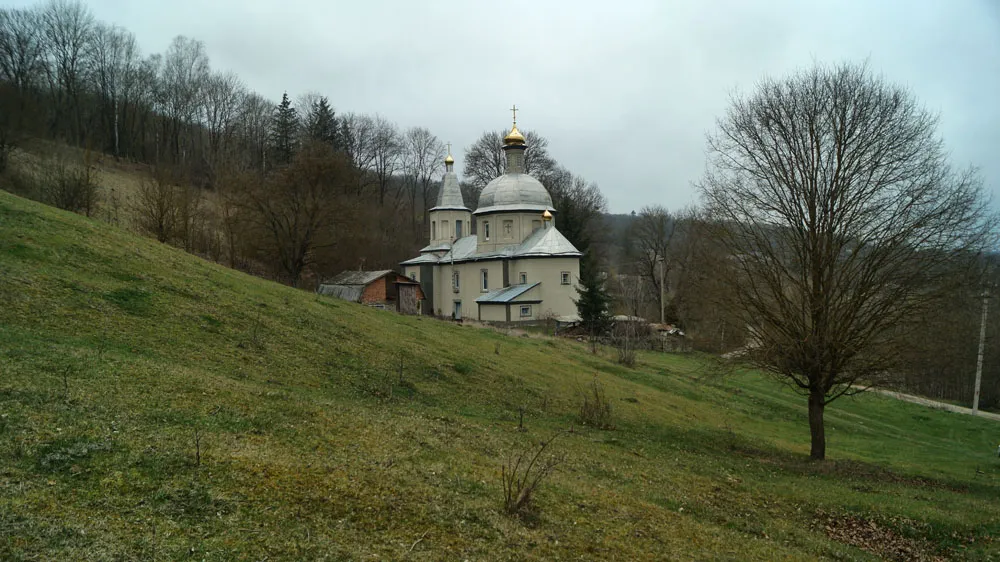
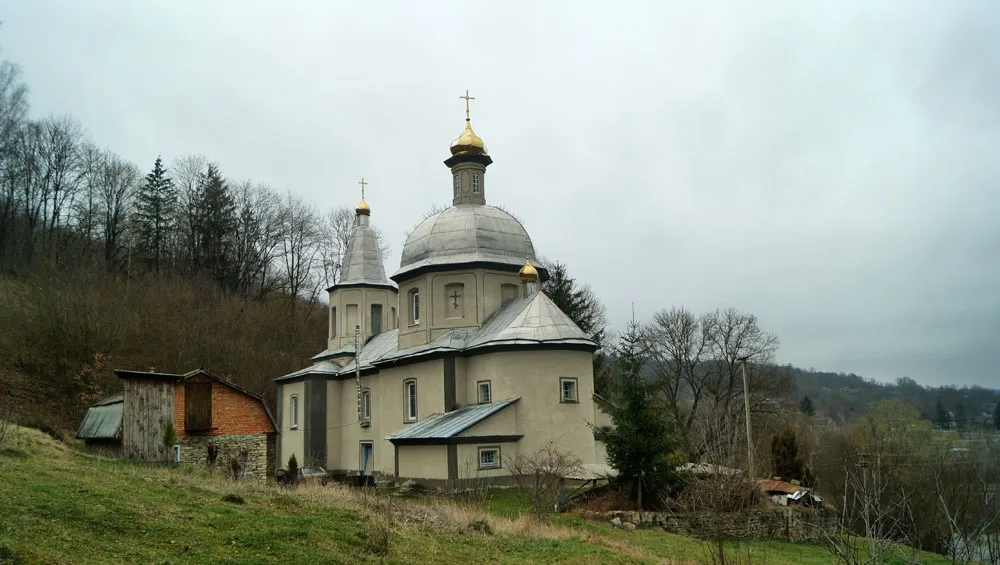
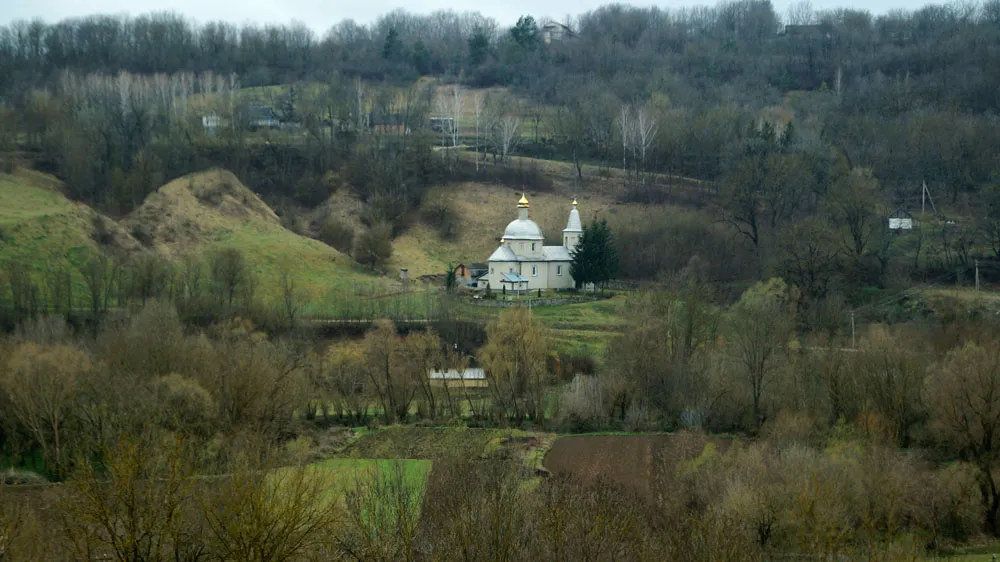
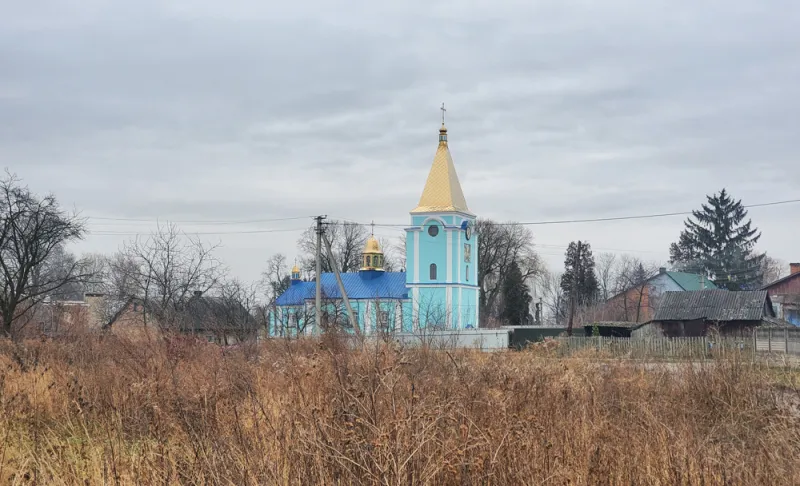
The Church of the Intercession and an old cross beside it
After Górecki’s death, for his services in the capture of Smolensk the king assigned Verbovets to his five daughters: Zofia, Małgorzata, Katarzyna, Elżbieta and Dorota. This was attested by the inspection of 1616. In 1629 two parts of Verbovets and part of Bakhtyn were owned by Stefan Wolański, who had full power over the population of his holdings. At this time many Orthodox became Polonized, adopting the Catholic faith. The townspeople also suffered from Polish oppression. The Polish authorities disregarded the town’s self-government and restricted crafts and trade. The development of crafts declined. Polish oppression in Ukraine caused a whole series of uprisings.
During the war of liberation of 1648–1654 under the leadership of Bohdan Khmelnytskyi, Verbovets was finally laid waste, the castle was destroyed, Jews and Catholics were slaughtered, and the Orthodox population scattered in different directions, so that the inspection of 1665 attested the complete absence of even a single peasant on the holdings of the then owner of Verbovets, the Galician standard-bearer Stefan Złoczewski. In 1708 Verbovets belonged to Aleksander Gruszczyński, during whose tenure it was subjected to devastation by the Cossacks of the Mohyliv colonel Savva. The village was destroyed, and only 28 peasants fled. From 1765 it was temporarily owned by Eustachy Dembowski. After the inspection of 1776 Verbovets had 144 households. At about this time the starosta was Radenkyi, and at the end of the 18th century Stefan Broniewski, under whom Verbovets again grew considerably and strengthened, famous for the rich timber forests in its surroundings and the industrial extraction of saltpetre and potash.
During the annexation of Podillia to Russia, the Verbovets starosty was taken away from Broniewski because he refused to swear an oath of allegiance to the Russian empress, and in 1793 it was sold to Senior Councillor Dmytro Troshchynskyi.
In 1796 Verbovets was designated a district town by Empress Catherine II, and from 1804 it was sold to Count Sobański. With the formation of Ushytsia county in 1804, Verbovets became a supernumerary town[1]. On old documents a seal has survived with the inscription: “Город Вербовец Каменец — Подольской губернии, Новоушицкого уезда” (“The town of Verbovets, Kamianets, Podolia Governorate, Nova Ushytsia county”).
In 1807 two villages were assigned to Verbovets: Zhytnyky and Durniaky (now Liubomyrivka). Later Stavchany and part of Bakhtyn were assigned.
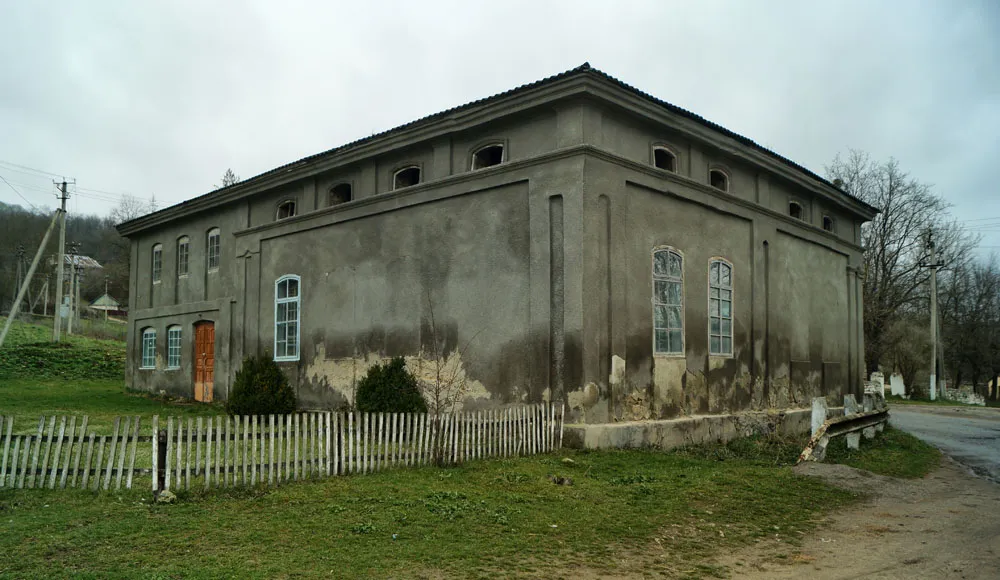
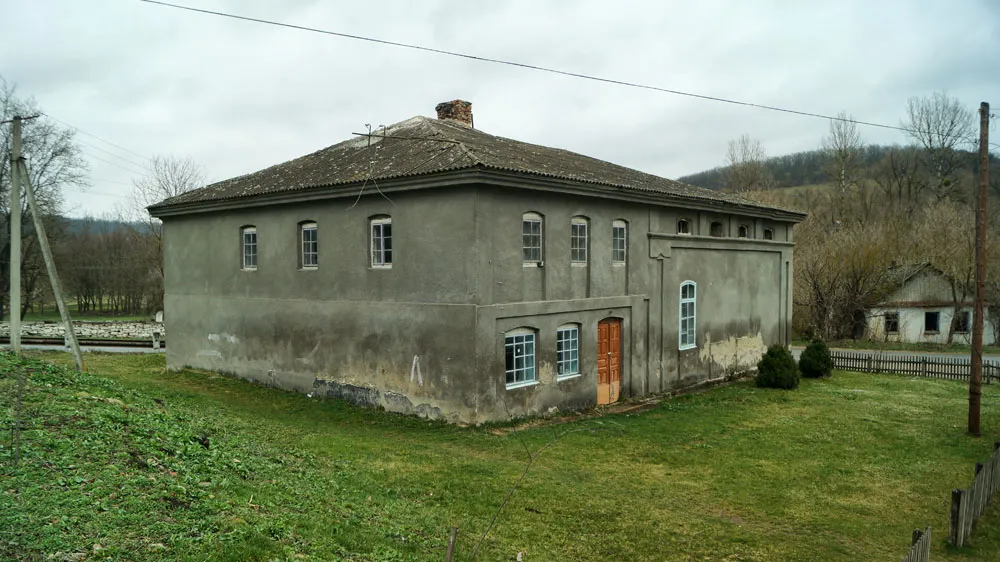
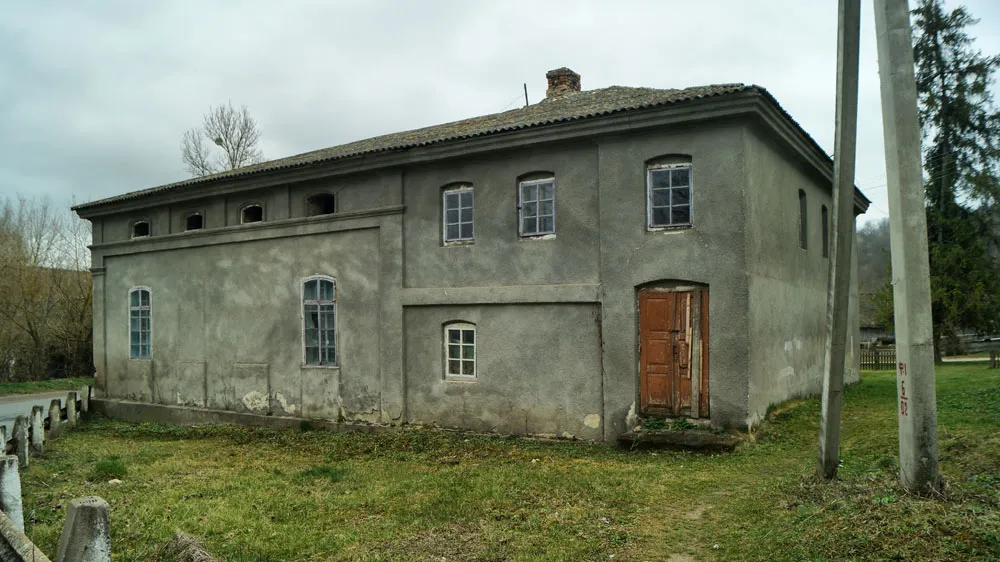
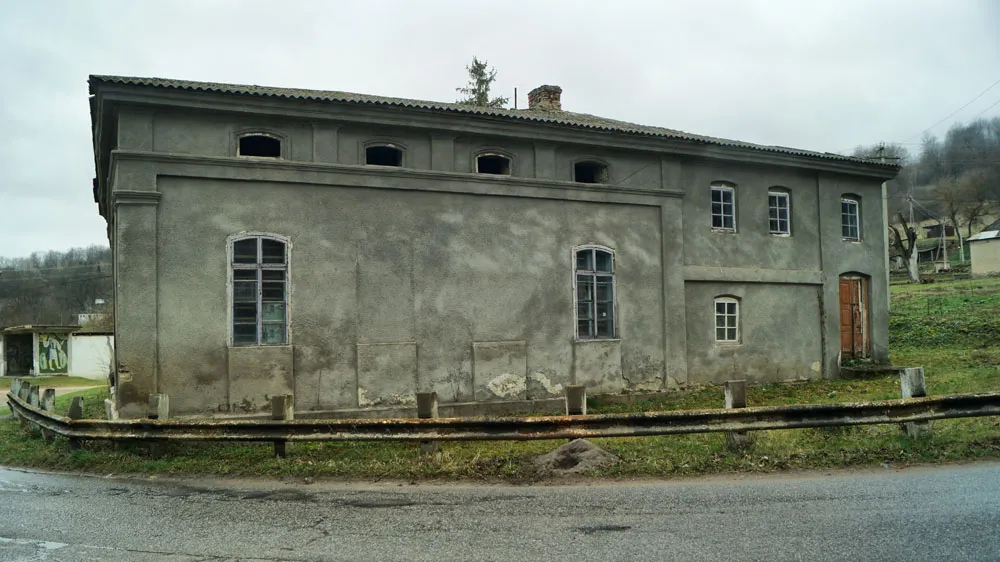
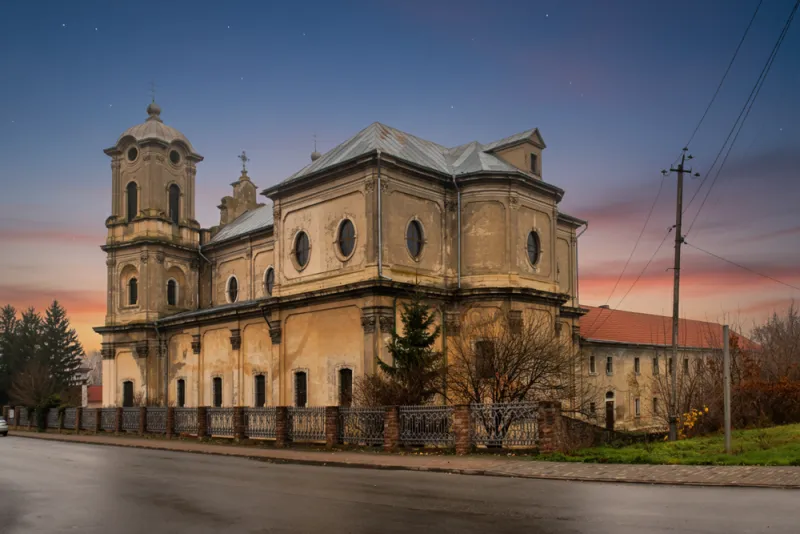
The former synagogue
The population did not perform corvée labour. They rented land from the landowners at a high price. Sometimes the rent for land was greater than the income. Impoverishment of the population grew.
In 1832 a town Duma was founded in Verbovets, subordinate to the Nova Ushytsia magistrate, and town administration was introduced from 1838.
As early as 1862 the peasant Ostap Leskov tore down the tsar’s portrait in the volost administration and ripped it up in response to the completion of the transfer of peasants to redemption payments.
During the establishment of Soviet power the village became independent, Count Sobański disappeared, and his estate in Zhytnyky was nationalized. Private ownership of land was abolished.
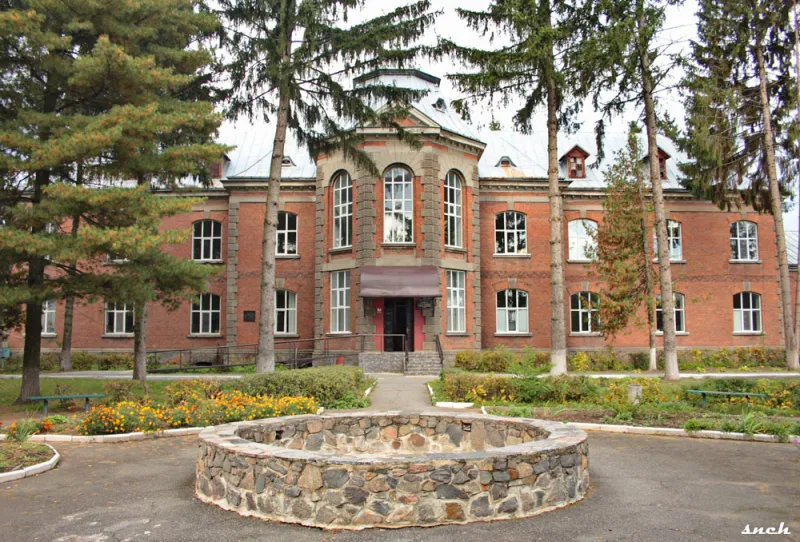
The large buildings in the centre of the town, called in those days “inns” or “petsinnia”, which belonged to a Jew named Breiman, passed to the state and became grain stores. Later they housed collective-farm barns and warehouses. In time they were demolished, and a mill and an oil factory were built in their place. The two-storey house of a former resident of the town, Urts, who emigrated to America, passed to the state. His private shop was located in this house. At present[when?] the building belongs to the school. A two-storey house bought and donated by a monk to his two sisters, Marfa Borzhemska and Domna Marchynska, was transferred to the school.
The old buildings owned by a town resident, Pidhaietskyi, were rebuilt into a single trade complex, where an industrial goods and household goods store is located. In a two-storey house that belonged to the church clergy there is a school boarding house.
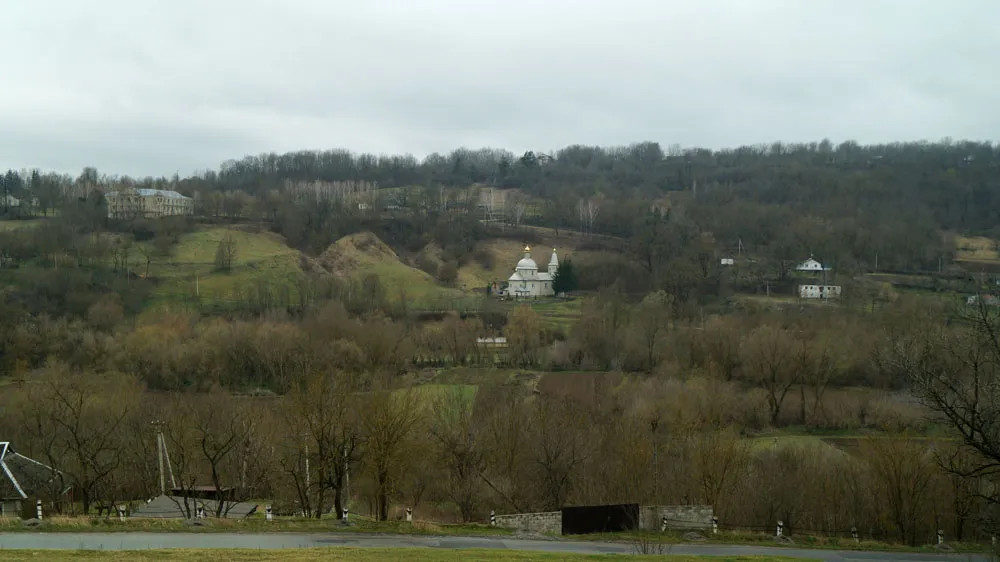
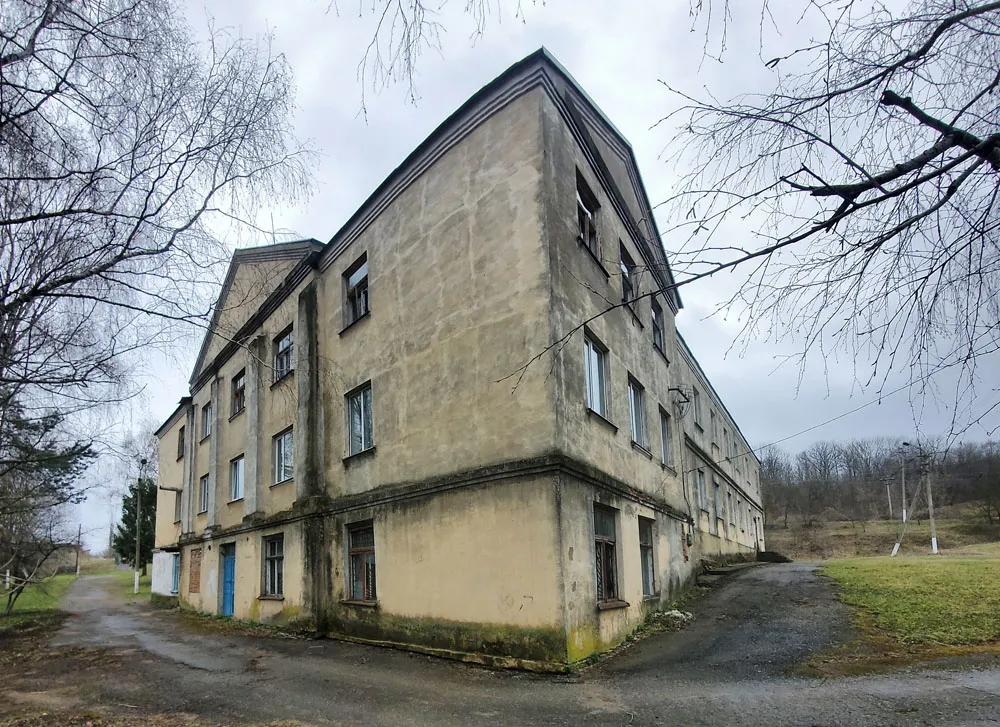
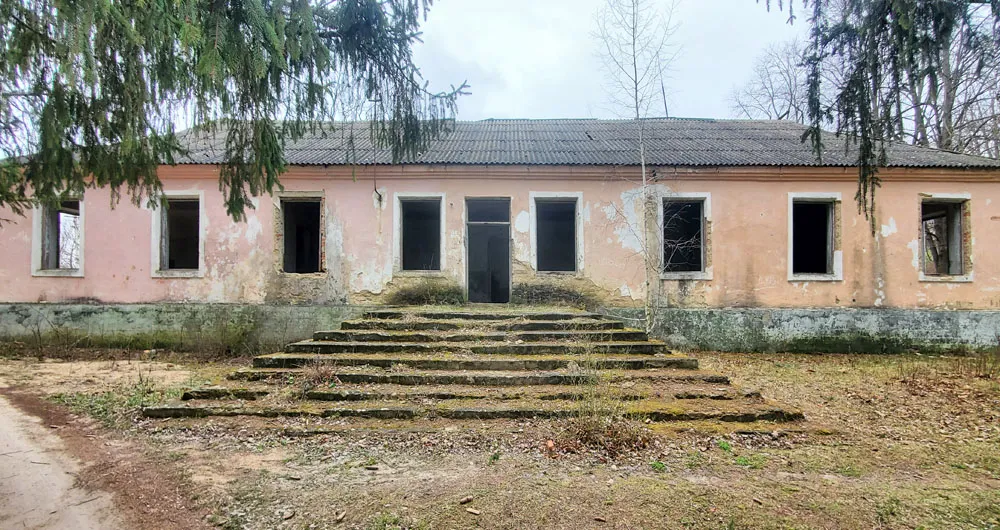
The club on the hill and an unknown building (probably the former school)
In the old building where the town Duma was once located, the executive committee of the village Council was housed for a long time.
After the border was established between Nova Ushytsia county and Verbovets, which became part of Murovani Kurylivtsi district, the lands of Tarashcha (the name comes from the landowner Tarashchanskyi, who owned it), Mykulyntsi and Pereladyno joined Verbovets. The Zhytnyky fields also became part of Verbovets. Today the names Tarashcha, Mykulyna, Pereladyno and Zhytnytski Fields have been preserved. The origin of the name Mykulyna has not yet been established. During the period of the NEP the land was put up for sale and well-off peasants bought plots from the state.
The village’s ancient monuments are 2 walls hewn out of stone in the direction of the village of Zhytnyky on the bank of the Batizhok River. On the rock walls there are several Latin inscriptions that can no longer be deciphered, but around the 1770s they were read and recorded in a chronicle.
According to the data, there was a church or kostel here, and during an earthquake two walls were destroyed, while the walls hewn from the rock have survived.
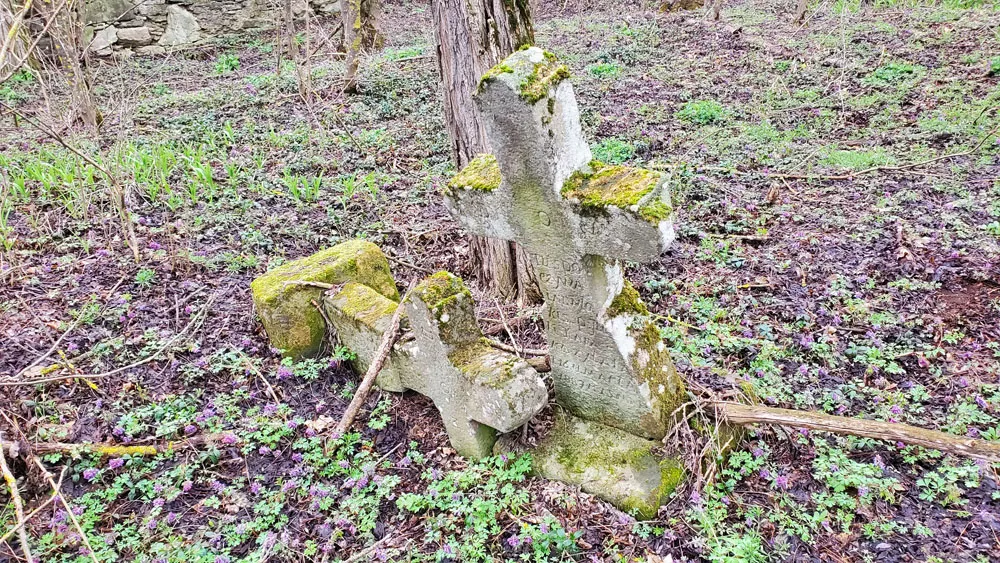
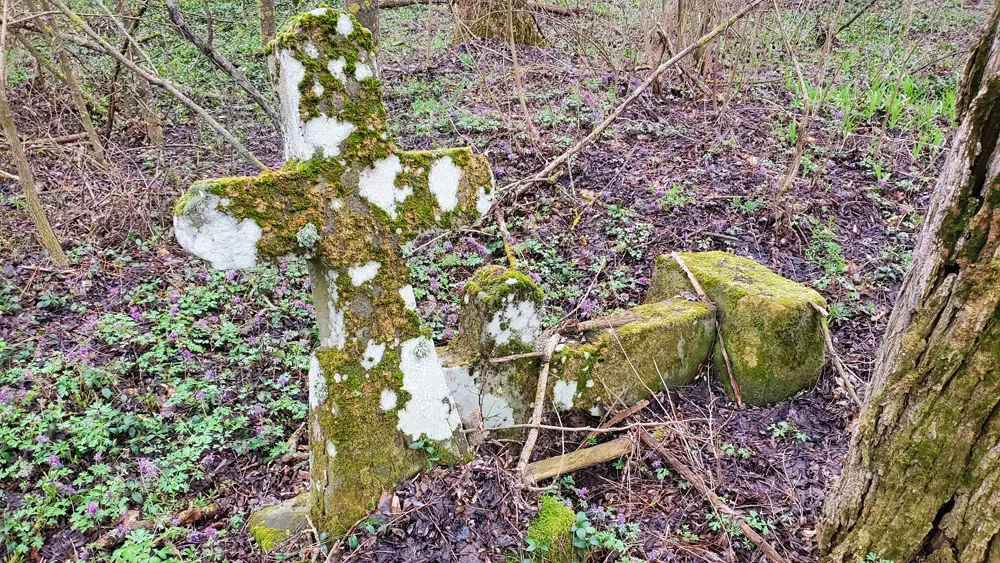
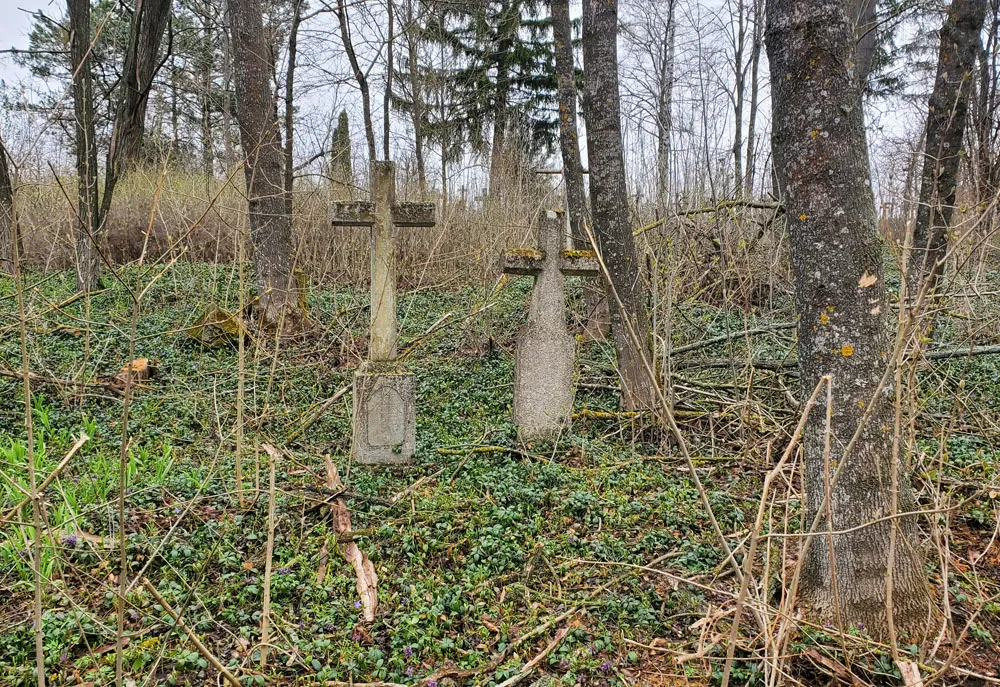
Today the village has a church built in 1821. It was built with the funds of parishioners and the state. On the site of this church there had stood a wooden Church of the Intercession, which burned down in the 1820s.
In 1885 Verbovets had a Ministry single-class school, and from 1899 a church literacy school for girls.
The village has a Roman Catholic church (kostel), built with donations from parishioners in 1895. It was built on the site of the former ancient castle and walls, which served as a watch post not far from the border of Wallachia.
Today beside the church a women’s Catholic convent of the Missionary Congregation of the Servants of the Holy Spirit has been built.
A wooden church (kostel) was built here in 1607, but on the night before Easter 1798 it burned down from bonfires that had been lit. In the church there is a “miraculous icon” of the Mother of God, painted on canvas in an old style. Every year an indulgence feast takes place here on Yahidna.
The church land comprised 40 desiatinas. The Roman Catholic church also owned 40 desiatinas.
A large two-storey stone building (the former Jewish synagogue) has been rebuilt, and it now houses the school’s sports hall. The school library is also there. The village Council was located in the building of the former town Duma.
Text from Wikipedia, photos by Roman Malenkov.