Armenia. Akhpat

· 3 min read
In the north of Armenia, not far from the Georgian border, near the town of Alaverdi and Sanahin Monastery, lies Akhpat Monastery. It is one of the largest monastic complexes in Armenia and was in the past a significant cultural, scientific and educational centre of the country. Since 1996, together with Sanahin Monastery, Akhpat has been a UNESCO World Heritage Site.
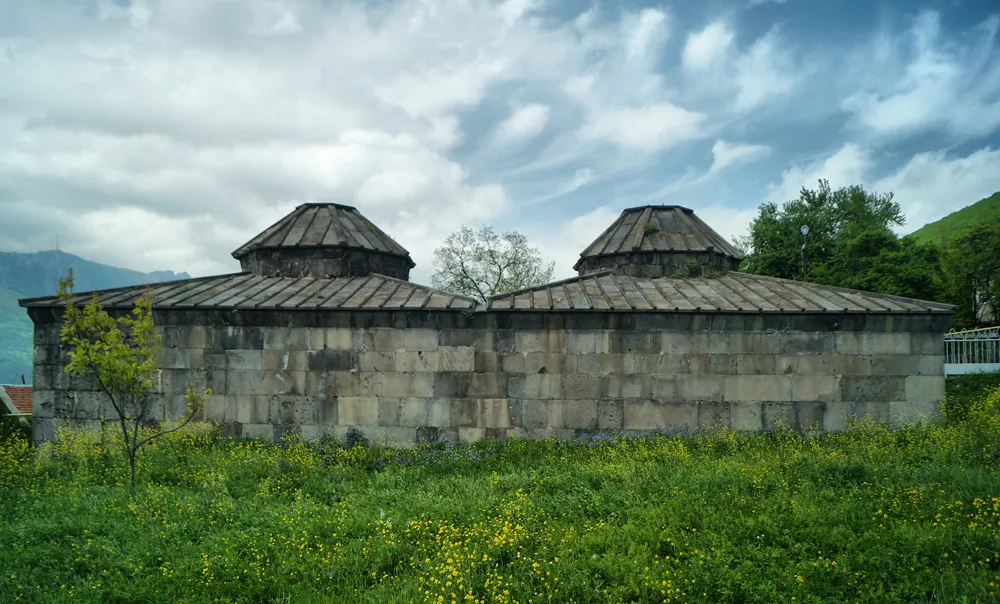
We came to Akhpat on a Saturday, a day off. There was a whole crowd of visitors, but they did not spoil the good impression made by the incredible monastic complex of three churches, a chapel, a scriptorium and a bell tower. The almost unreal colour of the buildings made of dark stone is enhanced by the surrounding nature. A fairy-tale place.
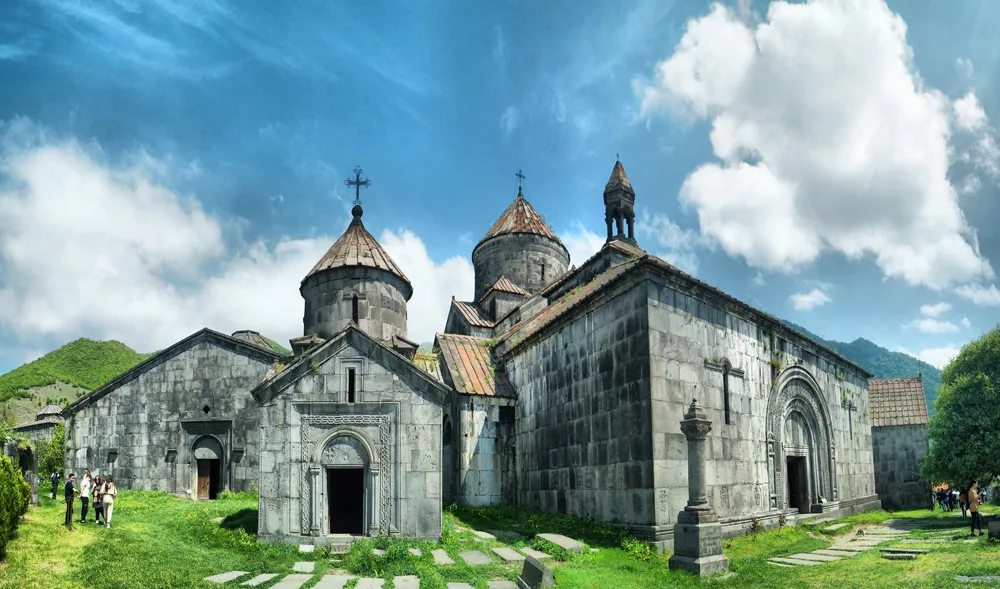
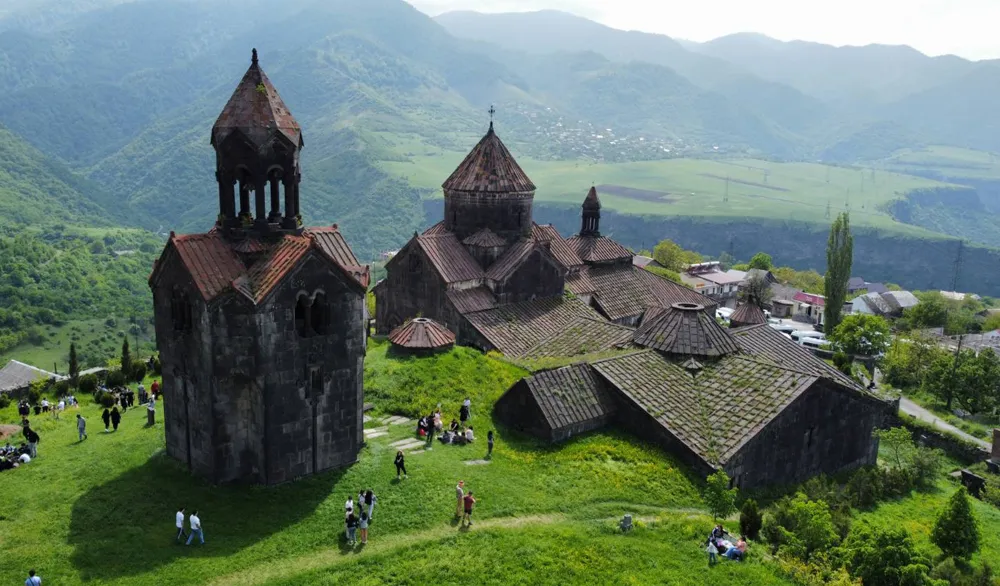
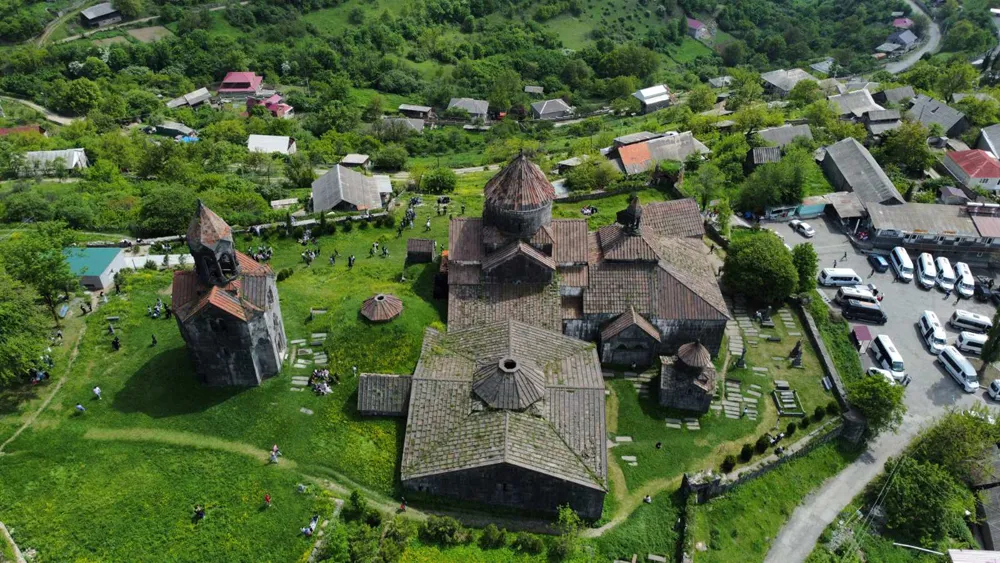
Akhpat Monastery was founded in 976 by Queen Khosrovanush, wife of Ashot III Bagratuni. Almost immediately it became one of the main spiritual centres of the Kingdom of Lori (there was such an Armenian feudal vassal state), and later, after the burial vault of the royal Bagratuni house was moved here, it acquired pan-Armenian importance as well, as confirmed by the ceremony of Bishop Barsegh taking the office of catholicos in 1081, precisely at Akhpat.
In 1105 Akhpat was plundered by Emir Kzil, and in 1118 the territory of the Kingdom of Lori was seized by the Seljuks and it ceased to exist. Later this territory was annexed to Georgia and the monasteries of Akhpat and Sanahin gained a new lease of life. Akhpat became the residence of Armenian archbishops and was regarded as one of the main monasteries of Eastern Armenia until its conquest by the Russian Empire.
The name Akhpat is linked to a legend about two architects, a father and a son, who quarrelled over some construction dispute and then, after the son built a great wall, made peace. The father then said “akh pat” (“oh, wall” in Armenian). That name stuck to the monastery.
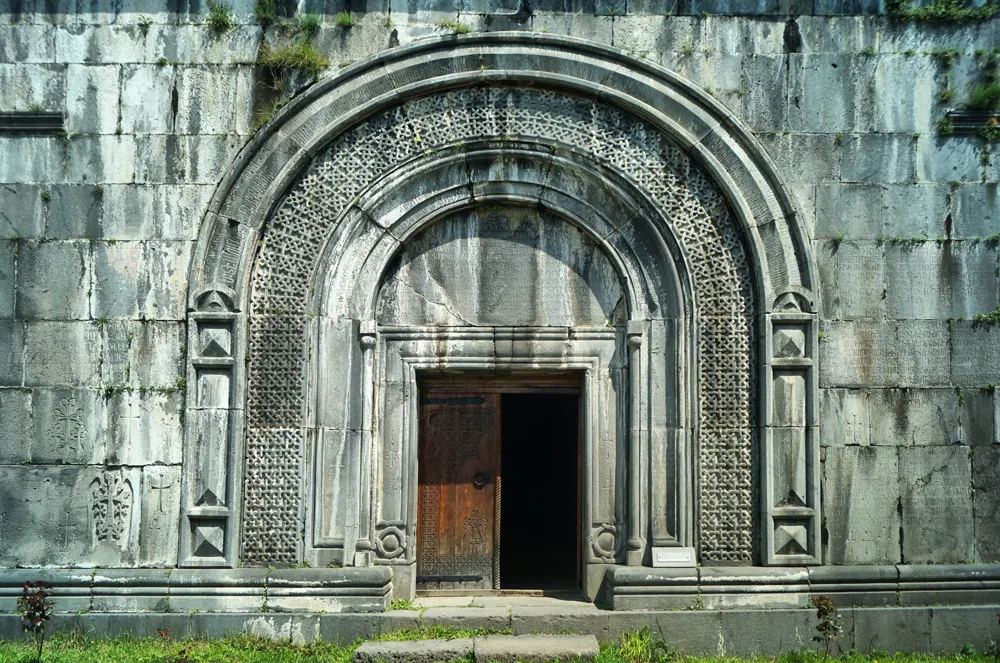
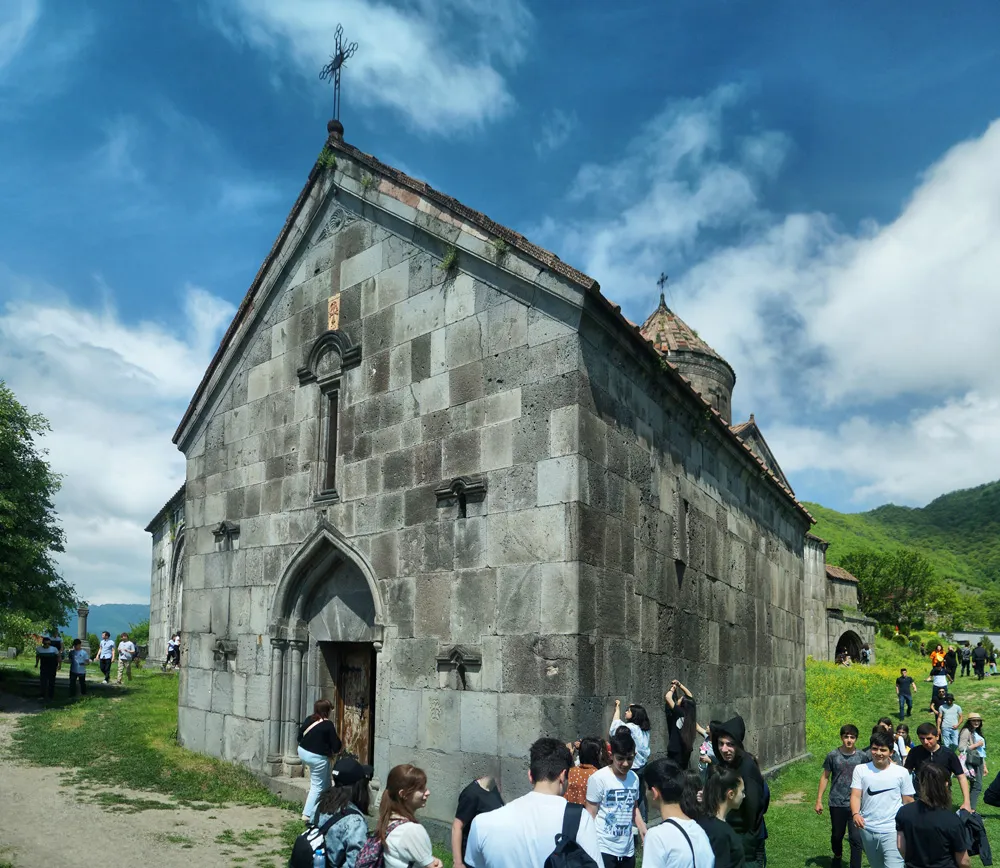
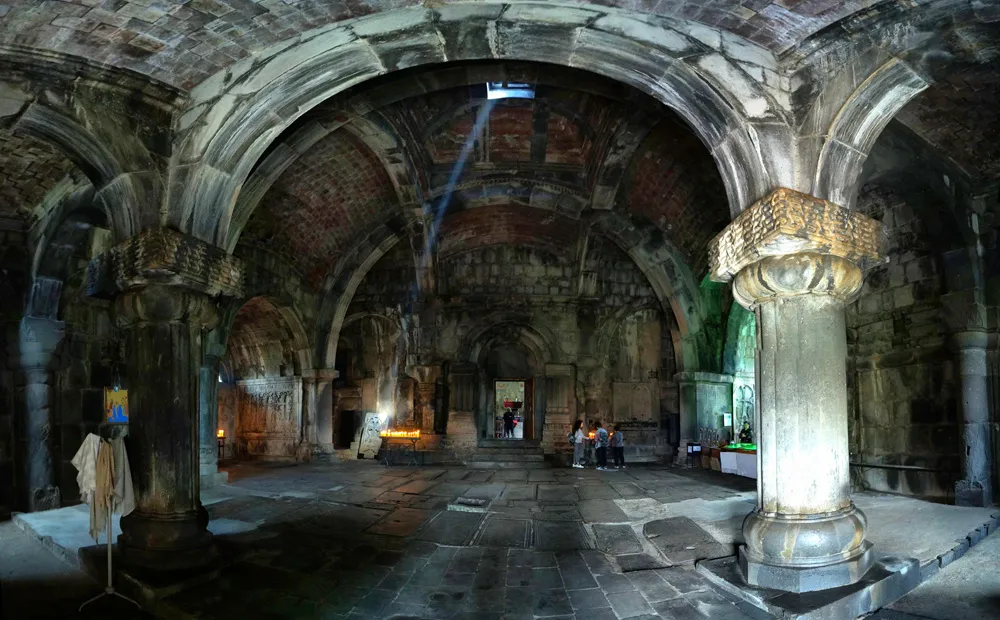
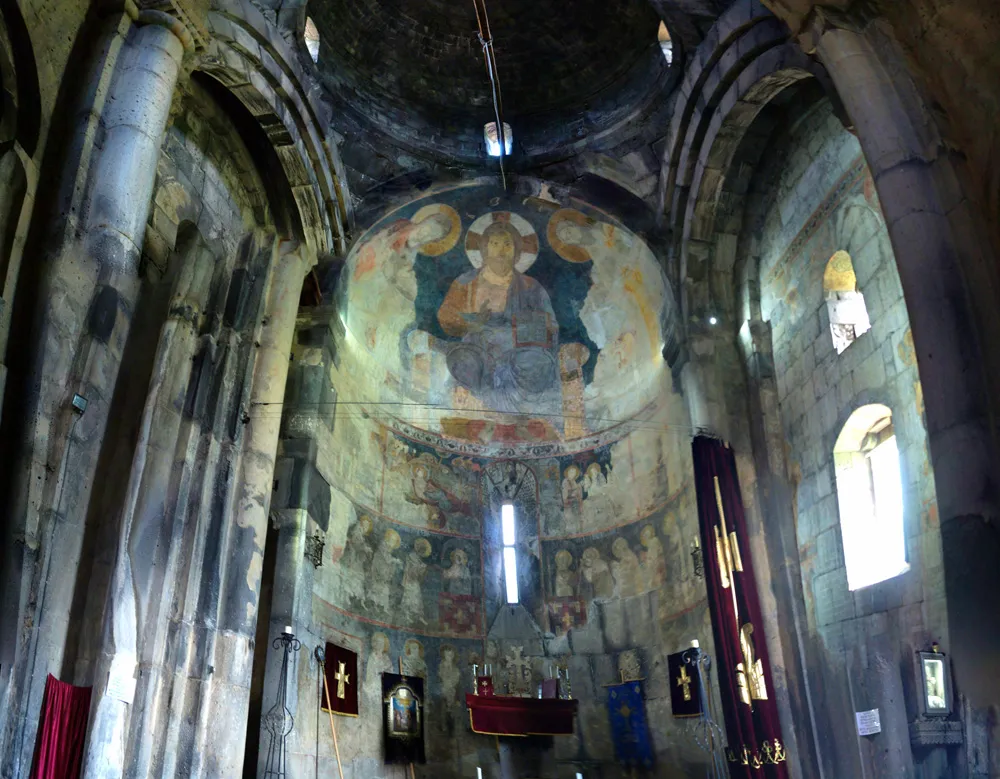
The main church of Akhpat is the Church of Surb Nshan (Holy Sign), whose construction began in 972, even before the monastery was founded. The architect of the church was Trdat, and its patrons were the Bagratuni princes, children of Ashot III, Smbat and Kiurike; their bas-relief image holding a model of the church adorns the eastern façade.
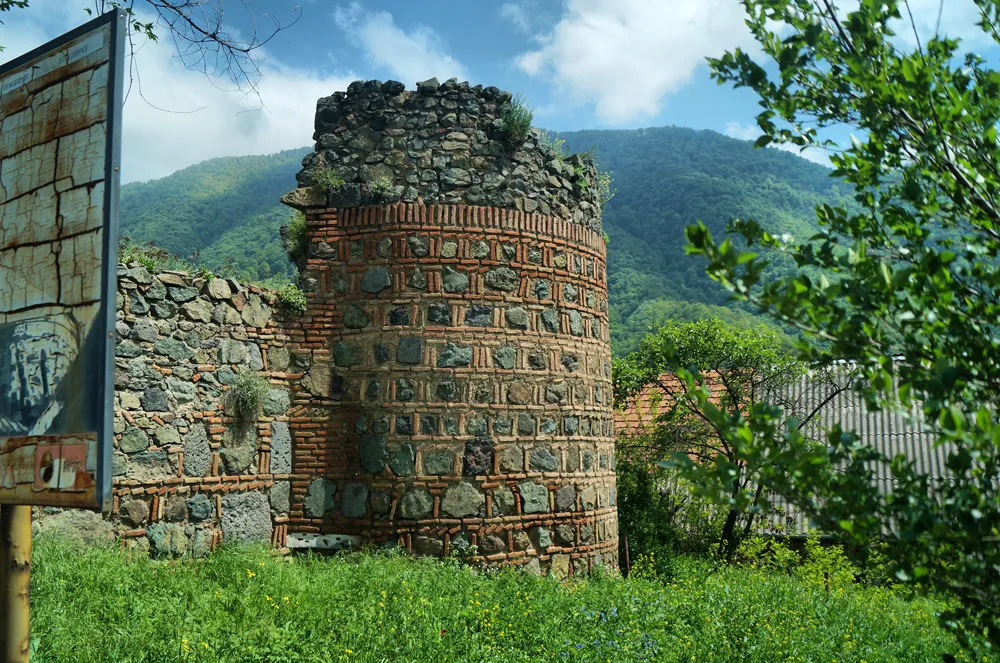
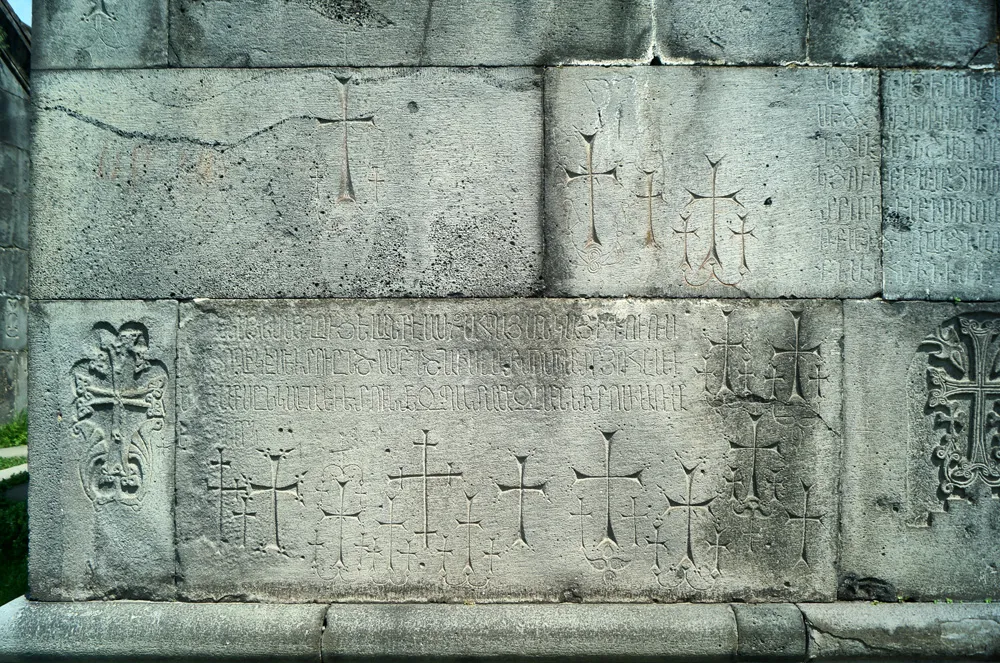
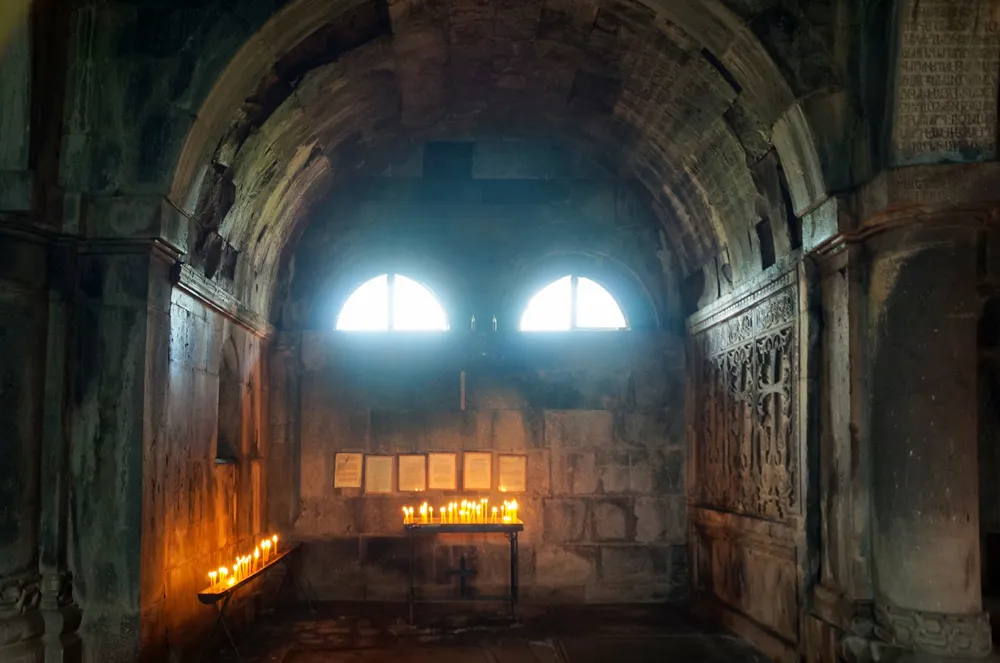
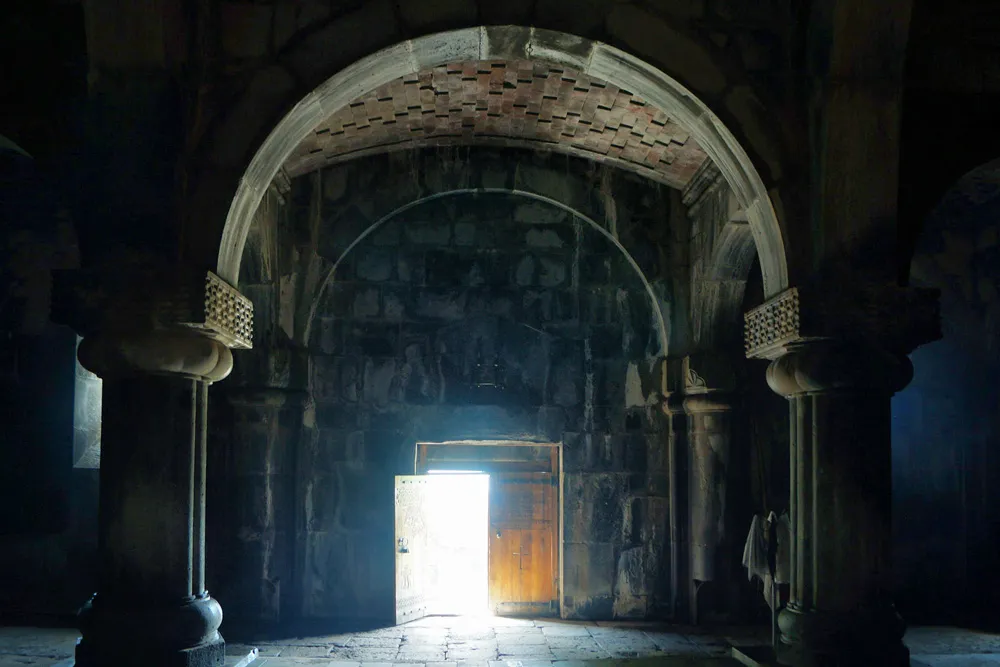
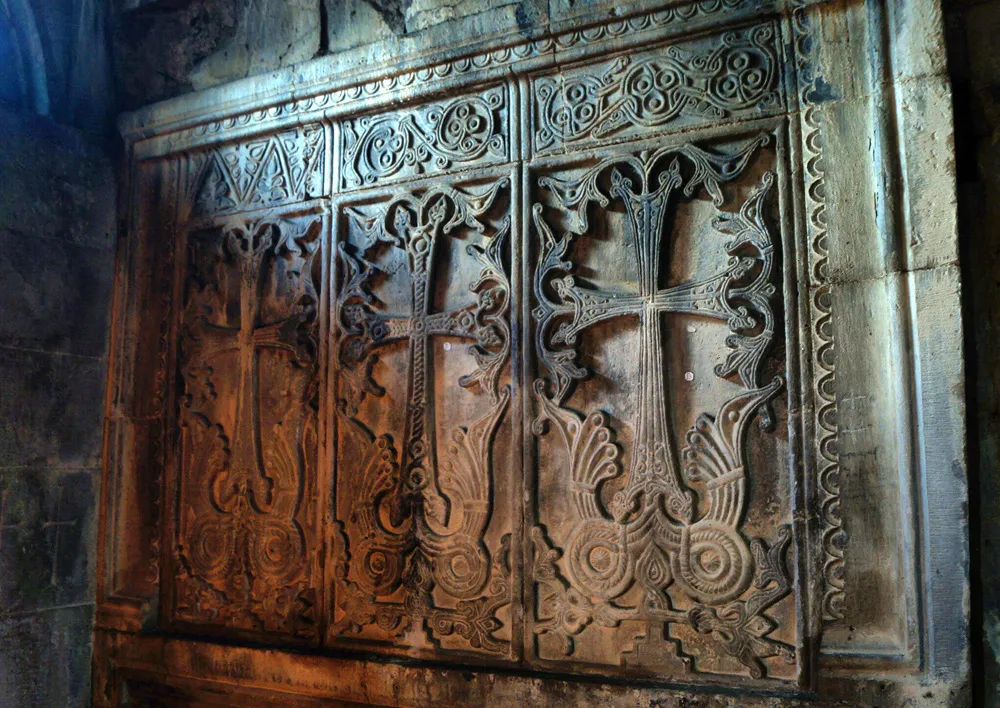
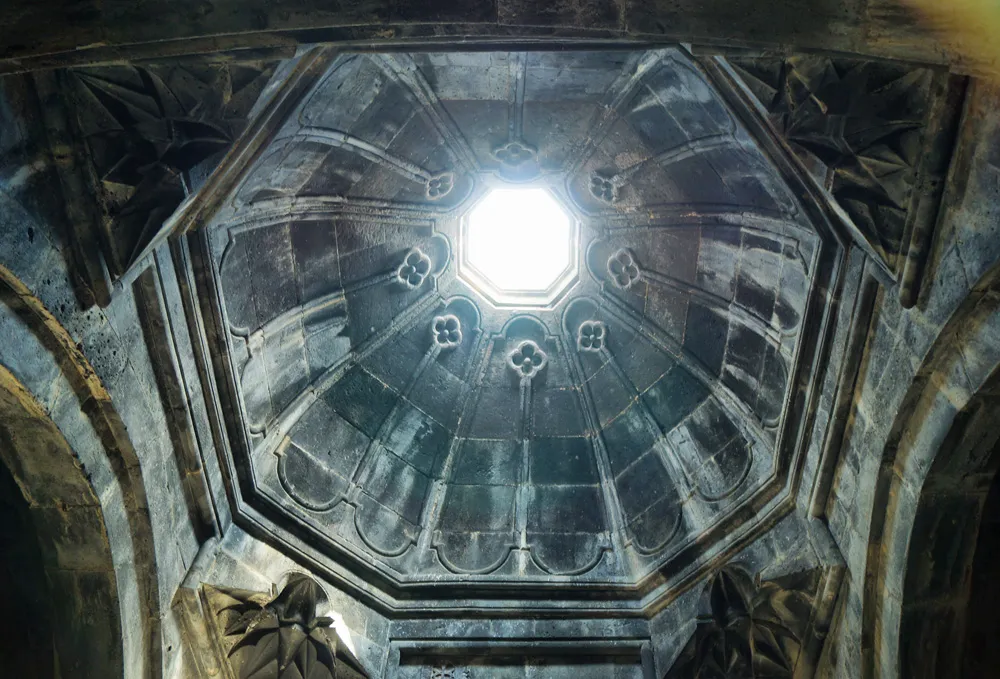
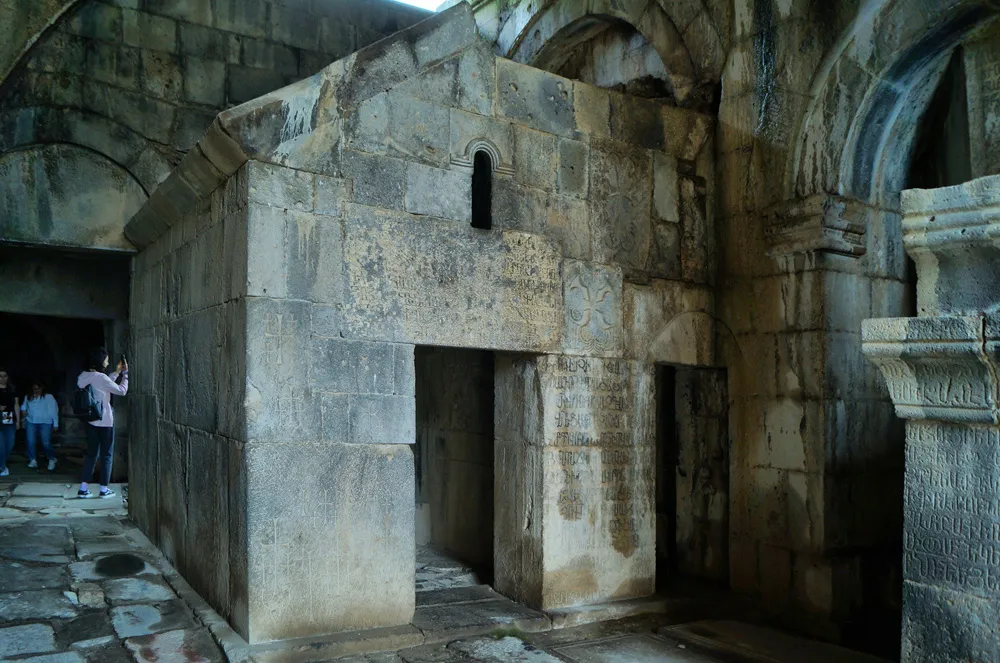
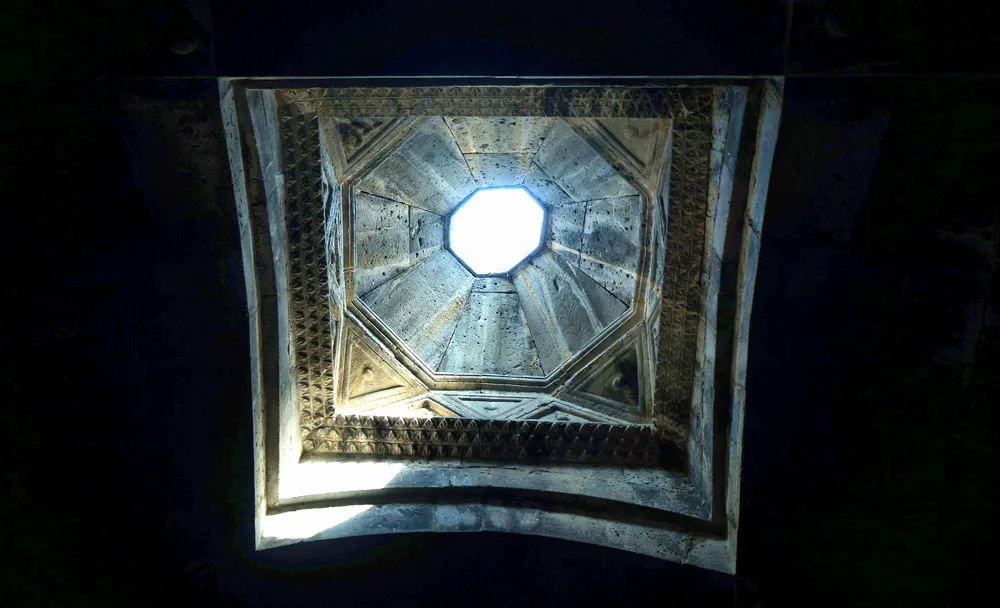
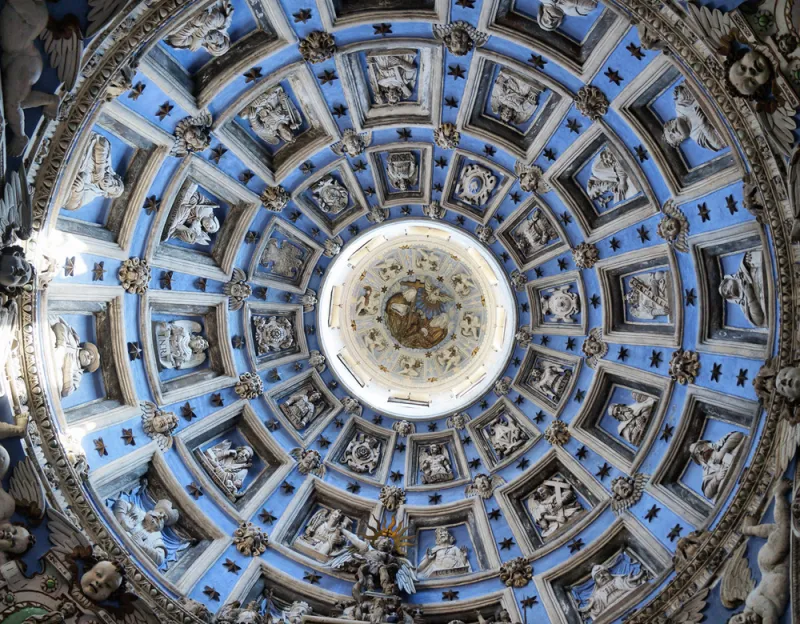
The Church of Surb Nshan is a brilliant work of art. Almost everything here is impressive, from the incredible doorway portal to the domed hall and the altar, with remnants of wall paintings. In front of the entrance is a large gavit, very interesting inside, with columns, arches and a skylight in the centre of the dome. To the right of the gavit, the Church of Surb Grigor (St. Gregory the Illuminator) was built in 1005 and rebuilt in 1211; it is a building resembling a simple house with a gabled tiled roof. To the left of the gavit is the small domed Church of Surb Astvatsatsin (Mother of God), built in the 13th century, and behind it a scriptorium (library), a building plain on the outside and impressive inside, with a cross-domed plan and a skylight in the centre. The scriptorium is connected to the Church of Surb Nshan and to the gavit. The burial vault of the princely Ukanyants family is attached to them. Behind them stands a three-tier bell tower, built in 1245. There is also a refectory on the territory of the monastery complex; I did not look at it closely, but judging from the photos it is also very decent.
The monastery library is unique. In its time it was the largest collection of Armenian medieval manuscripts, on the basis of which the Yerevan museum and archive complex Matenadaran was created. All the Akhpat manuscripts were taken there.
Akhpat is 170 kilometres from Yerevan and 10 from Alaverdi. The road is of normal surface quality and extremely picturesque, especially in the deep, canyon-like valley of the Debed River.
Text and photos by Roman Malenkov.