Damilovskyi’s waterworks in Bila Tserkva. A masterpiece of Ukrainian Art Nouveau
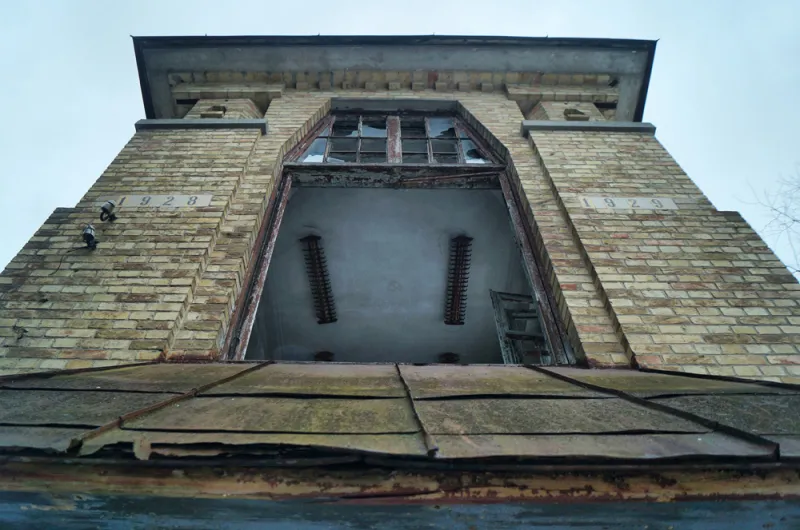
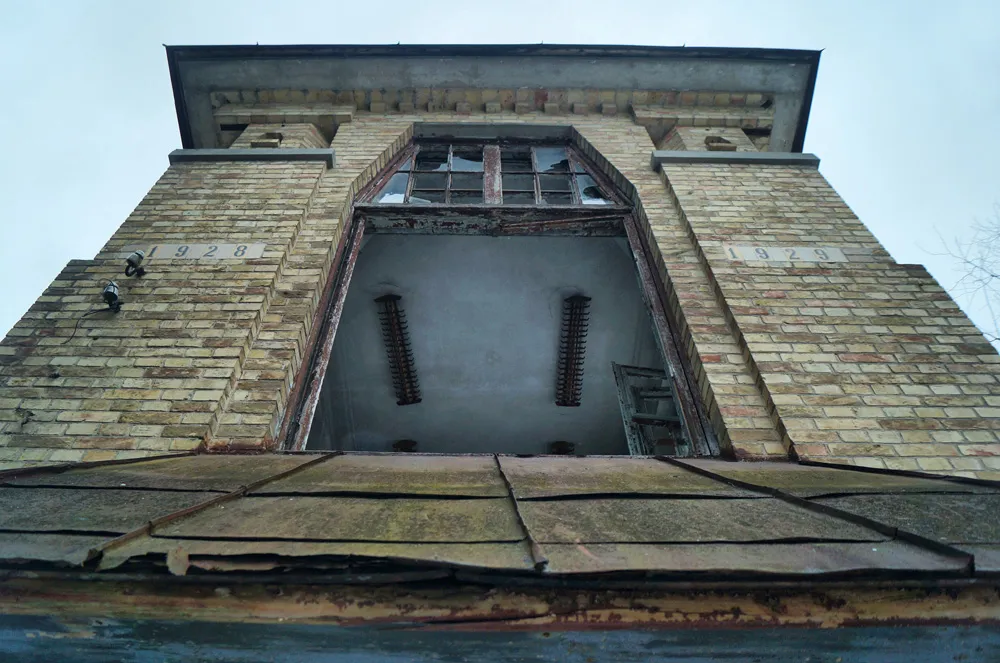
This is how Mykola Damilovskyi wrote in his autobiography: “In the spring of 1928, under a contract with the Bila Tserkva executive committee, I began the design, and by the spring of 1929 I had built and commissioned the municipal waterworks for the city of Bila Tserkva.”
The waterworks was built on the territory of the Oleksandriia park, and many local historians wonder why Damilovskyi chose the grounds of a wonderful park for the construction of a powerful engineering structure. But looking at the plan of the park from the time of the Ukrainian People’s Republic (1918–1919), we can see that a waterworks was already there, or at least its pits, since number 13 on it is marked “Waterworks pits”. Most likely the original waterworks was built by the owners of Oleksandriia, the Branickis, and it would also be illogical for a huge park with a count’s manor, palace, pavilions, a multitude of farm buildings, its own power station, orangeries and nurseries not to have had a waterworks at the beginning of the 20th century. There is another hypothesis, that the Branickis dug the pits for a waterworks but did not manage to build the waterworks itself, having emigrated in 1917.
Another version may be that we have dated the map incorrectly: it is not excluded that it was drawn up between 1923 (the official start of the Soviet construction of the waterworks pits) and 1928 (the start of the construction of the waterworks buildings). Then the hypothesis about the Branickis’ pits falls away, but how they maintained the whole large estate without some kind of waterworks is unclear.
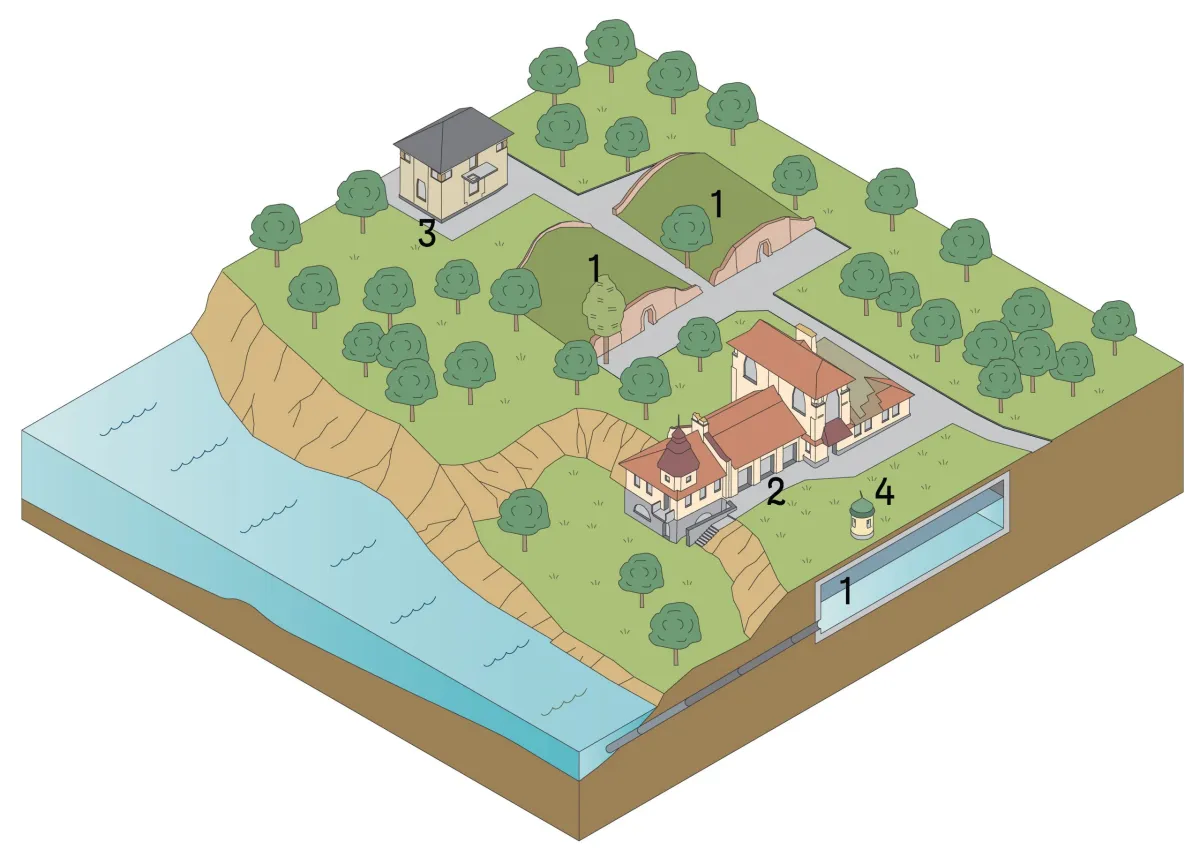
Numbered: 1. Reservoirs. 2. Pumping station. 3. Chlorination building. 4. Inlet-outlet turret of the reservoir.
The waterworks, if the Branickis had one, probably did not have the capacity to supply the city with water, so the city executive committee decided to build a much more powerful engineering structure. Construction of the reservoirs began in 1923, and for the building of the structures themselves a well-known engineer-architect from Kyiv was invited, who had just completed the construction of a waterworks for the city of Kryvyi Rih. Mykola Damilovskyi set about the task energetically and within a year erected the waterworks complex, putting it into operation as early as the spring of 1929.
It should be noted that the construction of a large engineering structure in the park did considerable harm to its plants: a large alley was cut down to lay the pipes, and many trees were felled and damaged when building access roads to deliver building materials and in transporting them. But this was already a much lesser evil than the one the Russians had committed earlier, completely destroying all the buildings of the count’s manor: the palace and the pavilions.
All the waterworks buildings were designed in the Ukrainian Art Nouveau style, and Mykola Damilovskyi was a vivid proponent of this Ukrainian national style. From 1923 to 1928 a wave of Ukrainization rolled across Soviet Ukraine, which turned out to be… a trap. In 1929 the trap snapped shut and repressions began. Damilovskyi too fell under the Stalinist steamroller, precisely for his national style. He was accused of participating in a mythical (invented) organization, the Union for the Liberation of Ukraine (SVU). Mykola Oleksandrovych spent 7 months in the Lukianivska Prison but was released for lack of evidence. He was lucky: he was not shot, but the waterworks in Bila Tserkva became his last architectural work.
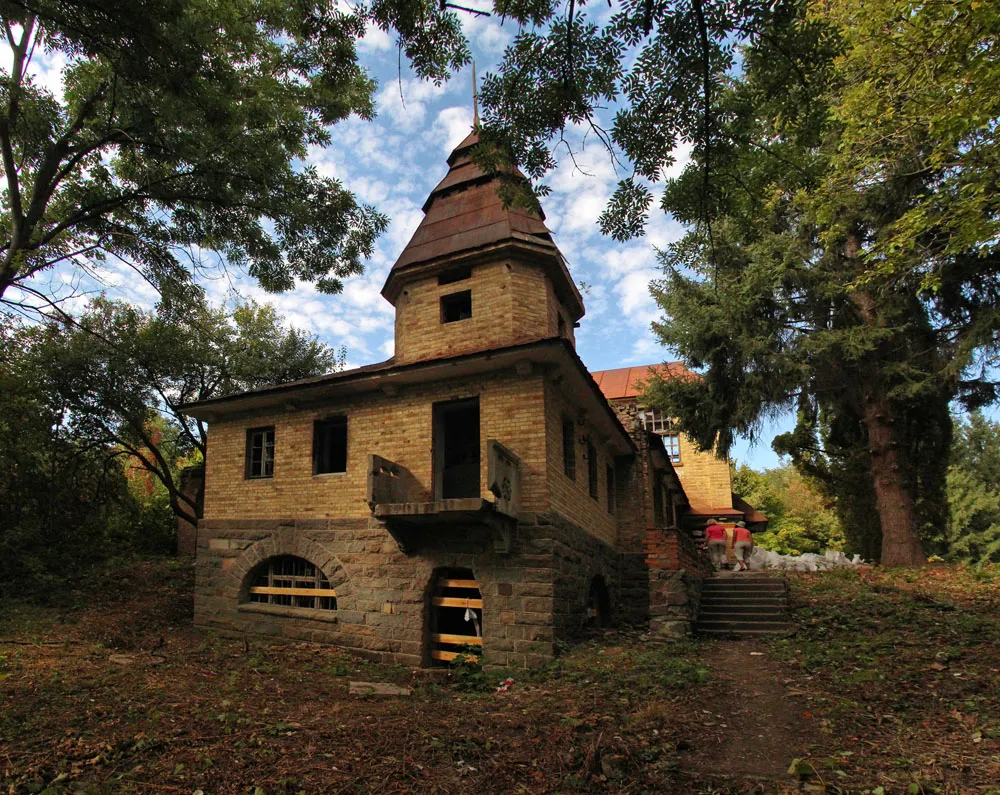
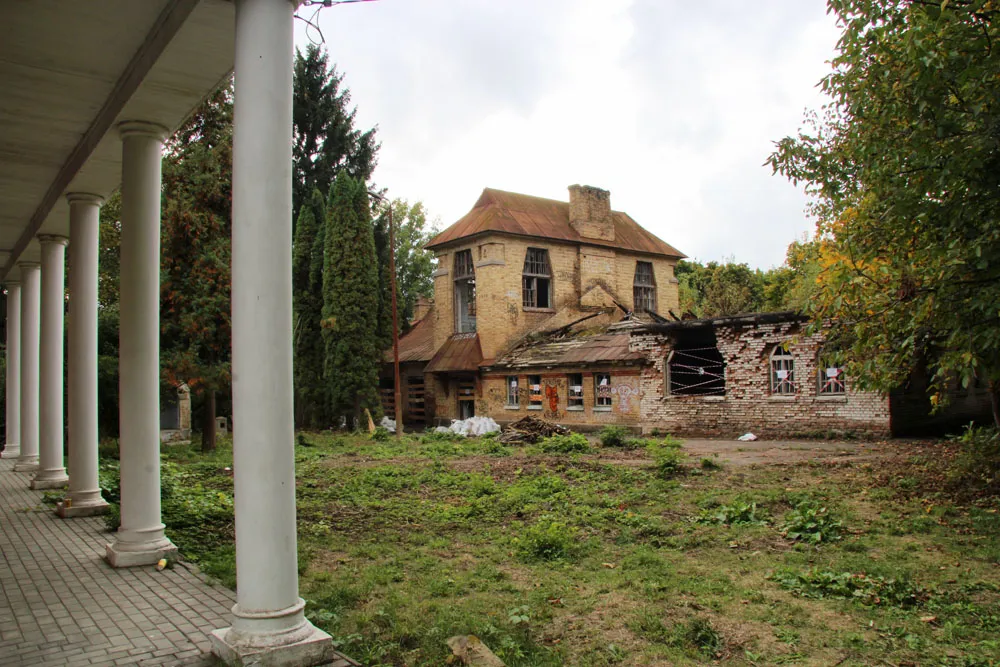
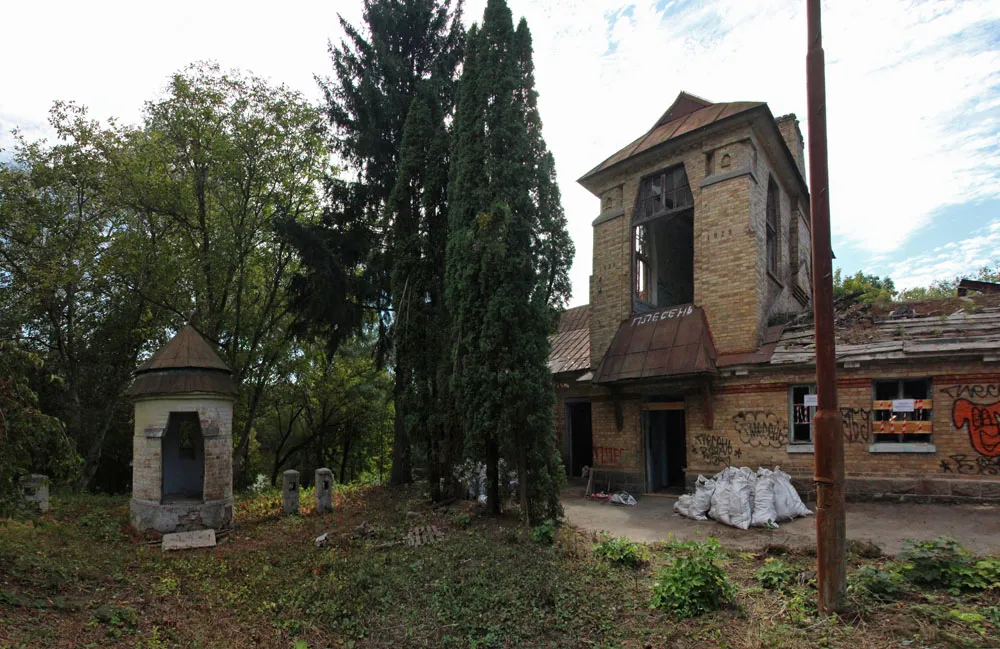
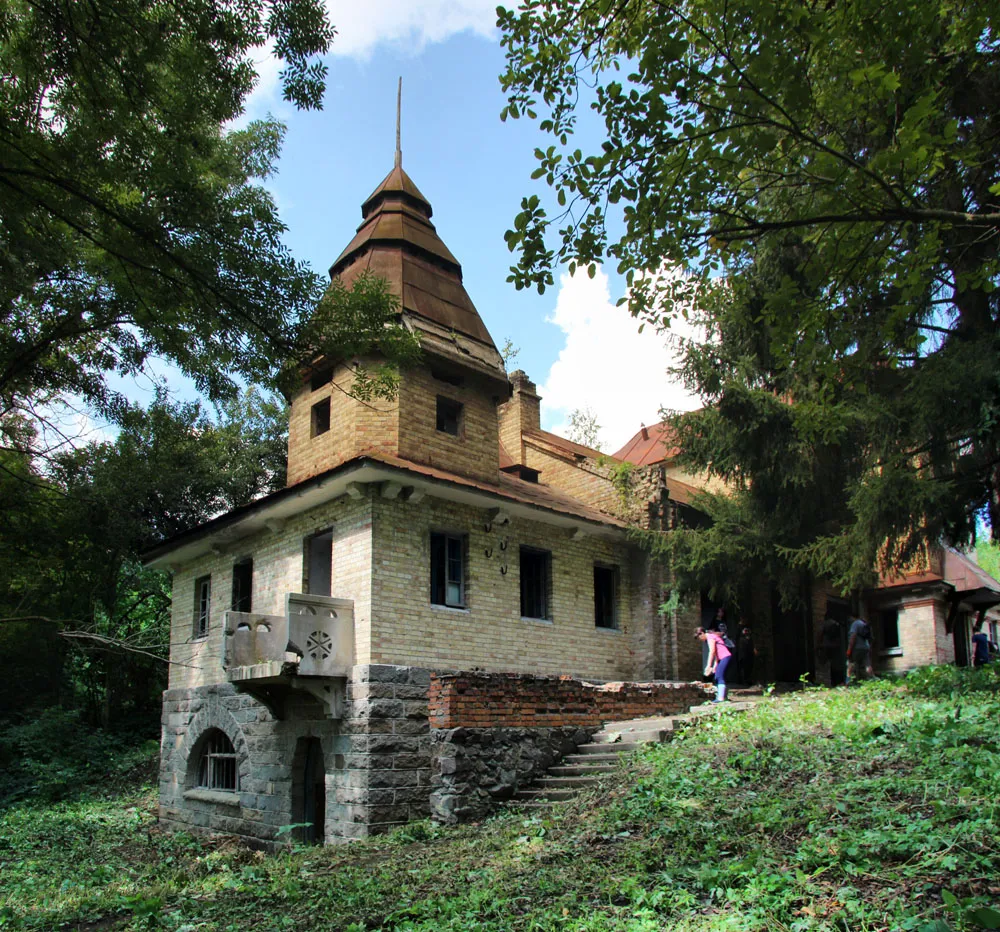
The pumping station
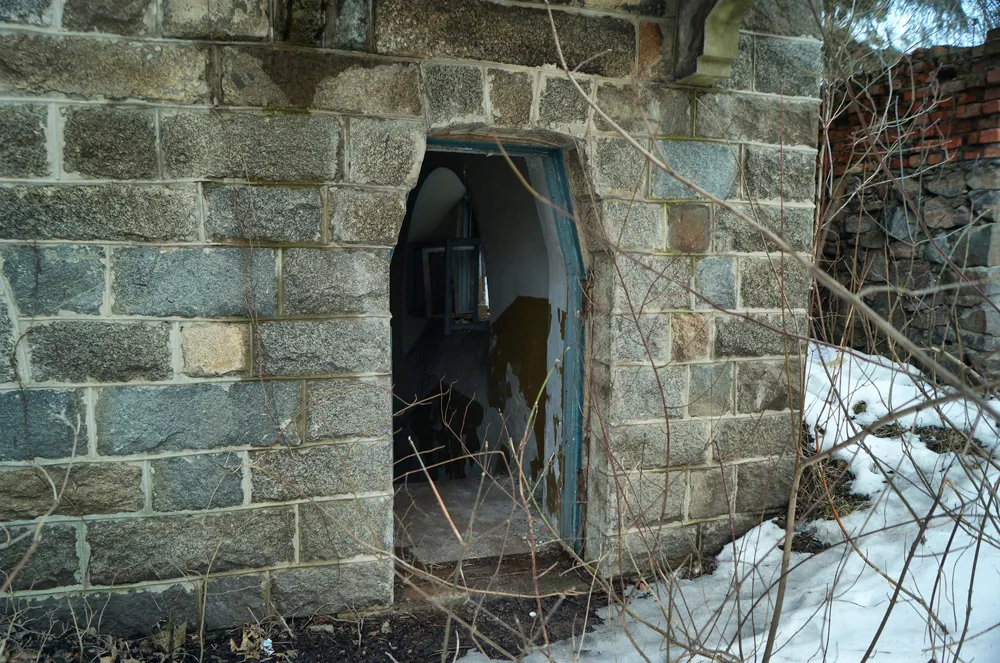
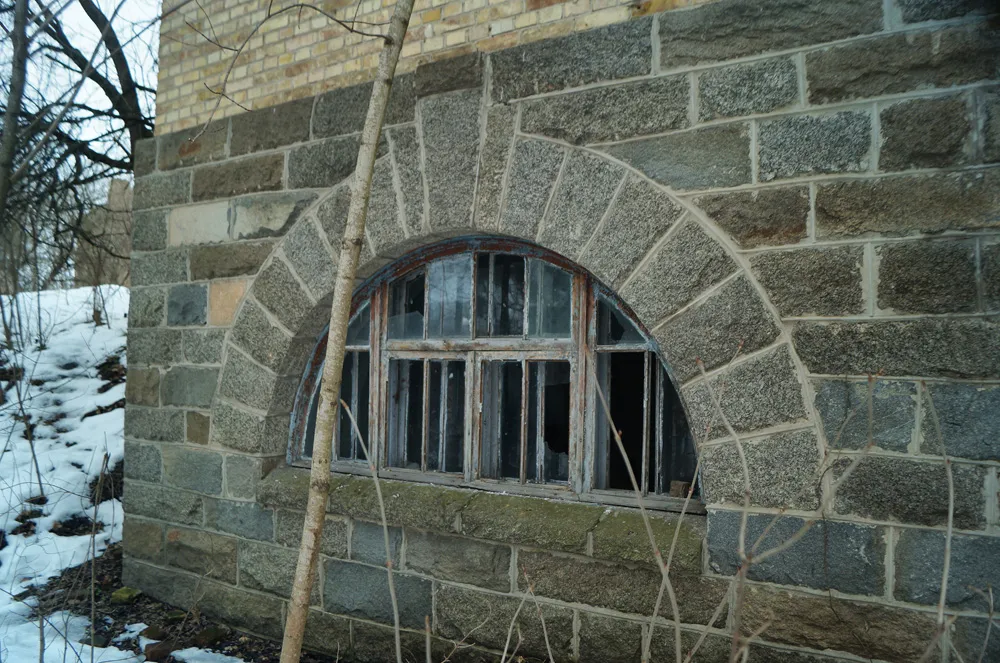
So first the reservoirs were built: one large one, completely hidden underground, with the ventilation and inlet-outlet brought to the surface in an openwork turret. Two more reservoirs, sufficiently deep, were made with above-ground parts and doors.
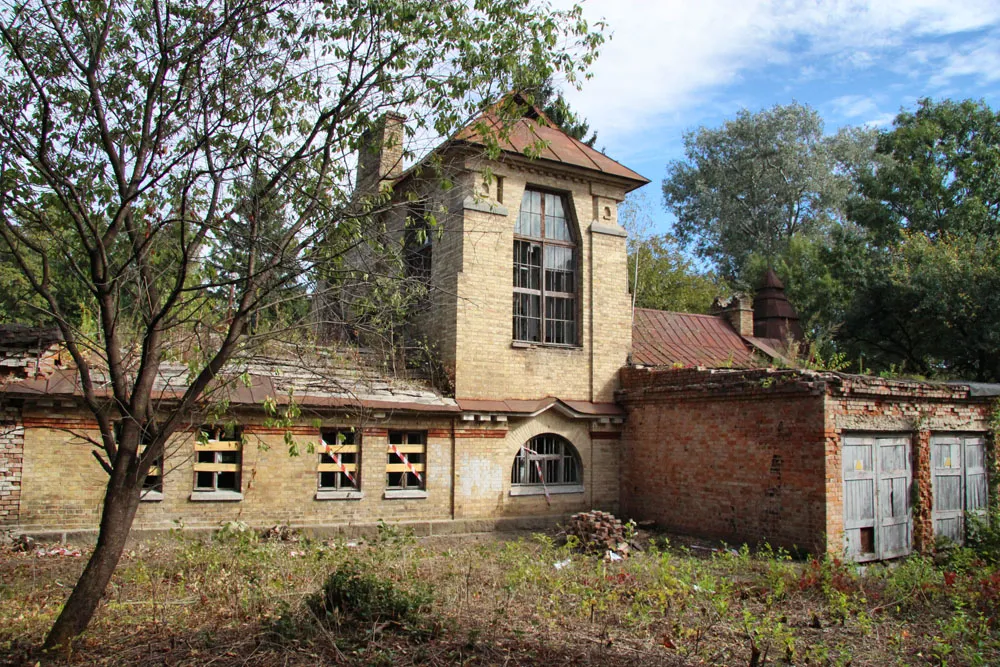
The basis of the architectural ensemble is the pumping station building. How utilitarian that sounds: a pumping station! But Damilovskyi made of it a true masterpiece, a palace, and in the Ukrainian national style at that. It is rather complex in its number of storeys and the interior layout of its rooms, since it is far from symmetrical and stands on a slope above the river. On the Ros side it has two storeys, with a tower and a balcony. The concrete balcony has kept traces of its original decoration. The tower is a wonderful Art Nouveau embodiment of the Ukrainian Baroque church domes with their broken profiles. Next comes the single-storey machine hall where the pumps stood. The hall is covered with metal on a French roof truss system. It is joined to a two-storey office building, whose second floor has huge Art Nouveau windows, an incredible adornment of the building. Beyond the office there is a hall with water reservoirs (now empty).
All the rooms were heated by four tiled stoves, which are now almost entirely smashed. But authentic old tiles have survived on the floor. Around the 1960s another room was added to the pumping station, which spoiled the structure. But now this room is so ruined that it is not worth discussing. It simply needs to be demolished, returning the station building to its original appearance.
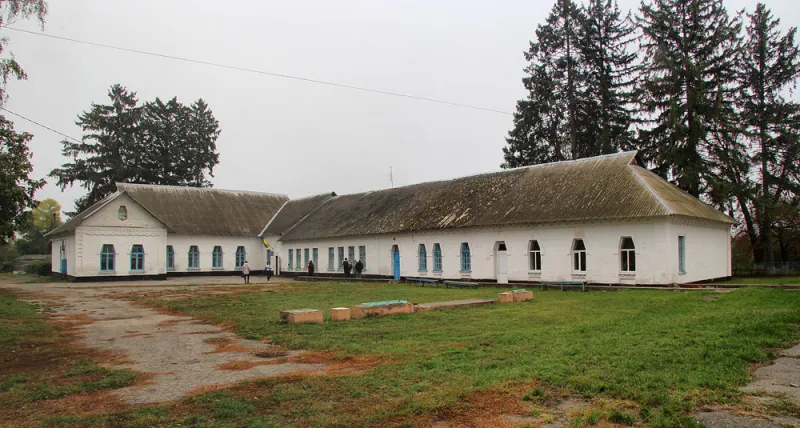
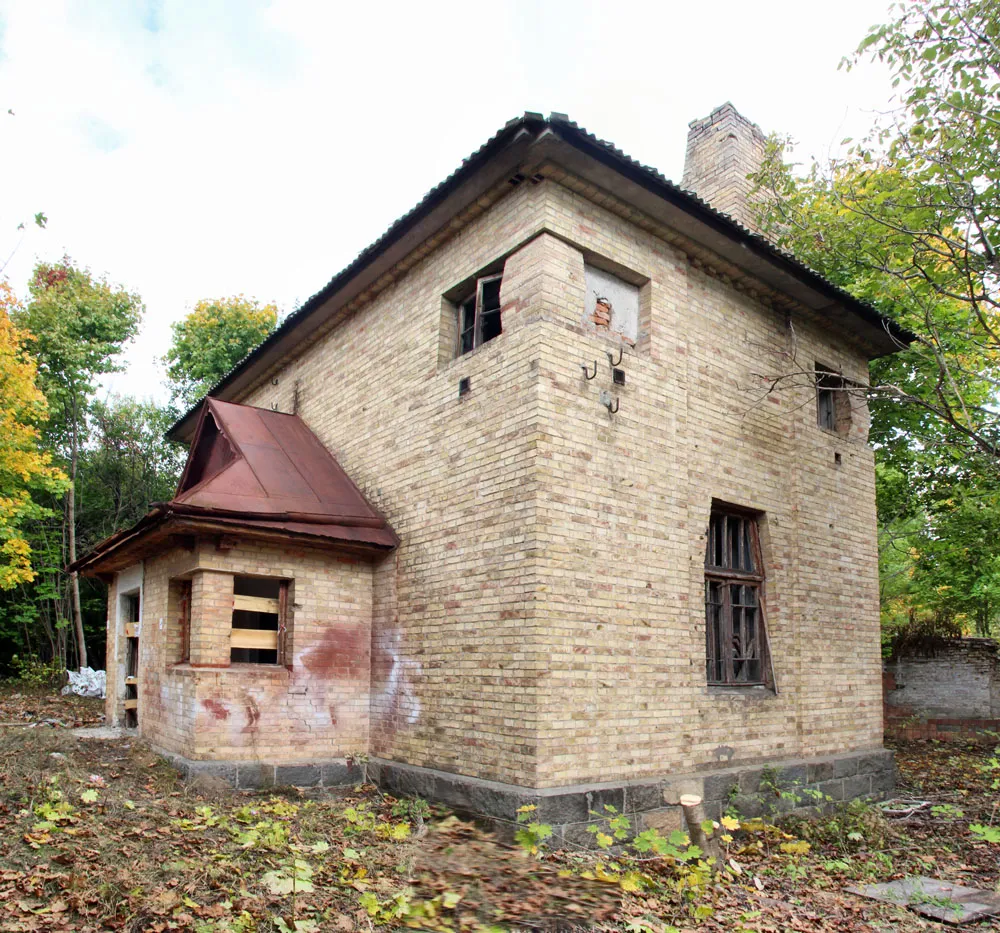
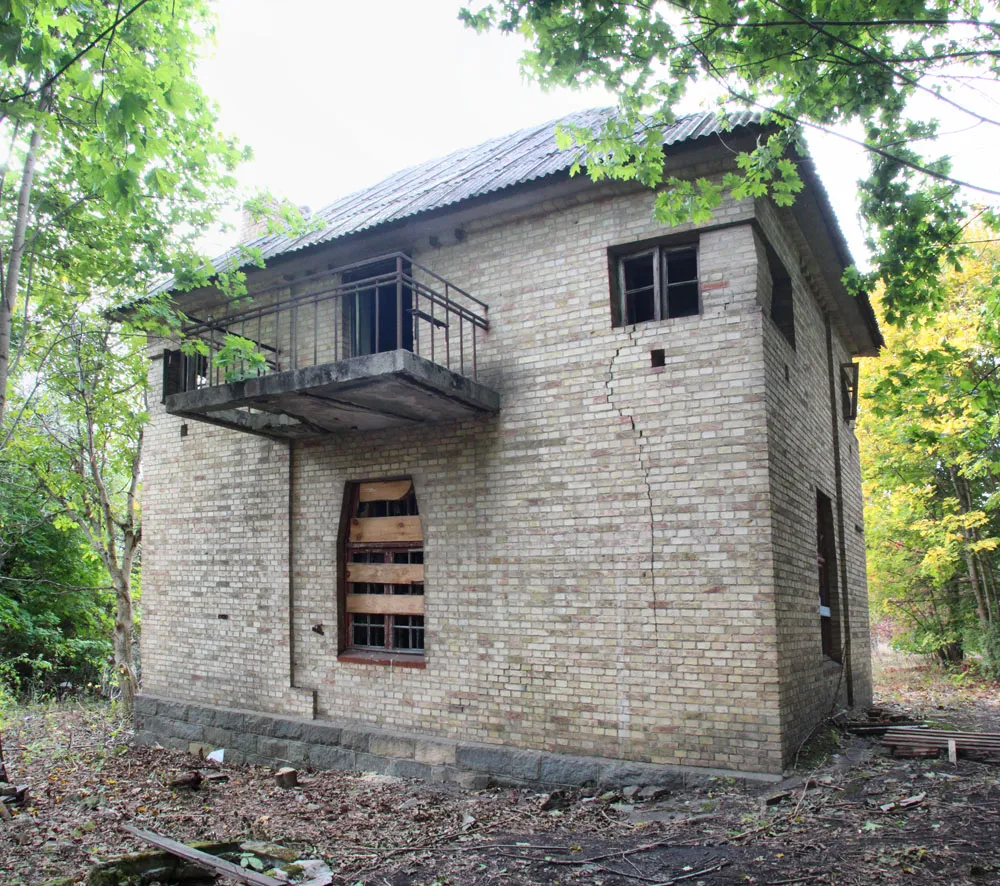
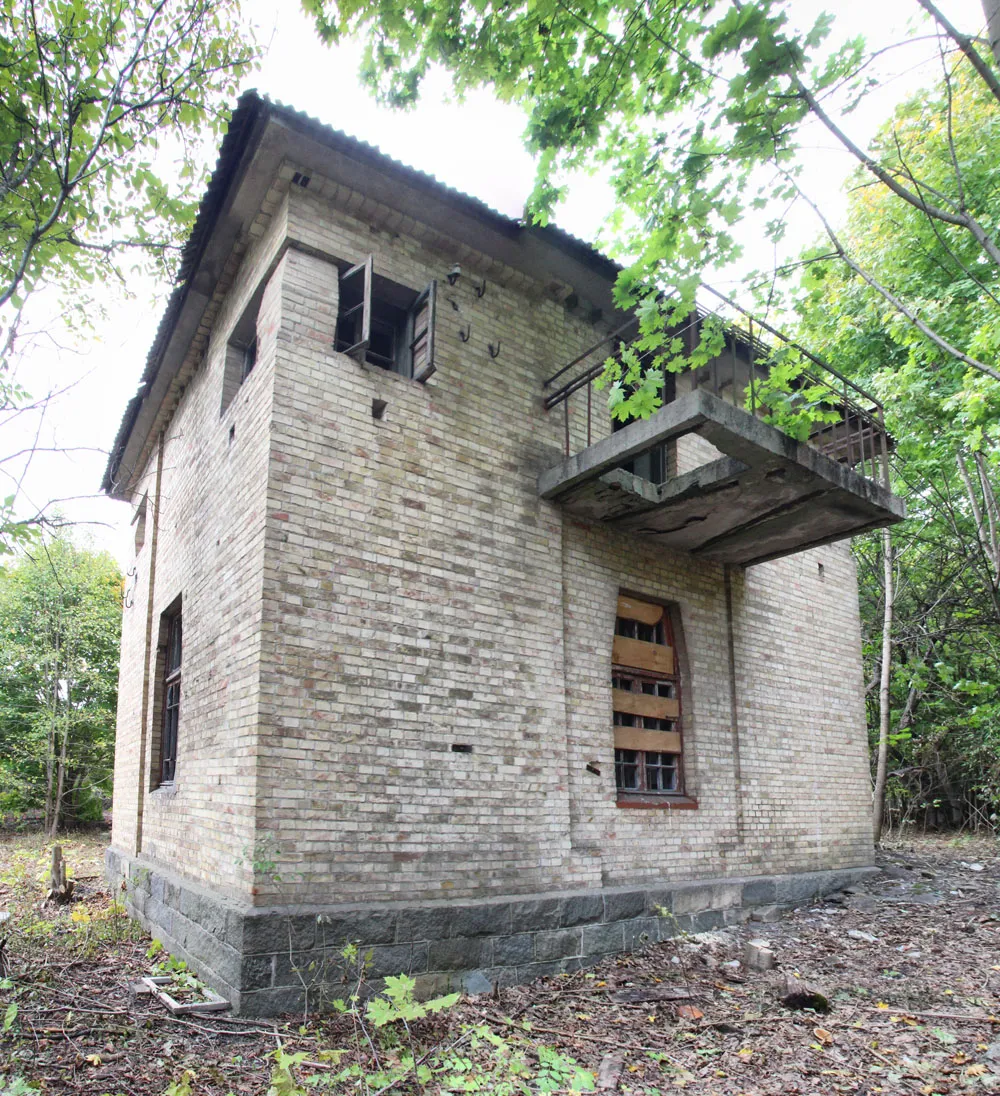
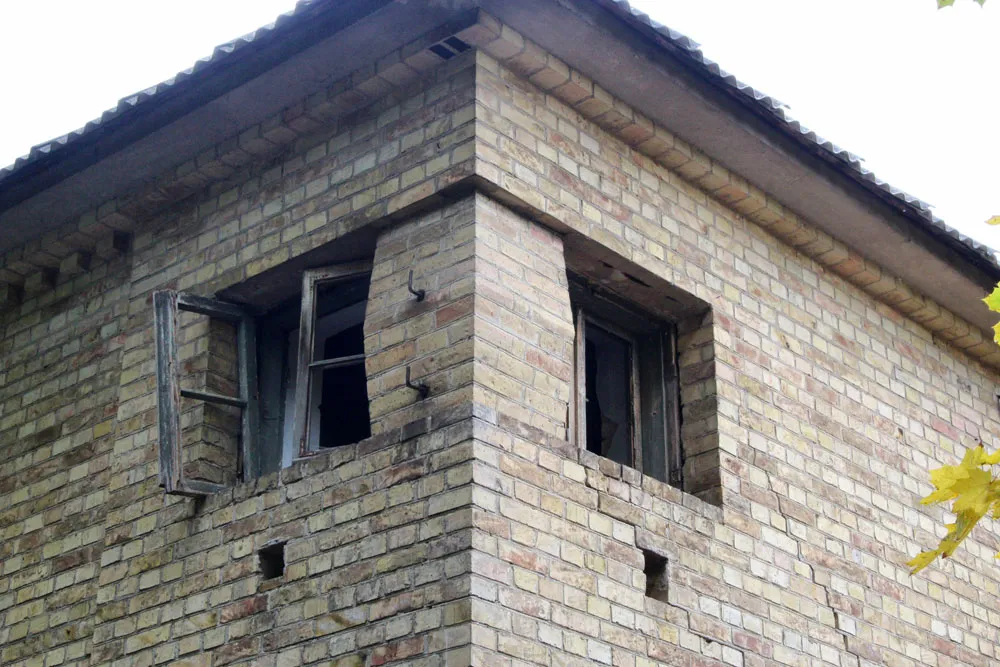
Behind the station, upstream along the Ros, stand two reservoirs with doors and gables in the Ukrainian Art Nouveau style, which we have already mentioned. And further on is a two-storey building where the water was chlorinated, that is, purified. Although we do not know exactly when water began to be disinfected with chlorine, in 1929 it was purified with aluminium sulphate. The chlorination building, as it can simply be called (in Russian it was called “khloratornaya”), is also built in the Ukrainian Art Nouveau style. Although this building is much simpler, decoration can be seen only around the second-floor windows.
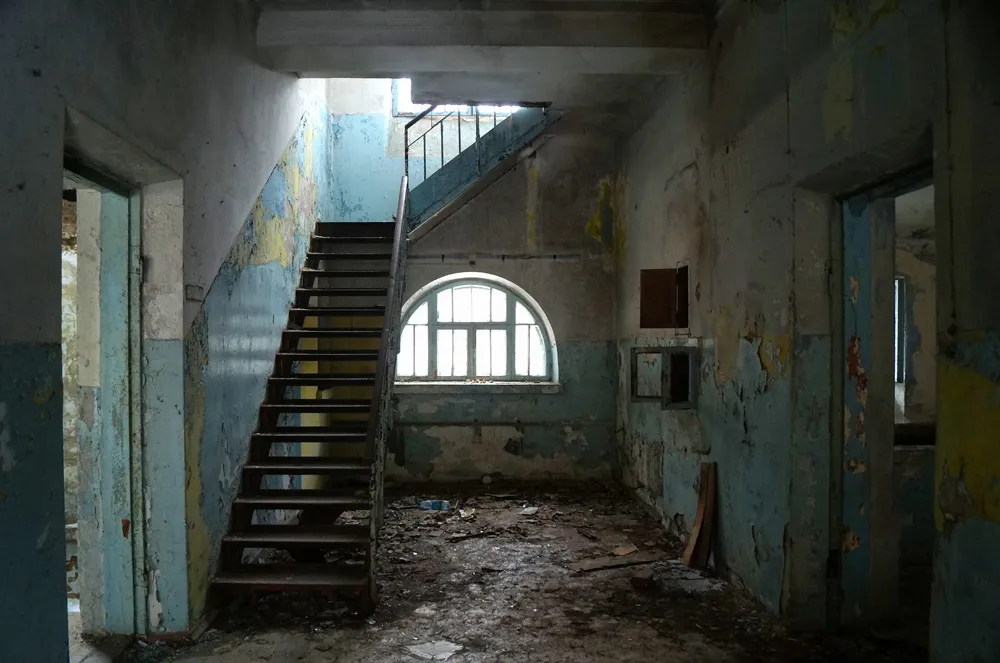
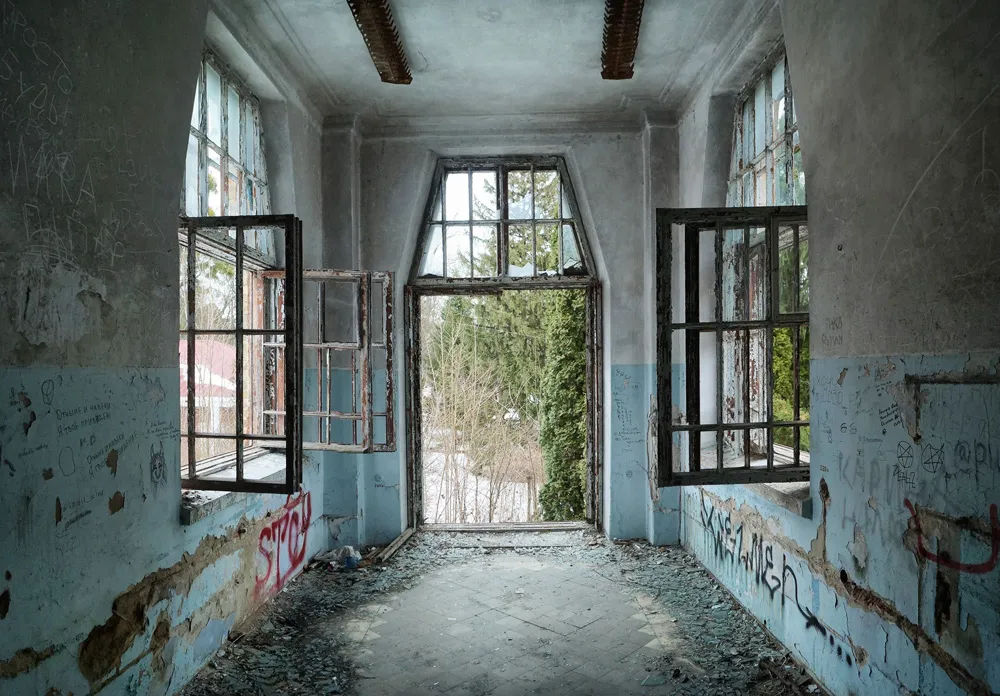
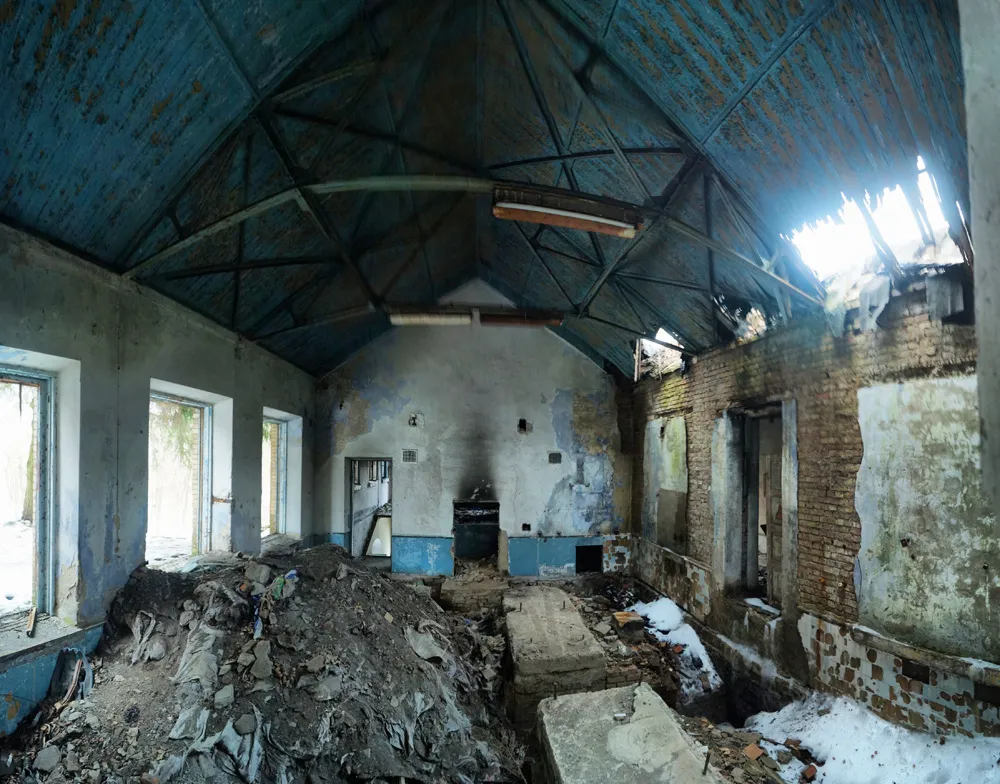
Interior rooms of the pumping station
The ensemble of Damilovskyi’s waterworks buildings is a true architectural masterpiece. It is hard to find a similar embodiment of a complex of engineering structures in Ukraine. It looks more like a magnate’s country residence than a banal pumping station. Unfortunately, all the buildings of the ensemble now stand empty, without windows (mostly) and doors, scorched and daubed by vandals. It is a semi-ruin. The ensemble became like this already in the years of independence. First it was abandoned by Bilotserkvivvodokanal, which passed it to other owners. They passed it on to someone else. Needless to say, in that time all the waterworks equipment and all the metal that could be taken disappeared. Homeless people spent nights here, or even lived here, and behind the fence installed back when the waterworks was operating, they felt very comfortable, as in their own yard. The waterworks, in an already much ruined state, passed to the balance of the Oleksandriia Arboretum in 2012. And now, in 2024, we are trying to change its sad fate.
Text and photos by Roman Malenkov, graphics by Andrii Yarovyi.
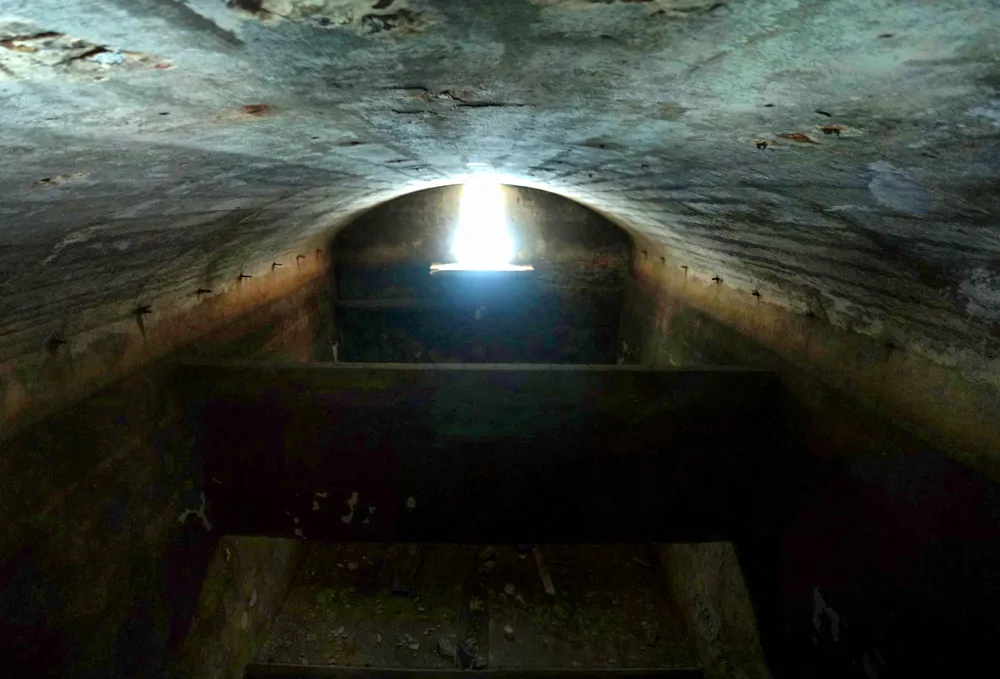
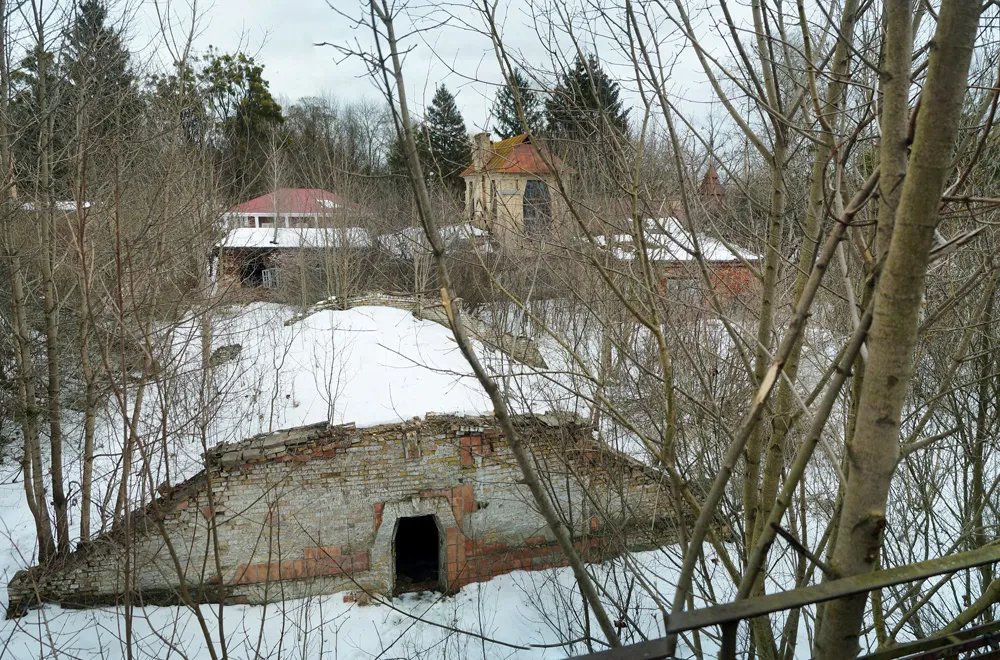
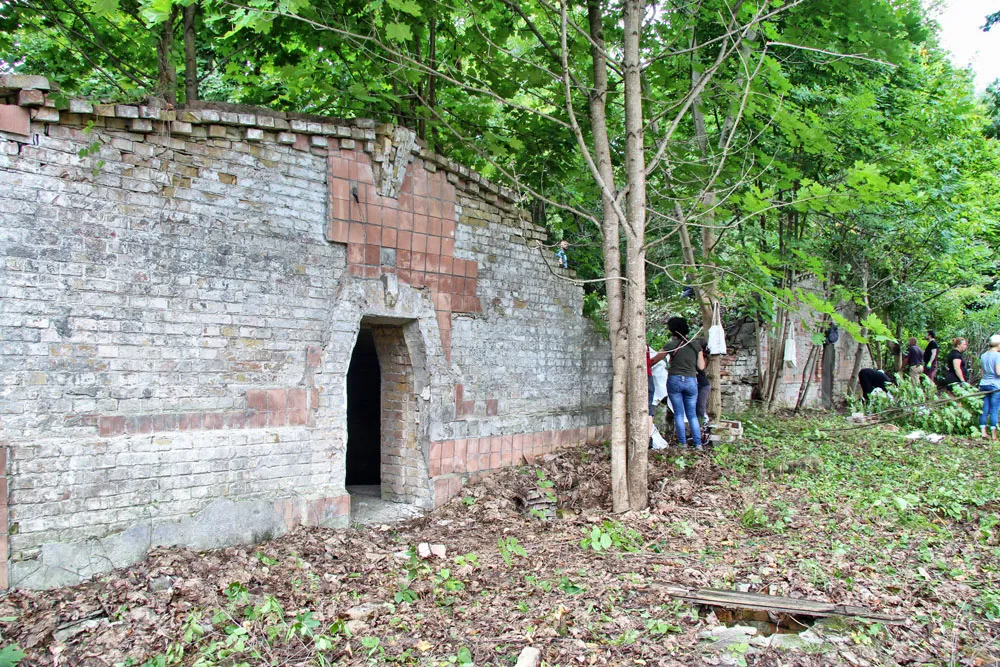
The reservoirs
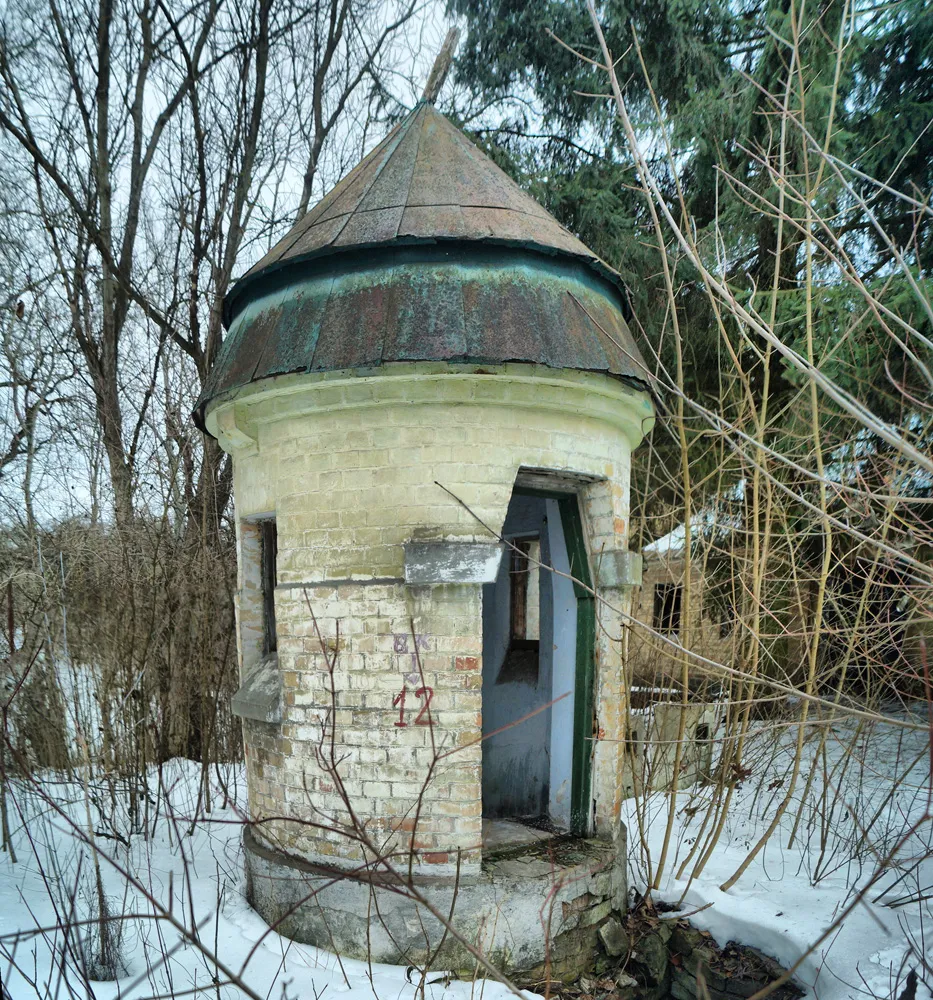
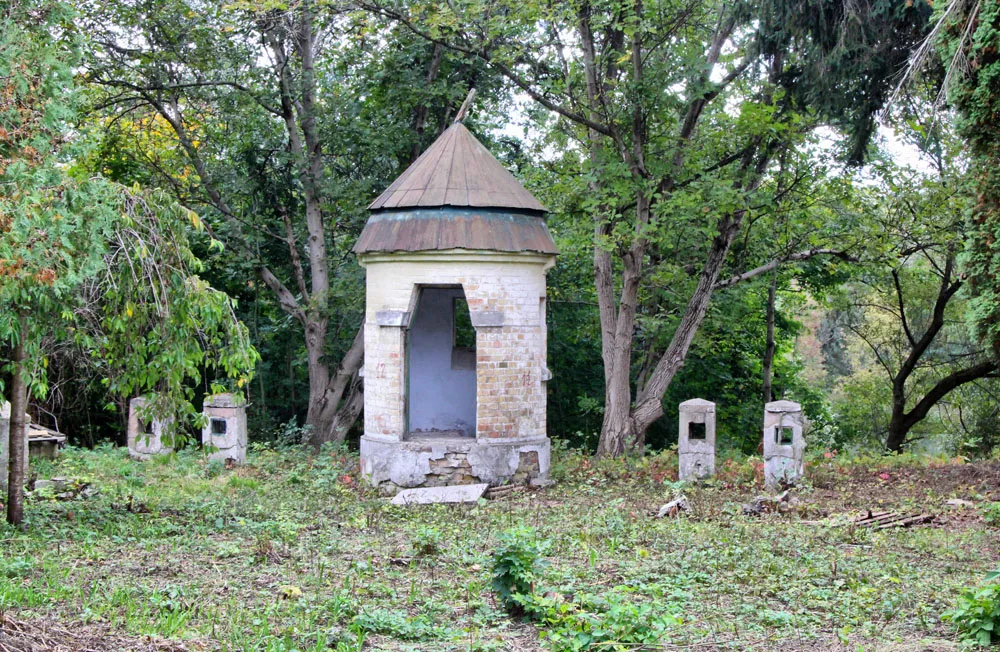
The entrance turret and ventilation pipes of the reservoir
See many more photos of Damilovskyi’s waterworks in our photo gallery
Website: Damilovskyi. Architectural heritage