

Myrne Pole under Russian bombs: an old kirche destroyed
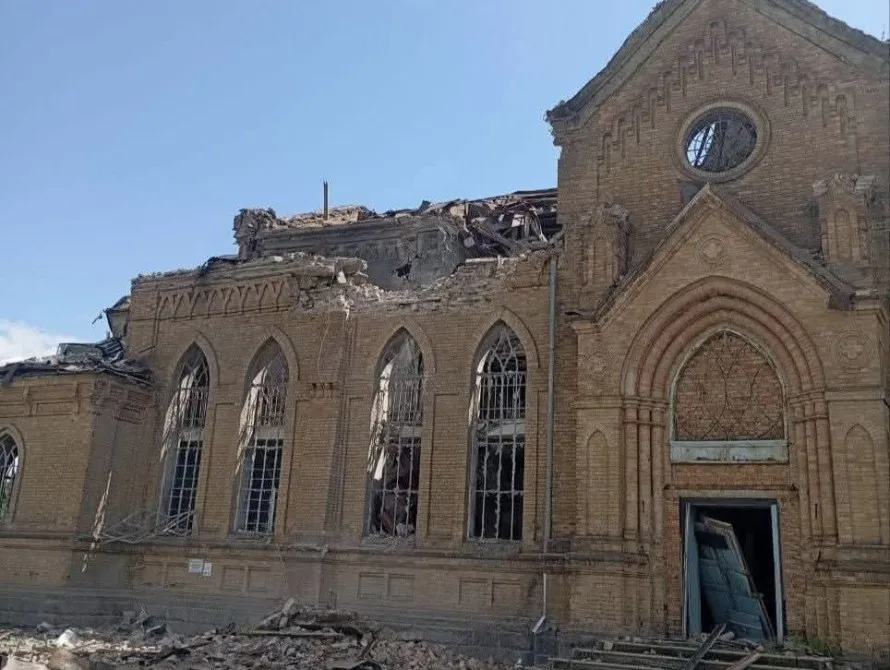
In the village of Tersianka in Zaporizhzhia Oblast, a Russian aerial bomb destroyed the historic Protestant Kirche of Saints Peter and Paul, built as early as 1911 by the German community. The monument had survived decades of alterations and destruction, but the current war has put an end to its history. This is reported by “ZaBor”. According to local historians and eyewitnesses, the Russians struck the building on 23 May. After the attack the structure suffered critical damage. Photos of the aftermath were published by Larysa Yevsieieva.
Background:
The former Myrne Pole (now Tersianka; today this name sounds especially sad and symbolic — “Peaceful Field”) was the centre of the Kankrinivka colony, home to prosperous German colonists. It was here that the only kirche for the 18 surrounding villages within a radius of about 60 kilometres stood. The village also had a boarding school. The community decided to build a large church after lengthy discussions: at first they planned a small building, but in the end they decided to erect a large one.
The construction was financed by local peasants, landowners and community members, who donated money, equipment, an organ, decoration and other elements for the church. The building commission included Pastor Friedrich Haman, the village elder Schneider, the landowner Müller, Yakiv Schmidt and other community representatives. The work was directed by the architect Turovets, who proposed using reinforced-concrete structures — a modern technological solution at the time. The church became a true architectural ornament of the region.
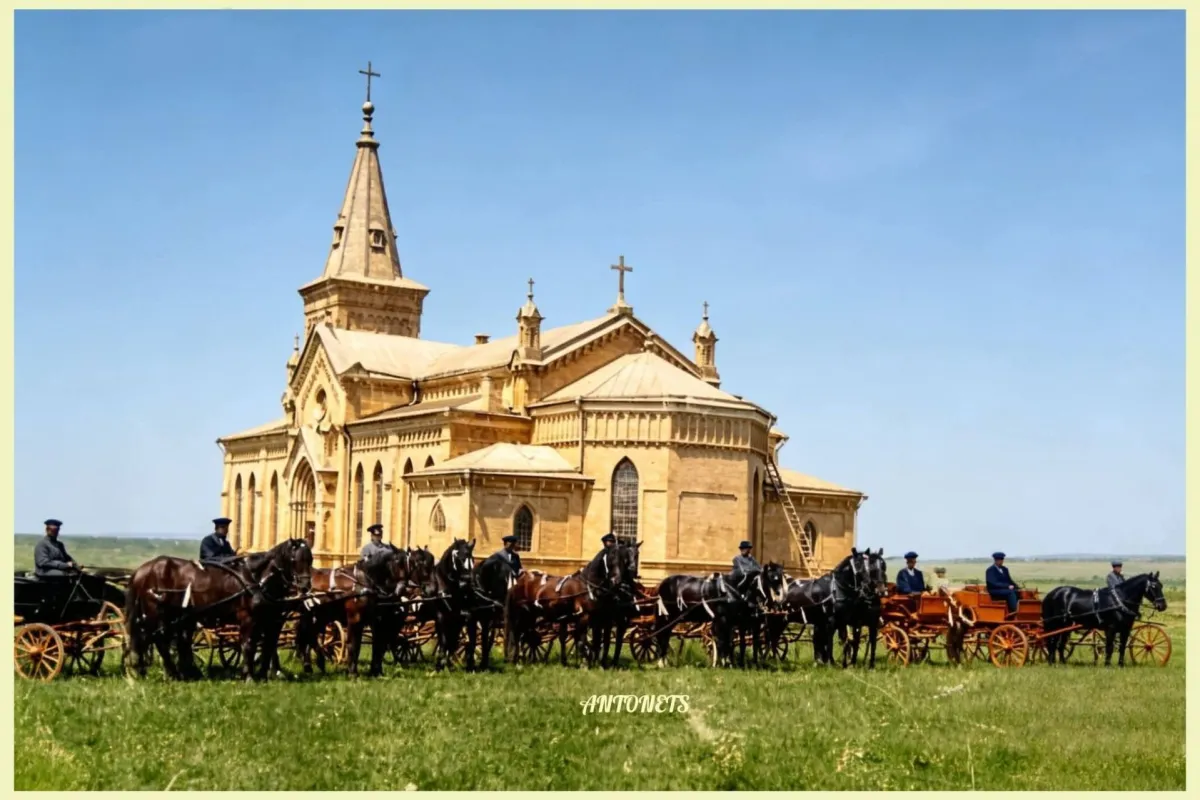
Granite was used for the foundation and steps, and the façade was faced with light red brick. The metal window frames were made in Katerynoslav. Inside, the kirche was decorated with pink marble columns, arched vaults and coloured stained-glass windows. The special pride of the church was its organ by the German firm Bach and Schunt, delivered from Stuttgart. It had 20 stops and was considered a unique musical instrument for its time.
The kirche was solemnly opened on 5 June 1911. According to eyewitnesses, hundreds of people came from the surrounding settlements for the consecration. The spacious church could hold about 1,200 people. It was in use until 1934. After the arrest and execution of the last pastor, the building was converted into a cinema. Even so, for decades the structure kept its historic appearance and remained one of the main architectural monuments of the Zaporizhzhia region.
The kirche withstood decades of Soviet alterations and the Second World War, but could not withstand Russian bombs. Its destruction is yet another painful loss for the cultural heritage of the Zaporizhzhia region. Together with the building, part of the history of the German settlements of southern Ukraine, which for over two centuries shaped the architectural and cultural face of the region, has vanished.
This is not the first kirche destroyed by the Russians. As Ukraine Incognita reported earlier, in Kherson Oblast the German Evangelical Lutheran Kirche of the Holy Apostles Peter and Paul in the village of Zmiivka burned down after a strike by the occupiers.


