

A photo exhibition devoted to the region’s old cemeteries has opened in Khmelnytskyi Oblast
Our publication has repeatedly written about the partner project “Graves of the Ancestors”, carried out by the NGO “Ukraine Incognita” and the municipality of Horodok, represented by the Department of Culture, Nationalities, Religions and Tourism of the Horodok City Council. Let us recall that the aim of this initiative is to study all the old necropolises of the historical Horodok area (Ukrainian, Polish and Jewish) in order to explore and show the general public the multinational history and culture of Podillia, and also to use the findings to create new tourist routes in the future.
The project has proved quite productive. In particular, as part of it, at least a dozen discoveries have already been made that had nationwide and international resonance.
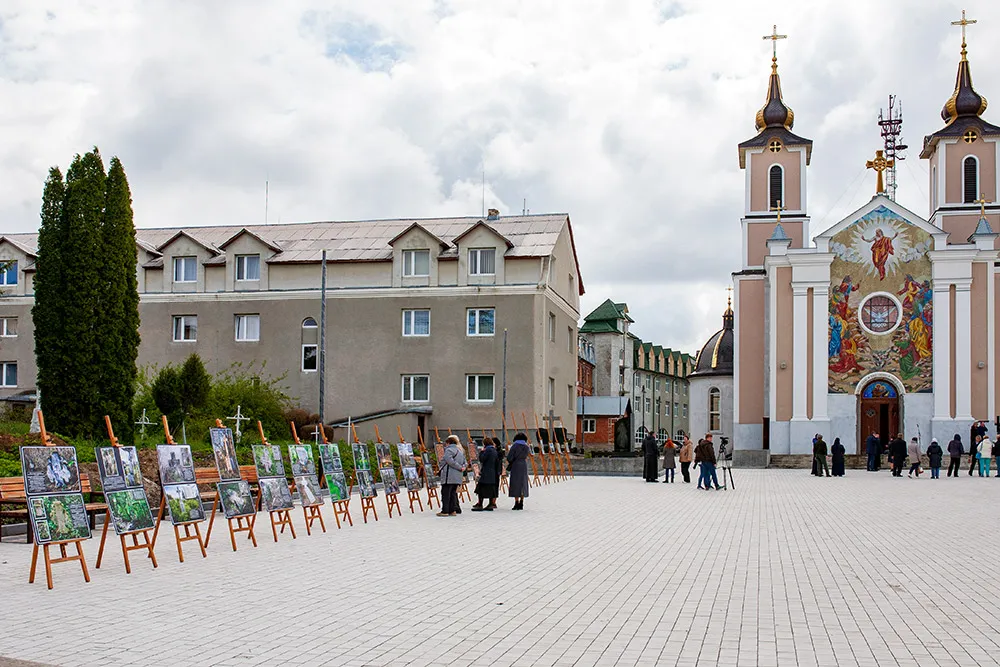
The photo exhibition, which opened on 16 May in the Sanctuary of St. Anthony in the town of Horodok, is dedicated to the upcoming International Museum Day (celebrated on 18 May) and to the “equator” of the project: exactly half of what was planned has been studied so far, which is almost four dozen necropolises and burial sites.
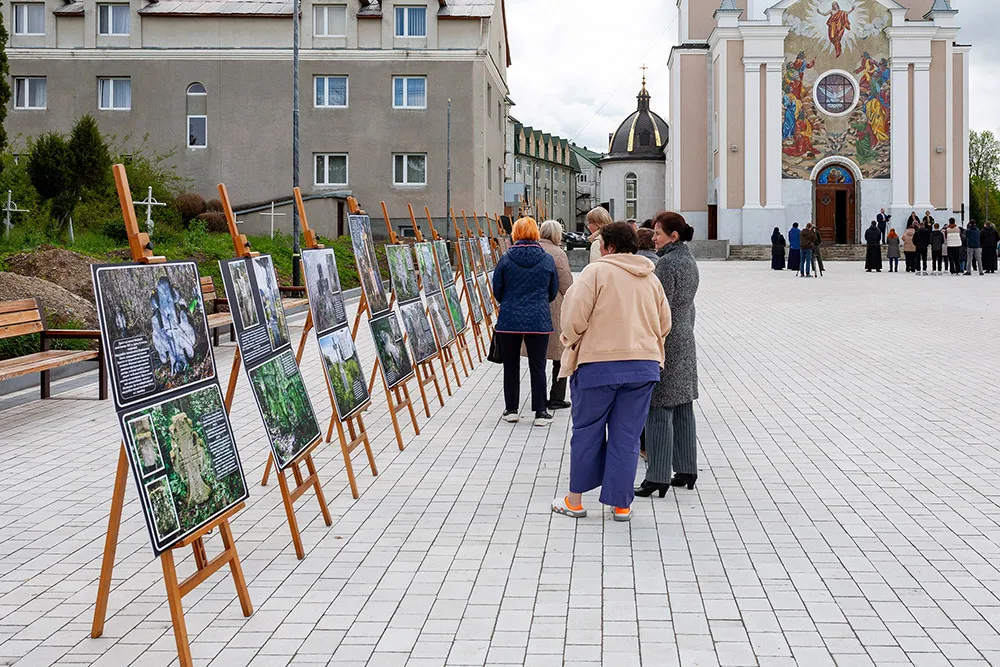
The exhibition evenly presents photographs from Ukrainian, Polish and Jewish necropolises. In all there are thirty panels (ten for each ethnic community).
Note that the “Jewish” photographs shown are part of the large-scale project “Sataniv: the lost world of the old Jewish cemetery”, which was carried out with the support of the United Jewish Community of Ukraine. That exhibition has already visited five regional centres and Kyiv. In the capital, it was displayed at the exhibition centre of the Babyn Yar National Historical Memorial Reserve.
In addition, photographs of churches of various denominations in the Horodok area were presented, the work of the local photographer and active participant in the “Graves of the Ancestors” project Ihor Motsnyi.
The unconventional venue for the exhibition was not chosen by chance. Firstly, the Sanctuary houses an old miraculous icon of St. Anthony of Padua, who is considered the protector of Horodok, and the Saint himself the heavenly patron of the town. Secondly, the church of St. Stanislaus, Bishop and Martyr, is itself unique despite its rather trivial architecture. Its main part was built back in the time of Leonid Brezhnev: it is the FIRST Christian church built in the USSR! In its final form, however, it was completed already in the Independence era, but the core was erected during the “stagnation” period. Note that the second church built in the Soviet Union was the gate church above the Golden Gate in Kyiv (built in 1982). But it was used exclusively as a museum.
And finally, the church stands in the middle of an old cemetery (dating from the early 19th century), some of whose local gravestones are presented at the exhibition.
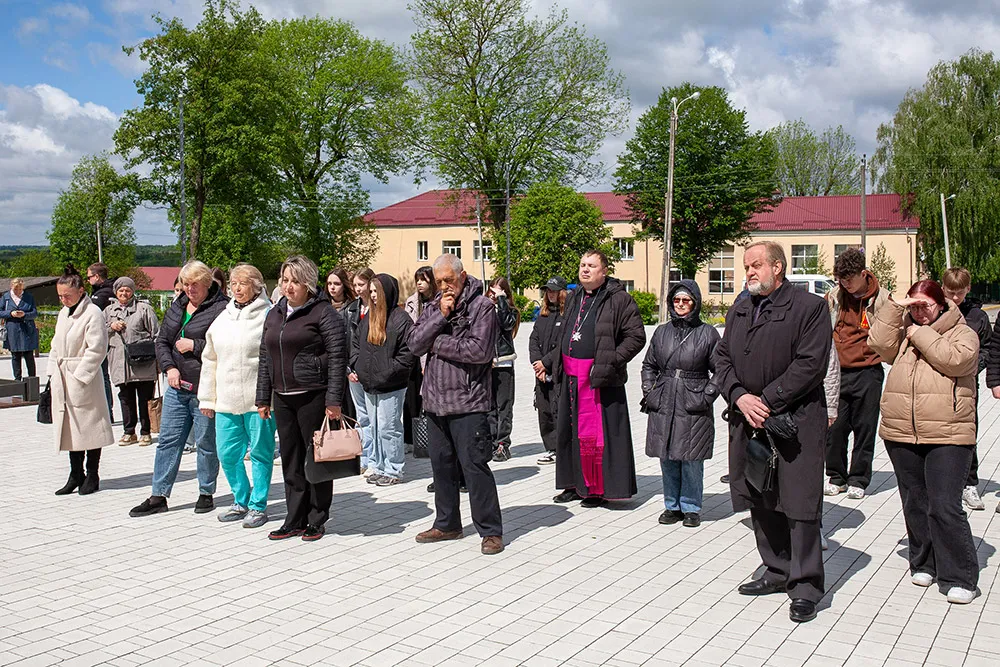
The opening ceremony was attended by representatives of the local authorities and the public, clergy, the Jewish community of Horodok, pupils of the Junior Academy of Sciences and, of course, participants of the “Graves of the Ancestors” project.
The guest of honour was Mr Tomasz Kowal, Vice-Consul of the Consulate General of the Republic of Poland in Vinnytsia.
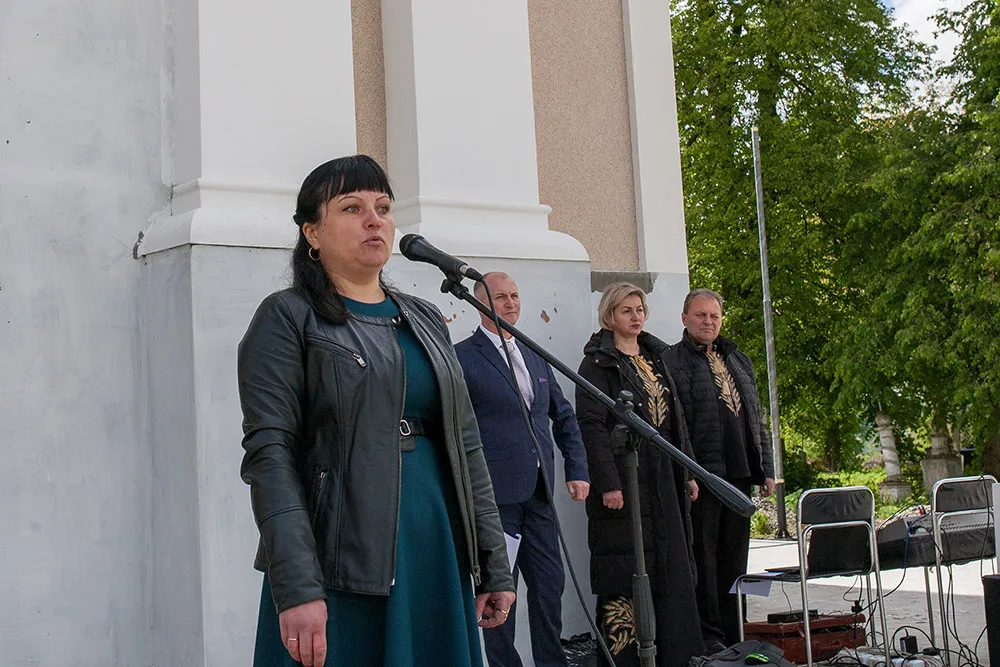
Speaking at the opening, the Secretary of the Horodok City Council, Ms Olena Hrikh, spoke about the importance of both the “Graves of the Ancestors” project and the exhibition itself:
“Today, when the entire Ukrainian people stand against the brutal invasion of Russian aggressors, we need unity more than ever,” the Secretary stressed. “This project and this event work to unite all citizens of Ukraine regardless of ethnic origin or religion. The project clearly demonstrates that in our Podillia, Ukrainians, Poles and Jews lived side by side for centuries. It shows vividly how a cultural exchange took place between them, which enriched every community. And this bright and interesting shared past opens the way to the future for us. This exhibition promotes the unity of our nation and is a contribution to the common victory over the aggressor,” Olena Hrikh concluded.
She also recalled that thanks to the “Graves of the Ancestors” project and the finds and discoveries made during its implementation, many people in Ukraine and the world have learned about the Horodok community, its rich history and cultural heritage.
Oleh Fedorov, Head of the Department of Culture, Nationalities, Religions and Tourism and an active participant in the “Graves of the Ancestors” project, also stressed the importance of preserving the multinational and multi-confessional heritage of Podillia. At the same time, he noted that the exhibition once again refutes the traditional Russian accusations against Ukraine of Nazism and fascism:
“What Nazism can there be when, alongside the Ukrainian heritage, we study and honour the Polish and Jewish one?”
Mr Oleh recalled that last year Horodok already hosted an exhibition devoted to Roman Catholic (Polish) necropolises. It is now in the sister city of Sochaczew (given as a gift).
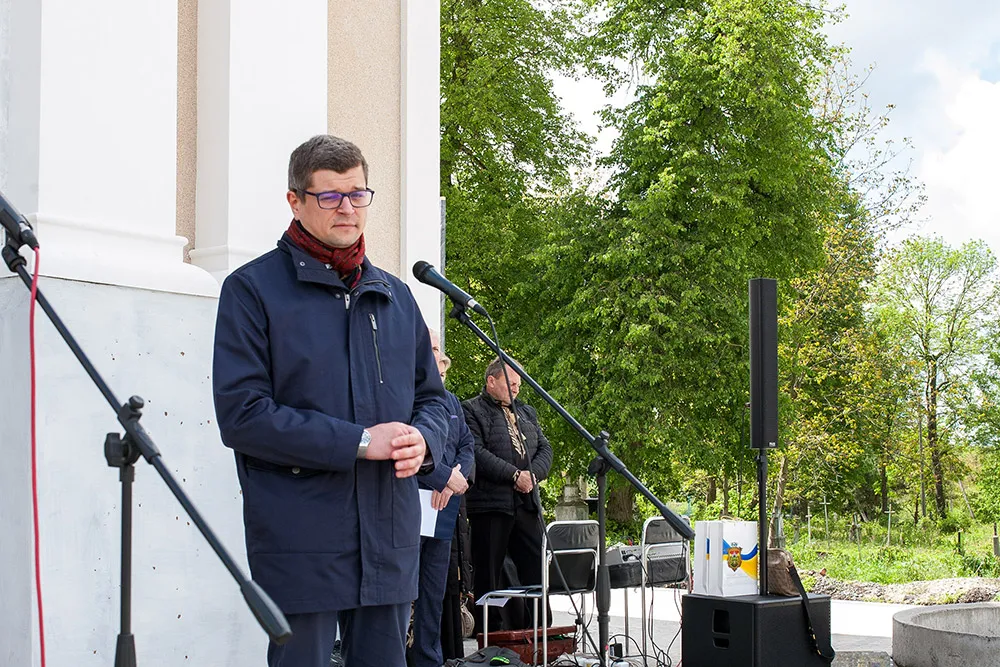
Vice-Consul Tomasz Kowal noted that this exhibition once again reminded us that Ukrainians and Poles in Podillia are good neighbours who for centuries lived side by side in respect and harmony, continue to live in peace and harmony today, and will do so in the future. The exhibition itself not only promotes interethnic peace and harmony in Ukraine but also works to strengthen friendship between Ukraine and Poland.
The rector of the Church of St. Stanislaus, Bishop and Martyr, Fr. Viktor Lutkovskyi, expressed his joy that such an interesting exhibition is taking place within the walls of his church, thanked everyone involved, and likewise stressed the importance of the project for studying the past of the Horodok area and Podillia and for unity and harmony in society.
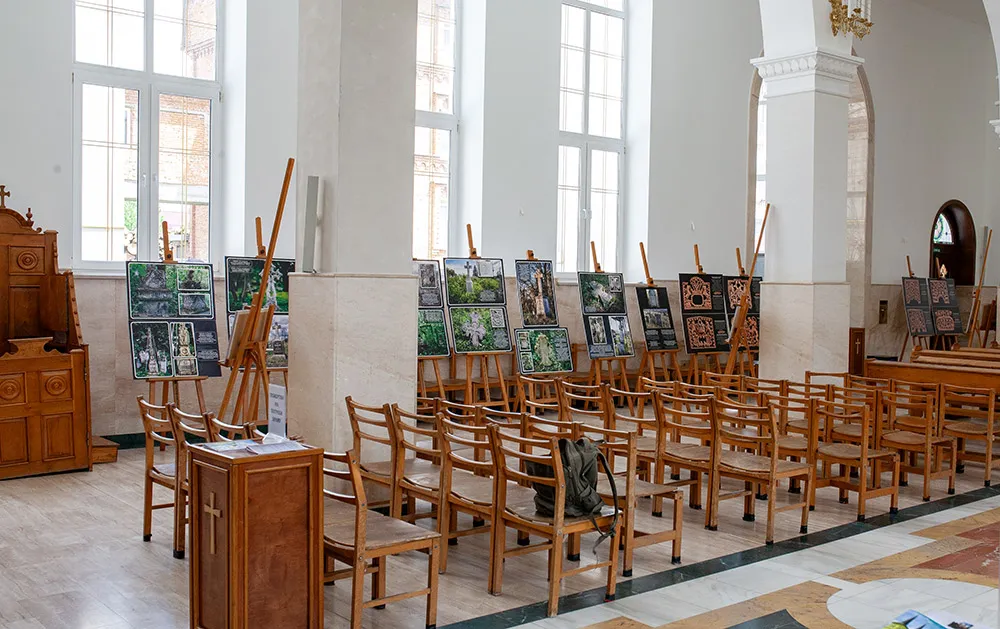
In conclusion, Dmytro Poliukhovych, a member of the NGO “Ukraine Incognita” team, led a tour of the exhibition and told in detail about the most important and interesting finds.
The exhibition has now been moved from the square in front of the Sanctuary into the church, where it will be on display until 26 May.


