

In Lviv region, the historic “Franko oak” falls on a tourist bus
In the village of Nahuievychi in Lviv Oblast, a tree fell on an excursion bus. Eyewitnesses published the relevant photos on social media on Saturday, 7 June. This is reported by zaxid.net.
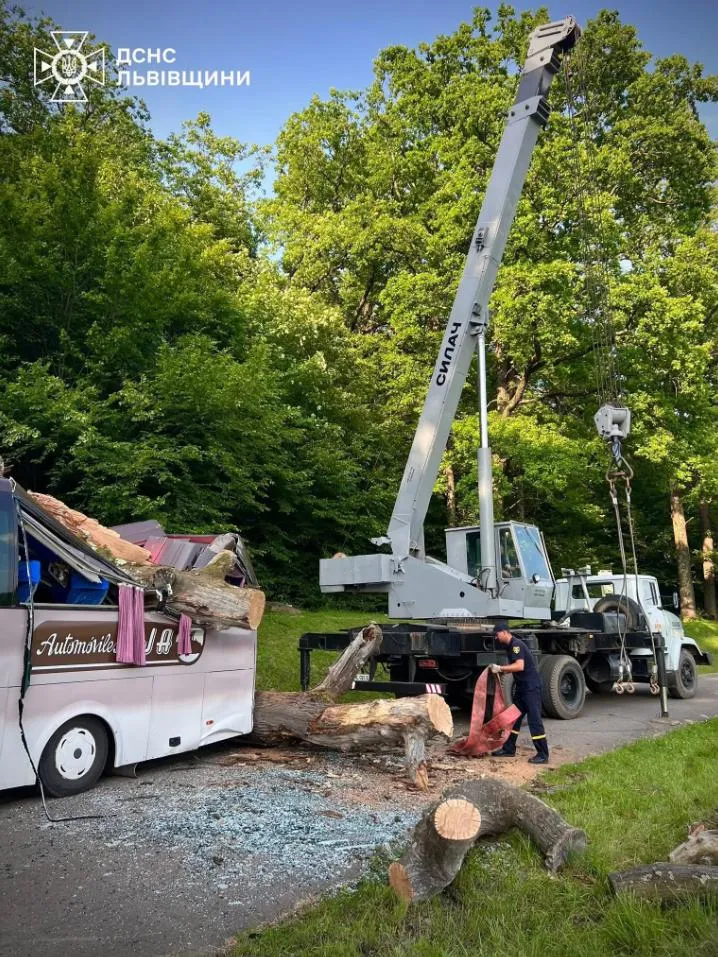
As the published photos show, the tree fell on the bus together with its roots, and the vehicle itself was deformed by the impact. There was no information about bad weather in Nahuievychi that day, so the cause of the tree’s fall is not yet known.
The State Emergency Service of Lviv Oblast told ZAXID.NET that there were no casualties as a result of the fall. Traffic on the road is ensured.
According to eyewitnesses, children were travelling on the bus, but at the moment the tree fell there was nobody inside.
According to the website “Media Drohobychchyna”, it was Ivan Franko’s oak that fell, a tree that grew on the grounds of the writer’s family estate in Nahuievychi. The oak, under which Ivan Franko often rested, is a historical monument of local significance. In recent years a sign was placed next to the tree warning of the danger of falling and banning parking.
Background
Nahuievychi (from 1951 to 2009, the village of Ivana Franka) is a village in Drohobych district of Lviv Oblast. It is located 10 km from Drohobych. Ivan Franko was born and spent his childhood here. He often visited Nahuievychi while studying in Drohobych and Lviv, and later came here with his family to rest and to work.
The village (first Solne, then Bashevo, later Nahuievychi) traces its origins to princely times. People here engaged in farming, salt-making (hence the first name), and in the 19th century also in oil extraction. Salt works attracted people here, the village began to grow and was named Bashevo. The Tatar invasion did not pass Bashevo by: it was destroyed. Later a new village grew up here. Afterwards the Polish king granted it to the nobleman Stanisław Naguevsky. There is a version that he named the village Nahuievychi to immortalize his own name. The name “Nahoiovychi” (“Nahuiovychi”, in Polish charters “Naguiowice”) is much older than the earliest Polish settlements in the region, so the opposite version is more likely: the owners of the farmsteads took their surname from the name of the settlement they owned.
Nahuievychi (historical name “Nahoiovychi”) is a village known at least since the times of Galician Rus. Prince Lev Danylovych, by his charters (13th century), gave the villages of Babyna, Potik, Strashevychi, Spas, Lavriv, Torchanovychi, Lypie, Rozluch, Hnizdets, Nahuievychi and others to the bishops of Sambir: Abraham (1254), Euphemius (1291) and Hariyon (1292).


