

Lviv region concerned about saving a 17th-century wooden church

· 2 min read
As “Tvoie misto” reports, the Department of Architecture and Urban Development of the Lviv Regional Military Administration has published a tender for the restoration of the Church of the Epiphany in the village of Kuhaiv. The church was built at the end of the 17th century. It is currently in a state of disrepair.
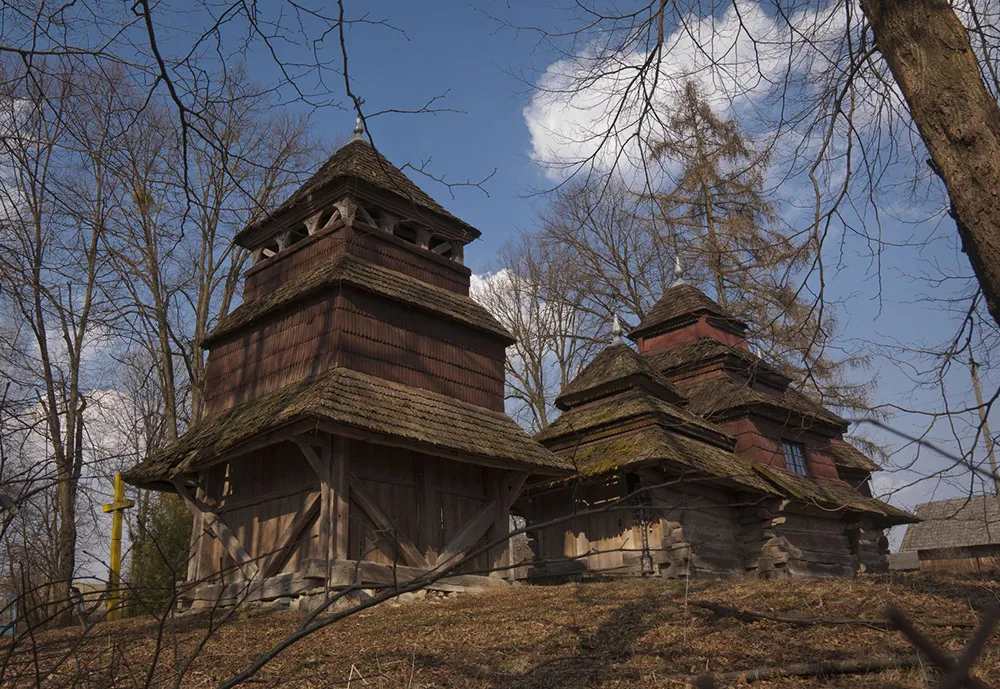
Church of the Epiphany (Kuhaiv village, Lviv Oblast). Photo: map.ugcc.ua
UAH 4.284 million from the local budget is planned for this project. The contractor will be determined by an auction starting on 14 August.
According to the terms of reference, the nave, the sanctuary, the foundation, the floor, the narthex and the sacristy are to be restored.
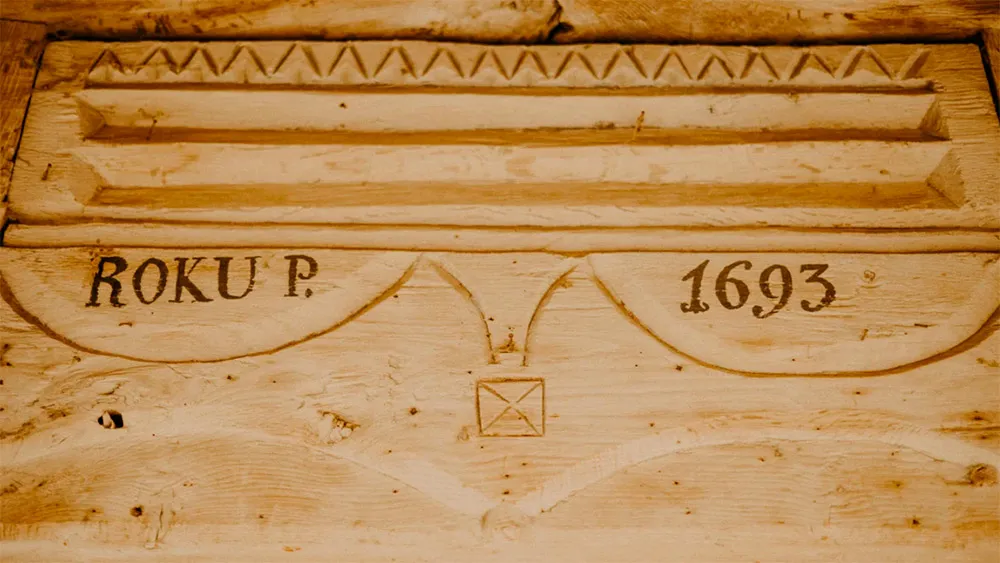
Photo: Dzvinka Zahaiska/localhistory.org.ua
According to the date marked on the door frame, the church was built in 1693. It was restored at the community’s expense in 1874 under Father Oleksandr Horynovych and the churchwardens Mykhailo and Vasyl Batoh (as an inscription in the interior attests). Repairs were also carried out in 1985, when, among other things, the shingles were replaced. The church is of three-log construction. The central volume is crowned with a three-tiered tent-shaped shingle roof, and the two side ones with two-tiered ones. A sacristy is attached to the sanctuary on the north. The iconostasis of 1702–1806, the work of folk craftsmen, has survived.
After a new brick church was built in the 1990s, the old church was rarely used and gradually fell into decay, and therefore needs urgent restoration.
In 2010, design and cost estimate documentation was prepared at the commission of the Regional Office for the Protection of Cultural Heritage. However, no funds were allocated for the restoration.
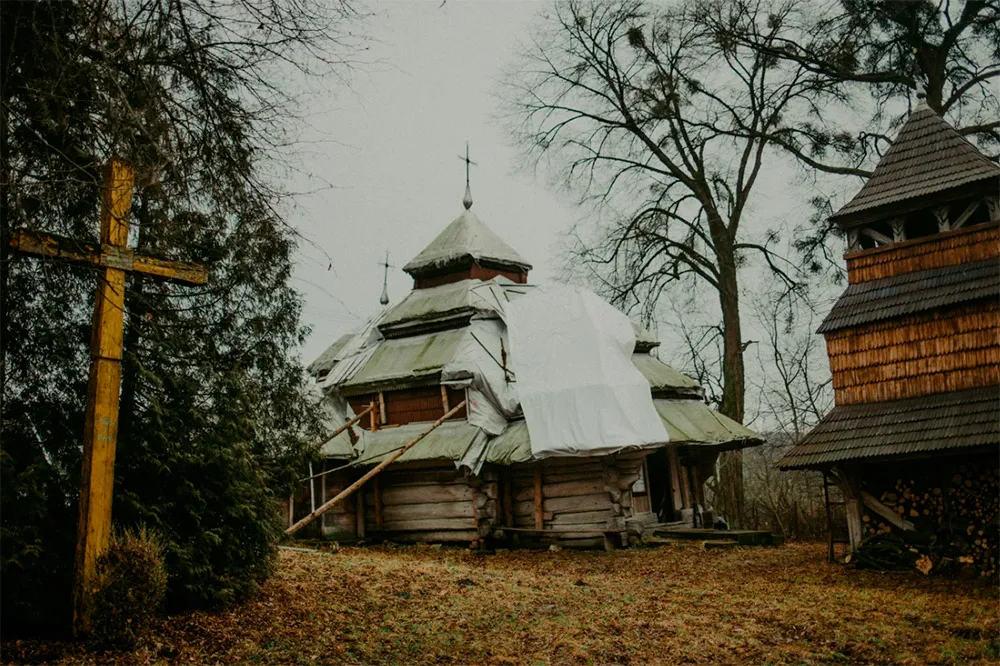
The church under plastic sheeting. Photo: Dzvinka Zahaiska/localhistory.org.ua
At the end of 2012 an initiative to save the church was launched on social networks: “Save the church in Kuhaiv”. In August 2013, with funds collected by volunteers, security and fire alarms were installed and the church was covered with a vapour-permeable membrane.


