

Famous church in Mykulyntsi in Ternopil region now has its own voice
A chiming clock has been installed on the tower of the Church of the Holy Trinity in Mykulyntsi in Ternopil Oblast. This was reported by the head of the Mykulyntsi community, Ivan Slobodian.
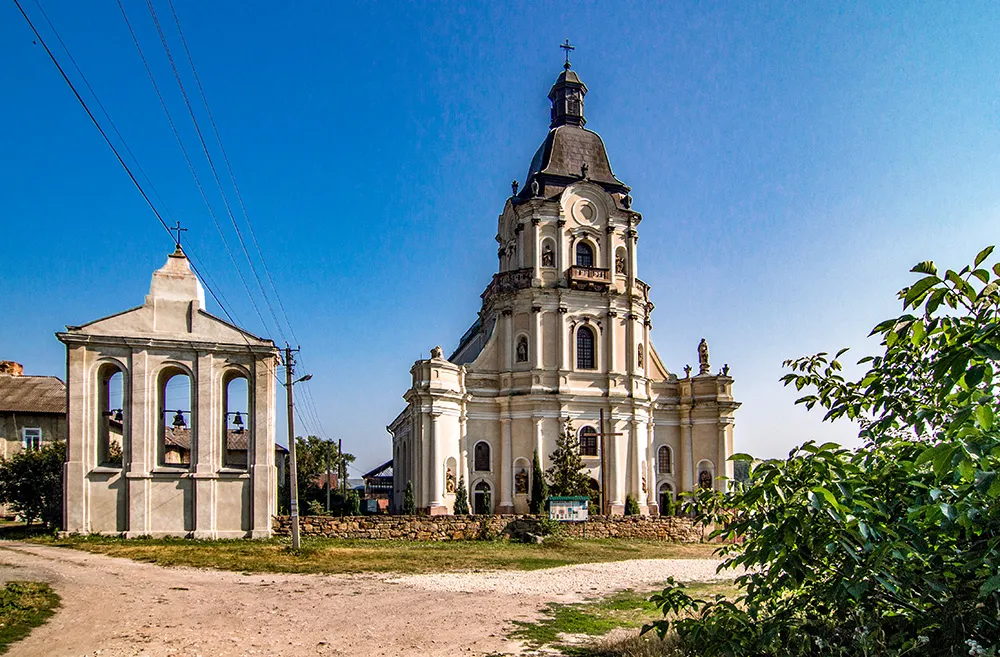
Church of the Holy Trinity. Photo: D. Poliukhovych
On his Facebook page he wrote:
“For several days now the chime of a carillon has been ringing over Mykulyntsi, and many people are puzzled and looking for an answer to this event. I am very pleased to tell everyone that these are the chimes of the Mykulyntsi Church of the Holy Trinity.
The chimes not only strike the hours but at 9:00, during the “minute of silence,” they accompany this minute of remembrance of our fallen heroes, the defenders of Ukraine, with a sad melody!
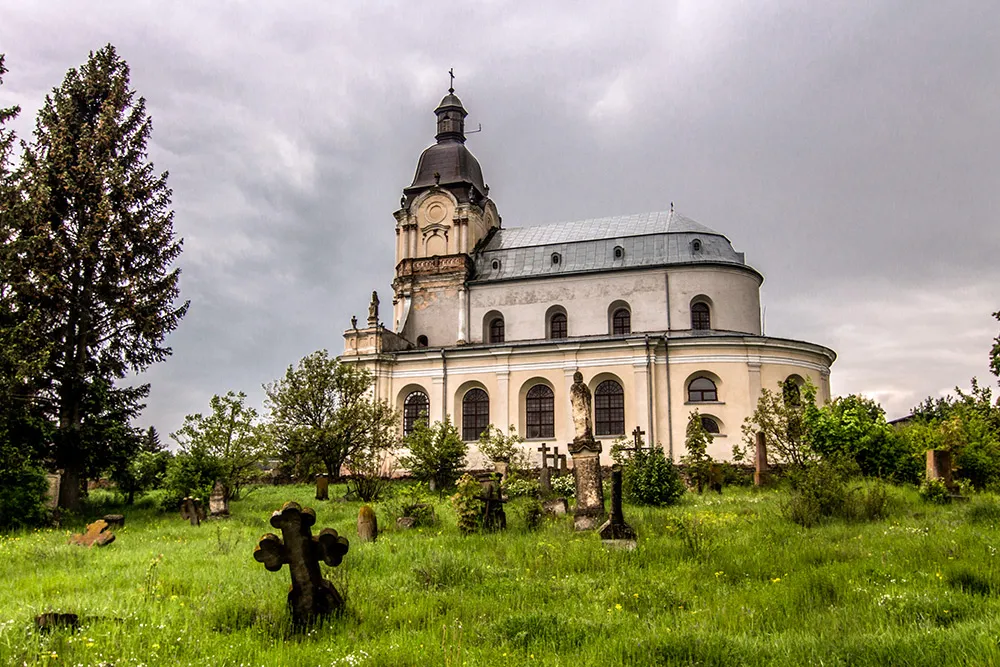
Church of the Holy Trinity. Photo: D. Poliukhovych
The chimes further prompt us, despite the morning cares and problems, to stop and honour with a brief prayer the memory of those who gave their lives for us, for our children, for Ukraine!
The chimes seem to underline that despite the very difficult situation in our state, caused by a many-year war with the Muscovite horde, life in Ukraine goes on: Ukraine lives and fights.
I want to add that chimes on churches and other buildings ring in many European countries. And the fact that we have installed chimes partly underlines that we are gradually approaching the time when we will be accepted into the great family of friendly European peoples.
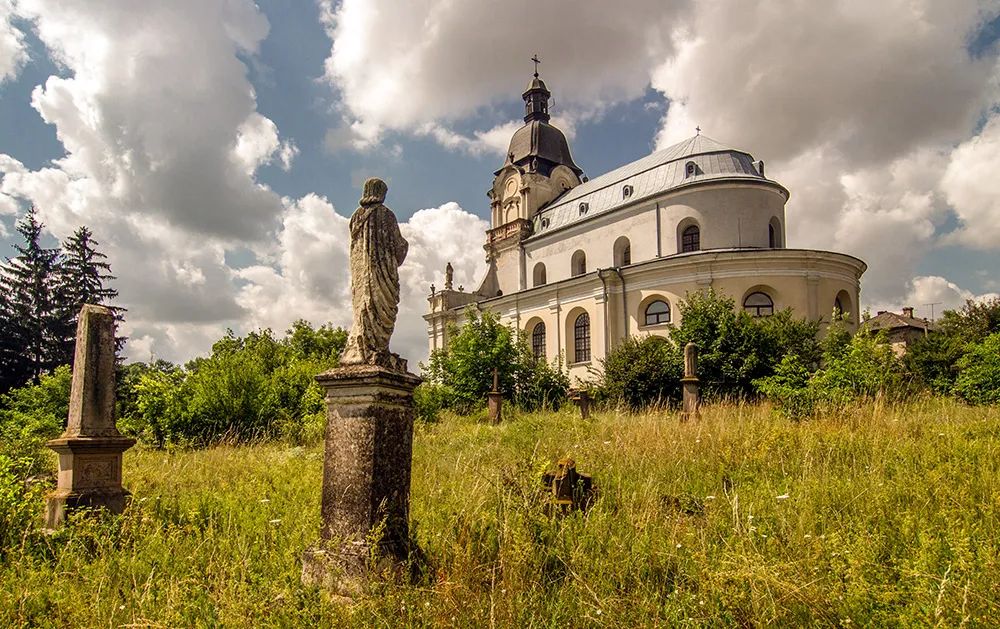
Church of the Holy Trinity. Photo: D. Poliukhovych
And now I will briefly tell you who was the initiator and organizer of installing the chimes on the tower of the Mykulyntsi Church of the Holy Trinity: it is Father Wiktor Stachów, priest of the Roman Catholic community in the settlement of Mykulyntsi, a very active and enterprising person, a skilled and intelligent organizer of many repair works on religious buildings and churches, of the restoration of many historical and spiritual religious treasures, a wise spiritual mentor and teacher.
He personally did a great deal of work and managed to find friends and caring people in Poland who gave Mykulyntsi such a wonderful thing. And over some time he found specialists who programmed the chiming system and carried out the work of installing and adjusting it. I consider this a notable landmark event in the life of Mykulyntsi, and for it I express sincere gratitude to Father Wiktor…
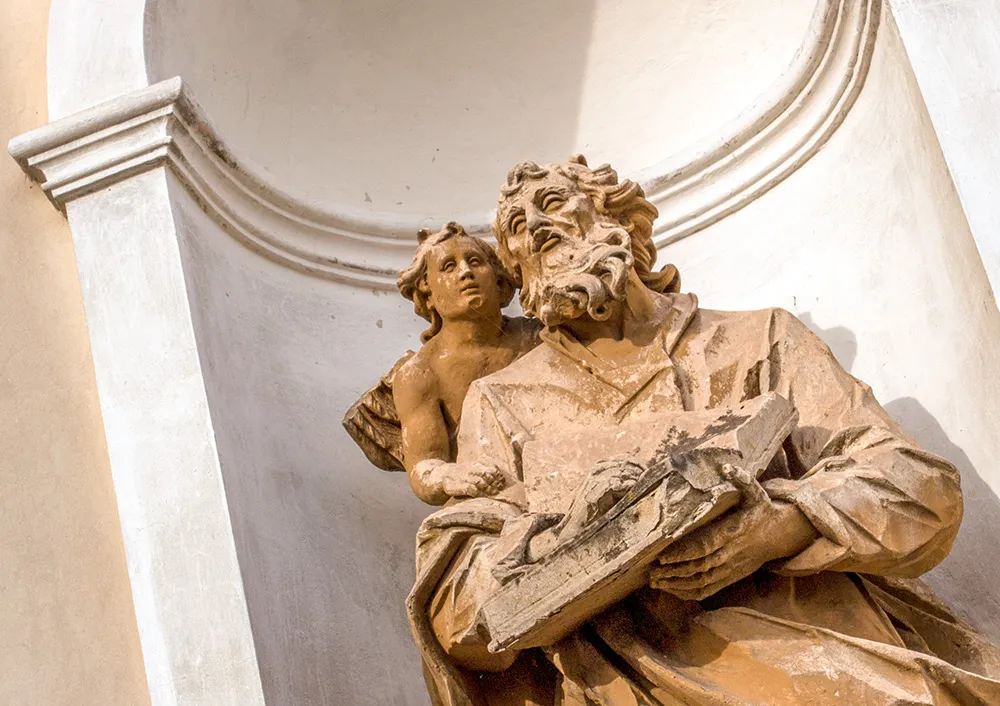
Church of the Holy Trinity. Decor. Photo: D. Poliukhovych
May the Lord grant him many more years of that inexhaustible energy and zeal to do good and bring God’s word to people. And the chimes call all of us to inspired work, to bring closer victory over the enemy and the future rebuilding of our state,” wrote the head of the Mykulyntsi settlement.
Background:
The Church of the Holy Trinity in Mykulyntsi is a striking example of the late Baroque era, and in Ternopil region the Mykulyntsi church has almost no equal in grandeur. But let us start with the history of the church in the town. The Church of St. Anne in Mykulyntsi already existed at the end of the 16th century. It was probably built by Anna Sieniawska, then owner of the castle. In 1619 it was destroyed during a Turkish-Tatar attack. In 1677 there was only a chapel here, and in 1718 a wooden Church of St. John the Baptist, built of oak beams.
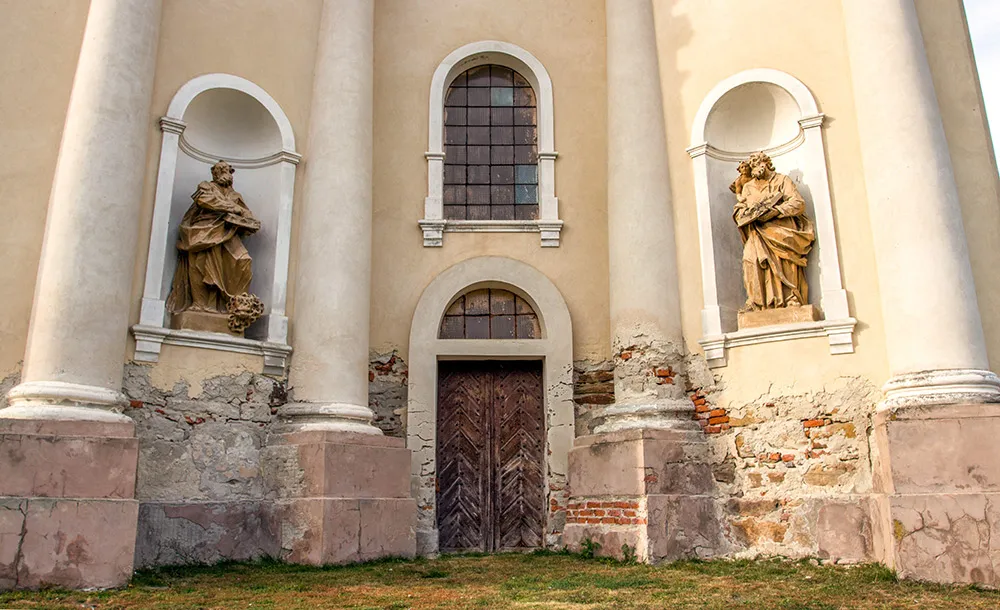
Church of the Holy Trinity. Photo: D. Poliukhovych
Construction of a new brick church began in 1761 with funds from Countess Ludwika Potocka. The architect was her granddaughter’s husband, August Fryderyk Moszyński. As its basis the architect took the church at the royal palace in Dresden. The foundation stone of the future shrine was laid by the Archbishop of Lviv, Wacław Sierakowski. It was consecrated, once completed in 1779, under the title of the Holy Trinity.
The church has rich architectural decor. Its refined forms, strengthened by the central spire, harmonize well with the main façade of the neighbouring palace and fit nicely into the park landscape. The façade is richly decorated with Baroque elements with lavish details. It is crowned by a small tent-shaped dome. Stone sculptures and vases are placed in the niches.


