

Mysterious “custodians” found on the grounds of the Post Station in Kyiv
A volunteer clean-up day will soon take place on the grounds of the historical and architectural monument “Post Station” (“Post House”), which is under the State Historical and Architectural Reserve “Ancient Kyiv”. While preparing for this volunteer event, staff of the KNMC and the Reserve discovered a number of unexpected circumstances.
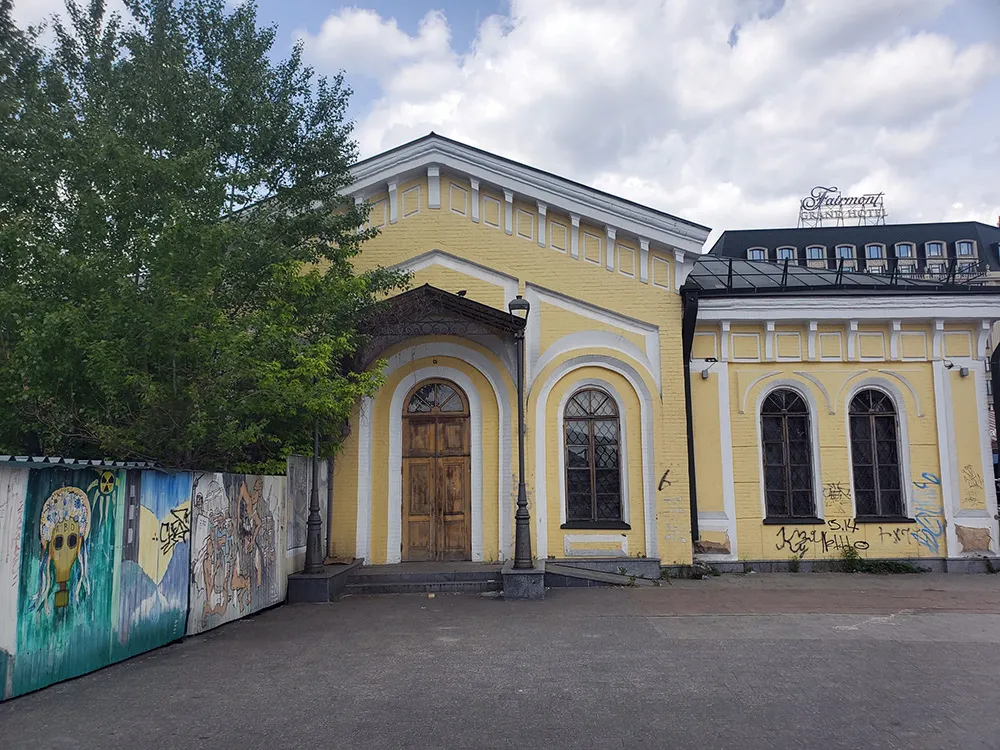
Photo: State Historical and Architectural Reserve “Ancient Kyiv”
As Reserve staff told “Ukraine Incognita”:
“Today we entered the grounds of the Post Station (2 Poshtova Square), which we have to prepare for further restoration work. On the grounds of the building, which is officially on the balance sheet of the KNMC, strangers were found. They introduced themselves as Olha Rutkovska and Vitalii Biletskyi, the self-described custodians of the Post Station. They refused to leave the station’s premises, explaining their presence by some documents that they had forgotten. In the photo you can see the results of their “custody”: it is full of rubbish, and all the doors and gates have foreign locks for which we have no keys… Around is a terrible mess. In some time we plan to hold a clean-up day on the grounds, which everyone who wishes will be able to attend”.
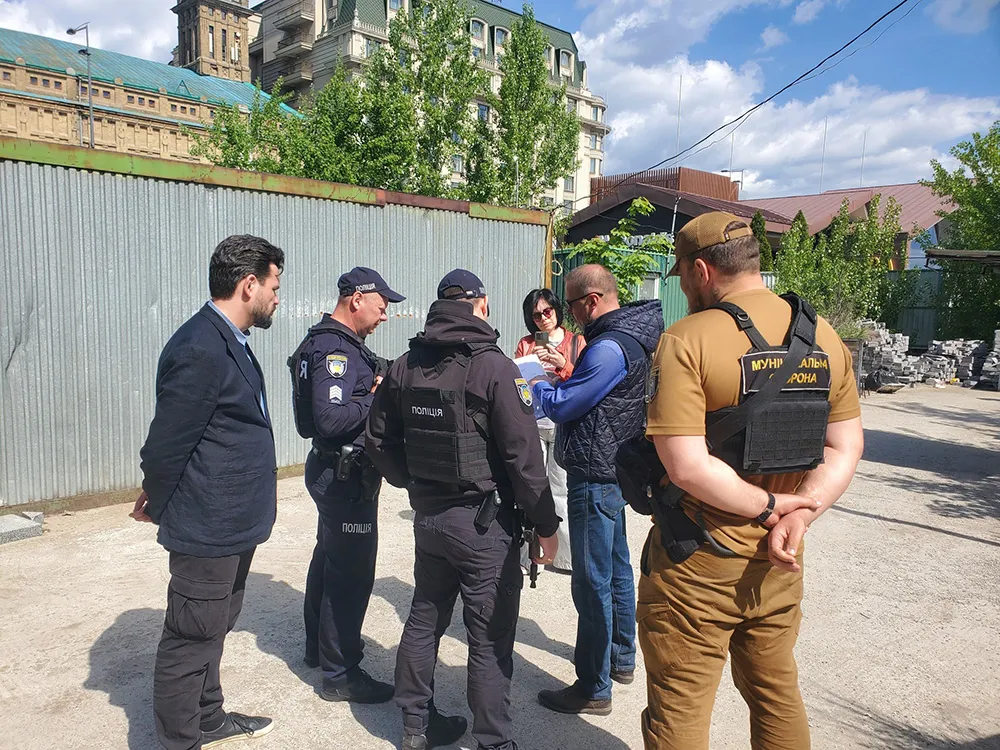
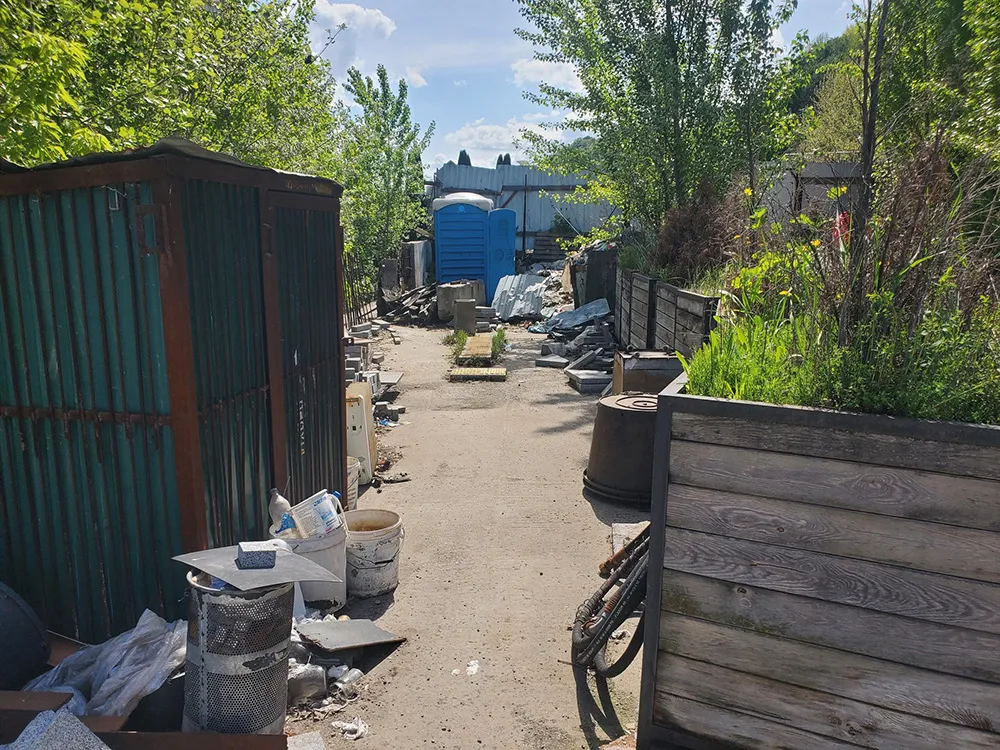
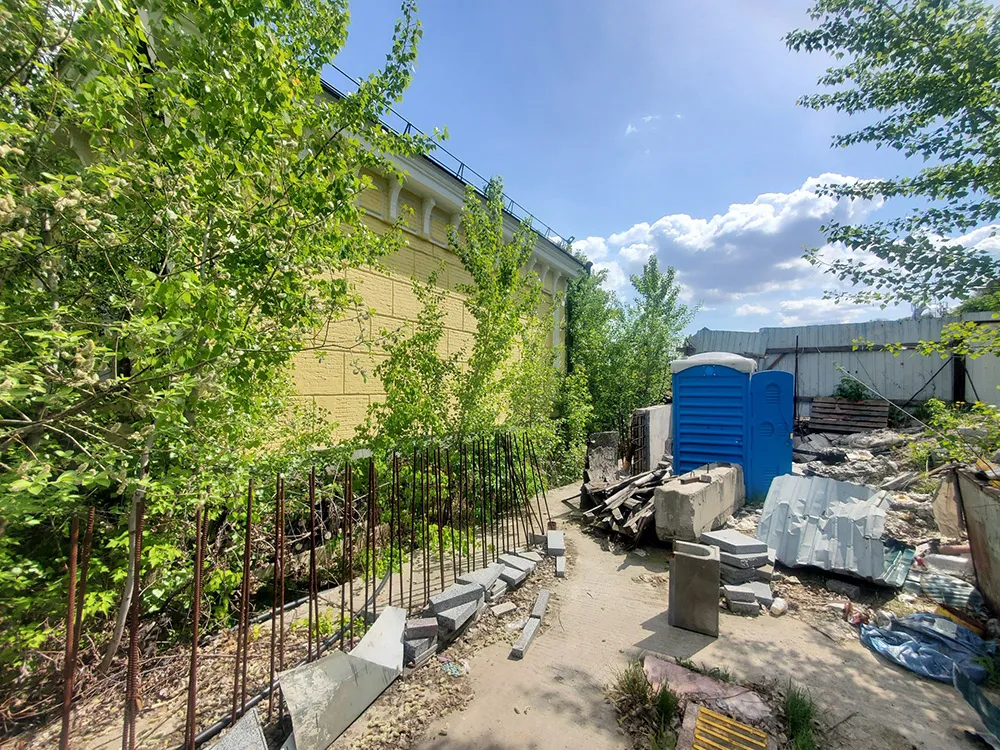

“Ukraine Incognita” will announce the time of the clean-up day as soon as it is decided when it will be held.
As previously reported by our publication, the former post and stagecoach station on Poshtova Square in the capital will become a museum again.
Historical background from “Fascinating Kyiv”
In 1851, in connection with the construction of the Chain Bridge and the Embankment Road, Emperor Nicholas I ordered a post and stagecoach station to be created where the Embankment Road joins Podil. At that time it was an empty plot next to the cemetery of the Church of the Nativity of Christ, used for the temporary storage of various goods.
The design of a “second-class station building” (differing from the first class in lacking special rooms for members of the imperial family) was prepared in St. Petersburg by staff of the Main Directorate of Ways of Communication and Public Buildings. It was approved by the emperor in July 1852. The plan was to build a complex consisting of three one-storey brick buildings (the station building proper and two small service wings on either side of it), as well as wooden stables at the rear.
It was decided to build the brick buildings in the Classical style. Construction began in 1853, but because of the outbreak of the Eastern (Crimean) War of 1853–1856 it was suspended. Subsequent changes to the design required considerable effort in replanning the square. Some revival of work during 1855–1858, when the station building was erected as a whole, was interrupted because it had not been decided how to use one of the wings: for the local directorate of ways of communication or for a hotel.
In 1862 the engineer M. Benzemann prepared a new design for the post yard, according to which the wings were to be two-storeyed. The left one was intended for an office, the right one for station services. This design also envisaged a change in the architectural appearance of the half-built station building: its windows were changed from semicircular-arched to rectangular, and the triangular gable was replaced with a pediment whose tympanum contained an image of a double-headed eagle. In 1865, under the supervision of M. Benzemann, construction of the station building was completed and a postal stagecoach office was opened in it.
The right service wing was built with one storey; the site of the left one, for lack of funds, was sold into private ownership. In 1870–72 a two-storey building was erected there to a design by architect O. Schiele (it has not survived), part of whose premises was rented by the directorate of the Tenth District of Ways of Communication. Behind the station building stood wooden stables. In 1909 they were destroyed by fire, and the following year a large two-storey building on a raised-basement half-storey was erected in their place for various services, stables, garages for motor stagecoaches and workshops (architect V. Bezsmertnyi; not preserved). The post and stagecoach service operated until 1919.


