

UAH 8 million needed to restore the unsafe wall of the building of Ukraine’s oldest archive, built in 1630
Emergency stabilization work is being completed at the Central State Historical Archive in Lviv. This summer part of the vaulting collapsed there, and the wall of the three-storey 400-year-old building leaned 17 cm out of true. The city council allocated money for the design and estimate documentation, and the Polish institute Polonika for the priority emergency work. However, bringing the wall out of its unsafe condition requires at least UAH 8 million. And inside there are still many old murals awaiting restoration. Archive director Olesia Stefanyk told ZAXID.NET about the situation as it stands now.
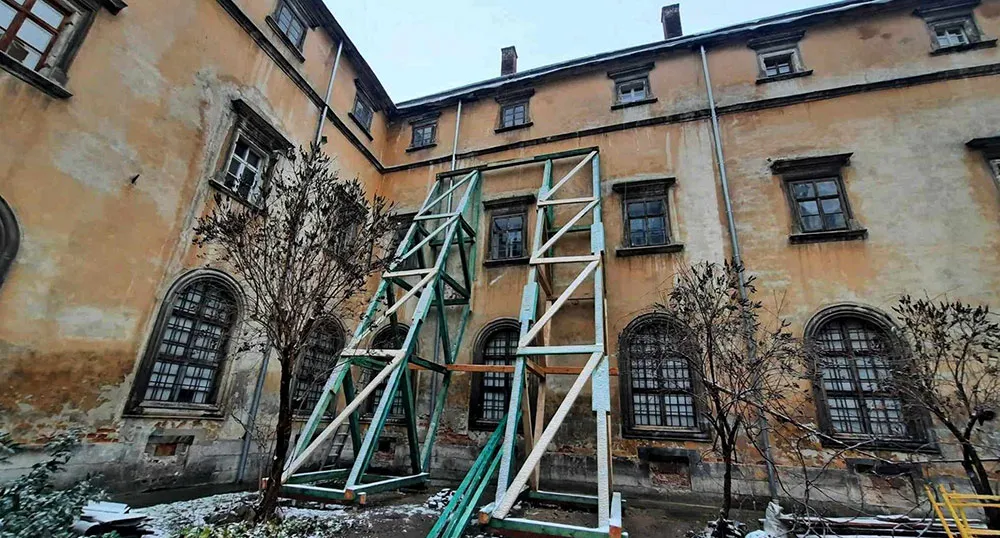
The walls of the ancient Bernardine monastery, built in 1630, have long suffered from damp. There is evidence that as early as 1819 the Austrian authorities had already put up wooden props at this spot. That is, the problem already existed 200 years ago.
Now the damp in the walls of the inner courtyard is visible up to the height of the first floor. According to the archive director, the situation has worsened especially in the last 5 years, even though last year the drainpipes were replaced with funds from the ALIPH foundation.
“Water has been undermining the foundations for many centuries. Water collects in the courtyard. Drainage and waterproofing must be installed. Any explosion nearby could cause the wall to collapse completely,” says Olesia Stefanyk.
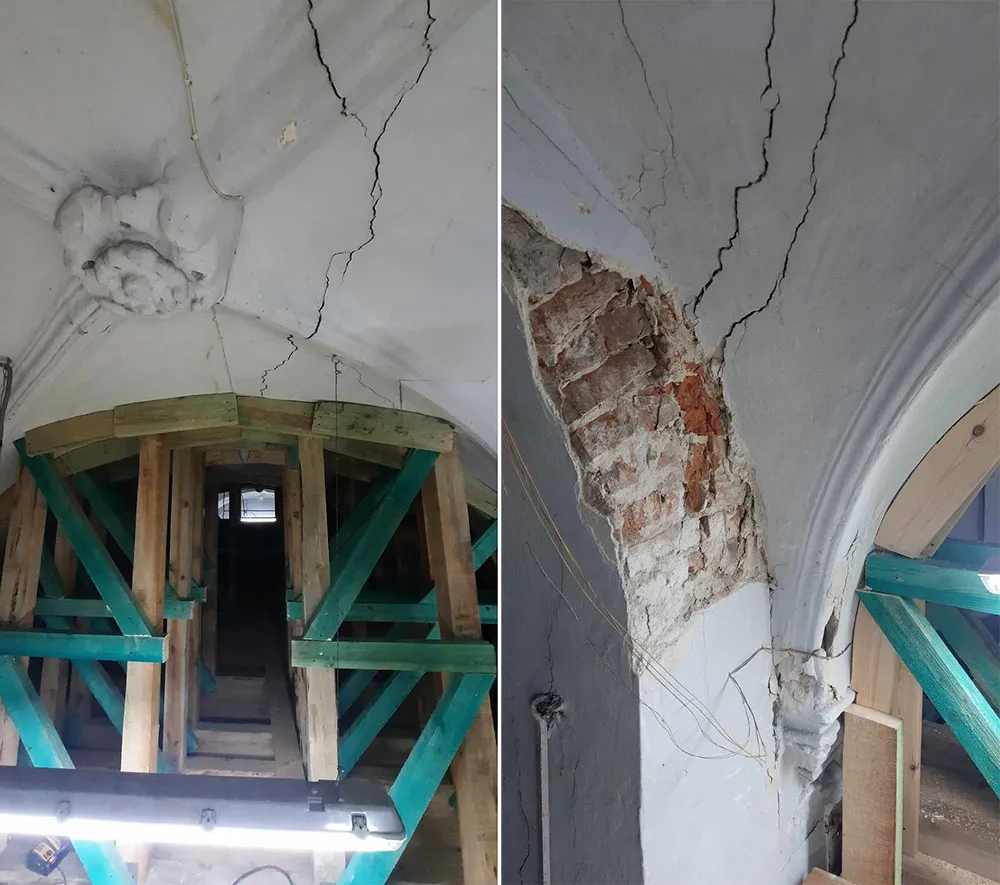
After a section of the wall collapsed on 9 July, the commission on technogenic and environmental safety and emergencies decided to carry out urgent emergency work. Lviv Polytechnic lecturers Andrii Pelekh and Ihor Bokalo drew up the reinforcement plans. The city council allocated UAH 700 thousand for the design and estimate documentation. The Polish institute for cultural heritage abroad, Polonika, supported the partners: from its reserve fund it allocated UAH 1 million for the emergency work.
As of now, the craftsmen have finished reinforcing the wall from the outside; it is temporarily propped by wooden beams. The same structures are being installed inside. However, this solution is temporary. To strengthen the wall, which has leaned 17 cm, at least UAH 8.2 million is needed.
“Geological surveys showed 15 layers of soil to a depth of five metres. At a depth of 2.5 m there is sewage water, which does the greatest harm. To save this wall, we need to tie it together along its whole length with special metal tie rods. We will look for grant-makers, because very valuable documents are kept here,” the archive director stressed.
The collector (main sewer) under the monastery itself, according to the conclusions of specialists from Lvivvodokanal, also needs major repairs. Incidentally, it too has historical value: it was at this spot that a group of Jews who escaped from the Nazis during the Holocaust hid. In their memoirs they recalled the church singing from the church at the monastery, which they heard in the sewer.
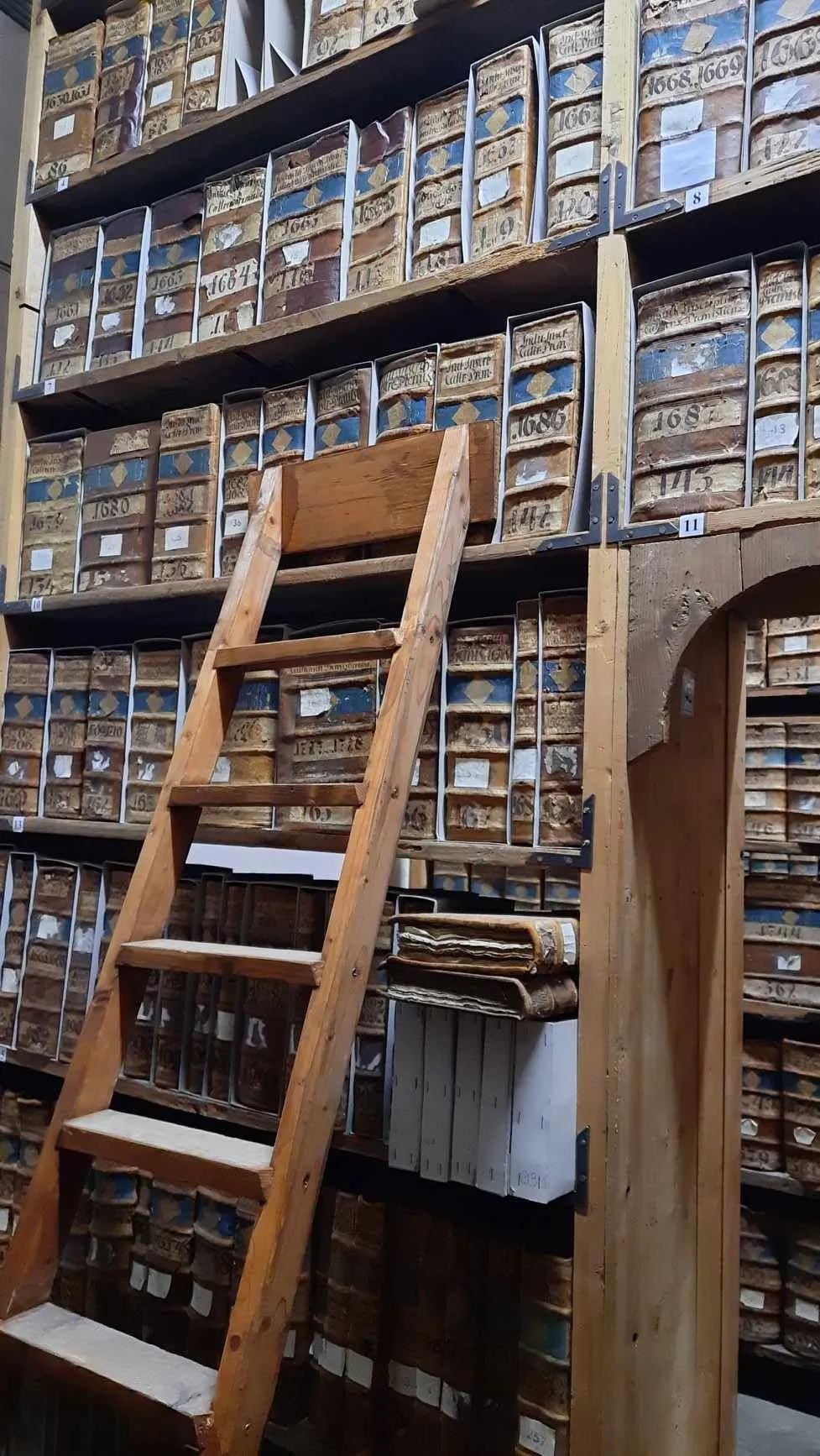
The Central State Historical Archive in Lviv holds 1 million 120 thousand files dating from the 12th century to 1946. The oldest of them are the birch-bark documents from Zvenyhorod of 1100 and a papal charter of 1233 on parchment.
The room where the cracks appeared used to be the monastery library. Isolated probes on the walls confirm the presence of murals that are still waiting to be uncovered and restored. The library kept court books of the 15th–18th centuries, which became the basis of the archive created 240 years ago.
The archive’s premises are the former Bernardine monastery, which is now a monument of national significance and lies within the UNESCO protected zone. In the former monastery refectory, well-preserved murals of the early 18th century survive on the vault, a biblical scene with the Queen of Sheba. On the walls are frescoes in even worse condition depicting other Bernardine monasteries.
And in a former monk’s cell, 17 years ago, original drawings by the monastery’s then residents were accidentally discovered beneath Soviet whitewash. These mystical images, like the other murals, await their restoration.


