

Tower of Pniv Castle collapses (photos)

· 2 min read
Pniv Castle, located on the south-western outskirts of the town of Nadvirna in the Nadvirna district of Ivano-Frankivsk Oblast, on the border of Hutsulshchyna and Pokuttia, continues to fall into ruin. “Unfortunately, today we lost a piece of our history: part of the tower of Pniv Castle has collapsed,” reports “Reporter”, quoting a message from Nadvirna resident Ihor Havryliuk.
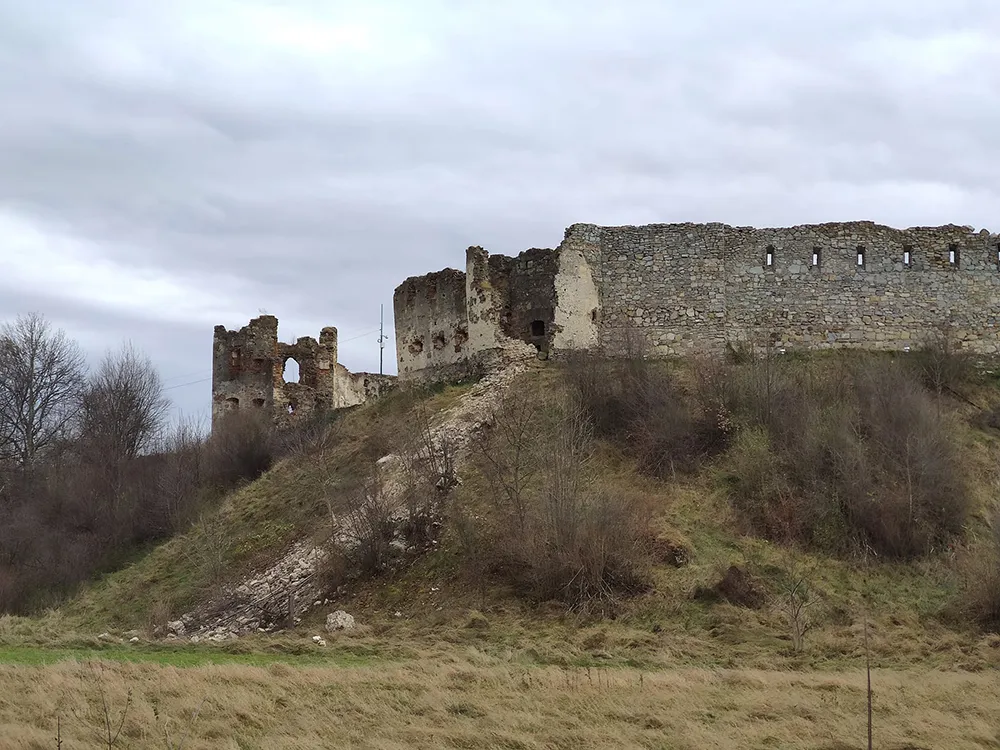
Here and below, photos: “Reporter”
Pniv Castle is one of the most enduring fortresses in Ukraine. It was built in the second half of the 16th century by the Kuropatwa feudal lords. The castle served as an important fort-post during the Polish-Turkish wars of the 17th century. In plan the stronghold resembled an irregular pentagon. The stone walls with brick crowning were in places up to 1.8 m thick.
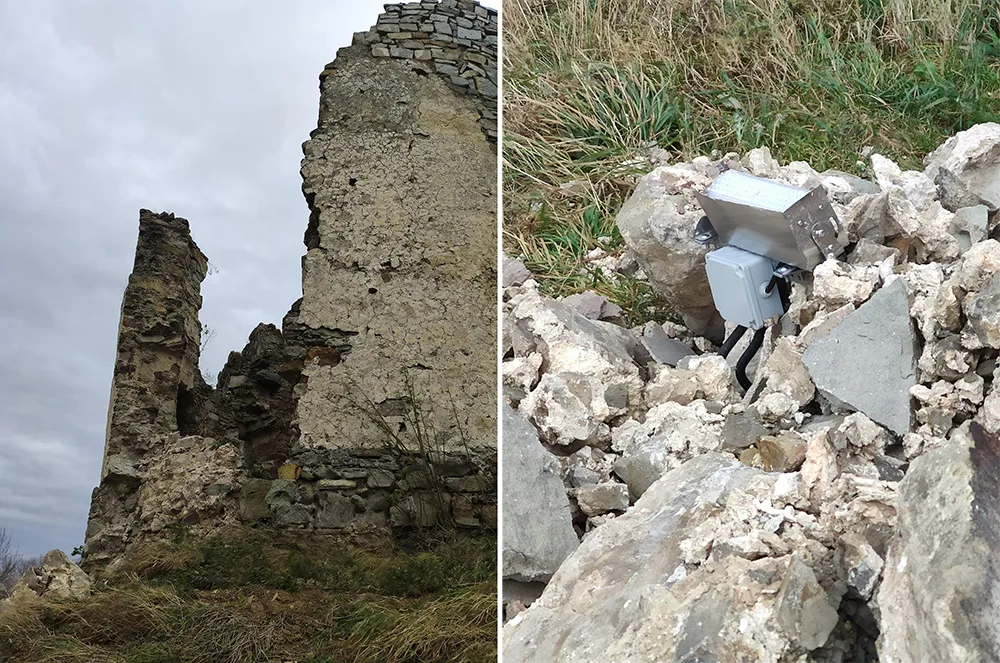
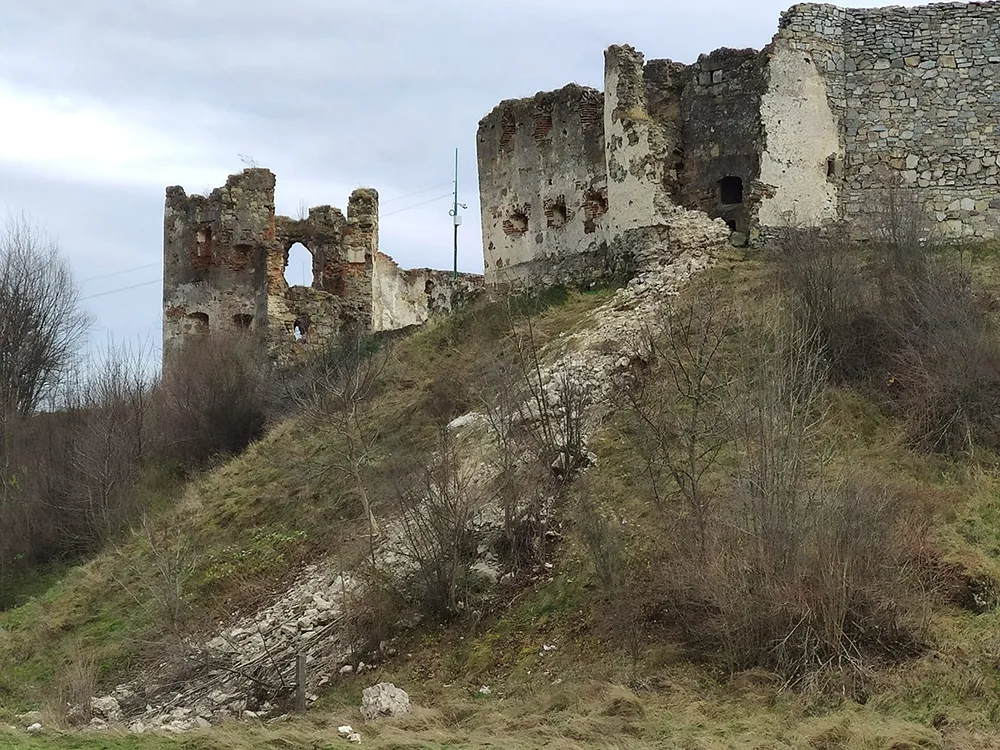
This is what Wikipedia writes about Pniv Castle:
“The castle is a large, well-planned and carefully thought-out fortification which, until the construction of the Stanyslaviv stronghold (1662), was the largest in the whole Carpathian foothills region. It stands on a natural hill whose western side faces the Bystrytsia Nadvirnianska River. The castle was built of large hewn blocks of grey mountain stone; on the inner sides of the walls red brick was also mostly used. The walls were built first of all as a defensive structure, so it is no wonder that they were a metre or more thick. The outer walls are even more massive and impregnable, up to 1.8 m thick. There are five curtain walls: the castle is pentagonal in plan and fortified by towers placed around the whole perimeter of the outer walls. There are five towers, all different in height, shape and purpose. There are four corner towers: the eastern one is round, the northern and southern ones are hexagonal, and the one facing west is semicircular. At the junction of the eastern and southern walls there is a triangular projection with two tiers of loopholes. There are also loopholes along all the walls and in the towers. This number of towers, and their marked projection beyond the curtain line of the castle, made it possible to observe and fire upon the space along all the outer walls. The last, fifth tower is the gate tower. Entry into the castle was by a drawbridge across a special moat filled with water. The moat is artificial; it ran along the entire southern wall. From the east the castle’s defensibility was strengthened by a deep ravine, with a stream flowing along its bottom. To the west the natural height drops away steeply on its own. The castle is most vulnerable and unprotected from the north but, despite this, for its time it was one of the most fortified castles in Ukraine and best adapted to a long siege.


