Signs of steering column faults that should not be ignored
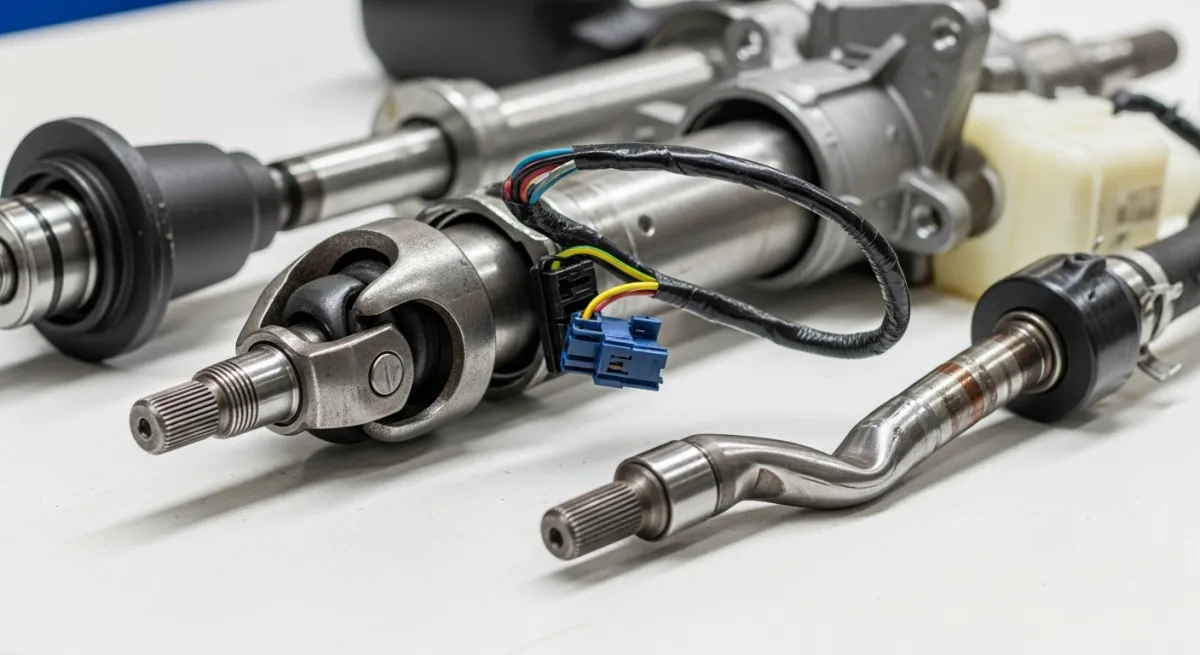
Steering is one of a car’s key safety systems. It is through steering that the driver controls the direction of travel, manoeuvres and the stability of the vehicle on the road. Any deviation in the work of this system can not only reduce driving comfort but also create a real threat to life. Special attention should be paid to the condition of an element such as the steering column, since its faults often develop gradually and go unaddressed.
What a steering column is and what it does
The steering column is the assembly that connects the steering wheel to the steering mechanism. It transmits effort from the driver’s hands to the wheels and ensures the correct turning angle and steering stability. In modern cars the column is often equipped with height and reach adjustment, safety elements, and electronic components linked to the power steering and driver-assistance systems. Because of constant loads, vibrations and external factors, this assembly wears over time, which can lead to a variety of fault symptoms.
Unusual noises when turning the wheel
One of the most common signs of trouble is the appearance of unusual sounds. Squeaking, knocking, clicking or crunching when turning the wheel may indicate worn bearings, play in the joints or damage to the column’s internal elements. At first these noises may appear only during sharp manoeuvres or on a bumpy road. Over time, however, they become constant, which shows that the problem is progressing. Ignoring such signals can lead to the mechanism seizing or loss of steering accuracy.
Steering wheel play and vague response of the car
If the steering wheel starts to have excessive free play and the car responds to a turn with a delay, this is a serious reason to have it checked. Play often arises from wear of the splines, joints or mountings that are part of the steering column. Vague steering is especially dangerous at high speeds or during emergency manoeuvres. The driver may not feel the exact moment the wheels turn, which raises the risk of emergencies.
Seizing or increased resistance when turning the wheel
Another sign of a fault is uneven rotation of the steering wheel. If, while driving or standing still, you feel that the wheel turns in jerks, stops in certain positions or needs more effort, this may indicate internal damage. The causes may be corrosion, a deformed shaft or problems with the adjustment mechanism. Combined with a faulty power steering, such defects make driving much harder, especially in city conditions.
Vibrations transmitted to the steering wheel
Unusual vibrations in the steering wheel are often blamed on the wheels or suspension, but in some cases the source of the problem is the steering column itself. Worn bearings or loose connections can transmit oscillations from the road surface directly to the wheel. Such vibrations not only reduce comfort but also speed up the wear of other steering components. In addition, constant oscillations make it harder to hold a stable path.
Problems with steering wheel adjustment
Many cars allow the steering wheel to be adjusted for height and reach. If this mechanism stops holding the chosen position, the wheel changes its angle on its own or does not move at all, this points to a steering column fault. Such problems often arise from worn locking parts or damaged internal locks. Although at first glance this may seem a trifle, an incorrect wheel position harms ergonomics and control of the car.
What ignoring faults can lead to
Putting off repairs to the steering column can have serious consequences. Over time, slight play or noise grows into a critical fault that can lead to loss of control. In the worst case, the steering wheel may become completely detached from the steering mechanism. Besides safety, financial costs also rise. Repair at an early stage is usually limited to replacing individual parts, whereas a neglected problem may require replacing the whole assembly.