

Will the palace and church of the vanished town of Chervonohorod be restored?
In the Ternopil Oblast there are plans to restore the ruins of a 17th–19th-century church and palace near the village of Nyrkiv. This is all that remains of the once well-known and large town of Chervonohorod. This is reported by the website “Ternopoliany”.
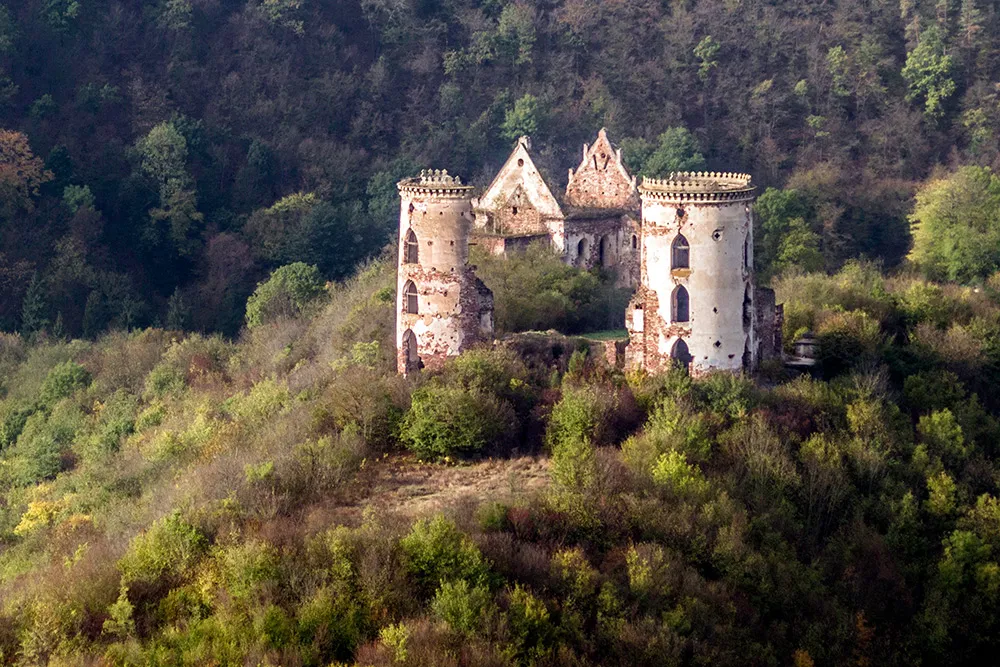
The palace (“castle”) and church of the vanished Chervonohorod. Photo: Dmytro Poliukhovych
This became possible because today Archbishop Tykhon of Ternopil and Buchach took part in signing a Memorandum of Cooperation on the preservation and restoration of the ruins of the 17th–19th-century church and palace in the village of Nyrkiv, Ternopil Oblast.
On 14 May 2024, His Beatitude Metropolitan Epiphanius of Kyiv and All Ukraine met in his residence, the Metropolitan’s House, with patrons and representatives of the charitable organization “Dzhurynskyi Family Charitable Foundation”: Vitalii, Oleksandr and Oleh Dzhurynskyi.
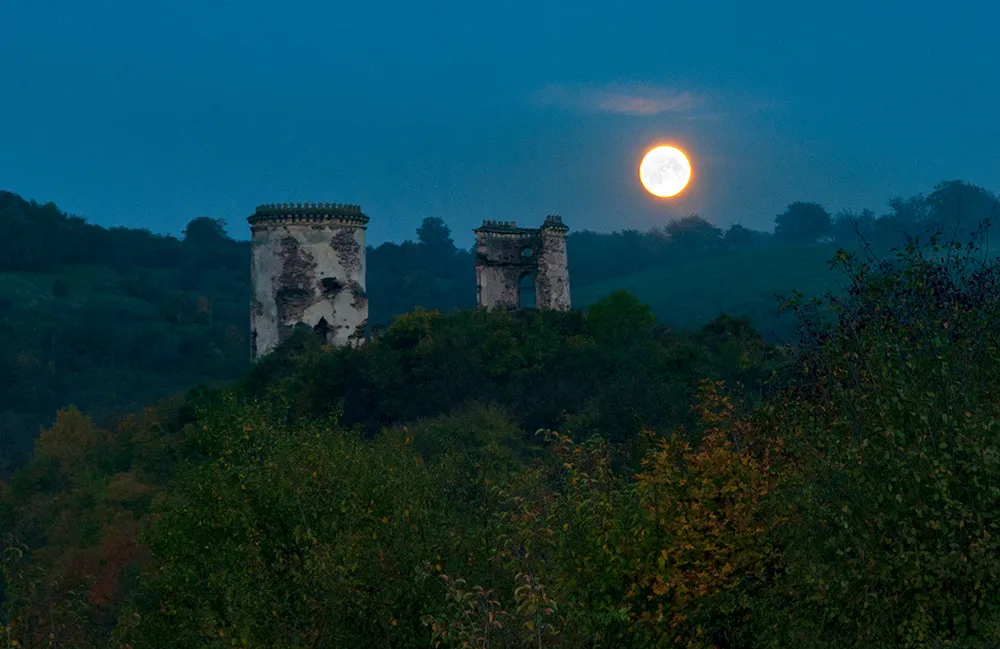
Photo: Dmytro Poliukhovych
Archbishop Tykhon of Ternopil and Buchach and Marian Martyniuk, a representative of the legal department of the Orthodox Church of Ukraine, also took part in the meeting.
With the blessing of the Primate of the Orthodox Church of Ukraine, His Beatitude Metropolitan Epiphanius, the parties signed a Memorandum of Cooperation on the preservation and restoration of the ruins of the 17th–19th-century church and palace in the village of Nyrkiv, Ternopil Oblast.
Background: Chervonohorod (or Czerwonogród in Polish transcription) is a dead but eternal town, founded at an unknown time by an unknown founder.

The Dzhuryn (Chervonohorod, Nyrkiv) waterfall. Photo: Dmytro Poliukhovych
The town’s history began more than a thousand years ago, when Cherven was the residence of Rus princes. There is evidence that in 981 it was seized by Prince Volodymyr of Kyiv. Here, in the capital of the Chervonohorod principality, in the surroundings of a wooden castle, the princes of Galicia-Volhynia hunted, until in 1240 the town was devastated by the Tatar-Mongol invasion.
From the mid-14th century the Podolian lands became for almost a century an object of dispute between Lithuania and Poland. In 1340 the town was seized by the Polish king Casimir, but he never incorporated it into the Polish crown. In 1363, after a successful battle with the Tatars on the Syniukha River, the Lithuanian prince Algirdas gave Podolia to his nephews, the Koriatovych princes, founders of the castles in Kamianets, Bakota, Smotrych, Skala and Bratslav.
Read the continuation of the story about this interesting place on the “Ukraina Incognita” website.


