

“Polish” crosses in a Ukrainian cemetery: new discoveries in the “Graves of the Ancestors” project
Last time we told you about the interesting discoveries made within the “Graves of the Ancestors” project, carried out by the NGO Ukraine Incognita and the Department of Culture, Ethnic Groups, Religions and Tourism of the Horodok City Council. Its aim, to recall, is to study all the old necropolises of the Horodok area (Ukrainian, Polish and Jewish) in order to show the multifaceted, multinational culture of Podillia.
On 4 April the “Graves of the Ancestors” expedition studied the necropolises of the villages of Kumaniv and Andriivka. In Andriivka, we should note, a discovery of nationwide significance was made, but more about that later. There is still much to be clarified there.
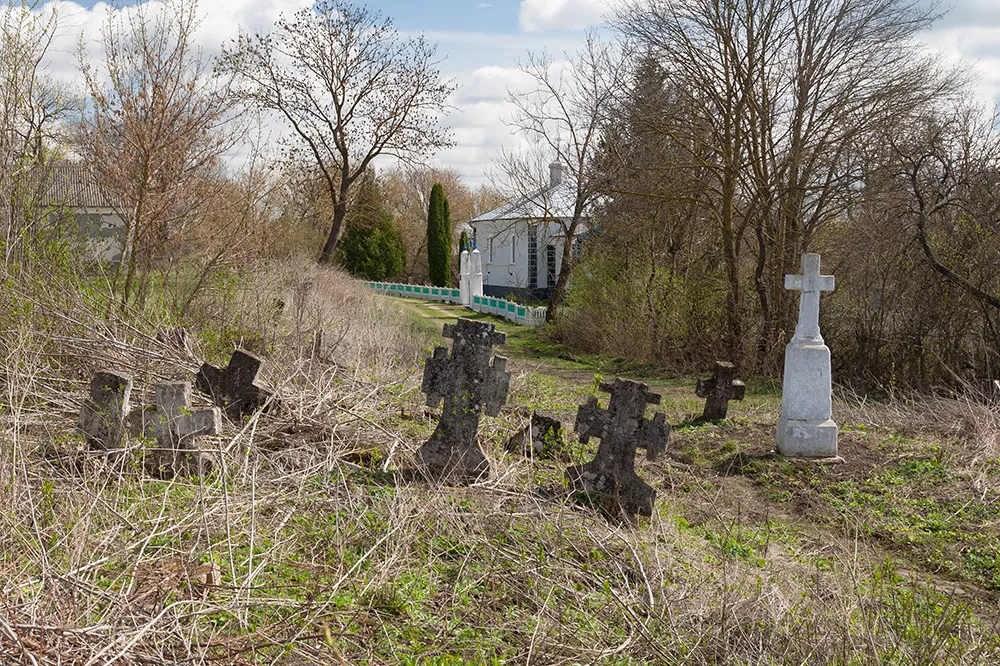
The cemetery in the village of Kumaniv
The Ukrainian cemetery in Kumaniv impressed with its size and the huge number of old stone crosses. The oldest probably dates from the end of the 18th century. The oldest one with a date on it is from 1810, also a venerable age. A photo report from the cemetery will soon be published in the articles section.
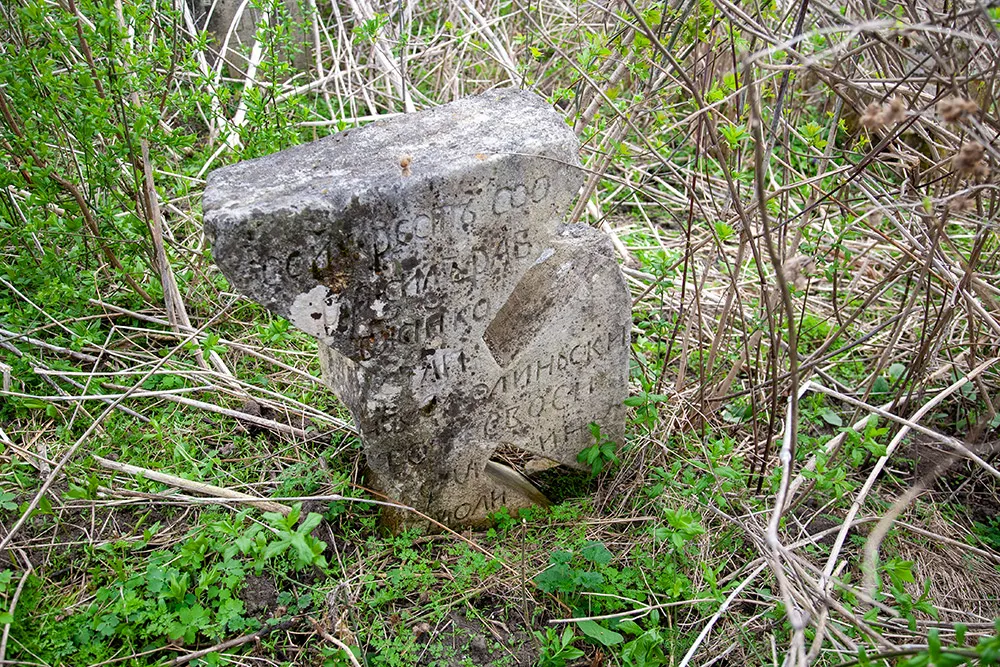
The oldest cross
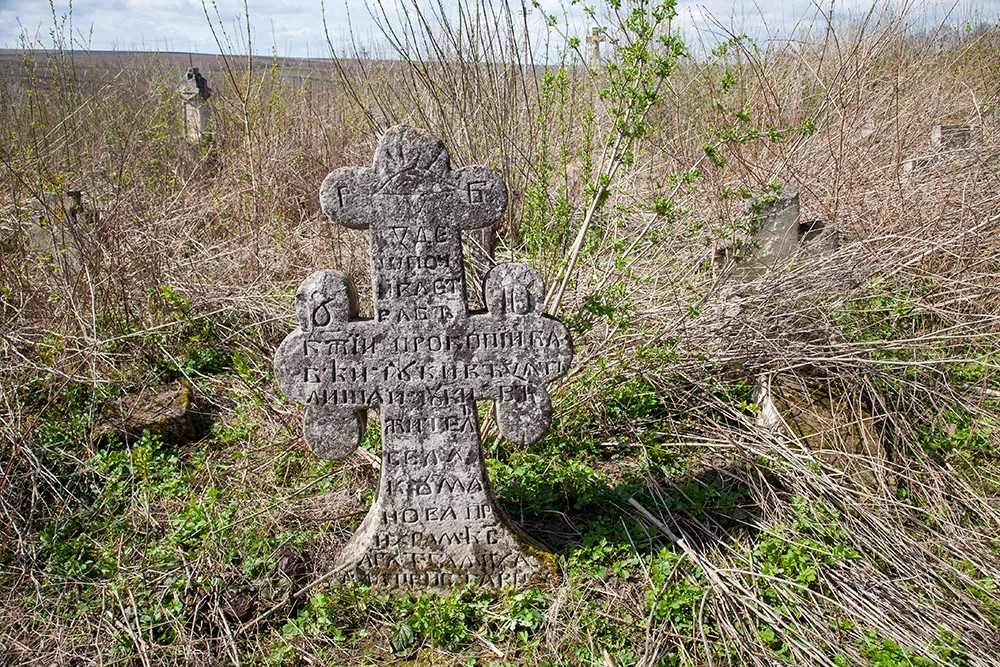
Among the finds worth singling out is a gravestone, probably from the first half of the 19th century, in the form of a six-armed cross, which is quite rare in this part of Podillia. Unfortunately the epitaph is badly damaged and nothing more can be said about this gravestone.
This type of cross is extremely rare in this part of Podillia
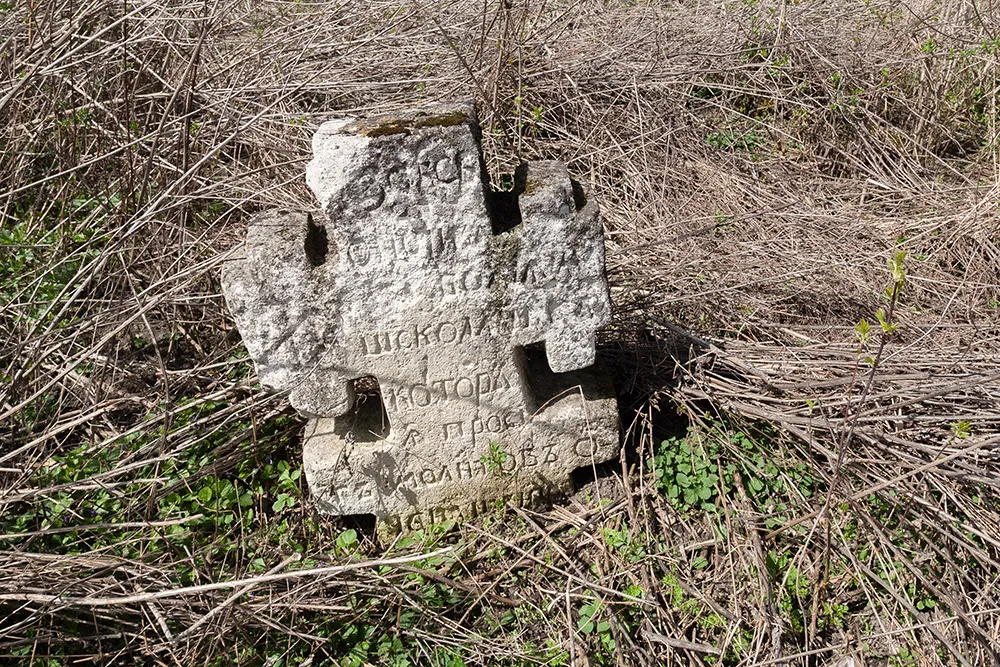
The most interesting, however, proved to be two gravestones standing side by side, set on the graves of children aged 5 and 6. All of them are dated 1877. The children probably died at the same time, either in an accident (a fire) or from an infectious disease. These gravestones were found by project participant Valentyn Nyshchyi.
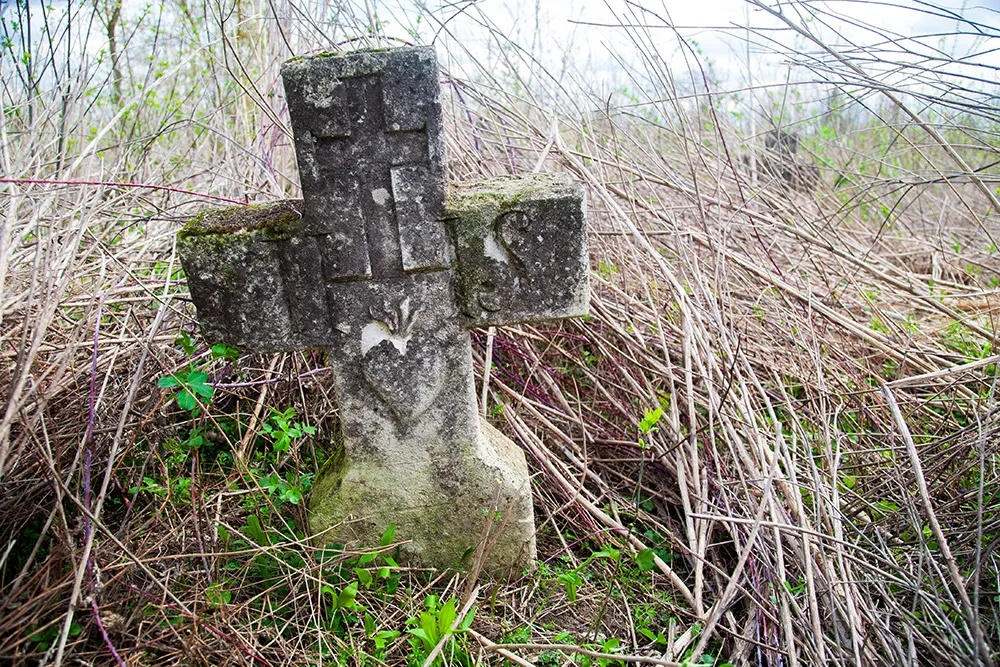
A cross with a Catholic christogram…
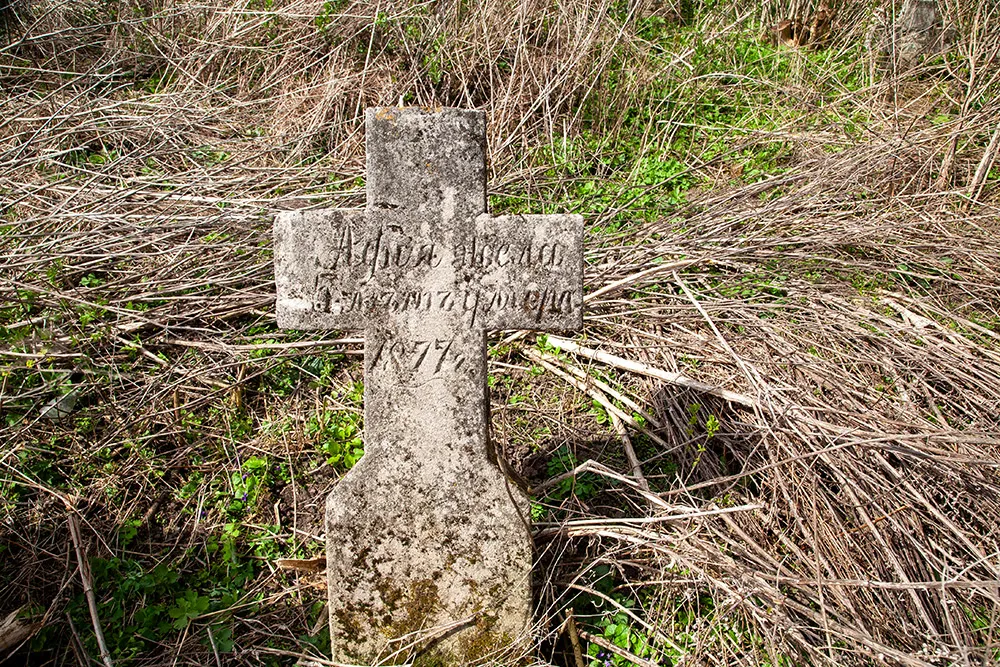
…and a Cyrillic (Orthodox) epitaph
These gravestones are interesting because typical Roman Catholic crosses with the “IHS” christogram were used as blanks.
According to Oleh Fedorov, head of the Department of Culture, Ethnic Groups, Religions and Tourism of the Horodok City Council and an active participant in the project, the reason for using “Polish” crosses here may be quite straightforward:
“In those days, blanks for gravestones were carted around the villages on wagons by so-called ‘cross-carriers’,” says Mr Fedorov. “The ‘cross-carriers’ took the output of master stonecutters on commission and then sold it either for money or in exchange for grain. The convoys of ‘cross-carriers’ carried gravestones for every occasion. Even Jewish matzevot. Probably, by the time they reached Kumaniv, all the ‘Orthodox’ or ‘undefined’ crosses had been sold, and only the openly Catholic ones were left. So those were what the parents or relatives of these children bought.”
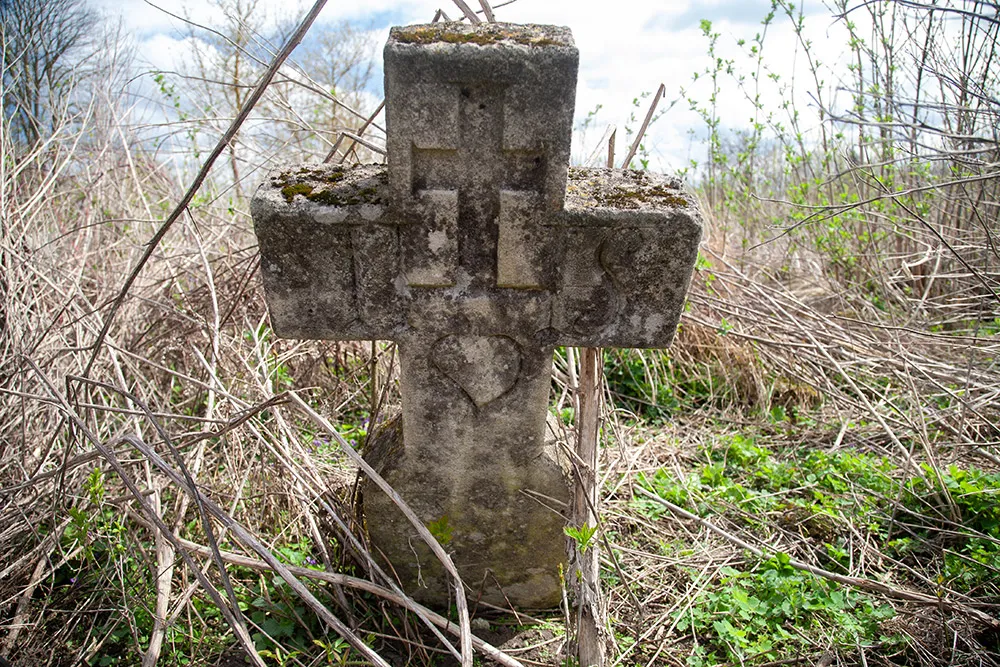
Another cross with textbook Catholic decoration
It is worth noting that Roman Catholics (Poles), too, did not shun typical Orthodox (Ukrainian) gravestones. In particular, in the lapidarium at the Sanctuary of Our Lady of Letychiv one can see typical Ukrainian crosses (the Saviour is nailed to the cross with 4 nails there, not 3 as in the Catholic canon), but with epitaphs in Polish using Roman Catholic symbols.
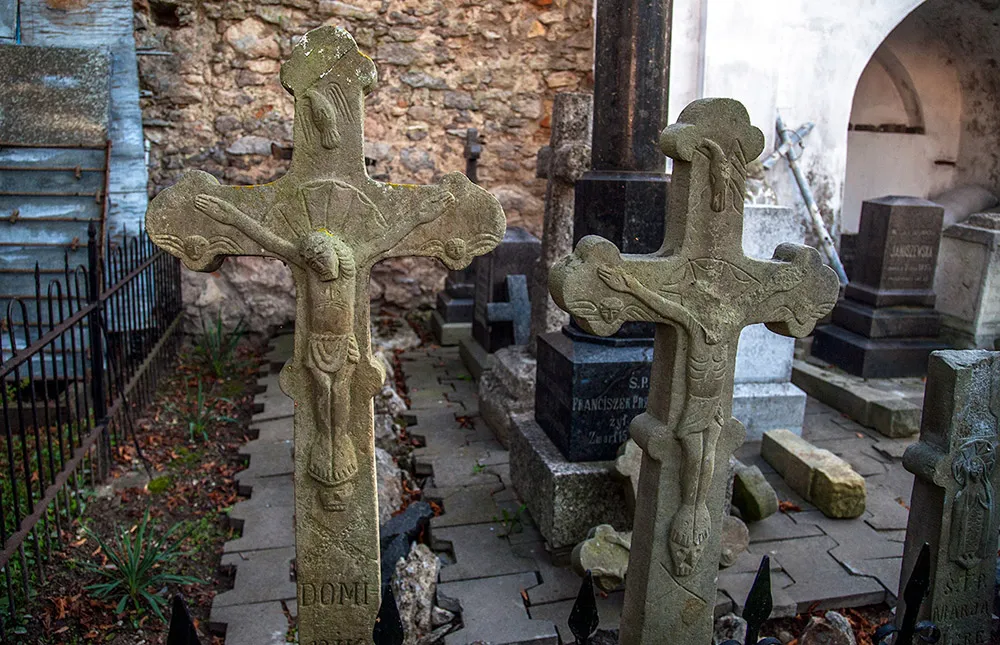
“Ukrainian” crosses from Letychiv
On the whole, it is a vivid example of the coexistence of different national communities in multicultural Podillia.
The most interesting and, without exaggeration, sensational discovery was made in the neighbouring village of Andriivka. But about that later. There are many historical puzzles here that still have to be worked out.


