

Kotelva

· 2 min read
The settlement of Kotelva arose in the 16th century. Its appearance was linked to the Kotelva fortress, built to defend the eastern borders of the Polish–Lithuanian Commonwealth. The first official mention of the settlement dates from 1582, and from the first half of the 17th century Kotelva was a significant Cossack town which, from the uprisings of 1638, held a prominent place in the Cossack regimental system; after the Khmelnytsky Uprising, Kotelva became a company-level town.
From the beginning of the 18th century two Cossack companies were stationed in Kotelva, and most of the population belonged to the Cossack estate. Thus in 1732, of the 3,877 men living in Kotelva, 1,178 were Cossacks and 2,400 were auxiliaries (pidpomichnyky). Auxiliaries were also Cossacks, but poor ones, unable to perform military service at their own expense. They were deprived of some Cossack privileges and equated with state peasants, but had considerably fewer obligations than peasants.
In the second half of the 18th century, chumak trading became popular on the Left Bank. Most auxiliaries abandoned farming and became chumaks, and Kotelva turned into one of the main chumak centres of Ukraine.
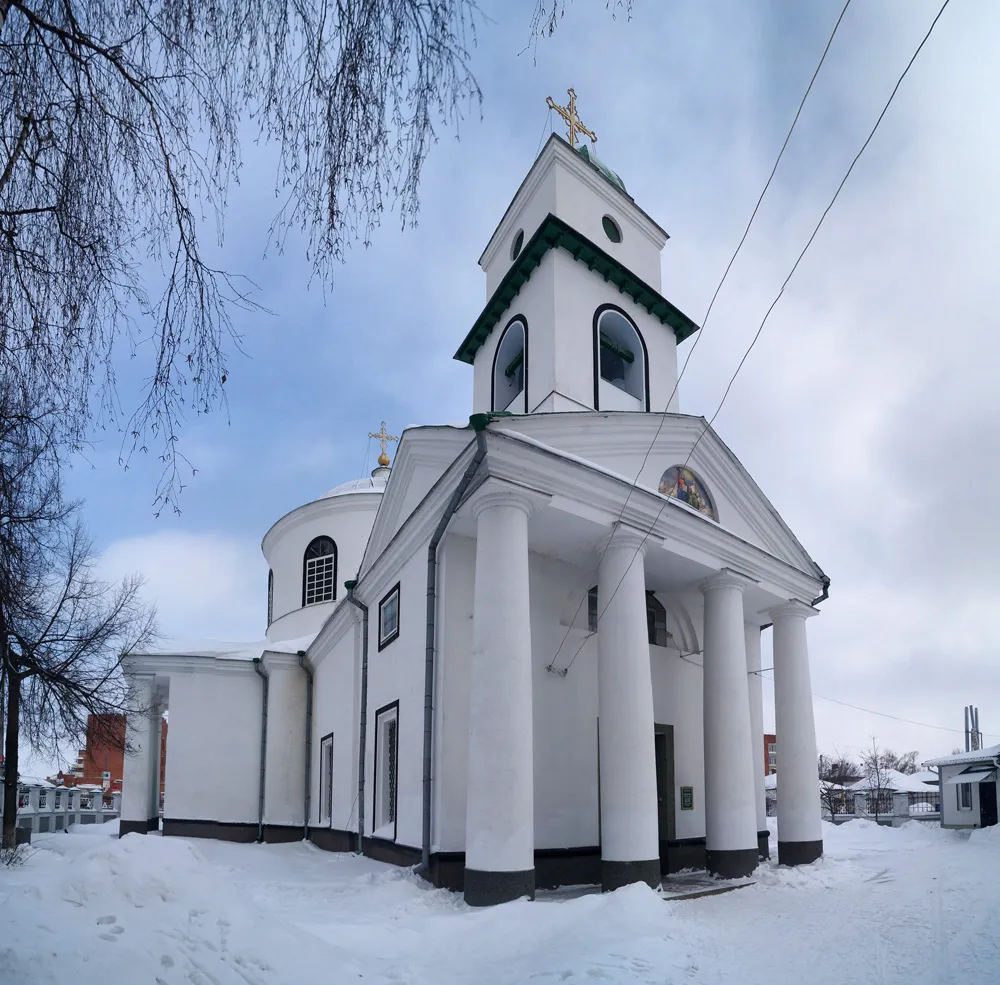
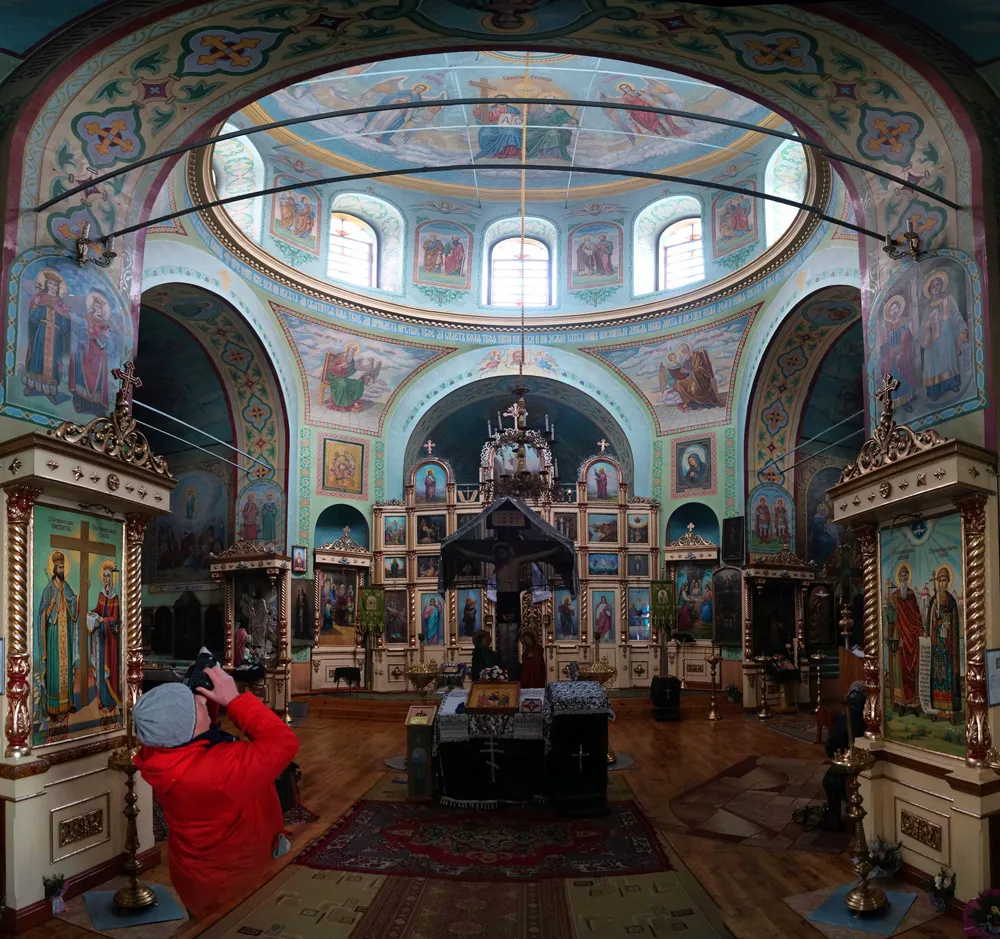
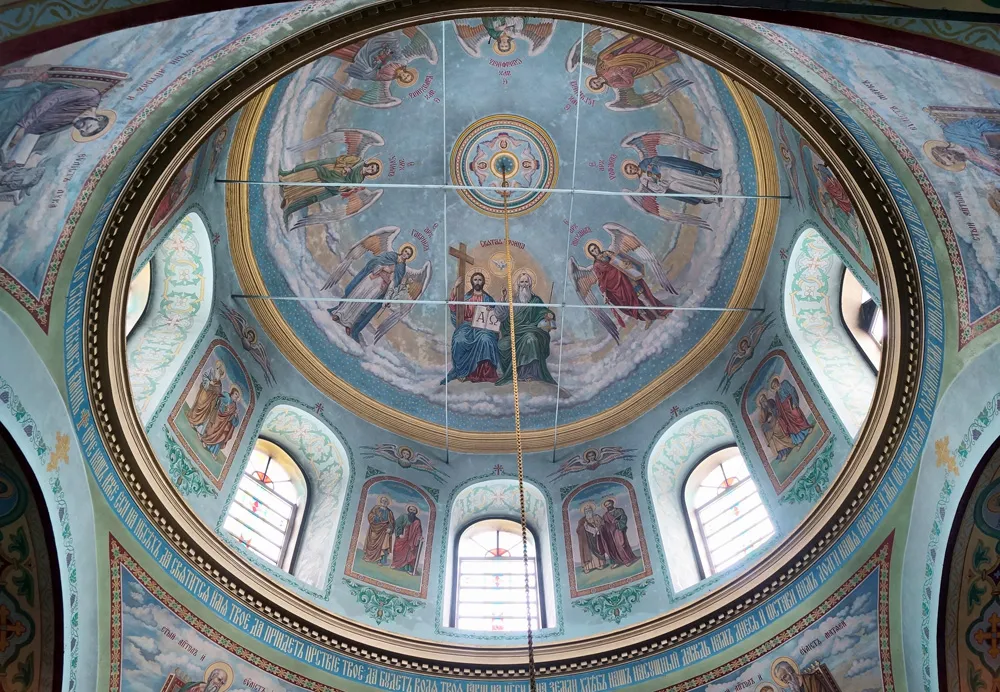
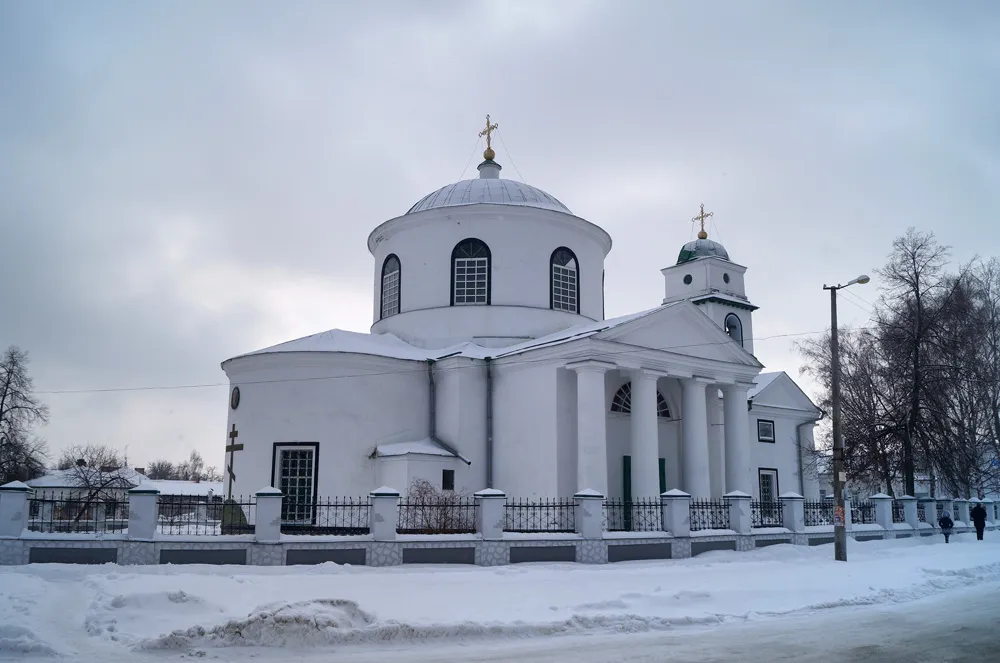
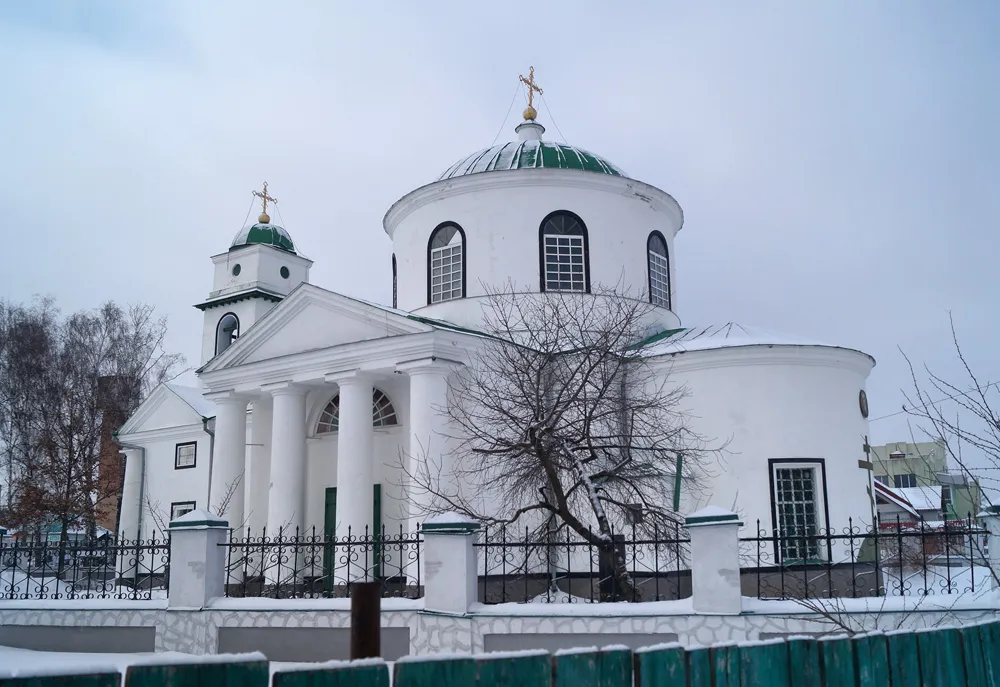
In 1812 a village school appeared in Kotelva. That same year the masonry Trinity Church was completed, and it has survived to our time. In total, in the 19th century Kotelva had 7 Orthodox churches. Crafts developed in the town, and it had a weekly bazaar and four annual fairs.
The only architectural monument in Kotelva is considered to be the Trinity Church already mentioned. Its construction began in 1809 and finished in 1812. In 1838 a bell tower was added to the church. Architecturally it is mature Classicism: a church with a single dome, a semicircular apse and three four-column porticoes.
From 1892 there was a parish school at the Trinity Church, and its building has survived. In 1909, 110 children studied there.
The Bolsheviks closed the church. From 1933 it housed a warehouse of the “Zahotzerno” grain procurement office. During the occupation the Germans reopened the church, and since then the Trinity Church has been active.
Text and photos by Roman Malenkov.


