

Soviet memorial on Slava Hill in Lviv, as expected, turns out to be a sham
In Lviv, during work to study and relocate Soviet burials from Slava Hill, it was found that the gravestones do not correspond to the burials. This was stated at a briefing by Sviatoslav Sheremeta, director of the Dolia Memorial and Search Complex, according to a correspondent of Ukrinform.
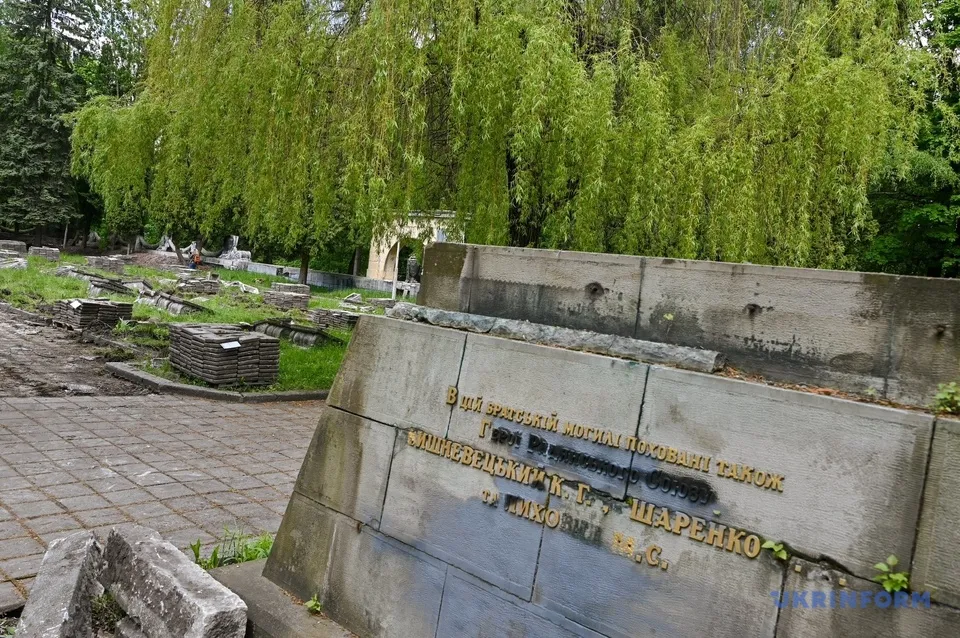
Photo: Ukrinform
“When we began surveying the planned area where the graves should be, we did not find them at first. After further research it turned out that the number of graves matches: there are eight burials (in the first row – ed.). But they are arranged in a different order from the gravestones,” Sheremeta noted.
According to him, the burials are arranged parallel to the alleys, not perpendicular to them, as the memorial was laid out.
“This indicates that after the Second World War the fallen soldiers of the Soviet army were buried, and then designers came who had been tasked by the top leadership of the USSR and the top leadership of the Communist Party locally to create an ideological place for propaganda of the Soviet totalitarian regime. No one cared about the fate or memory of the soldiers. A mighty memorial had to be shown,” added the director of the Memorial and Search Complex.
He remarked that because of this it is extremely difficult to establish who exactly is buried where.
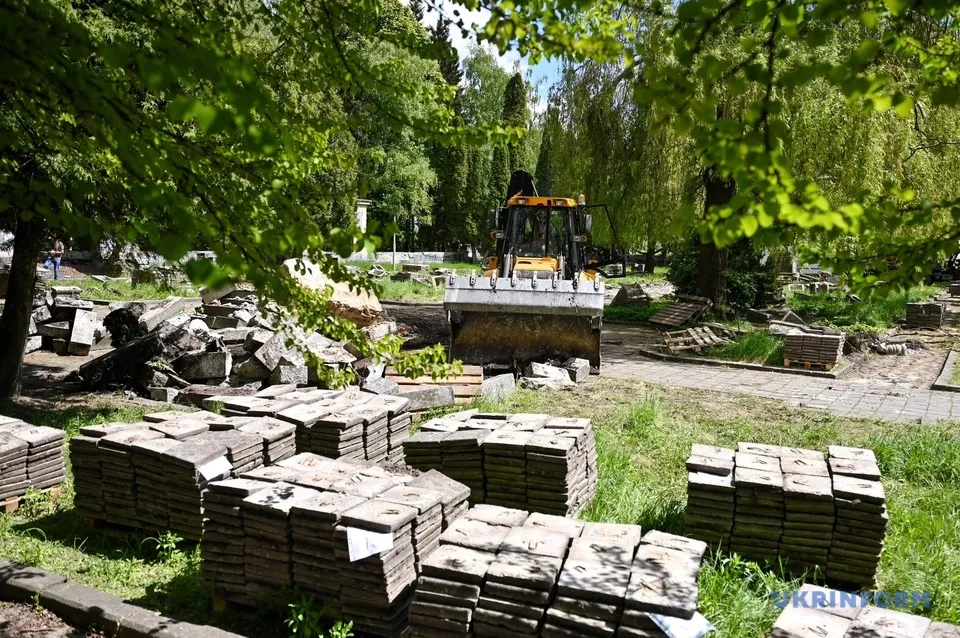
Photo: Ukrinform
According to Yevhen Boiko, Manager of Affairs of the Executive Committee of the Lviv City Council, 80% of the most difficult work on relocating the burials has already been completed.
“All the monuments and grave slabs have been removed from this area. The entrance group remains. It will take the most time, because expensive materials were used there, and we will dismantle them element by element. Some of the elements will be moved to our Territory of Terror museum,” he said.
As previously reported by “Ukraine Incognita”, in 2023 the Government decided to remove from the State Register of Immovable Monuments of Cultural Heritage of National Significance the monuments to the Russian writer Oleksandr Pushkin, the Bolshevik leader Mykola Shchors, and other Russian and Soviet figures. The corresponding resolution was initiated and drafted by the Ministry of Culture and Information Policy of Ukraine.


