

Russian strike drones damage the Potemkin Palace in Dnipro
On the evening of 26 March, during a massive drone attack on Dnipro, the Russian aggressors severely damaged the city’s oldest monument, the Potemkin Palace. The monument was hit despite the fact that it is a testimony to the imperial past. The city authorities declared that the palace will be restored and given the name of the Ukrainian hetman Petro Sahaidachny. This was reported by the mayor of Dnipro, Borys Filatov.
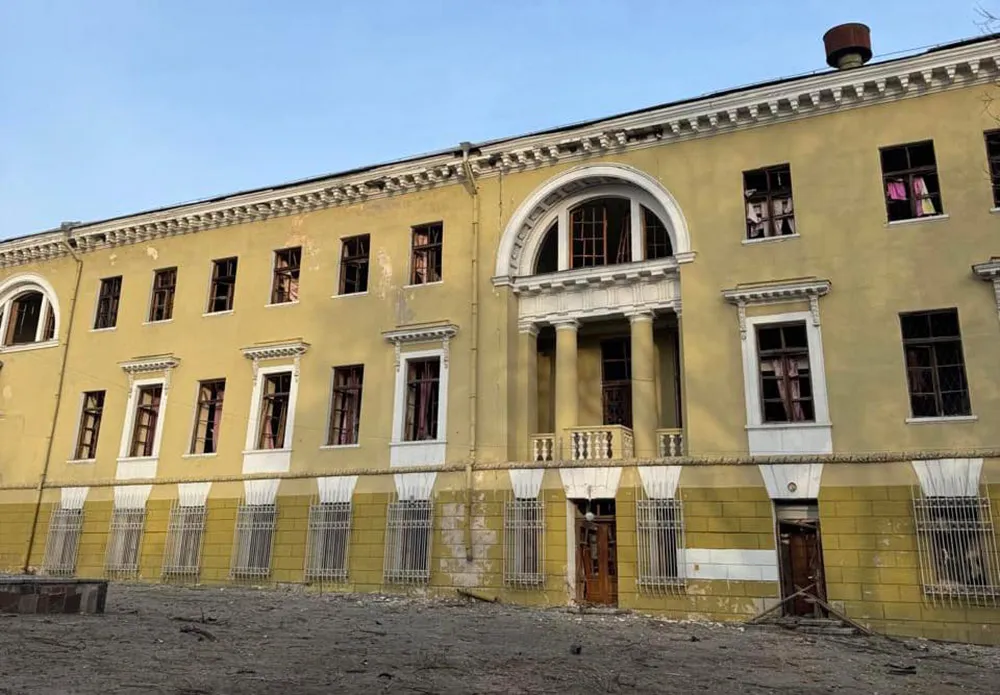
The damaged palace…
“What kind of people must one be to shoot at the very centre of the city, at dense residential buildings, and in the process to wreck the historic building of the palace of Prince Potemkin, which he built for Catherine II? A building that is a symbol of imperial might,” says Borys Filatov’s post. He wrote the post in Russian, noting that this was deliberate, so that Russians would read it.
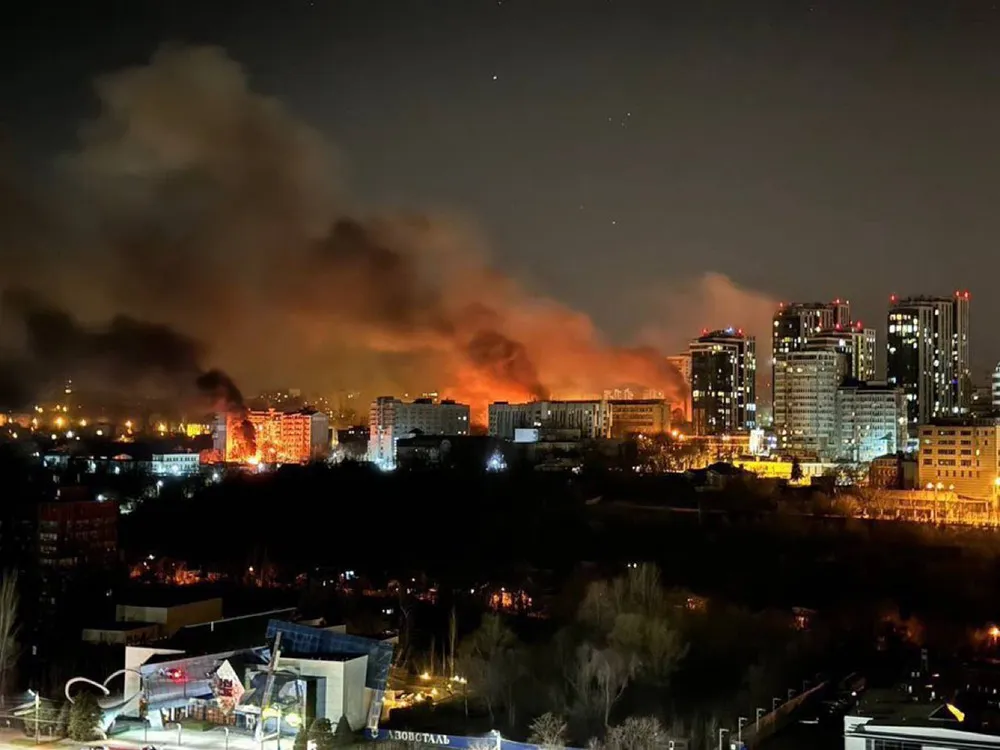
Dnipro after the shelling
The mayor of Dnipro also added that the restored palace will be renamed in honour of the Ukrainian hetman Petro Sahaidachny, “who burned Moscow”.
Background:
The Potemkin Palace was built in the Classicist style with a six-column portico and a huge main façade about 121 metres long. The palace stands in the central Taras Shevchenko Park, where the garden of the retired Zaporozhian osaul Lazar Hloba once was.
In its day His Serene Highness Prince Potemkin bought this land for 3,000 roubles to build a palace that was to become the residence of the governor-general of the Novorossiya Governorate.
Prince Potemkin himself never lived in the palace: he died in 1791, before construction was completed.
After his death the palace gradually fell into decline, and only at the end of the 1830s did Emperor Nicholas I give it to the local nobility, who carried out a partial restoration of the building.
Today the building houses the Students’ Palace of Oles Honchar Dnipro National University, the gallery “Hetmans of Ukraine” and the Museum of Dnipropetrovsk National University.


