Hot-rolled or cold-formed channel: what is the difference and which to choose
The question of choosing a channel section arises in almost every project where a structure must withstand a serious load or work in harsh operating conditions. At first glance both types of rolled steel look similar: the same U-shaped profile, the same flanges and web. But behind the outward similarity lie different production technologies, different behaviour of the metal under load and, as a result, different suitability for different uses. It is worth understanding these differences before the purchase specification is drawn up; otherwise you may either overpay for excess strength or end up with a structure that cannot withstand the design load.
How the profile is made
A hot-rolled steel channel is produced by rolling a billet heated to over a thousand degrees through a system of rollers, gradually forming the profile. In this state the metal is plastic, so after cooling the structure is uniform, without the internal stresses typical of cold deformation. The thickness of the web and flanges in such a profile passes smoothly from one to the other, and the angle between them is formed directly during rolling.
A cold-formed channel is made differently: a ready-made steel sheet of a given thickness is bent into the required shape on a roll-forming mill at room temperature. Here the flanges and web have the same thickness across the entire section, and the bend corners are fairly sharp, with a small radius of curvature. It is precisely this technological difference that determines all the further differences in characteristics.
Mechanical properties: where the metal is stronger
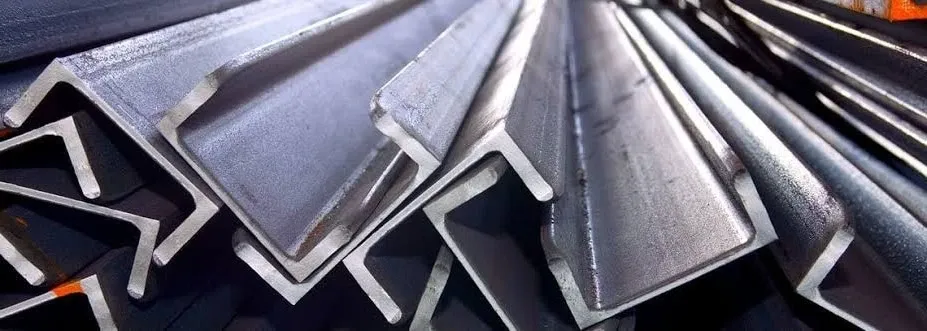
In a hot-rolled profile the web is traditionally thicker than the flanges, which gives the structure natural stiffness in the vertical plane. The inner corners are rounded and smooth, so stress concentration at the transitions is minimal. This is especially important where the element works in bending or under variable cyclic loading: floor beams, frame elements, load-bearing structures of bridge crossings.
A cold-formed channel, despite the equal thickness of web and flanges, often wins on weight at the same profile height: less metal is used, and torsional stiffness is in some cases even higher thanks to the geometry of the sharp corners. However, the abrupt transition between web and flange creates a zone of increased stress concentration, which makes such a profile less suitable for impact and cyclic loads. In static structures, where there is no vibration or variable load, this feature is practically unnoticeable.
Dimensional accuracy and appearance
Roll-forming technology gives considerably better geometric accuracy. The tolerances on flange width and profile height of a cold-formed channel are tighter, the surface is smoother, and deviations from straightness are minimal. For installation work where precise fitting of elements matters, such as frames of ventilation systems or light metal structures, this advantage is felt at once: less adjustment on site and less waste when cutting.
Hot-rolled steel by definition has wider tolerances, since the metal shrinks as it cools, and this cannot be controlled with absolute precision. For load-bearing structures this is rarely critical, because the calculation already includes a certain margin, but when buying a batch it is worth checking the certificate and the actual measurements rather than relying solely on the markings.
Operating conditions and durability
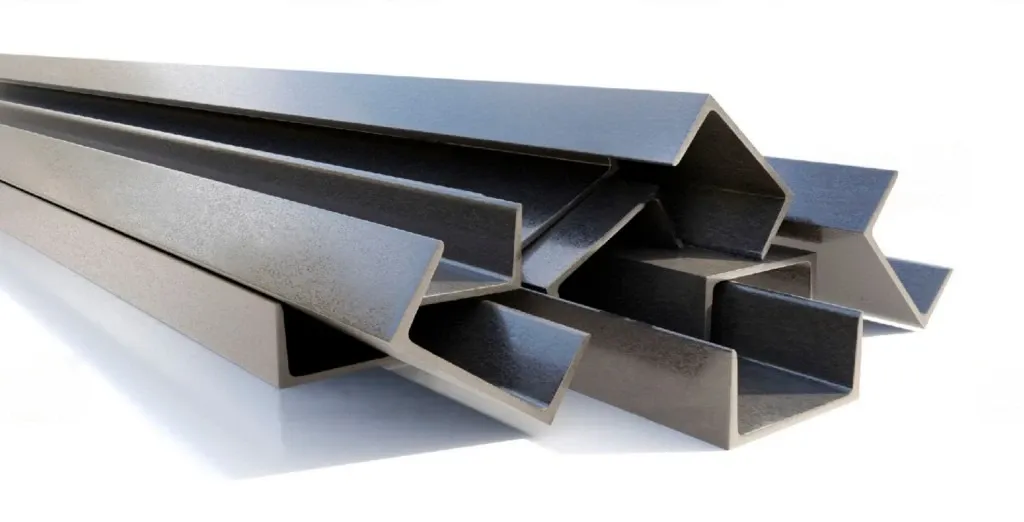
Here the choice depends on where and for how long the structure will work. A hot-rolled channel better withstands low temperatures, impact loads, vibration and outdoor use under variable snow or wind loads. The structure of the metal after hot rolling is less prone to brittle fracture in frost, which is critical for structures in northern regions or industrial facilities with impact loads: overpasses, crane runways, bridge elements.
A cold-formed profile suits structures with mainly static loads and controlled operating conditions: interior frames, light floors, facade system elements, shelving equipment, ventilation ducts. In heated rooms or under a canopy, where there are no temperature swings or impacts, the difference in durability between the two types practically disappears.
Cost and purchasing logistics
A cold-formed channel usually turns out cheaper at comparable sizes because less metal is used per unit of length and the production chain is simpler. For projects with a limited budget where the load is not critical, this is a noticeable saving on large purchase volumes.
A hot-rolled profile costs more, but this difference is often offset by the structure’s longer service life and the absence of any need for additional reinforcement of joints. When purchasing, it is worth counting not the price per tonne but the cost of solving a specific engineering problem: sometimes a cold-formed profile that is cheaper on paper requires a larger section or additional stiffening ribs, which in the end cancels out the saving.
Practical guidelines for choosing
If the structure carries a constant static load indoors or under a controlled canopy, a cold-formed channel does the job and saves budget. If it involves open sites, impact loads, vibration, low temperatures or long service without the possibility of regular inspection, the advantage lies unquestionably with hot-rolled steel.
Joints deserve separate attention: welds on a hot-rolled profile behave more predictably because of the uniform structure of the metal in the heat-affected zone. On a cold-formed profile, welding near a bend requires more careful control, since the metal in this zone has already undergone cold deformation and has a different level of internal stress.
The final decision is always tied to the design load, operating conditions and project budget. A sound purchase begins not with comparing prices per tonne but with a clear understanding of what engineering task a particular profile must solve at a particular site.