

“Scythian Gold” is a historic victory for Ukraine and the beginning of the return of valuables stolen by Russia, says acting Minister of Culture

· 3 min read
According to the official website of the Ministry of Culture and Information Policy, on 28 November individual artefacts from the collection “Crimea: Gold and Secrets of the Black Sea”, were presented in the Treasury of the National Museum of the History of Ukraine. They returned to Ukraine from the Netherlands.
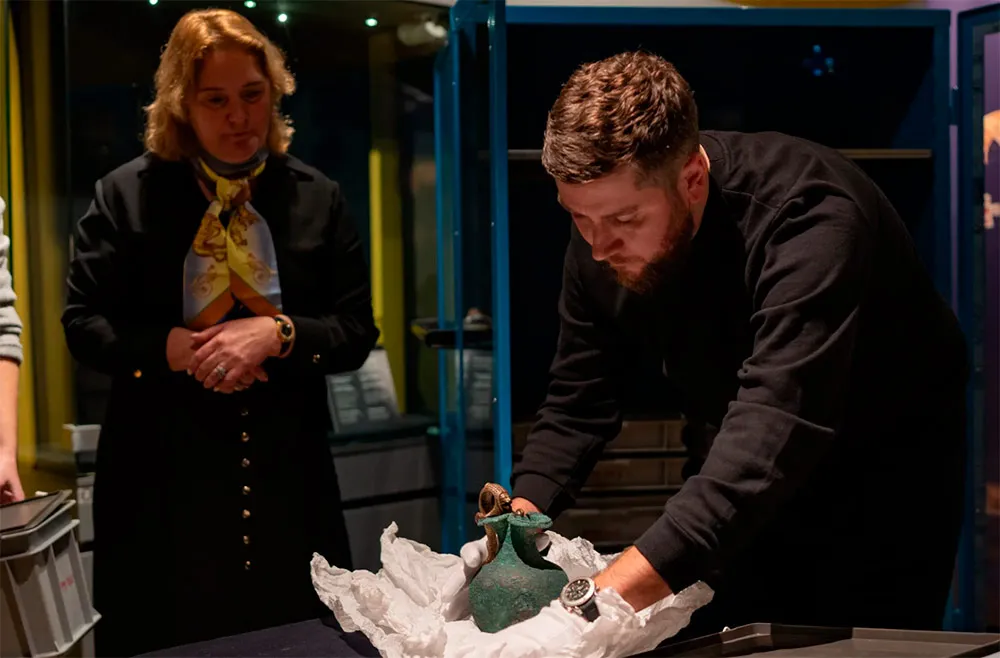
Photo: Press service of the Ministry of Culture and Information Policy
The presentation was attended by Rostyslav Karandieiev, acting Minister of Culture and Information Policy of Ukraine; Emine Dzhaparova, First Deputy Minister of Foreign Affairs of Ukraine; Iryna Mudra, Deputy Minister of Justice of Ukraine; and Jennes de Mol, Ambassador Extraordinary and Plenipotentiary of the Kingdom of the Netherlands to Ukraine.
“The ‘Scythian Gold’ is the most valuable Ukrainian collection that the Russians never managed to appropriate. The collection has already been cleared through customs in Ukraine. Our diplomats, lawyers, cultural figures, law enforcement officers and special services carried out enormous work to return the valuables. The 565 items that have returned will be added to the collection. We believe that after the return of Crimea the artefacts will go home. We are grateful to the world community, which stands in solidarity with Ukraine. I thank everyone involved in this mission of returning Ukrainian culture. I thank the Ministry of Foreign Affairs, the Ministry of Justice, the Embassy of the Kingdom of the Netherlands in Ukraine, the SBU, and everyone who was in the single team that worked for the result. The return of a collection that rightfully belongs to Ukraine should become the beginning of the return of the artefacts stolen by Russia and part of the future reparations from the aggressor country,” said Rostyslav Karandieiev.
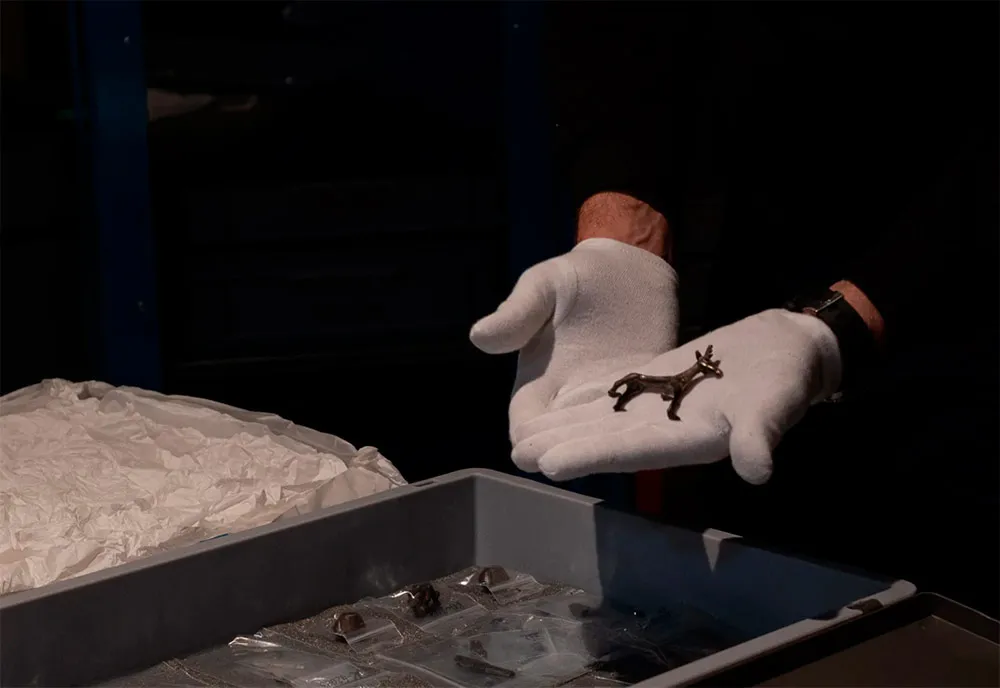
Photo: Press service of the Ministry of Culture and Information Policy
The collection consists of valuables from four Crimean museums: the Central Museum of Tavrida, the Kerch Historical and Cultural Reserve, the National Reserve “Tauric Chersonesos” and the Bakhchysarai Historical and Cultural Reserve.
“I congratulate us all on this victory. It is an extraordinary honour for me, because I took part in all the court hearings. The Ukrainian delegation was strongly represented by museum professionals. They tried to accuse us of politicising the process. In the end the court’s decision was on Ukraine’s side. This case teaches us one thing: if aggression is not stopped, it will expand in space. Justice must be restored, and the Russian Federation must be punished,” stressed Emine Dzhaparova.
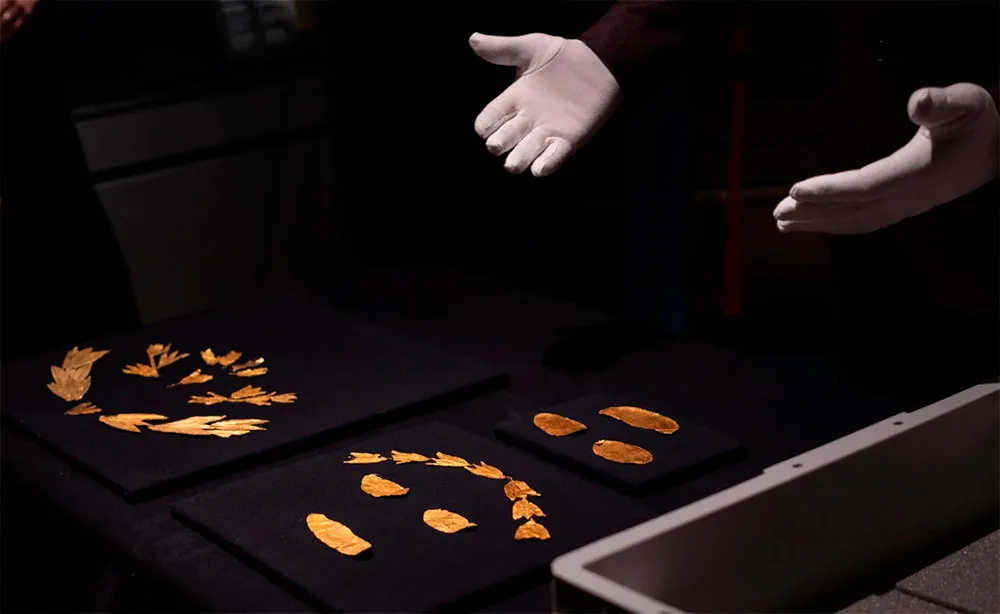
Photo: Press service of the Ministry of Culture and Information Policy
The legal battles over the valuables from the four Crimean museums lasted almost 10 years. Until the de-occupation of Crimea, the “Scythian Gold” will be kept temporarily in the Museum’s Treasury on the grounds of the Kyiv Pechersk Lavra.
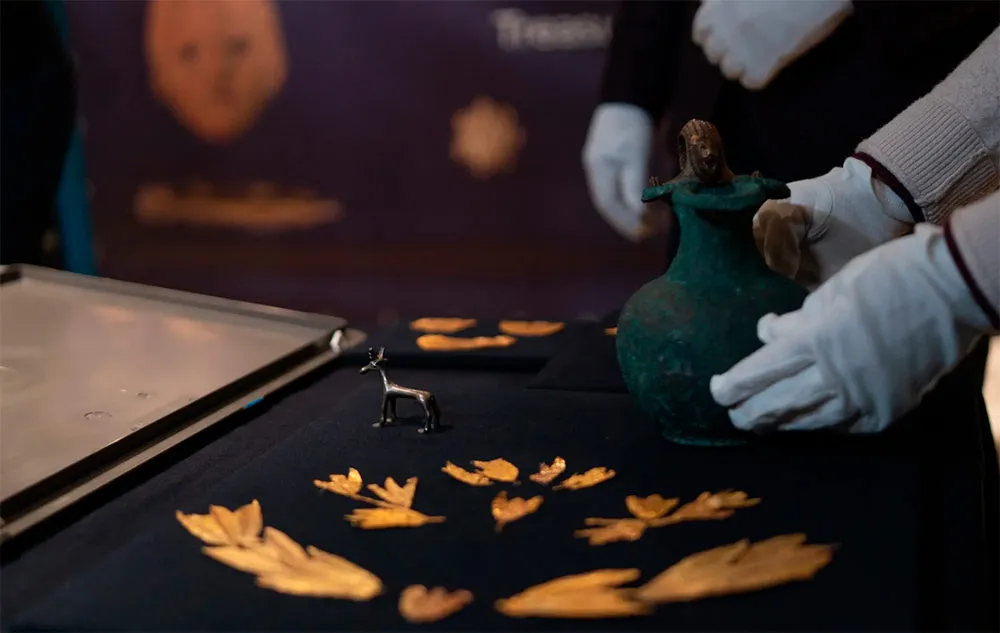
Photo: Press service of the Ministry of Culture and Information Policy
“National cultural heritage has returned to its owner. Since 2014 Ukraine has been holding the defence front and also advancing on the legal front. This case, this decision, is landmark in terms of establishing legal facts. Despite the absurdity of Russia’s arguments, it was established that Russia wanted to prove that Ukraine’s sovereignty does not extend to the territory of Ukraine. As a result we have a decision that shows that Crimea is Ukraine. Thanks to the joint work of all the bodies, we achieved a decision in our favour. Our sincere gratitude to the Netherlands for its consistent support of Ukraine,” noted Iryna Mudra.
For his part, Jennes de Mol, Ambassador of the Kingdom of the Netherlands to Ukraine, noted that the return of the collection is a sign of the independence of the Dutch judicial system, which has passed long trials:
“Ukraine has a legitimate interest in protecting its cultural heritage, so the Amsterdam District Court applied the legal norms of the Hague Convention and the UNESCO Convention. And here we are. The Crimean treasures have been returned to Ukraine without hindrance. I hope that in the foreseeable future the artefacts will return to Ukrainian Crimea.”
Rostyslav Karandieiev, together with an authorised representative of the Museum, opened one of the boxes and showed some of the artefacts. Soon the collection will be fully exhibited.


