

Svarkove

· 4 min read
The village of Svarkove is located in Hlukhiv district of the Sumy region, on the bank of the river Kleven.
As to the origin of the village’s name, there are versions that it was named either because of the battles during Bolotnikov’s uprisings and the war with the Swedes, which the people called “svarky” (quarrels), or because of constant clashes between the residents of the two ends of the village. To my mind, such explanations are far-fetched: first the name is taken, and then attempts are made to explain it. At the very least the question arises which battles exactly gave rise to the name, if the difference between Bolotnikov and the Swedes is more than 100 years. My scepticism and distrust of such explanations is also fuelled by the fact that once I was told about the origin of the name of the town of Kobeliaky in the Poltava region. Supposedly it was named so because many mares (kobyly) were bred in that area. Why then KobEliaky and not KobYliaky? And were male foals destroyed either at once or on reaching a certain age? Some mare-ish kingdom of the Amazons. But this is all a lyrical digression; let us return to the village of Svarkove.
The village was founded by the nobleman O. Pisochynskyi. Strangely, the discrepancy in the founding date is considerable: various sources give both 1513 and 1630, but all name O. Pisochynskyi as the founder. Probably it was still 1630, if we accept that there was such a nobleman, Oleksandr Pisochynskyi, who in those years was starost of Novhorod-Siverskyi and owned quite a few estates, including in the Hlukhiv area.
In the period of the Hetmanate, in 1718, Hetman Ivan Skoropadskyi gave the village of Svarkove to his wife’s nephew, the well-known historian and memoirist, general treasurer of the military chancellery Yakiv Andriiovych Markovych. From then until 1918 the Markovyches owned the village. Yakiv Andriiovych and his grandsons Oleksandr Mykhailovych and Yakiv Mykhailovych are the best-known owners of Svarkove.
Yakiv Andriiovych Markovych (1696–1779), although he was put forward for the hetmancy and did not get it, was still a confidant of more than one hetman, and even became related to one. His first wife was Olena Pavlivna Polubotok, daughter of Hetman Pavlo Polubotok and niece of Hetman Ivan Samoilovych.
There is no historical information about the father of Oleksandr and Yakiv, Mykhailo, only the years of his life (1752–1829) and that he had 4 sons and 5 daughters, but two of his sons left a memory behind them.
Both were born in the village, and both were well-known historians and ethnographers.
Yakiv Markovych (1776–1804) wrote “Notes on Little Russia” (“Zapiski o Malorossii”), in which he described the everyday life, folklore and economy of the Ukrainian people, the structure of the Hetmanate, and the nature and history of Ukraine. It was one of the very first books on the history of Ukraine. For some time he served in the College of Foreign Affairs in St. Petersburg. Unfortunately, in unknown circumstances he took his own life at the age of 28.
Oleksandr Markovych (1790–1865) lived a full life; he wrote “A Description of Little Russia” (unfortunately unpublished), “Historical Sketches of the Town of Hlukhiv” and, as is believed, the “History of the Rus’” (“Istoriia Rusov”); he studied the folk customs and everyday life of the local residents, and even provided both his own descriptions and those of his grandfather, Yakiv Andriiovych, to Mykola Gogol.
The Markovyches kept a large family archive, including a huge diary of the grandfather, which he kept every day for many years.
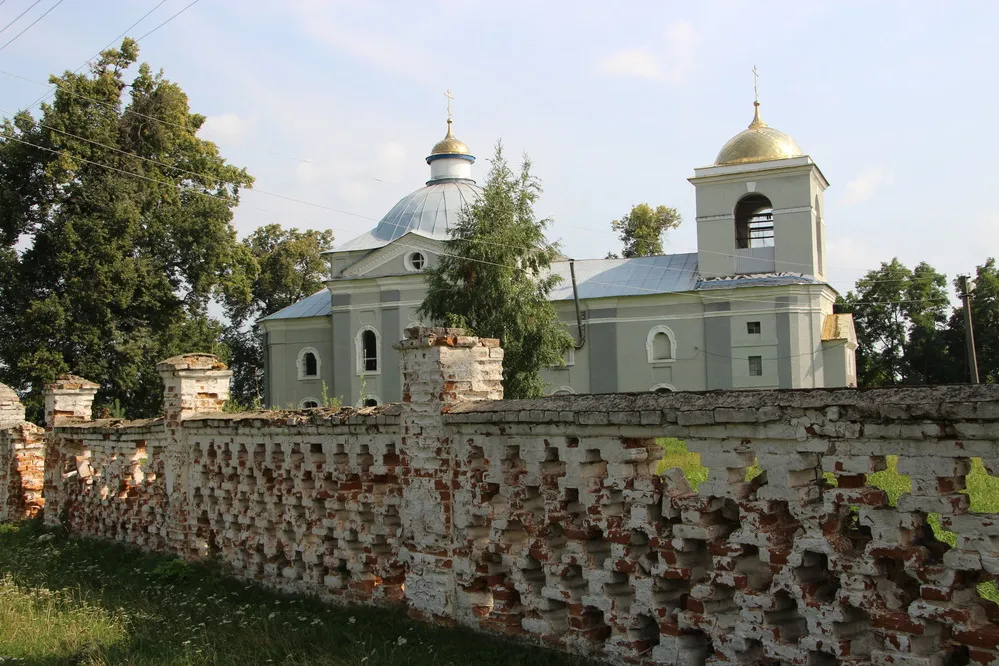
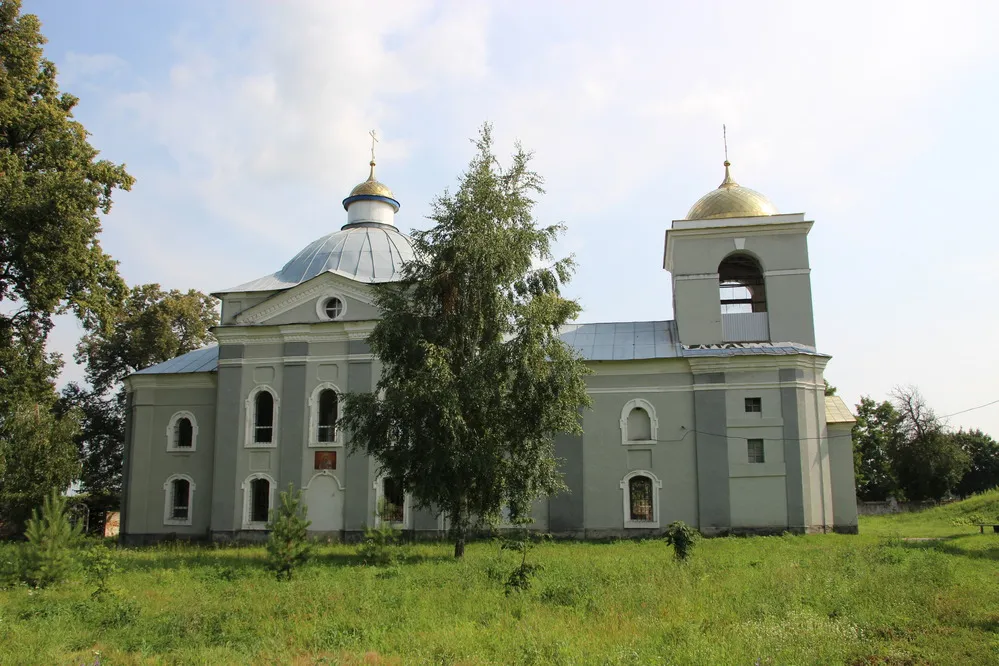
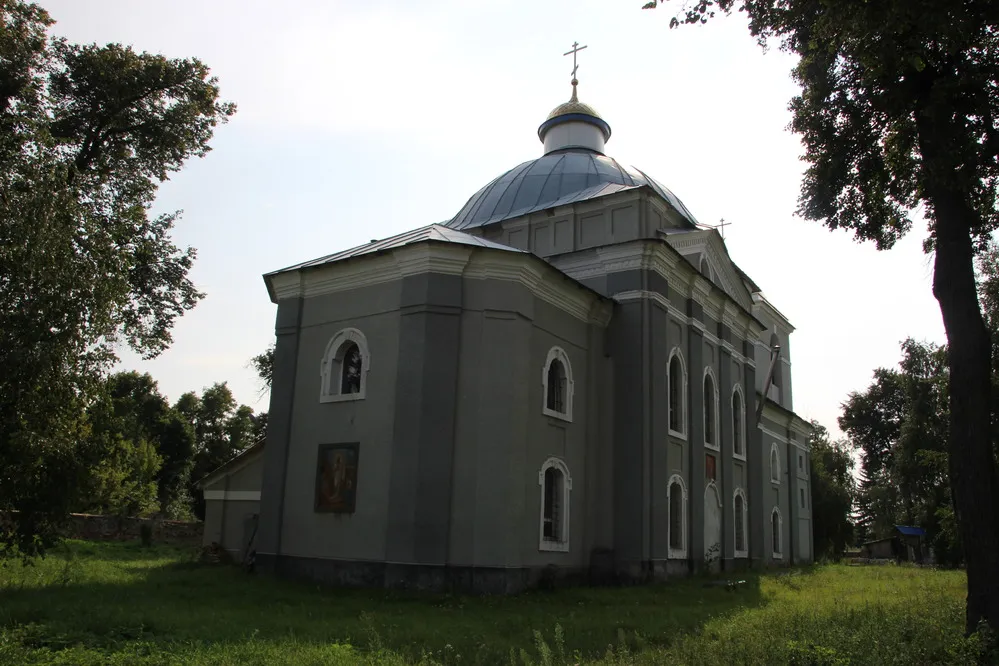
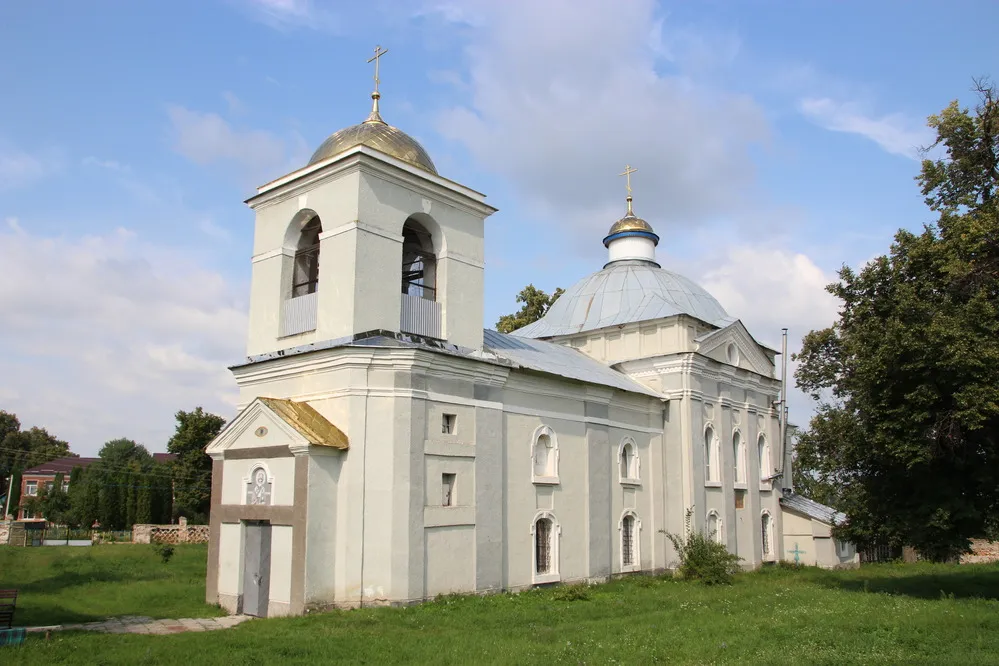
In the very centre of the village stands the masonry St. Nicholas Church, a monument of architecture of national significance.
Construction of the church began in 1743, commissioned and paid for by Yakiv Andriiovych Markovych, the first owner of the village from the Markovych family, and was completed in 1757 (there are also data for 1747). In 1813 the church was repaired at the expense of the then owner of the village, Anastasiia Markovych, and in the 1820s a narthex with a two-tier bell tower, which has four arched openings for bells, was added to it on the western side. The last repair of the church took place in 1998. Around the church, forming a yard, is a pleasant brick fence, probably of the late 19th century, or perhaps older.
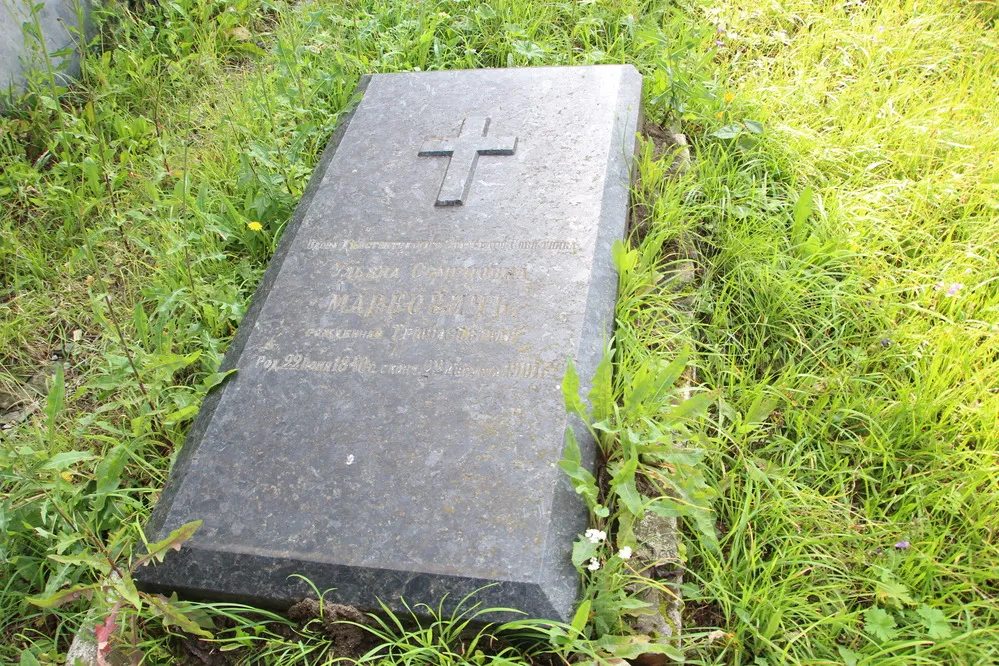
Near the church, marble gravestones have survived of Parmen Andriiovych Markovych, who, as we think, was the son of one of the brothers of the above-mentioned Oleksandr and Yakiv Markovych — Andrii Markovych — and also of his wife Uliana Semenivna Markovych, née Tryfanovska.
To the north of the village of Svarkove is the hydrological natural monument of local significance “Svarky Springs” — several gushing springs.
Text and photos by Ihor Dorozhko, Oleh Hodyna and Maksym Nazarenko.


