

Here the Mother of God “left her footprints”
The Tovtry Ridge is not only a unique mountain formation but also a place with a concentration of remarkable historical monuments. As a reminder, the origin of these low but very picturesque hills is not tectonic but biological. It is a former barrier reef of an ancient Miocene sea, built by a variety of living organisms.
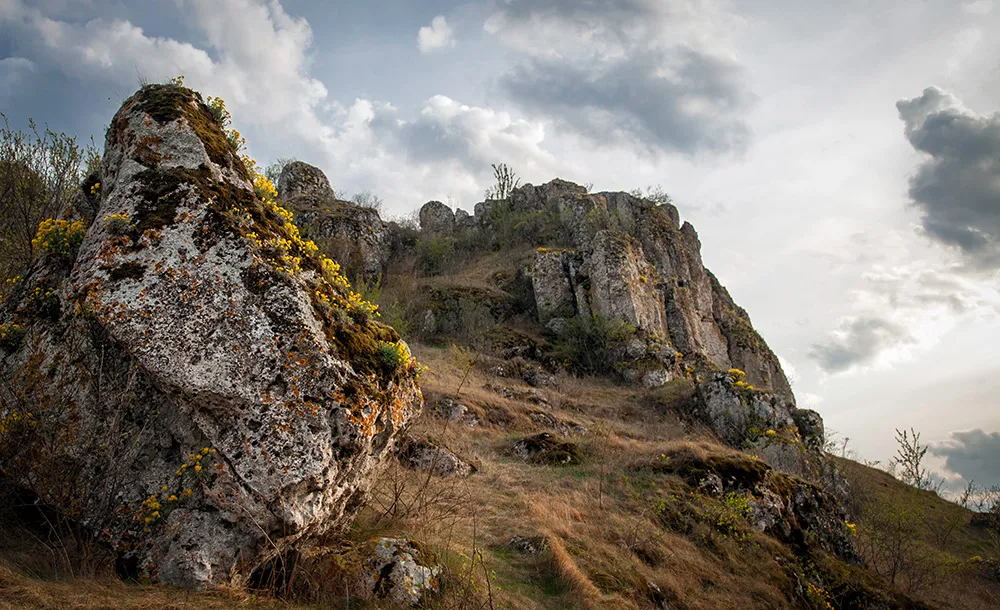
Mount Vysoki Kameni (High Rocks)
Today we have its analogue in the Great Barrier Reef off the coast of Australia. True, the Australian one is made of corals, while the Tovtry were built by other living organisms that, like corals, had calcareous skeletons, accumulated lime, or created limestone structures. First of all, these were bryozoans. Serpulid worms also did a fair share of work, building tube-shaped homes of limestone around their bodies. Stony algae, the lithothamnia, contributed no less. In their cells they actively accumulate lime, so they themselves are hard as stone. Hence the name “stony algae”. Even today lithothamnia create large reefs, for example off the coast of Fiji…
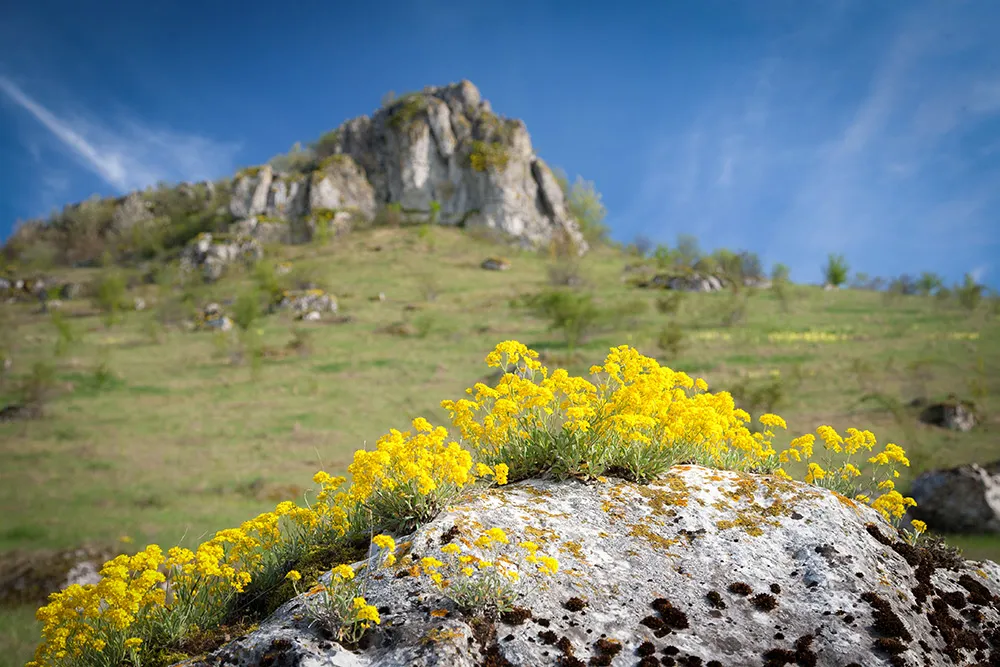
Mount Vysoki Kameni (High Rocks)
The Tovtry are famed for their unique nature. Within the ridge there is the Medobory Nature Reserve and the Podilski Tovtry National Nature Park.
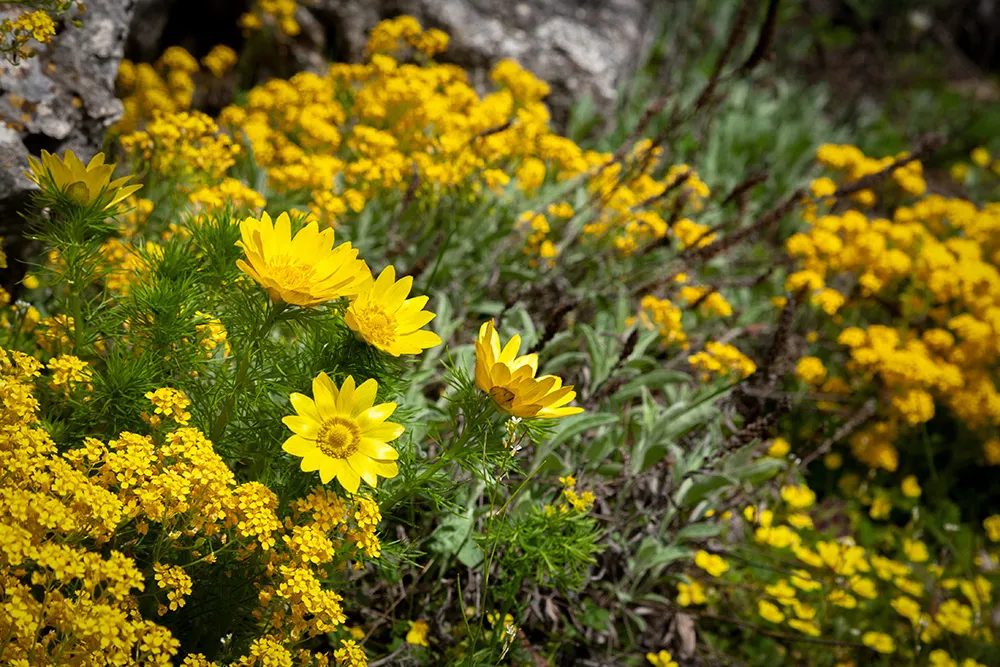
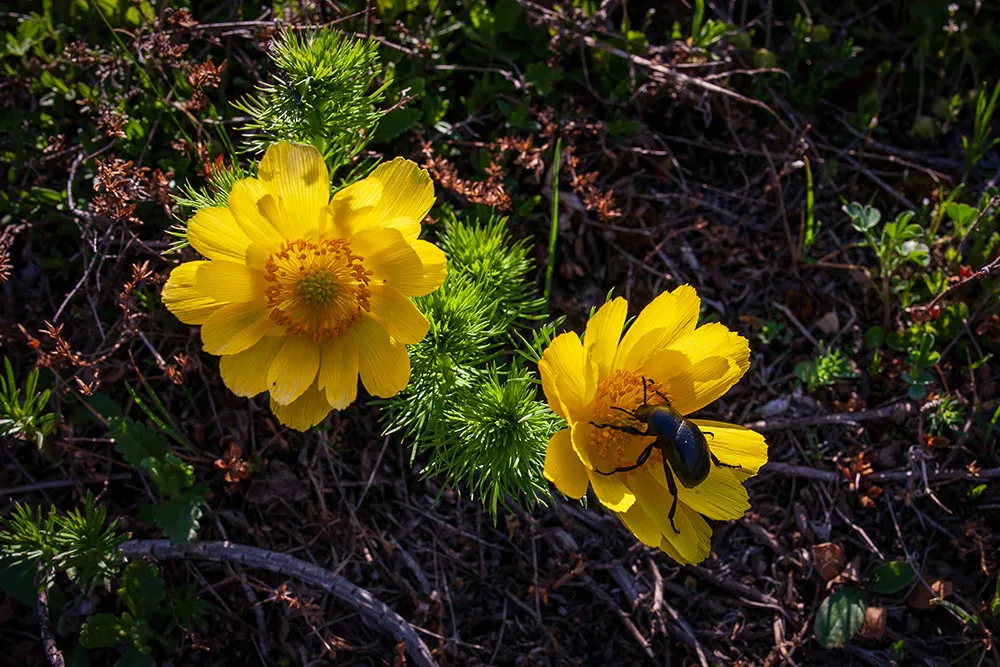
These are the very days when pheasant’s eye blooms in the Tovtry (photo of 21 April 2025)
But the Tovtry are not just an amazing geological and natural monument. There are also many historical relics here, in particular ancient sanctuaries and sacred places.
The reason is clear. In antiquity, everything that stood out sharply from the general relief was at once populated by mighty spirits and deities. And the narrow strip of the Tovtry-Medobory is just what was needed. Imagine the feelings of an ancient person: the Podillian hills, familiar to the eye, suddenly give way to rocks and gigantic boulders, and then, a kilometre or two further on, there are the same ordinary hills again.
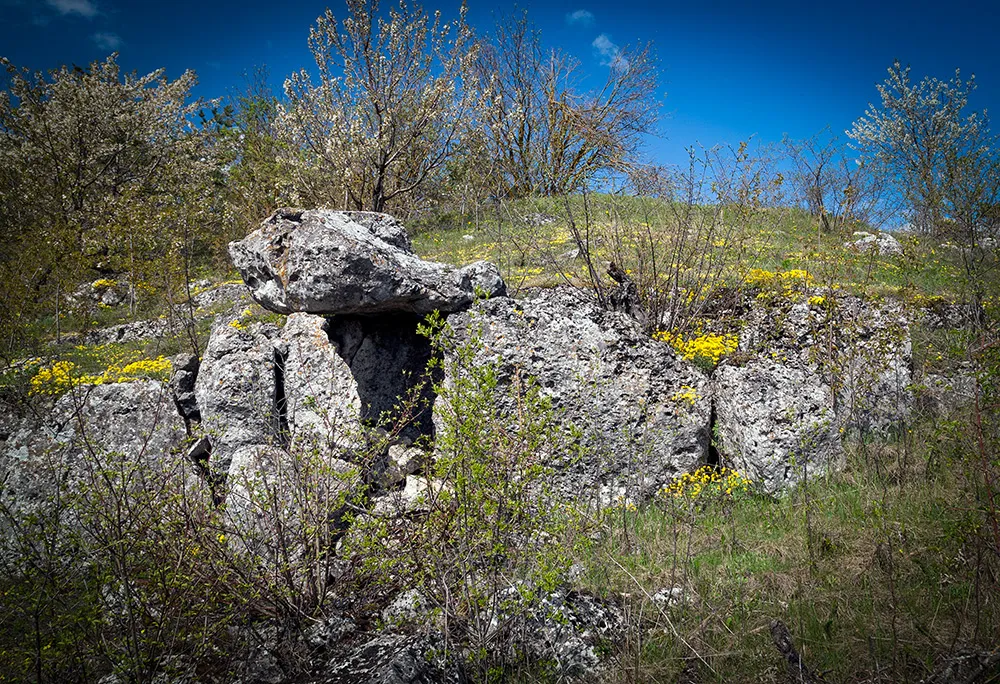
A dolmen-like formation on Mount Baba
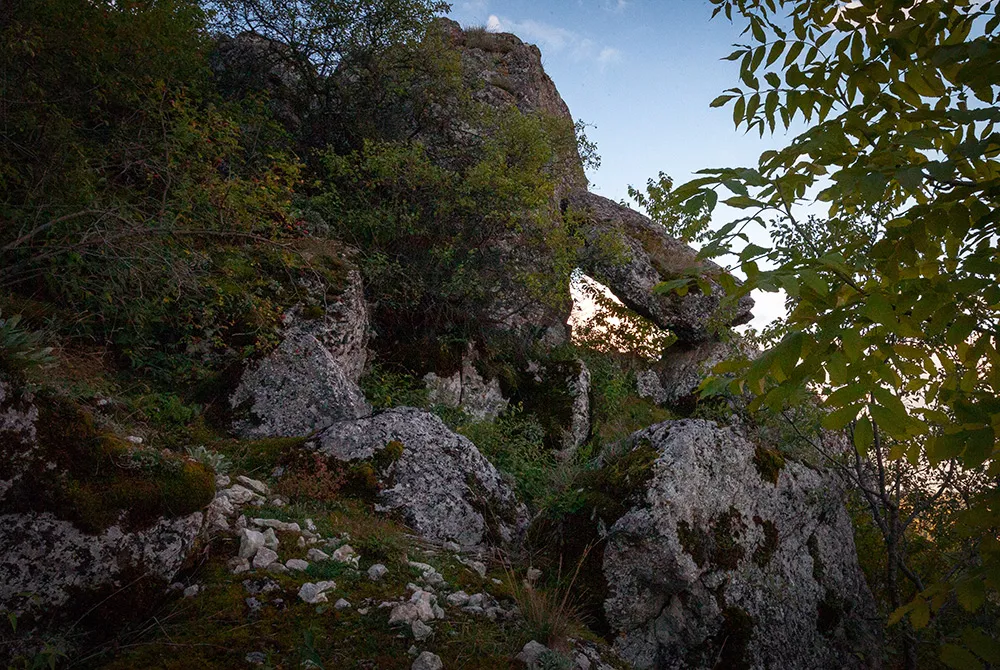
A dolmen-like formation on Mount Vysoki Kameni. On the day of the winter solstice the sun sets exactly in the centre of the opening
On just a small stretch of the Tovtry between the villages of Zakupne, Ivakhnivtsi and Demkivtsi (some 5–6 km), the team of the NGO Ukraine Incognita has found three dolmen-like megalithic formations, a rock chapel, and a cave with petroglyphs (the latter, like two of the dolmen-like formations, was previously entirely unknown to historians).
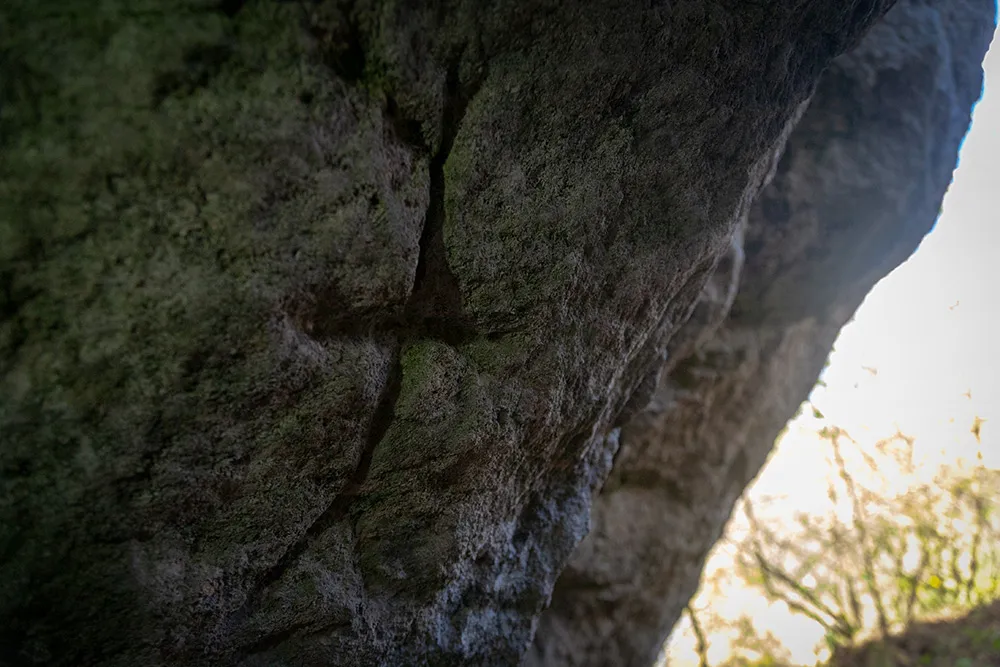
One of the petroglyphs of the cave on Mount Baba
An interesting and still unstudied historical and cultural phenomenon of the Tovtry is the cult of venerating the footprints of the Mother of God, which, as locals believe, She left on boulders and rocks during Her famous journey to Pochaiv. More than ten such “footprints” are known so far. Near Zakupne alone there are two; one near Ivakhnivtsi and one near Demkivtsi.
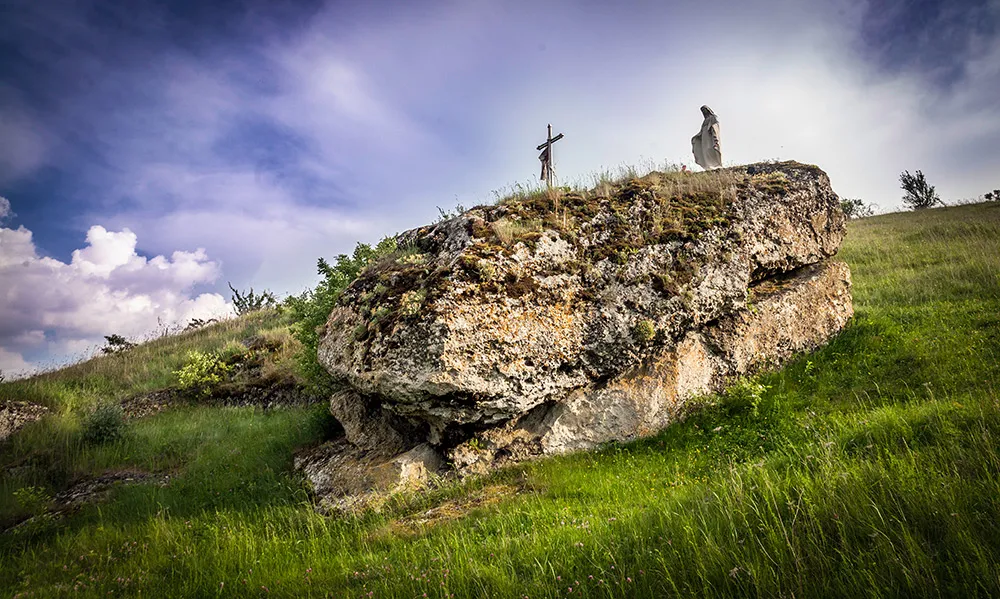
A boulder with a “footprint” at the foot of Vysoki Kameni
The most interesting one is near Demkivtsi. There is a whole sacred complex there. In particular, at the highest point of the rocky crest of an unnamed tovtra hidden in the forest on the outskirts of the village mentioned above, one can see either a small cave or a sizeable dolmen. The structure is clearly man-made, but to understand more precisely what it is, detailed research with archaeological excavations is needed.
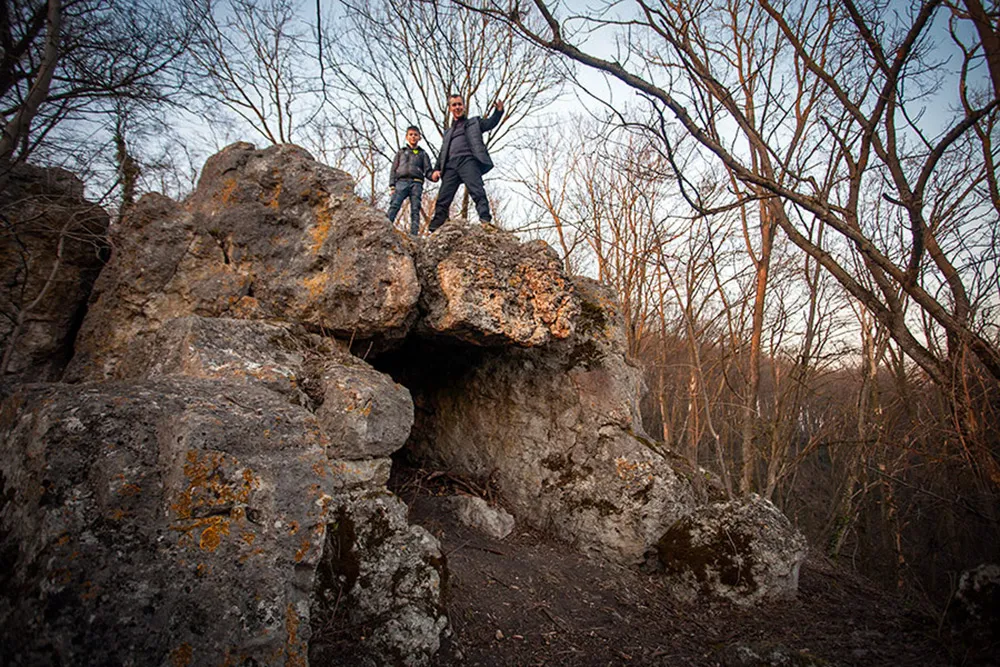
A man-made cave or dolmen. On its “roof” there is also a “footprint”
Right below the cave, at the base of the rock, there is yet another unique historical monument. Long, long ago a huge boulder, the size of an intercity bus, broke off from the main rock mass here and slid a little down the slope of the hill. A narrow gorge formed between it and the rock. Incidentally, the famous sanctuary in Busha was once formed on the same pattern.
A chapel later arose in the gorge. Today one can see the grooves in the rock where the wooden roofing structures were fastened, and a niche carved into the rock where a sacred figure stood.
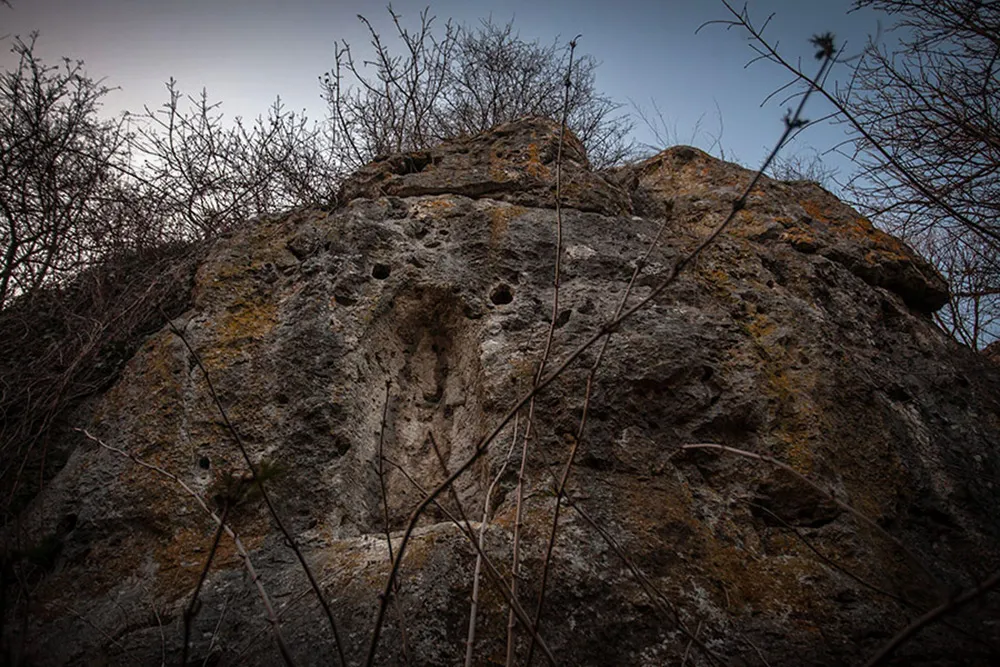
The niche for the figure
During a visual survey of this complex hidden in the forest, we were surprised by the stubs of church candles on the “roof” of the cave (dolmen?). Coins left as offerings were also scattered there. As local residents later explained, above the cave there is a “footprint” of the Mother of God. In fact, there were quite a few hollows of various sizes and shapes caused by weathering, but which of them is considered the “footprint” is unclear.
Here we also have a “biological” curiosity: “fairy rings” formed by mycelia. The mycelia show through the grass
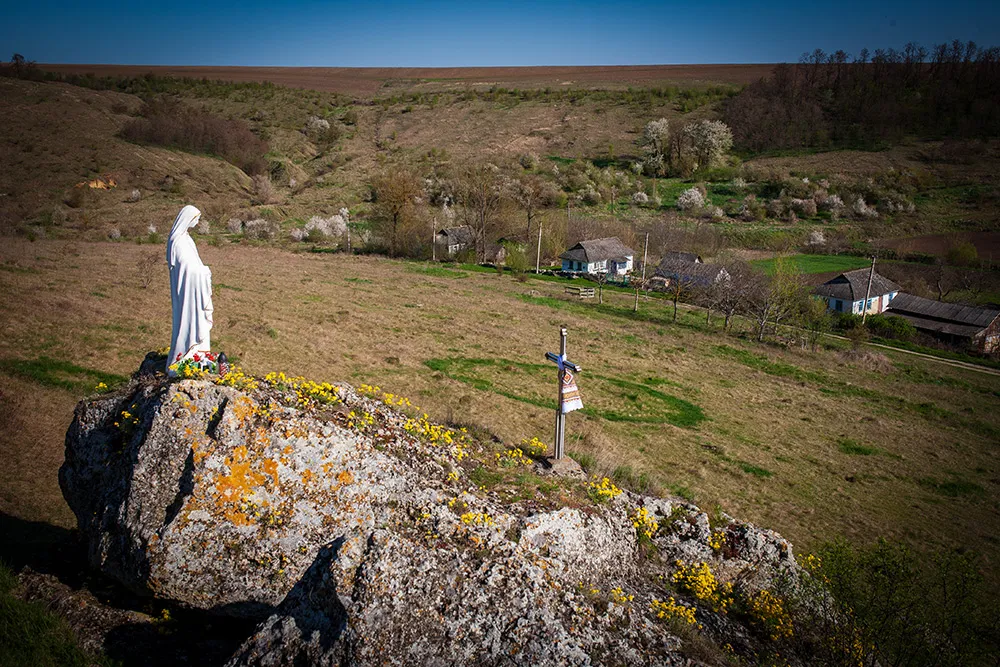
The most revered “footprint” in the Zakupne–Ivakhnivtsi–Demkivtsi area is the relic at the foot of Mount Vysoki Kameni (High Rocks). It is a solitary gigantic boulder. It may well be an altar from pre-Christian times. Besides a stainless-steel cross welded together, a figure of the Mother of God has also been placed on it.
The cult of the Tovtry “footprints” has not yet been studied by historians. It may be connected in some way with some pre-Christian female deity. Incidentally, two more “footprints”, as well as a dolmen-like formation and a cave with petroglyphs, can be seen on Mount Baba, next to Vysoki Kameni. Its name is linked with an idol that stood there as late as the early 20th century.
Text and photos by Dmytro Poliukhovych


