

At Babyn Yar, stone beasts tell of the traditional culture of Ukraine’s Jews

· 3 min read
Today the exhibition “Sataniv: The Lost World of an Ancient Jewish Cemetery” opened at the Babyn Yar National Historical Memorial Reserve. It was organised by the museum “Memory of the Jewish People and the Holocaust in Ukraine” (Dnipro) with the assistance of the United Jewish Community of Ukraine. The author of the exhibition is the well-known Podillia local historian Dmytro Poliukhovych, a member of the Ukraine Incognita team.
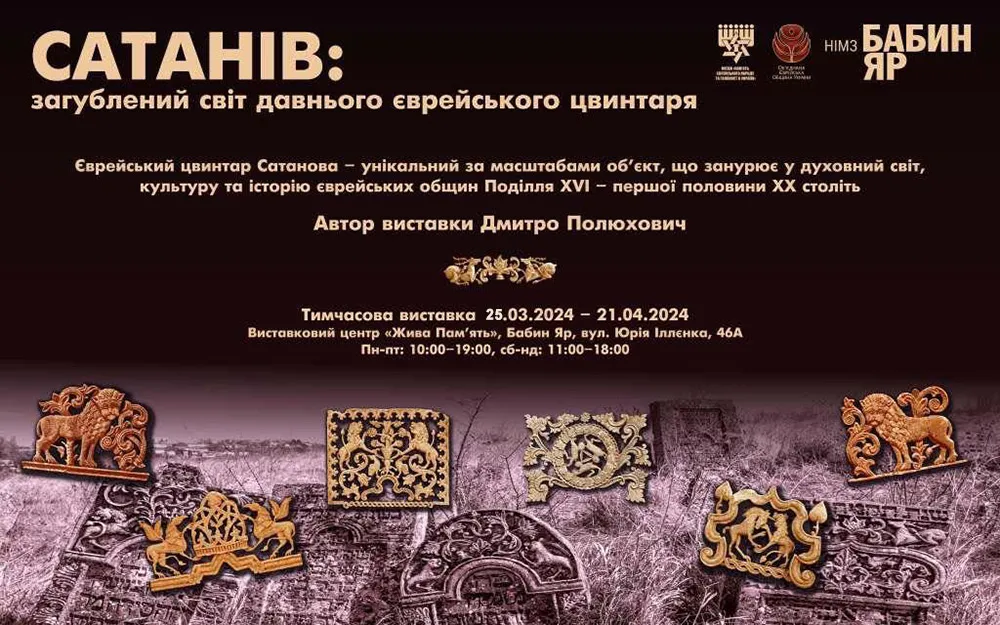
Dmytro came up with his own know-how for showing the beauty of old carving, so that an ordinary photograph turns into a self-sufficient work of art. The exhibition presents the decoration of ancient matzevah gravestones from the mid-17th to the early 19th century. In addition, visitors can learn about the hidden sacred meaning encoded in the old bas-reliefs and find out more about the culture and customs of the Jewish people, who have lived alongside Ukrainians for more than a thousand years.
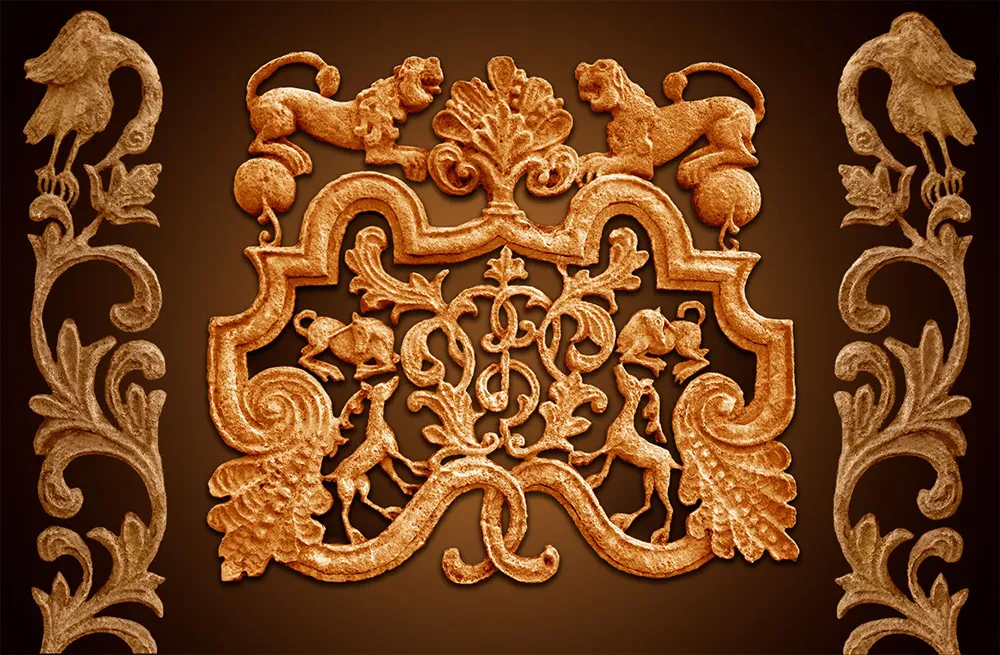
A photograph of ancient carving turned into a new work of art. It is based on the decoration of the gravestone of a girl named Sarah, daughter of Rabbi Meir, who died in 1800.
In the context of a war that has united all Ukrainians in resisting the enemy, regardless of national origin, the Sataniv necropolis is quite telling. In particular, during Tatar raids all the national communities (Ukrainian, Polish and Jewish) stood together to defend the town. In the Sataniv Jewish cemetery there survives a gravestone whose epitaph states that the man buried there fell in battle at the town gate during the war with the “Tugarins”. In ancient Jewish chronicles the Turks and Tatars were called “Tugarins”.
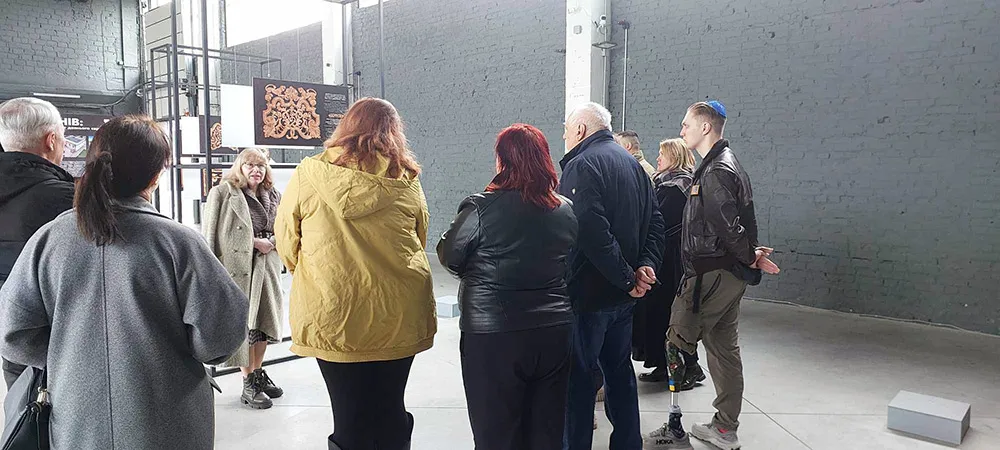
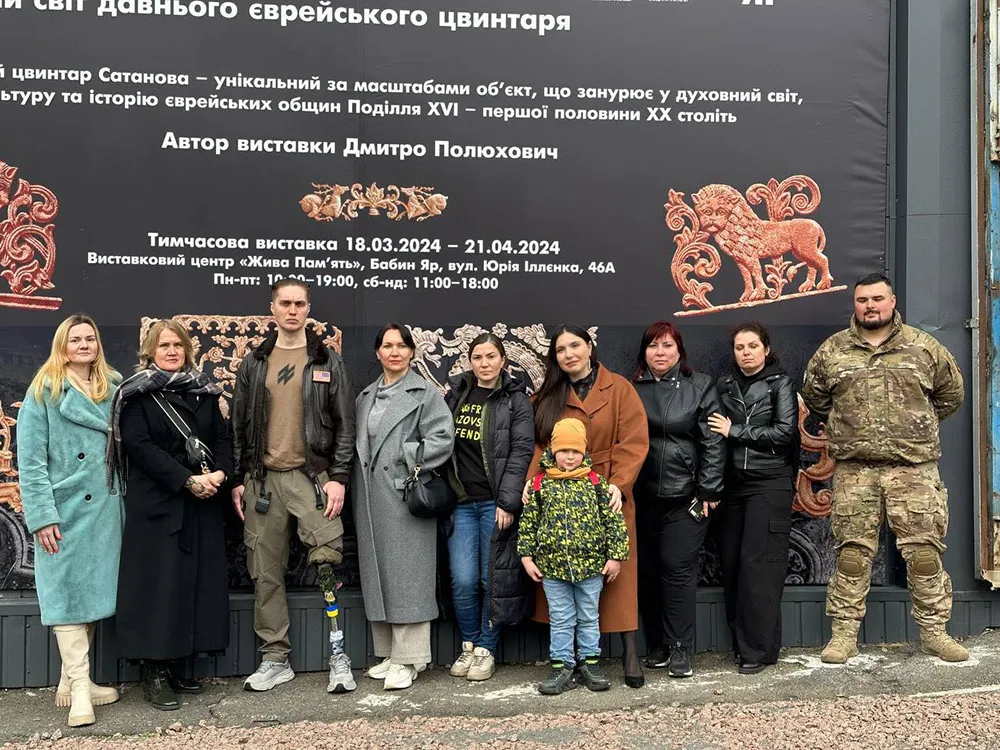
Symbolically, the first visitors to the exhibition at Babyn Yar were representatives of the community of families of fighters of the Azov Special Purpose Brigade, defenders of Mariupol, and Azov veterans, including Vladyslav Zhaivoronok, call sign “Wikipedia”, and Oleksii Popil, “Cyrus”.
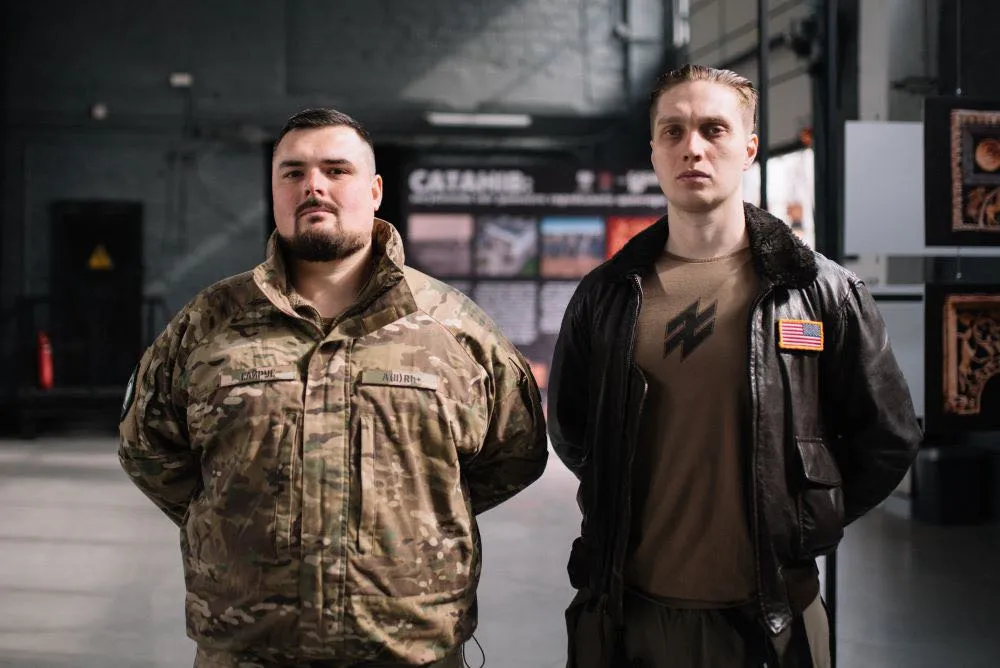
“Cyrus” (left) and “Wikipedia” (right)
“Wikipedia”, in particular, said:
“I am grateful to the organisers and the author of the exhibition, who did a huge amount of work not only to show the folk art of Ukraine’s Jews but to reveal the traditions and culture hidden behind it. It was truly interesting.
A lot was said here about how, at certain times in history, such burials were destroyed. They were destroyed by the Nazis, and destroyed by the Russian communists… Yet every such burial is a piece of history, the history of particular people and whole communities. And when we think about who destroyed such burials, they were people who did not know their own history, took no interest in it and simply had none…
The same is happening in Ukraine, where the Russian invaders not only kill people and raze towns and villages to the ground but deliberately destroy our historical heritage in order to deprive us of our history and our past.
Ukraine has a history, a huge, ancient and multinational history. We love and honour our culture, we love and respect the cultures of the different nationalities that together create the shared culture of Ukraine… This exhibition is an example of that respect.”
To recall, before this the exhibition was shown in Dnipro, at the largest Jewish museum in Ukraine and one of the largest such museums in Europe, “Memory of the Jewish People and the Holocaust in Ukraine”.
The exhibition in Kyiv will run until 21 April, after which it will move to Odesa.


