

Part of the “English Club” in Dnipro collapses, an architectural monument of national significance
On 22 November 2025 an architectural monument of national significance, the “Club Building”, partially collapsed in Dnipro — the ceiling of the building and part of a wall fell in. This is reported by Suspilne Dnipro. The prosecutor’s office has begun an investigation into the circumstances of the incident, according to the agency’s website. As the statement says, the building is privately owned. The investigation has preliminarily established that the monument collapsed because of its improper condition.
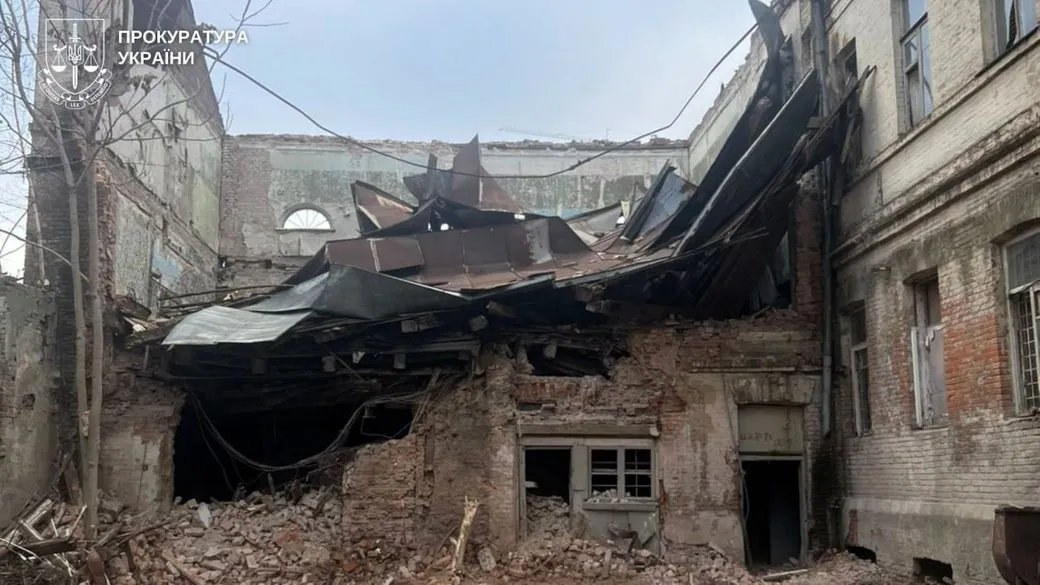
Law enforcement officers have opened proceedings on the grounds of deliberate unlawful destruction of a cultural heritage site belonging to monuments of national significance (Part 3 of Article 298 of the Criminal Code of Ukraine).
The penalty under the article is up to five years’ imprisonment, with or without deprivation of the right to hold certain positions or engage in certain activities for up to three years.
Background
At first it was a closed gentlemen’s club for officials, officers and businessmen. From the beginning of the 20th century it was an establishment open to everyone, regardless of sex. The premises were rented out for balls, masquerades, lectures and concerts. In particular, on 25 February 1914 the 100th anniversary of Taras Shevchenko was celebrated here. It was one of the largest Ukrainian events in Katerynoslav at the time.
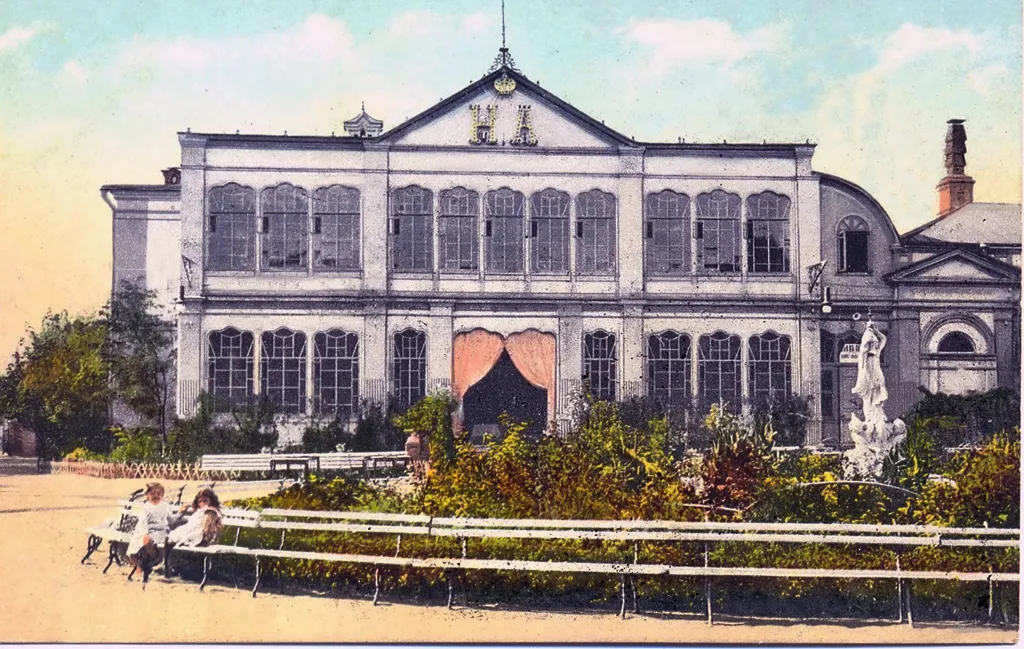
The English Club seen from the garden side
The history of its construction is interesting: in 1880 an All-Russian competition for the construction of a club was announced. The first prize went to Alexander von Hohen, to whose design the building at 3 Protochna Street was built in 1890–1891. By Christmas 1891 the Club was already receiving members.
By decision of the City Duma, Protochna Street, named after the confluence of the rivers Polovytsia (until 1884), Zhabokriach and Klenovyi Bayrak, was renamed Klubna Street, which it remained until 1923.
The exterior façade of the building had eclectic-classical forms with pronounced rustication of the ground-floor walls, original window-opening decoration, semicircular windows on the second floor and stylised cornices. The English Club seen from the garden side. The interior layout of the club was rich: a vestibule with a wide marble staircase, a hall with a balcony adorned with openwork iron railings, artistic decoration of the ceiling, neat drawing rooms and studies. The building had a summer garden. Large verandas opened onto the club’s courtyard, where a cosy garden was laid out with a summer music stage, a fountain and flowerbeds. The English garden was visited by townspeople until the 1950s.
Near the courtyard a summer theatre with a cinematograph was opened. There was also a summer theatre in the City Garden (it burned down in 1921).
In 1924 the building of the former English Club was given over to the “United Lenin Club” and the “House of Workers’ Enlightenment”. In 1927 the Club’s premises were given to the House of the Red Army, later the Garrison House of Officers of the Soviet Army and the Garrison House of Officers of the Armed Forces of Ukraine.
In 1941, during the German Nazi occupation, the premises housed a Ukrainian Club, and after its closure, from December 1941 to October 1943, the premises together with the theatre were handed over to the German Officers’ Club.
Later the House of Officers was again located in the building. In the 2000s the Club building, an architectural monument of Ukraine of national significance, was abandoned, as a result of which it has been gradually collapsing.
The building is mortgaged to PrivatBank. In 2021 the Club was put up for sale without success, and in July 2023 the building was put up for auction again. On 3 October 2023, after the fourth auction, the building was bought by the company PROMTENS LLC, which offered 10 million 405 thousand 722 hryvnias.
Source: Wikipedia


