

Clean-up day held at the mass grave of the Bohdan Khmelnytskyi Cossacks in Kyiv
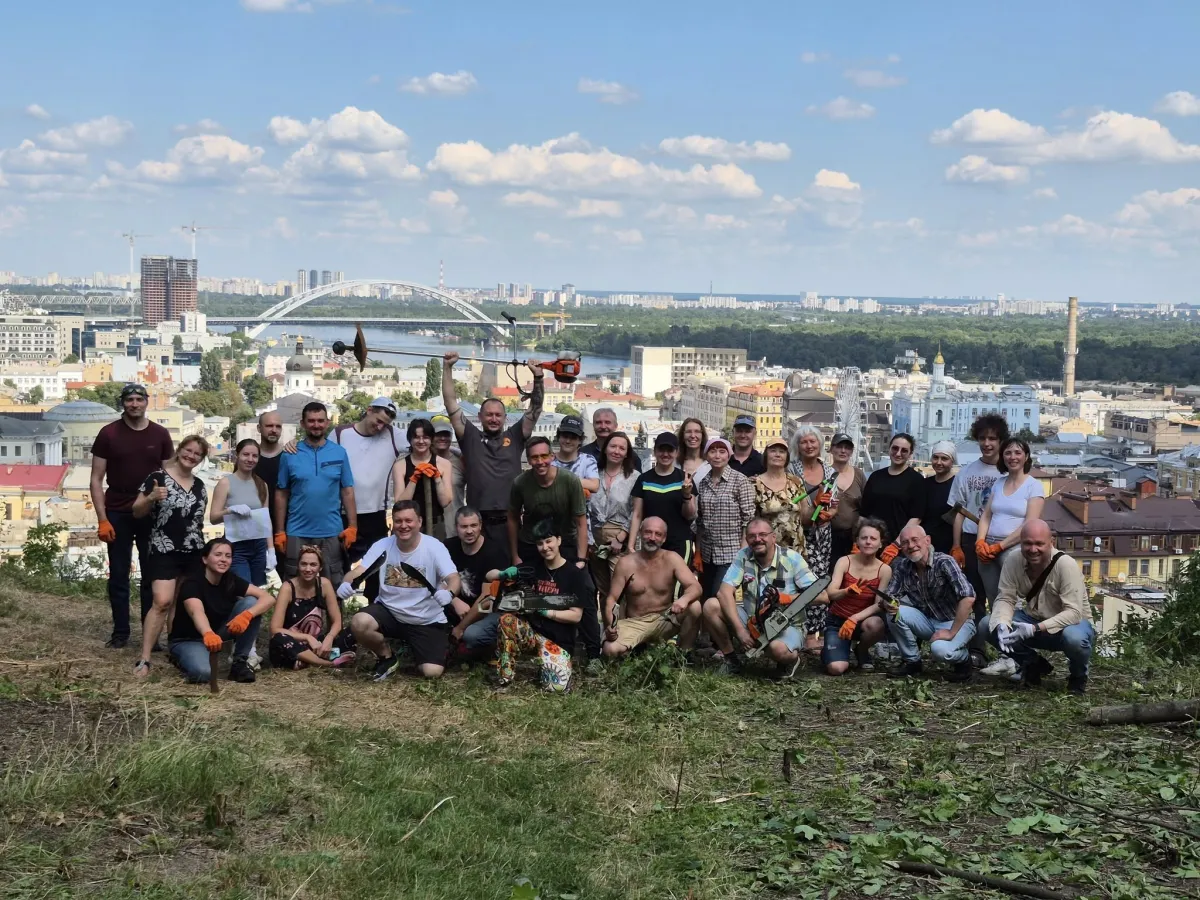
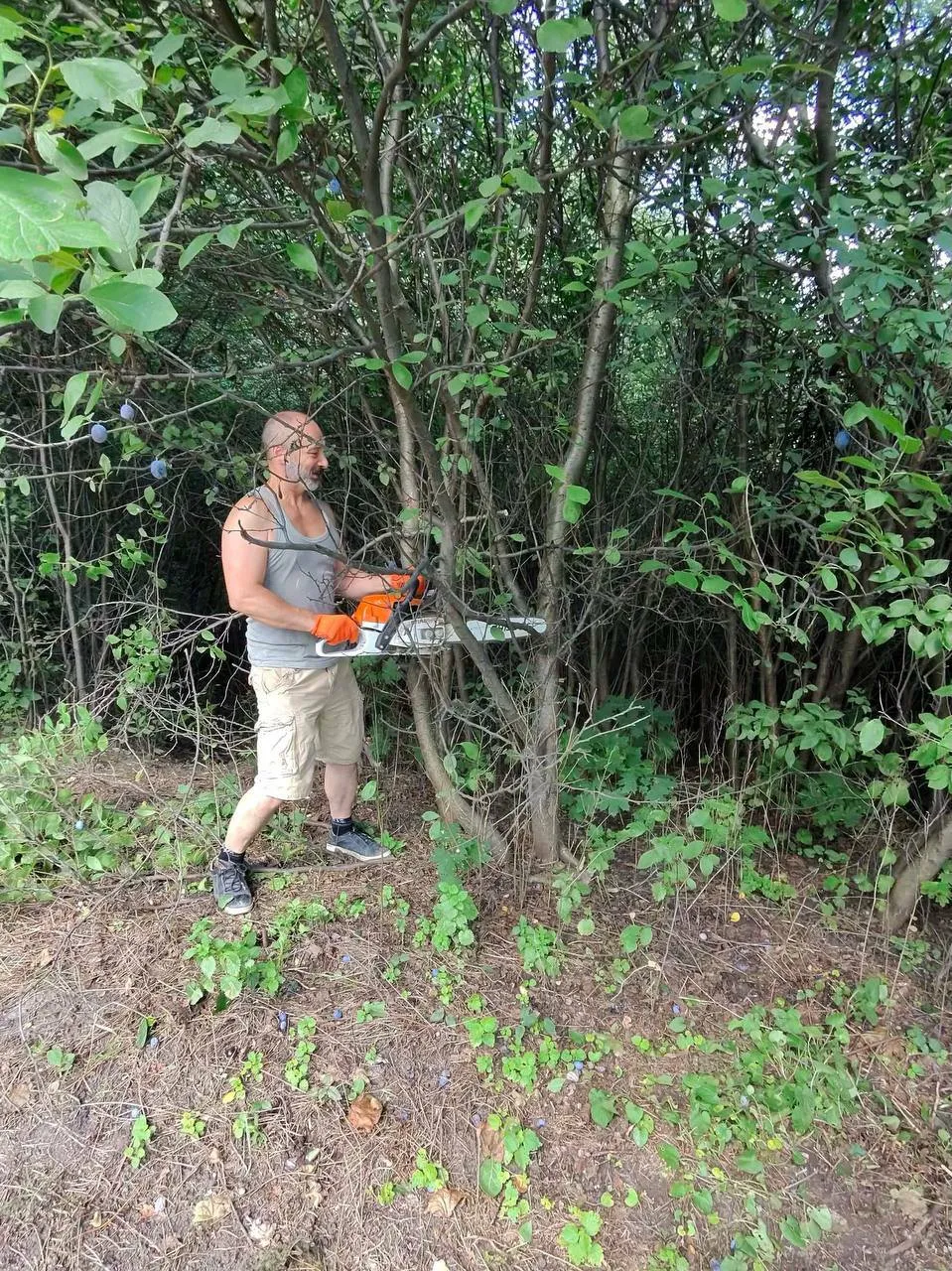
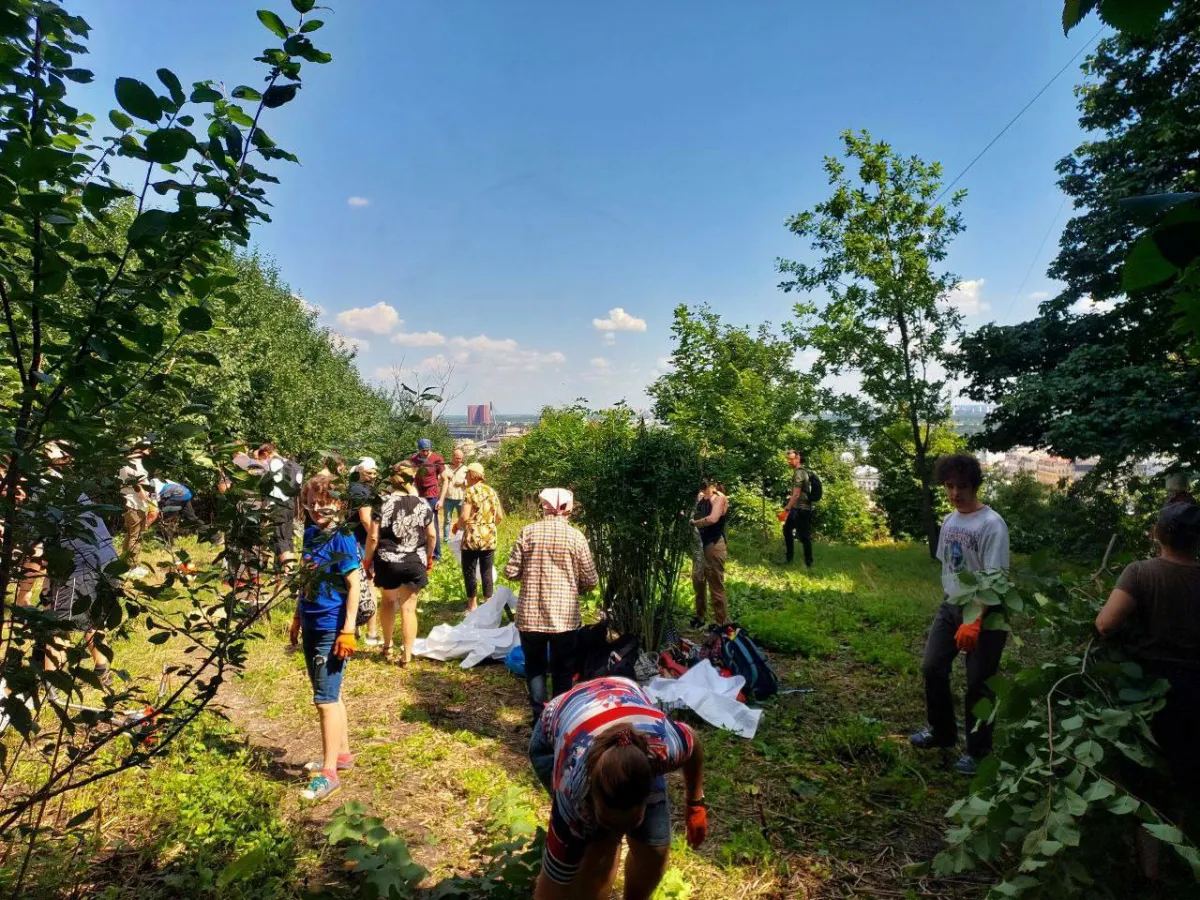
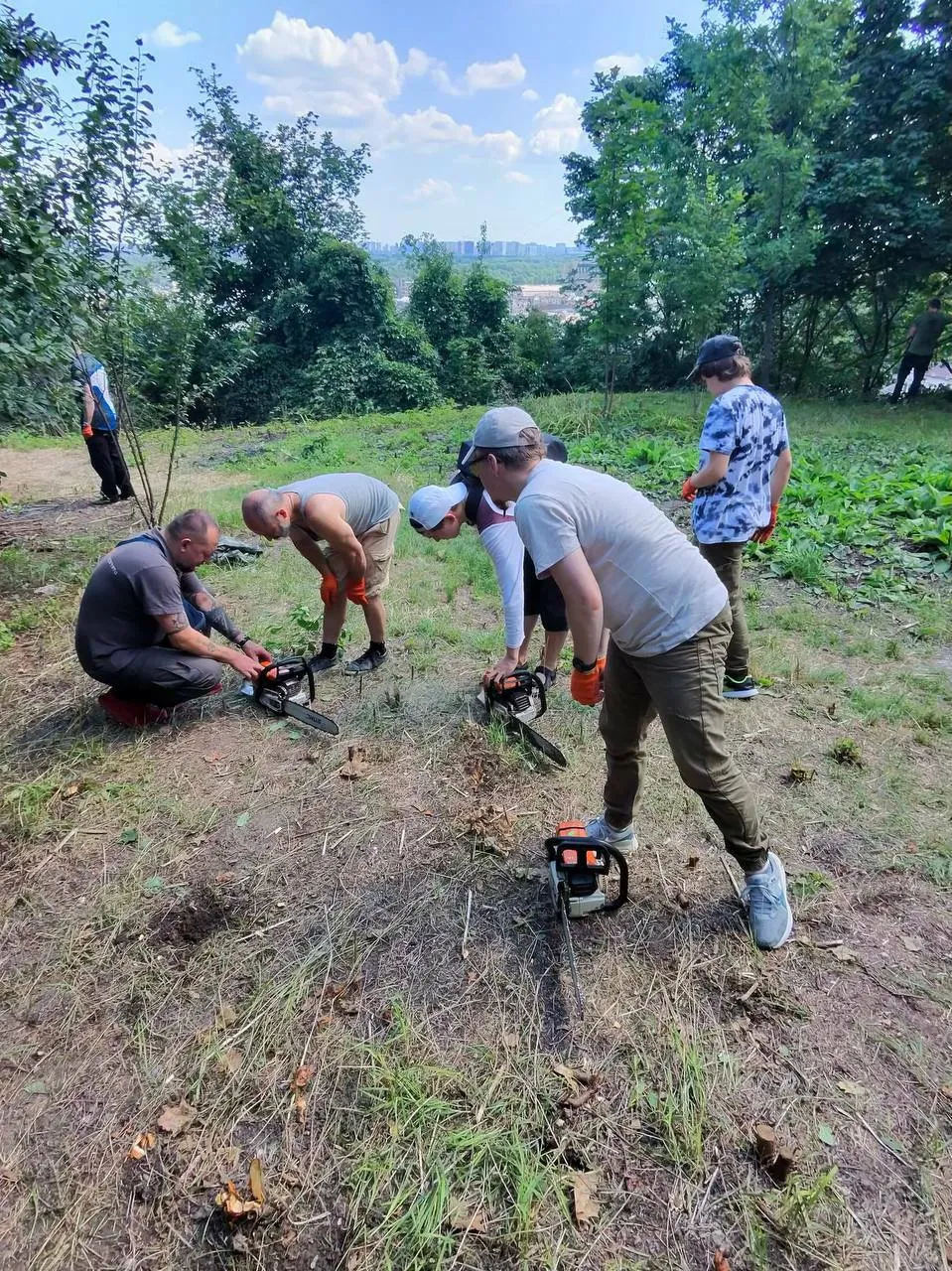
On 2 July, on the initiative of the Ancient Kyiv Reserve, the NGO “Ukraine Incognita”, the charitable foundation “Na chasi” and VIHAREV Architects&Engineers, and with the support of the Kyiv Scientific and Methodological Centre and the Department for the Protection of Cultural Heritage of the Kyiv City State Administration, a mass clean-up day was held on Zamkova Hora in Kyiv. The aim was to tidy the area around the burial of the Bohdan Khmelnytskyi Cossacks killed by Russians, and to open one more viewing platform to visitors.
Zamkova Hora was once the site of the cemetery of the Florivskyi Monastery. The Cossacks of the 1st Bohdan Khmelnytskyi Regiment (the Bohdanivtsi), who were treacherously killed by Russians on 8 August 1917, were buried there.
Let us recall what preceded this.
At the end of April 1917 the creation of the First Ukrainian Cossack Hetman Bohdan Khmelnytskyi Regiment was proclaimed. On 4 May (21 April, Old Style), after meeting with representatives of the Ukrainians, General Aleksei Brusilov, commander of the South-Western Front (who later went over to the Bolsheviks), officially permitted the formation of the regiment, but with the proviso that only 500 men were to remain in the Kyiv garrison: the Russians feared “Mazepism”, and a large number of Ukrainian soldiers in Kyiv frightened them.
The next Ukrainian military formation, the First Simferopol Regiment named after Hetman Petro Doroshenko, was created in Simferopol on 24 April.
Meanwhile the “democratic-revolutionary” Russian leadership of the Kyiv Military District saw in Ukrainization signs of “desertion” and an attempt to bring down the front. And the Russian-language Kyiv media, from the chauvinist and reactionary “Kievlianin” to the liberal and democratic “Kievskaia mysl”, as well as the local Councils of Workers’ and Soldiers’ Deputies, began actively branding the creation of the regiment a terrible crime against the revolution, democracy, the unity of the people and so on.
At the beginning of August 1917 the Russian command, to be on the safe side, dispatched almost all the Ukrainized units of Kyiv to the front. In their place a regiment of Russian cuirassiers and a regiment of Don Cossacks were driven into Kyiv.
This is how Mykhailo Hrushevskyi recalled the Bohdan Khmelnytskyi Regiment, which still remained in the city at that time: “it was the only relatively well-organized Ukrainian unit”, which “was a thorn in the eye of Oberuchev, Kornilov, Kerensky and God knows who else”.
On 8 August the turn came for the Bohdanivtsi: they were sent off in two trains. Soon after departure, the second train was attacked by soldiers of the cuirassier regiment and Don Cossacks. The commander of a cuirassier squadron ordered the train to be fired on with machine guns and rifles, killing 31 Bohdanivtsi. Later, at Post-Volynskyi station, the cuirassiers and Don Cossacks surrounded the shot-up train. The Russians risked almost nothing here: the Ukrainian unit was practically unarmed, as it had almost no ammunition.
After disarming them, the Russians beat the Ukrainians with rifle butts and wounded some with sabres. Then about 300 men, including all the officers, were arrested, and the abuse continued, with shouts of “We’ll show you autonomy, you Khokhol mugs”.
On 12 August the fallen soldiers of the Bohdanivtsi Regiment were buried on Zamkova Hora. The Russian bishop Dmitry, who had blessed the regiment’s departure for the front the day before and was invited to the memorial service, refused to conduct the funeral service for the fallen.
Telling: at the time of these events the Bohdanivtsi and the Russian units belonged to the same army of the Russian Republic. But the Russians’ hatred of Ukrainians was so fierce that this played no role: even the rather “emasculated” autonomy that Ukrainian leaders were promoting at the time provoked harsh rejection among the Muscovites.
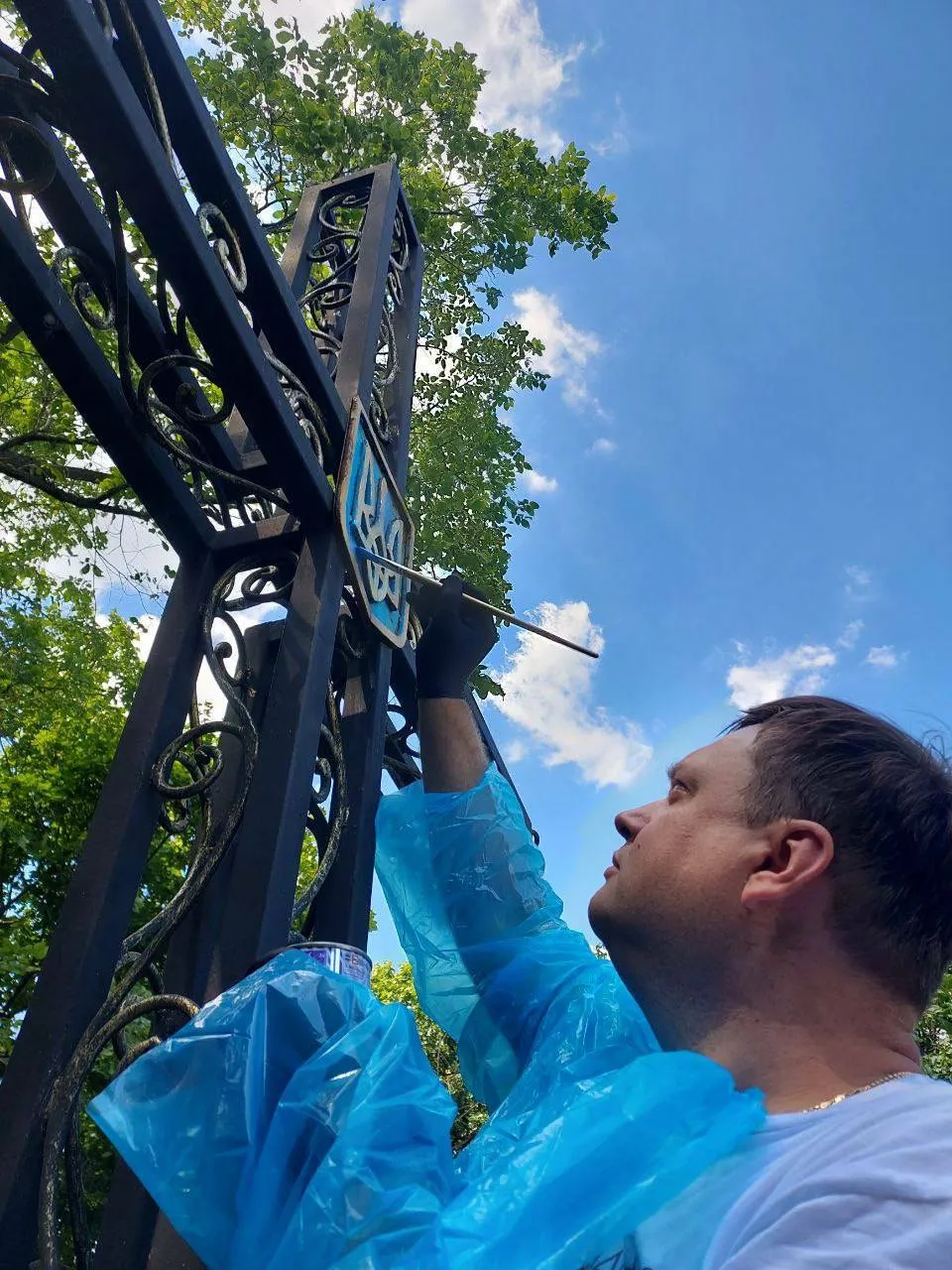
The cross on Zamkova Hora appeared on 14 October 1989. Then, on the initiative of the Ukrainian Helsinki Union (UHU) and the Union of Independent Ukrainian Youth (SNUM), a mass ascent of Zamkova Hora took place (from 3,000 to 5,000 participants by various estimates), and a cross (originally wooden) was erected and consecrated on the grave of the Ukrainian soldiers. It was the first mass event in Kyiv devoted to the armed confrontation of Ukrainians with Moscow.
Later the cross was replaced with an iron one.
In time the grave and all the approaches to it became overgrown with bushes and weeds.
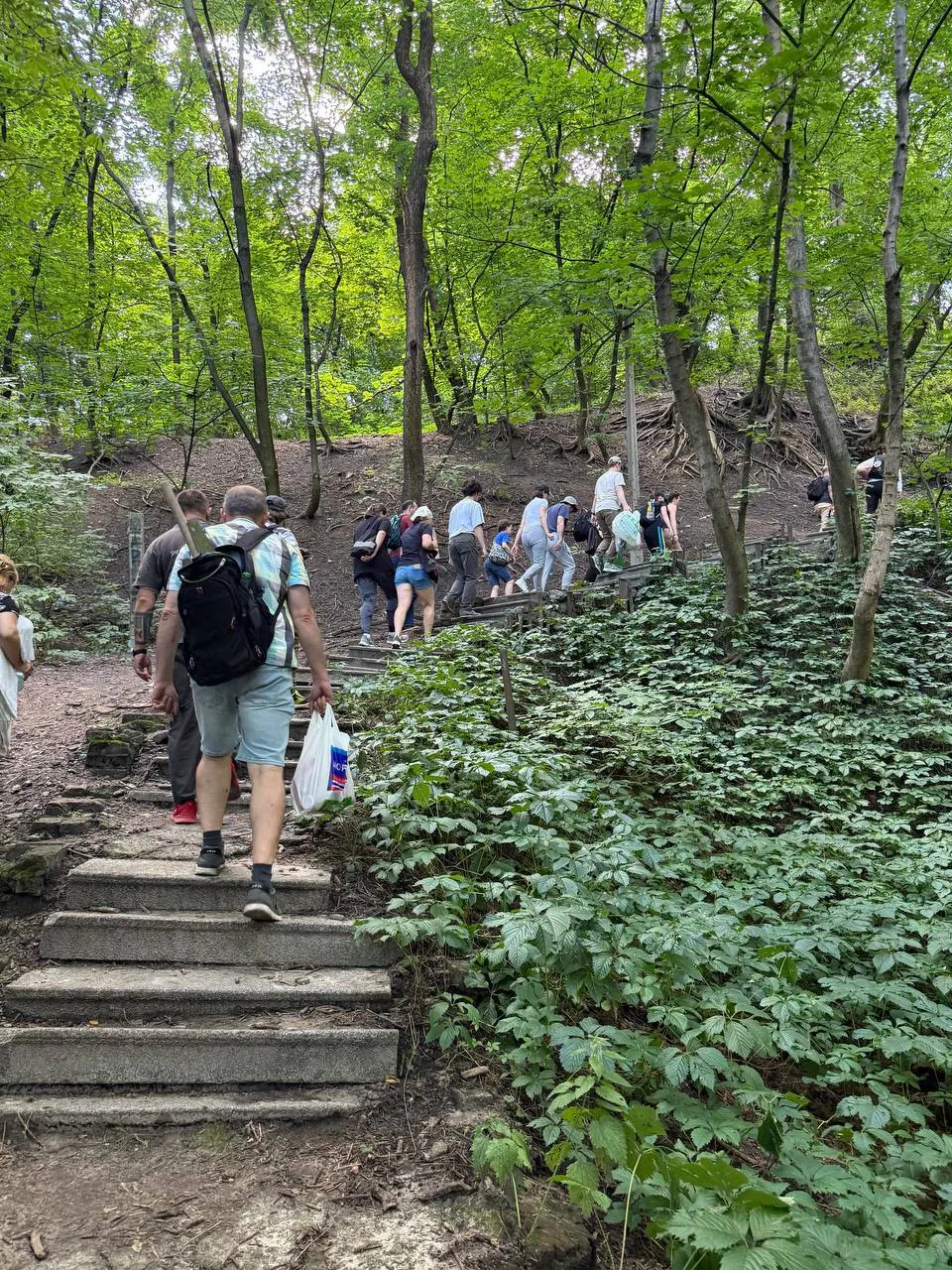
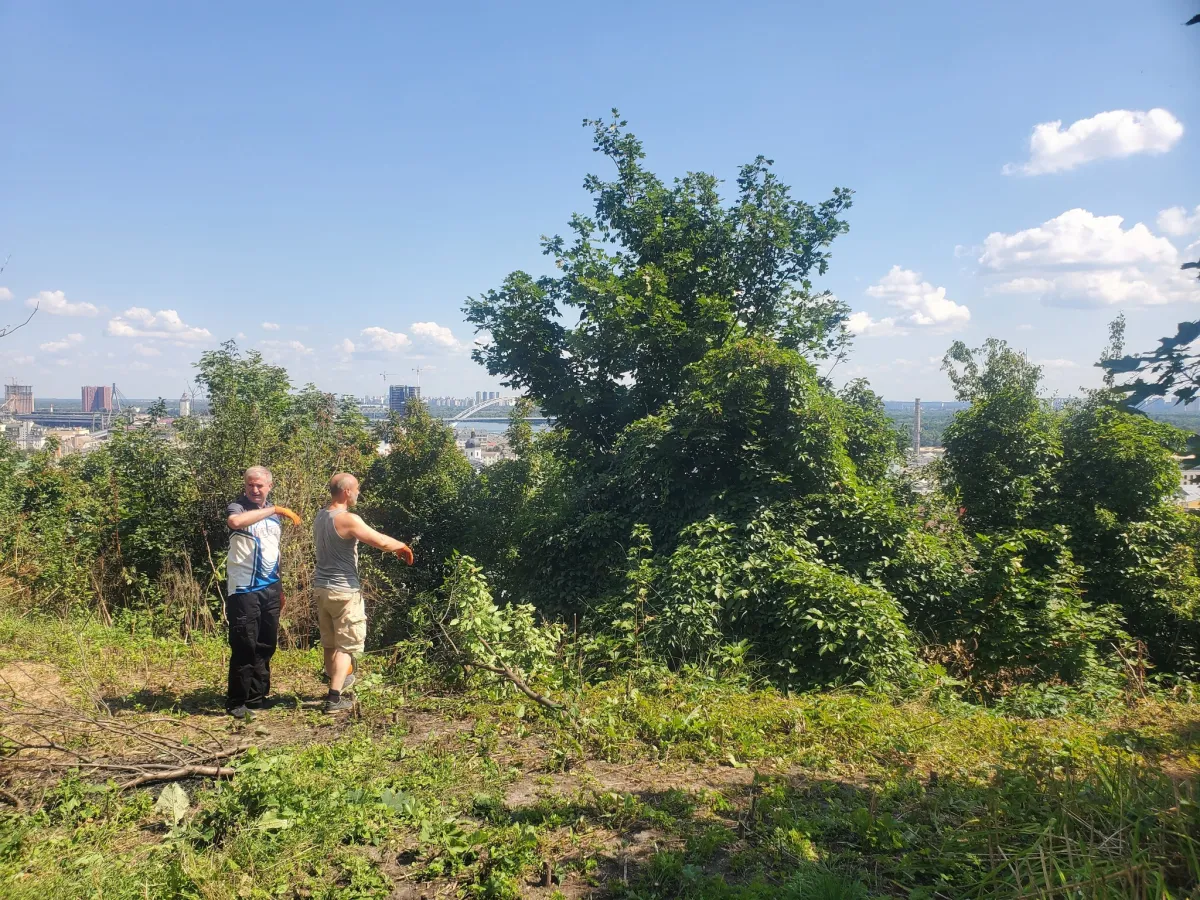
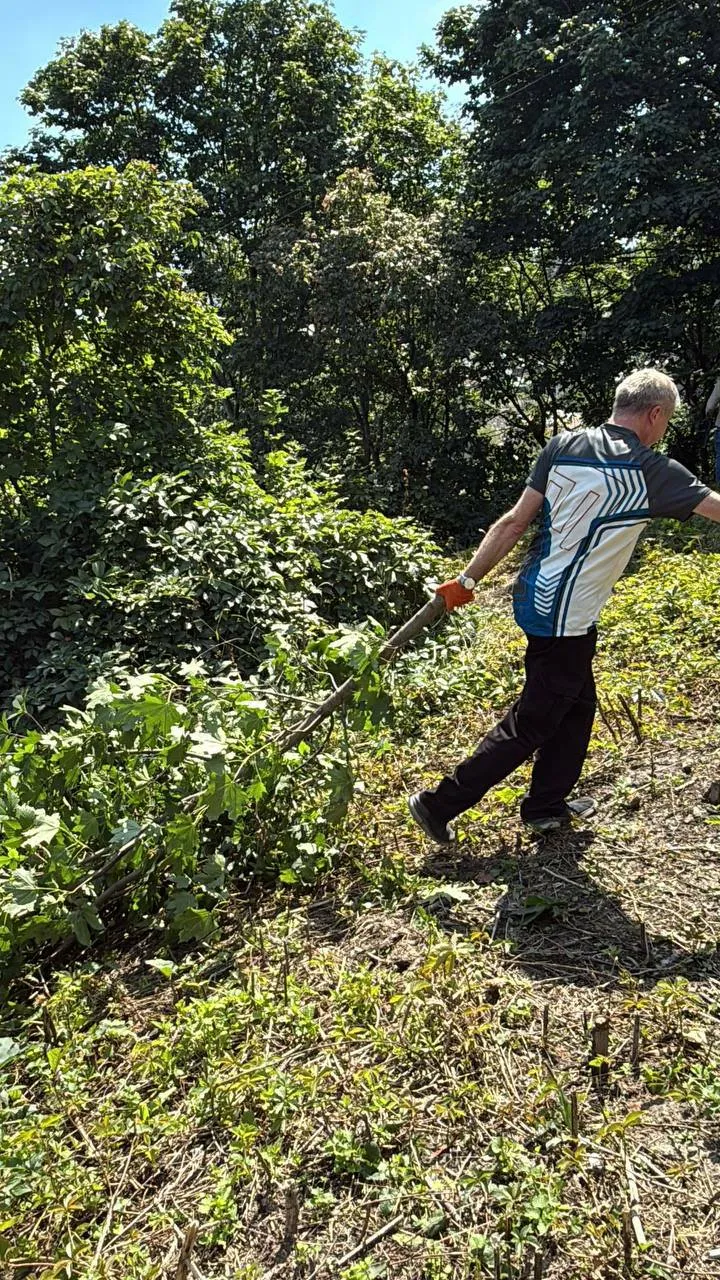
Almost fifty volunteers took part in the clean-up day. They began tidying the burial of the Bohdanivtsi soldiers of 1917 and opened up anew the fairy-tale view of Kyiv’s Podil (this is not the last clean-up day, there will be more).
The road to the burial and a large area around it have been cleared. Everyone is welcome to come, to pay tribute to the Ukrainian heroes and to see the wonderful view with their own eyes.
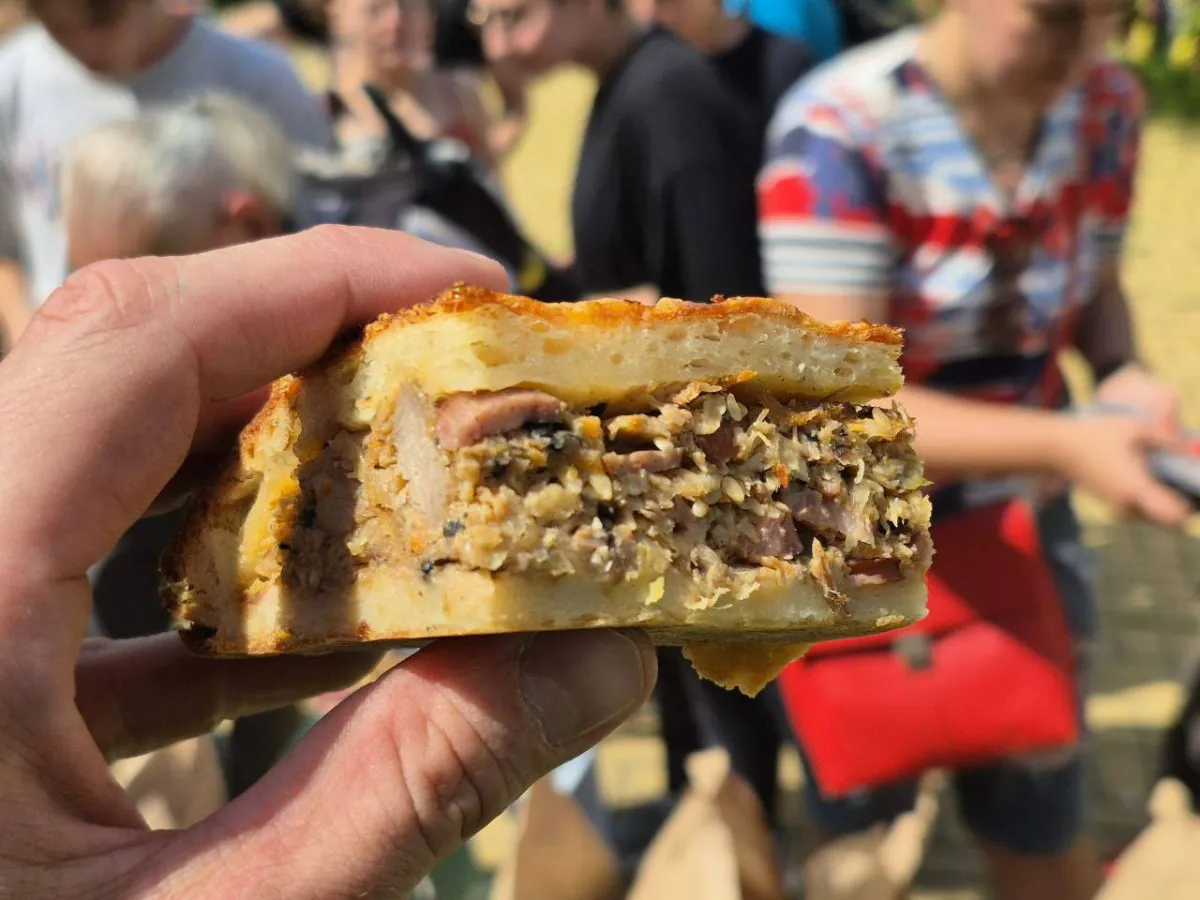
Every traditional clean-up day ends with refreshments for the participants. This time they were prepared by the well-known chef Yevhen Klopotenko, to whom the organizers are sincerely grateful for the treat and gastronomic support.
The organizers are, of course, also sincerely grateful to all the caring Kyivans who joined in preserving the memory of the Bohdanivtsi Cossacks.


