

The tourist season opens in Maliivtsi
The Maliivtsi Regional Museum of History and Culture (Khmelnytskyi Oblast) is a longtime friend and partner of the team of the NGO “Ukraine Incognita”. It is perhaps the brightest example of how enthusiasm, the tireless work of volunteers and a burning desire to work and create can turn a monument that, without any exaggeration, was threatened with oblivion and decay into one of the best-known tourist magnets not only of Podillia but of all Ukraine.
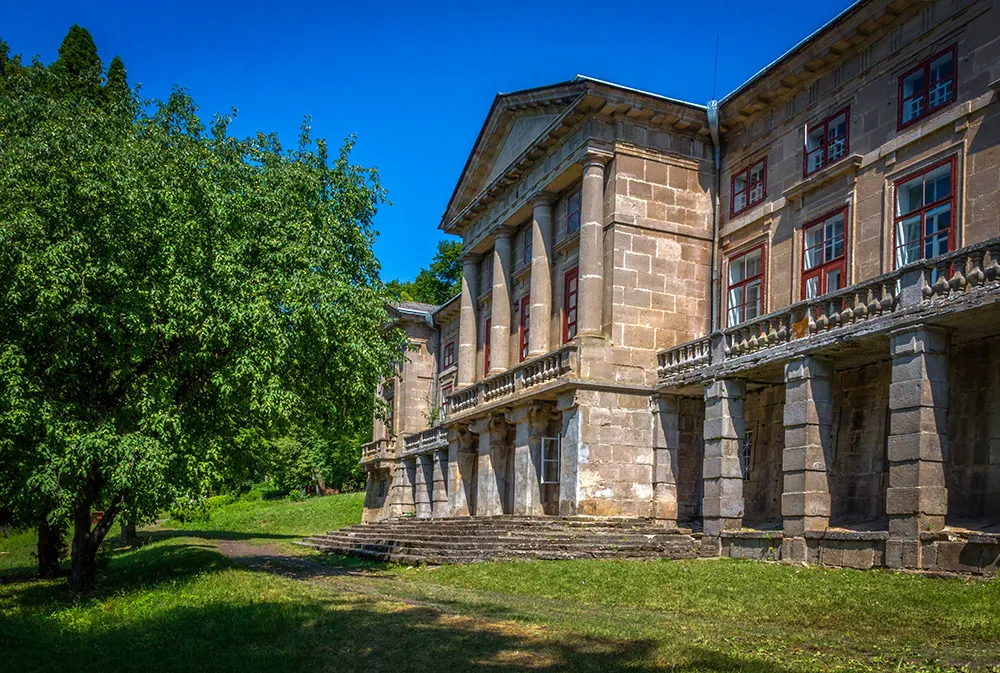
As a reminder: the palace in Maliivtsi was built in 1788 by the Crown Court Hunter Jan Onufry Orłowski, one of the favourites of Stanisław August Poniatowski, the last king of the Polish–Lithuanian Commonwealth.
The sizeable palace park (17.2 ha) was created by the efforts of the famous botanist and master of landscape gardening, the Irishman Dionysius Macclair, and the no less distinguished park artist Dionizy Kliner.
The main highlight of the Maliivtsi park is an 18-metre travertine rock with an artificial waterfall of astonishing beauty. The water comes from a powerful spring located slightly above the top of the rock. Today it runs through an iron pipe, while in the past it flowed along a wooden trough. In the rock, a grotto at its base and a cave church above it catch the eye. These are the remains of an ancient cave monastery.
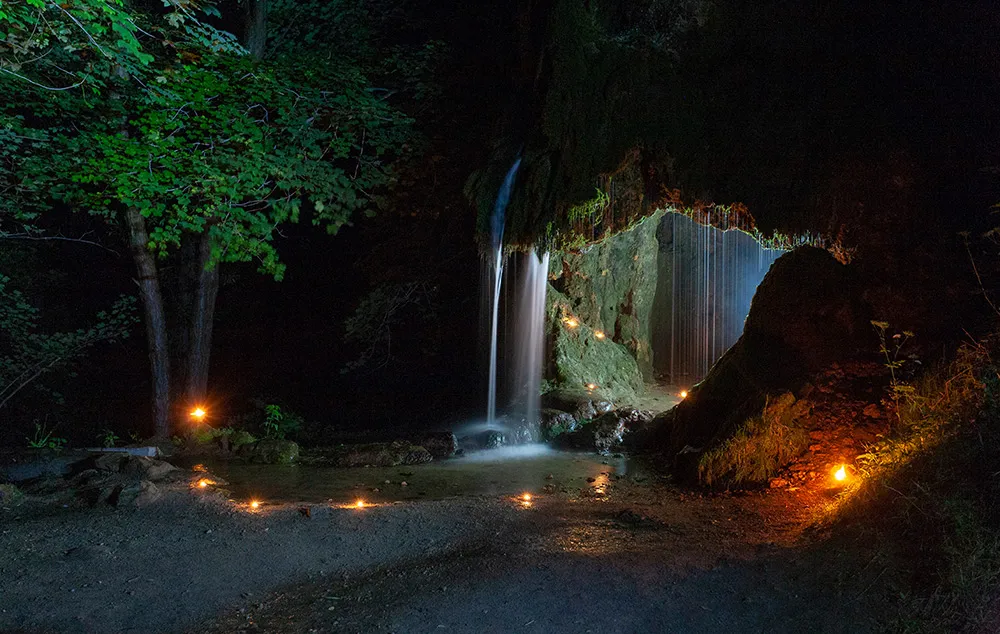
The waterfall. Photo: Dmytro Poliukhovych
In the post-revolutionary years a hospital operated in the palace. Later it became a children’s sanatorium. Eventually, because of the healthcare reform and the COVID-19 epidemic, the sanatorium was closed. The unique palace was threatened with decay and destruction. We have many examples of how old palaces, once life had left them, turned into wasteland and ruins within a few years.
Then the volunteer Anastasiia Donets became concerned about the monument’s fate. She is now the museum’s director.
The history of the museum’s creation began in autumn 2020. In December 2020 public activists began to sound the alarm, and the public organization “Maliivtsi Heritage” organized a volunteer work day at which caring people prepared firewood to heat the palace. The regional authorities responded to the active volunteer movement; negotiations with the activists and a study of the situation began, and on the proposal of the head of the regional administration Serhii Hamalii, on 8 April 2021 a session of the Khmelnytskyi Regional Council voted to create the municipal cultural institution “Maliivtsi Regional Museum of History and Culture”.
The museum was registered on 29 September 2021, and from 1 January 2022 it opened its doors to visitors, with a staff of three research fellows, two museum attendants, a director, an accountant and three watchmen.
Today the remarkable Anastasiia Donets, the museum’s “godmother” and the initiator of the volunteer movement, is in charge here.
In a little over three years of museum history, the palace and the park have changed beyond recognition. The palace itself, for example, has been freed of a significant part of its late Soviet additions, and the huge park, through the efforts of volunteers (more than a dozen work days were needed), has become a real park rather than the “guerrilla thickets” it was before.
In addition, the museum staff constantly come up with and carry out extremely interesting and vivid projects.
If a few years ago a visit to Maliivtsi was only a “side” route during tourists’ trips to Kamianets-Podilskyi (as in, we are going to Kamianets, and if there is time and mood we will also look in on the Counts Orłowski), today the situation is quite often the opposite. Maliivtsi is the main goal, and the “Capital of Podillia” above the Smotrych comes second.
The opening of the 2025 tourist season in Maliivtsi became a bright and interesting event. First the museum staff boasted of their latest acquisitions. Above all, this is the Portrait of an Unknown Woman in Blue (1827) by the famous Slovak painter János Rombauer, who worked for a time in Ukraine. Importantly, the costly painting was bought largely thanks to the help of volunteers and friends of the Maliivtsi museum.
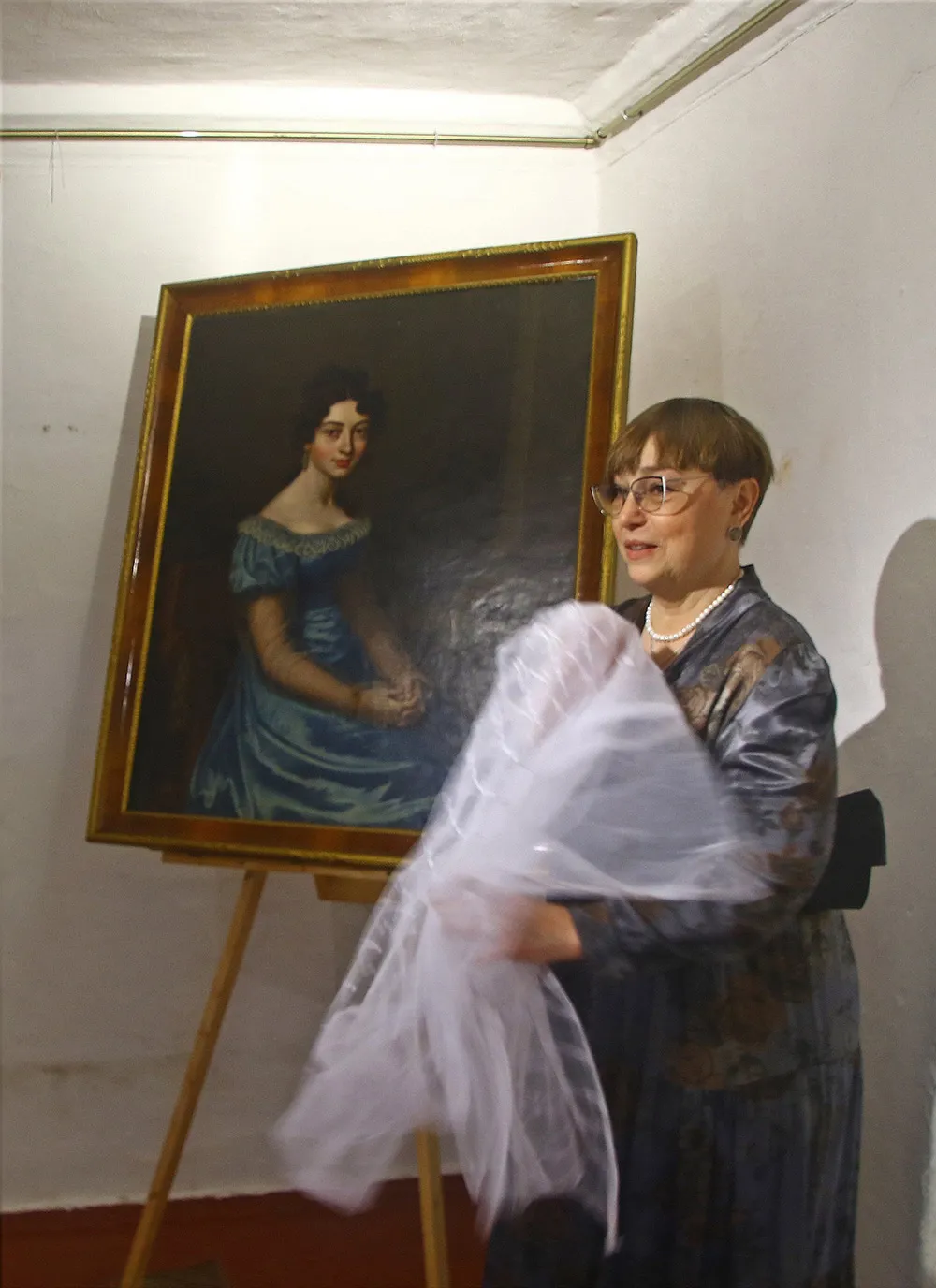
Portrait of a lady in blue. Photo: Facebook page of Blacky Kamienczanka
The museum staff also drew guests’ attention to a large and beautiful lantern from the late 19th to early 20th century that has recently adorned the palace vestibule. It was bought with funds from sponsors of the “OLOS” charitable foundation.
They also boasted of an unexpected “archive find”, a photograph previously unknown to the public that shows a general view of the Maliivtsi Basilian monastery. Dmytro Babiuk and Volodymyr Moroz were behind this.
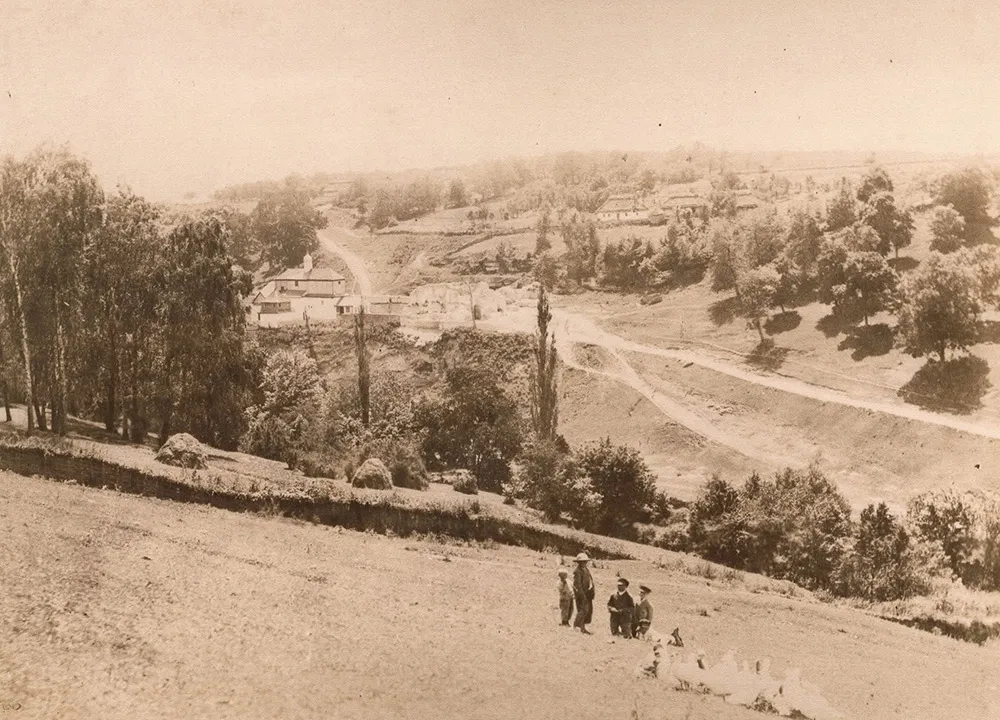
The monastery.
Participants of the event were also shown a short film about the history of the palace, made by Anastasiia Donets and Dmytro Babiuk.
Of course, there was a tour of the palace and the park. In the former, the museum staff paid most attention to the “countess’s boudoir”, cleared of late Soviet layers (“UI” reported earlier on its restoration), and in the park, to the round islet in the middle of the pond, cleared of overgrowth, to which a pretty path of stones now leads.
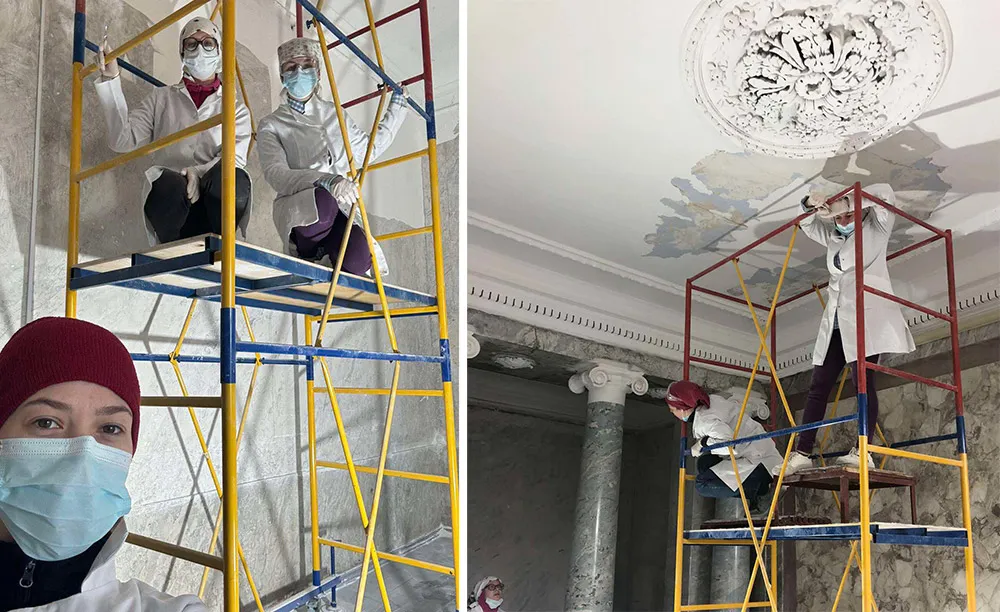
Restoration of the “countess’s boudoir”
Finally, like the cherry on the cake, a new tourist product was presented: “A Wedding in Maliivtsi”. An excerpt from this attraction, the ritual of weaving and the groom’s buying back of the wedding wreath and of unbraiding the bride’s plait, was shown to the guests at the ethno-homestead “House by the River”. The role of the wedding matchmaker was played by Oleh Pohorilets, director of the Mezhybizh State Historical and Cultural Reserve.
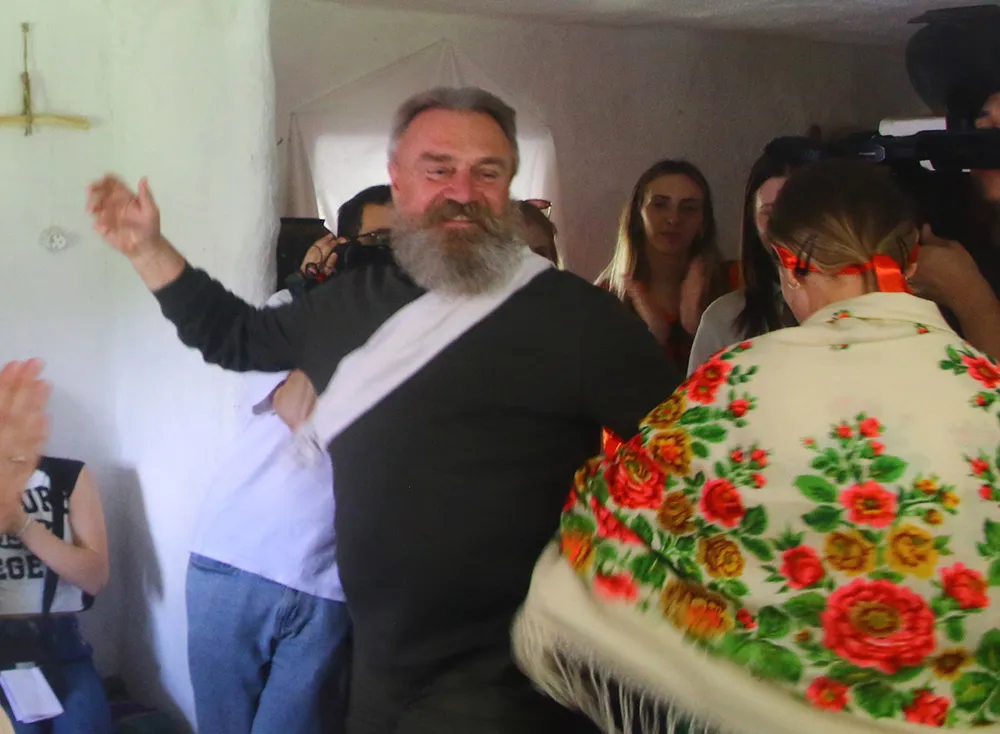
Photo: Facebook page of Blacky Kamienczanka
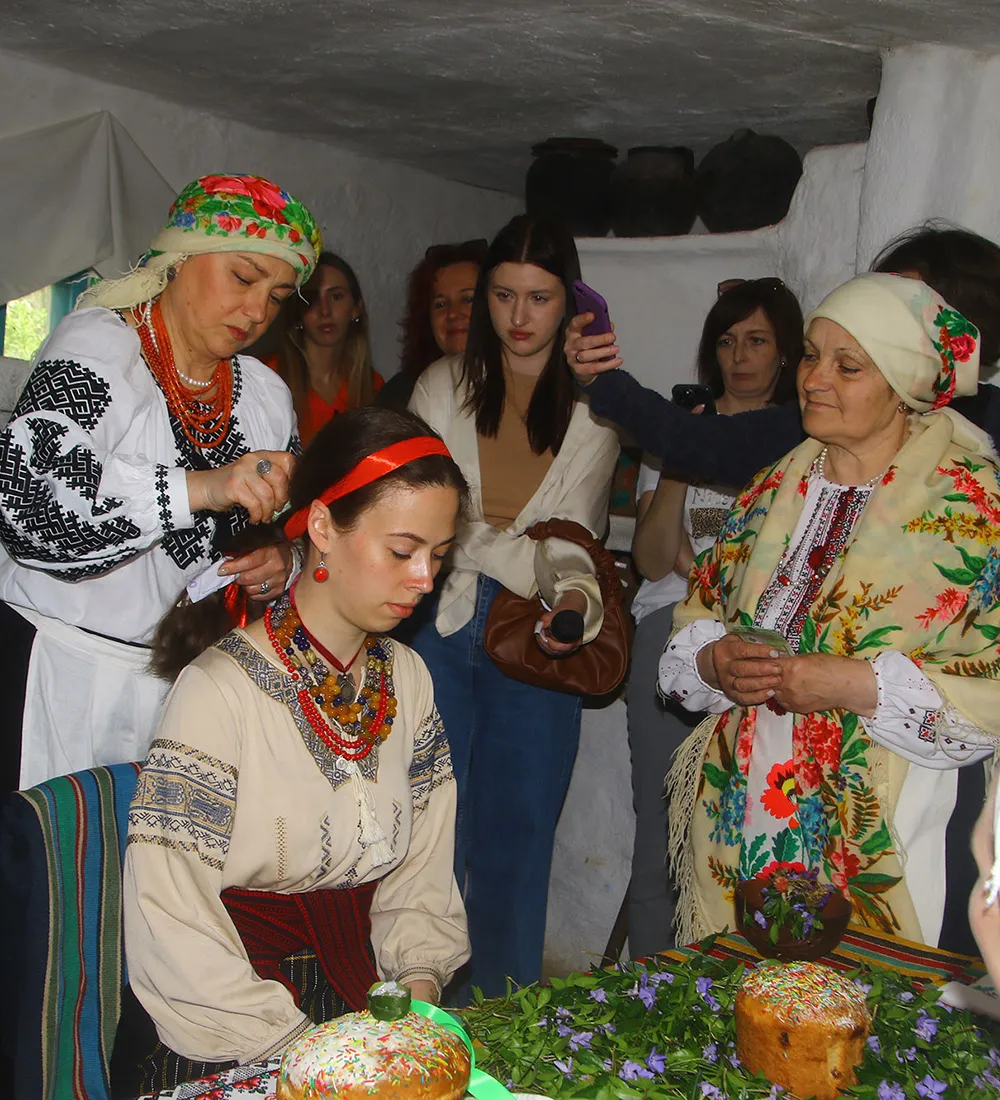
Photo: Facebook page of Blacky Kamienczanka
Finally, the guests were invited to an authentic Podillian wedding table.


