

The famous Baidar Gate in Sevastopol has begun to collapse
The Baidar Gate in Sevastopol, one of the best-known historical structures in Crimea, has begun to collapse — the monument is subsiding and crumbling onto the road. This was reported by the Telegram channel “Crimean Wind”.
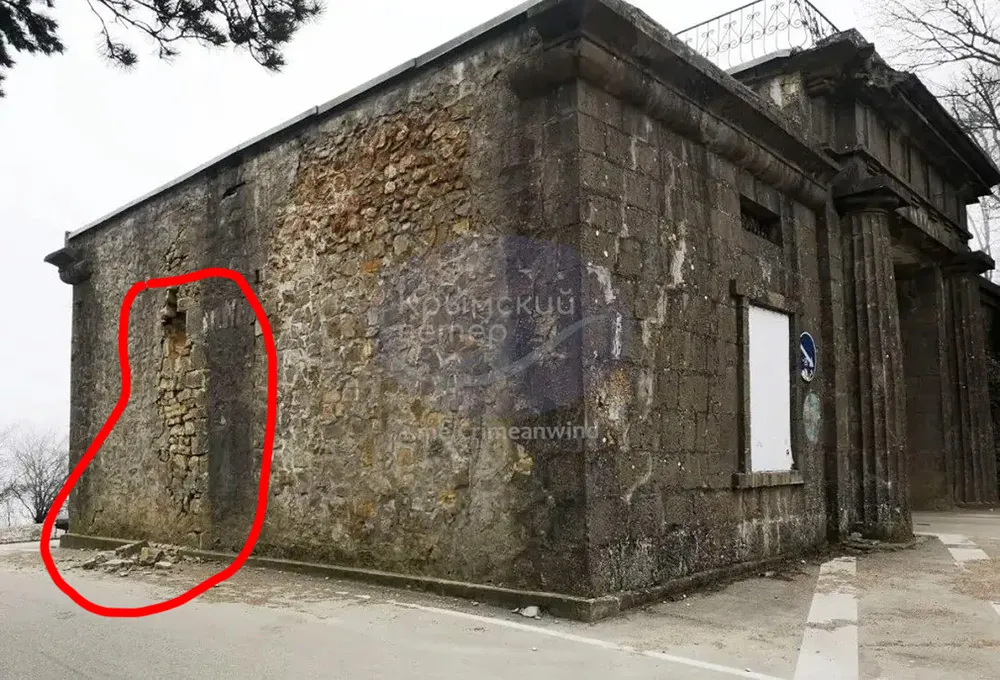
The outer wall of the monument on the roadway side is visibly crumbling. Stones are falling straight onto the road, and the ground beneath this section is cracking and sinking. Activists are documenting serious damage.
Background:
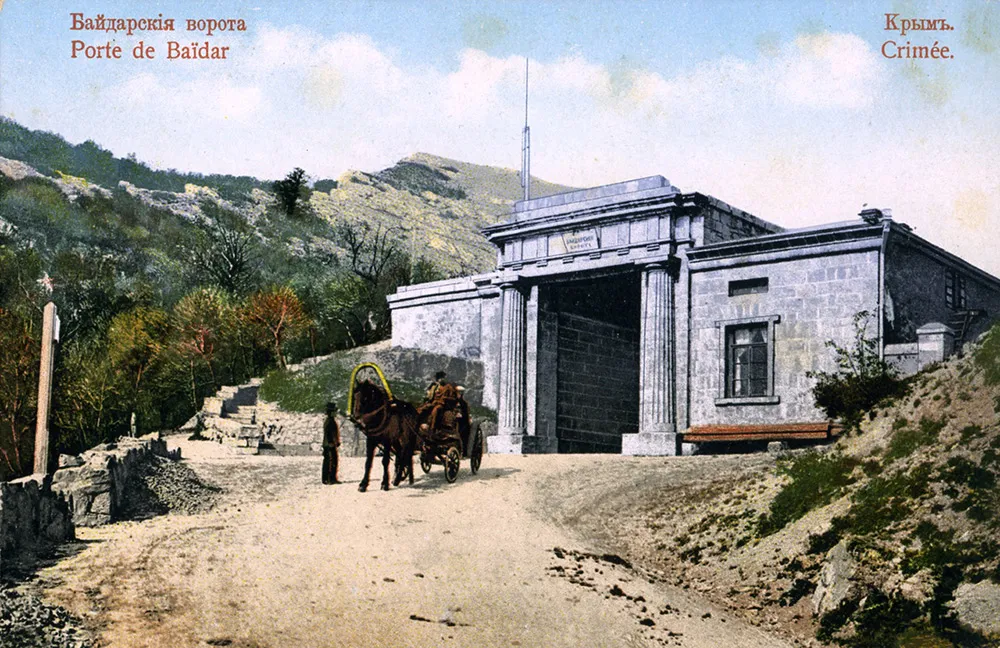
The Baidar Gate is an architectural monument of national significance, built in 1848 on the Baidar Pass in Crimea. It is a stone arch that became the symbolic entrance from the Baidar Valley to the Black Sea coast.
History and architecture
- Date of construction: 1848.
- Architect: Karl Ivanovich Eschliman (1808–1893), a Swiss-born architect who worked in the Russian Empire.
- Location: the Baidar Pass, between Mount Chelebi (657 m) and Mount Chu-Bair (705 m), at an altitude of 527 m above sea level.
- Purpose: built as a ceremonial gate on the old Sevastopol–Yalta highway, which was constructed from 1837 to 1848 on the initiative of Governor-General Mikhail Vorontsov.
The arch is made of stone, with a viewing platform built above it, offering a panorama of the Baidar Valley and the coast. The gate became not only a functional element of the road but also a symbol of the entrance to the southern coast of Crimea.
Cultural significance
- Status: architectural monument of national significance (protection no. 1226).
- Tourist appeal: from the viewing platform one can see the Baidar Valley and the Foros Church of the Resurrection of Christ (built in 1892 on the Red Rock).
- Natural surroundings: the pass is part of the Baidar Landscape Reserve, which underscores its natural and cultural value.
Thus, the Baidar Gate combines an engineering function, architectural expressiveness and symbolic meaning, remaining an important historical monument and tourist attraction in Crimea.


