

The government has simplified the procedure for concluding protection agreements for monuments
On 30 May the Cabinet of Ministers of Ukraine adopted a resolution “On Amendments to Resolution of the Cabinet of Ministers of Ukraine of 28 December 2001 No. 1768”. The amendments to the Procedure for Concluding Protection Agreements update rules that had governed the field for more than twenty years and had become badly outdated. Simplifying the procedures will help bring more cultural heritage sites under protection. This is reported by the Government Portal.
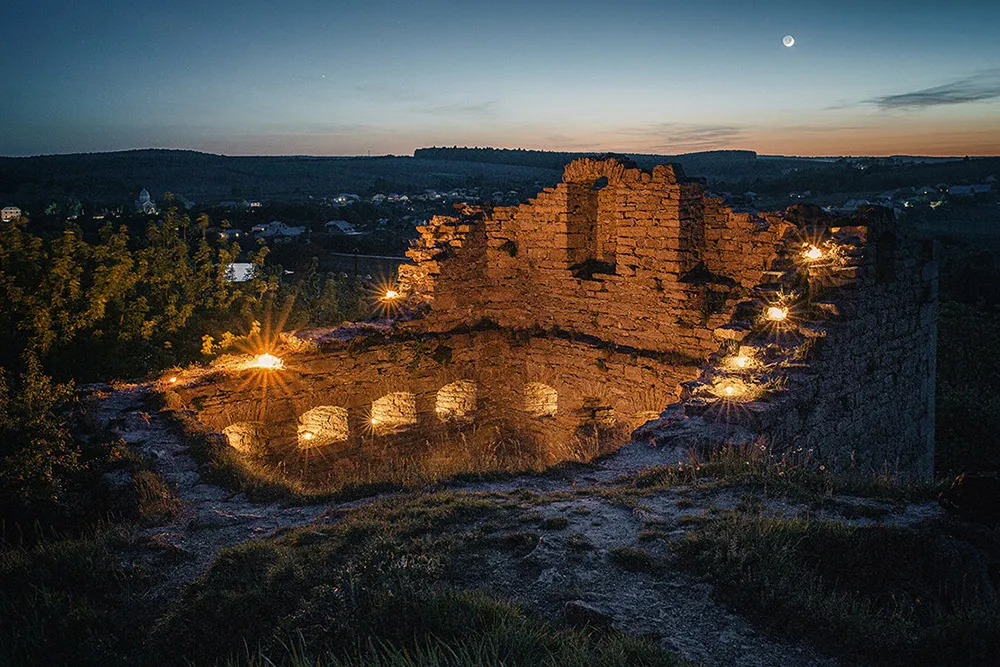
The castle in Sataniv. Photo by Ihor Motsnyi and Dmytro Poliukhovych
What exactly has changed in the area of protection agreements:
- a form of protection agreement for newly identified cultural heritage sites has appeared. This will finally make it possible to implement in practice the provision of Article 23 of the Law of Ukraine “On the Protection of Cultural Heritage” and to strengthen the preservation of newly identified cultural heritage sites until they are entered in the State Register of Monuments;
- the forms of passports and deeds have been improved depending on the type of monument;
- discrepancies that previously arose when concluding protection agreements for monuments of monumental art, landscape garden art, landscape, science and technology, history and archaeology have been resolved;
- from now on the procedure for approving protection agreements for monuments of national significance with the Ministry of Culture and Information Policy has moved to electronic form. This will shorten the time needed to conclude them and reduce printing costs;
- the cultural heritage protection authority with which a protection agreement may be concluded has been specified.
Overall, the amendments to the Procedure will:
- speed up the procedure for concluding protection agreements;
- resolve discrepancies that previously existed between the Procedure for Concluding Protection Agreements and the Law of Ukraine “On the Protection of Cultural Heritage”;
- help improve the protection of newly identified cultural heritage sites. From now on, cultural heritage protection authorities will be able to conclude protection agreements for them with owners and users.


