

Polish cemeteries of Podillia presented in Horodok
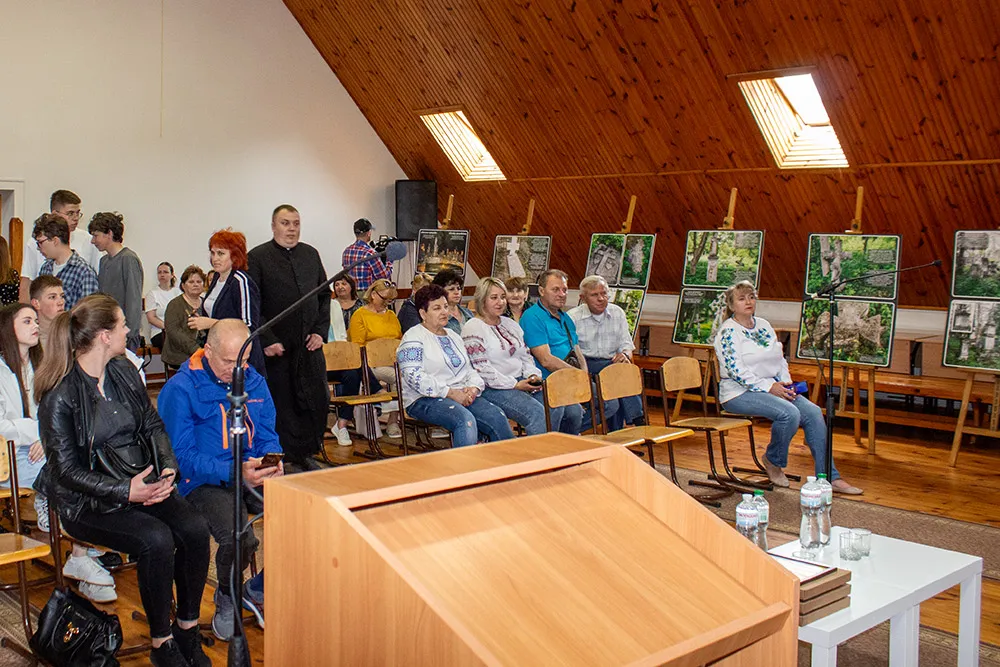
On 28 May a photo exhibition devoted to the ancient Roman Catholic (Polish) cemeteries of Podillia opened at the Institute of Theological Sciences of the Immaculate Virgin Mary in Horodok, Khmelnytskyi region. This is reported by DEPO. The event is the result of the work of local historians within the project “Graves of the Ancestors”, initiated by the Horodok City Council, the Department of Culture, Nationalities, Religions and Tourism of the Horodok City Council and the NGO “Ukraine Incognita”. We recall that within this project all the old necropolises (Ukrainian, Polish and Jewish) of the former Horodok district are to be surveyed. The aim is to show the multinational and multi-confessional history and culture of Podillia, which will undoubtedly promote harmony in society. It will also help to identify interesting locations that will contribute to the development of tourism in the community. The exhibition is timed to coincide with Ukrainian Local Historian’s Day, which is celebrated today.
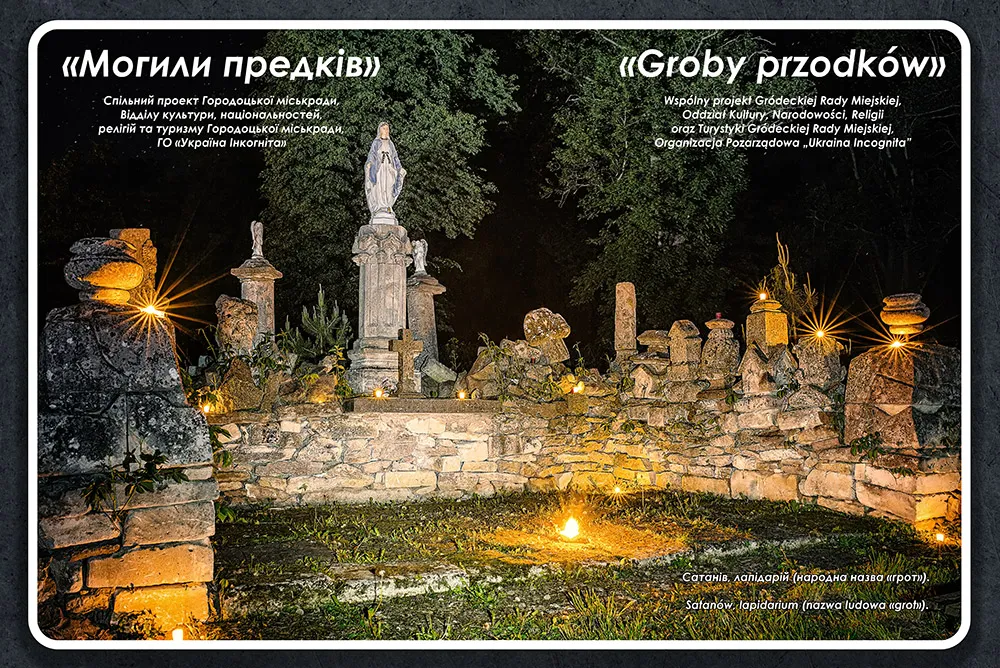
One of the exhibition panels
The project has been running for almost a year, during which the local historians have managed to survey almost three dozen necropolises and burial places. In that time a number of interesting finds and discoveries have been made. Some were of nationwide significance and resonance, for example the find of the so-called “pilgrim crosses”: marks in the form of crosses of various types that pilgrims scratch to reinforce prayers in especially holy or venerated places. Previously in Ukraine such crosses were known only in ancient churches and cave monasteries, but not at burial sites. An interesting and resonant discovery was the touching and sad “Monument to Lost Love”, about which the national media wrote a great deal.
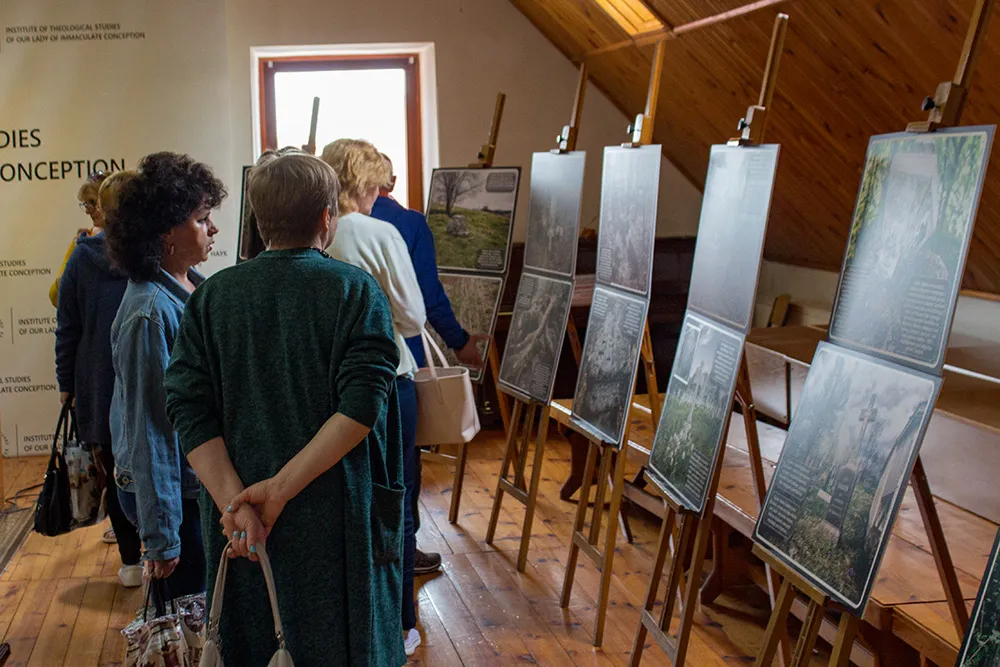
The exhibition is the first “material” result of the project “Graves of the Ancestors”, not counting, of course, more than fifty publications about the research results that appeared in regional, national and foreign media.
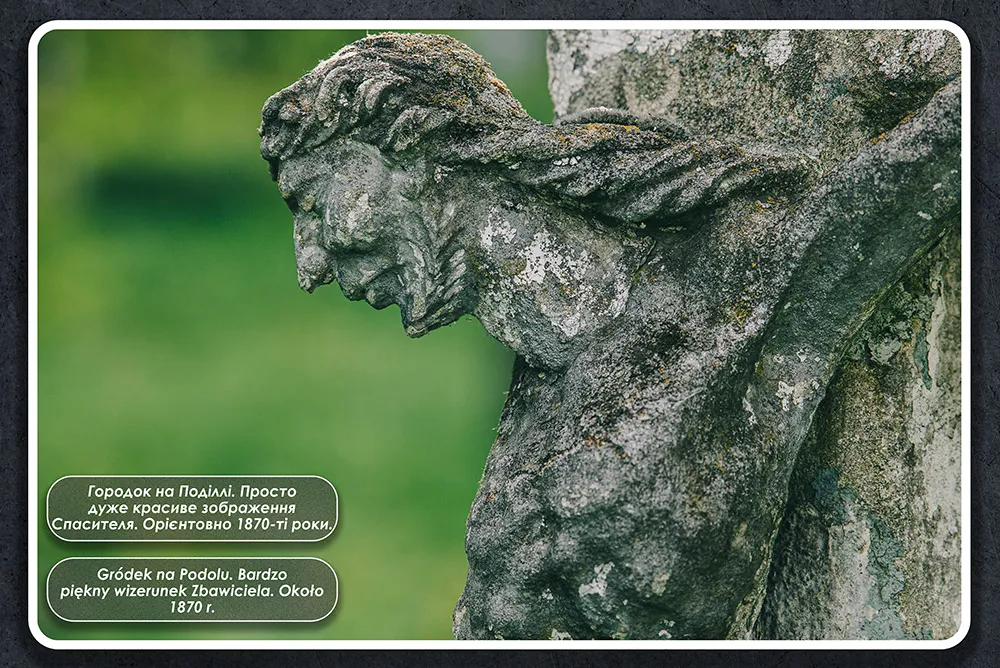
A symbolic and significant fact: the panels for the exhibition were printed in Kharkiv. Until recently this was an insignificant detail. Today, sadly, it is an important one…
“We began with a photo exhibition specifically about Polish cemeteries for several reasons,” says Oleh Fedorov, head of the Department of Culture, Nationalities and Religions. “First, most of the Roman Catholic necropolises of the Horodok area have by now been surveyed. Most importantly, we want to give this exhibition to our Polish sister-city friends from Sochaczew, who will celebrate their City Day on 30 May. Our towns have been twinned for 31 years, and in honour of this 31 exhibition panels will be handed over to our friends.”
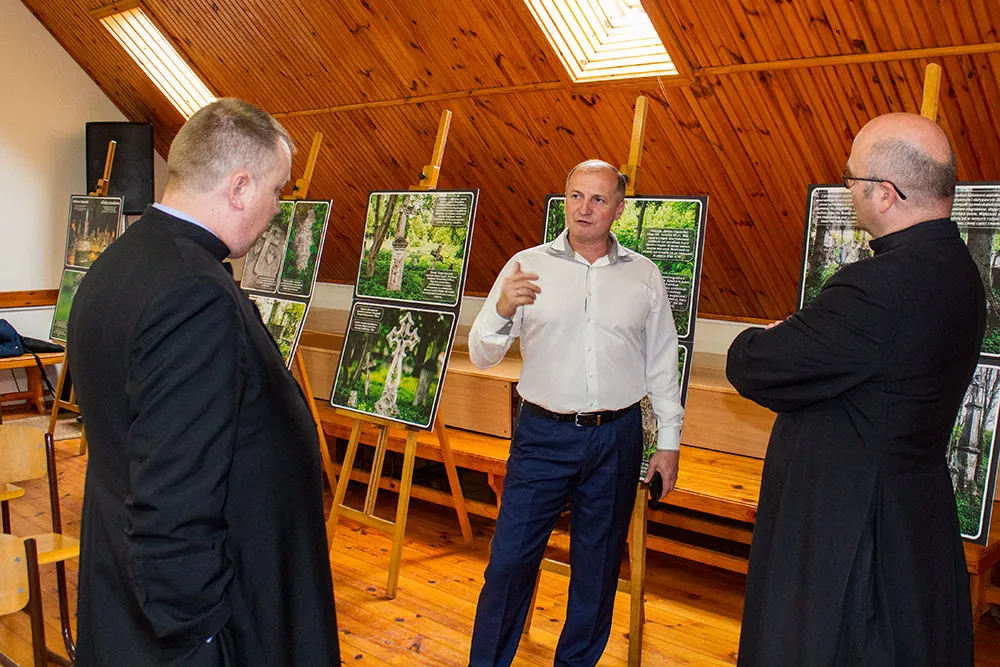
Oleh Fedorov (centre)
Interestingly, 29 panels are devoted to purely Polish cemeteries. One each is devoted to a Ukrainian and a Jewish one.
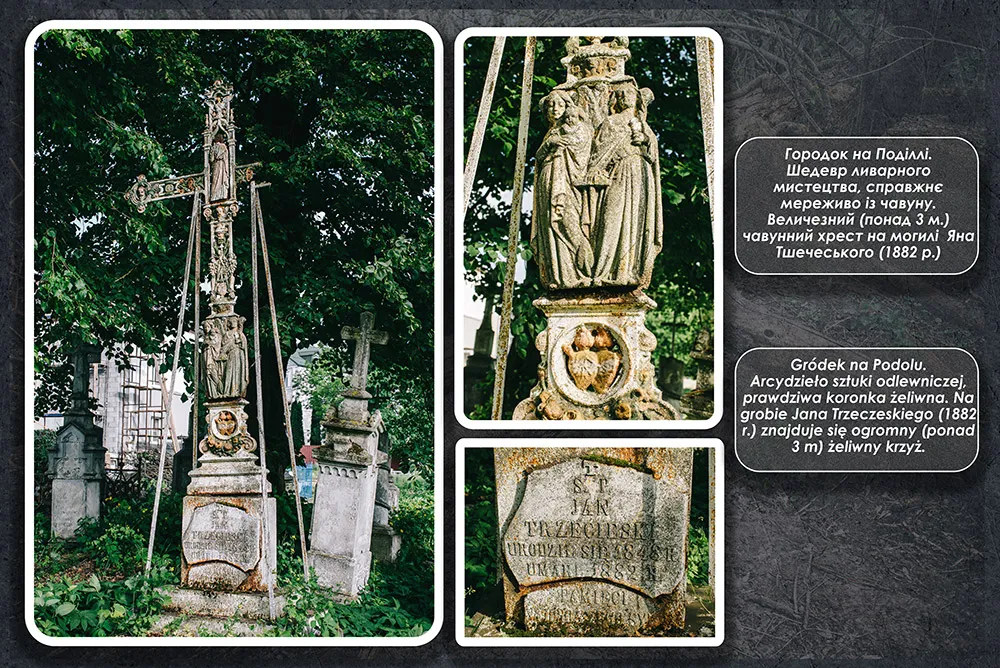
“The cultures of the peoples who lived in Podillia influenced one another quite strongly,” says Dmytro Poliukhovych, a local historian and participant in the project from the NGO “Ukraine Incognita”. “In particular, in Sataniv’s Roman Catholic cemetery there are several crosses in a purely Ukrainian, Orthodox ‘design’. Conversely, in the Orthodox (Ukrainian) cemetery of the village of Kumaniv we found gravestones decorated with the ‘IHS’ christogram in the classic Roman Catholic tradition. It is even more interesting with the Jewish cemetery in Horodok. The image of an eagle embodying God is a rather common subject on matzevot. But in our case the master who decorated a gravestone of the first half of the 18th century, when depicting this bird, took as his model the Polish heraldic eagle from some coin of the period. He merely turned its head the opposite way. On the same gravestone we see floral decoration borrowed from Ukrainian decorative and applied art.”
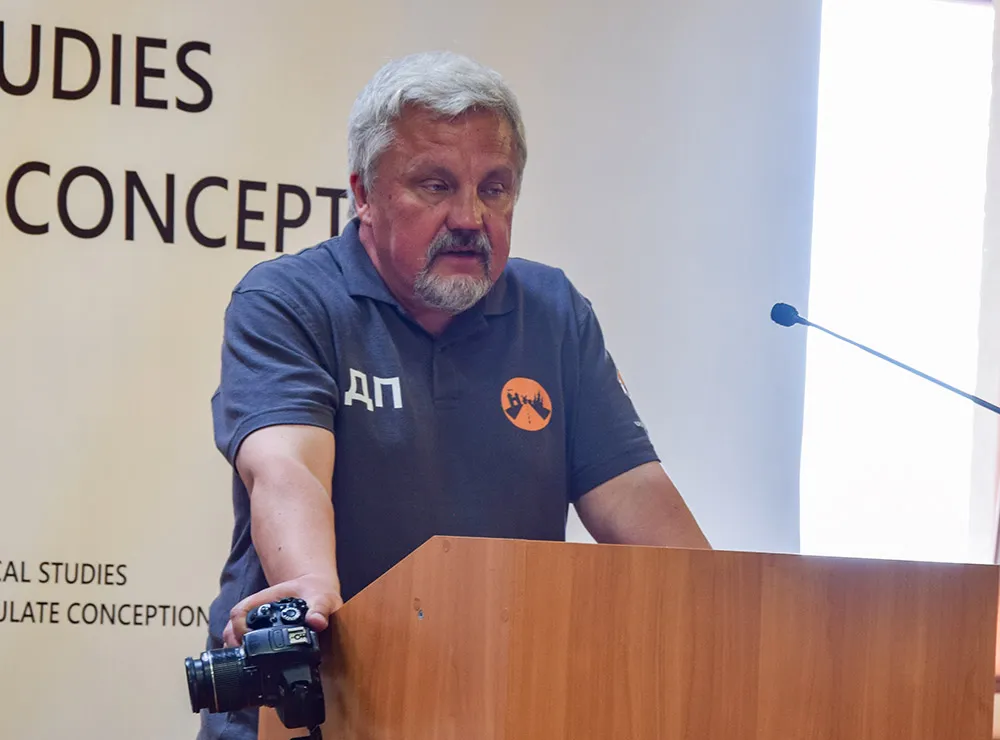
“Ukraine Incognita” team member Dmytro Poliukhovych
The Institute of Theological Sciences was chosen as the venue for the first showing of the exhibition not by chance: the Institute’s staff provided consultations during the implementation of the project.
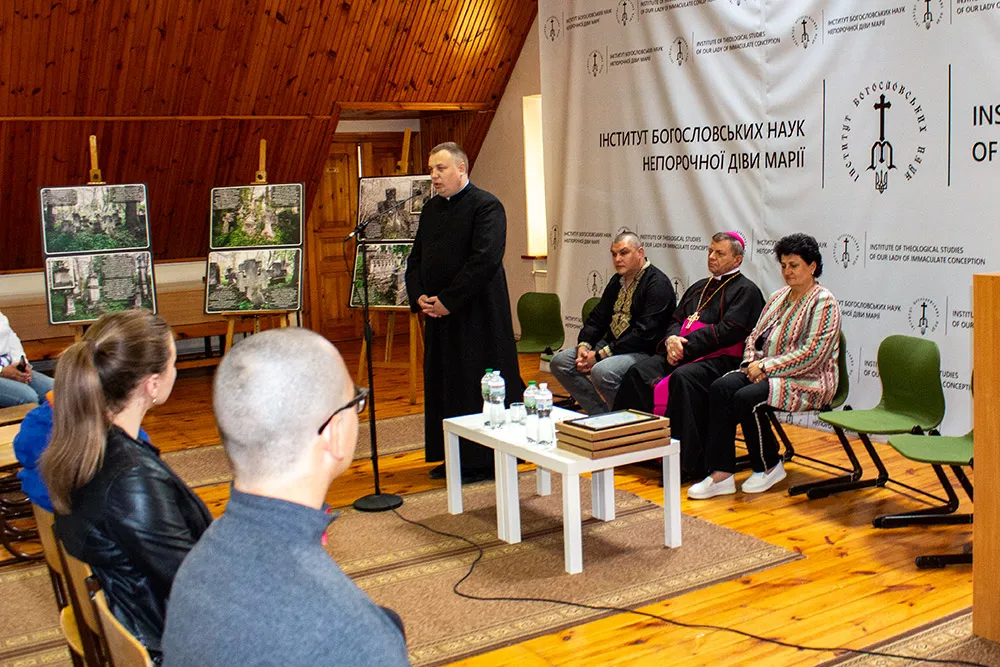
Rector of the Institute, Fr Oleh Zharuk
“Studying the history of the Horodok area through the prism of the history of cemeteries is no easy task. However, studying history from precisely this angle reveals the identity of our Podillian land,” comments the Institute’s rector, Fr Oleh Zharuk. “The Soviet authorities tried to erase the memory of the past, destroying old cemeteries regardless of denomination. Today we observe the consequences with sadness. It is very important that such a project, initiated here in Horodok, has continued. After all, it is important for us to discover how our ancestors lived, their faith and their belonging to one people or another.”
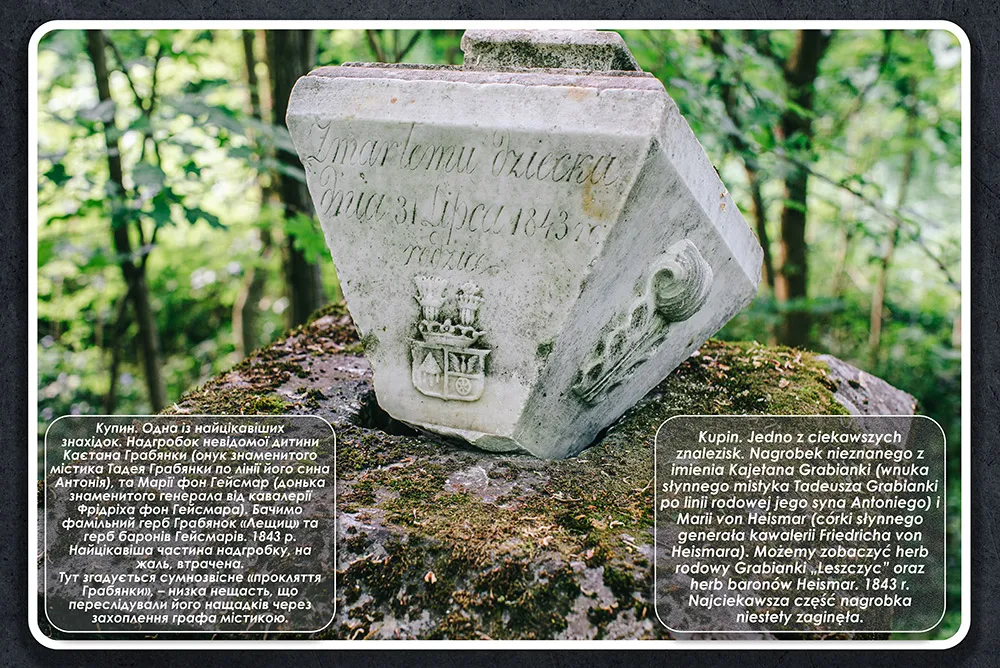
Note that in Horodok alone the Communists destroyed (together with churches) two very interesting Roman Catholic necropolises: the one near the Church of St. Anne (with burials from the early 18th century) and a not much younger cemetery near the Church of St. Stanislaus. In the village of Ostapkivtsi, an old Ukrainian cemetery was likewise destroyed and ploughed up for the sake of a patch of field. Jewish cemeteries fared best, and even that only because they lie on terrain inconvenient either for building or for farming.
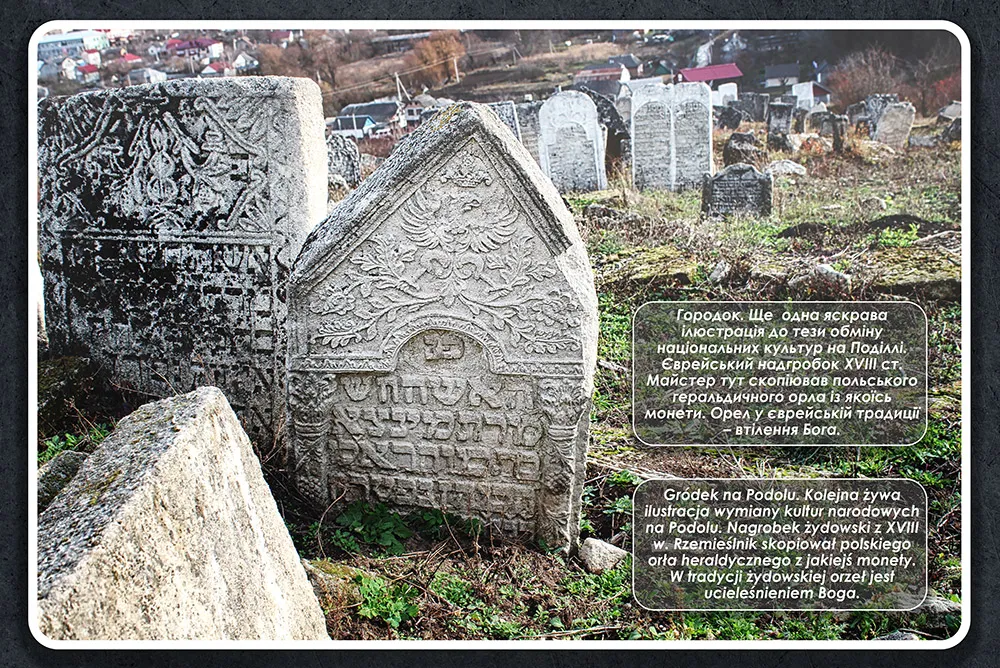
The motifs of Polish heraldry are easy to trace in this eagle
Olha Bystrytska, the manager of affairs (secretary) of the executive committee of the Horodok City Council, stressed the importance of the project “Graves of the Ancestors” for studying the history of the Horodok area and for the residents of the community to know more about their past and about the history and culture of neighbouring peoples who lived peacefully side by side for centuries. She also noted that the sister-city friends from Sochaczew know about the exhibition and are eagerly awaiting its arrival in Poland.
In addition, she presented certificates of honour to the project participants Oleh Fedorov, Dmytro Poliukhovych and Vitalii Nyshchyi from the head of the Khmelnytskyi Oblast State Administration, Serhii Tiurin, with which they were awarded for a significant contribution to the development of local history studies and for researching and popularising the historical and cultural heritage of Khmelnytskyi region.
The opening of the exhibition was attended by representatives of the city authorities, cultural institutions of Horodok, pupils of the Junior Academy of Sciences, Polish public organisations, Roman Catholic priests, teachers and students of the Higher Seminary of the Holy Spirit and, of course, of the Institute of Theological Sciences, and citizens who care about the history of their native land. Everyone was invited.
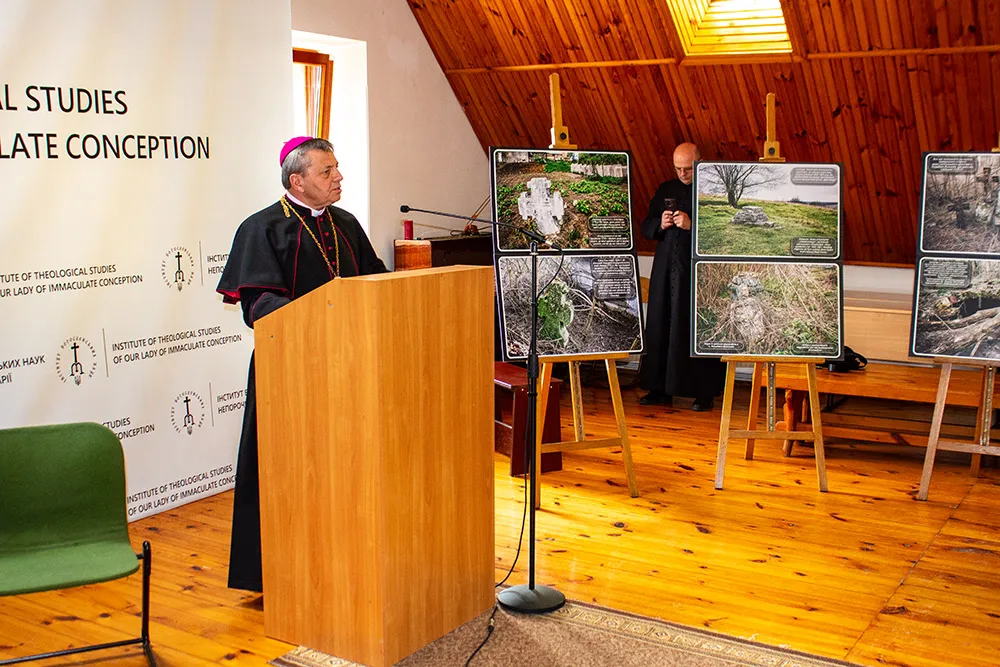
The guest of honour was the Bishop of the Kamianets-Podilskyi Diocese, Leon Dubravskyi. He noted in particular the importance of studying necropolises as an important component of historical heritage. He also recalled the sacred significance of burial places for Christians, “because the first Christians gathered in the catacombs near the tombs of their fellow believers.” Accordingly, in His Excellency’s opinion, the Communists destroyed necropolises on a par with churches. All the more so because during the Communist persecution of the Church the faithful quite often gathered for prayer precisely in cemeteries.
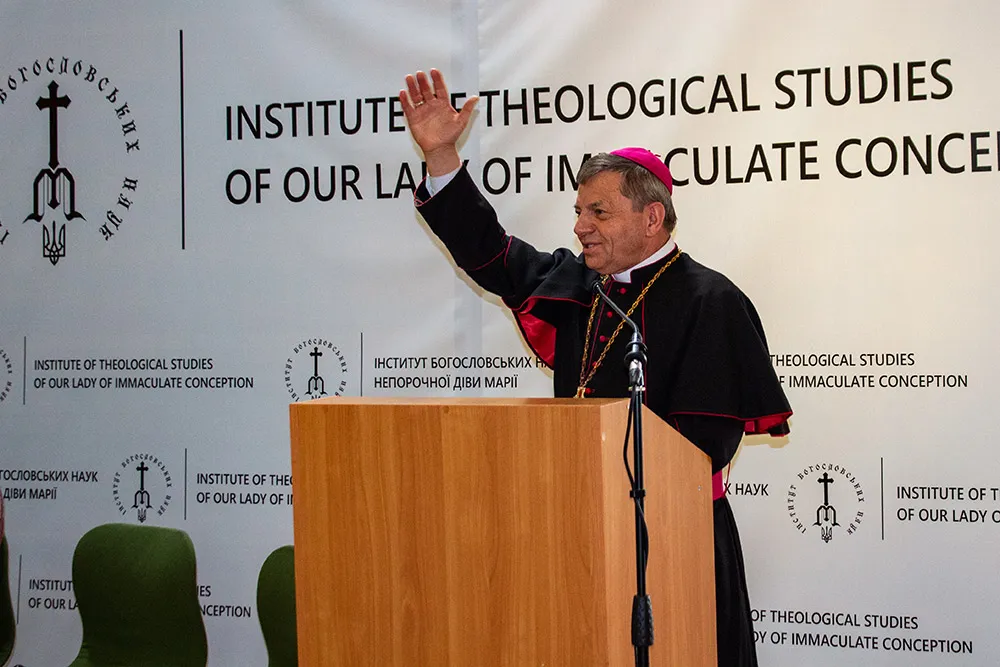
Bishop Leon Dubravskyi assessed the activity of the “Graves of the Ancestors” project team with the words “Some destroy, some build.” That is, if some destroyed and desecrated cemeteries, then the researchers, preserving the memory and showing it to others, act as builders. The bishop also expressed the wish that as many people as possible see this exhibition, and said it would be good if it were seen not only in Horodok but also in Kamianets, Khmelnytskyi and other places.
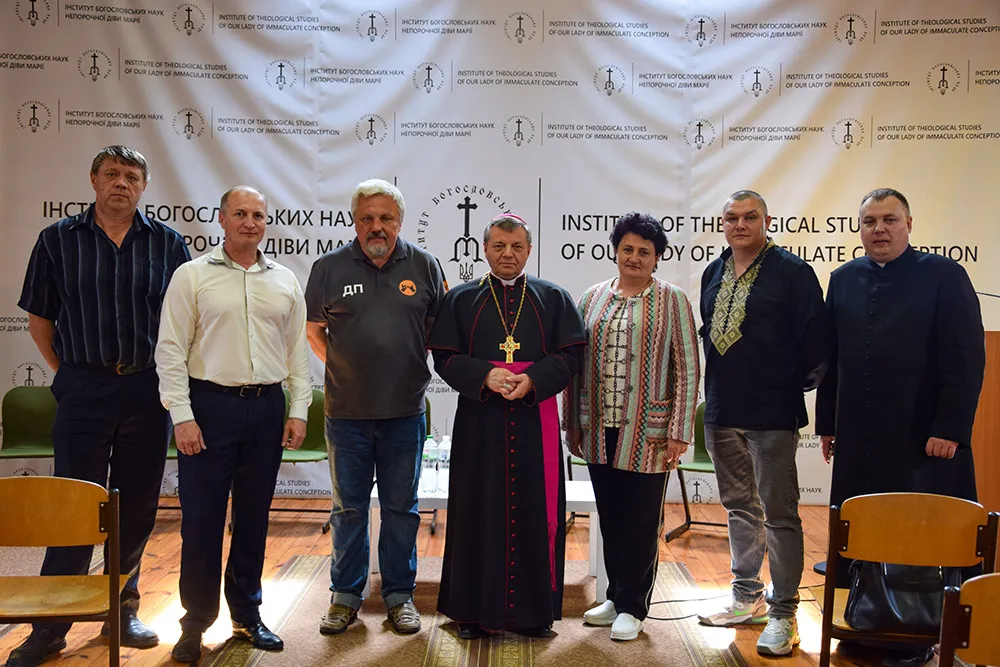
Members of the “Graves of the Ancestors” project team Valentyn Nyshchyi, Oleh Fedorov, Dmytro Poliukhovych, Bishop of the Kamianets-Podilskyi Diocese Leon Dubravskyi, Olha Bystrytska, team member Ihor Motsnyi and the Institute’s rector Fr Oleh Zharuk
The exhibition in Horodok will be on display only briefly. On 29 May it will travel to Poland, to the sister city.
The next photo exhibition will be devoted to ancient Ukrainian cemeteries. There is also a great deal of interest there.


