

Exhibition devoted to the ancient Jewish cemetery of Sataniv opens in Khmelnytskyi
Today, 24 September, to the sound of the shofar, an exhibition by “Ukraine Incognita” NGO team member Dmytro Poliukhovych, “Sataniv: The Lost World of the Ancient Jewish Cemetery” / “Stone Lace of Ancient Matzevot”, devoted to the traditional art of Ukraine’s Jews, opened at the Khmelnytskyi Regional Scientific and Methodological Centre of Culture and Art. Khmelnytskyi is already the fourth large city to show this exposition. Before that it was in Dnipro, Kyiv and Odesa. In January next year it will also be seen in Vinnytsia.
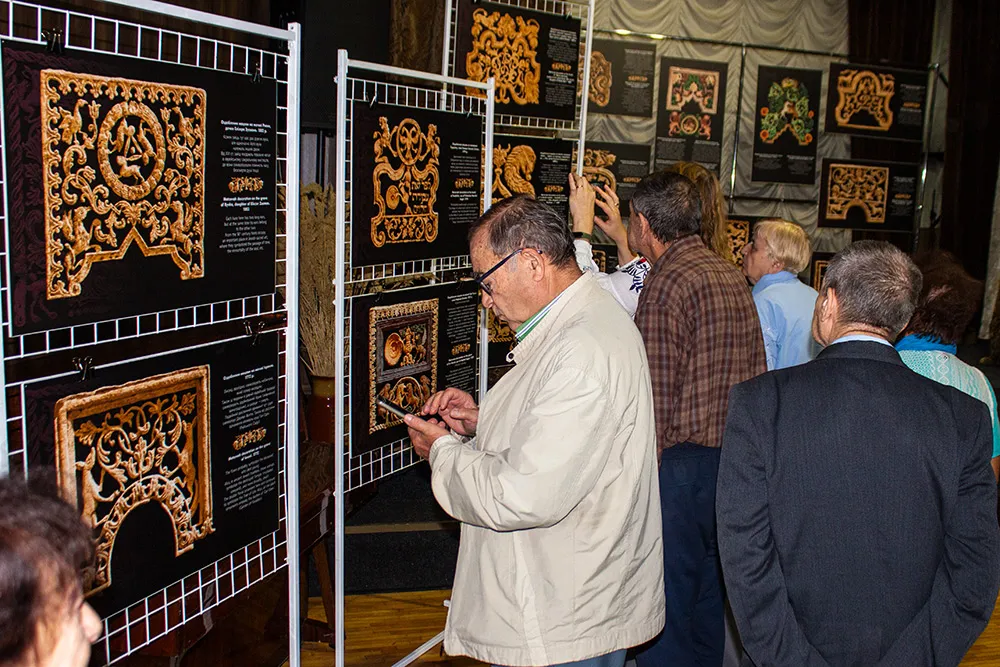
Photo: Natalka Nadvynychna
The exhibition came about with the assistance of the United Jewish Community of Ukraine, which funded the production of the far from cheap display panels and helped considerably with organization. It was first seen at the largest Jewish museum in Ukraine, “Memorial Center of the Jewish People and the Holocaust in Ukraine” (Dnipro).
The exhibition presents Mr Dmytro’s works based on the refined carved decoration of matzevot (gravestones) from the mid-17th to the early 19th century.
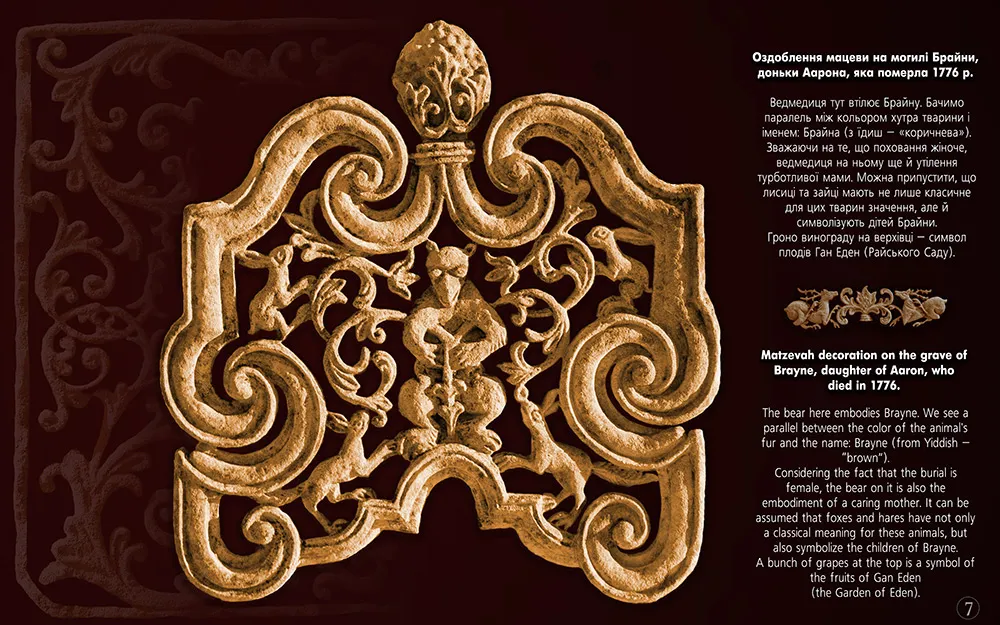
One of the exhibition panels
Perhaps the most vivid assessment of these works was given by Yevhen Kotliar (Kharkiv), Candidate of Art History, professor and Chair of the Academic Council of the Ukrainian Association of Judaica.
“The beautiful and original works of Dmytro Poliukhovych, like a kind of rubbings, preserve and return to us the generous wealth of Renaissance and Baroque forms of these masterpieces of traditional Jewish art. The author tenderly preserves their warmth, texture and play of light and shadow.
The eye slowly glides over these fragile ochre patterns, which evoke associations with the delicate shortbread for the holiday of Purim that Jews baked in the former small towns, the shtetls. For this they used carved wooden Purim moulds (purim-bretl) with similar emblems. In his works, Mr Dmytro carefully detaches the openwork carving from the stone plane and lays it as a silhouette on a dark background, like a three-dimensional paper cutout, a reyzele. Freed from its base, the gravestone’s design heightens the expressiveness of the images and, in some mystical way, gives the image a voice. It is this voice that preserves a direct connection between a contemporary and a vanished artistic culture and a tradition that is still alive and flourishing.”
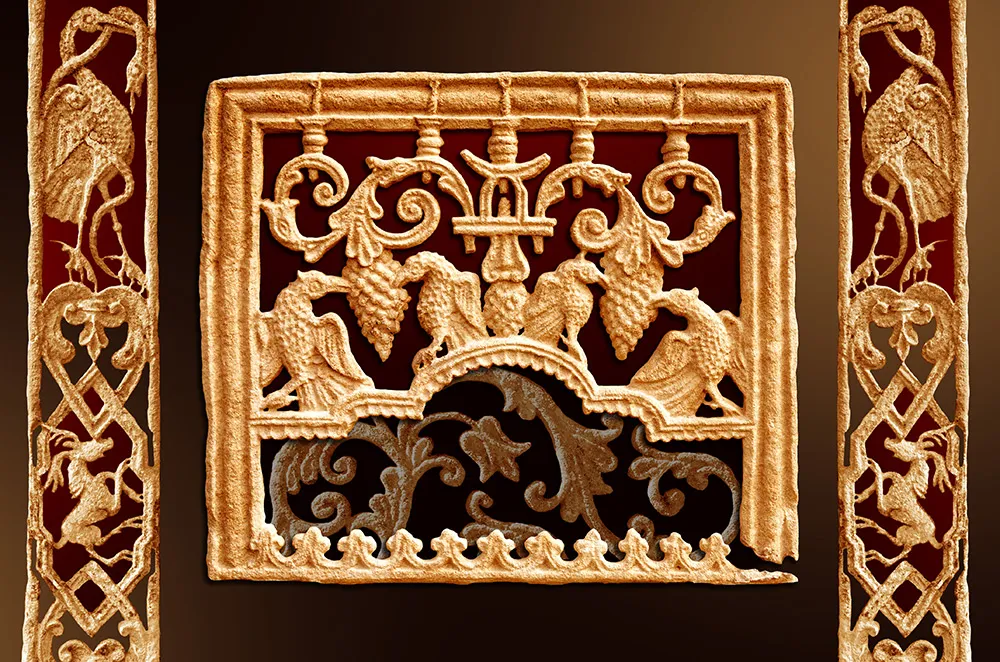
Besides the Khmelnytskyi Regional Scientific and Methodological Centre of Culture and Art itself, the organization of the exhibition involved the Department of Culture, Nationalities, Religions and Tourism of the Horodok City Council and the largest Jewish organization in the Khmelnytskyi region, the charitable foundation “Hesed Besht”. For the aim of the exhibition is not only to show the beauty of the works of the ancient masters, but also to reveal the culture, worldview, religious beliefs and customs of Ukraine’s Jews. It should be understood here that every image on a gravestone carries a whole range of hidden meanings. The exhibition’s author has studied this topic for a good two decades.
As for the mentioned Department of Culture, Nationalities, Religions and Tourism of the Horodok City Council, the latter may indirectly be considered a co-author as well.
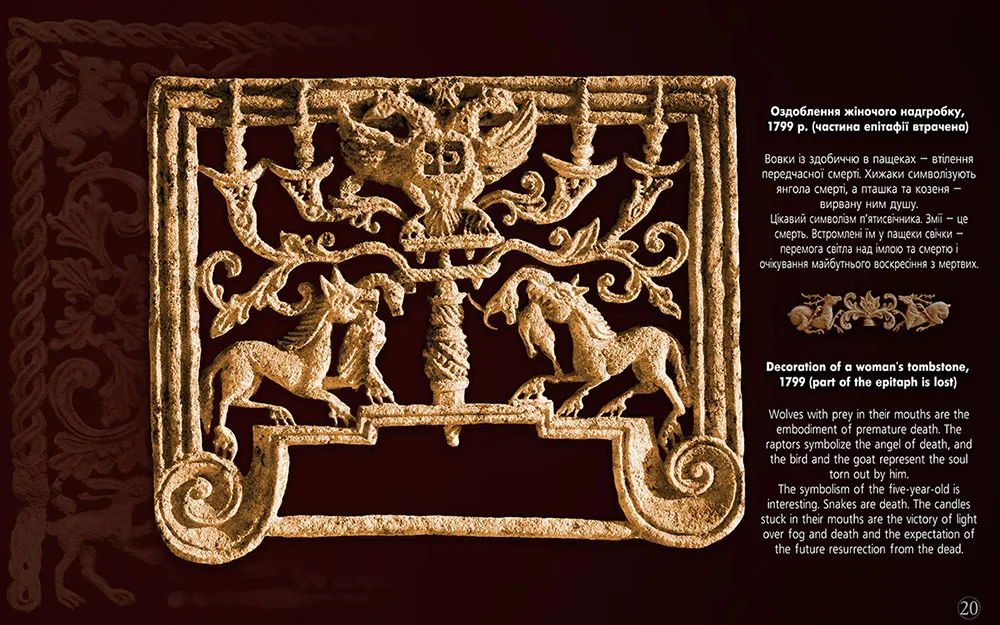
This matzevah was found during an expedition by the head of the culture department, Oleh Fedorov. We stress: the eagle here is an ancient Jewish symbol of God and has nothing to do with Russia!
We have repeatedly written about the “Graves of the Ancestors” project, carried out in partnership between the NGO “Ukraine Incognita” and the above-mentioned culture department, under the patronage of the mayor of Horodok, Ms Neonila Andriichuk. The aim of the project is to study all the old necropolises (Ukrainian, Polish and Jewish) of the former Horodok district. So far almost four dozen locations have been surveyed.
During the expedition’s work at the Jewish cemetery in Sataniv, the project participants found, in addition to those previously known, a number of further matzevot with very interesting and original decoration. At that time colleagues helped Mr Dmytro, a participant in “Graves of the Ancestors” on behalf of “Ukraine Incognita”, to clean them of layers of moss and lichen. It is not an easy process: more than an hour is spent on each bas-relief. Cleaning, let us note, is a necessary part of obtaining a quality photograph of the carving, without which further work is impossible.
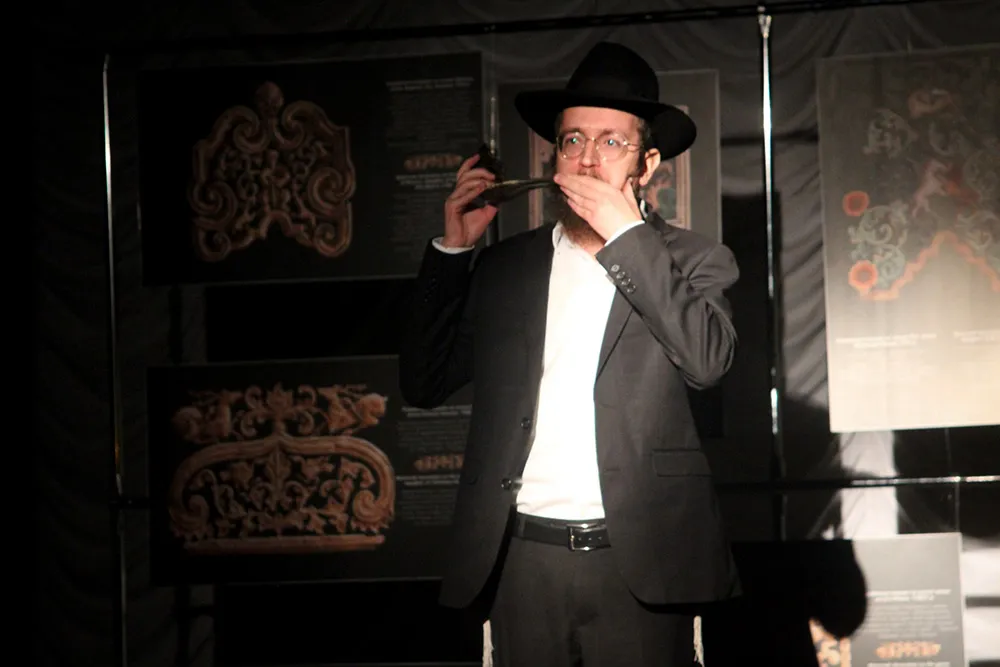
The exhibition opened to the sound of the shofar. Photo: Facebook page of KhONMTsKiM
Greeting the opening of the exhibition in Khmelnytskyi, UJCU Chief Operating Officer Vitalii Kamozin noted in his letter of address, in particular:
“For the United Jewish Community of Ukraine it is a great honour to support an exhibition with the author’s project of Dmytro Poliukhovych, who has found a unique way to show the beauty of matzevah carving. The matzevot of eastern Podillia have the highest level of art among other regions of Ukraine.
Your region is one of the richest in Jewish heritage and has special significance both for the Jewish community of Ukraine and for the international community, since it is here that the founder of Hasidism, the Baal Shem Tov, and his successor Dov Ber of Mezhyrich are buried.
It is valuable to us that this exhibition is now presented in the regional capital; we are grateful for the organization to the Khmelnytskyi Regional Scientific and Methodological Centre of Culture and Art, as well as to the Department of Culture, Nationalities, Religions and Tourism of the Horodok City Council, which has always supported the author in his research work.”
Roza Tapanova, director of the Babyn Yar National Historical Memorial Reserve, in whose exhibition pavilion the exhibition was shown in the spring, drew attention to a symbolic coincidence:
“It is symbolic that after its journey across Ukraine – Dnipro, Kyiv, Odesa – the masterpieces of the ancient masters of Sataniv return to their homeland, Podillia, precisely in the days when the world marks the sad anniversary of the Babyn Yar tragedy, one of the most terrible and bloodiest pages in the history of the Jewish people. This exhibition can be seen not only as a story about Jewish history and culture, but also as a requiem and a kind of monument to the civilization of the shtetls destroyed by the Catastrophe.”
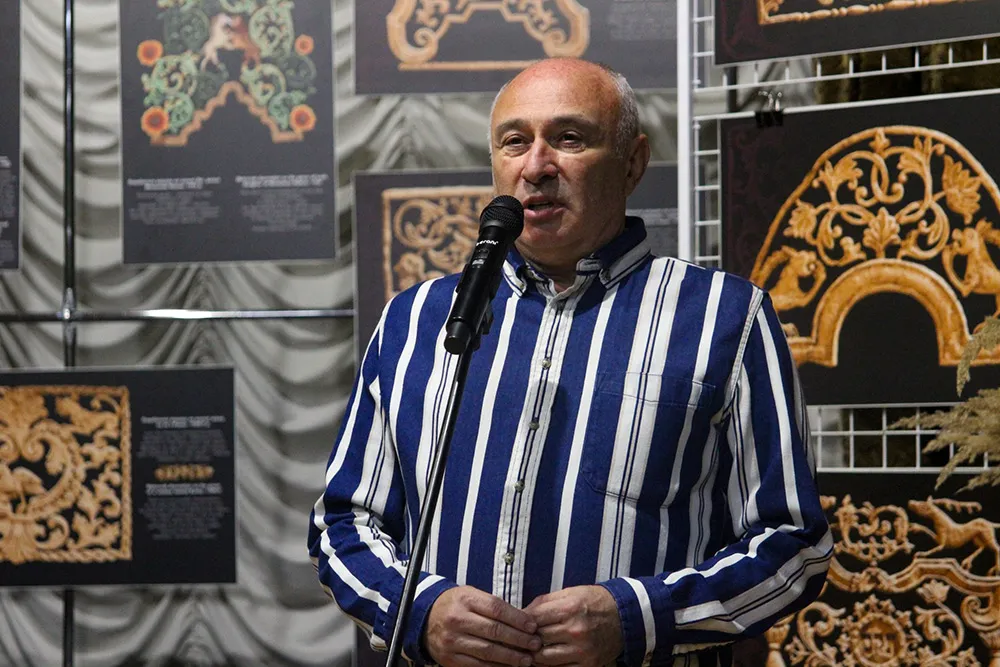
Ihor Ratushnyi. Photo: Facebook page of KhONMTsKiM
Ihor Ratushnyi, director of the Khmelnytskyi charitable foundation “Hesed Besht”, remarked:
“Where there is memory, words are not needed! Exhibitions are a unique cultural and historical event for our city and for all of Ukraine. This exhibition opens up to us the incredible world of the Jewish cemetery as a cultural asset, in which every matzevah carries a wealth of history, symbols and art, testifying to the life path of people who lived on this land, worked and developed Ukraine over many centuries.
We at the Khmelnytskyi charitable foundation “Hesed Besht” always strive not only to support our community but also to share its heritage with a wider audience. It is important to remember that matzevot are not merely gravestones: they are testimony to the culture, spirituality and craftsmanship of our ancestors. Their exquisite carving reflects their dreams, aspirations, faith and hopes. Each element of the ornament tells a story of life that is closely linked to the history of the city itself. This exhibition became possible thanks to the joint efforts of historians, volunteers and our friends who care about the fate of Jewish heritage in Ukraine. We are deeply grateful to everyone who took part in this project for their love and respect for the past. May this exhibition serve as a reminder of our shared responsibility to preserve our cultural heritage and pass it on to future generations.”
The director of KhONMTsKiM, Merited Artist of Ukraine Maiia Onyshchuk, noted:
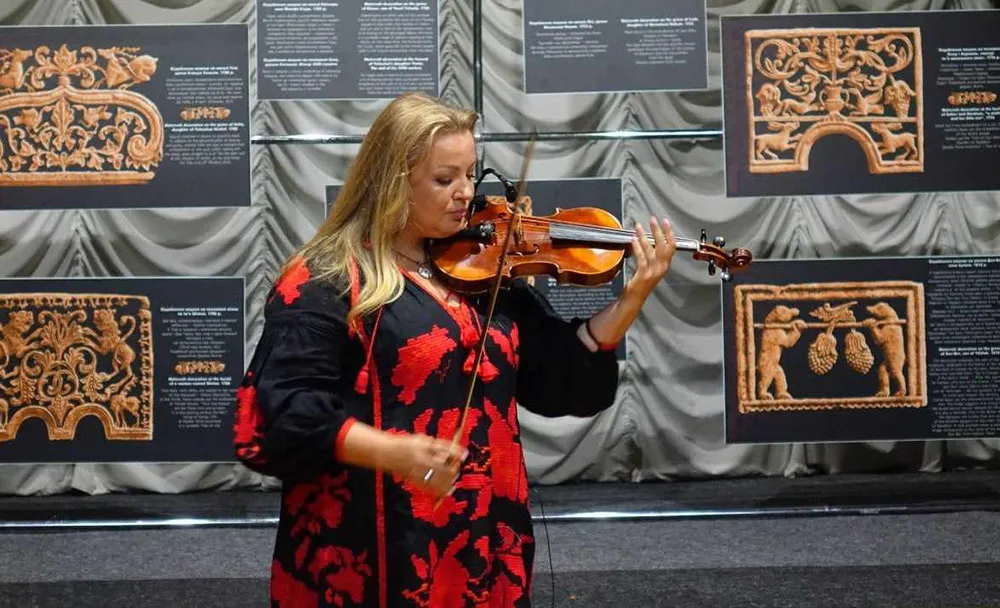
Maiia Onyshchuk
“The main thing for us is to show the high culture, customs and beliefs of a people who for centuries lived and still live beside us, and who have a rich spiritual heritage and faith. We respect the national minorities living in the Khmelnytskyi region and hold joint events that popularize the culture of both peoples.”
Ms Onyshchuk also played on the violin a sad and soulful melody from the famous film “Schindler’s List”.
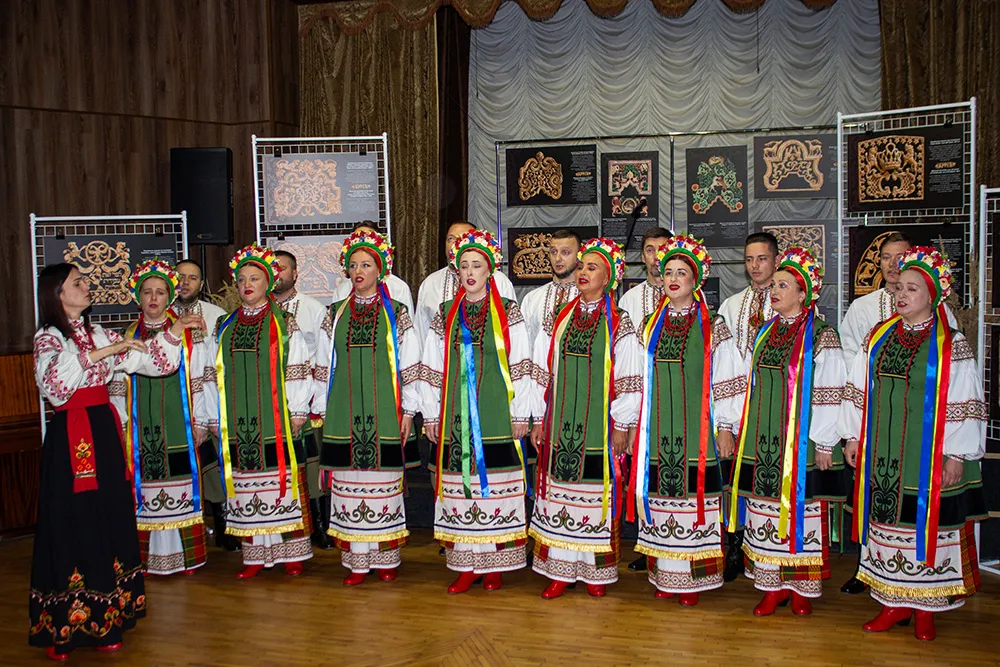
To conclude the opening ceremony, the Academic Song and Dance Ensemble “Cossacks of Podillia” performed Ukraine’s spiritual anthem “Great and Only God”.
The exhibition at KhONMTsKiM will run until the end of the month. After that it can be seen on the premises of the charitable foundation “Hesed Besht”


