

Stucco and paintings restored in the former refectory of the Dominican monastery in Lviv

· 3 min read
An exhibition hall has been restored at the Lviv Museum of the History of Religion, reports ZAXID.NET.
This is the former refectory of the Dominican monastery. Here rare Rococo stucco work and six oil paintings on the walls depicting Dominican monasteries were restored. Among them are Zhovkva, Pidkamin, Jarosław, Bohorodchany, Tarnobrzeg-Dzików and Tulchyn.
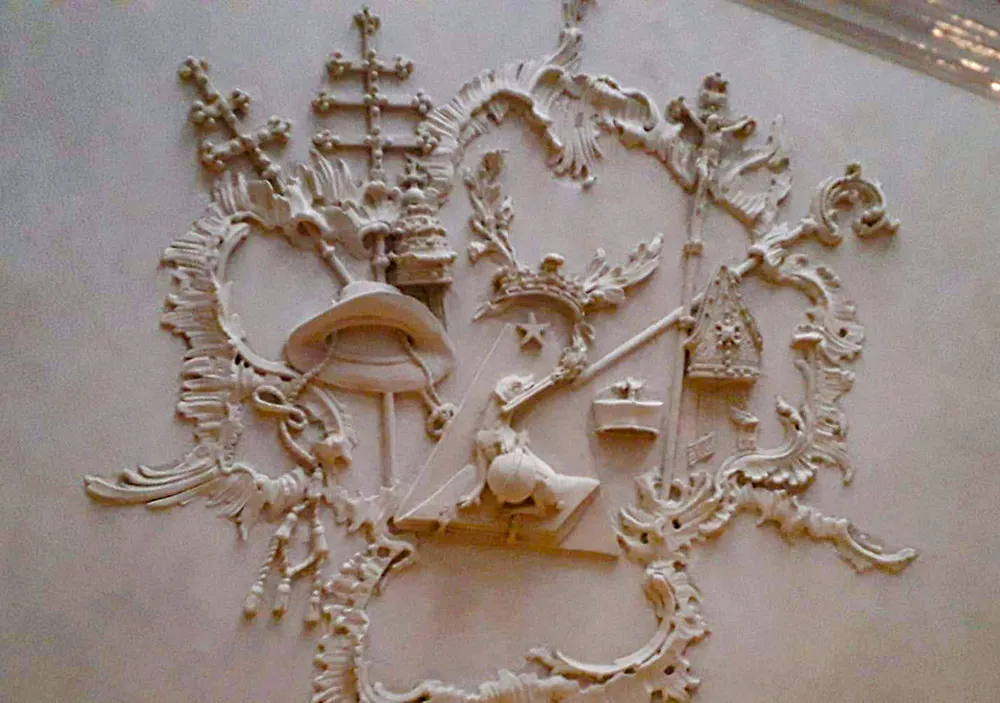
Rococo stucco with papal coats of arms. Photo by Orest Malets
“On the eve of Christmas we have good news at the museum. A distinguished commission of the Instytut Polonika summed up the results of the project to restore the refectory of the former Dominican monastery, now an exhibition hall, and confirmed the completion of the work,” said museum director Orest Malyts.
The director said the work lasted two years and was funded by the Instytut Polonika. A team of Polish and Ukrainian restorers led by Paweł Boliński and Lesia Hanuliak worked on restoring the monument. They restored a refectory of about 200 m2.
“We restored the vaulting and six paintings in the lunettes showing the largest Dominican monasteries of the Ruthenian province, strengthened the plaster layer, and restored the Rococo stucco on the ceiling with the papal coats of arms. We also cleared the east wall, where we found older paintings with fragments of an image of St. Dominic with a dog holding a torch in its teeth, and a place for an icon on the west wall,” said Orest Malyts.
Restorer Lesia Hanuliak said the work was quite complicated. There were cracks in the vaulting and losses of stucco and decoration.
“On the basis of old photographs we managed to restore the lost elements and find the original color. There are paintings from different periods. This hall is Rococo, from the late 18th century, one of the few examples in Lviv. The oil depictions of Dominican monasteries date from the late 19th century. They were in a dire state and on the verge of destruction,” says Lesia Hanuliak.
The restorers also made test probes on the vaults and walls of other rooms and found paintings under a layer of plaster in the cloister walk (the gallery with the exhibition). There are fragments of floral ornament, animals and inscriptions. They, too, await restoration.
Note that restoration work had previously been carried out at the monument under the state program “Grand Restoration”. From November 2021 to February 2022, almost 80% of the work was done. The joinery and wooden double-glazed windows were replaced, restoration of one hall began, where the walls were cleared, the electrics replaced and a screed poured.
The Baroque Dominican monastery and the church next to it were built in Lviv in the 18th century on the site of a dismantled Gothic one. The monks used the premises until the Second World War, after which they left for Poland. In the former monastery the Soviet authorities set up a museum of atheism, which, with the restoration of Ukraine’s independence, became the Museum of the History of Religion. The church now functions as the Church of the Most Holy Eucharist


