

An exhibition devoted to a unique treasure has opened at the National Museum of the History of Ukraine
For Kyiv Day, the National Museum of the History of Ukraine has prepared a mini-exhibition about one of Kyiv’s unique Rus-era hoards. This is reported on the Museum’s official page on Facebook.
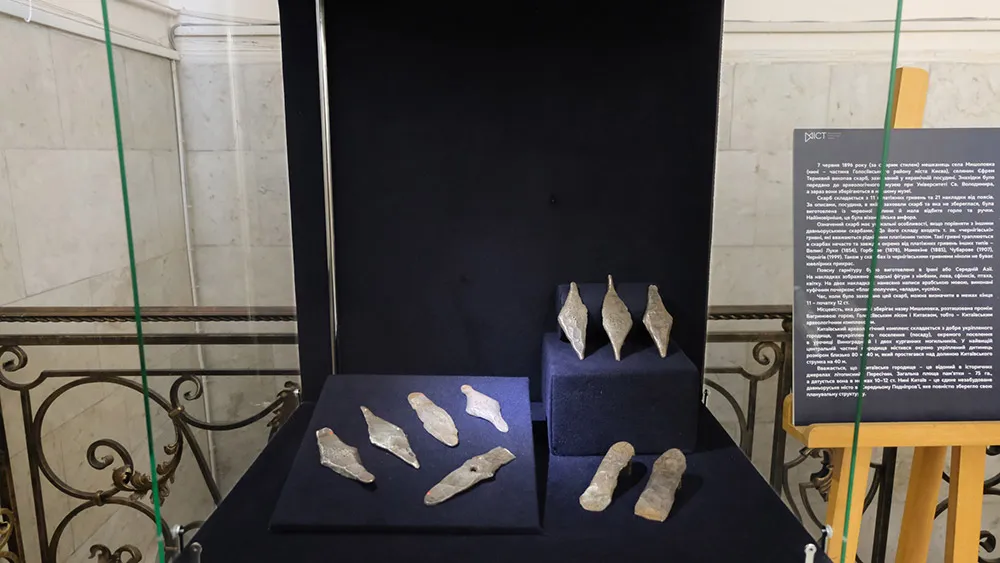
As the announcement states, on 7 June 1896 (Old Style) a resident of the village of Mysholovka (now part of Holosiiv district of Kyiv), the peasant Yefrem Ternovyi, dug up a hoard hidden in a ceramic vessel. The finds were handed over to the archaeological museum at St Vladimir University, and now they are kept in our museum.
The hoard consists of 11 payment hryvnias and 21 belt plaques. According to descriptions, the vessel in which the hoard was hidden, which has not survived, was made of red clay and had a broken-off neck and handles. Most likely it was a Byzantine amphora.
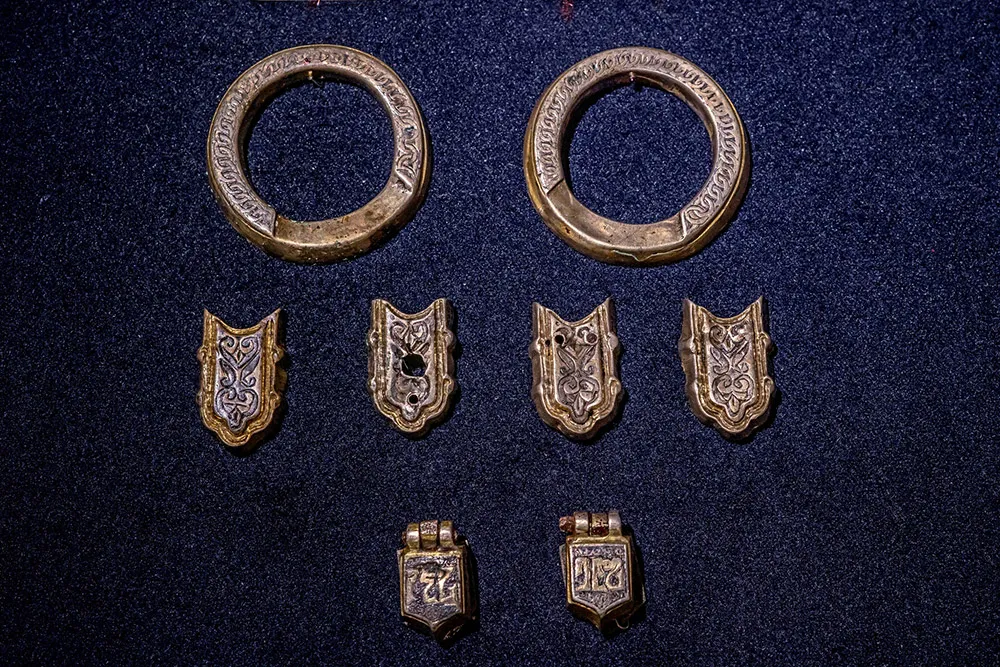
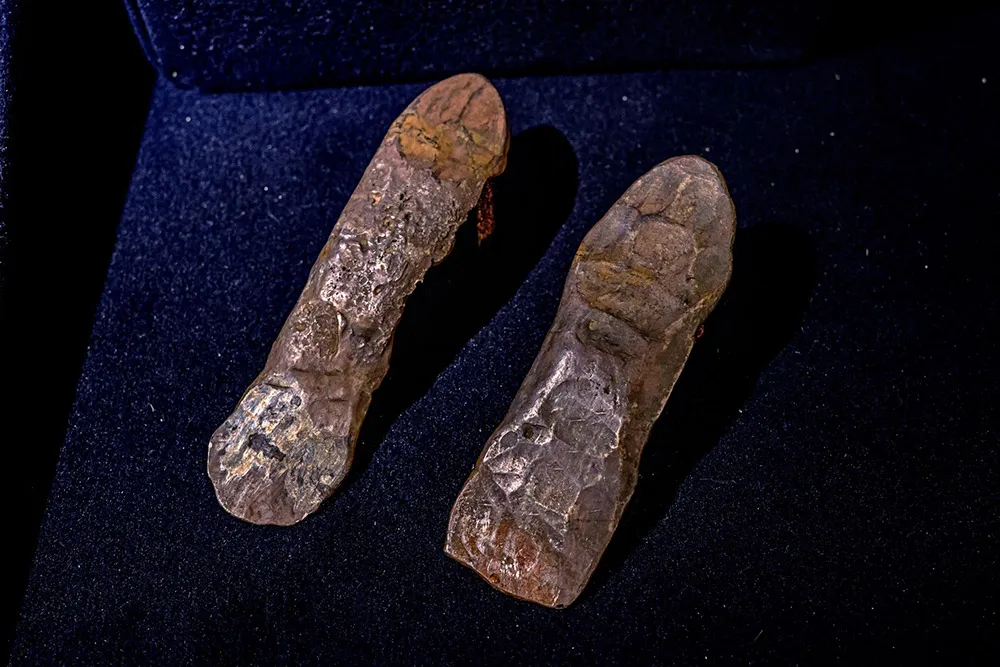
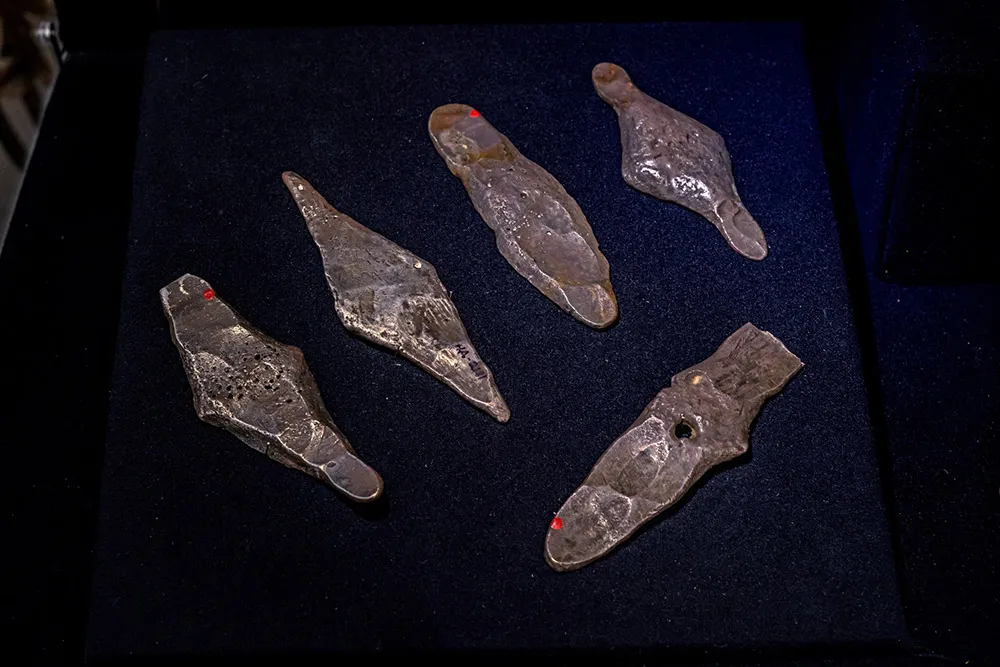
This hoard has unique features compared with other Rus-era hoards. It includes the so-called “Chernihiv” hryvnias, which are considered a rare type of payment ingot. Such hryvnias are found in hoards infrequently and always separately from payment hryvnias of other types: Velikiye Luki (1854), Horbove (1878), Mamekine (1885), Chubarove (1907), Chernihiv (1999). Also, hoards with Chernihiv hryvnias never contain jewellery. The belt set was made in Iran or Central Asia. The plaques depict human figures with haloes, a lion, sphinxes, a bird and a flower. Two plaques bear inscriptions in Arabic in Kufic script: “well-being”, “power”, “success”.
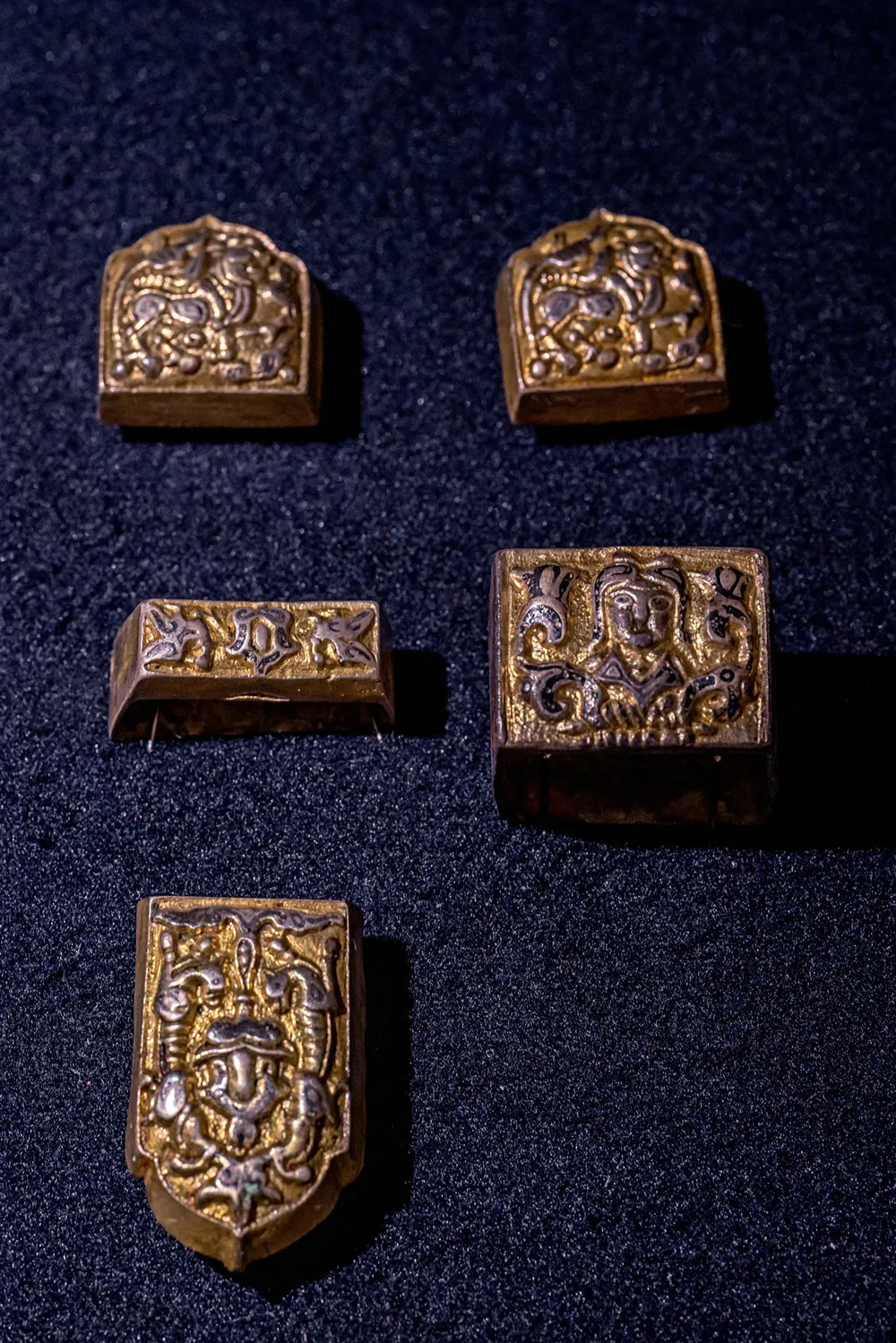
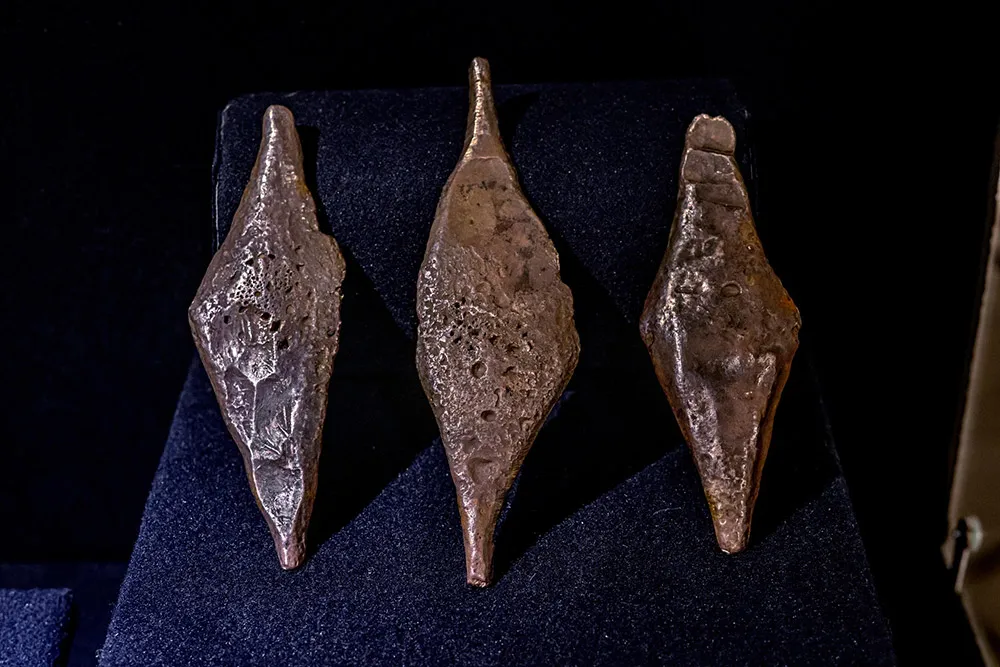
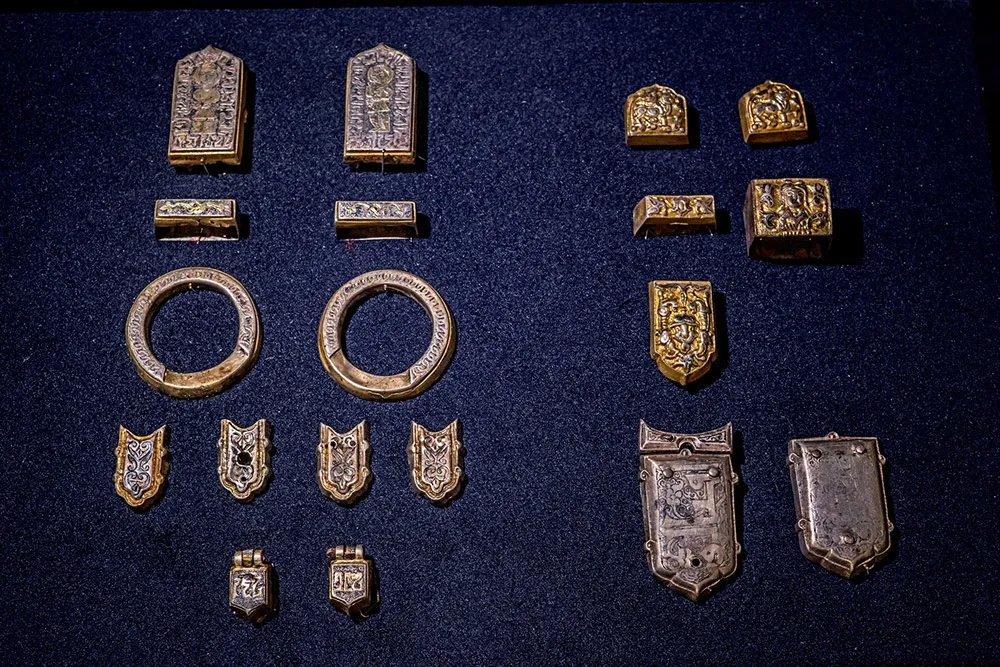
The time when this hoard was hidden can be placed between the late 11th and early 12th century. The area, which still preserves the name Mysholovka, lies between Bahrynova Hora, the Holosiiv Forest and Kytaiv, that is, the Kytaiv archaeological complex. The Kytaiv archaeological complex consists of a well-fortified hillfort, an unfortified settlement (the posad), a separate settlement in the Vynohradnyi tract and two barrow cemeteries. In the highest central part of the hillfort there was a separately fortified detinets about 80 × 40 m in size, which rose 40 m above the valley of the Kytaiv stream. The Kytaiv hillfort is believed to be the Peresichyn known from chronicle sources. The total area of the site is 75 ha, and it is dated to the 10th–12th centuries. Today Kytaiv is the only unbuilt Rus-era town in the Middle Dnipro region that has fully preserved its planned layout.
The mini-exhibition will run until 3 June 2025. Hurry up!
Meanwhile, as Ukraine Incognita has already reported, so-called Russian “archaeologists” do not stop digging in occupied Crimea. Recently they published a report on a collection of 1,600-year-old silver and gold jewellery that they found in aristocratic burials on the occupied peninsula.


