

An exhibition on the art of ancient Jewish gravestones opens in Odesa
The genocide museum “Territory of Memory”, created by the Odesa Holocaust Research Center, is the youngest in Ukraine. It opened its doors to visitors only in May this year. The museum is devoted to the genocides of the 20th and 21st centuries: the Armenian genocide, the Holodomor, the Holocaust, the genocide of the Roma people, and the present-day genocide of Ukrainians by Russian invaders.
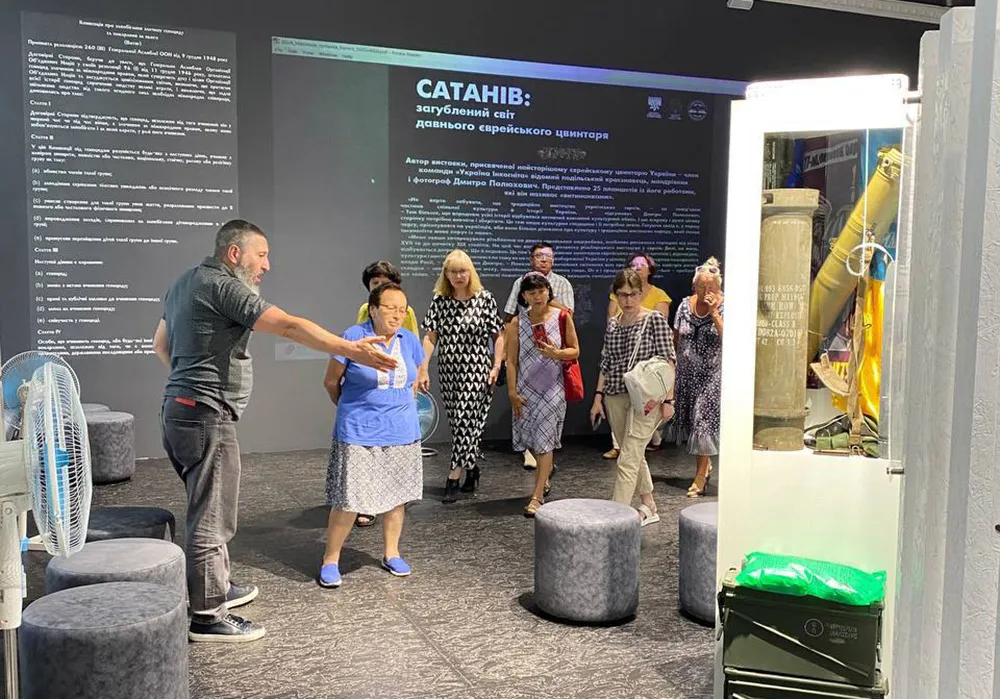
On 17 July, in memory of the culture of Ukraine’s Jewish towns destroyed by the bloody wave of the Holocaust, the museum opened the exhibition “Sataniv: the lost world of an ancient Jewish cemetery”, by Dmytro Poliukhovych, a member of the NGO “Ukraine Incognita” team, local historian and journalist.
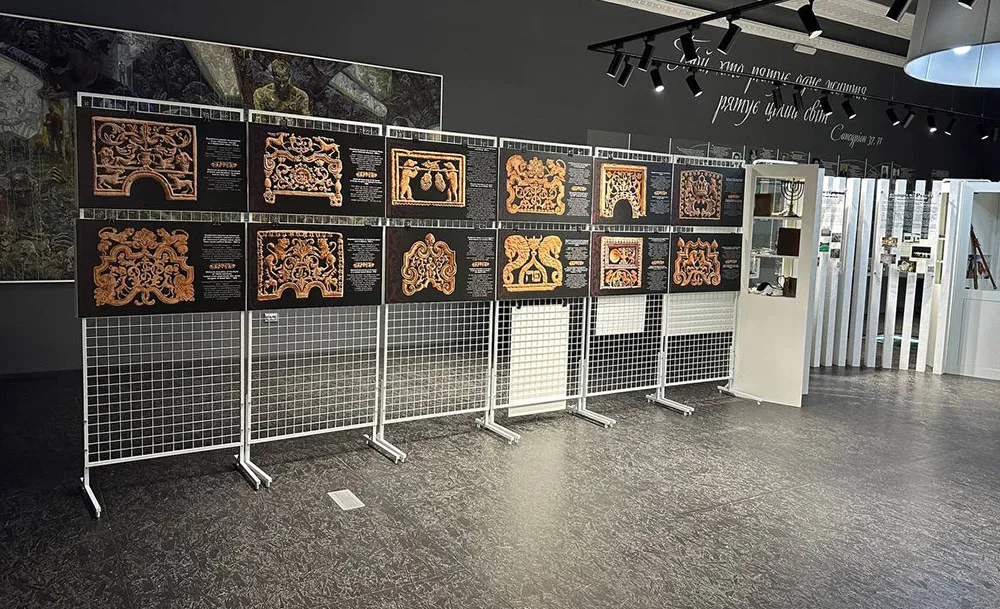
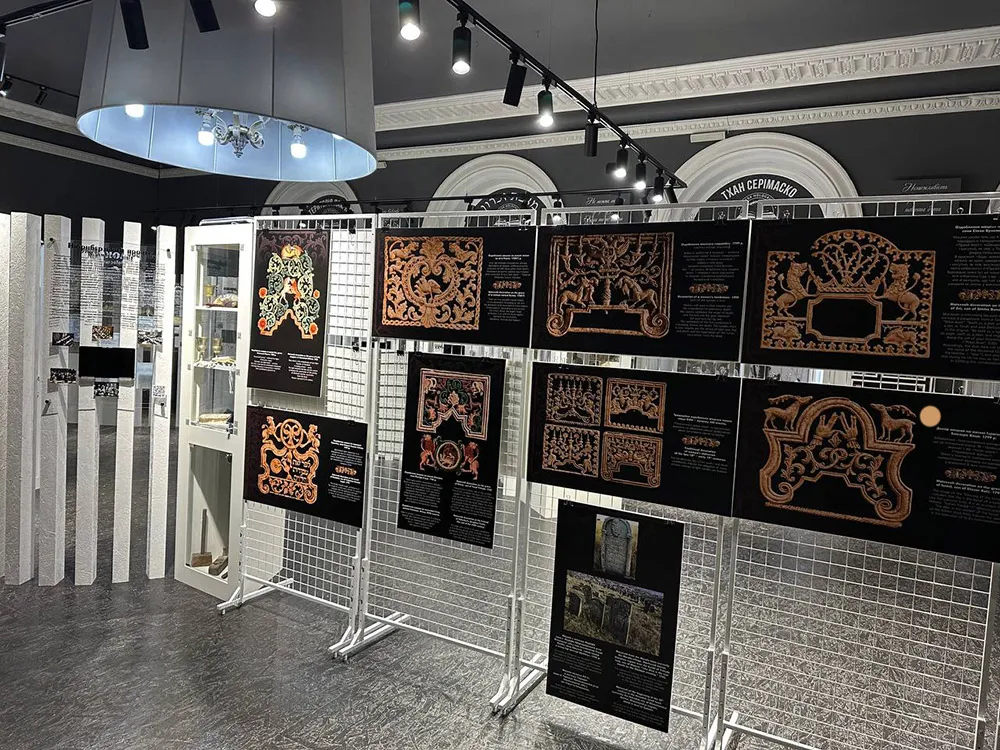
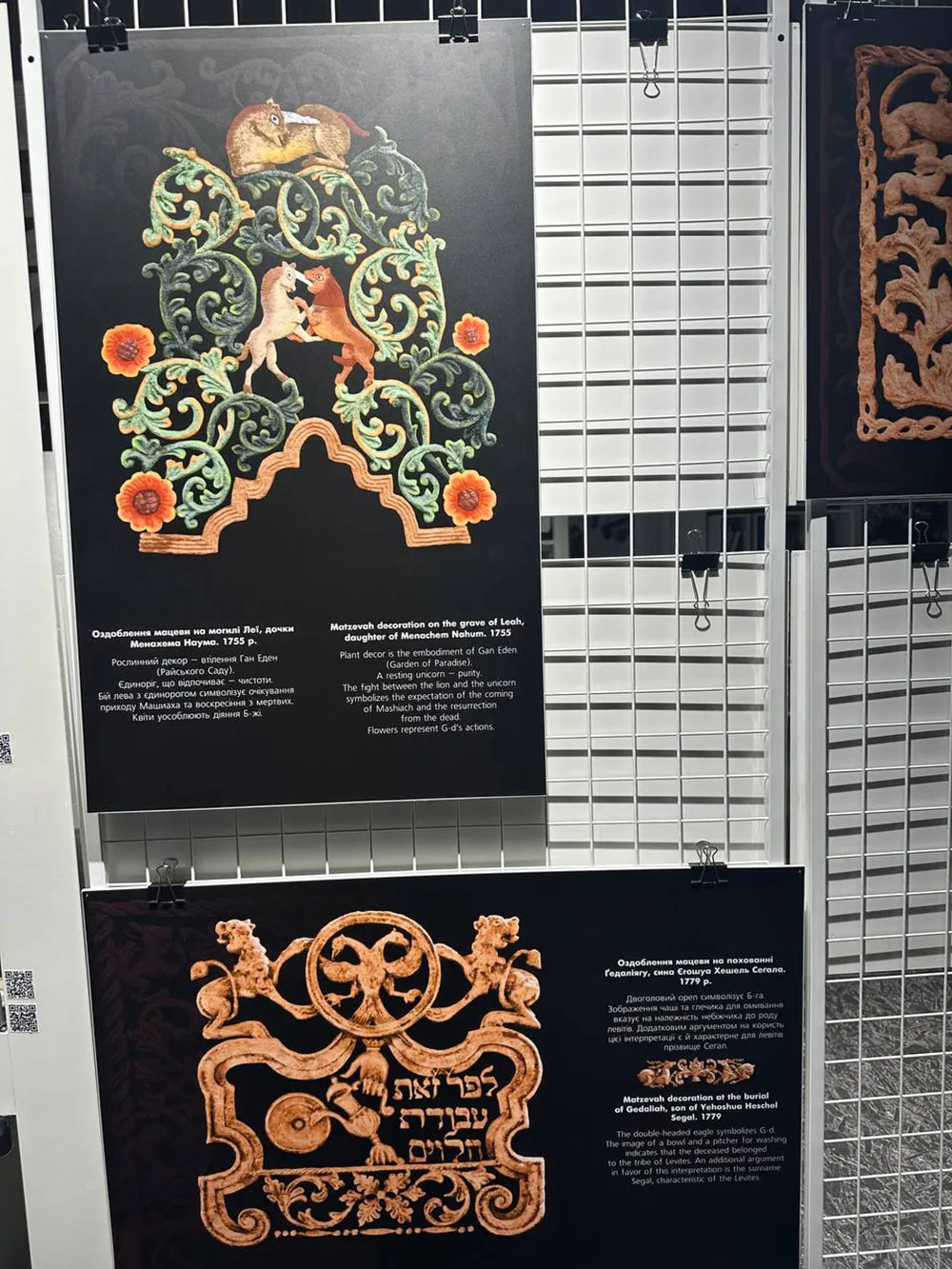
The exhibition presents examples of traditional Jewish folk art through the decoration of ancient matzevot gravestones from the cemetery in Sataniv, spanning the period from the mid-17th to the very beginning of the 19th century. Dmytro devised and put into practice his own method of processing photographs of ancient stone carving, which he calls “cut-outs” (vytynanky), and explains why:
“I have always been fascinated by the carving on ancient Jewish gravestones, especially those dated from the late 17th to the early 19th century. This period saw the peak of the Jews’ stone-carving art. It is quite difficult to show the whole beauty of the old masters’ work in ordinary photographs: patches of moss, lichen, weathering and so on get in the way. So I came up with my own know-how: to remove everything superfluous, that is, to cut out and remove the background entirely. The result is a self-sufficient work of art”, says Dmytro Poliukhovych.
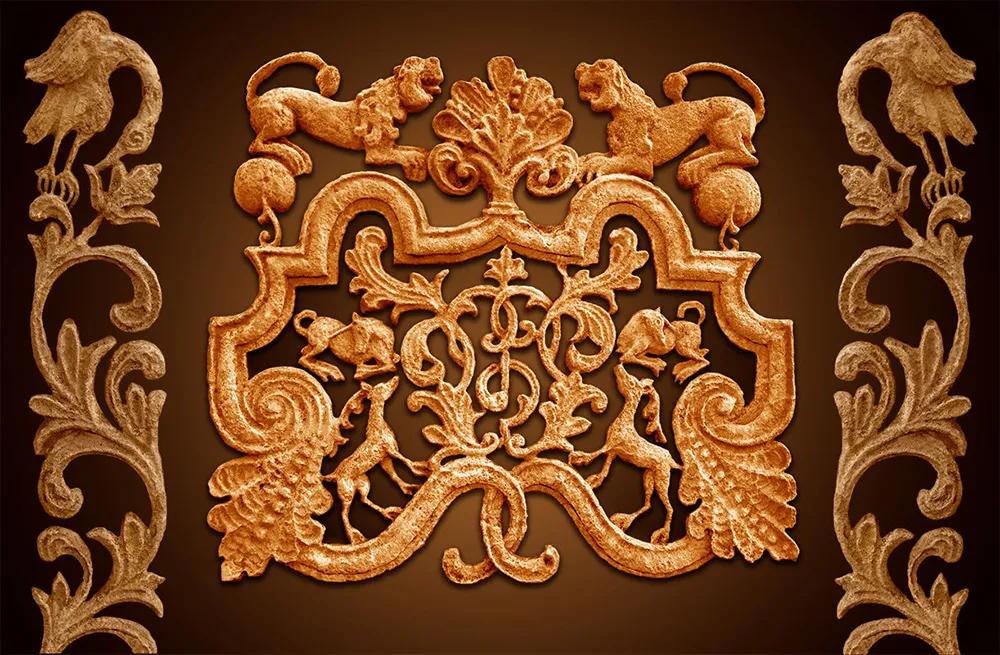
It is worth recalling that a number of the gravestones whose decoration is shown at the exhibition were discovered during the study of the necropolis within the project “Graves of the Ancestors”, initiated by the NGO “Ukraine Incognita” and the Department of Culture, Ethnic Minorities, Religions and Tourism of the Horodok City Council. The aim of the project is to study all the ancient necropolises of the former Horodok district of the Khmelnytskyi Oblast (Ukrainian, Polish and Jewish) in order to show the multinational and multi-confessional culture and history of Podillia.
The collection of works with the decoration of the gravestones of the ancient cemetery in the town of Sataniv was first exhibited, with the support of the United Jewish Community of Ukraine, as early as this spring in the largest Jewish museum in Ukraine, “Memory of the Jewish People and the Holocaust in Ukraine” (Dnipro). After that, it was shown in the Babyn Yar National Historical Memorial Reserve in Kyiv. Now it is Odesa’s turn.
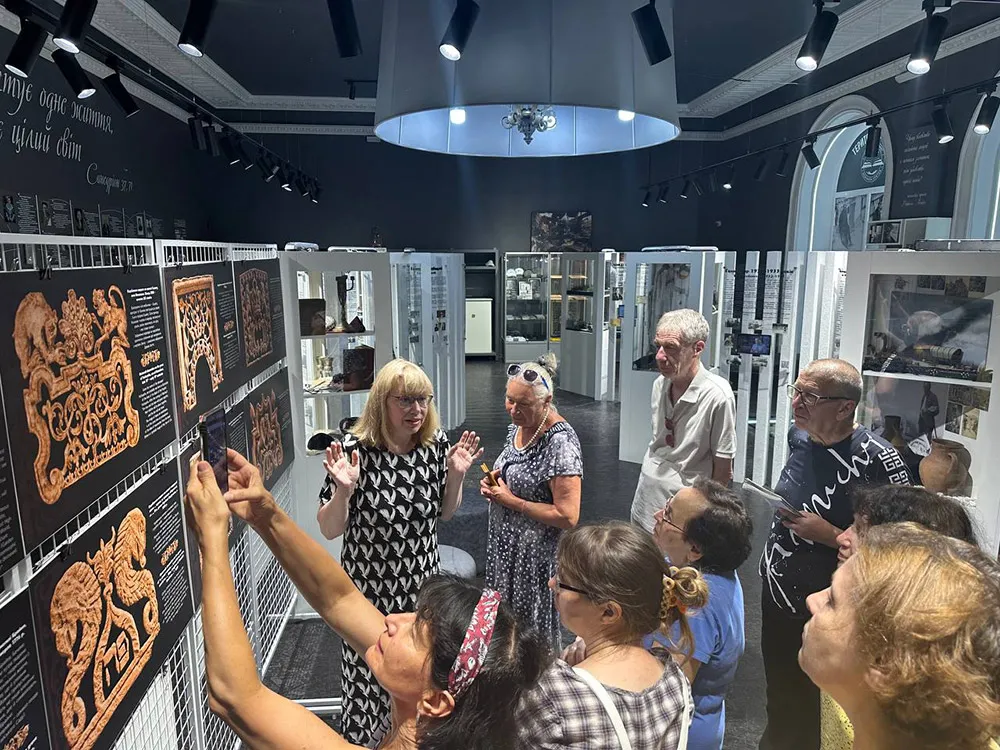
Olena Ishchenko talks about the symbolism of the images
It is worth noting that the exhibition is not only about art, but also about the hidden meanings encoded in the decoration, which reveal the culture and beliefs of the Jews of Ukraine. Dmytro has studied this aspect as well. This aspect of Ashkenazi Jewish culture was explained to the exhibition’s visitors by Olena Ishchenko, a staff member of the museum “Memory of the Jewish People and the Holocaust in Ukraine” and Candidate of Historical Sciences.
She shared her impressions with “Ukraine Incognita”:
“Those who visited the Genocide Museum today are people who care about preserving the cultural heritage of the various peoples of Ukraine. They were impressed by the presented ornaments of the matzevot from the Jewish cemetery in Sataniv. After all, they made it possible to penetrate the deep meanings put in by those who commissioned and made the gravestones. Those present spoke with emotion about the fate of Odesa’s Jewish cemeteries and the arbitrariness of the city authorities in Soviet times”.
In addition, the historian from Dnipro noted:
“People noted the originality of the author’s idea, which made it possible to reproduce, with maximum accuracy (even to the point of deciphering the Hebrew texts), what was depicted several centuries ago…”
Ms Ishchenko also emphasized that:
“Odesa local historians strive to study the Jewish heritage and to involve schoolchildren and students in it, and thus to bring up young people in the spirit of respect for Ukraine’s multi-ethnic culture”.
One of the first visitors to the exhibition, the writer, poet, critic, member of Ukrainian PEN and Odesa correspondent of Kyiv Daily Maria Halina, said the following:
“Personally, I found it interesting that the decoration is atypical for Odesa and southern Ukraine. In fact, on our cemeteries Jewish gravestones are practically devoid of decoration. It turns out this decoration can be simply fantastic! I was struck by the complex and symbolic images, the zoomorphic and plant motifs, even strange ones, because here there is a confrontation between a lion and a unicorn, and a double-headed eagle with “Kohen hands” instead of crowns, and a pelican tearing at its own breast, that is, symbols we are used to attributing to entirely different cultures, but built into the Jewish worldview and context. I want to note the clear and excellent design of the exhibition, because we had an additional opportunity to see all the patterns on separate posters with the corresponding explanations… Overall, incredible material, I recommend it to everyone”, said Ms Maria.
“The exhibition is a kind of retrospective of the history of the Jews of Podillia,” comments the event Vitalii Kamozin, Chief Operating Officer of the United Jewish Community of Ukraine. “A story in an original format about the history of Jewish communities is an effective way to draw attention to the tragedy of the Holocaust, as a result of which shtetl culture was completely destroyed. This is brought into focus through the prism of the present-day war, when the invaders no longer even hide that their goal is the extermination of Ukrainians as a people”, Mr Kamozin concluded.
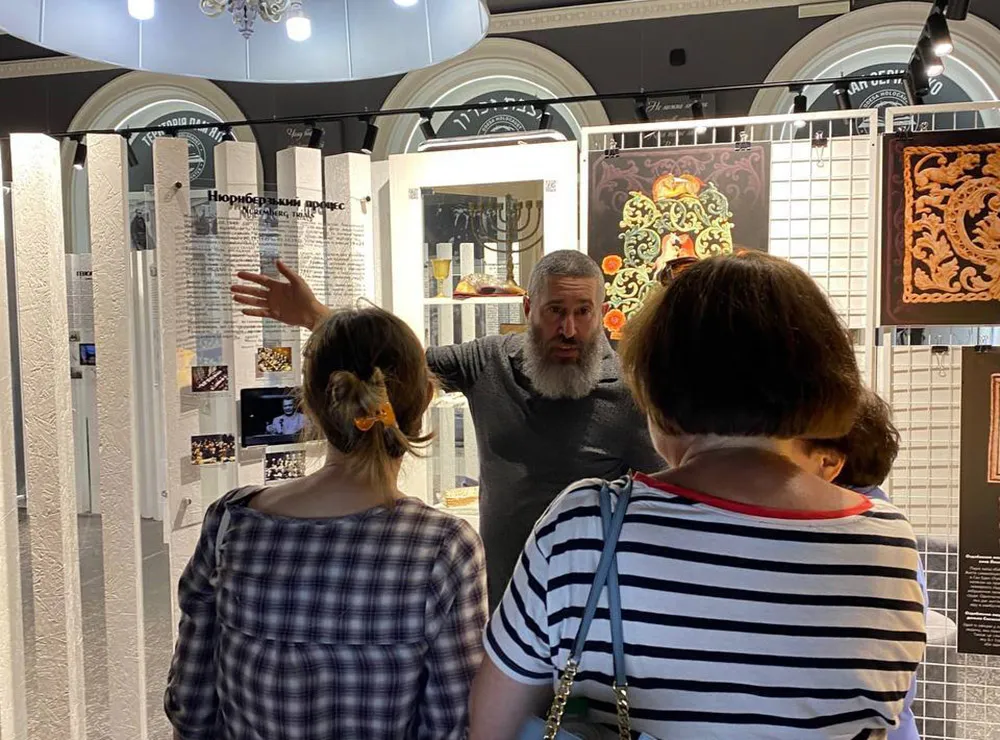
Pavlo Kozlenko
“The exhibition first of all returns us to memory, to the memory of the Jewish people, who survived pogroms, the Holocaust, Soviet antisemitism,” comments the event Pavlo Kozlenko, chairman of the board of the NGO “Odesa Holocaust Research Center”. “Most Jewish cemeteries have already been destroyed and have not survived. Those that partly survived are in a terrible state. The surviving remains of matzevot are unique ethnographic and research material. The presented exhibition by Dmytro Poliukhovych introduces us to the art of the matzevot as a distinct strand of Jewish cultural heritage”.
The exhibition can be visited until 30 July. Address: Odesa, 10 Sadova St., genocide museum “Territory of Memory”. Closed on Sunday and Monday. Tue–Thu 11:00 to 16:00, Friday 14:00–18:00, Saturday 11:00–15:00
After Odesa, the exhibition can be seen in Khmelnytskyi
Photo: Viktoriia Bilovil


