

The most terrifying gravestone in Ukraine found in Sataniv

· 2 min read
A visit by representatives of “Ukraine Incognita” to the old Jewish necropolis of the town of Sataniv (Khmelnytskyi Oblast) had a fairly trivial aim: to photograph several very beautiful matzevah gravestones of the second half of the 18th century, so that after special processing they could be presented at an exhibition devoted to traditional Jewish art. Before the photo session they had to be thoroughly cleaned of moss and lichen and washed of a layer of unicellular algae. The local historian Oleksandr Nyshchenko helped with this difficult task.
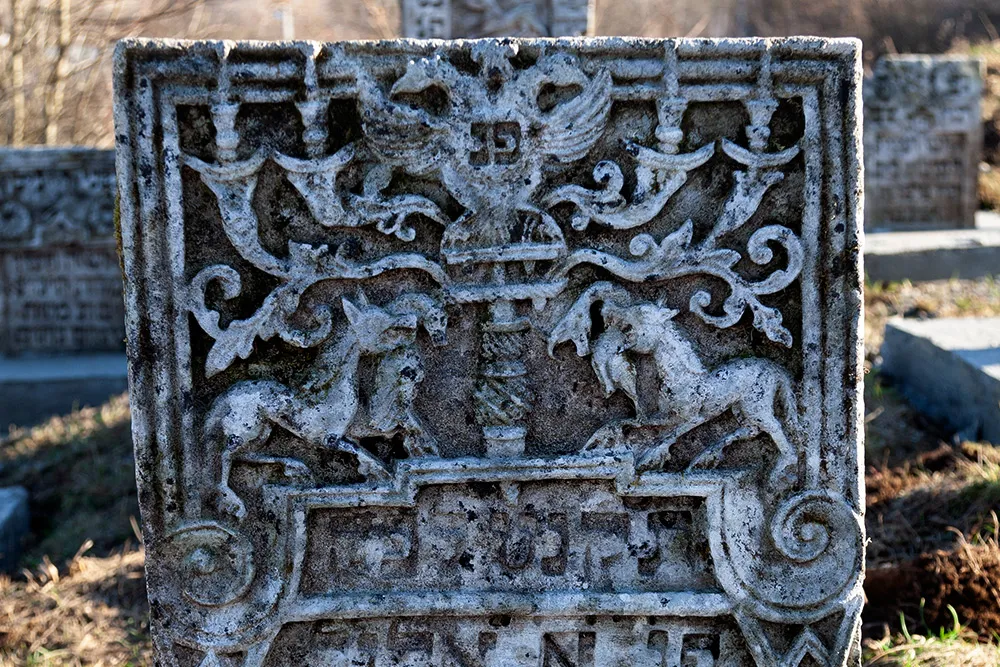
At the same time the kirkut (Jewish cemetery) was surveyed, in case something that had not been noticed before caught the eye. And not in vain!
During the survey a gravestone with a very rare and, at the same time, terrifying scene was discovered.
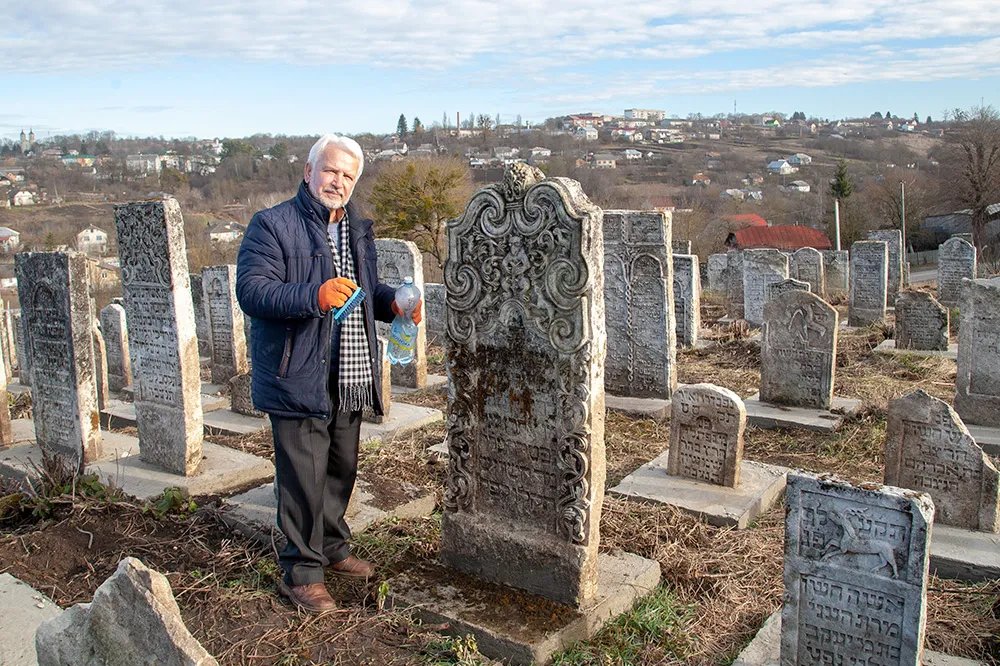
Oleksandr Nyshchenko
This is a typical woman’s gravestone of 1799. Unfortunately, most of the epitaph is lost, so the name of the woman buried here is unknown. Here we see two wolves with prey in their jaws: some bird and a kid goat. In Jewish funerary art such an image (fairly rare) symbolises premature death. The wolf is the angel of death, the prey is the soul torn from the body. But here we see one more symbol of death. If you look closely, the five-branched candelabrum, a symbol of a virtuous woman whose duty is to light the Shabbat candles, is not quite traditional. The candle holders here are made in the form of predatory serpent heads. The snake, too, is an embodiment of death.
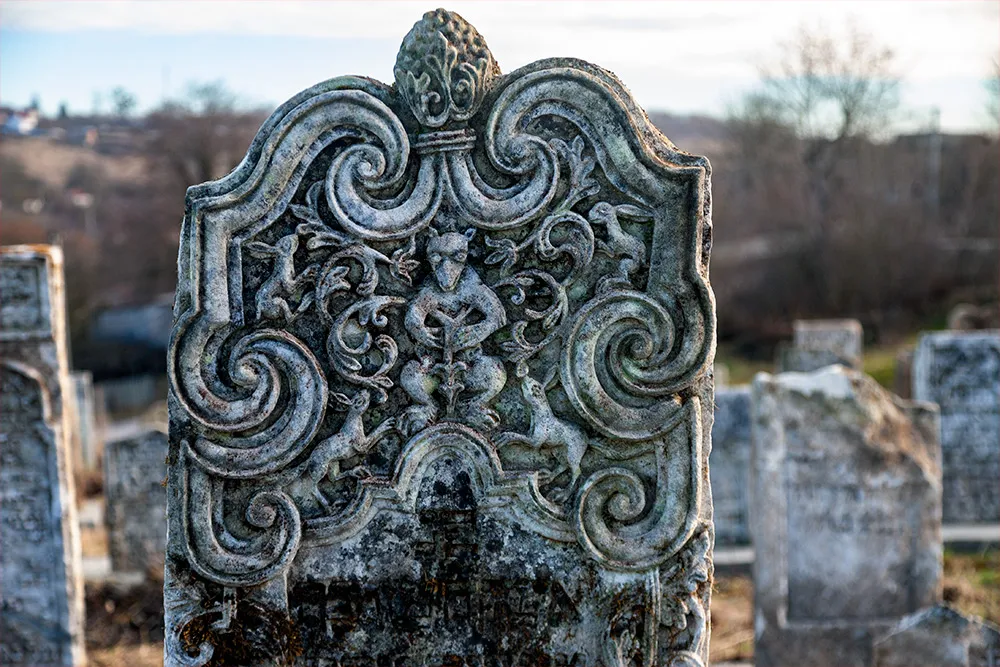
Gravestone on the grave of Braina (literally “brown” in Yiddish), daughter of Aaron, who died in 1776. The brown bear here embodies the name of the deceased.
It can be assumed that the candles stuck into the serpents’ jaws here symbolise the victory of light over darkness and the hope of a future resurrection of the dead.
This is probably one of the gravestones richest in symbols of death.
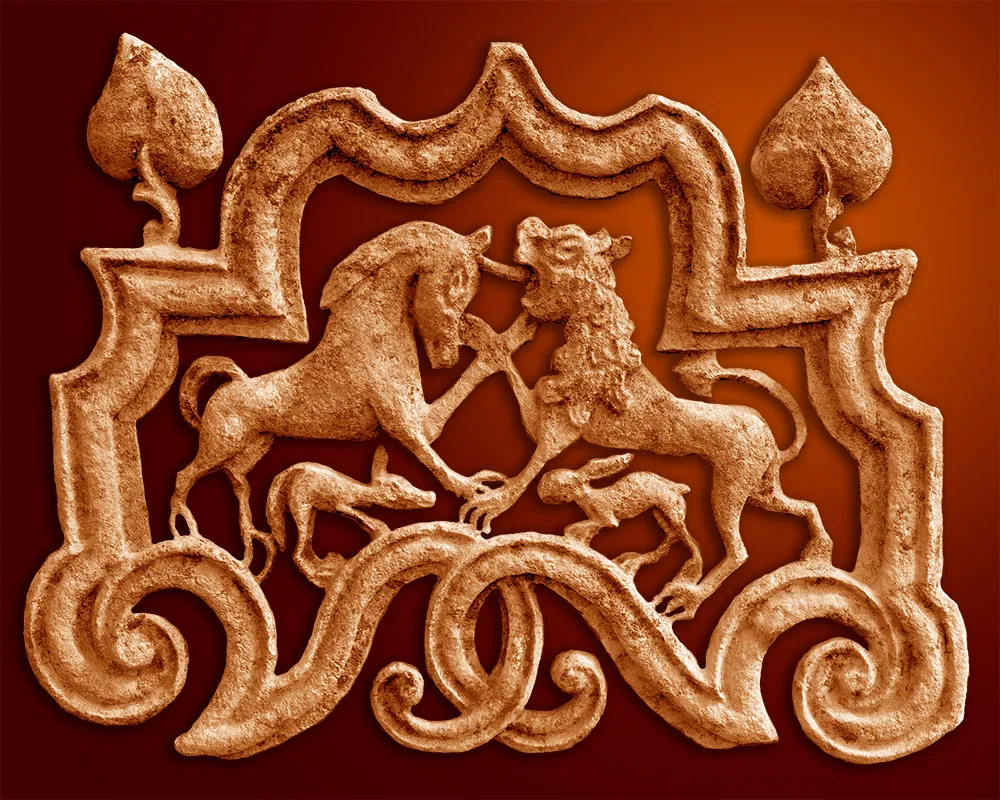
After special processing the bear will turn into something like “lace”
The double-headed eagle here has nothing to do with the Russian or Austrian one. Here it is a symbol of God. The two heads embody the two lines of His governance of the world: forgiveness and punishment, severity and love, and so on…


