

A unique “reworked” matzevah of 1807 discovered in Smotrych

· 2 min read
The old Jewish cemetery in Smotrych (Khmelnytskyi Oblast) is quite ancient and interesting. The oldest burials here date back to the 17th century. The decorative styles vary. Some of the matzevot have the ornamentation typical of this corner of Podillia. One can even single out works by masters whose pieces simultaneously adorn the cemeteries of neighbouring Kupyn, Horodok, Kuzmyn, Tarnoruda and Sataniv (one hand is fairly easy to trace). There are also absolutely unique works here that have no analogues in other towns.
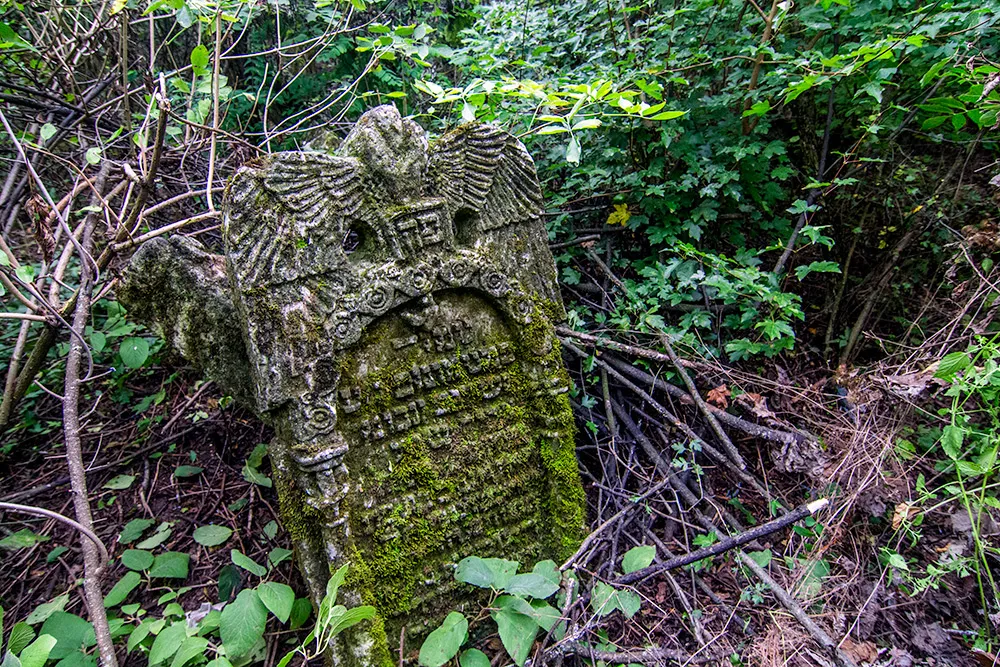
Gravestone of Yoel, son of Zeev (1744)
It is enough to mention the gravestone of Yoel, son of Zeev (1744), whose crowning is made in the form of a giant eagle (the embodiment of God), protecting the burial with its wings. Interestingly, the eagle is not only a traditional bas-relief but can also be regarded as a sculpture, which is absolutely atypical for 18th-century Jewish burials.
But the most interesting gravestone is nevertheless the stele on the grave of Reizl, daughter of Yitzhak Segal, 1807.
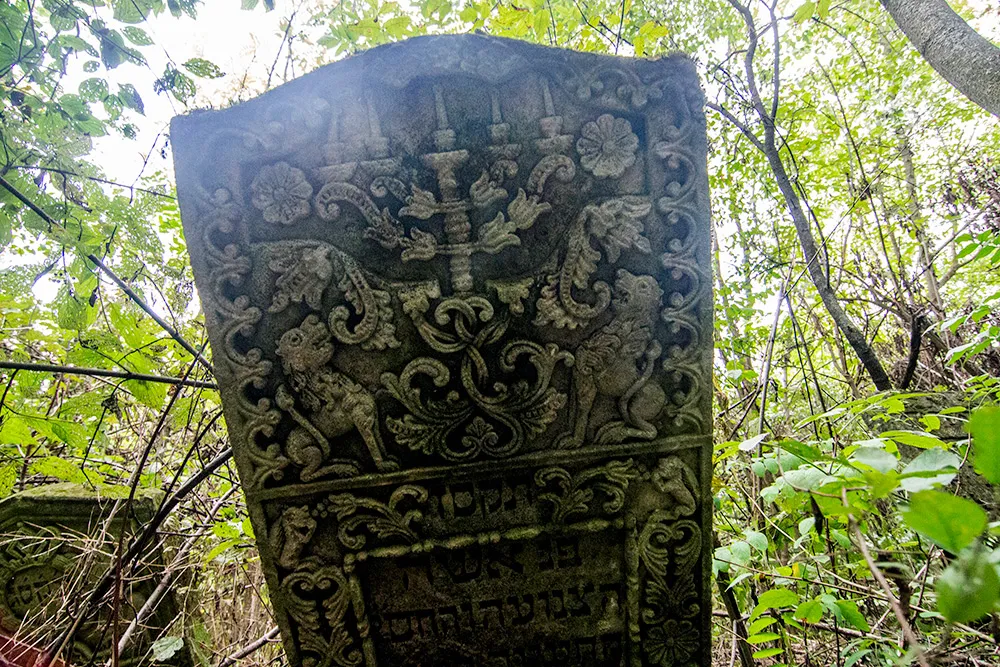
Gravestone on the grave of Reizl, daughter of Yitzhak Segal, 1807
At first glance this is an absolutely typical woman’s grave: a five-branched candelabrum with lions on either side. The style (the hand of the master) is not unique either. Nearly fifty works by this very master are known in Sataniv alone. His works are also found in neighbouring Kuzmyn, Tarnoruda and Horodok.
That this matzevah is non-trivial became clear only now, on detailed analysis of the photograph.
It turned out that we have a rather rare, perhaps even unique case of an already finished central bas-relief being replaced with a new one!
If you look closely, the lions originally guarded not a five-branched candelabrum at all, but a round medallion with three hares! This motif, we note, is also unique and has a very interesting history. For more about the hares, read the article “The Sataniv cemetery, a ‘voodoo’ doll and greetings from China (applied magicology)”.
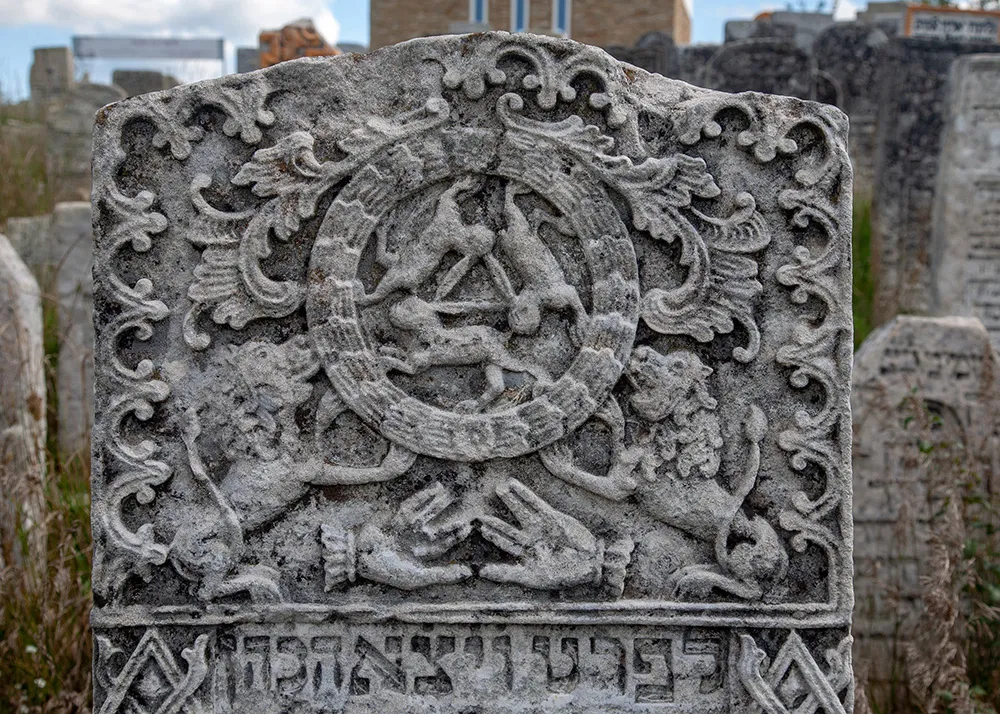
Gravestone of Shlomo, son of Abraham Avli HaKohen
Most likely the stele originally looked roughly like the gravestone of Shlomo, son of Abraham Avli HaKohen, in Sataniv. It is the work of the same master from the same time (the first decade of the 19th century). In any case, the main element of the monument in Smotrych was originally “three hares”. Part of the wreath framing the long-eared animals even survived.
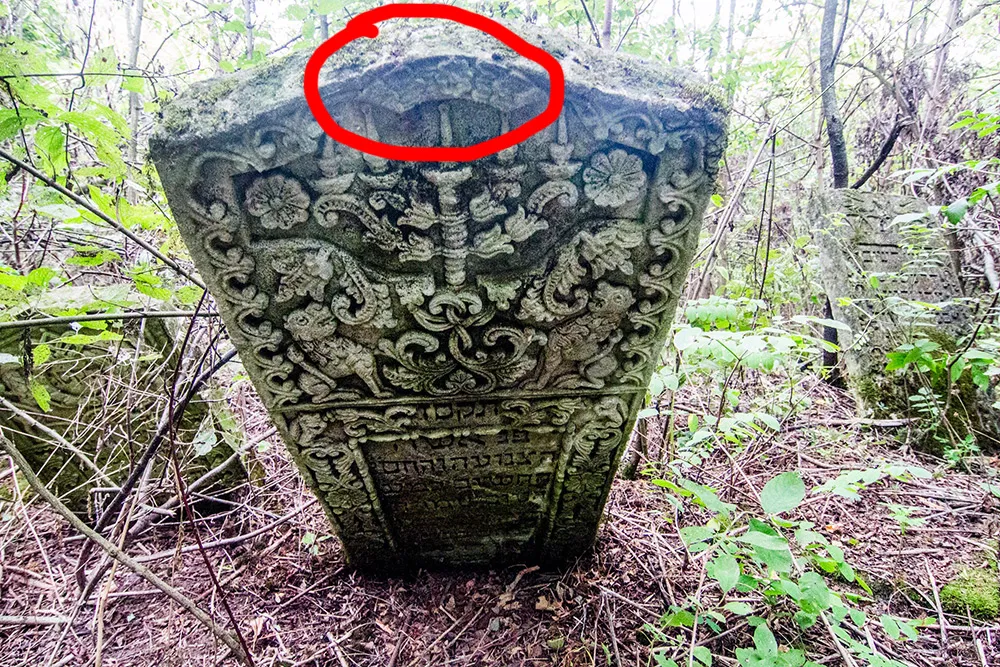
For some reason the customer (the father or husband of the deceased) did not like the matzevah that was already finished, and they asked for the hares to be replaced with a five-branched candelabrum, a symbol of a righteous woman. It is also clearly visible that it was carved later on top of the already finished decoration.
No other gravestones with reworked decoration are known in Ukraine.


