

Pottery Museum of the Vyshhorod Historical and Cultural Reserve damaged by Russian shelling
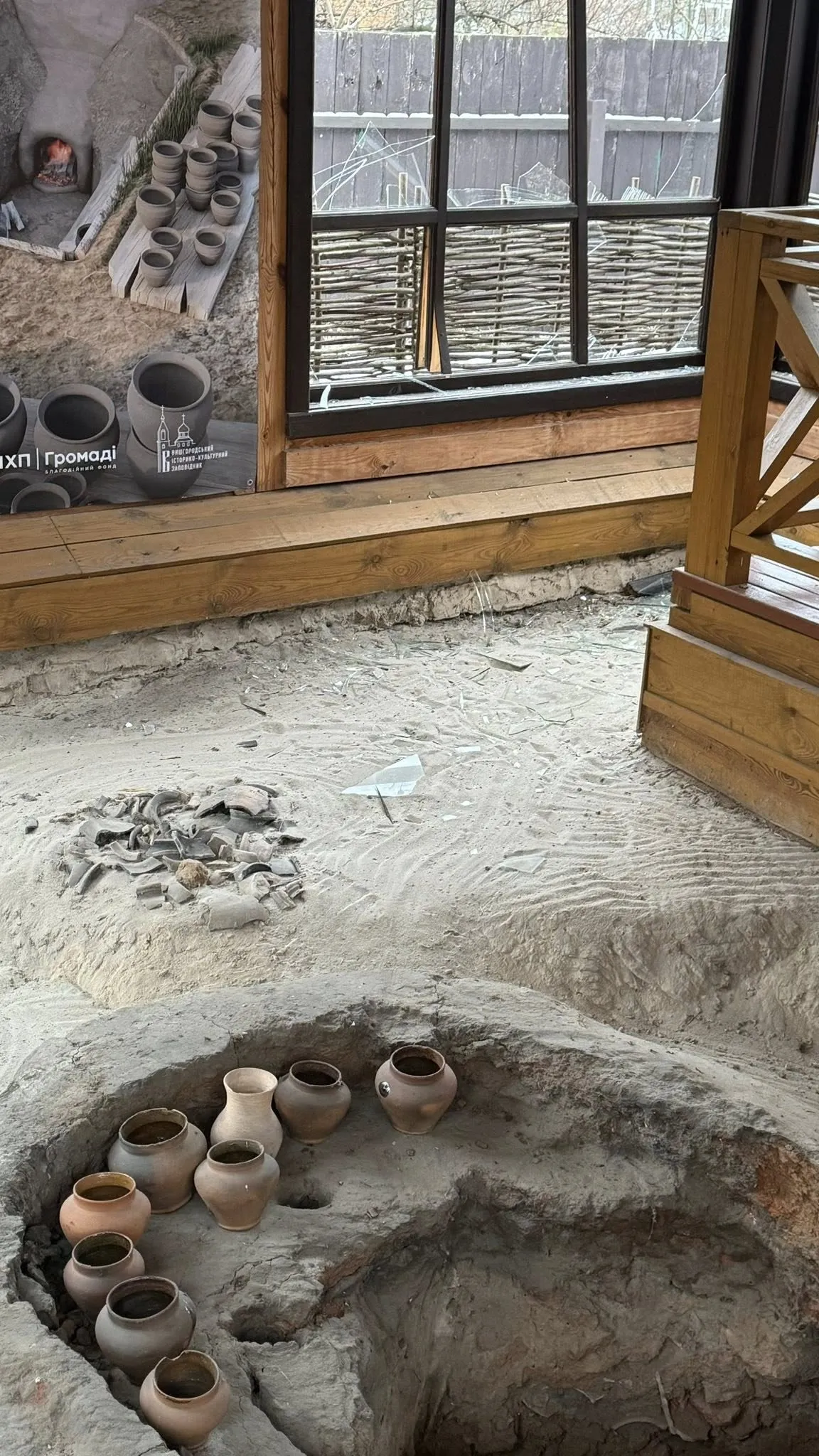
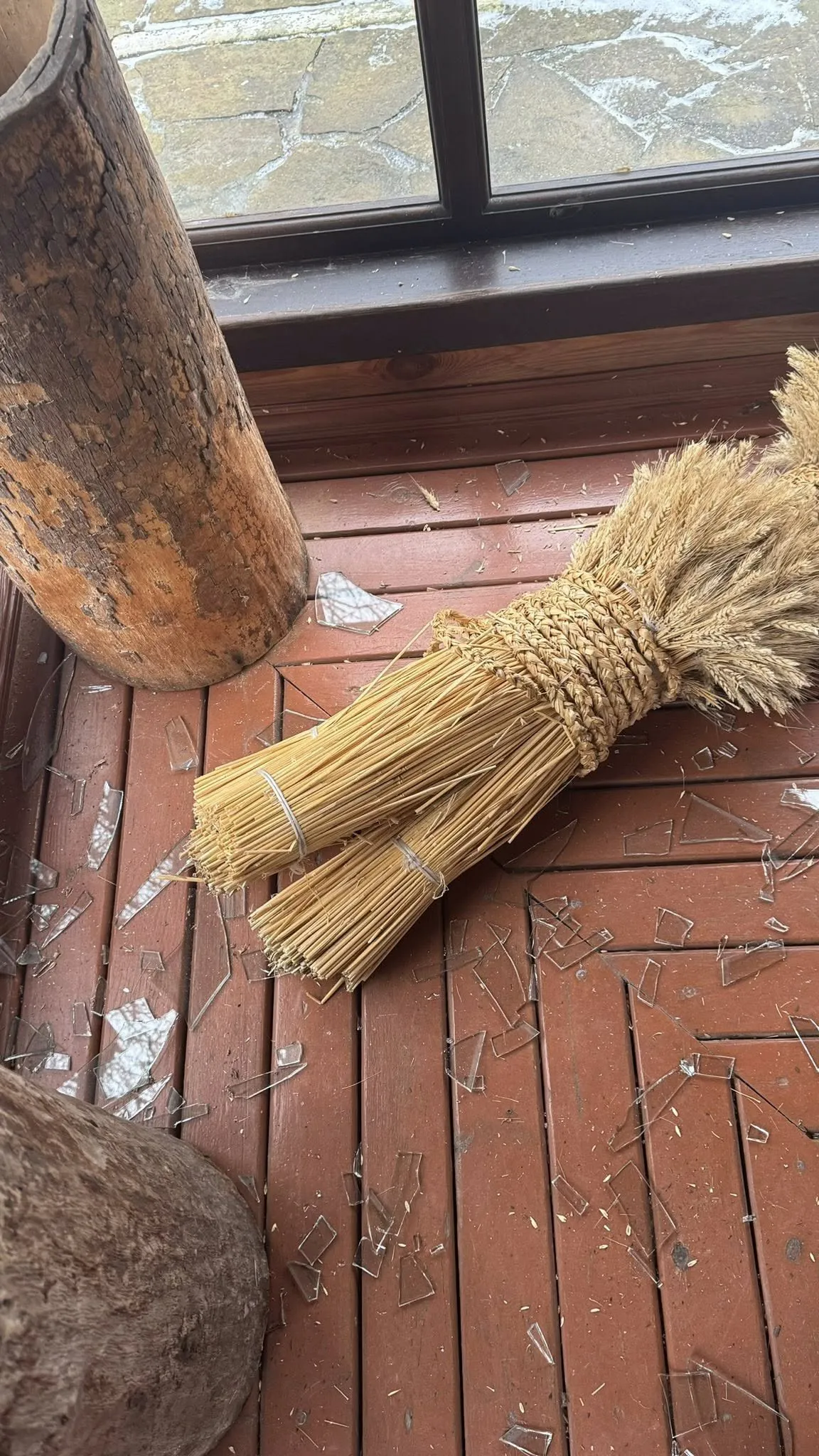
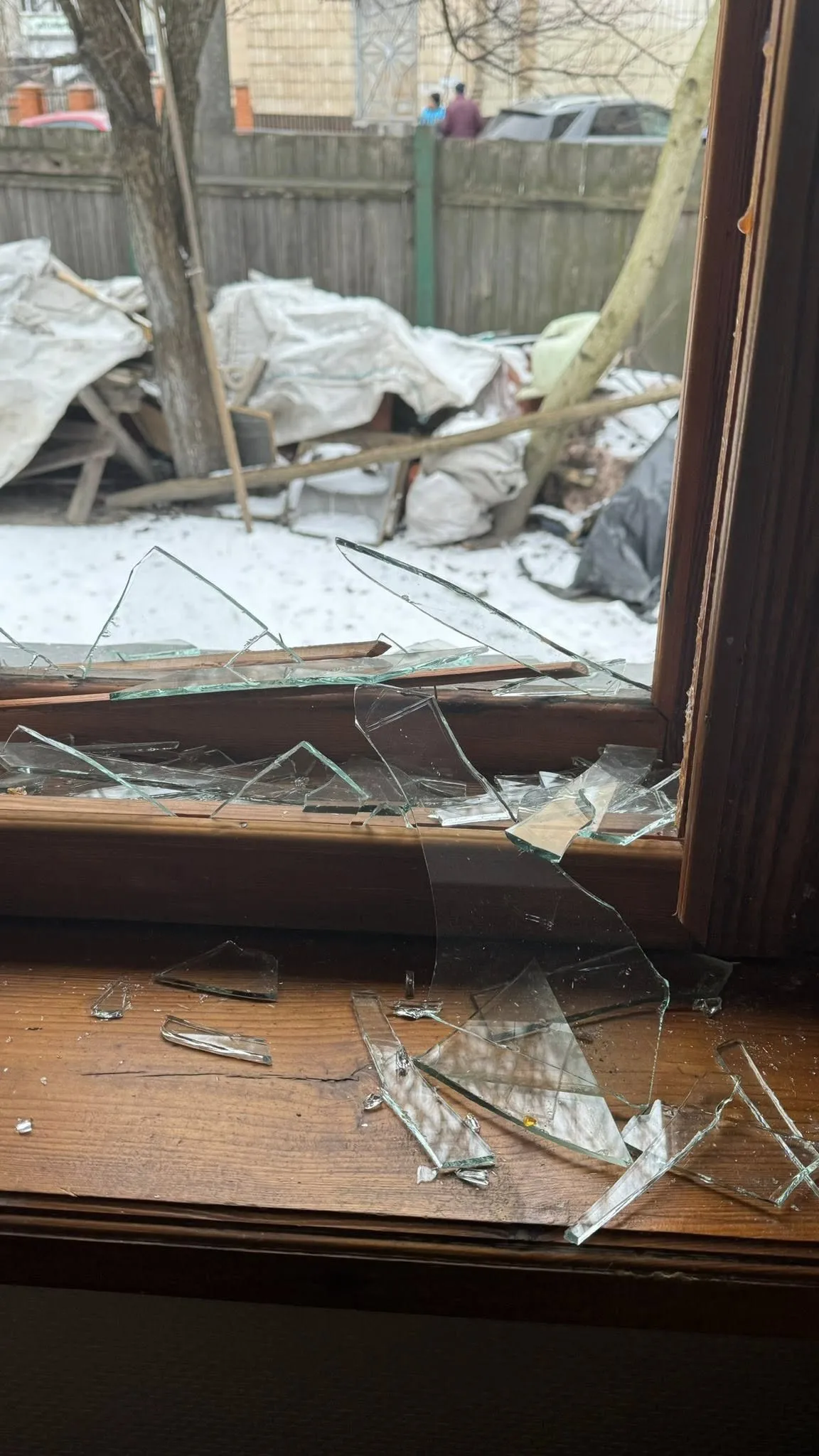
As a result of a Russian missile strike on the Kyiv Hydroelectric Power Plant, the famous Pottery Museum in Vyshhorod was damaged. In particular, on the grounds of the Vyshhorod Historical and Cultural Reserve, in the Museum of Old Rus Pottery, which is among the top 5 museums of the Kyiv region in the “Mandrui Kyivshchynoiu” (Travel the Kyiv Region) rating, the pavilion over an archaeological monument of local significance was damaged — a 10th–11th-century pottery kiln, a unique object and the only one of its kind in Eastern Europe. The museum’s work premises and the room for workshops, where classes for children were held, were also damaged.
Background from “Mandrui Kyivshchynoiu”
The Museum of Old Rus Pottery of the Vyshhorod Historical and Cultural Reserve opened in 2006. In 2003, during research on the grounds of the property at 11 Mezhyhirskoho Spasa Street, archaeologists discovered the remains of a two-chamber 11th-century pottery kiln, typical of Vyshhorod. In 2014 the Vyshhorod Historical and Cultural Reserve was given the grounds of the property with a vacated house, from which the museum’s history began. Its pearl is the unique 11th-century pottery kiln, the only preserved one in Eastern Europe. In all, there were 250–300 such kilns in Vyshhorod. The pottery centre in Vyshhorod occupied most of the city’s lower town in the 10th–12th centuries. Such production has no analogues on the territory of Old Rus. The first evidence of large-scale ceramic production in Vyshhorod was obtained by researchers in 1934–1937, when an expedition of the Institute of the History of Material Culture led by F. Movchanivskyi uncovered two kilns on the southern slope of the hillfort and traced the stains of 15 more on the slope of a ravine. In 1990, seven kilns were investigated on the site of the construction of a house on Mezhyhirskoho Spasa Street, in 1992 three more, and in 1995 one well-preserved kiln. The collection of ceramics gathered on this territory is tens of thousands of fragments and whole items: pots, jugs, lamps, large storage vessels — “pithoi”, floor tiles made for the Church of Saints Boris and Gleb…
Not far away, archaeologists found an Old Rus street along which, beside a stream, the potters’ homesteads were located. The remains of dwellings and outbuildings were found, along with the remains of kilns, fences and the roadway, where pits and potholes were filled with fragments of defective pottery. Both the workshops and the dwellings were small — 3.6×3.6; 4.6×2.7; 5.4×4.1 m, sunk into the ground to a depth of 0.5 to 1.6 m. The structures of the discovered 10th-century buildings are mostly of log construction, those of the 11th–12th centuries mostly timber-framed. In some rooms, fragments of posts and floorboards have survived. Above-ground structures may also have existed, but they are hard to detect during excavation.
However, the exhibition of the Museum of Old Rus Pottery is not limited to the history of Vyshhorod’s ceramic production alone.
The Museum presents examples of Trypillian and Early Iron Age ceramics found in the city and the district. There is a large collection of building ceramics: plinthos from the ruins of the Church of Saints Boris and Gleb, glazed floor tiles of the church, a large collection of 18th–19th-century bricks, among them the so-called “mezhyhirka” — a small fire-resistant brick for building stoves, mass-produced in the villages of Novi Petrivtsi and Valky. The exhibits also include fragments of unique products of the Mezhyhirya Faience Factory and remains of faience production.
Household items also leave no one indifferent, as does the collection of authentic clothing and embroidered towels of the Kyiv Polissia region gathered in the museum.
The museum’s courtyard is designed in the folk style of a peasant homestead. Exhibition 40 presents the traditions and everyday life of the population of the Kyiv Polissia. At the open-air exhibition area, unique works of folk craftsmen and examples of ancient crafts — tree beekeeping and boat-building — are displayed.
The collection of bee trees (forerunners of modern hives), logs and the hives themselves currently numbers 14 exhibits and is constantly growing. Among them is an exhibit that is more than a century old.
Vivid examples of woodworking traditions are the dugout and flat-bottomed boats (7 units), a traditional peasant cart, antique chests, spinning wheels and so on. The jewel of this collection is the reconstruction of an Old Rus boat (by researcher Oleksii Petrauskas), made using traditional technology and with tools similar to those used in Old Rus times. The boat was built in Olevsk (Zhytomyr Oblast) and travelled almost 700 km under its own power along rivers and channels on its way to Vyshhorod.
The museum long ago ceased to be a static institution and became a unique interactive venue. Here you can not only learn a great deal about the history of Vyshhorod pottery and the traditions, customs and crafts of the Kyiv Polissia while viewing the exhibitions and on guided tours, but also touch ancient crafts yourself in workshops on pottery wheel throwing, clay modelling, making objects from wax and other creative activities. And the cosy, atmospheric Open Air art space makes it possible to hold various folklore and ethnographic festivals here and to introduce visitors to the traditions, customs and rituals of the Kyiv Polissia.
Photo: Vyshhorod Historical and Cultural Reserve


