

Owner of an architectural monument, the main building of the Lustdorf children’s sanatorium, must conclude a protection agreement, prosecutors say
On the claim of the Kyivskyi District Prosecutor’s Office of Odesa, the court obliged the State Institution “Lustdorf Children’s Specialized (Special) Sanatorium” of the Ministry of Health of Ukraine to conclude a protection agreement for an architectural and urban-planning monument of local significance. This is reported by the Office of the Prosecutor General.
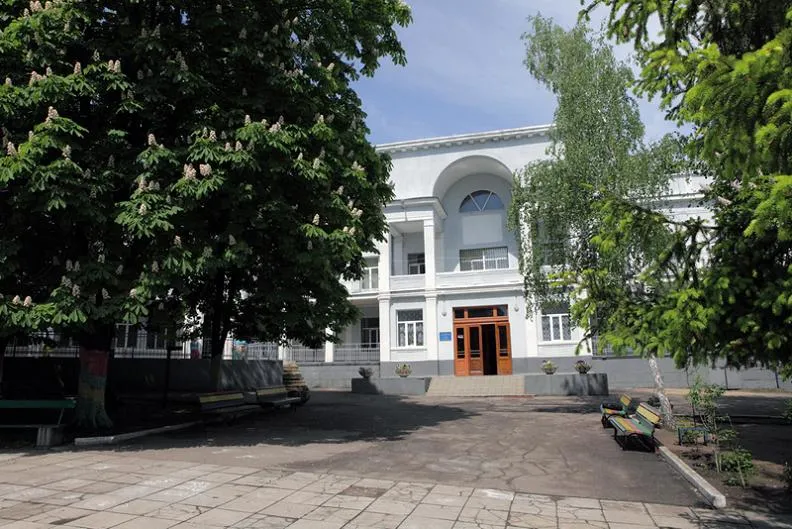
Lustdorf sanatorium, Odesa. Photo: lustdorf.org.ua
For a long time the owner of the property, the State Institution “Lustdorf Children’s Specialized (Special) Sanatorium” of the Ministry of Health of Ukraine, did not carry out repair and restoration work on the monument building, although the sanatorium was actively used for the treatment and rehabilitation of children. Such inaction led to the deterioration of the architectural monument (cracks, flaking plaster and paint are visible in some areas of the front and courtyard façades) and the threat of its final collapse and destruction.
This was the ground for the prosecutor to go to court with the corresponding claim, which has now been upheld.
The conclusion of a protection agreement will determine the specifics of the regime of use of the monument building, and the types and deadlines of restoration, conservation, repair and other heritage-protection work for its protection and preservation for present and future generations, taking particular account of the fact that children stay there for treatment and recovery.
Background
In the 19th century the sanatorium operated as a hotel and enjoyed enormous popularity. In 1914 it was included in Karl Baedeker’s guidebook for travellers, which noted that “four miles from the Great Fountain lies the German colony of Lustdorf or Olgino, a popular resort, and as a place to stay the Hotel ‘Villa Kitty’, built by William Wilcott, is recommended.”
After the revolution the hotel was nationalized, and its building was handed over to organize a children’s sanatorium, on the basis of which a children’s shelter was opened in 1922.
Construction of the main building began in 1934 to a design developed by a group of architects, I. N. Alter, A. R. Kopylov and V. L. Feldshtein, headed by F. A. Troupianskyi. Construction lasted until 1938. The interiors of the main building preserve authentic stained-glass windows with floral ornament and abstract designs.
As early as 1937, 350 children with bone and joint tuberculosis were treated in this building, including by surgical methods, for periods from 2 months to 2 years.
The main building of the sanatorium was taken under state protection by a decision of the executive committee of the Odesa Oblast Council of People’s Deputies of 15 August 1985 and entered in the State Register of Immovable Monuments of Ukraine as an architectural and urban-planning monument of local significance by order of the Ministry of Culture and Tourism of Ukraine of 5 April 2011.
As “Ukraine Incognita” reported earlier, the Cherkasy District Administrative Court upheld the claim of the Cherkasy District Prosecutor’s Office concerning one of the buildings located in the central and at the same time historic part of the city of Cherkasy, near the “Druzhba Narodiv” palace of culture: the “Residential building of the late 19th century”, which is a cultural heritage site.
The court obliged the owner of the building to conclude, within a month of the entry of the ruling into force, a protection agreement for the said architectural monument with the Department of Culture and Cultural Heritage Protection of the Cherkasy Oblast State Administration.


