

Rymachi

· 5 min read
Rymachi is a village in Ukraine, in Liuboml district of Volyn Oblast, the center of the Rymachi starosta district.
The population is 942. The local self-government body is the Vyshniv village community. The village lies 12 kilometers from the district center (highway E373) and adjoins the Yahodyn railway station. The village of Berezhtsi is part of the starosta district.
The present official name of the settlement is Rymachi. This name has not changed throughout the village’s existence.
There is the following legend about the origin of the name “Rymachi”. A man went to Rome to pay homage to the Pope. After returning from Rome he settled on the spot where Rymachi now stands. Other people built their dwellings around his homestead. This is how the settlement of Rymachi arose, its name deriving from the word “Rym” (Rome). This was told by Onykii Pechera. Historical sources contain no data on the village’s origin.
The territory of the present village of Rymachi was inhabited in the Chalcolithic and Bronze Ages, as numerous archaeological finds attest.
In written sources the settlement is first mentioned in 1442. It is known that among a number of villages then granted by the Polish king Władysław Warneńczyk to Krystyn of Wilczypole was the village of Rymachi. After some time, however, it again became part of the royal domains.
In the 16th century the settlement belonged to the Liuboml starostwo. According to the 1564 inspection, 17 kmets (peasants) lived here, each paying 6 groschen in tax annually; there was a manor farm and a tavern.
The grant by the Polish king Sigismund III to the nobleman Marcin Krasicki of the village of Rymachi, together with other settlements then belonging to Liuboml Castle, is dated 24 October 1599.
At the beginning of the 17th century, after the adoption of the Union, a confrontation between local Orthodox and Catholics took place in the vicinity of the settlement. From 1659 the village of Rymachi, as part of the Liuboml starostwo, belonged to the domains of Hetman Ivan Vyhovskyi, and from 1680 it was owned by the Polish Crown Hetman, Voivode of Kraków Dymitr Jerzy Wiśniowiecki.
From the second half of the 18th century the “village of Rymachi” was among the domains of Grand Crown Hetman Branicki. After the Third Partition of Poland in 1795 the village was part of the Volodymyr-Volynskyi county of Volyn Governorate.
During the Franco-Russian war of 1812 small armed skirmishes between Austro-Saxon and Russian troops took place in the area of the settlement.
In 1849, after the confiscation of lands from the Counts Branicki, the peasants of Rymachi became state peasants. In the second half of the 19th century the settlement was part of the Berezhtsi volost of the Volodymyr-Volynskyi county. At that time most of the population were Poles, while the Orthodox were assigned to the church of the neighboring village of Berezhtsi. In 1892 a church literacy school was opened in Rymachi.
At the beginning of the 20th century 1,042 people lived in the village. During the First World War a large part of the population was evacuated to Yekaterinoslav Governorate. The settlement was occupied by Austro-Hungarian troops. At that time, with their permission, a Polish school was opened in the village.
During the Second Polish Republic the village of Rymachi was part of the Berezce gmina of the Lubomlski county of the Volhynian Voivodeship. In 1921 it had 1,233 inhabitants. Later, in 1929-1930, the village was relocated: some of the residents were resettled to the farmsteads of Struzhky, Pidrudivka, Zarudivka, Pochernivia, Pidostrovy and Yahodyn.
In 1934 the construction of the brick Roman Catholic Church of St. Isidore the Laborer was completed in the village. At that time a seven-grade Polish school operated in the village.
In 1939 Rymachi was annexed to Soviet Ukraine.
Source: Wikipedia
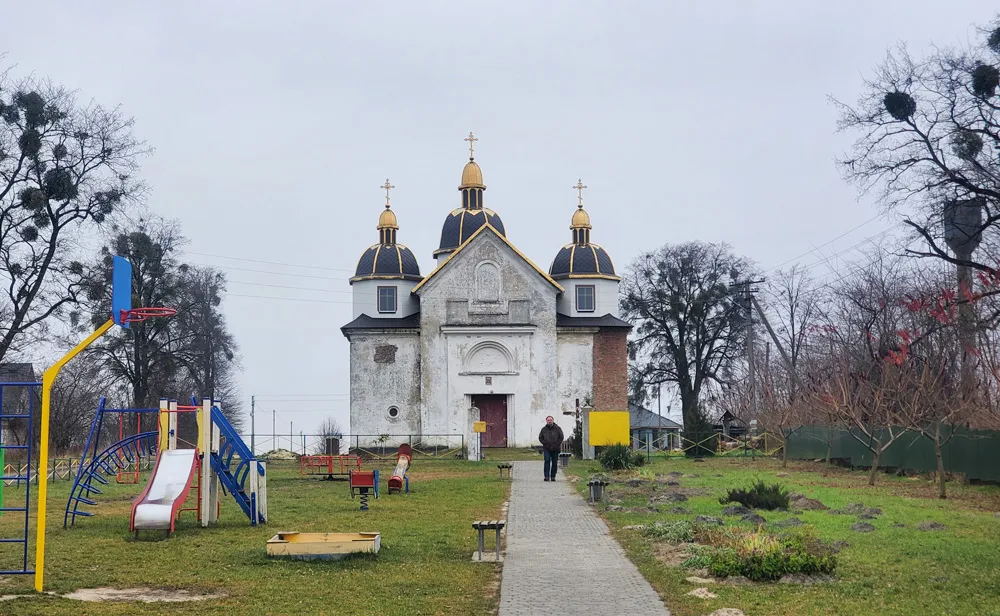
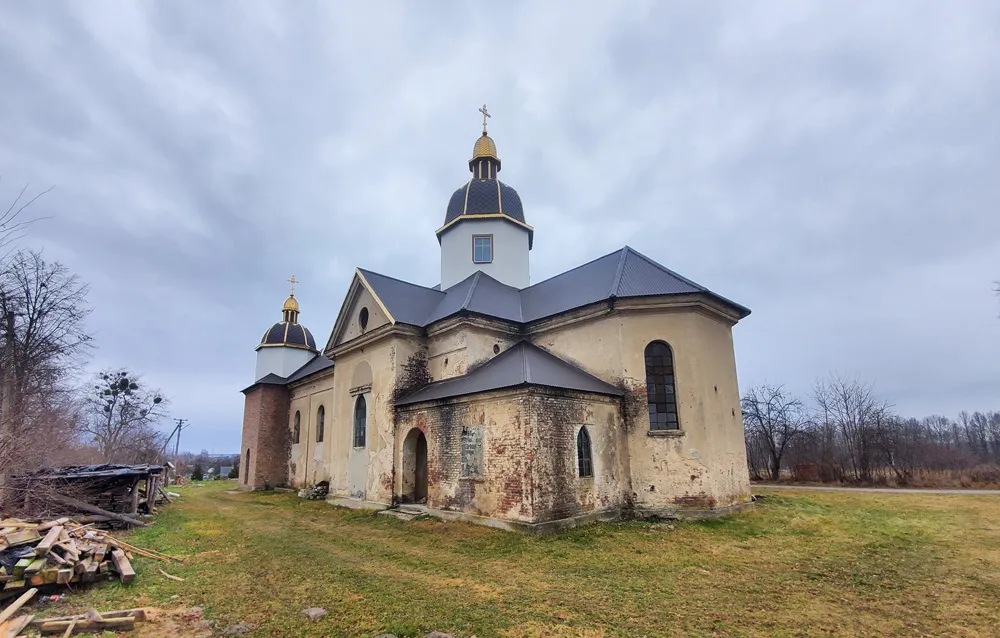
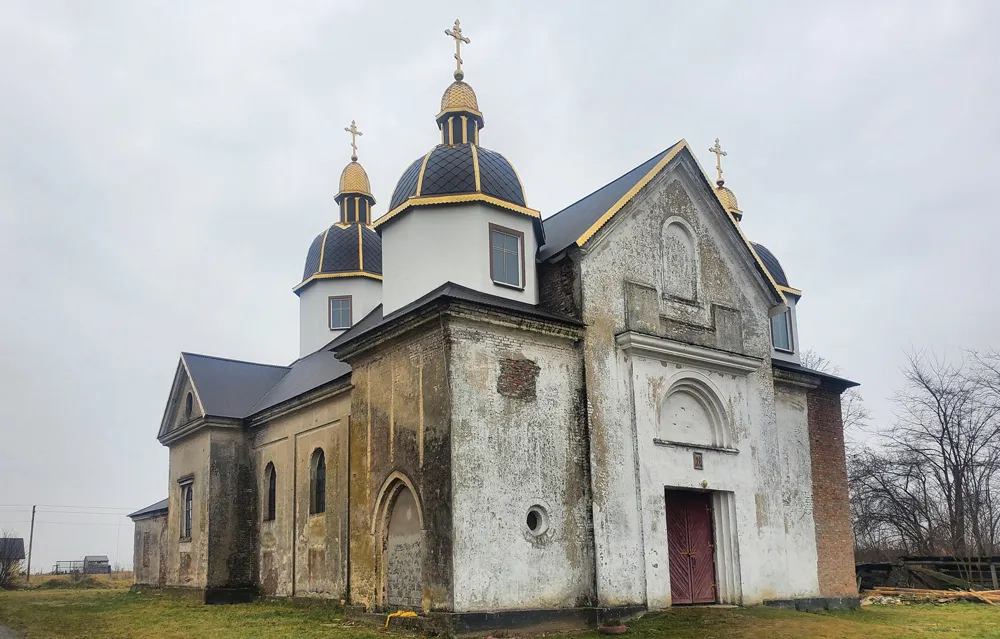
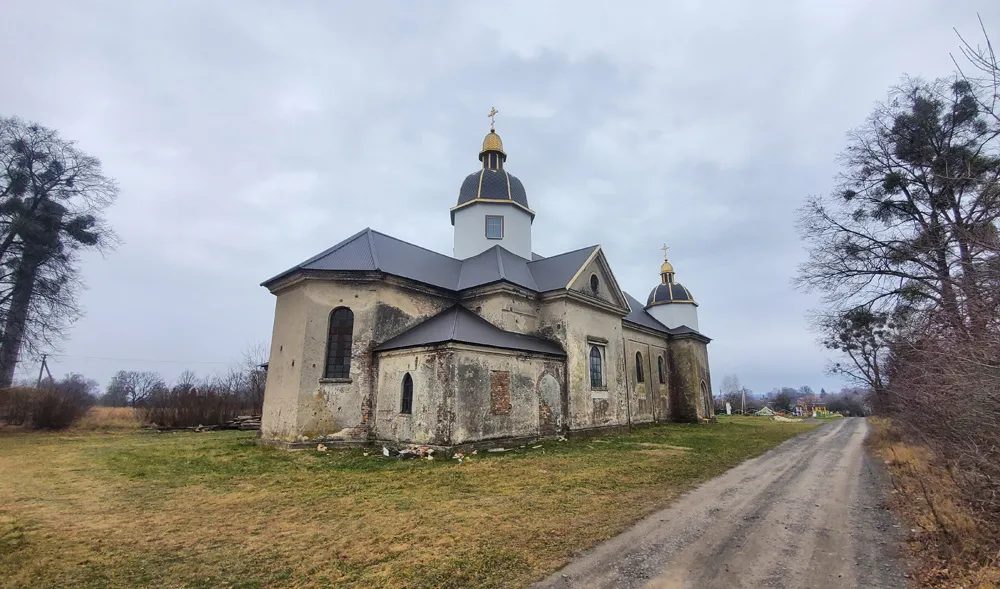
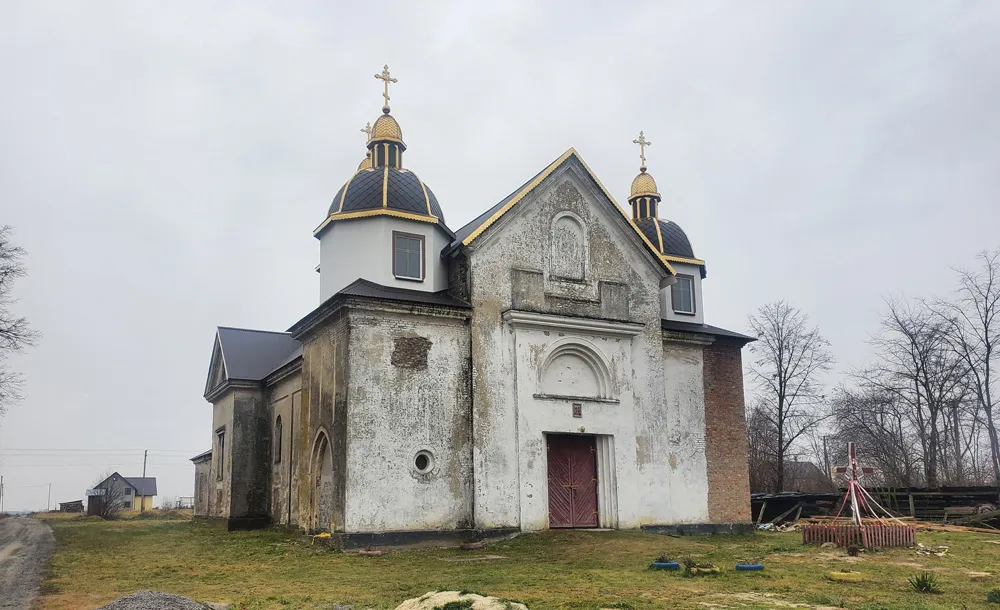
Church of St. Isidore the Laborer
The settlement of Rymachi is first mentioned in 1417 (according to unconfirmed data); the next mention dates from 1442. Today its population is more than nine hundred.
The village’s Roman Catholics belonged to the parish of the Holy Trinity in Liuboml. Before the First World War Rymachi had a small chapel, and the construction of a branch church was planned. But only on 1 August 1926 was a committee for building the shrine created, which decided, to begin with, to build a temporary wooden chapel. It was consecrated on 12 April 1927. On 21 June 1928 the church committee received the design of the church, prepared by the engineer Tadeusz Kraft from Kovel. On 19 May 1929 the auxiliary bishop of Lutsk, Stefan Walczykiewicz, consecrated the foundation, laid back in December 1928, and the cornerstone of the future shrine.
Interestingly, the construction work was carried out illegally, since the relevant state bodies approved the design of the church only on 25 March 1930 and gave permission for its construction on 31 March 1930. The construction of the church was completed in 1933, and it was consecrated on 8 December by the dean of Liuboml, Fr. Stefan Jastrzębski, but the decoration and furnishing of the church continued. Moreover, for lack of funds the towers and the fence were never completed. On 19 May 1939 Bishop Stefan Walczykiewicz consecrated two new bells cast in Przemyśl, placed in a wooden bell tower. Before the Second World War the parish in Rymachi was the largest in the deanery, covering fifteen neighboring villages and numbering about three thousand faithful.
After the war the Soviet authorities first turned the church into a village club and then into a collective-farm mill and grain store. After the collapse of the USSR a full restoration of the church was planned, but it was limited to partial repairs. From 1996 services were held in the shrine, but because of the lack of local faithful it was handed over in 2010 to the Ukrainian Orthodox Church of the Kyiv Patriarchate. On 25 August 2010 Archbishop Mykhail of Lutsk and Volyn consecrated the former Church of St. Isidore as the Church of Saints Peter and Paul. However, when needed (for example, for pilgrims from Poland), Catholic services are also held here with the permission of the Orthodox.
Source: Churches and chapels of Ukraine
Photos by Roman Malenkov


