

Artefacts stolen by the Romanians from the Odesa museum found in Iași
The last of the six epigraphic monuments (foundation building slabs) lost in 1941 have finally been found; they were taken from the holdings of the Odesa Archaeological Museum to the city of Iași by a Romanian trophy commission. This is reported on his Facebook page by Doctor of Historical Sciences Andrii Krasnozhon, rector of the Ushynskyi South Ukrainian National Pedagogical University.
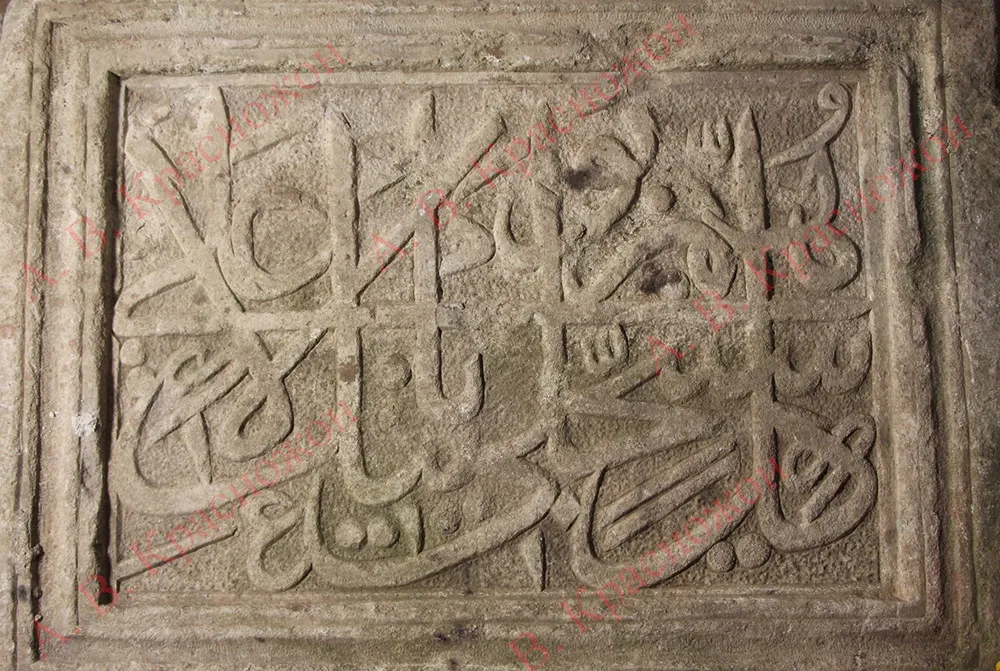
A plaque stolen by the Romanians. Photo: Facebook, Andrew Krasnozhon
– My Romanian colleagues and I recently published the archive of this commission, writes the scholar. – The slabs are currently kept in the “Moldova” National Museum (with no link to the history of their origin), where they were sent 83 years ago at the order of the then Institute of Turkology (they were received by a certain laboratory assistant, Mihai Guboglu, later a well-known Romanian Ottomanist).
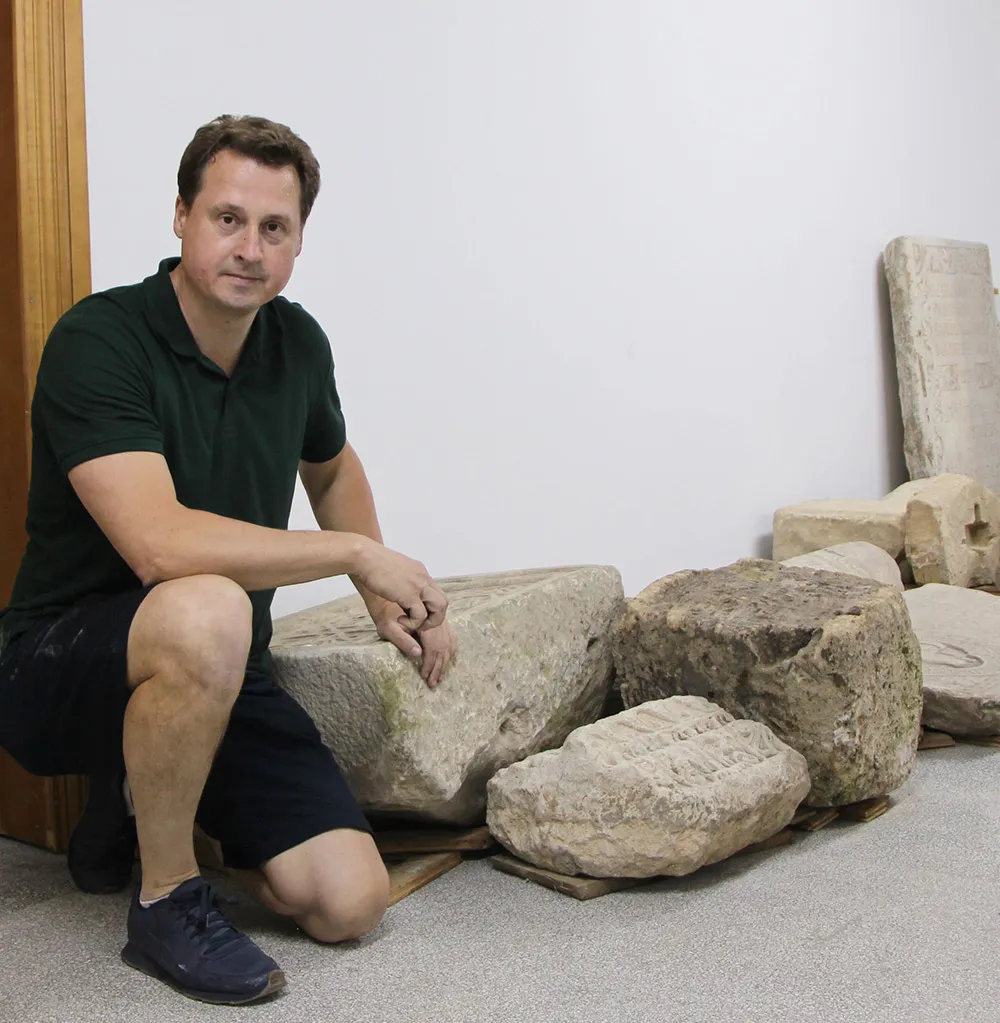
Artefacts stolen by the Romanian occupiers. Photo: Facebook, Andrew Krasnozhon
Three slabs bear the tughras of Selim III and contain texts about the modernisation of the Izmail fortress, which took place after Suvorov’s crushing assault of 1790 (I found one of them in Iași back in 2014). Two more epigraphic monuments come from the Akkerman Fortress. Their fate was unknown until now, since the last publication in 1915 (for the first time since then I am publishing new photos). One is a slab with an Arabic inscription and a prayer in honour of Ali (a sign of belonging to some Sufi community in 18th-century Akkerman). Another is a slab of local limestone with an inscription in honour of Abu-agha, who repaired something in the Akkerman citadel in 1673. Finally, the third monument is a gravestone pillar with an epitaph in honour of Mahmud Bey, a corsair who was buried in Istanbul. This grave marker was at one time brought to Odesa, and then ended up in Romania because of the special content of the inscription.
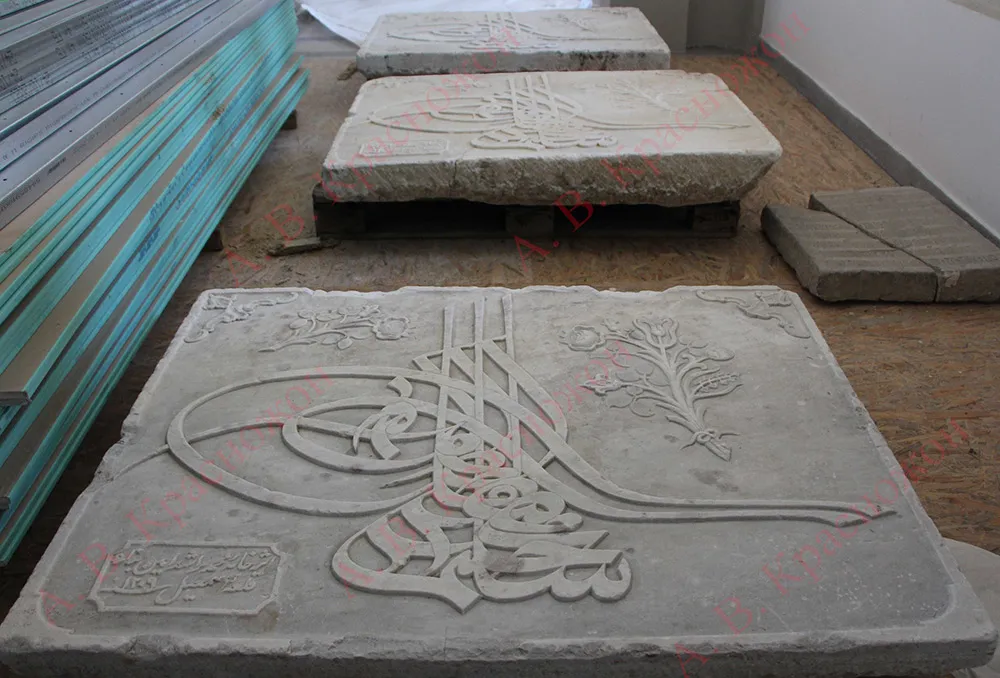
Artefacts stolen by the Romanians. Photo: Facebook, Andrew Krasnozhon
Thus, all the historical inscriptions known so far, at least of the Akkerman collection of foundation slabs (which during the war were taken [by the Romanian occupiers] from Odesa), have been found and the places where they are kept have been identified (Iași, Bilhorod-Dnistrovskyi, Kherson).
The question remains open whether Ukraine as a whole, and the Ministry of Culture and Information Policy in particular, will insist on the return of the artefacts stolen from Odesa by Hitler’s Romanian allies to their rightful owners.


