

Those responsible for illegal construction on Castle Hill in Kremenets will stand trial
Investigators of the Kremenets police department have sent to court an indictment against the former director of the Kremenets-Pochaiv Reserve and his accomplice, a local entrepreneur. The offenders are accused of deliberate illegal destruction of parts of cultural heritage sites (Part 5 of Article 298 of the Criminal Code of Ukraine). This is reported by the Communications Department of the Ternopil Oblast Police.
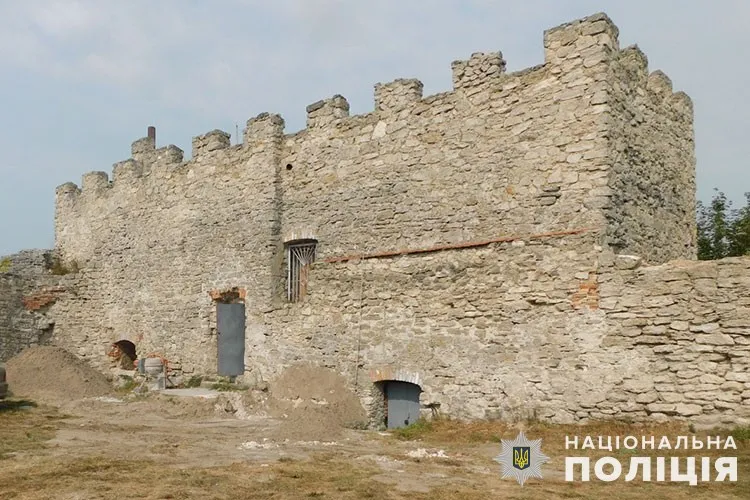
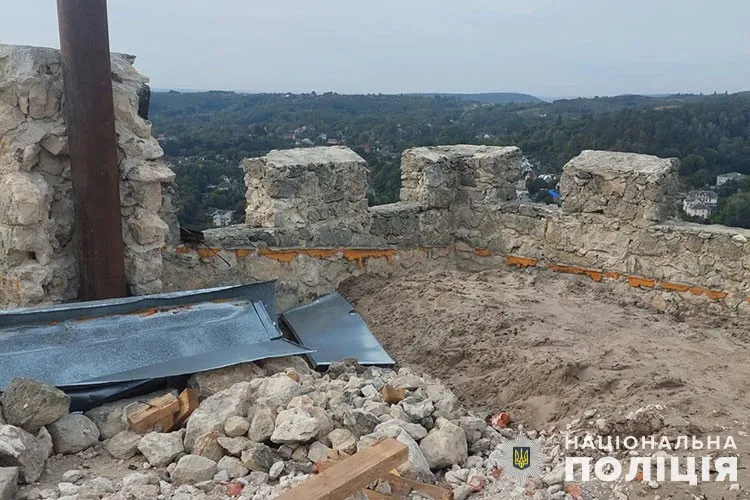
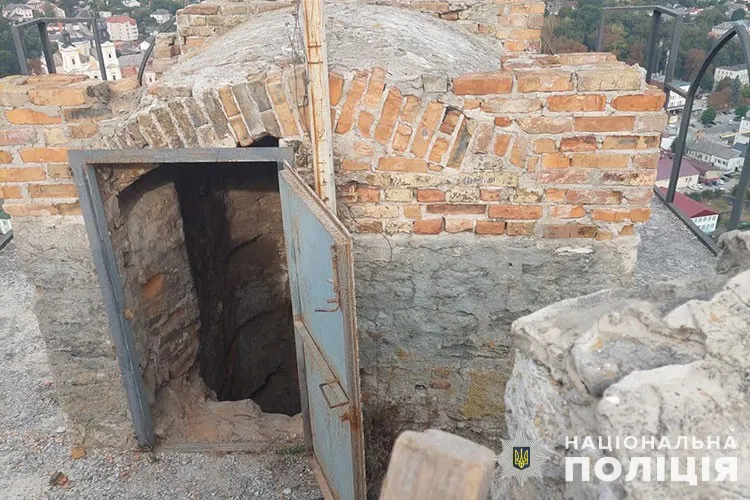
During the pre-trial investigation, conducted under the procedural supervision of the Kremenets District Prosecutor’s Office, it was established that the reserve’s director, without any special permits, gave instructions to carry out earthworks on Castle Hill, where a monument of architecture and urban planning of national significance is located. The entrepreneur, having begun to build a café, damaged and partly destroyed historical and archaeological heritage sites. According to the expert examination, the extent of the damage to the monument is 25 cubic metres, and the amount of harm caused is UAH 3,415,800. To recover this sum, law enforcement officers filed a civil claim against the accused for joint recovery.
The penalty under the article with which the defendants are charged is imprisonment from three to eight years.
For reference:
In 17th-century sources the castle is mentioned in 1064, when a boyar of the Denysko-Mokosheiv family, of the Vukry coat of arms, voluntarily gave it to the Polish king Bolesław the Bold. In the Hypatian Chronicle the castle is mentioned in the 13th century. It is known that in 1226 it withstood a siege by the troops of the Hungarian prince Andrew. Later, in 1240, Khan Batu failed beneath its walls, and in 1255 so did the baskak Kuremsa. Only in 1261 did Burundai force the Volhynian princes to demolish the fortifications of their towns, Kremenets included. Most likely the fortifications of that time were wooden.
Under the Polish–Lithuanian treaty of 1349 the town was given to Prince Yurii Narymontovych on condition that he would not rebuild the castle. However, according to the sources, Prince Yurii broke the agreement, and the Grand Duke of Lithuania, Liubart, took Kremenets from him in favour of Poland.
In 1354, by then already Polish, the castle became easy prey for the Lithuanian princes and passed to Liubart. But that same year the Polish king Casimir took it back without much effort. For 12 years Kremenets changed hands several times, until under a new agreement in 1366 it passed to Poland. Considering the importance of Kremenets for defending the state’s border against attacks by Lithuania and the Tatars, Casimir evidently began to restore the castle’s defensive capability. It was probably then that the stone fortifications appeared. In 1370, after Casimir’s death, Liubart, who owned the Kremenets district, seized the castle and held it until 1376–1377. During the years of his possession, Liubart, and after him the royal administration, continued strengthening the castle, begun by Casimir. Probably for that reason, in 1382, after the death of King Louis of Hungary, Liubart, not relying on force of arms, bought the castle from the Hungarian starost. From 1390 the castle was held by Svydrygailo, who built a second castle on the neighbouring Stizhok hill, traces of which existed until the 19th century. He also granted Kremenets Magdeburg law.
In 1533 the Polish king Sigismund I gave the Kremenets starostwo to the Bishop of Vienna, Janusz, who over two years carried out substantial construction in the castle. At this time the gate (Noble) tower with a drawbridge, in which the castle’s starost lived, was raised in height. To the west of the Cherlena (Red) Tower the foundations of a third, square tower were laid, which was to rise above the town. On the bishop’s orders the digging of a well 80 m deep and the building of a tower in front of the castle, above the first moat, were begun.
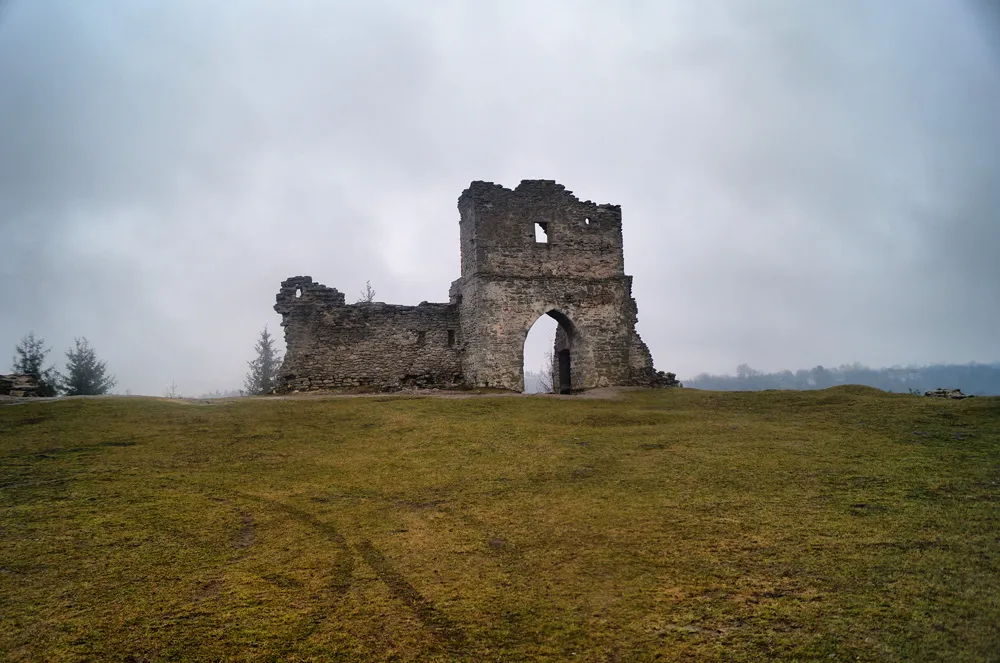
In 1536 Sigismund I gave the castle to his wife, Queen Bona Sforza, who held it for 20 years and granted the town several privileges. During this period the castle’s starosts carried out a number of reconstructions: the gate (Noble) tower was raised a second time, its upper tier covered with a vault and given a tent roof. Probably as a result of this work it acquired the name of the Great Tower. At the same time the other towers were raised and fighting galleries were provided on the walls. On the foundation of the tower on the town side a house was built with cellars, a main room, an entrance hall and a storeroom, as well as a defensive upper tier. This last structure received the name of the Tower above the New House. The dimensions of the castle at that time were 70.6 by 157 m.
In 1648, during the Liberation War, one of the Cossack detachments of M. Kryvonis, with the help of Kremenets townspeople, captured the castle, burning the wooden buildings and destroying part of the fortifications. The castle was not rebuilt after that. Documents of the 17th–18th centuries attest to its gradual decline and ruin. From the end of the 18th century it lost its defensive function completely, and in the 19th century several sections of the defensive walls collapsed.
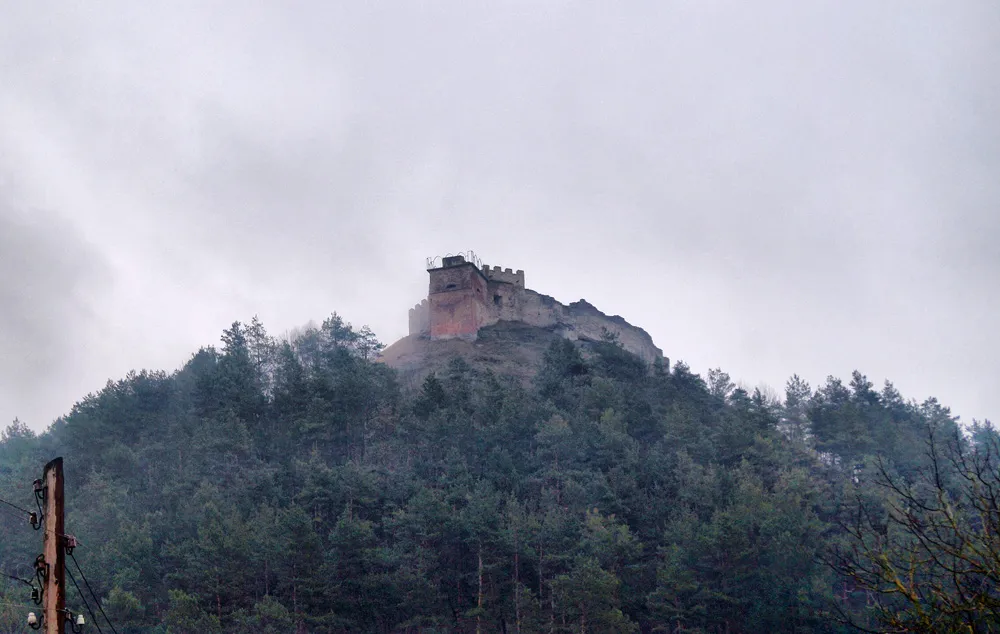
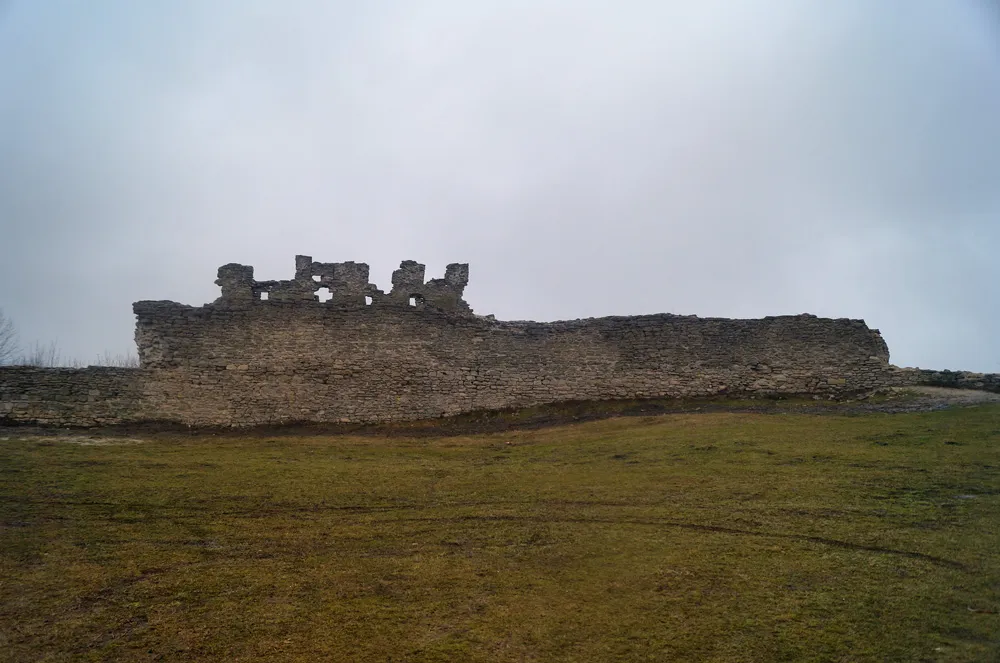
Of the castle, built of white limestone, there survive to our day a gate tower, square in plan (10 by 10 m), of two tiers with an arched Gothic passage, and part of the defensive walls (2.3 m thick, 8–12 m high), crowned with merlons and narrow slit-like loopholes.


