

With the support of “Ukraine Incognita”, Ukrainian researchers win an international competition
The winners of the international competition for the study of ancient Jewish cemeteries, announced by the ESJF European Jewish Cemeteries Initiative, an initiative carried out with the support of the German government, have been determined.
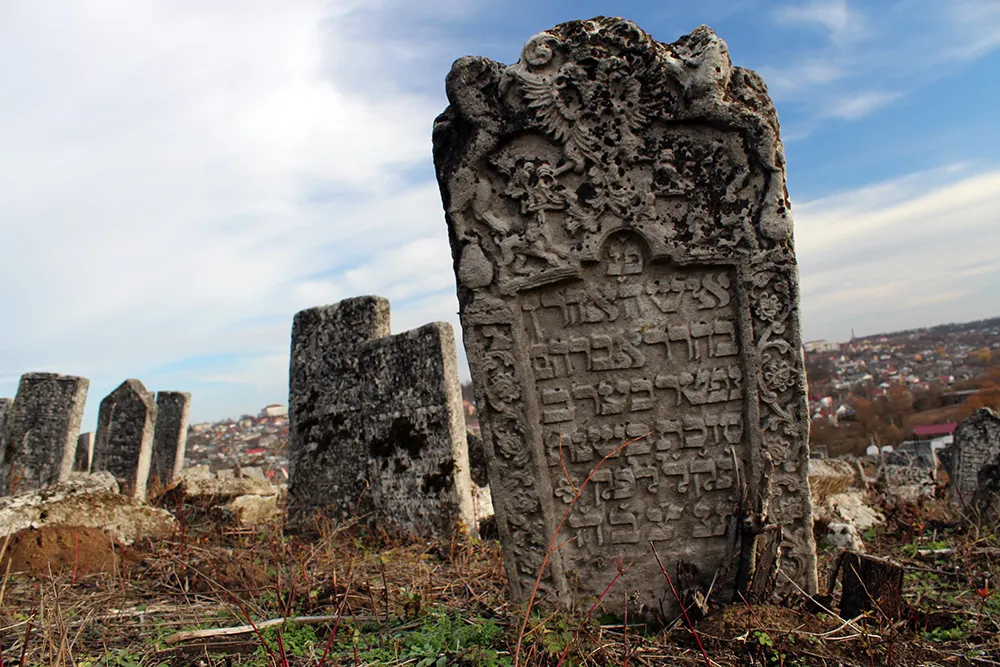
The study of the old cemetery in Horodok won the international competition
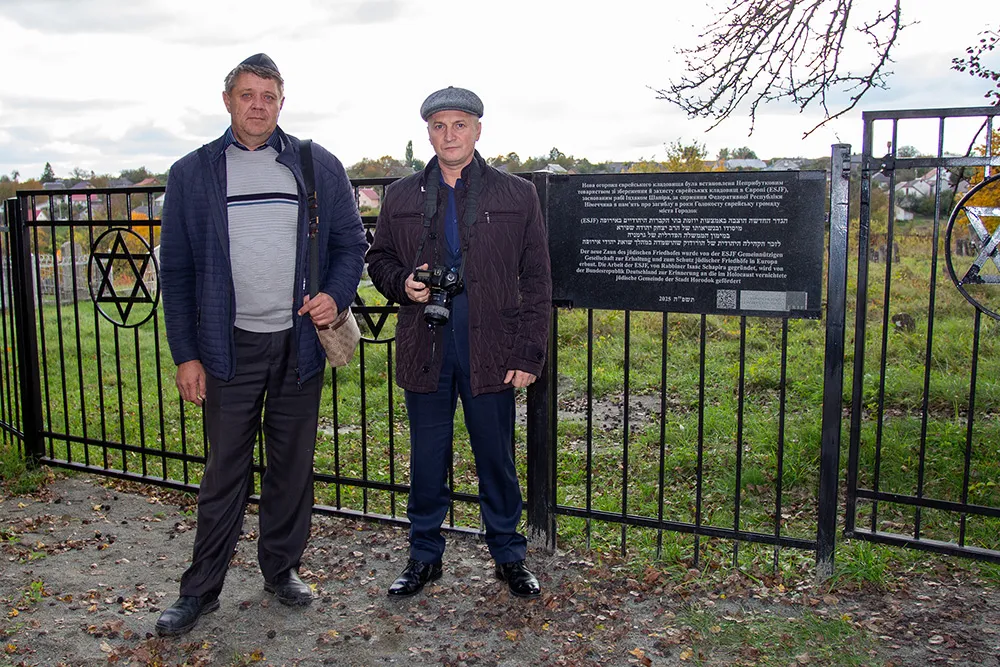
Among those who took part in the competition were volunteers of the partner project “Graves of the Ancestors”, launched by the Horodok city council and the NGO “Ukraine Incognita”. The project studies all the ancient necropolises of the historical Horodok area: Ukrainian, Polish and Jewish. According to Oleh Fedorov, head of the Department of Culture, Nationalities, Religions and Tourism of the Horodok City Council, the project not only broadens understanding of the region’s history and creates a basis for new tourist routes, but also promotes interethnic understanding, as it reveals the rich and fascinating culture of multinational Podillia.
In almost three years of the project, about fifty necropolises and burial sites have already been surveyed, and more than fifteen discoveries of national and international significance have been made. As a result of the expeditions, about a hundred articles have been published in regional, nationwide and foreign media, and three photo exhibitions have been organised, shown in Horodok as well as in other cities of Ukraine and abroad.
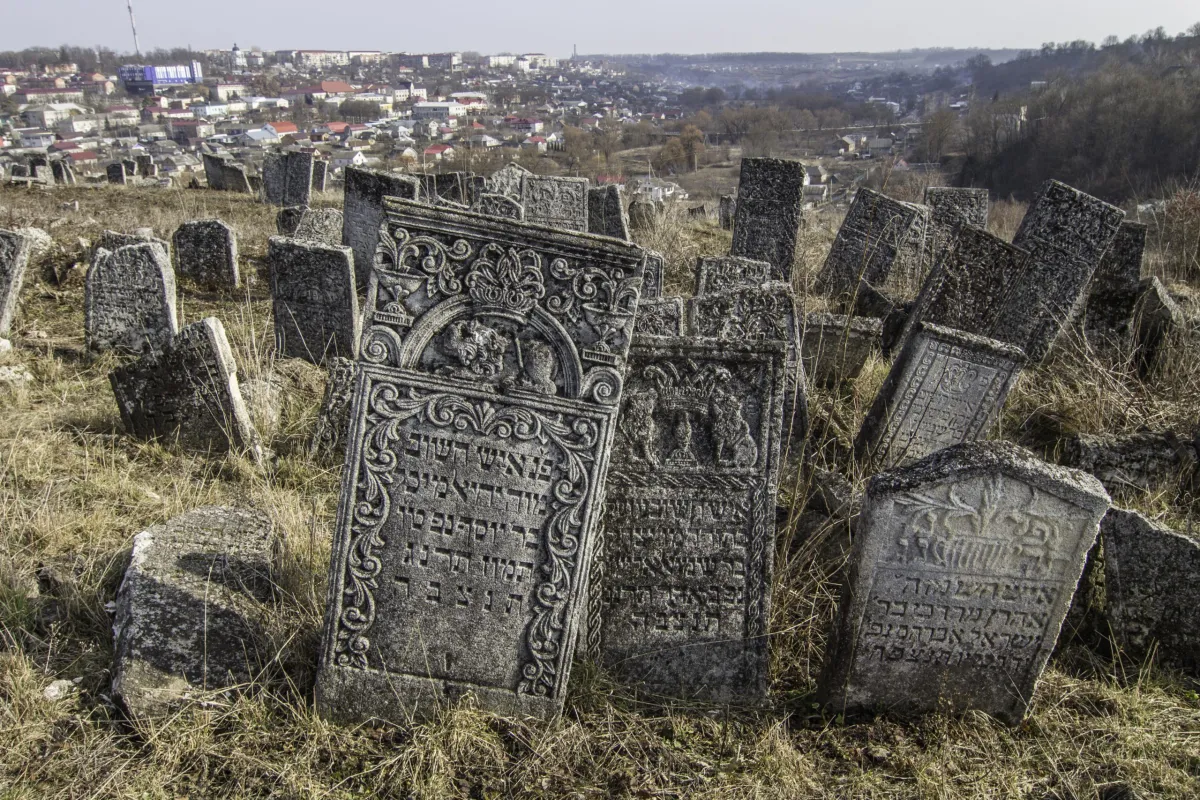
When the competition was announced, local historians Oleh Fedorov, Valentyn Nyshchyi and Ihor Oliinyk decided to try their hand and prepare a study of the ancient Jewish cemetery in Horodok, especially as they already had considerable groundwork on the subject. Joining the work as a consultant was Dmytro Poliukhovych, a member of the “Ukraine Incognita” team and an active participant in the “Graves of the Ancestors” project, a well-known specialist in Judaica and author of the study “The Jewish Cemetery of Sataniv, Stone Beasts and Mystical Rites” (Dukh i Litera publishing house, 2025).
“I really wanted to work more thoroughly on the study of the old (dating from the early 18th century) Horodok Jewish necropolis, but at that very time I was finishing another important and complex project,” says Dmytro Poliukhovych. “So I limited myself to consultations and supervision. It was interesting to see how my colleagues would cope on their own. And they really did cope well: I had to step in only a few times, in genuinely difficult cases. My book about Sataniv also helped a great deal; it is in effect an encyclopaedia of Jewish necropolis studies and is relevant for any cemetery in Eastern Europe”.
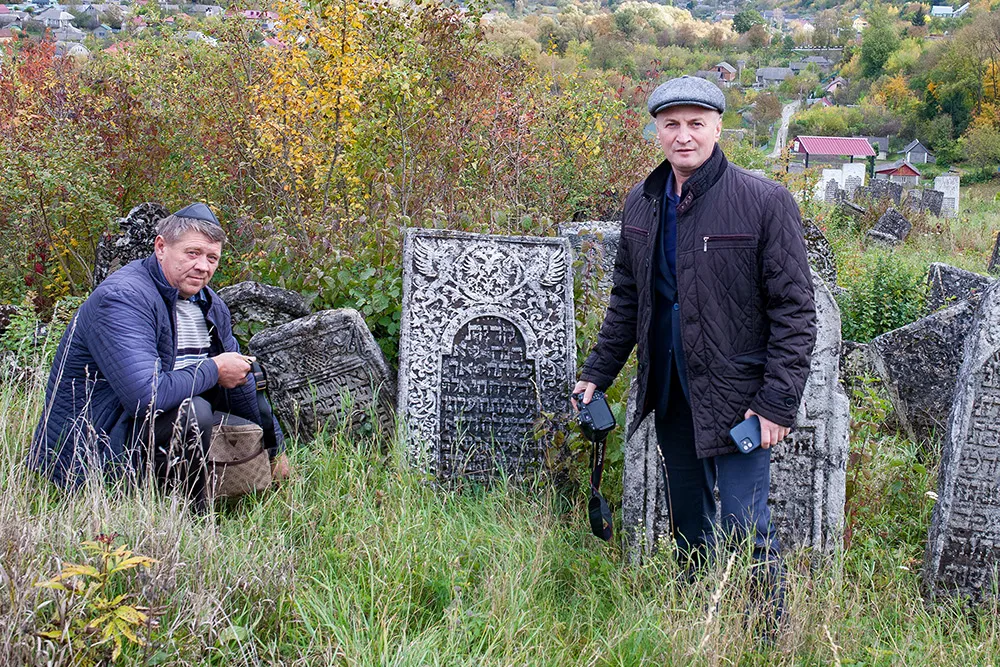
Valentyn Nyshchyi (left) and Oleh Fedorov during research at the necropolis
Oleh Fedorov explains the significance of the research:
“Unfortunately, of the many historical monuments of our town, only the old Jewish cemetery has survived as an integral complex, its oldest burials dating from the early 18th century. Everything else did not survive the turbulent 20th century. We had long planned to study it thoroughly, and the competition was a good opportunity to combine scholarly work with international cooperation. Moreover, taking part in a competition with nine European countries represented is also a political step: we are showing the world that there is no Nazism in Ukraine. After all, Ukrainians are studying Jewish heritage, so what ‘Nazism’ can there be here?”.
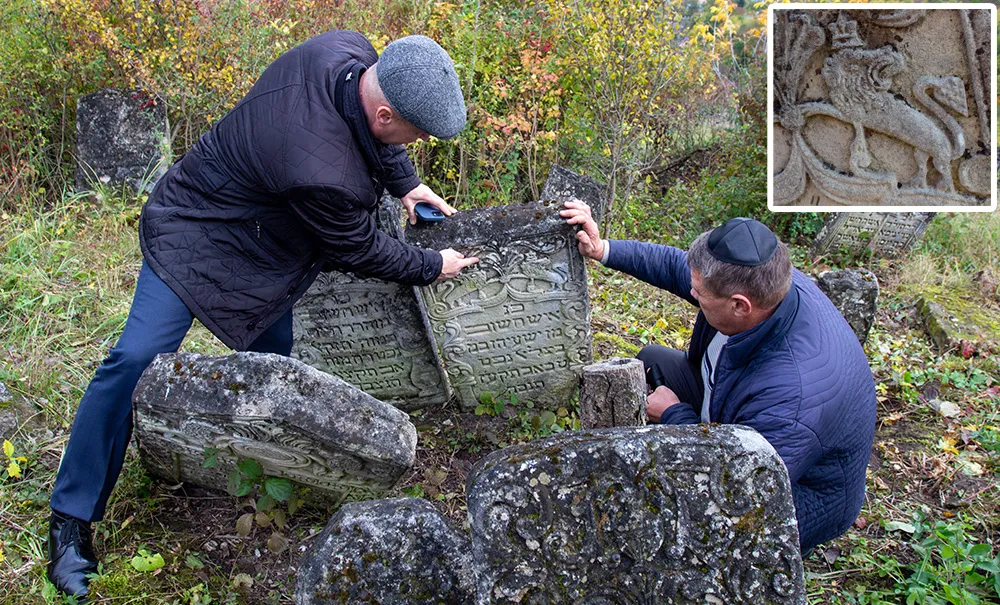
“Crowned” lions are one of the distinctive features of the necropolis in Horodok. In other cemeteries in this part of Podillia, lions are depicted without crowns on their heads
Active volunteer and local historian Valentyn Nyshchyi added:
“I learned a lot of new things. I hope our work will be useful to our fellow townspeople. I would like all this to be published, at least as a brochure, so that as many people as possible can see the results”.
Competition results
On 16 December the organisers announced the results: 35 studies from nine European countries had been submitted.
- First place went to the project of Serbian researchers led by Gordan Pavlović.
- Second place was shared by another group from Serbia (leader Radovan Sremak) and a team from Croatia (leader Karlo Varga).
- Third place was awarded to six projects at once, from Slovakia, the Czech Republic, Moldova and Ukraine.
Three works from Ukraine were among the winners:
- a study of the Jewish cemetery in Horodenka (Ivano-Frankivsk Oblast) led by Volodymyr Burdeniuk;
- a study of the Jewish cemetery in Derazhnia (Khmelnytskyi Oblast) led by Tetiana Shevchuk;
- a study of the Jewish cemetery in Horodok.
“We are delighted with this victory,” says Oleh Fedorov. “Third place among representatives of nine countries and among 35 studies is a considerable achievement. All the more so as it popularises the historical heritage of our Podillia and the town of Horodok at a broad European level. It is especially pleasing that our colleague, the historian Volodymyr Burdeniuk, an employee of the National Museum of Hutsul and Pokuttia Folk Art, with whom we have long and fruitfully cooperated within the “Graves of the Ancestors” project, also won. It was thanks to him that we were able to make sense of a unique stone cross of 1772 found in the village of Lisovody, which mixed abbreviations in Church Slavonic and Polish. I sincerely congratulate my colleague on the victory. And, of course, I thank our colleague from the NGO “Ukraine Incognita”, Dmytro Poliukhovych: without his consultations our study would hardly have succeeded”.
The NGO “Ukraine Incognita” sincerely congratulates its colleagues and partners on a well-deserved victory.


